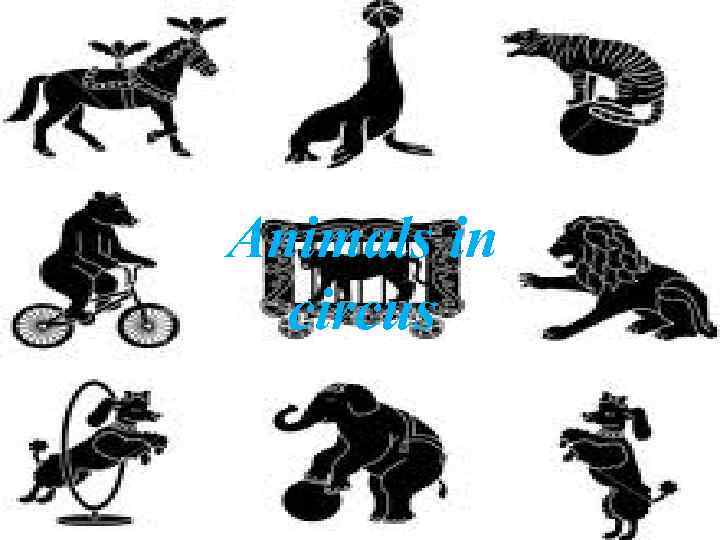
Animals in circus
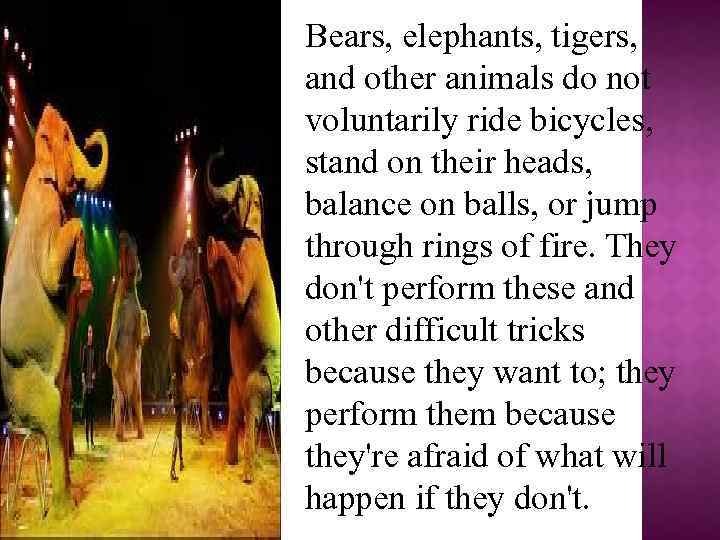
Bears, elephants, tigers, and other animals do not voluntarily ride bicycles, stand on their heads, balance on balls, or jump through rings of fire. They don't perform these and other difficult tricks because they want to; they perform them because they're afraid of what will happen if they don't.
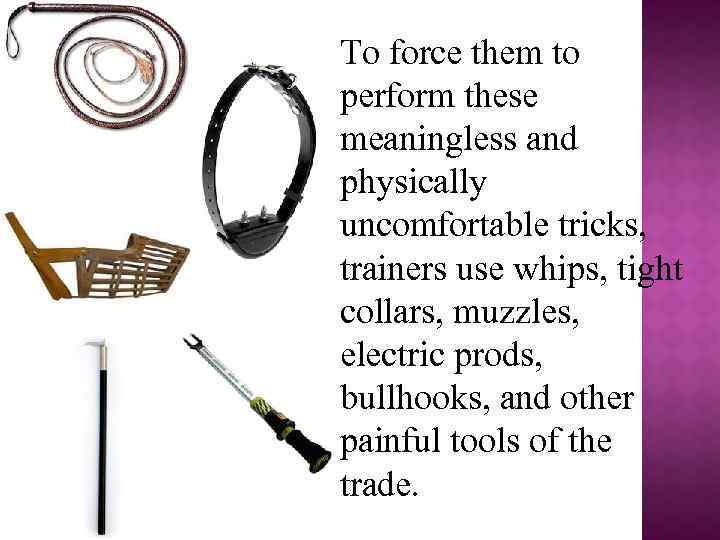
To force them to perform these meaningless and physically uncomfortable tricks, trainers use whips, tight collars, muzzles, electric prods, bullhooks, and other painful tools of the trade.
Circuses easily get away with routine abuse as no government agency monitors training sessions: elephants are beaten with bullhooks and shocked with electric prods, big cats are dragged by heavy chains around their necks and hit with sticks, bears are whacked and prodded with long poles…
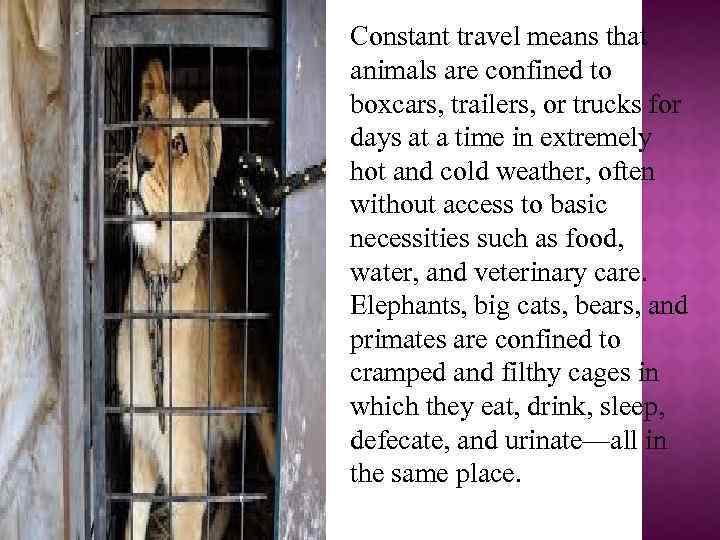
Constant travel means that animals are confined to boxcars, trailers, or trucks for days at a time in extremely hot and cold weather, often without access to basic necessities such as food, water, and veterinary care. Elephants, big cats, bears, and primates are confined to cramped and filthy cages in which they eat, drink, sleep, defecate, and urinate—all in the same place.
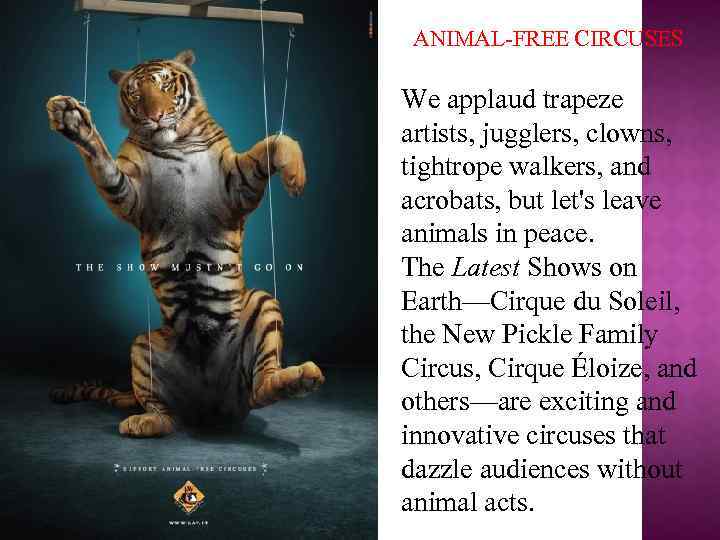
ANIMAL-FREE CIRCUSES We applaud trapeze artists, jugglers, clowns, tightrope walkers, and acrobats, but let's leave animals in peace. The Latest Shows on Earth—Cirque du Soleil, the New Pickle Family Circus, Cirque Éloize, and others—are exciting and innovative circuses that dazzle audiences without animal acts.