 Скачать презентацию Animal breeding and genetics Kick-off Two groups this
1d45528b1004d36d8836807ff21851b7.ppt
- Количество слайдов: 39



Animal breeding and genetics: Kick-off Two groups this year! Two blackboards! https: //edu 2. web. wur. nl/ ABG 20206 -2010 -group 1 ABG 20206 -2010 -group 2
Animal breeding and genetic course first some important messages! 2010 -group 1: Ø All WU-BSc students that started 2008, 2007 or earlier (… 3 rd yr BSc) Ø All international students (including EM-ABG)
Animal breeding and genetic course first some important messages! 2010 -group 2: Ø All WU-BSc students that started 2009 (… 2 nd yr BSc) Ø All HBO students, and dutch students from other universities
Animal breeding and genetic course first some important messages! When in doubt: ask me No registration? No acces to blackboard? : E-Mail to hans. komen@wur. nl Your name, registration number, and group (1 or 2)!!
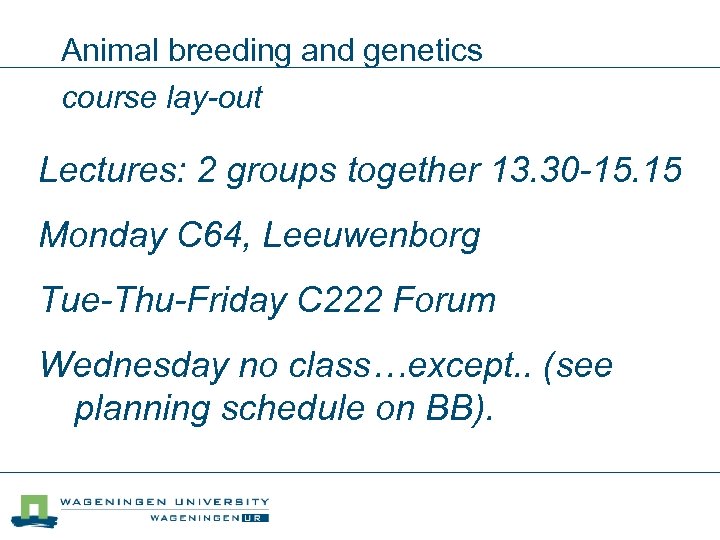
Animal breeding and genetics course lay-out Lectures: 2 groups together 13. 30 -15. 15 Monday C 64, Leeuwenborg Tue-Thu-Friday C 222 Forum Wednesday no class…except. . (see planning schedule on BB).
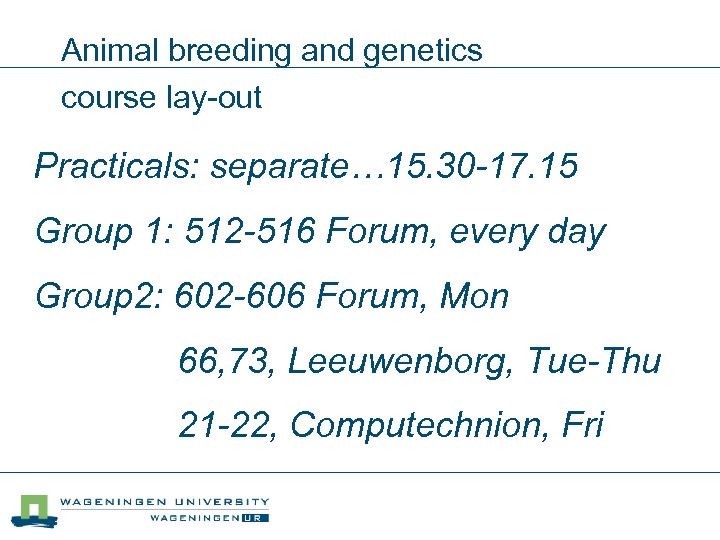
Animal breeding and genetics course lay-out Practicals: separate… 15. 30 -17. 15 Group 1: 512 -516 Forum, every day Group 2: 602 -606 Forum, Mon 66, 73, Leeuwenborg, Tue-Thu 21 -22, Computechnion, Fri
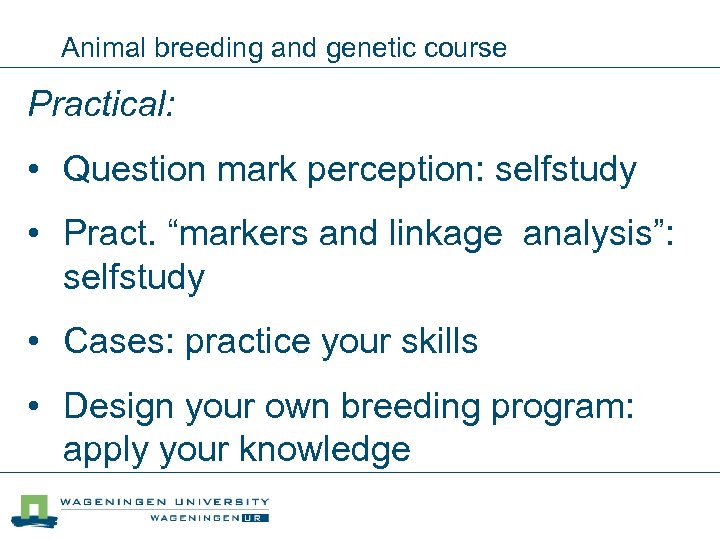
Animal breeding and genetic course Practical: • Question mark perception: selfstudy • Pract. “markers and linkage analysis”: selfstudy • Cases: practice your skills • Design your own breeding program: apply your knowledge
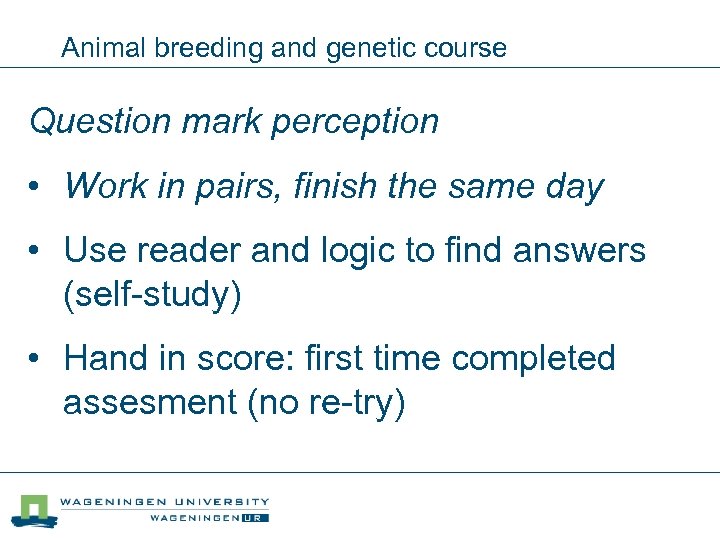
Animal breeding and genetic course Question mark perception • Work in pairs, finish the same day • Use reader and logic to find answers (self-study) • Hand in score: first time completed assesment (no re-try)
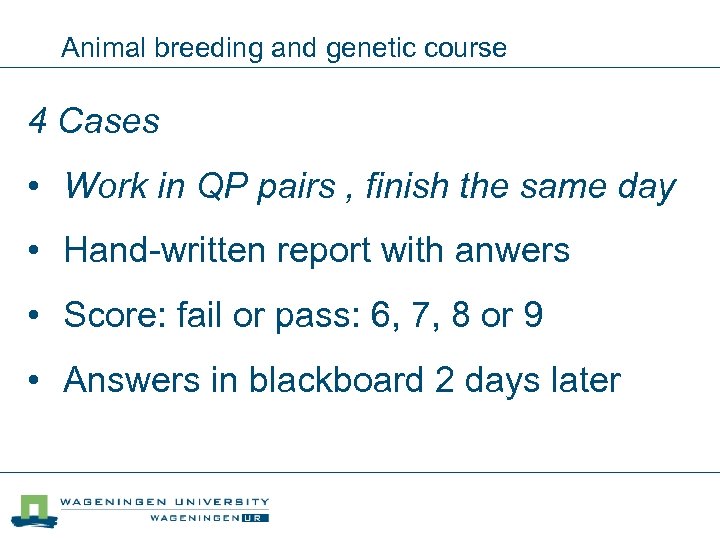
Animal breeding and genetic course 4 Cases • Work in QP pairs , finish the same day • Hand-written report with anwers • Score: fail or pass: 6, 7, 8 or 9 • Answers in blackboard 2 days later
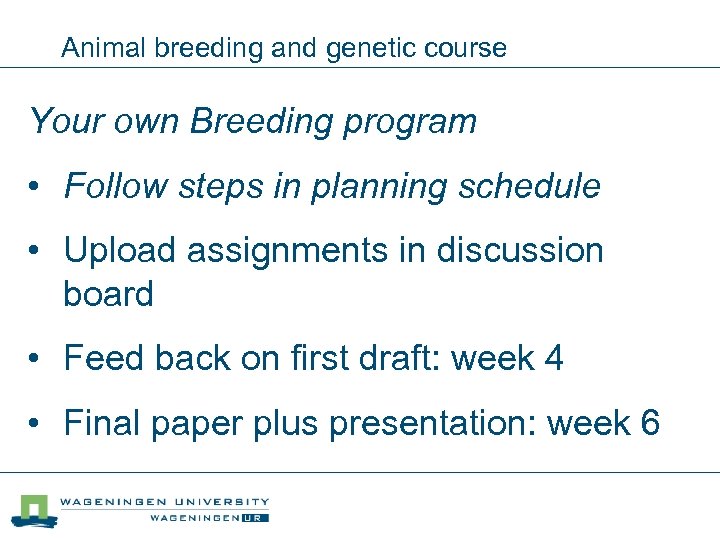
Animal breeding and genetic course Your own Breeding program • Follow steps in planning schedule • Upload assignments in discussion board • Feed back on first draft: week 4 • Final paper plus presentation: week 6
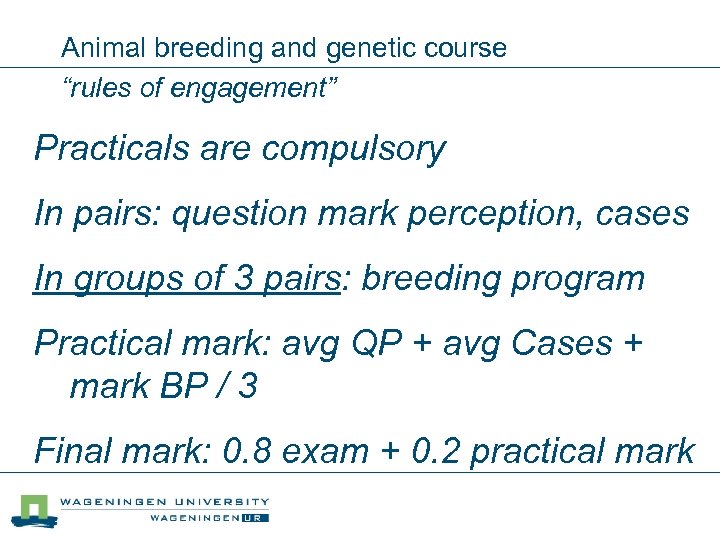
Animal breeding and genetic course “rules of engagement” Practicals are compulsory In pairs: question mark perception, cases In groups of 3 pairs: breeding program Practical mark: avg QP + avg Cases + mark BP / 3 Final mark: 0. 8 exam + 0. 2 practical mark
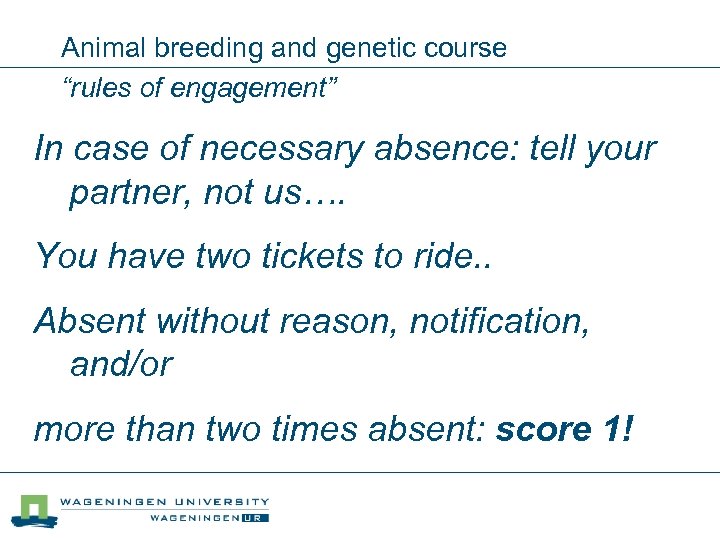
Animal breeding and genetic course “rules of engagement” In case of necessary absence: tell your partner, not us…. You have two tickets to ride. . Absent without reason, notification, and/or more than two times absent: score 1!
Tour of blackboard n http: //edu 2. web. wur. nl/
Chapter 1: introduction to the course Animal Breeding and Genetics A bird’s eye view Hans Komen
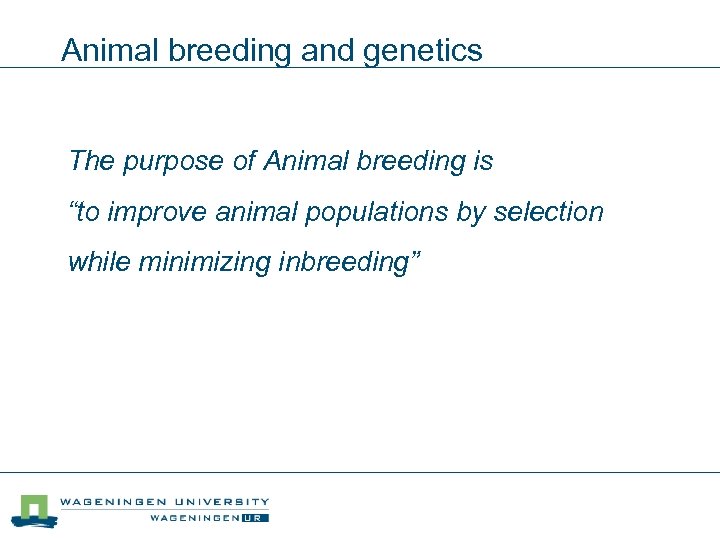
Animal breeding and genetics The purpose of Animal breeding is “to improve animal populations by selection while minimizing inbreeding”
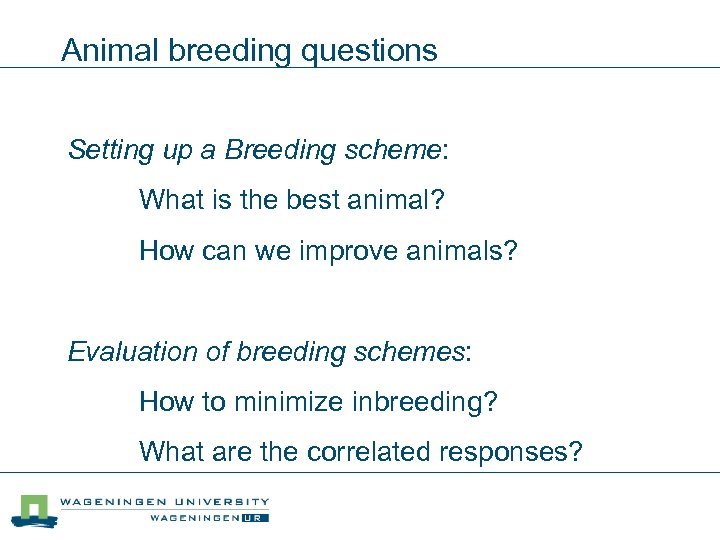
Animal breeding questions Setting up a Breeding scheme: What is the best animal? How can we improve animals? Evaluation of breeding schemes: How to minimize inbreeding? What are the correlated responses?
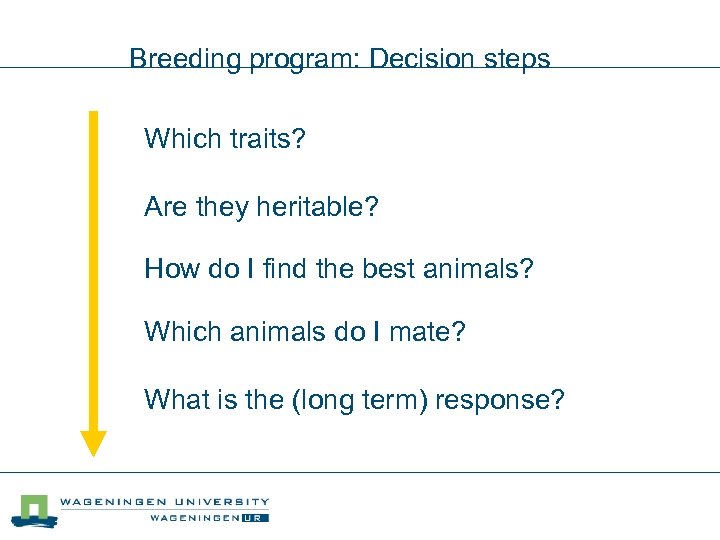
Breeding program: Decision steps Which traits? Are they heritable? How do I find the best animals? Which animals do I mate? What is the (long term) response?
Which traits? A trait is any observable (measurable) characteristic of an animal A trait is about phenotypes Appearance traits Performance traits
The phenotype: a complex of traits Phenotype definitions: broad sense: a tropical phenotype, trait specific: a dairy cow, a long distance runner gene specific: AB, blue eyes
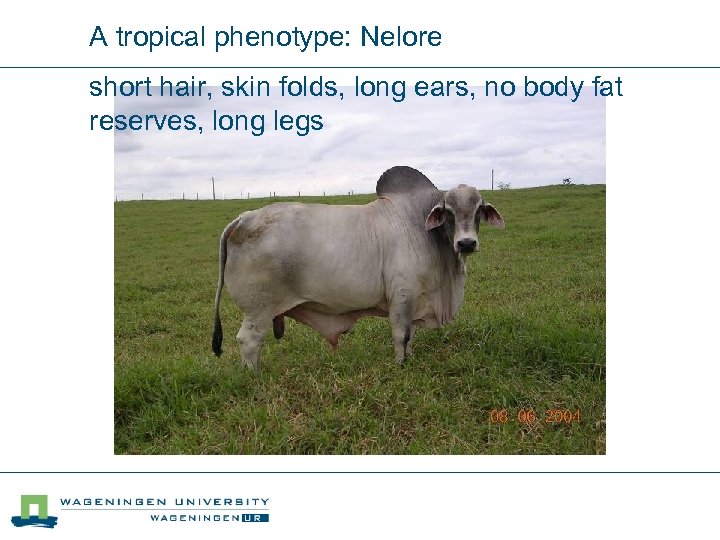
A tropical phenotype: Nelore short hair, skin folds, long ears, no body fat reserves, long legs
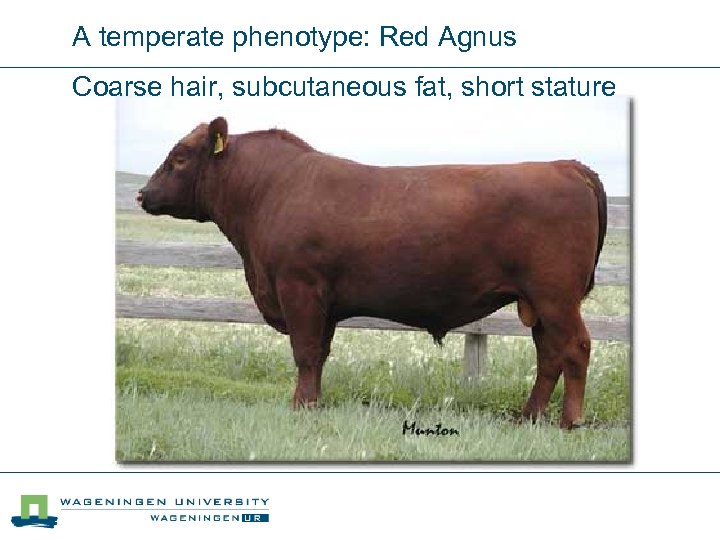
A temperate phenotype: Red Agnus Coarse hair, subcutaneous fat, short stature
Defining a breeding goal Genotypes are shaped by environment but Environments also determine which traits are relevant • Farming system • Economics of in- and outputs • Disease prevalence( tropical or temperate)
Defining a breeding goal To develop Sensible breeding objectives you need A thorough analysis of the function of the animal in the entire system and the interactions among its components
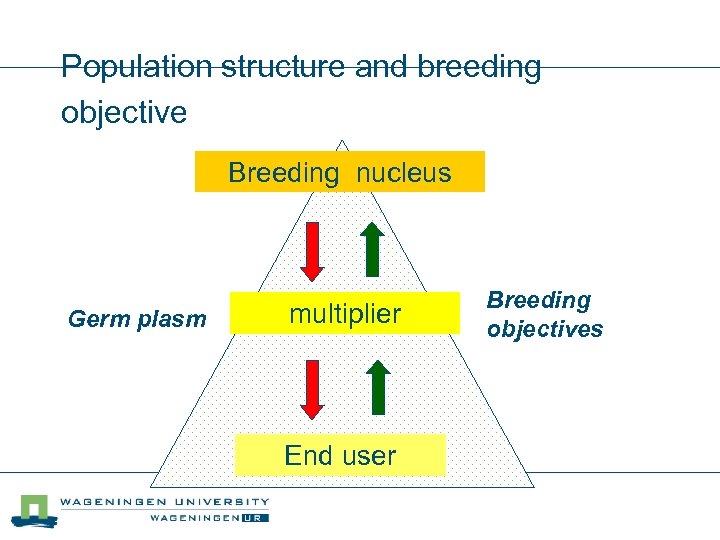
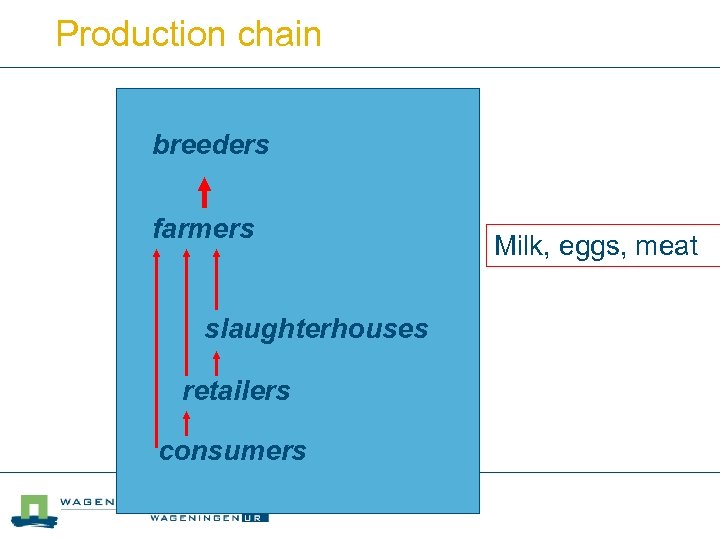
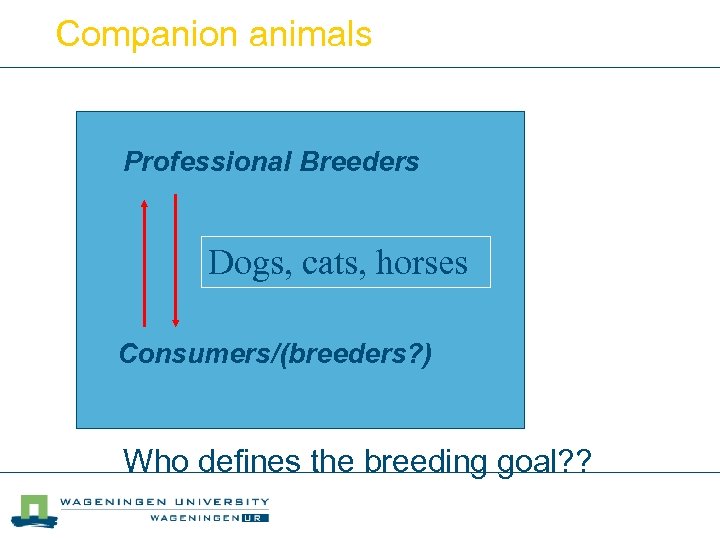
Population structure and breeding objective Breeding nucleus Germ plasm multiplier End user Breeding objectives
Production chain breeders farmers slaughterhouses retailers consumers Milk, eggs, meat
Companion animals Professional Breeders Dogs, cats, horses Consumers/(breeders? ) Who defines the breeding goal? ?
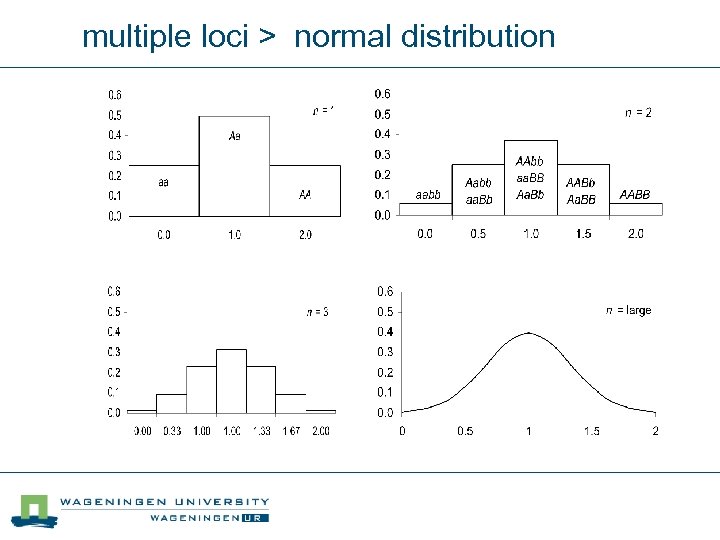
Is a trait heritable? Most traits are polygenic : weight, fertility, behavior, milk production many genes affect the trait, some with large effects, many others with small effects.
multiple loci > normal distribution
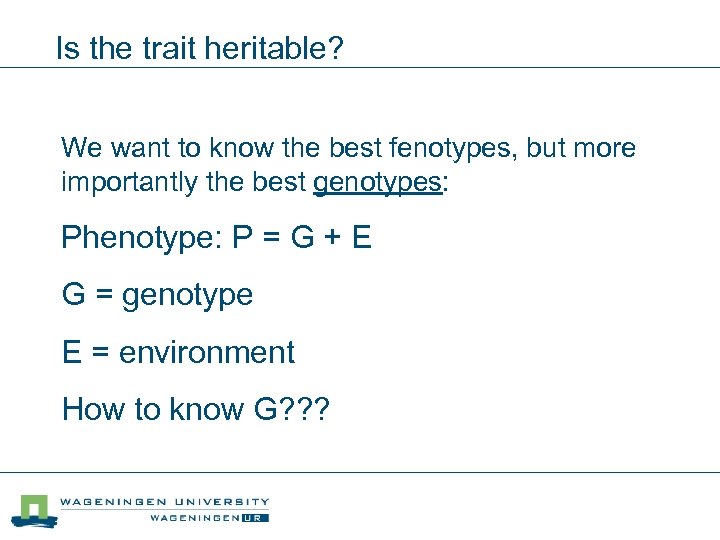
Is the trait heritable? We want to know the best fenotypes, but more importantly the best genotypes: Phenotype: P = G + E G = genotype E = environment How to know G? ? ?
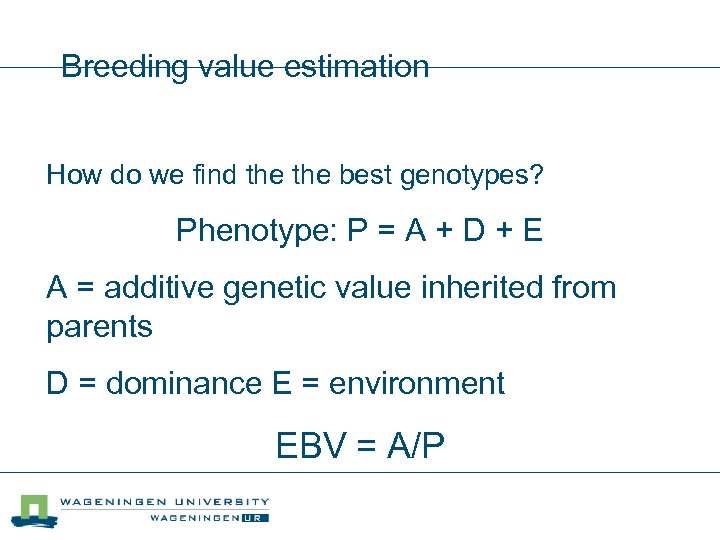
Breeding value estimation How do we find the best genotypes? Phenotype: P = A + D + E A = additive genetic value inherited from parents D = dominance E = environment EBV = A/P
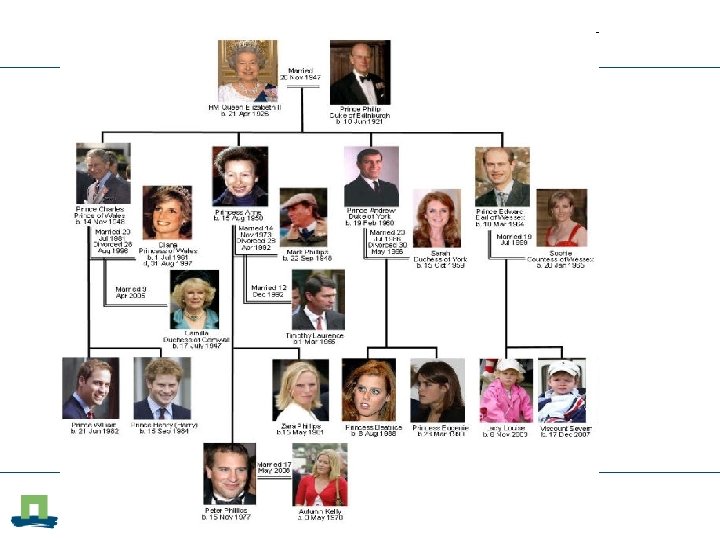
Breeding value estimation to estimate breeding values as accurately as possible, use as much information as possible: the animal itself its brothers, sisters, its sires, dams, its granddams and grandsires
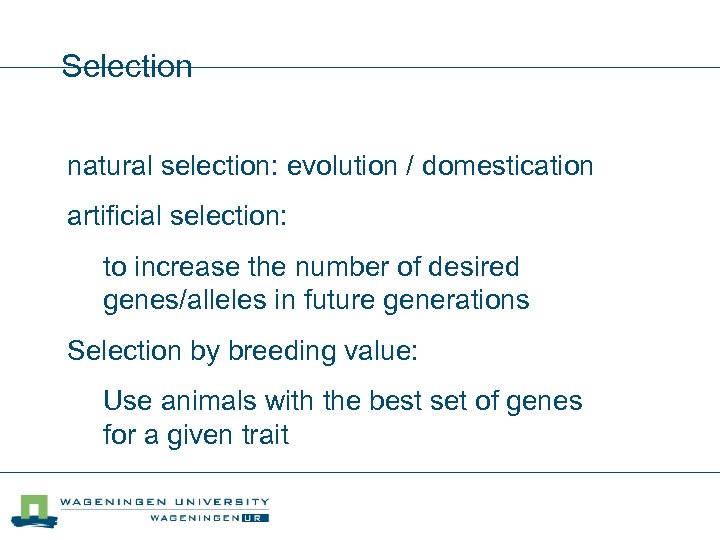
Selection natural selection: evolution / domestication artificial selection: to increase the number of desired genes/alleles in future generations Selection by breeding value: Use animals with the best set of genes for a given trait
Decisions…. how to improve the population By selection: • which animals become parents? • how long do they remain in the breeding population? • how many offspring do they produce? By mating: • who will mate with who?
Mating • to produce extreme genotypes • to produce complementarity • to obtain hybrid vigour/heterosis Example: tick resistance in tropical breeds Nelore x red Angus
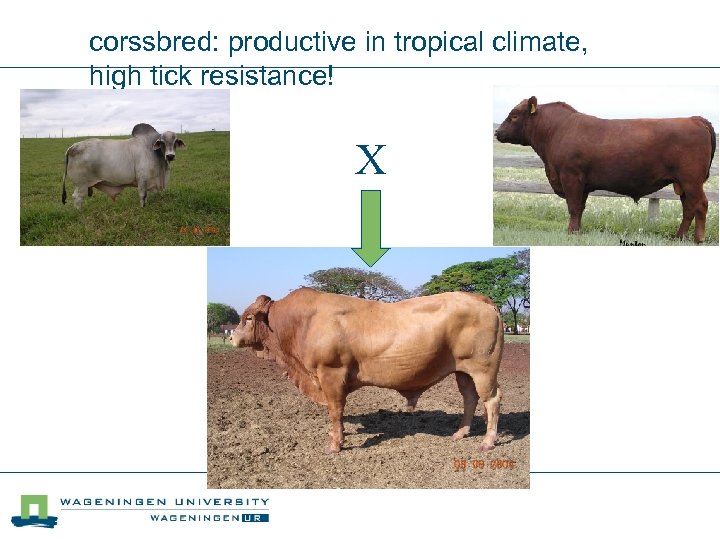
corssbred: productive in tropical climate, high tick resistance! X
the cost of breeding Breeding increases the risk of mating related individuals > more homozygous animals > inbreeding depression ØLoss of genetic variation and problems Succesfull highly productive breeds replace less productive breeds (e. g holstein-frysian) ØLoss of biodiversity!
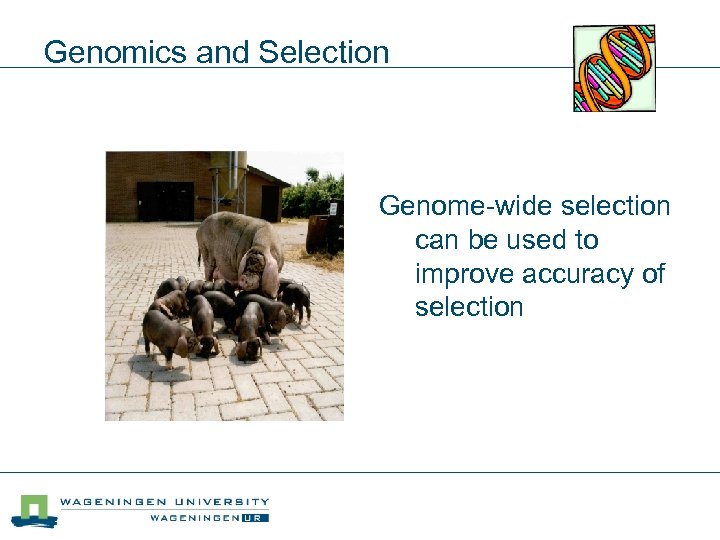
Genomics and Selection Genome-wide selection can be used to improve accuracy of selection
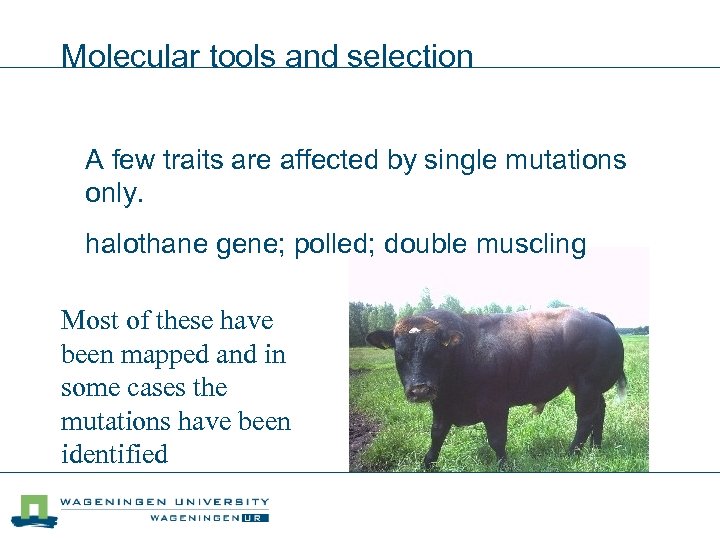
Molecular tools and selection A few traits are affected by single mutations only. halothane gene; polled; double muscling Most of these have been mapped and in some cases the mutations have been identified
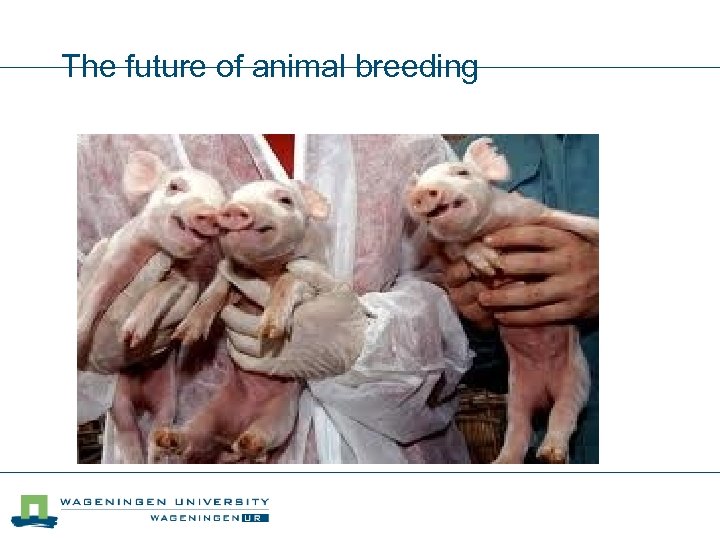
The future of animal breeding Larger companies, new technologies breeding is expensive! reproductive technology: Artificial insemination, Embryo transfer, cloning? ?
Скачать презентацию Animal breeding and genetics Kick-off Two groups this
1d45528b1004d36d8836807ff21851b7.ppt