 Скачать презентацию Anger is a feeling that has to be
anger-110828163711-phpapp02.ppt
- Количество слайдов: 25



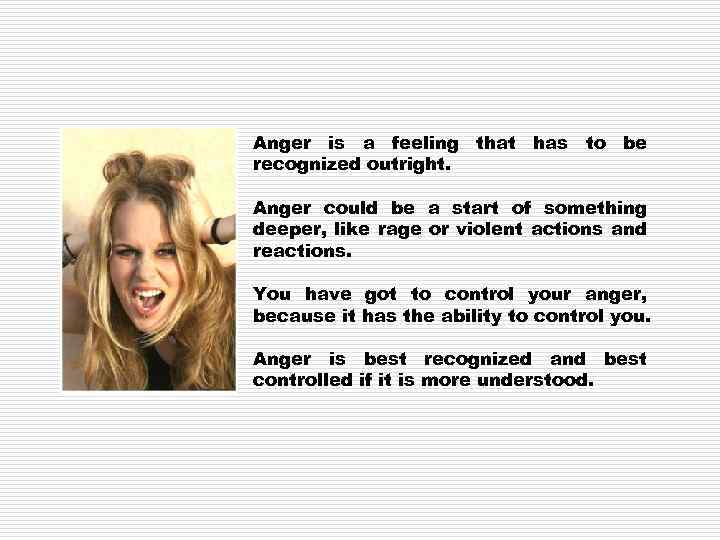
Anger is a feeling that has to be recognized outright. Anger could be a start of something deeper, like rage or violent actions and reactions. You have got to control your anger, because it has the ability to control you. Anger is best recognized and best controlled if it is more understood.
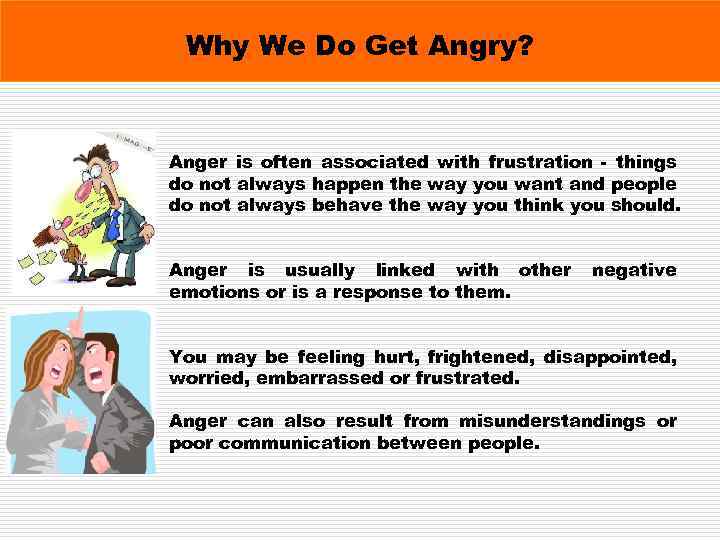
Why We Do Get Angry? Anger is often associated with frustration - things do not always happen the way you want and people do not always behave the way you think you should. Anger is usually linked with other emotions or is a response to them. negative You may be feeling hurt, frightened, disappointed, worried, embarrassed or frustrated. Anger can also result from misunderstandings or poor communication between people.
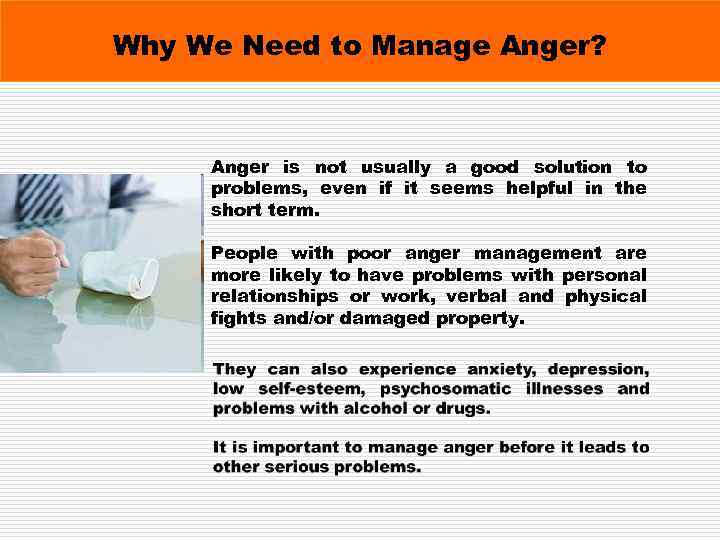
Why We Need to Manage Anger? Anger is not usually a good solution to problems, even if it seems helpful in the short term. People with poor anger management are more likely to have problems with personal relationships or work, verbal and physical fights and/or damaged property.
What Is Anger Management? Anger management is about understanding your anger and why it happens. It is about learning and practicing better ways of expressing anger, and knowing how to prevent it from occurring in the first place. Specifically, anger management is about knowing the triggers and early warning signs of anger, and learning techniques to calm down and manage the situation before it gets out of control.
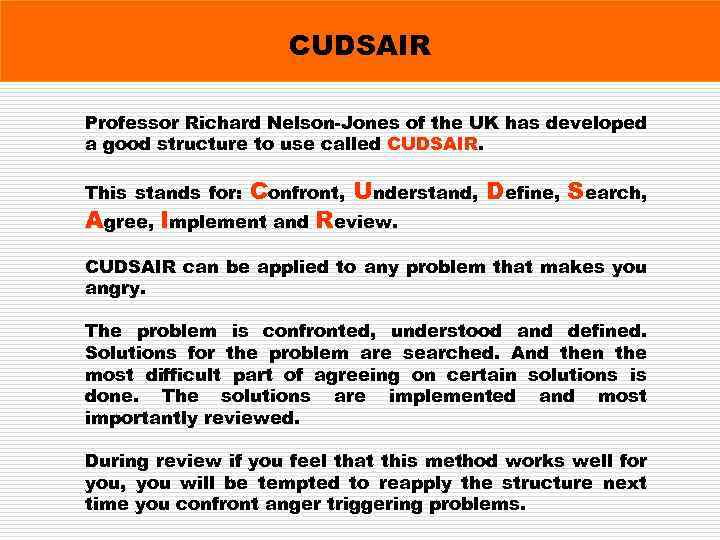
CUDSAIR Professor Richard Nelson-Jones of the UK has developed a good structure to use called CUDSAIR. Confront, Understand, Define, Search, Agree, Implement and Review. This stands for: CUDSAIR can be applied to any problem that makes you angry. The problem is confronted, understood and defined. Solutions for the problem are searched. And then the most difficult part of agreeing on certain solutions is done. The solutions are implemented and most importantly reviewed. During review if you feel that this method works well for you, you will be tempted to reapply the structure next time you confront anger triggering problems.
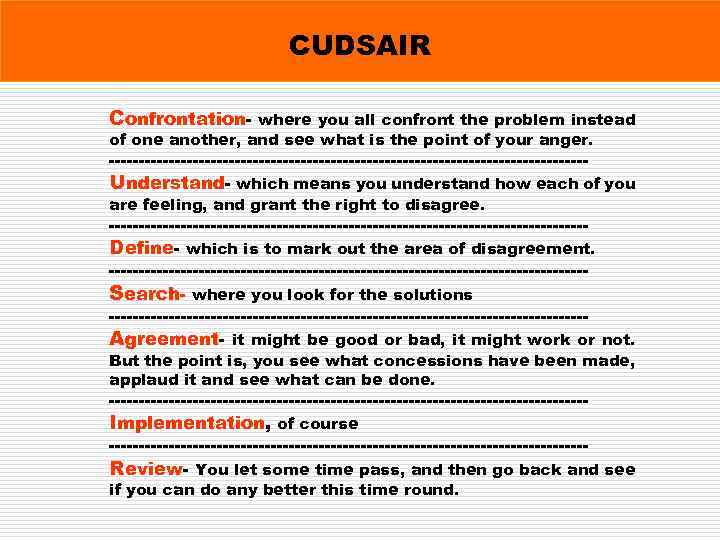
CUDSAIR Confrontation- where you all confront the problem instead of one another, and see what is the point of your anger. ----------------------------------------Understand- which means you understand how each of you are feeling, and grant the right to disagree. ----------------------------------------Define- which is to mark out the area of disagreement. ----------------------------------------Search- where you look for the solutions ----------------------------------------Agreement- it might be good or bad, it might work or not. But the point is, you see what concessions have been made, applaud it and see what can be done. ----------------------------------------Implementation, of course ----------------------------------------Review- You let some time pass, and then go back and see if you can do any better this time round.
TIPS On Managing Anger One of the greatest things you will ever achieve is learning anger management coping skills if you have a temper problem. These anger management tips are designed to help you understand the results of your anger and give you some insights into dealing with your temper problem. q q q q Consider Your Image Consider Others Views Do Not Hold a Grudge Be Forgiving That is Life Find an Acceptable Outlet Know Your Limits
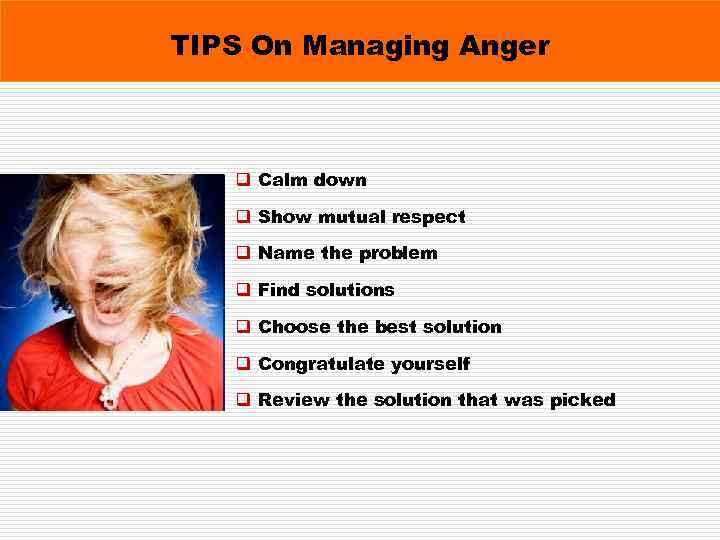
TIPS On Managing Anger q Calm down q Show mutual respect q Name the problem q Find solutions q Choose the best solution q Congratulate yourself q Review the solution that was picked
STRESS MANAGEMENT
HELP ME! WHAT IS STRESS ? Stress is the reaction people have to excessive pressures or other types of demand placed upon them. It arises when they worry that they can’t cope.
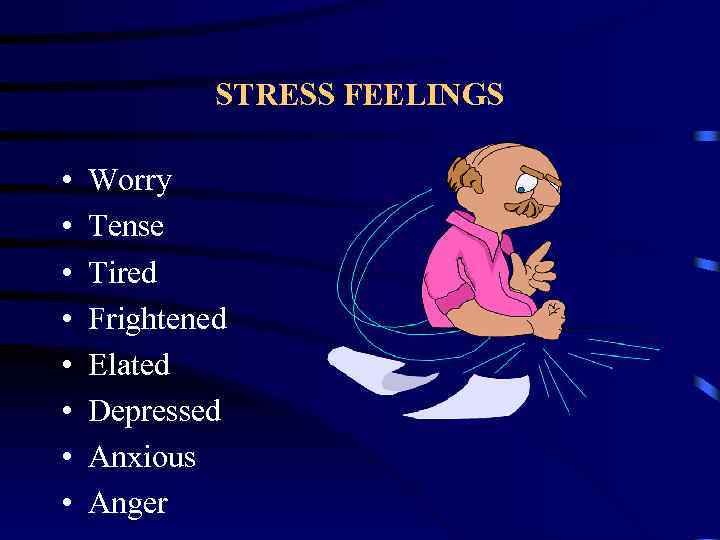
STRESS FEELINGS • • Worry Tense Tired Frightened Elated Depressed Anxious Anger
TYPES OF STRESSORS • External • Internal
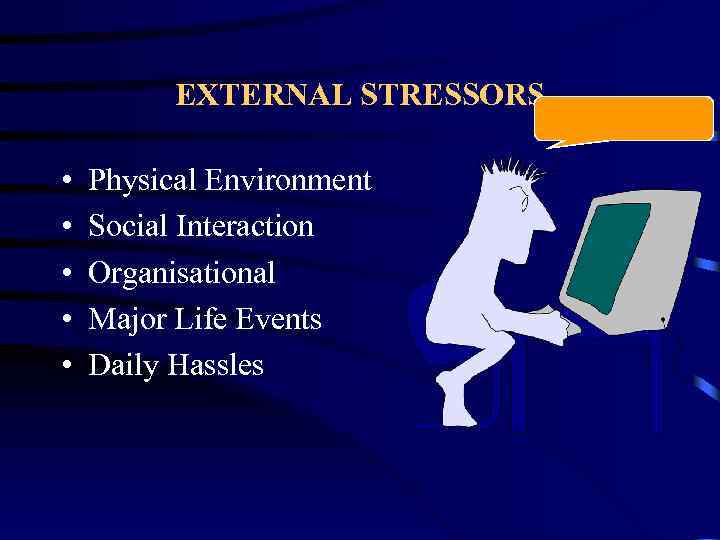
EXTERNAL STRESSORS • • • Physical Environment Social Interaction Organisational Major Life Events Daily Hassles
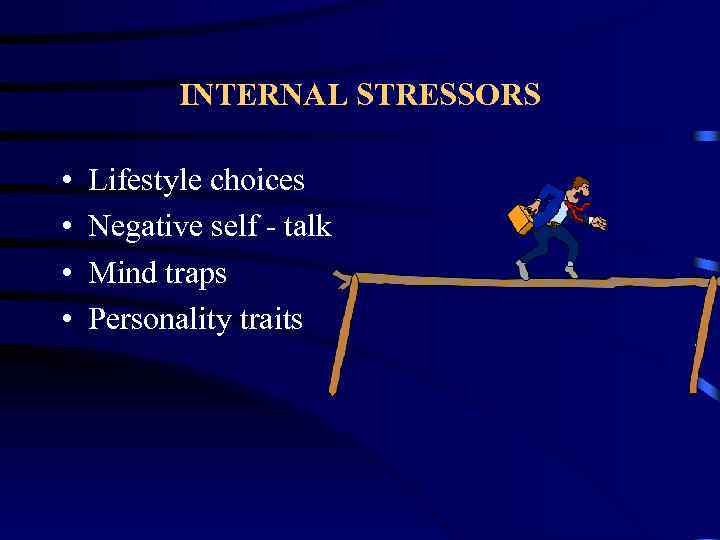
INTERNAL STRESSORS • • Lifestyle choices Negative self - talk Mind traps Personality traits
TYPES OF STRESS • Negative stress • Positive stress
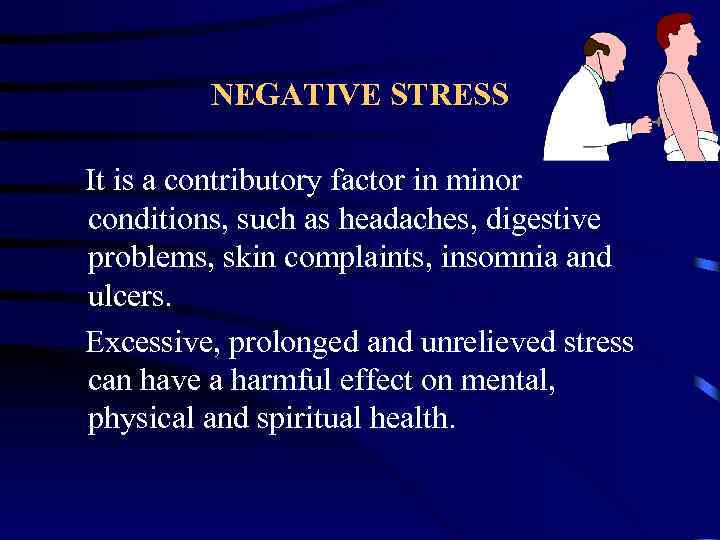
NEGATIVE STRESS It is a contributory factor in minor conditions, such as headaches, digestive problems, skin complaints, insomnia and ulcers. Excessive, prolonged and unrelieved stress can have a harmful effect on mental, physical and spiritual health.
POSITIVE STRESS Stress can also have a positive effect, spurring motivation and awareness, providing the stimulation to cope with challenging situations. Stress also provides the sense of urgency and alertness needed for survival when confronting threatening situations.
Stress Management Techniques • Change your thinking • Change your behaviour • Change your lifestyle
Benefits • • • Higher self-esteem Less self-conscious Less anxious Manage stress more successfully Appreciate yourself and others more easily Feeling of self-control
Time Management • Make a list What MUST be done What SHOULD be done What would you LIKE to do • Cut out time wasting • Learn to drop unimportant activities • Say no or delegate
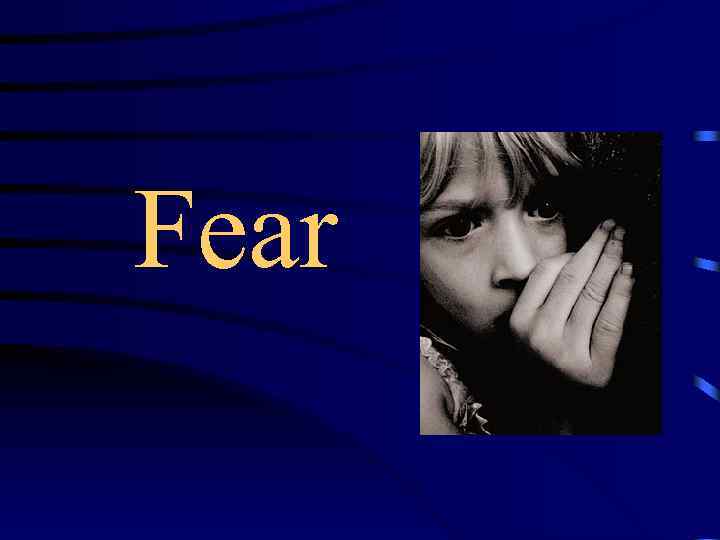
Fear
HELP ME! WHAT IS FEAR? Fear is an emotion induced by a perceived threat which causes entities to quickly pull away from it and usually hide. It is a basic survival mechanism occurring in response to a specific stimulus, such as pain or the threat of danger.
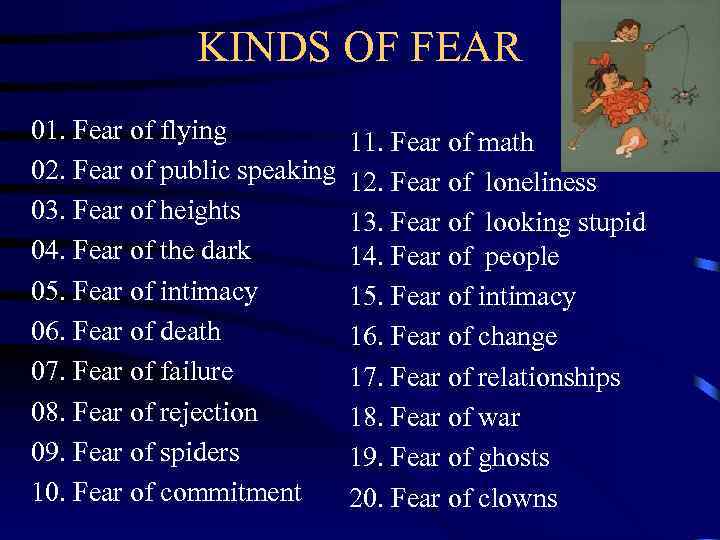
KINDS OF FEAR 01. Fear of flying 02. Fear of public speaking 03. Fear of heights 04. Fear of the dark 05. Fear of intimacy 06. Fear of death 07. Fear of failure 08. Fear of rejection 09. Fear of spiders 10. Fear of commitment 11. Fear of math 12. Fear of loneliness 13. Fear of looking stupid 14. Fear of people 15. Fear of intimacy 16. Fear of change 17. Fear of relationships 18. Fear of war 19. Fear of ghosts 20. Fear of clowns
Скачать презентацию Anger is a feeling that has to be
anger-110828163711-phpapp02.ppt