


 Скачать презентацию AND Archives Freeing Ourselves From the Tyranny of
f702b969c29f4dae53f389da884386cd.ppt
- Количество слайдов: 41
 AND Archives: Freeing Ourselves From the “Tyranny of the OR” Ted Habermann NOAA National Data Centers This presentation is designed to be viewed as a PPT slide show.
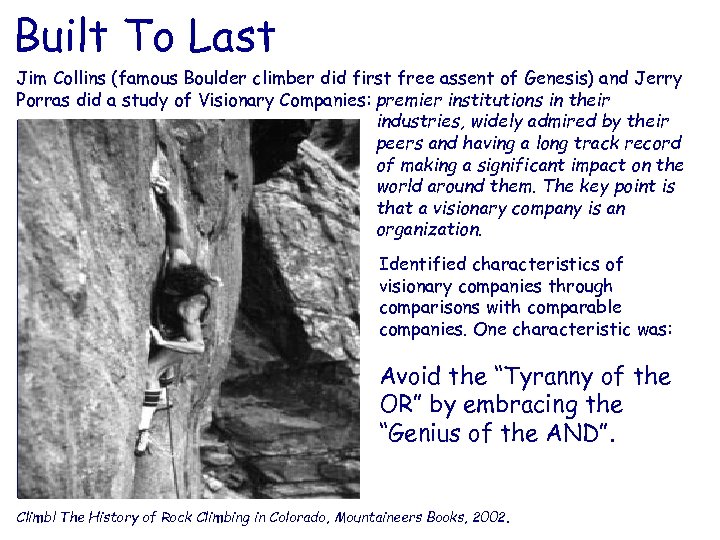 Built To Last Jim Collins (famous Boulder climber did first free assent of Genesis) and Jerry Porras did a study of Visionary Companies: premier institutions in their industries, widely admired by their peers and having a long track record of making a significant impact on the world around them. The key point is that a visionary company is an organization. Identified characteristics of visionary companies through comparisons with comparable companies. One characteristic was: Avoid the “Tyranny of the OR” by embracing the “Genius of the AND”. Built to Last: Successful Rock of Visionary Colorado, Mountaineers Books, 2002. Climb! The History of Habits Climbing in Companies, Harper Collins, New York, 1994.
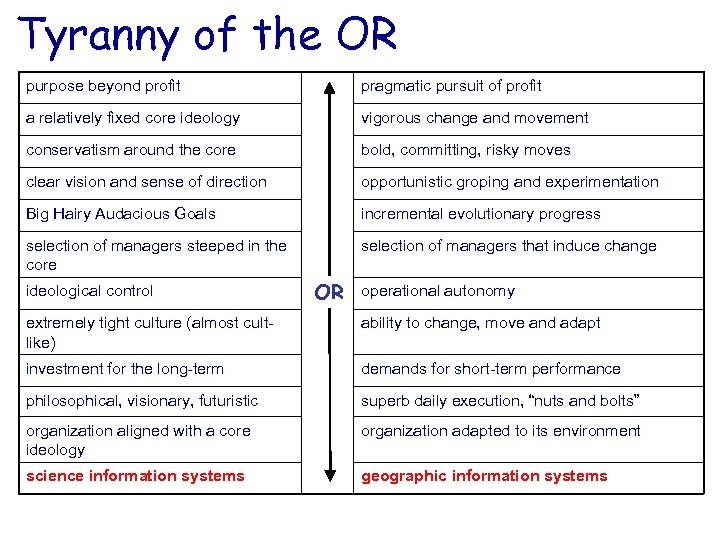 Tyranny of the OR Genius of the AND purpose beyond profit pragmatic pursuit of profit a relatively fixed core ideology vigorous change and movement conservatism around the core bold, committing, risky moves clear vision and sense of direction opportunistic groping and experimentation Big Hairy Audacious Goals incremental evolutionary progress selection of managers steeped in the core selection of managers that induce change ideological control AND OR operational autonomy extremely tight culture (almost cultlike) ability to change, move and adapt investment for the long-term demands for short-term performance philosophical, visionary, futuristic superb daily execution, “nuts and bolts” organization aligned with a core ideology organization adapted to its environment science information systems geographic information systems
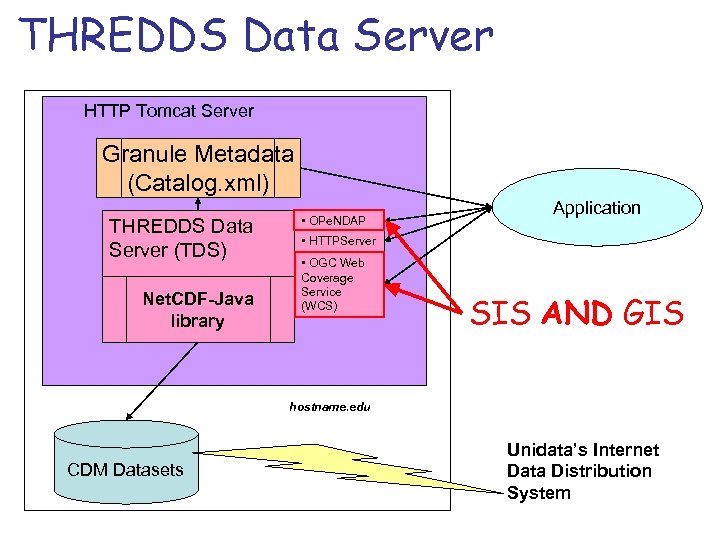 THREDDS Data Server HTTP Tomcat Server Granule Metadata (Catalog. xml) THREDDS Data Server (TDS) Net. CDF-Java library • OPe. NDAP Application • HTTPServer • OGC Web Coverage Service (WCS) SIS AND GIS hostname. edu CDM Datasets Unidata’s Internet Data Distribution System
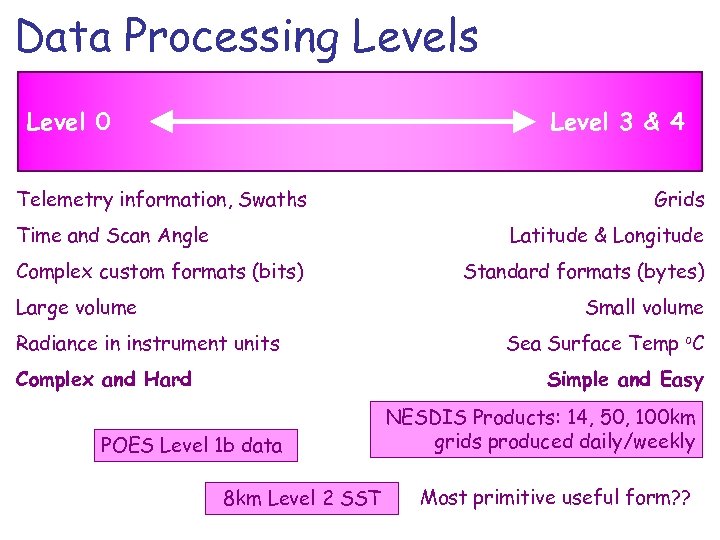 Data Processing Levels Level 0 Level 3 & 4 Telemetry information, Swaths Time and Scan Angle Grids Latitude & Longitude Complex custom formats (bits) Large volume Standard formats (bytes) Small volume Radiance in instrument units Complex and Hard Sea Surface Temp o. C Simple and Easy POES Level 1 b data 8 km Level 2 SST NESDIS Products: 14, 50, 100 km grids produced daily/weekly Most primitive useful form? ?
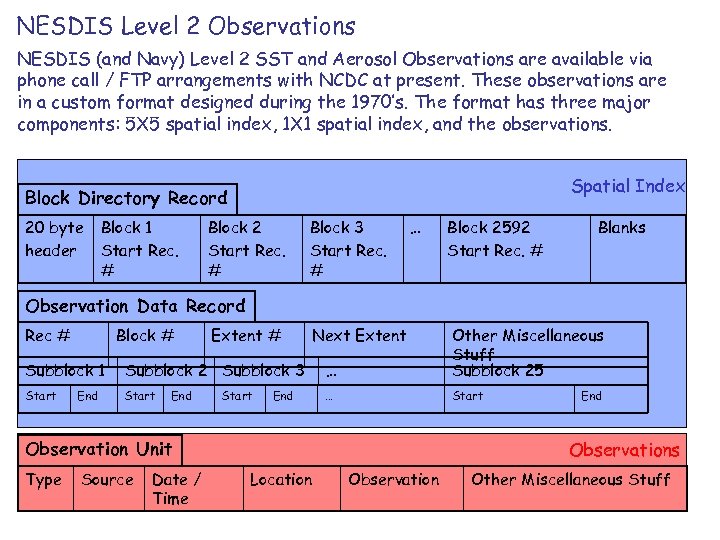 NESDIS Level 2 Observations NESDIS (and Navy) Level 2 SST and Aerosol Observations are available via phone call / FTP arrangements with NCDC at present. These observations are in a custom format designed during the 1970’s. The format has three major components: 5 X 5 spatial index, 1 X 1 spatial index, and the observations. Spatial Index Block Directory Record 20 byte header Block 1 Start Rec. # Block 2 Start Rec. # Block 3 Start Rec. # … Block 2592 Start Rec. # Blanks Observation Data Record Rec # Block # Subblock 1 Subblock 2 Subblock 3 … Other Miscellaneous Stuff Subblock 25 Start … Start End Extent # Start Next Extent End Observation Unit Type Source Date / Time End Observations Location Observation Other Miscellaneous Stuff
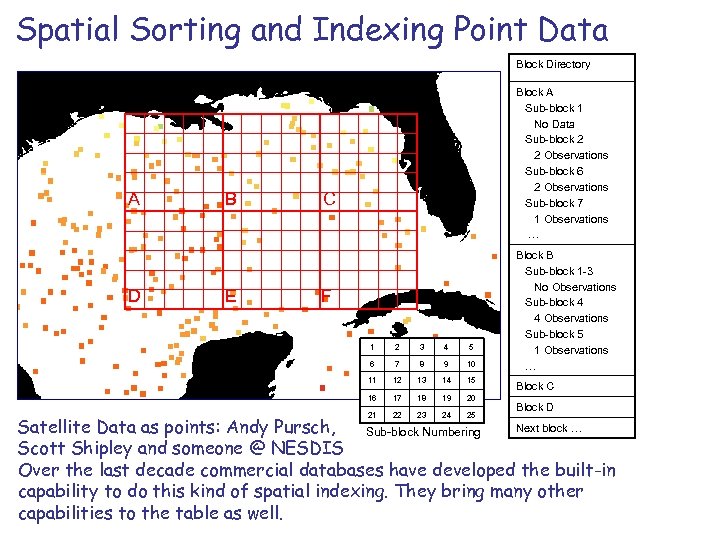 Spatial Sorting and Indexing Point Data Block Directory A D B E Block A Sub-block 1 No Data Sub-block 2 2 Observations Sub-block 6 2 Observations Sub-block 7 1 Observations … C F 1 2 3 4 5 6 7 8 9 10 11 12 13 14 15 16 17 18 19 20 21 22 23 24 25 Block B Sub-block 1 -3 No Observations Sub-block 4 4 Observations Sub-block 5 1 Observations … Block C Block D Next block … Satellite Data as points: Andy Pursch, Sub-block Numbering Scott Shipley and someone @ NESDIS Over the last decade commercial databases have developed the built-in capability to do this kind of spatial indexing. They bring many other capabilities to the table as well.
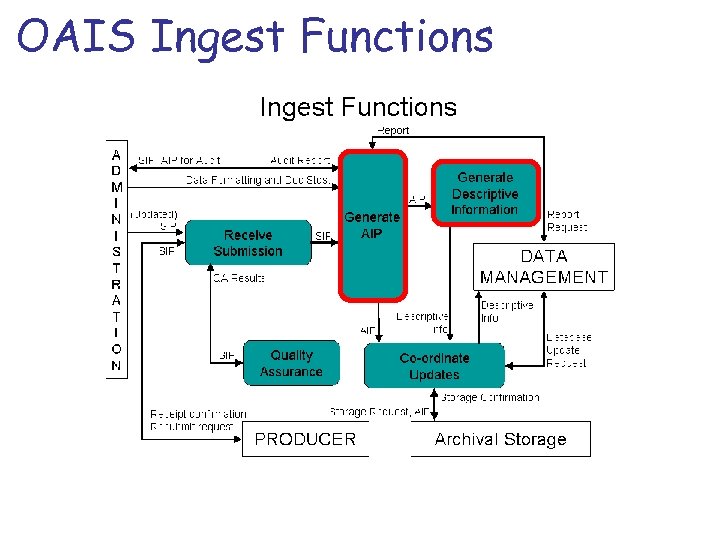 OAIS Ingest Functions
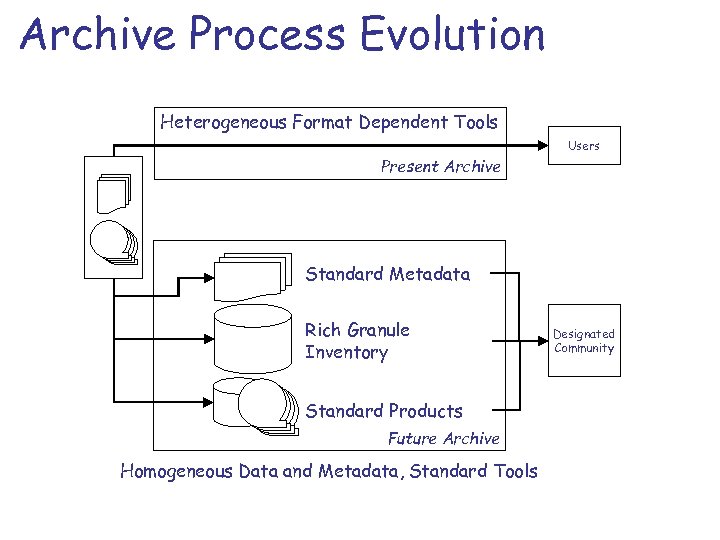 Archive Process Evolution Heterogeneous Format Dependent Tools Users Present Archive Standard Metadata Rich Granule Inventory Standard Products Future Archive Homogeneous Data and Metadata, Standard Tools Designated Community
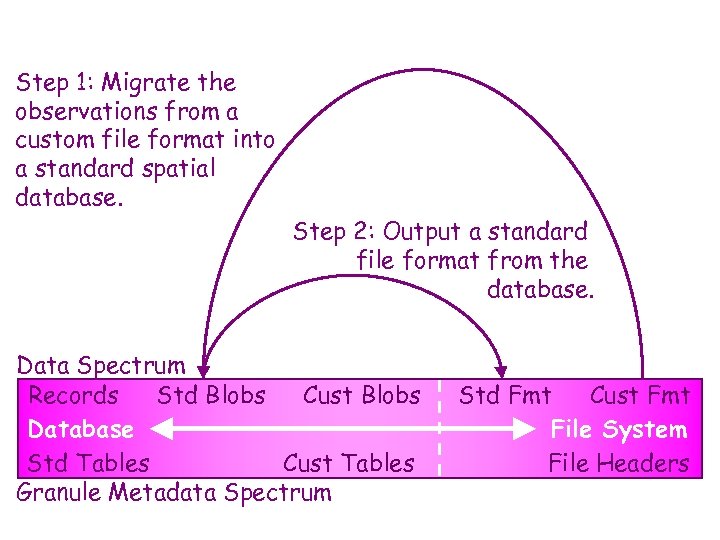 Step 1: Migrate the observations from a custom file format into a standard spatial database. Step 2: Output a standard file format from the database. Data Spectrum Records Std Blobs Cust Blobs Database Std Tables Cust Tables Granule Metadata Spectrum Std Fmt Cust Fmt File System File Headers
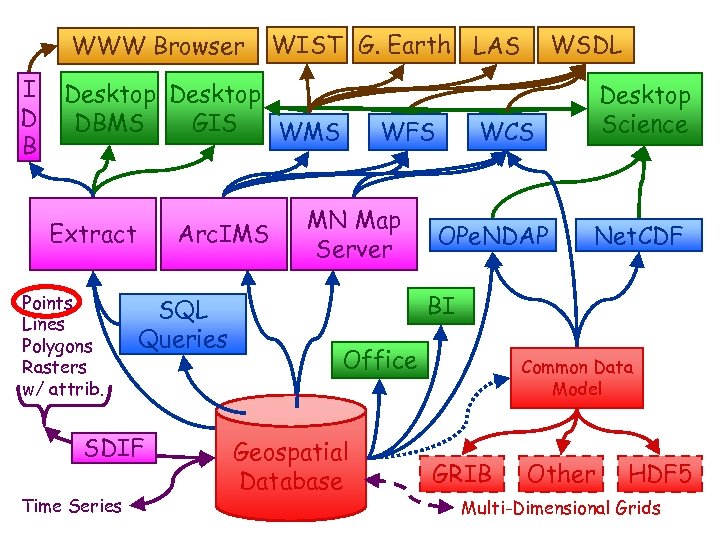 WWW Browser I D B WIST G. Earth LAS Desktop DBMS GIS WMS Arc. IMS Extract Points Lines Polygons Rasters w/ attrib. SQL Queries SDIF Time Series WFS MN Map Server WSDL Desktop Science WCS OPe. NDAP Net. CDF BI Office Geospatial Database Common Data Model GRIB Other HDF 5 Multi-Dimensional Grids
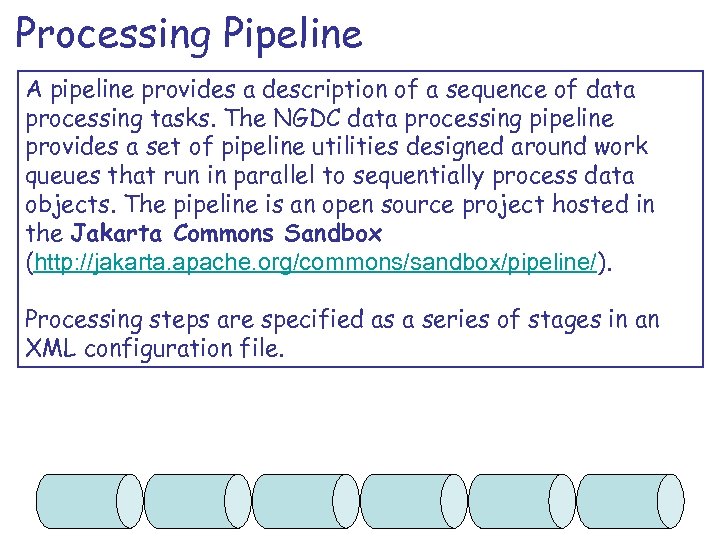 Processing Pipeline A pipeline provides a description of a sequence of data processing tasks. The NGDC data processing pipeline provides a set of pipeline utilities designed around work queues that run in parallel to sequentially process data objects. The pipeline is an open source project hosted in the Jakarta Commons Sandbox (http: //jakarta. apache. org/commons/sandbox/pipeline/). Processing steps are specified as a series of stages in an XML configuration file.
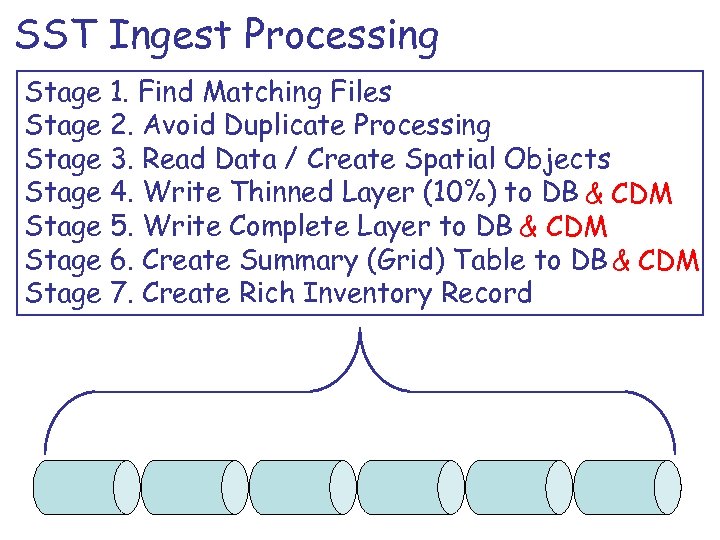 SST Ingest Processing Stage 1. Find Matching Files Stage 2. Avoid Duplicate Processing Stage 3. Read Data / Create Spatial Objects Stage 4. Write Thinned Layer (10%) to DB & CDM Stage 5. Write Complete Layer to DB & CDM Stage 6. Create Summary (Grid) Table to DB & CDM Stage 7. Create Rich Inventory Record
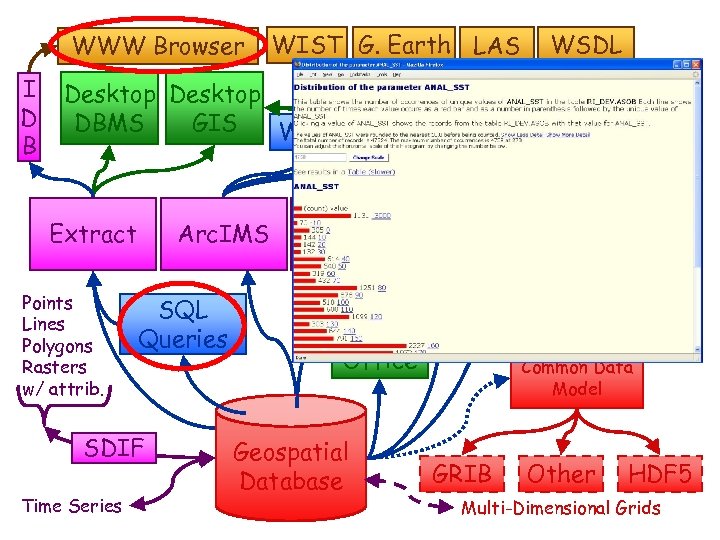 WWW Browser I D B WIST G. Earth LAS Desktop DBMS GIS WMS Arc. IMS Extract Points Lines Polygons Rasters w/ attrib. SQL Queries SDIF Time Series WFS MN Map Server WSDL Desktop Science WCS OPe. NDAP Net. CDF BI Office Geospatial Database Common Data Model GRIB Other HDF 5 Multi-Dimensional Grids
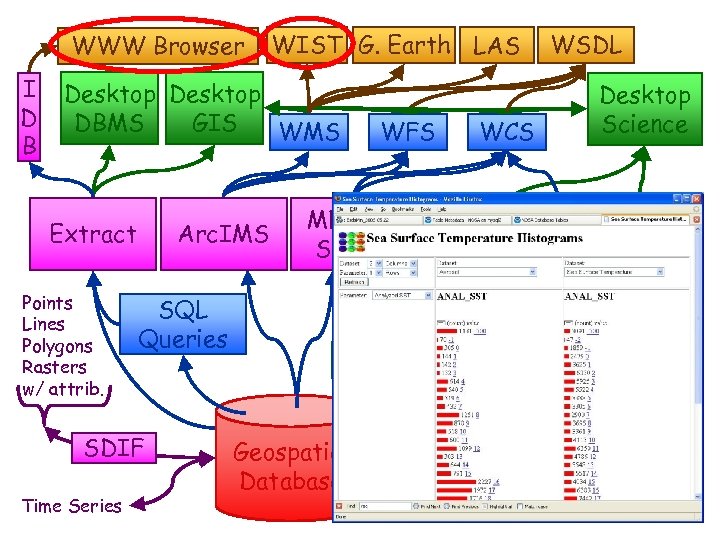 WWW Browser I D B WIST G. Earth LAS Desktop DBMS GIS WMS Arc. IMS Extract Points Lines Polygons Rasters w/ attrib. SQL Queries SDIF Time Series WFS MN Map Server WSDL Desktop Science WCS OPe. NDAP Net. CDF BI Office Geospatial Database Common Data Model GRIB Other HDF 5 Multi-Dimensional Grids
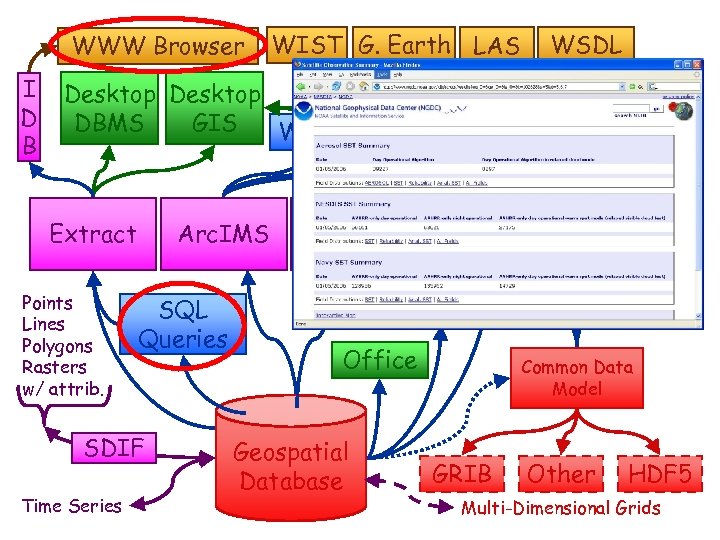 WWW Browser I D B WIST G. Earth LAS Desktop DBMS GIS WMS Arc. IMS Extract Points Lines Polygons Rasters w/ attrib. SQL Queries SDIF Time Series WFS MN Map Server WSDL Desktop Science WCS OPe. NDAP Net. CDF BI Office Geospatial Database Common Data Model GRIB Other HDF 5 Multi-Dimensional Grids
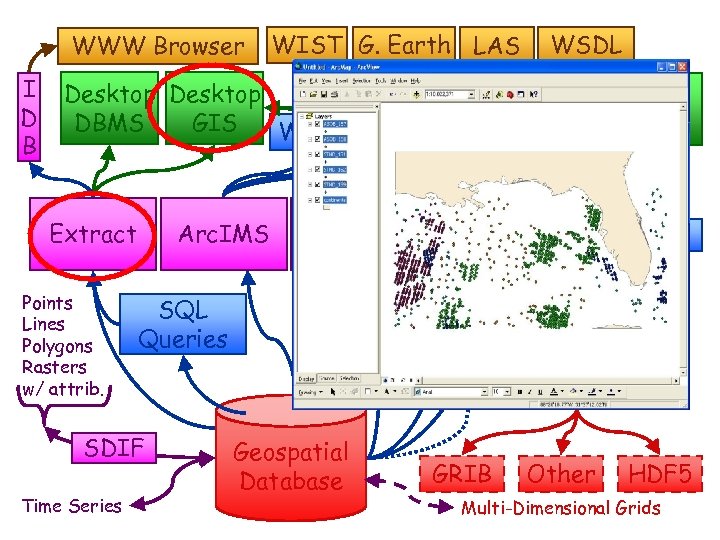 WWW Browser I D B WIST G. Earth LAS Desktop DBMS GIS WMS Arc. IMS Extract Points Lines Polygons Rasters w/ attrib. SQL Queries SDIF Time Series WFS MN Map Server WSDL Desktop Science WCS OPe. NDAP Net. CDF BI Office Geospatial Database Common Data Model GRIB Other HDF 5 Multi-Dimensional Grids
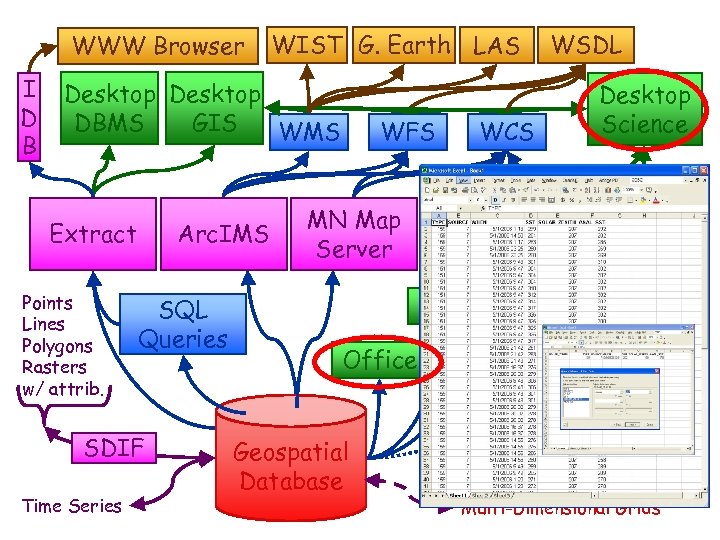 WWW Browser I D B WIST G. Earth LAS Desktop DBMS GIS WMS Arc. IMS Extract Points Lines Polygons Rasters w/ attrib. SQL Queries SDIF Time Series WFS MN Map Server WSDL Desktop Science WCS OPe. NDAP Net. CDF BI Office Geospatial Database Common Data Model GRIB Other HDF 5 Multi-Dimensional Grids
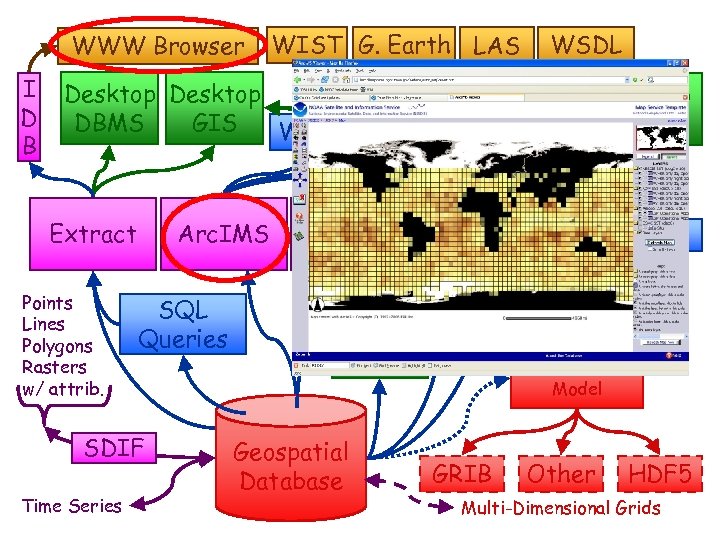 WWW Browser I D B WIST G. Earth LAS Desktop DBMS GIS WMS Arc. IMS Extract Points Lines Polygons Rasters w/ attrib. SQL Queries SDIF Time Series WFS MN Map Server WSDL Desktop Science WCS OPe. NDAP Net. CDF BI Office Geospatial Database Common Data Model GRIB Other HDF 5 Multi-Dimensional Grids
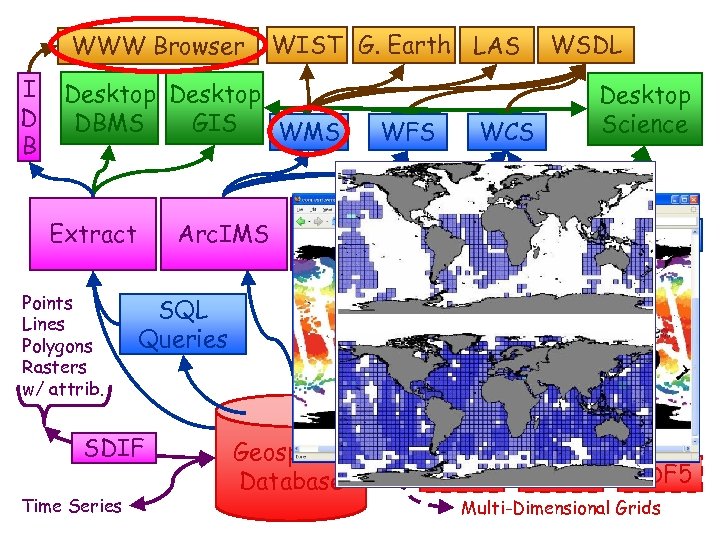 WWW Browser I D B WIST G. Earth LAS Desktop DBMS GIS WMS Arc. IMS Extract Points Lines Polygons Rasters w/ attrib. SQL Queries SDIF Time Series WFS MN Map Server WSDL Desktop Science WCS OPe. NDAP Net. CDF BI Office Geospatial Database Common Data Model GRIB Other HDF 5 Multi-Dimensional Grids
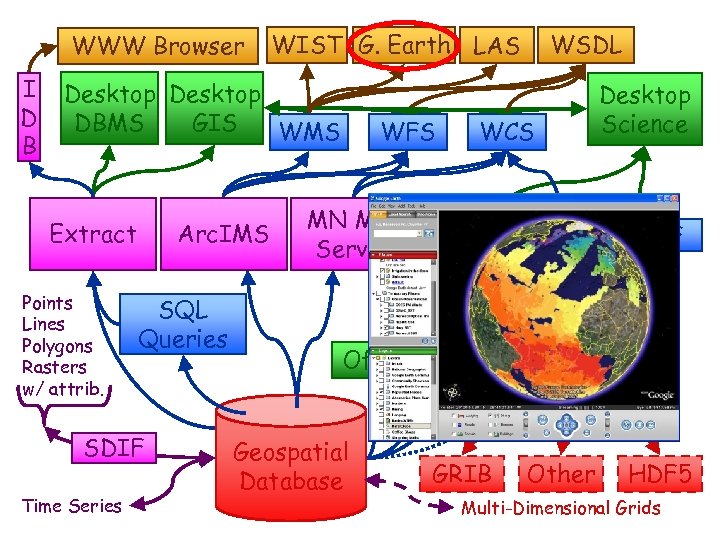 WWW Browser I D B WIST G. Earth LAS Desktop DBMS GIS WMS Arc. IMS Extract Points Lines Polygons Rasters w/ attrib. SQL Queries SDIF Time Series WFS MN Map Server WSDL Desktop Science WCS OPe. NDAP Net. CDF BI Office Geospatial Database Common Data Model GRIB Other HDF 5 Multi-Dimensional Grids
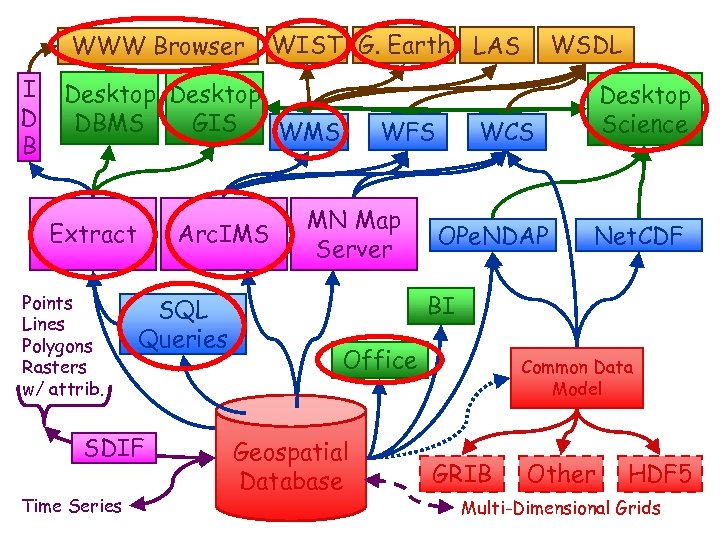 WWW Browser I D B WIST G. Earth LAS Desktop DBMS GIS WMS Arc. IMS Extract Points Lines Polygons Rasters w/ attrib. SQL Queries SDIF Time Series WFS MN Map Server WSDL Desktop Science WCS OPe. NDAP Net. CDF BI Office Geospatial Database Common Data Model GRIB Other HDF 5 Multi-Dimensional Grids
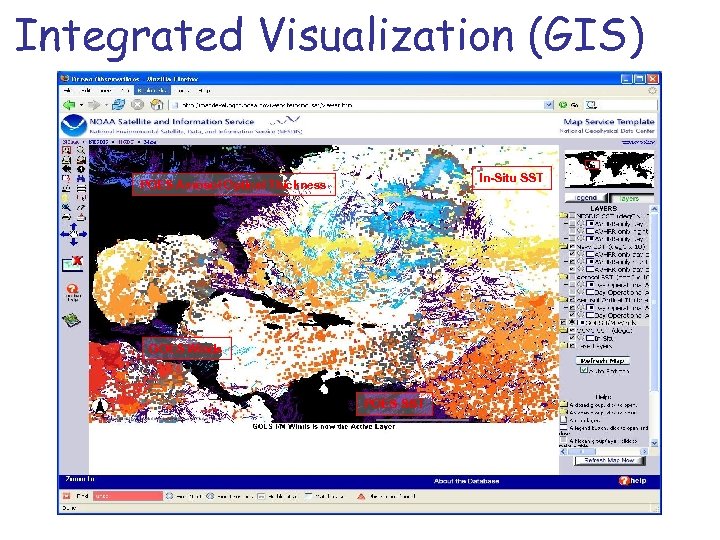 Integrated Visualization (GIS) In-Situ SST POES Aerosol Optical Thickness GOES Winds POES SST
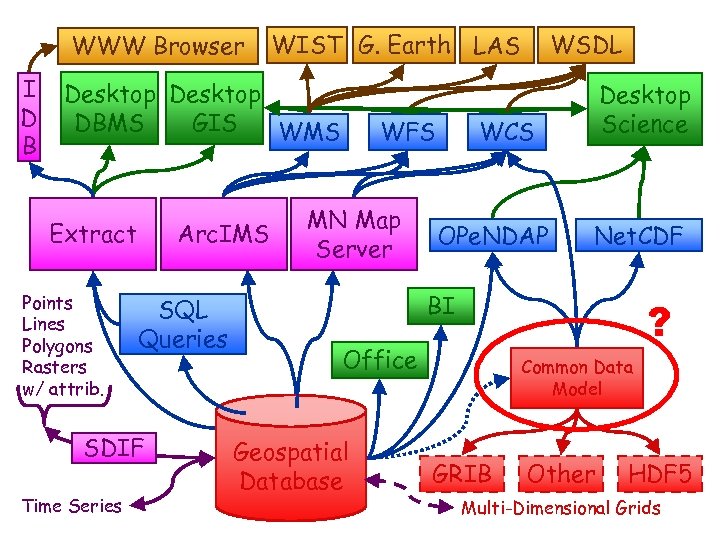 WWW Browser I D B WIST G. Earth LAS Desktop DBMS GIS WMS Arc. IMS Extract Points Lines Polygons Rasters w/ attrib. SQL Queries SDIF Time Series WFS MN Map Server WSDL Desktop Science WCS OPe. NDAP Net. CDF BI ? Office Geospatial Database Common Data Model GRIB Other HDF 5 Multi-Dimensional Grids
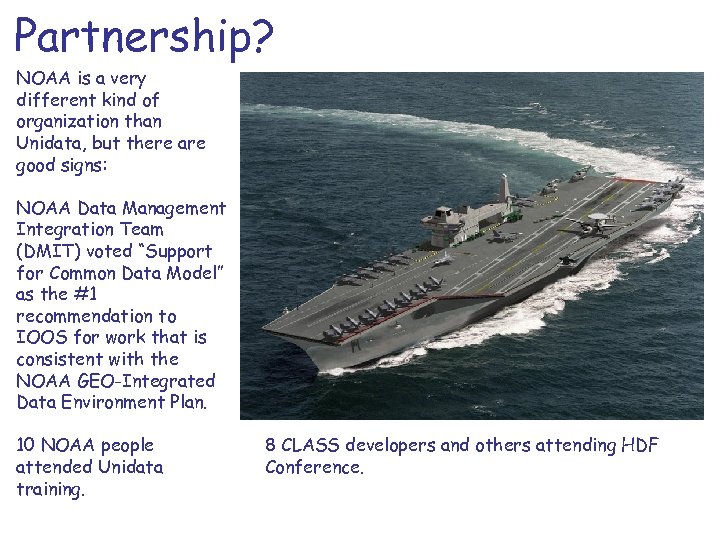 Partnership? NOAA is a very different kind of organization than Unidata, but there are good signs: NOAA Data Management Integration Team (DMIT) voted “Support for Common Data Model” as the #1 recommendation to IOOS for work that is consistent with the NOAA GEO-Integrated Data Environment Plan. 10 NOAA people attended Unidata training. 8 CLASS developers and others attending HDF Conference.
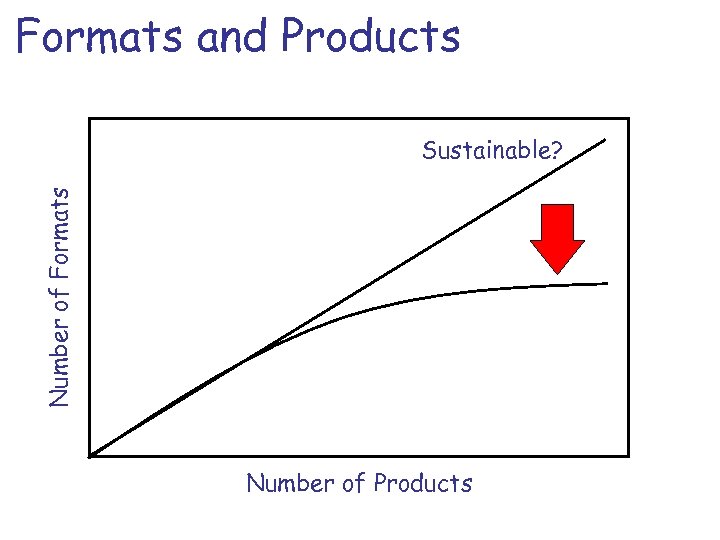 Formats and Products Number of Formats Sustainable? Number of Products
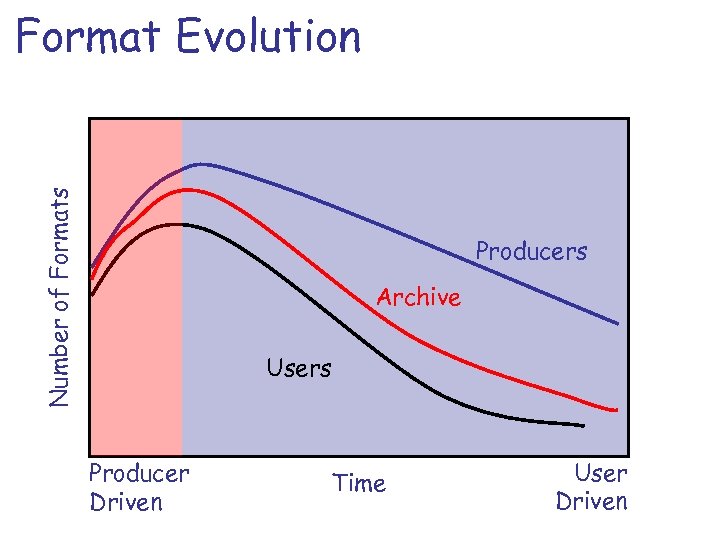 Number of Formats Format Evolution Producers Archive Users Producer Driven Time User Driven
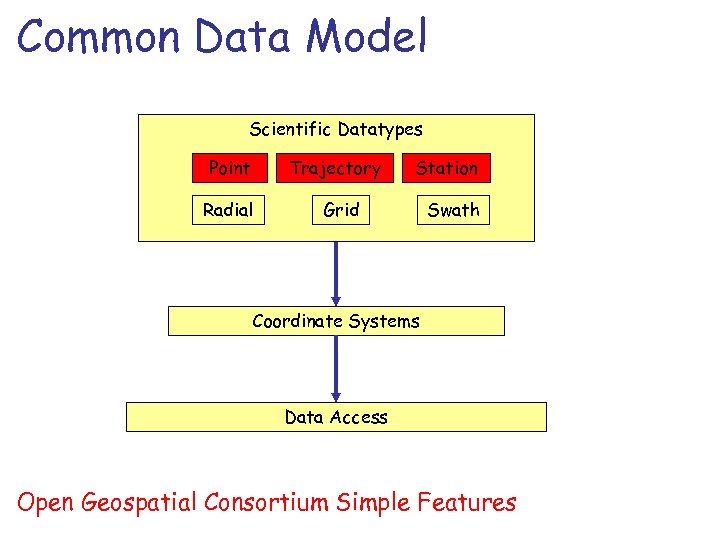 Common Data Model Scientific Datatypes Point Trajectory Radial Station Grid Swath Coordinate Systems Data Access Open Geospatial Consortium Simple Features
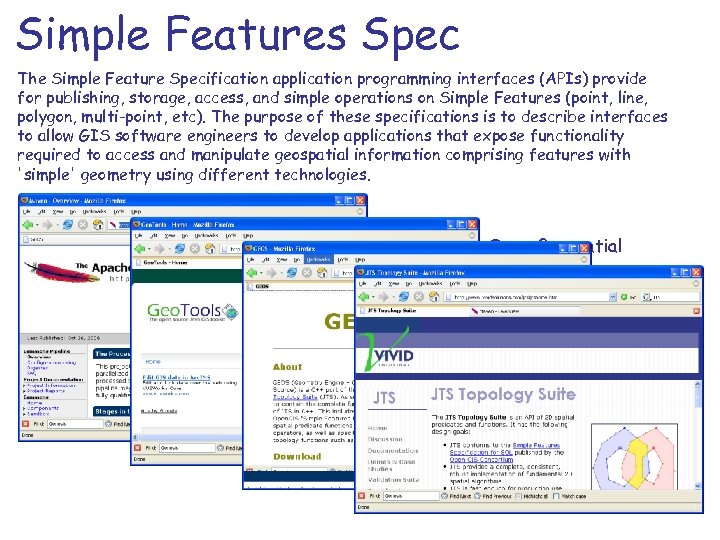 Simple Features Spec The Simple Feature Specification application programming interfaces (APIs) provide for publishing, storage, access, and simple operations on Simple Features (point, line, polygon, multi-point, etc). The purpose of these specifications is to describe interfaces to allow GIS software engineers to develop applications that expose functionality required to access and manipulate geospatial information comprising features with 'simple' geometry using different technologies. Wayland, Mass. , June 5, 2006 - The membership of the Open Geospatial Consortium, Inc. (OGC®) has approved and released the Open. GIS® Geography Markup Language (GML™) Simple Features Profile Specification. This standard defines a simple profile of GML version 3. 1. 1.
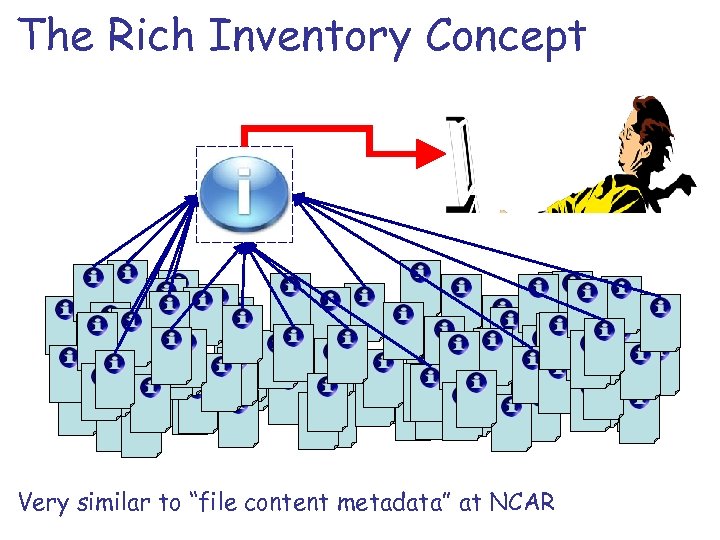 The Rich Inventory Concept Very similar to “file content metadata” at NCAR
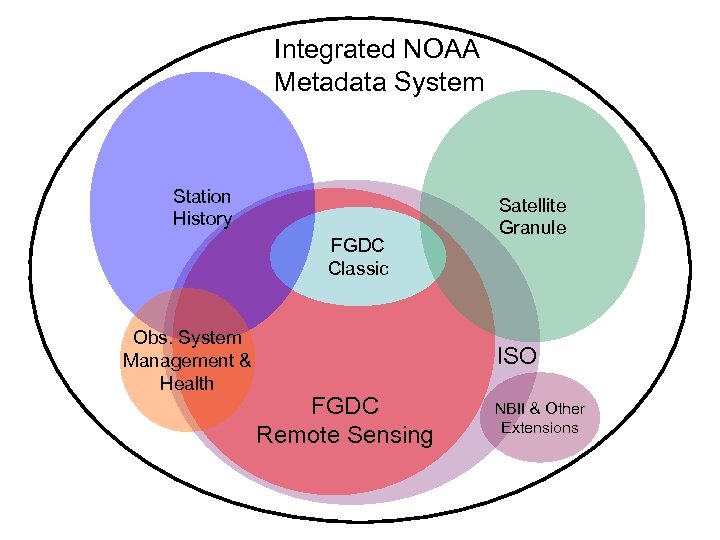 Integrated NOAA Metadata System Station History FGDC Classic Obs. System Management & Health Satellite Granule ISO FGDC Remote Sensing NBII & Other Extensions
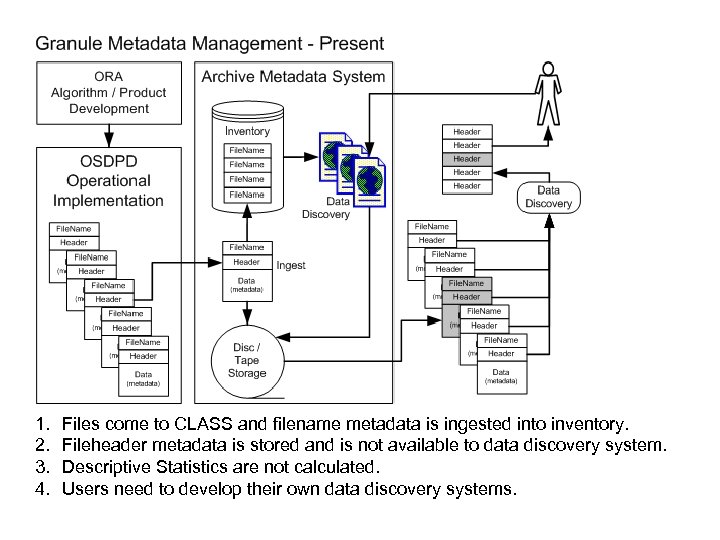 1. 2. 3. 4. Files come to CLASS and filename metadata is ingested into inventory. Fileheader metadata is stored and is not available to data discovery system. Descriptive Statistics are not calculated. Users need to develop their own data discovery systems.
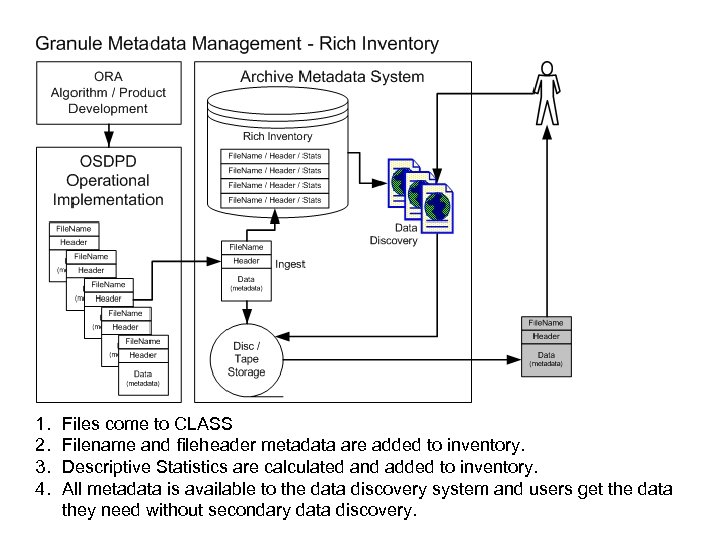 1. 2. 3. 4. Files come to CLASS Filename and fileheader metadata are added to inventory. Descriptive Statistics are calculated and added to inventory. All metadata is available to the data discovery system and users get the data they need without secondary data discovery.
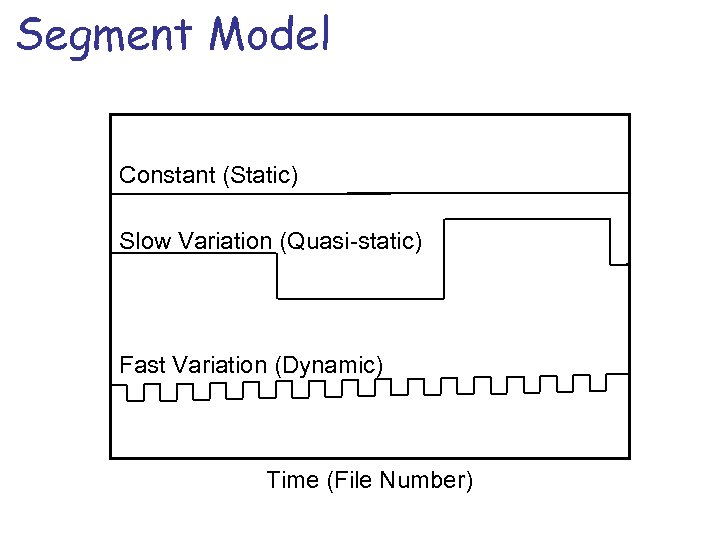 Segment Model Constant (Static) Slow Variation (Quasi-static) Fast Variation (Dynamic) Time (File Number)
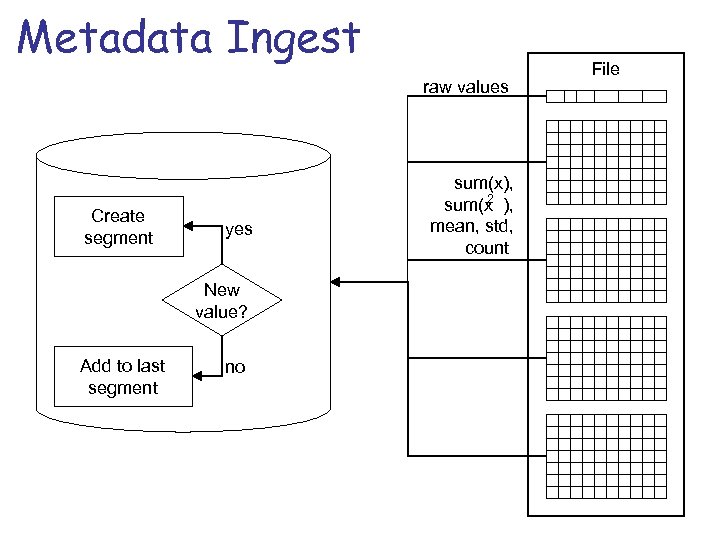 Metadata Ingest raw values Create segment yes New value? Add to last segment no sum(x), 2 sum(x ), mean, std, count File
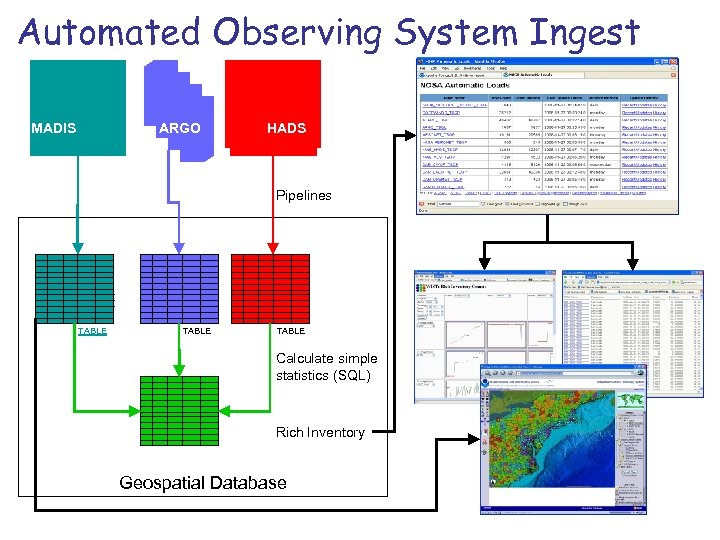 Automated Observing System Ingest MADIS ARGO HADS Pipelines TABLE Calculate simple statistics (SQL) Rich Inventory Geospatial Database
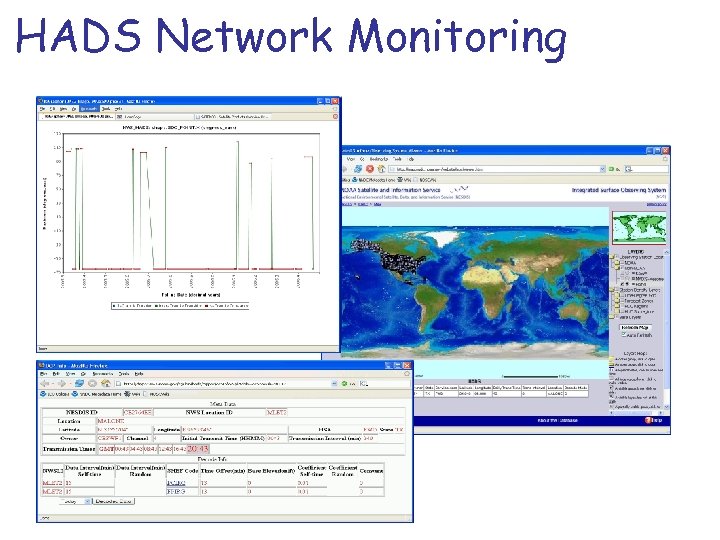 HADS Network Monitoring
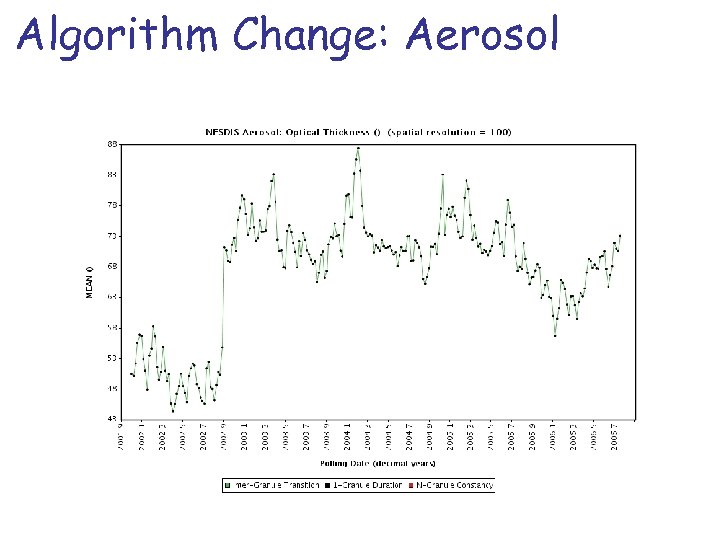 Algorithm Change: Aerosol
 Algorithm Change: Aerosol Hi Ted, Dr. Ignatov and I did some digging and this is the result. Sasha's conclusion is the most pertinent info we could find from logs or email archives. Here it is: Hi John, i checked my 2002 email archives, and here is what i found out: it appears that the current 3 rd generation aerosol algorithm was implemented into operations around Oct-Nov 2002 time frame. cannot say more precisely, as all email correspondence i am looking at, talks about this indirectly. (maybe it's what Steve refers to as the Phase II aerosol-SST algorithm. ) At the same time, Steve had implemented quite a few other changes fixing data bugs and formats: view angle problem in AEROBS, increased digitization in all channel's reflectances and AODs, etc. The jump in AOD 1 is deemed due to introducing 3 rd generation algorithm, which replaced the 2 nd generation. The new numbers (~0. 08) look more realistic than the previous ones (~0. 05 or so). The changes seen in the data is close to the expected effect of this change. the 3 rd gen alg takes into account the exact spectral response of N 16 AVHRR, whereas the 2 nd gen was using a generic set of LUTs for all AVHRRs ("one size fits all"). hopefully this settles the issue. . cheers, sasha
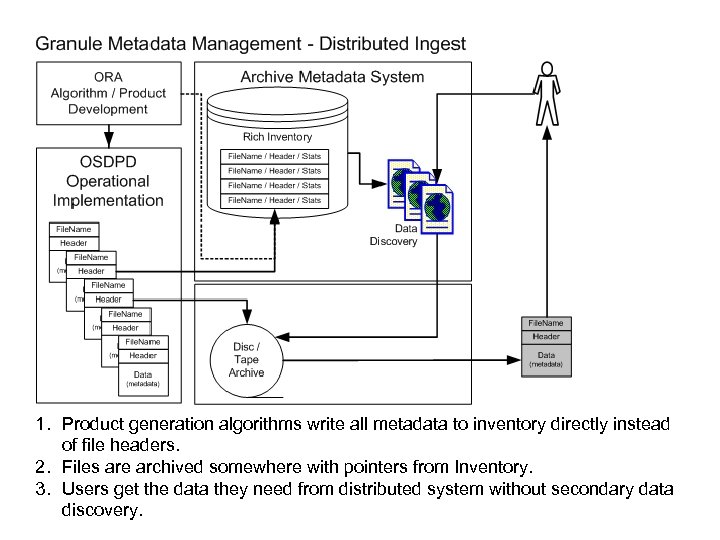 1. Product generation algorithms write all metadata to inventory directly instead of file headers. 2. Files are archived somewhere with pointers from Inventory. 3. Users get the data they need from distributed system without secondary data discovery.
 ted. habermann@noaa. gov