


 Скачать презентацию Ancient Roman Architecture Lecture 7 Period of
L7.Ancient_Roman_Architecture.pptx
- Количество слайдов: 25
 Ancient Roman Architecture Lecture 7
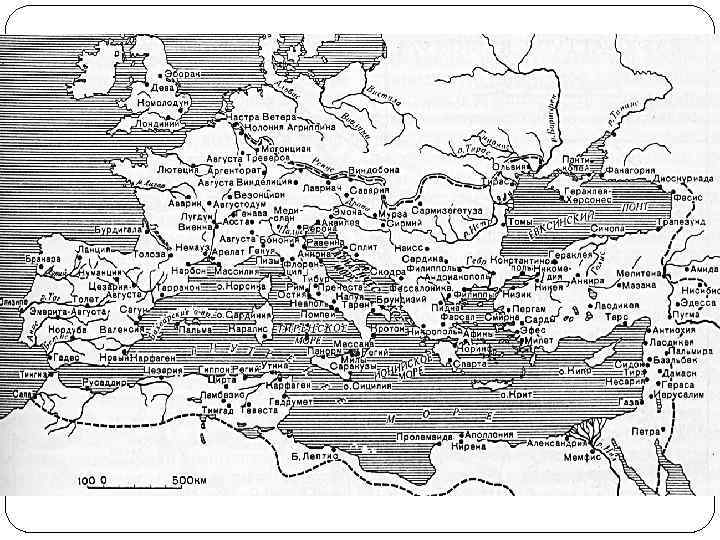
 Period of ancient kings (753— 510 BC) and Early Republic (V — IV BC) Influence of Ethruscan architecture Etruscan temple (VI BC): rectangular planning with overlapping and deep portico, which occupied half of building. Wooden columns and entablature were decorated by coloured terracotta reliefs Temple of Junona on the Falery, temple of Jupiter of Capitoly (509), Tullianum (with circle plan) Dwellings: round planning houses with high roof (Domus of Romul)
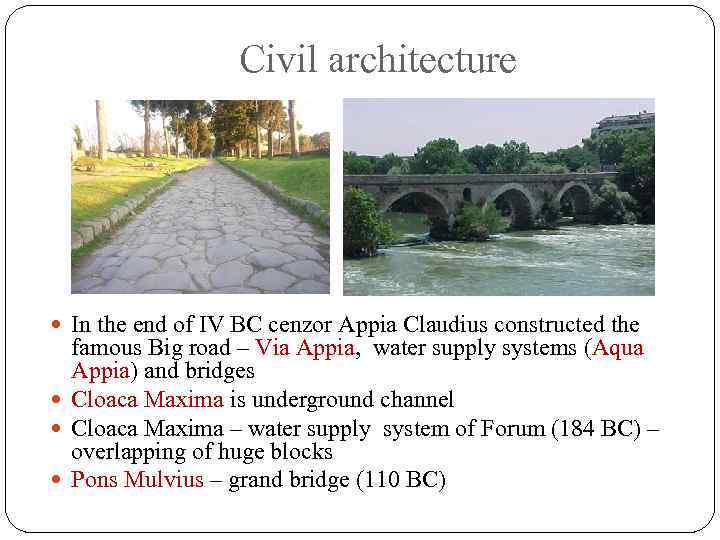 Civil architecture In the end of IV BC cenzor Appia Claudius constructed the famous Big road – Via Appia, water supply systems (Aqua Appia) and bridges Cloaca Maxima is underground channel Cloaca Maxima – water supply system of Forum (184 BC) – overlapping of huge blocks Pons Mulvius – grand bridge (110 BC)
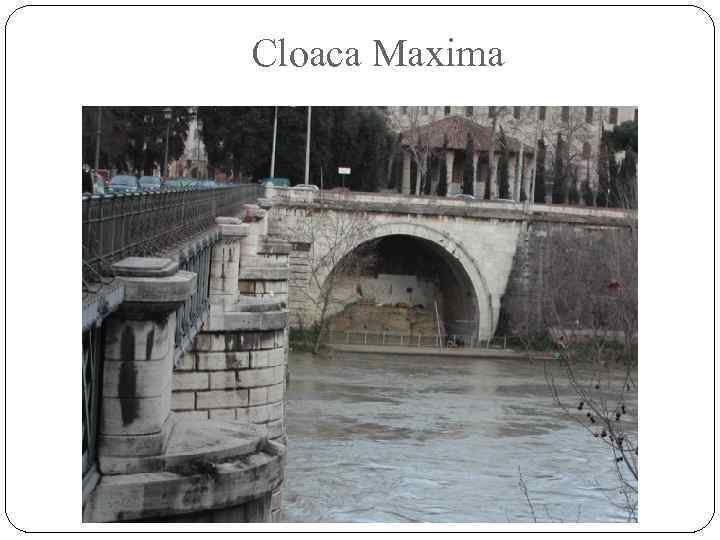 Cloaca Maxima
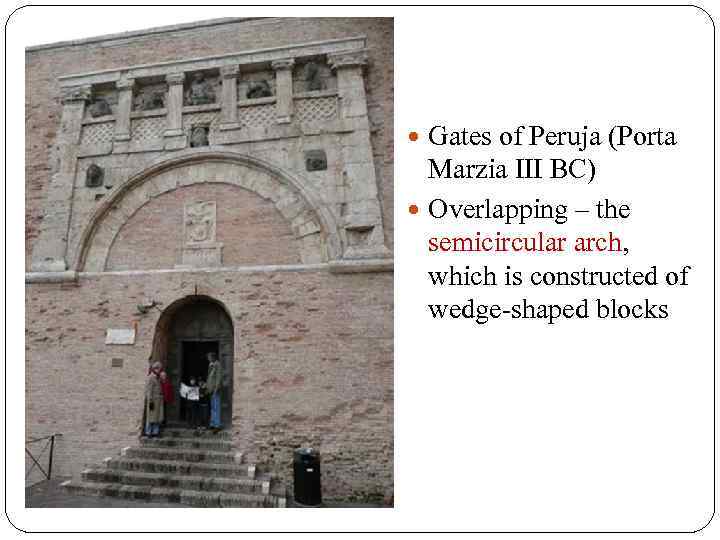 Gates of Peruja (Porta Marzia III BC) Overlapping – the semicircular arch, which is constructed of wedge-shaped blocks
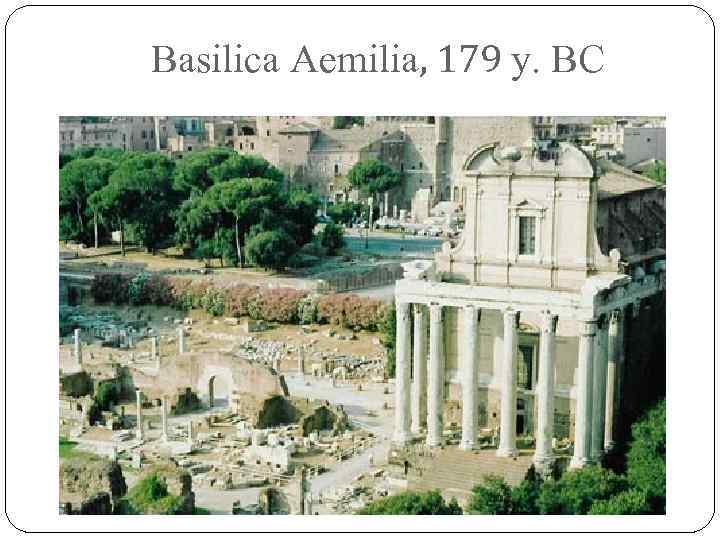 Basilica Aemilia, 179 y. BC
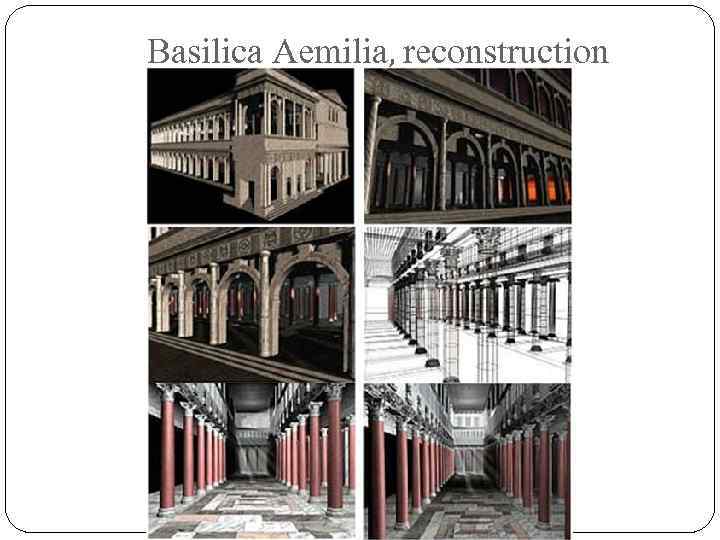 Basilica Aemilia, reconstruction
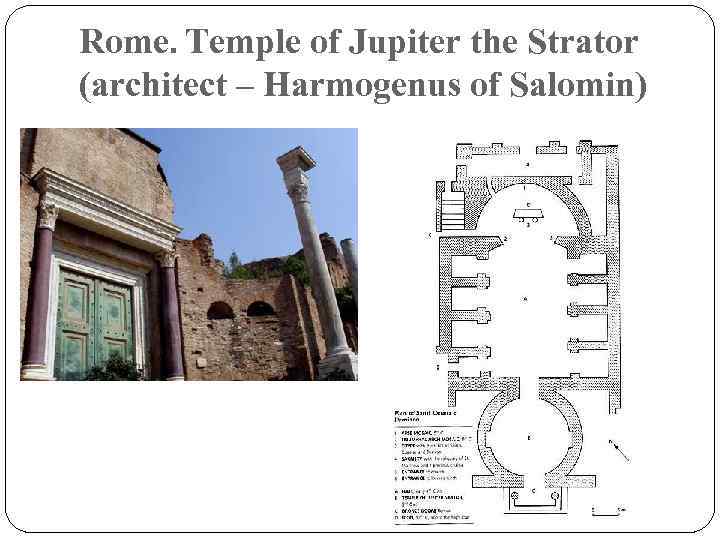 Rome. Temple of Jupiter the Strator (architect – Harmogenus of Salomin)
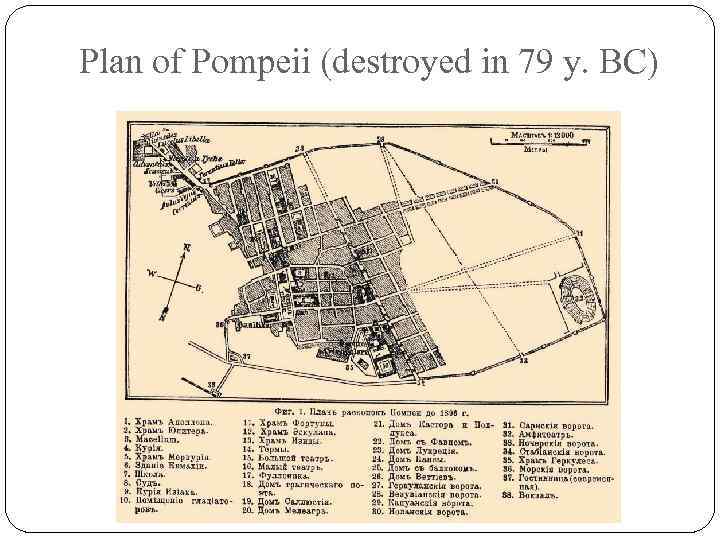 Plan of Pompeii (destroyed in 79 y. BC)
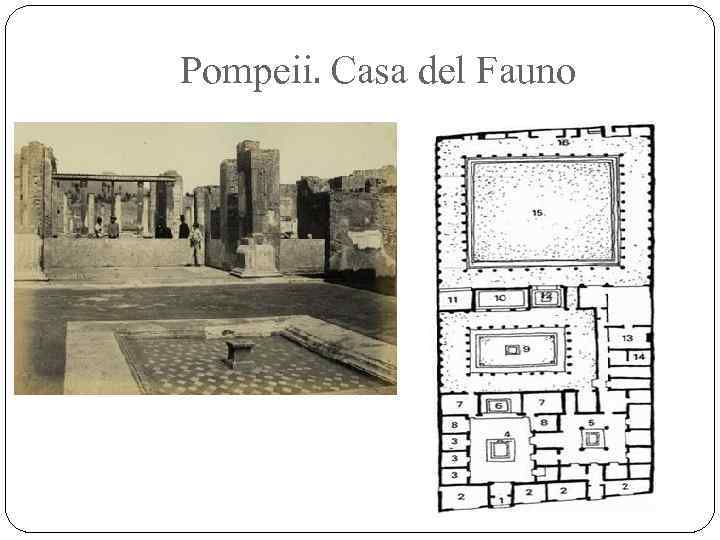 Pompeii. Casa del Fauno
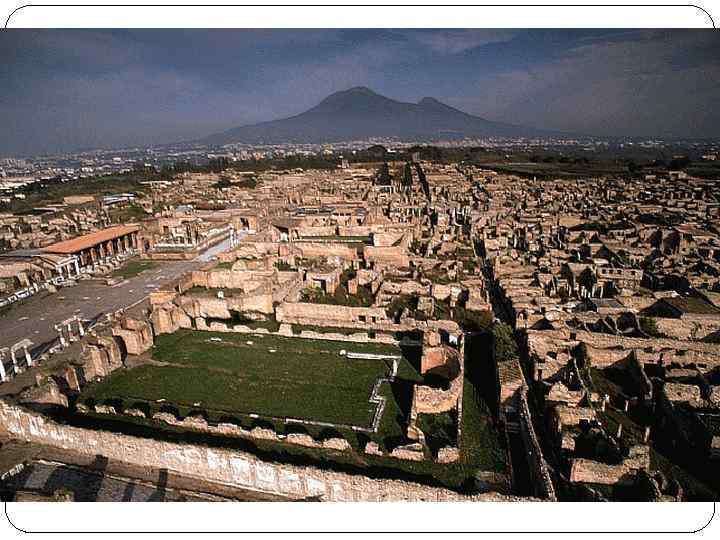
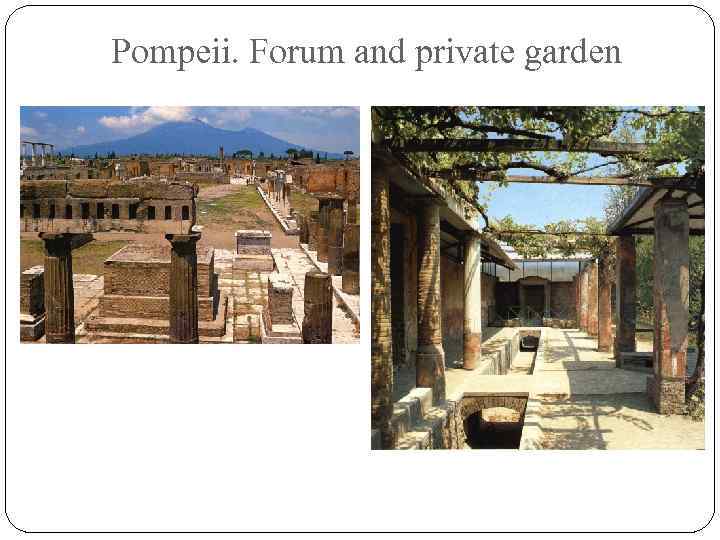 Pompeii. Forum and private garden
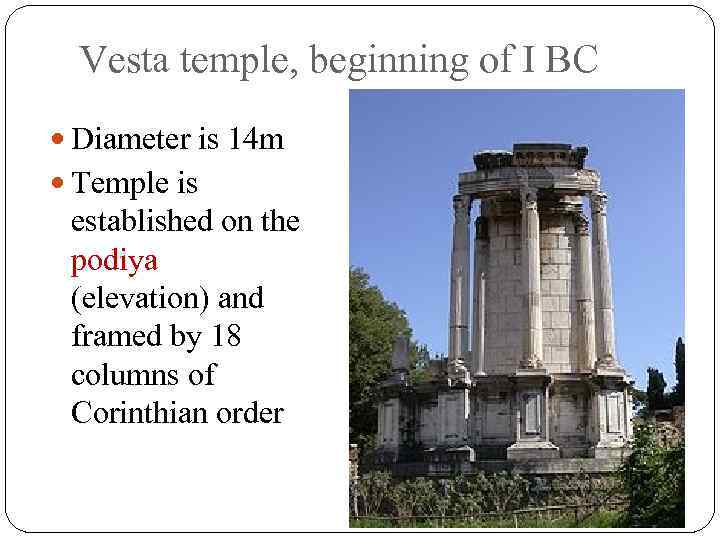 Vesta temple, beginning of I BC Diameter is 14 m Temple is established on the podiya (elevation) and framed by 18 columns of Corinthian order
 Architectural tractate Vitruvius was a 1 st century B. C. Roman who wrote about his field, architecture, in the 10 books of De architectura, which was dedicated to the first emperor, Augustus
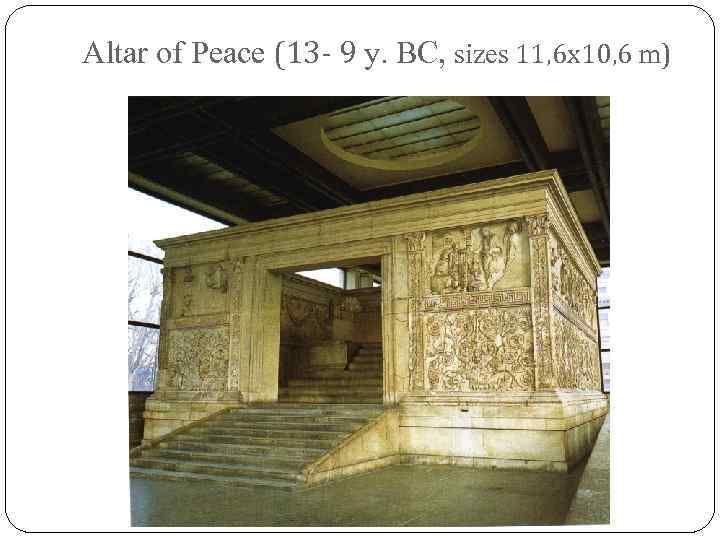 Altar of Peace (13 - 9 y. BC, sizes 11, 6 x 10, 6 m)
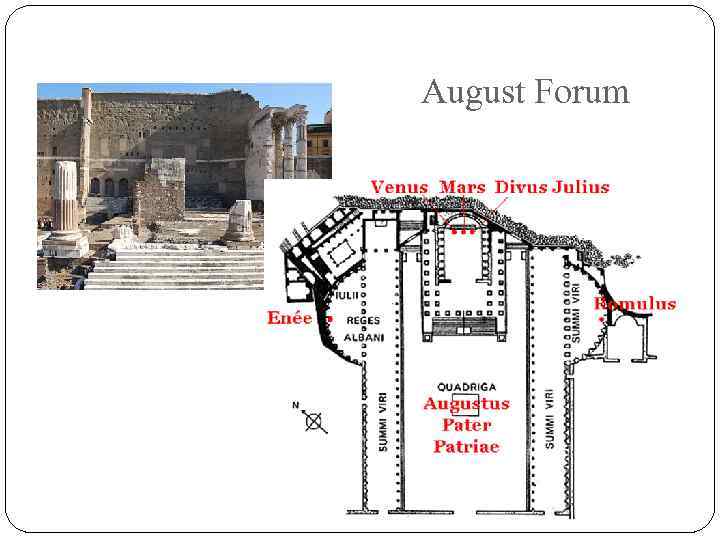 August Forum
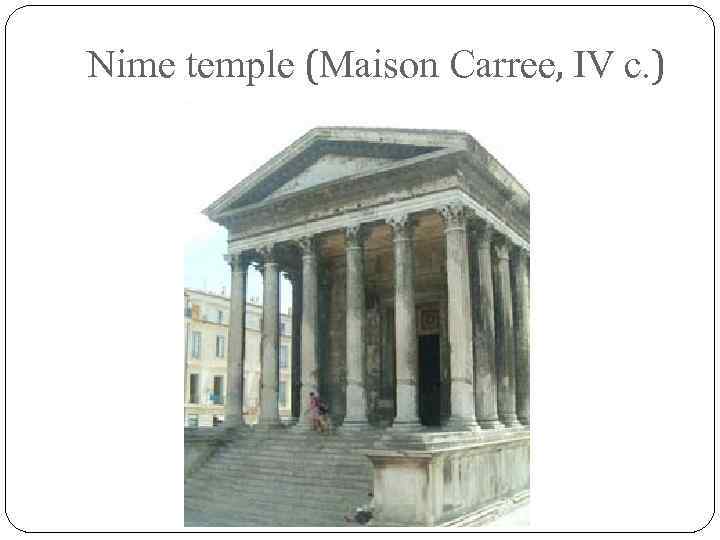 Nime temple (Maison Carree, IV c. )
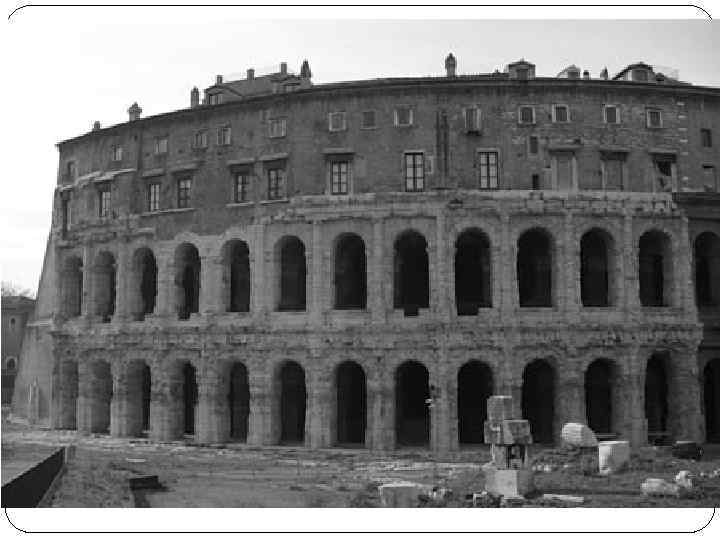
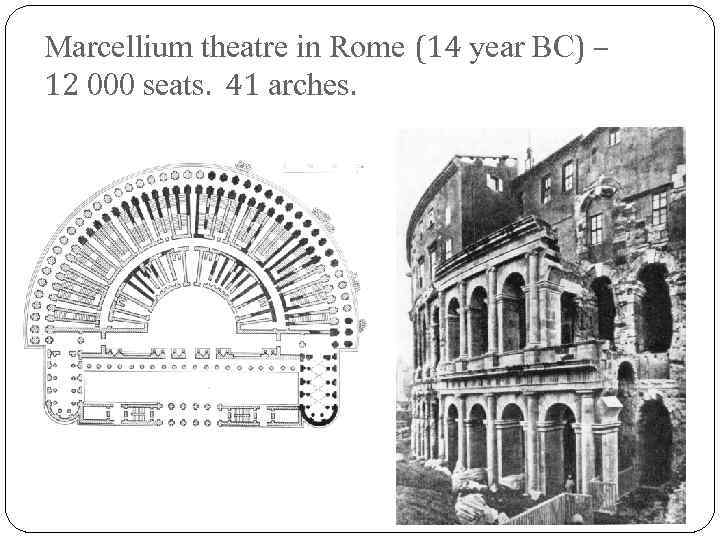 Marcellium theatre in Rome (14 year BC) – 12 000 seats. 41 arches.
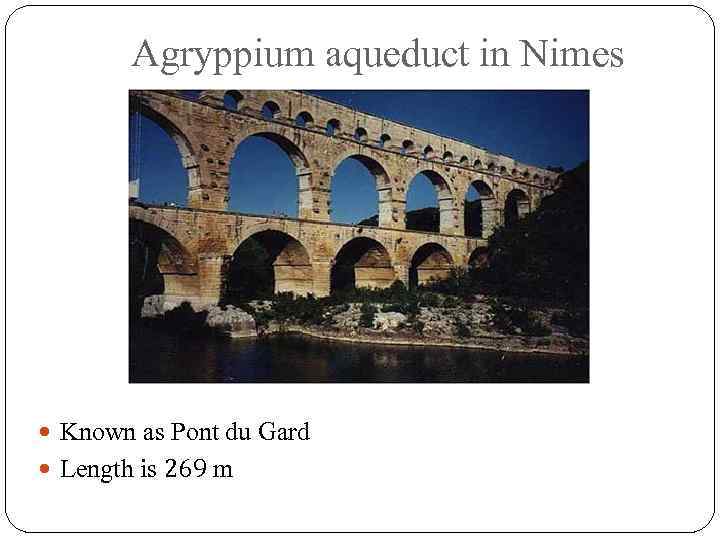 Agryppium aqueduct in Nimes Known as Pont du Gard Length is 269 m
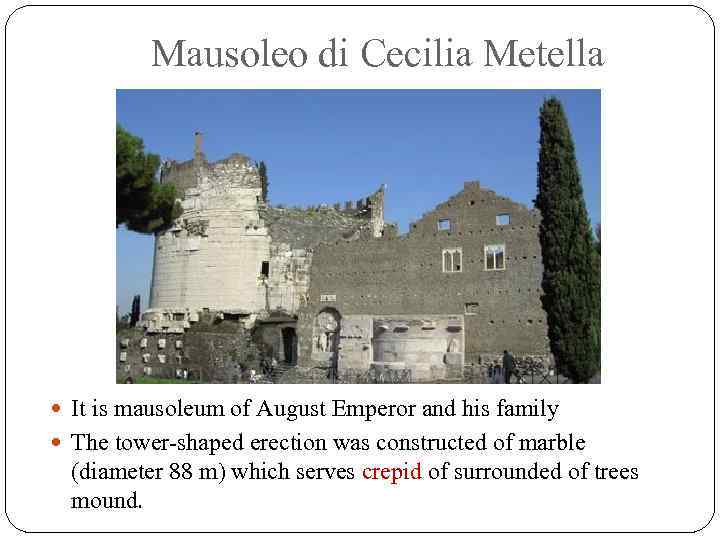 Mausoleo di Cecilia Metella It is mausoleum of August Emperor and his family The tower-shaped erection was constructed of marble (diameter 88 m) which serves crepid of surrounded of trees mound.
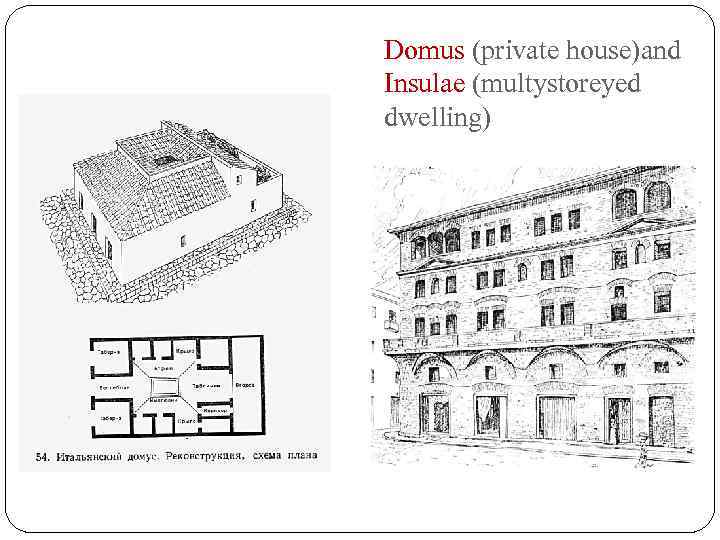 Domus (private house)and Insulae (multystoreyed dwelling)
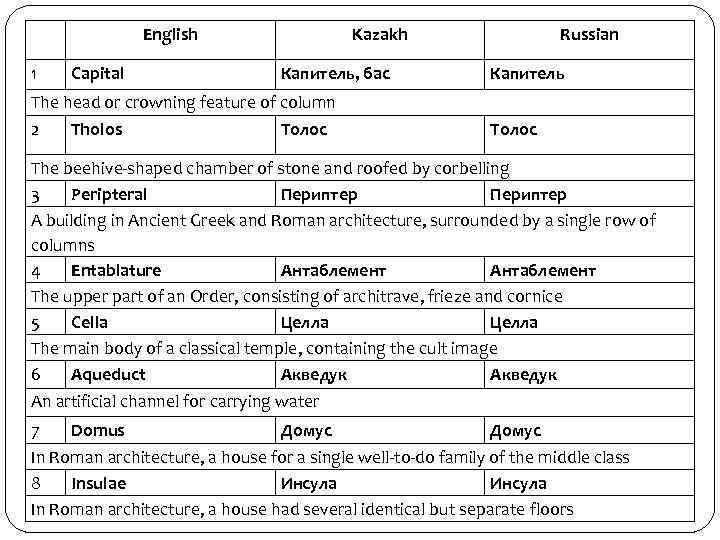 English 1 Capital Kazakh Капитель, бас The head or crowning feature of column 2 Tholos Толос Russian Капитель Толос The beehive-shaped chamber of stone and roofed by corbelling 3 Peripteral Периптер A building in Ancient Greek and Roman architecture, surrounded by a single row of columns 4 Entablature Антаблемент The upper part of an Order, consisting of architrave, frieze and cornice 5 Cella Целла The main body of a classical temple, containing the cult image 6 Aqueduct Акведук An artificial channel for carrying water 7 Domus Домус In Roman architecture, a house for a single well-to-do family of the middle class 8 Insulae Инсула In Roman architecture, a house had several identical but separate floors