


 Скачать презентацию Ancient Greek Sculpture Content 1 Introduction 2
Ancient Greek Sculpture (Arakelyan 4-A).pptx
- Количество слайдов: 19
 Ancient Greek Sculpture
 Content: 1. Introduction 2. Periods of ancient Greek sculpture 2. 1. Archaic period 2. 2. Classical period 2. 3. Hellenistic period 3. Materials 4. Techniques of creating 5. Summary
 Greeks always supposed that only in a perfect body can live a perfect soul. Therefore harmony of a body, external perfection are basis of the ideal person.
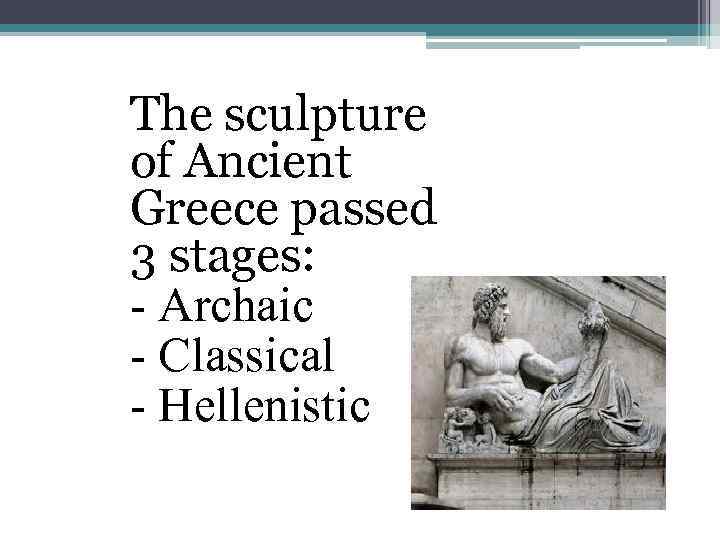 The sculpture of Ancient Greece passed 3 stages: - Archaic - Classical - Hellenistic
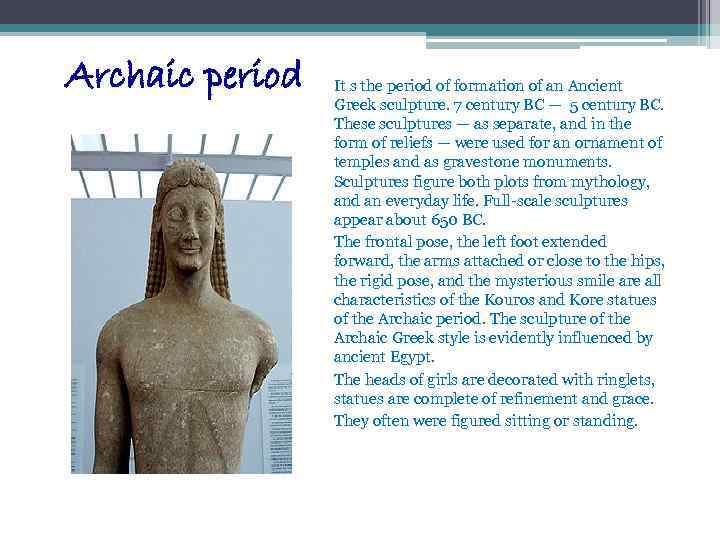 Archaic period It s the period of formation of an Ancient Greek sculpture. 7 century BC — 5 century BC. These sculptures — as separate, and in the form of reliefs — were used for an ornament of temples and as gravestone monuments. Sculptures figure both plots from mythology, and an everyday life. Full-scale sculptures appear about 650 BC. The frontal pose, the left foot extended forward, the arms attached or close to the hips, the rigid pose, and the mysterious smile are all characteristics of the Kouros and Kore statues of the Archaic period. The sculpture of the Archaic Greek style is evidently influenced by ancient Egypt. The heads of girls are decorated with ringlets, statues are complete of refinement and grace. They often were figured sitting or standing.
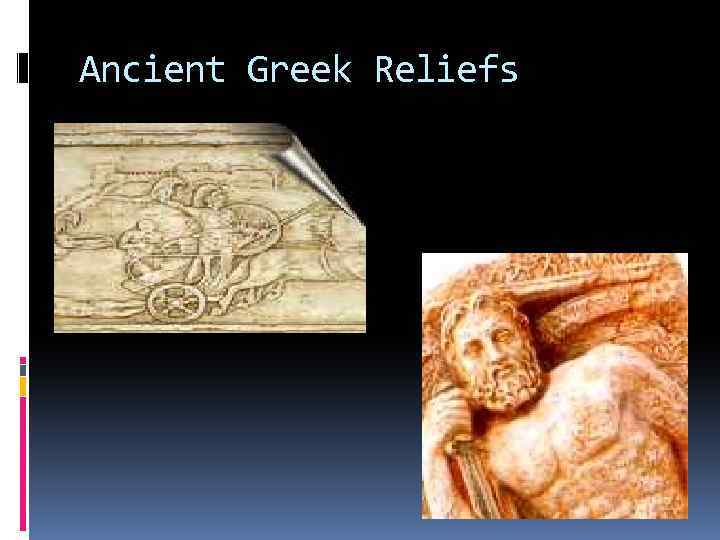 Ancient Greek Reliefs
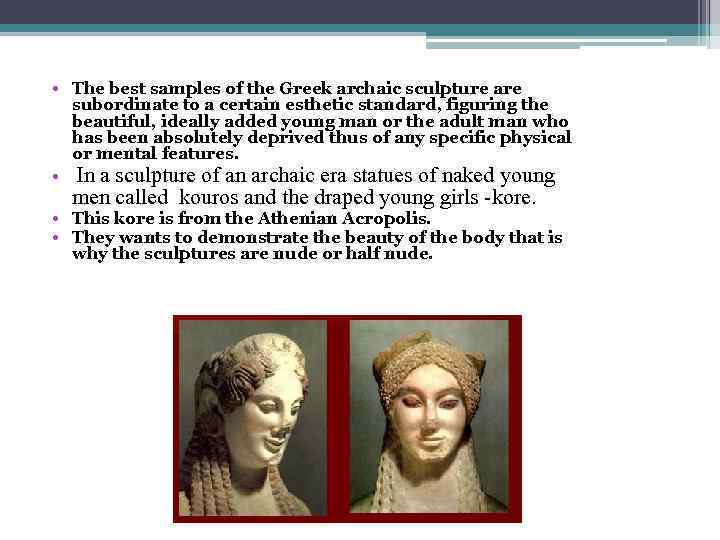 • The best samples of the Greek archaic sculpture are subordinate to a certain esthetic standard, figuring the beautiful, ideally added young man or the adult man who has been absolutely deprived thus of any specific physical or mental features. • In a sculpture of an archaic era statues of naked young men called kouros and the draped young girls -kore. • This kore is from the Athenian Acropolis. • They wants to demonstrate the beauty of the body that is why the sculptures are nude or half nude.
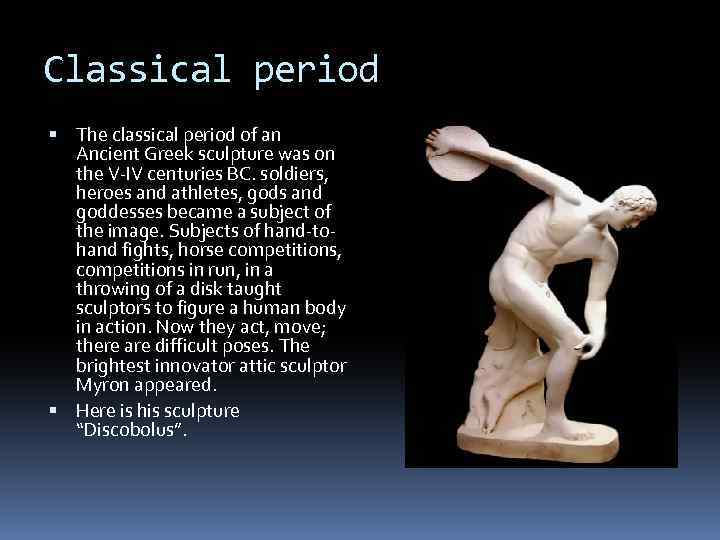 Classical period The classical period of an Ancient Greek sculpture was on the V-IV centuries BC. soldiers, heroes and athletes, gods and goddesses became a subject of the image. Subjects of hand-tohand fights, horse competitions, competitions in run, in a throwing of a disk taught sculptors to figure a human body in action. Now they act, move; there are difficult poses. The brightest innovator attic sculptor Myron appeared. Here is his sculpture “Discobolus”.
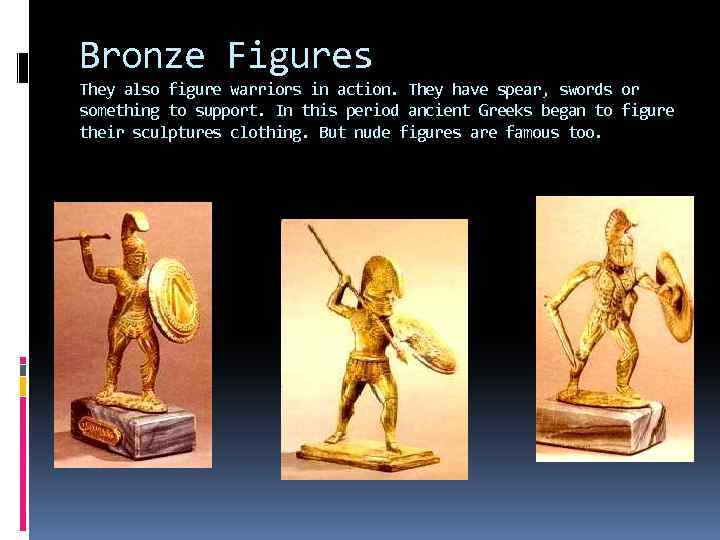 Bronze Figures They also figure warriors in action. They have spear, swords or something to support. In this period ancient Greeks began to figure their sculptures clothing. But nude figures are famous too.
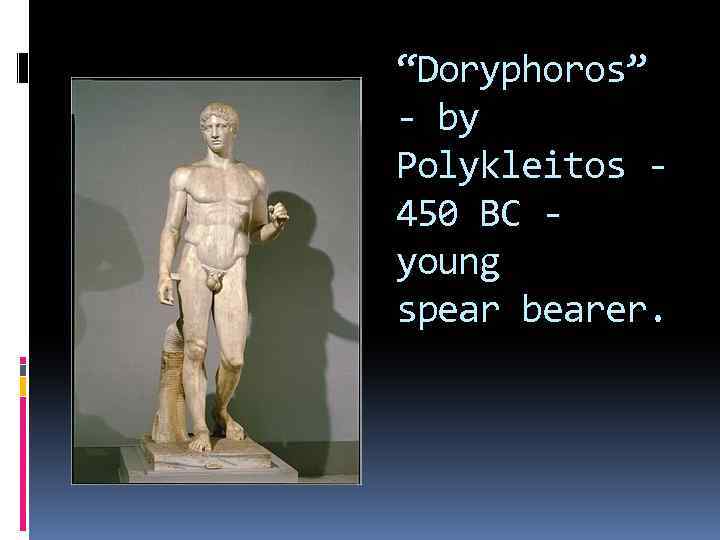 “Doryphoros” - by Polykleitos 450 BC young spear bearer.
 “The boy taking out a splinter”
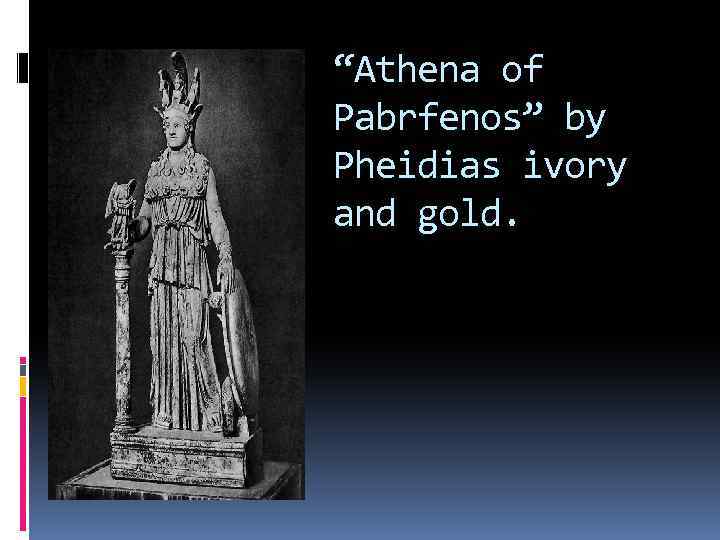 “Athena of Pabrfenos” by Pheidias ivory and gold.
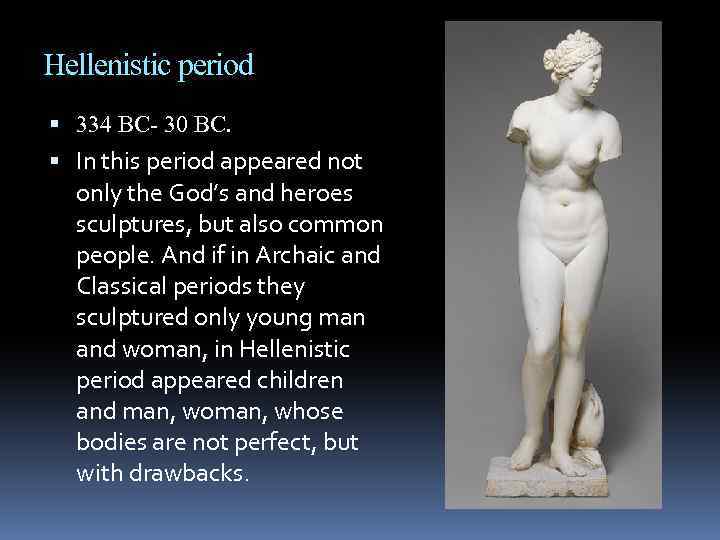 Hellenistic period 334 BC- 30 BC. In this period appeared not only the God’s and heroes sculptures, but also common people. And if in Archaic and Classical periods they sculptured only young man and woman, in Hellenistic period appeared children and man, woman, whose bodies are not perfect, but with drawbacks.
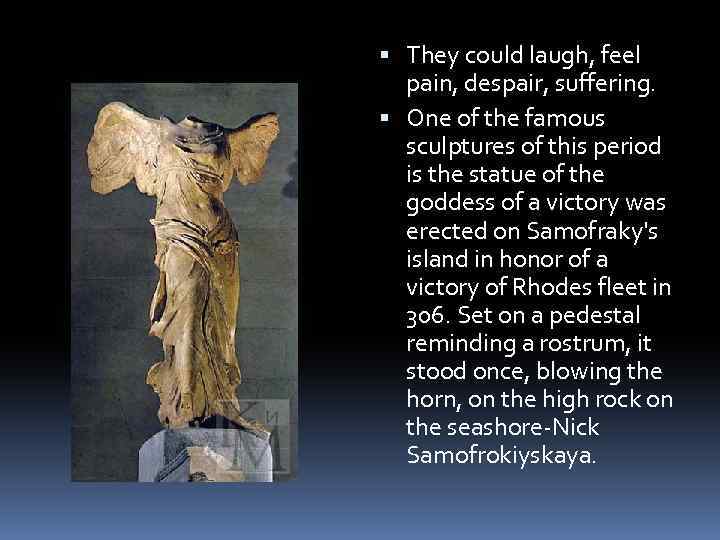 They could laugh, feel pain, despair, suffering. One of the famous sculptures of this period is the statue of the goddess of a victory was erected on Samofraky's island in honor of a victory of Rhodes fleet in 306. Set on a pedestal reminding a rostrum, it stood once, blowing the horn, on the high rock on the seashore-Nick Samofrokiyskaya.
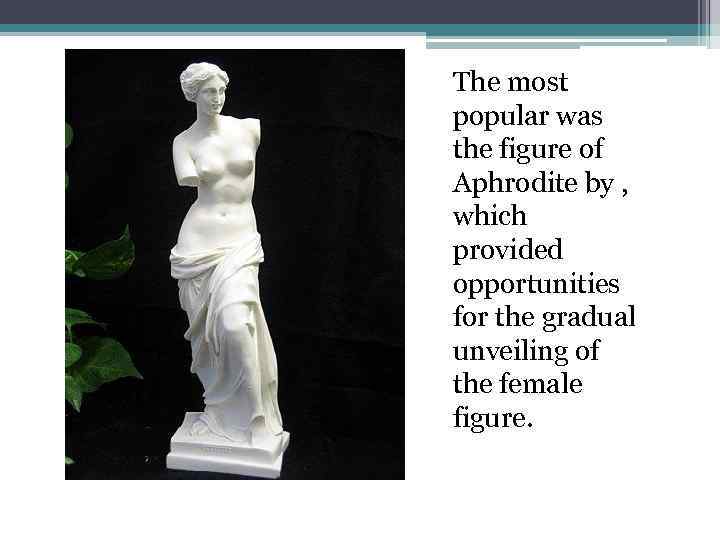 The most popular was the figure of Aphrodite by , which provided opportunities for the gradual unveiling of the female figure.
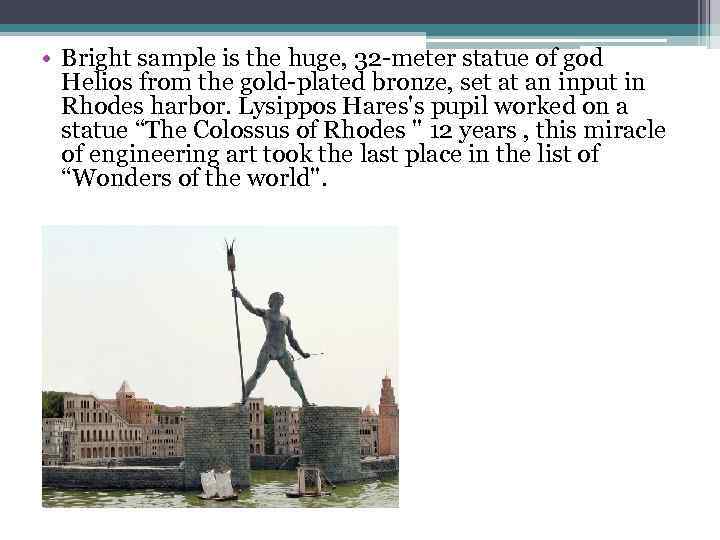 • Bright sample is the huge, 32 -meter statue of god Helios from the gold-plated bronze, set at an input in Rhodes harbor. Lysippos Hares's pupil worked on a statue “The Colossus of Rhodes " 12 years , this miracle of engineering art took the last place in the list of “Wonders of the world".
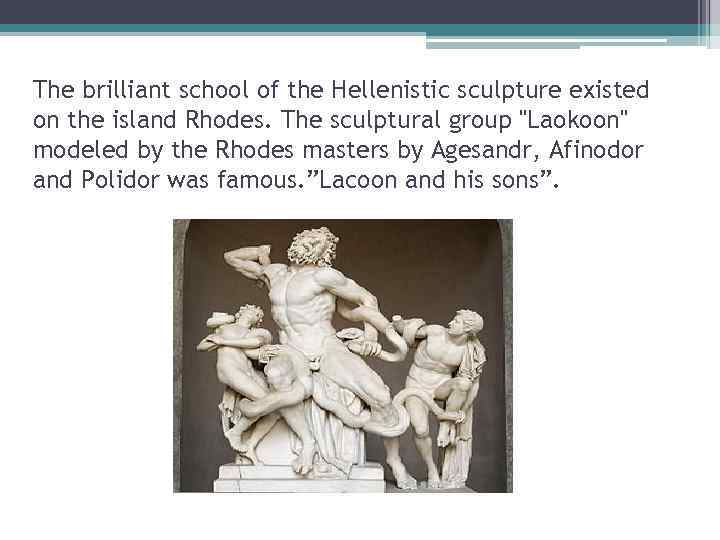 The brilliant school of the Hellenistic sculpture existed on the island Rhodes. The sculptural group "Laokoon" modeled by the Rhodes masters by Agesandr, Afinodor and Polidor was famous. ”Lacoon and his sons”.
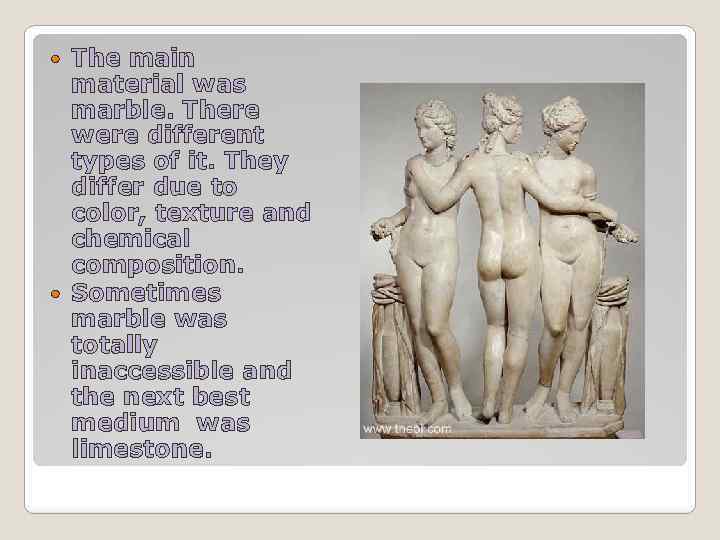 The main material was marble. There were different types of it. They differ due to color, texture and chemical composition. Sometimes marble was totally inaccessible and the next best medium was limestone.
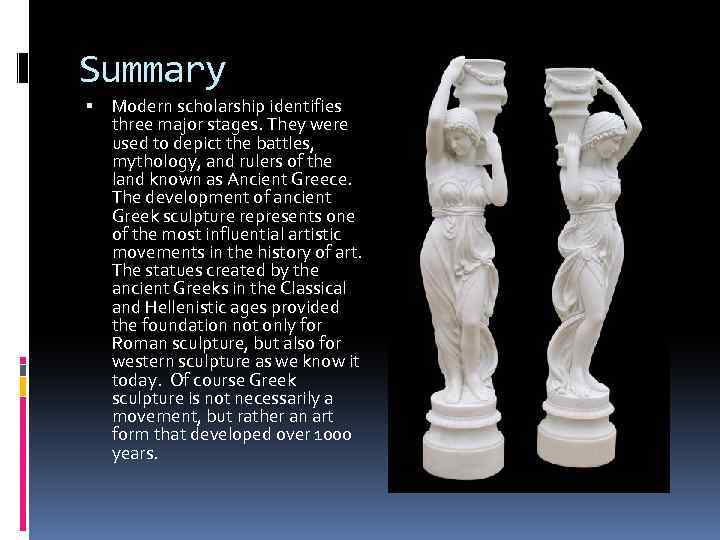 Summary Modern scholarship identifies three major stages. They were used to depict the battles, mythology, and rulers of the land known as Ancient Greece. The development of ancient Greek sculpture represents one of the most influential artistic movements in the history of art. The statues created by the ancient Greeks in the Classical and Hellenistic ages provided the foundation not only for Roman sculpture, but also for western sculpture as we know it today. Of course Greek sculpture is not necessarily a movement, but rather an art form that developed over 1000 years.