


 Скачать презентацию Ancient Egypt Unit Test Study Guide Civilization
c46ce468016546167ab19f1f0f905520.ppt
- Количество слайдов: 15
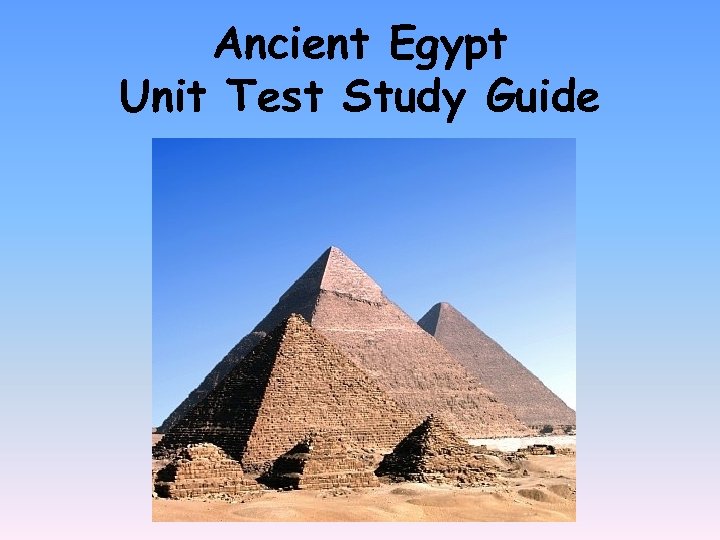 Ancient Egypt Unit Test Study Guide
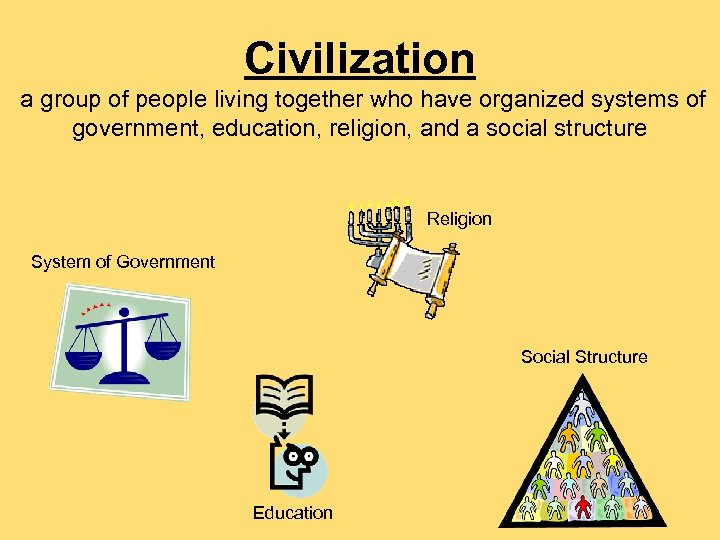 Civilization a group of people living together who have organized systems of government, education, religion, and a social structure Religion System of Government Social Structure Education
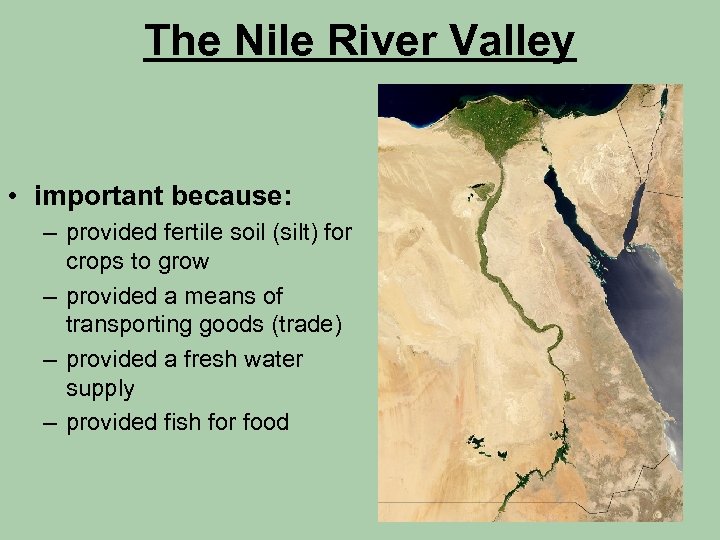 The Nile River Valley • important because: – provided fertile soil (silt) for crops to grow – provided a means of transporting goods (trade) – provided a fresh water supply – provided fish for food
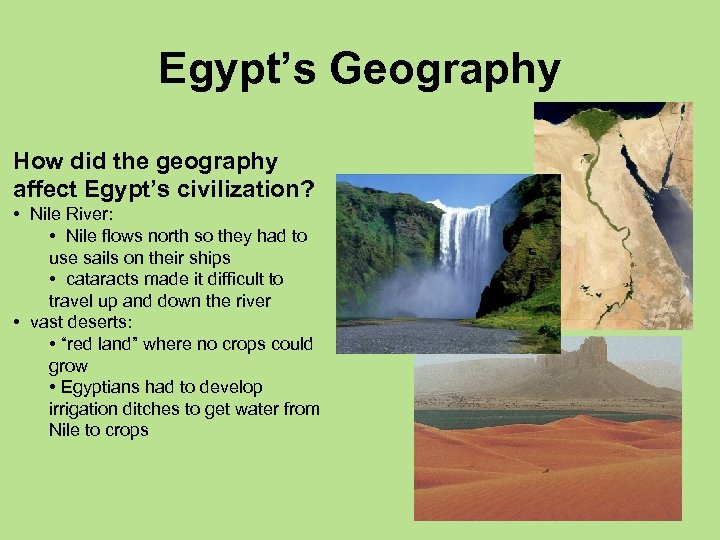 Egypt’s Geography How did the geography affect Egypt’s civilization? • Nile River: • Nile flows north so they had to use sails on their ships • cataracts made it difficult to travel up and down the river • vast deserts: • “red land” where no crops could grow • Egyptians had to develop irrigation ditches to get water from Nile to crops
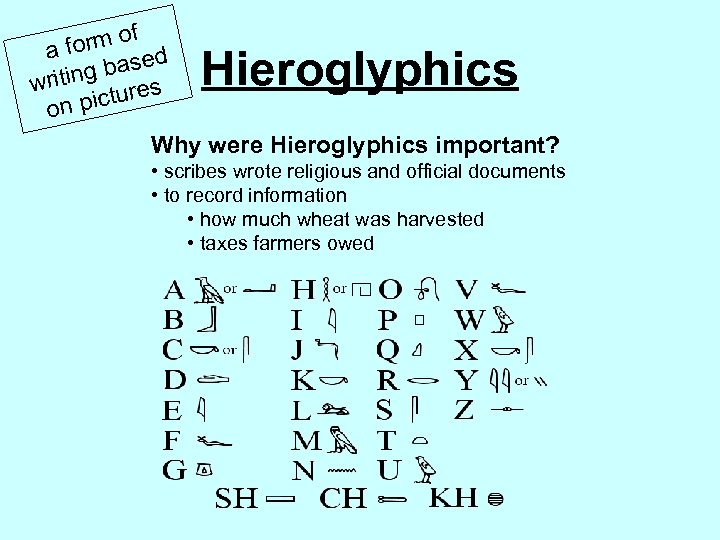 f form o d a se ng ba writi s icture on p Why were Hieroglyphics important? Hieroglyphics • scribes wrote religious and official documents • to record information • how much wheat was harvested • taxes farmers owed
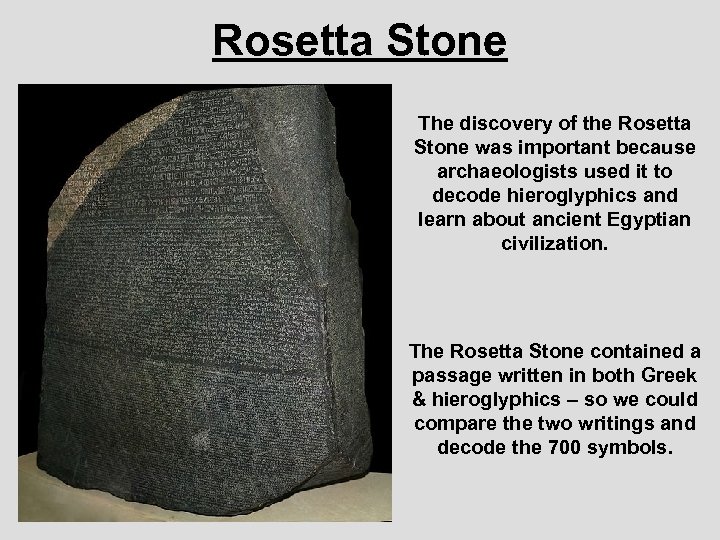 Rosetta Stone The discovery of the Rosetta Stone was important because archaeologists used it to decode hieroglyphics and learn about ancient Egyptian civilization. The Rosetta Stone contained a passage written in both Greek & hieroglyphics – so we could compare the two writings and decode the 700 symbols.
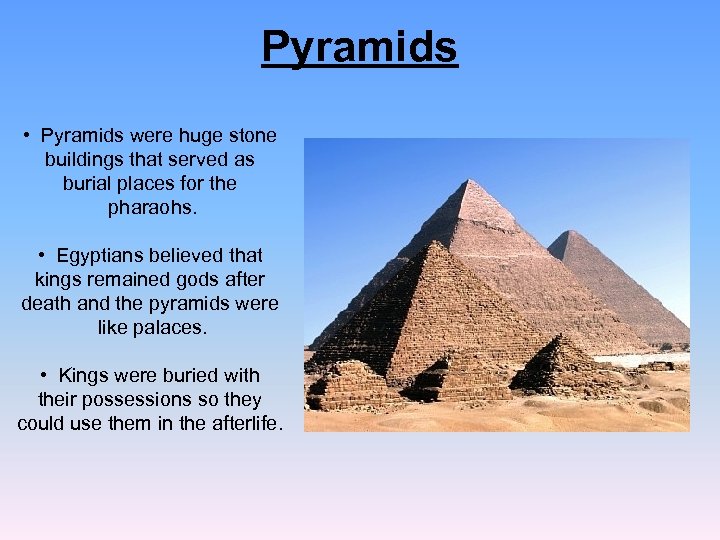 Pyramids • Pyramids were huge stone buildings that served as burial places for the pharaohs. • Egyptians believed that kings remained gods after death and the pyramids were like palaces. • Kings were buried with their possessions so they could use them in the afterlife.
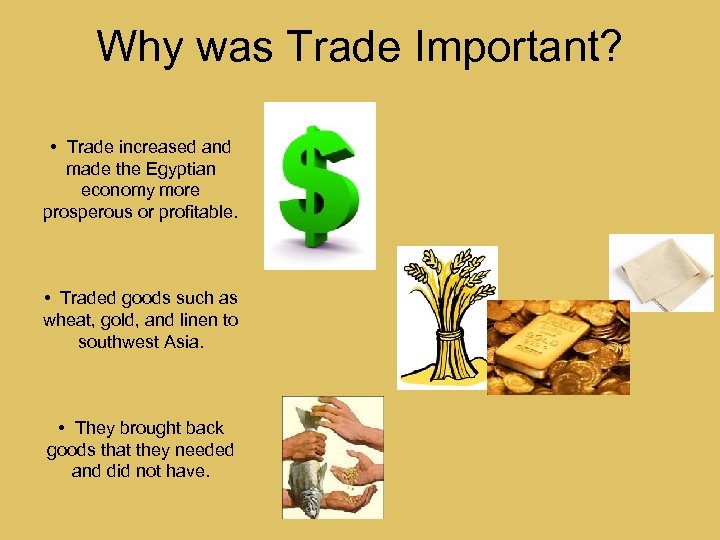 Why was Trade Important? • Trade increased and made the Egyptian economy more prosperous or profitable. • Traded goods such as wheat, gold, and linen to southwest Asia. • They brought back goods that they needed and did not have.
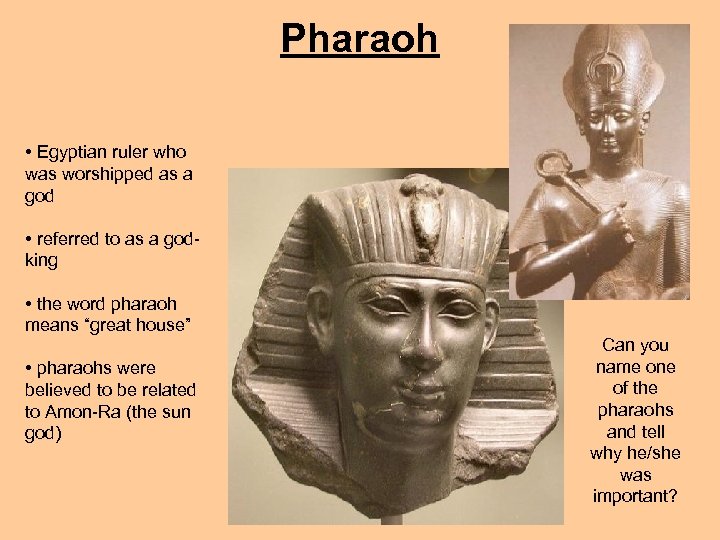 Pharaoh • Egyptian ruler who was worshipped as a god • referred to as a godking • the word pharaoh means “great house” • pharaohs were believed to be related to Amon-Ra (the sun god) Can you name one of the pharaohs and tell why he/she was important?
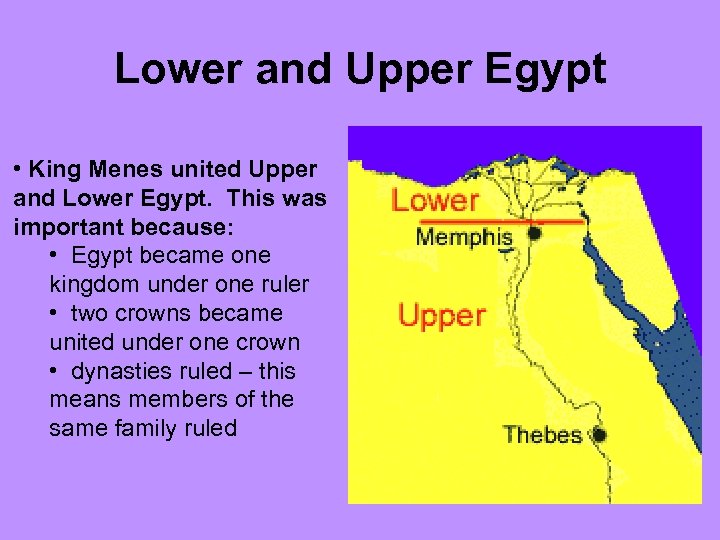 Lower and Upper Egypt • King Menes united Upper and Lower Egypt. This was important because: • Egypt became one kingdom under one ruler • two crowns became united under one crown • dynasties ruled – this means members of the same family ruled
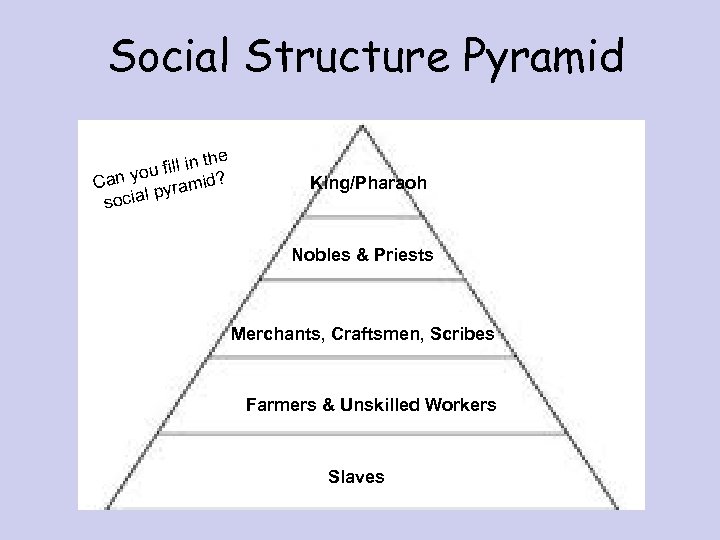 Social Structure Pyramid he fill in t ou Can y yramid? p social King/Pharaoh Nobles & Priests Merchants, Craftsmen, Scribes Farmers & Unskilled Workers Slaves
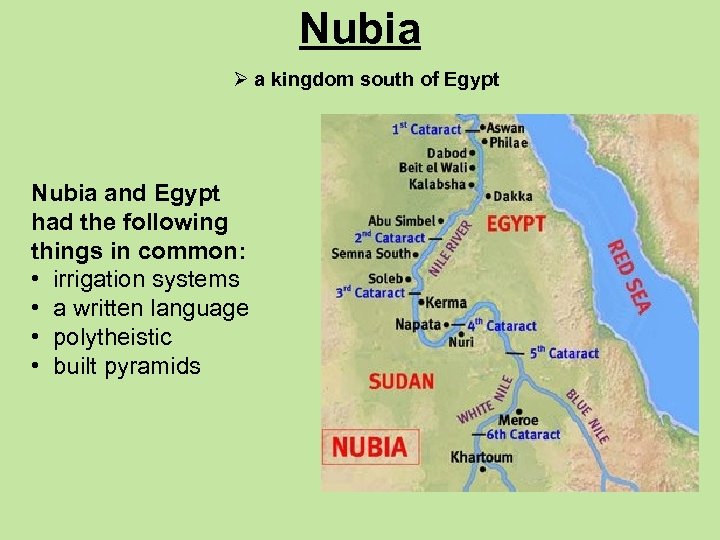 Nubia Ø a kingdom south of Egypt Nubia and Egypt had the following things in common: • irrigation systems • a written language • polytheistic • built pyramids
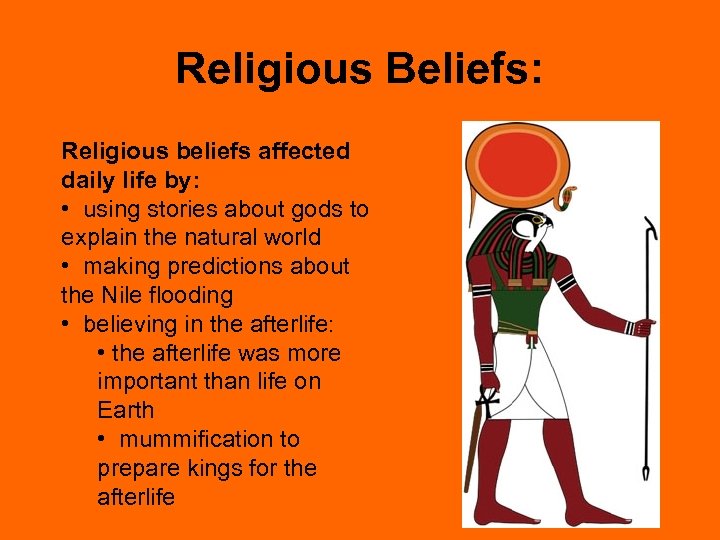 Religious Beliefs: Religious beliefs affected daily life by: • using stories about gods to explain the natural world • making predictions about the Nile flooding • believing in the afterlife: • the afterlife was more important than life on Earth • mummification to prepare kings for the afterlife
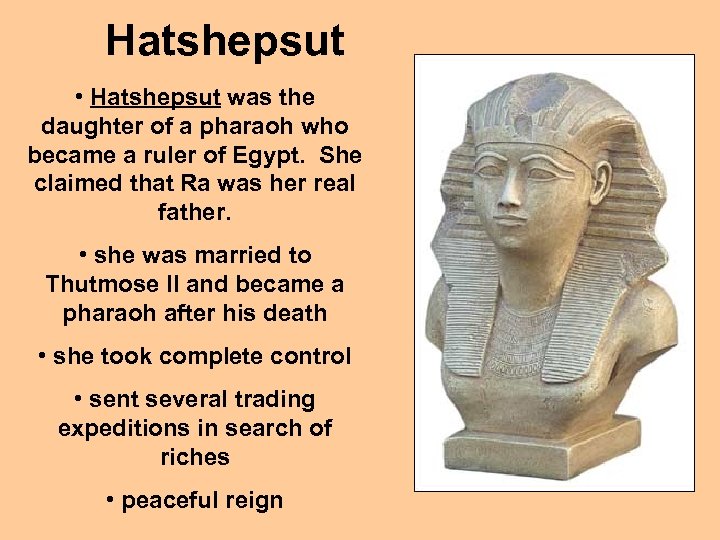 Hatshepsut • Hatshepsut was the daughter of a pharaoh who became a ruler of Egypt. She claimed that Ra was her real father. • she was married to Thutmose II and became a pharaoh after his death • she took complete control • sent several trading expeditions in search of riches • peaceful reign
 GRAPES Geography: Nile River, desert, cataracts Religion: polytheism, Ra, priests Achievements: pyramids, hieroglyphics, papyrus Political: Hatshepsut, Khufu, Menes Economic: farming, traded wheat, scribes Social: pharaoh, merchants, slaves (paper)