


 Скачать презентацию Analytical Structure 1 2 3 4 5 6
e0e89742ca1d00c93904544f671b12d1.ppt
- Количество слайдов: 42
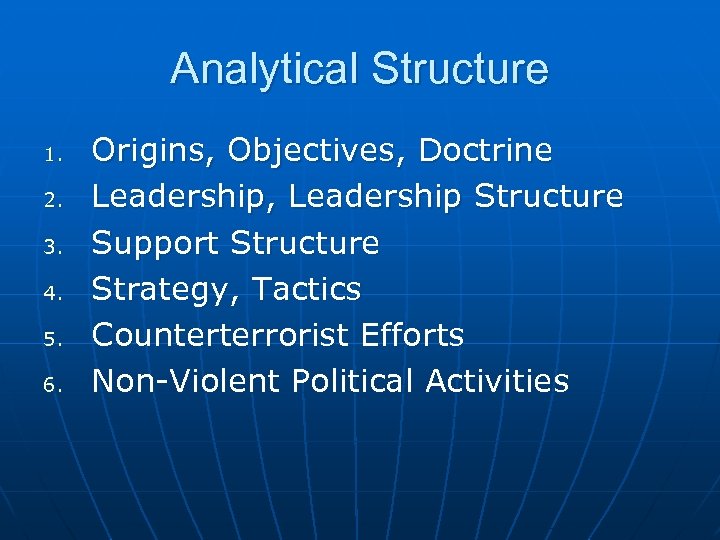 Analytical Structure 1. 2. 3. 4. 5. 6. Origins, Objectives, Doctrine Leadership, Leadership Structure Support Structure Strategy, Tactics Counterterrorist Efforts Non-Violent Political Activities
 1. Origins, Objectives, Doctrine
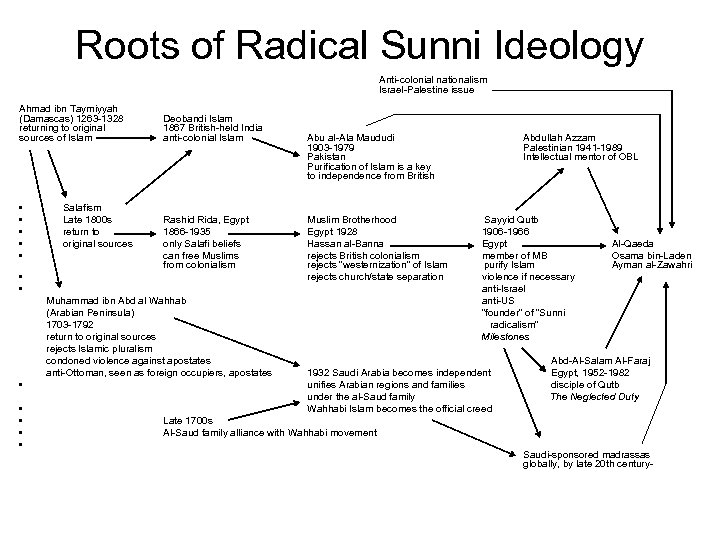 Roots of Radical Sunni Ideology Anti-colonial nationalism Israel-Palestine issue Ahmad ibn Taymiyyah (Damascas) 1263 -1328 returning to original sources of Islam • • • Salafism Late 1800 s return to original sources Deobandi Islam 1867 British-held India anti-colonial Islam Rashid Rida, Egypt 1866 -1935 only Salafi beliefs can free Muslims from colonialism • • Muhammad ibn Abd al Wahhab (Arabian Peninsula) 1703 -1792 return to original sources rejects Islamic pluralism condoned violence against apostates anti-Ottoman, seen as foreign occupiers, apostates • • • Abu al-Ala Maududi 1903 -1979 Pakistan Purification of Islam is a key to independence from British Muslim Brotherhood Egypt 1928 Hassan al-Banna rejects British colonialism rejects “westernization” of Islam rejects church/state separation Abdullah Azzam Palestinian 1941 -1989 Intellectual mentor of OBL Sayyid Qutb 1906 -1966 Egypt member of MB purify Islam violence if necessary anti-Israel anti-US “founder” of “Sunni radicalism” Milestones 1932 Saudi Arabia becomes independent unifies Arabian regions and families under the al-Saud family Wahhabi Islam becomes the official creed Al-Qaeda Osama bin-Laden Ayman al-Zawahri Abd-Al-Salam Al-Faraj Egypt, 1952 -1982 disciple of Qutb The Neglected Duty Late 1700 s Al-Saud family alliance with Wahhabi movement Saudi-sponsored madrassas globally, by late 20 th century-
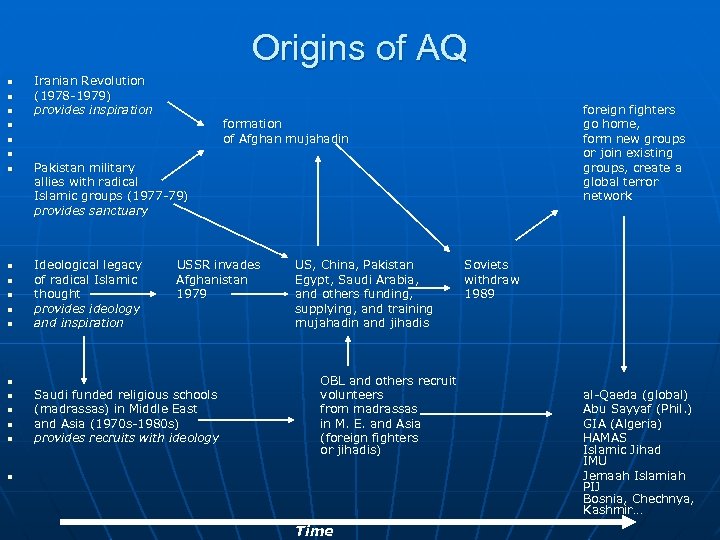 Origins of AQ n n n Iranian Revolution (1978 -1979) provides inspiration foreign fighters go home, form new groups or join existing groups, create a global terror network formation of Afghan mujahadin n n n n Pakistan military allies with radical Islamic groups (1977 -79) provides sanctuary Ideological legacy of radical Islamic thought provides ideology and inspiration USSR invades Afghanistan 1979 n n n Saudi funded religious schools (madrassas) in Middle East and Asia (1970 s-1980 s) provides recruits with ideology US, China, Pakistan Egypt, Saudi Arabia, and others funding, supplying, and training mujahadin and jihadis OBL and others recruit volunteers from madrassas in M. E. and Asia (foreign fighters or jihadis) n Time Soviets withdraw 1989 al-Qaeda (global) Abu Sayyaf (Phil. ) GIA (Algeria) HAMAS Islamic Jihad IMU Jemaah Islamiah PIJ Bosnia, Chechnya, Kashmir…
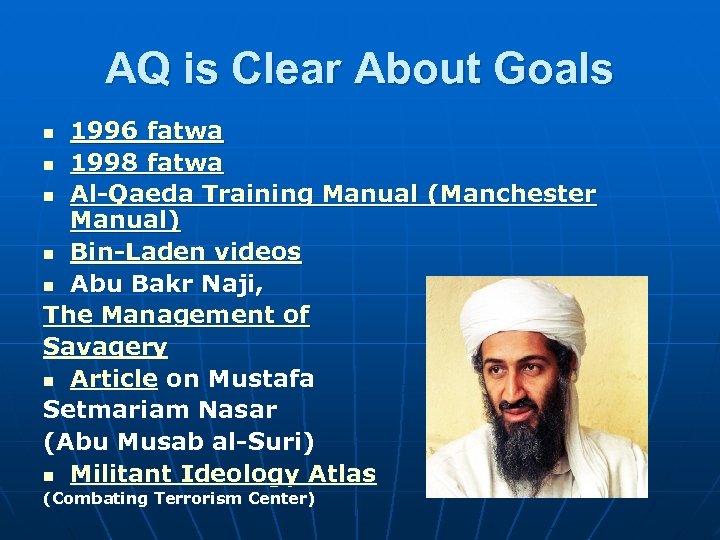 AQ is Clear About Goals 1996 fatwa n 1998 fatwa n Al-Qaeda Training Manual (Manchester Manual) n Bin-Laden videos n Abu Bakr Naji, The Management of Savagery n Article on Mustafa Setmariam Nasar (Abu Musab al-Suri) n Militant Ideology Atlas n (Combating Terrorism Center)
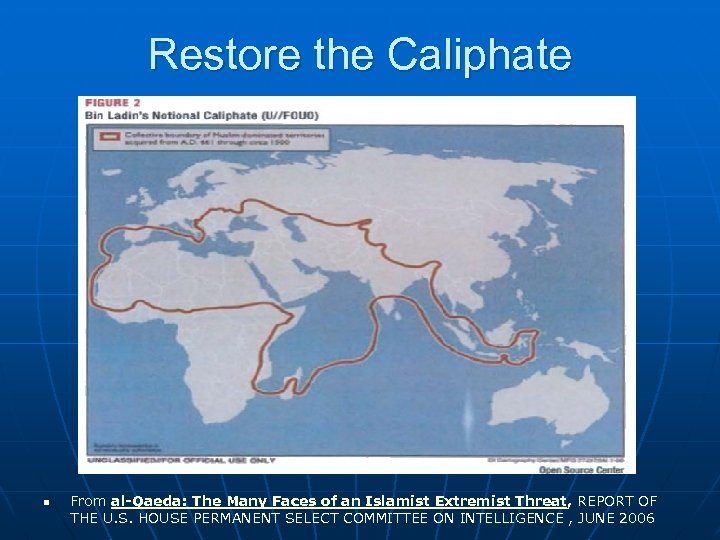 Restore the Caliphate n From al-Qaeda: The Many Faces of an Islamist Extremist Threat , REPORT OF THE U. S. HOUSE PERMANENT SELECT COMMITTEE ON INTELLIGENCE , JUNE 2006
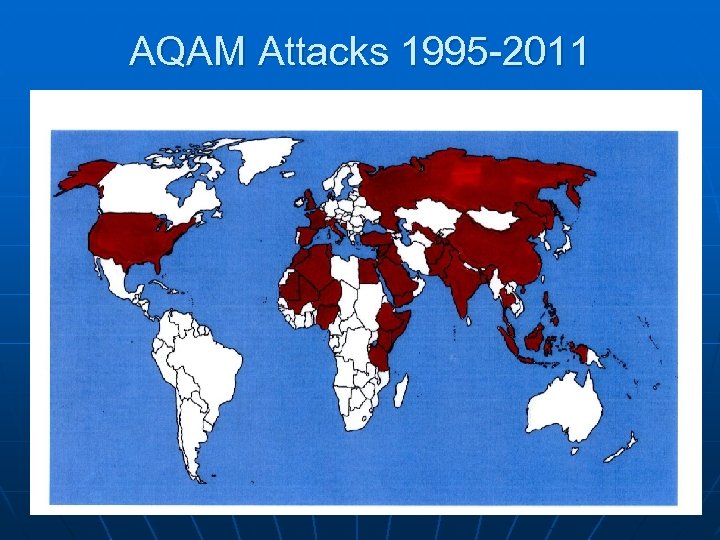 AQAM Attacks 1995 -2011
 n 2. Leadership, Leadership Structure
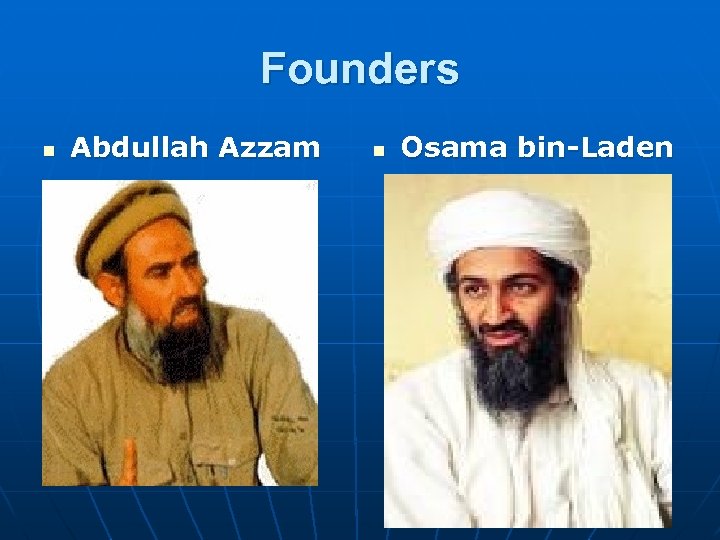 Founders n Abdullah Azzam n Osama bin-Laden
 Leadership n n n AQ Leadership 1989 Leadership 2008 Decentralization Regional Nodes Cells
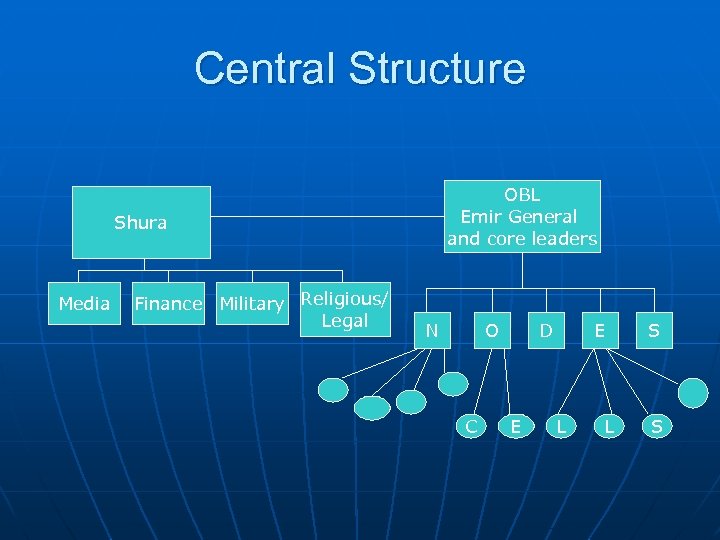 Central Structure OBL Emir General and core leaders Shura Media Finance Military Religious/ Legal N O C D E E L L S S
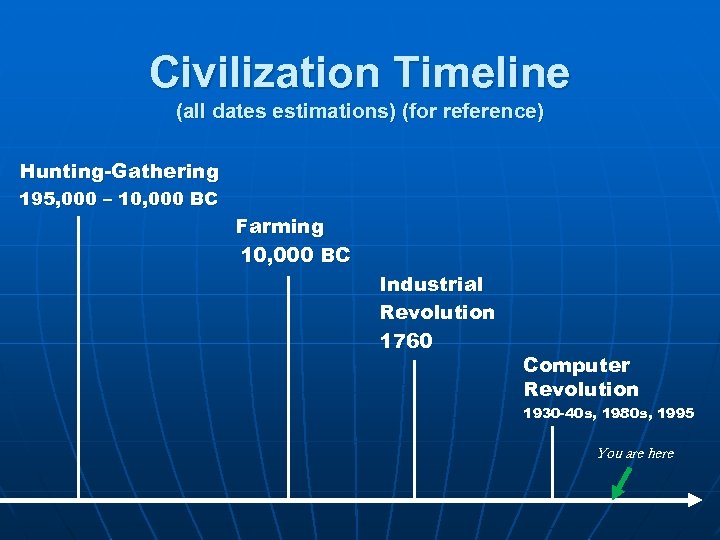 Civilization Timeline (all dates estimations) (for reference) Hunting-Gathering 195, 000 – 10, 000 BC Farming 10, 000 BC Industrial Revolution 1760 Computer Revolution 1930 -40 s, 1980 s, 1995 You are here
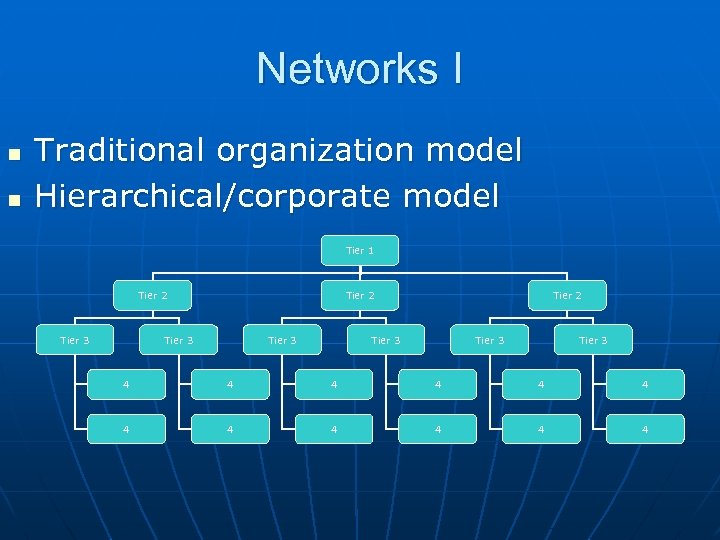 Networks I n n Traditional organization model Hierarchical/corporate model Tier 1 Tier 2 Tier 3 Tier 3 4 4 4
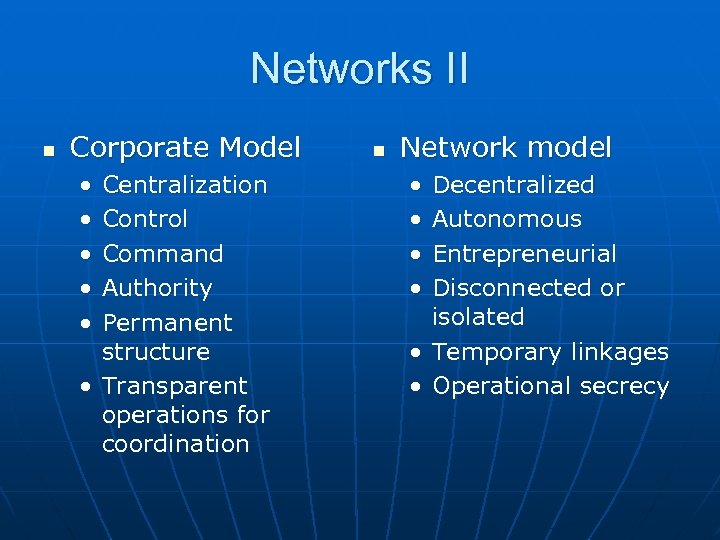 Networks II n Corporate Model • • • Centralization Control Command Authority Permanent structure • Transparent operations for coordination n Network model • • Decentralized Autonomous Entrepreneurial Disconnected or isolated • Temporary linkages • Operational secrecy
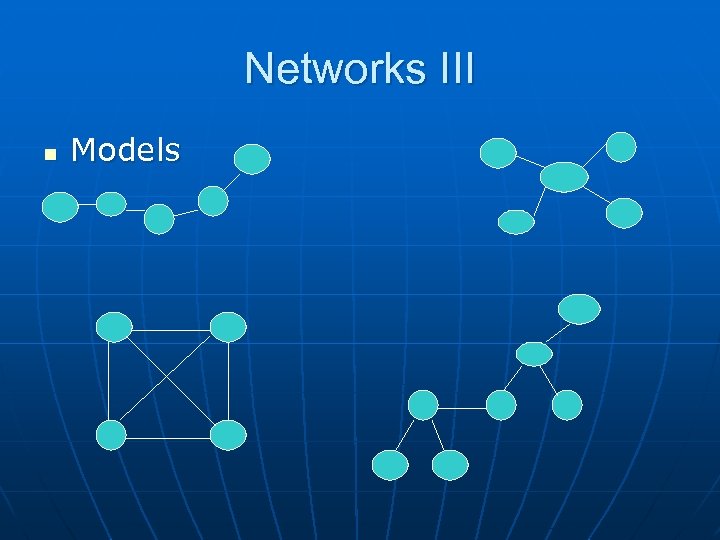 Networks III n Models
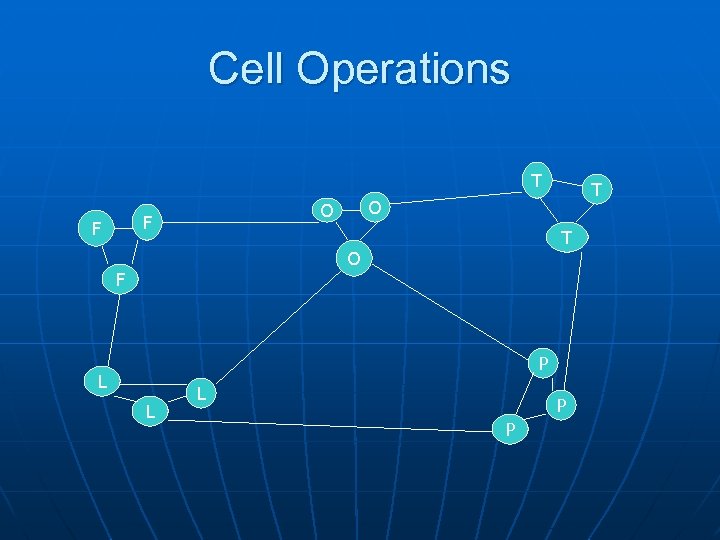 Cell Operations T O O F F T O F T P L L L P P
 Another View of Structure
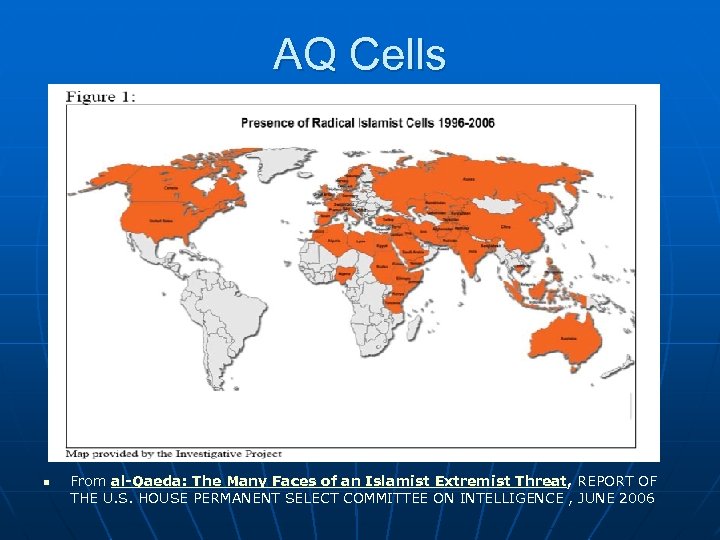 AQ Cells n From al-Qaeda: The Many Faces of an Islamist Extremist Threat , REPORT OF THE U. S. HOUSE PERMANENT SELECT COMMITTEE ON INTELLIGENCE , JUNE 2006
 3. Support Structure
 AQ Support and Activities n n AQ Attacks against US AQ Affiliated Organizations and People (UN List)
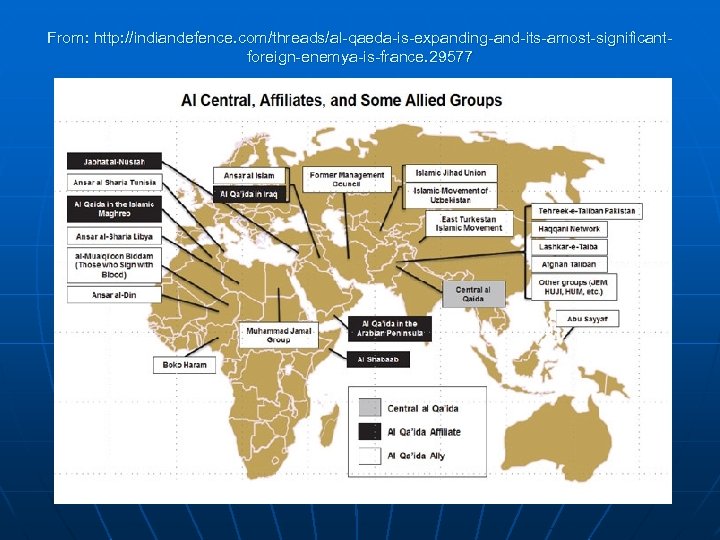 From: http: //indiandefence. com/threads/al-qaeda-is-expanding-and-its-amost-significantforeign-enemya-is-france. 29577
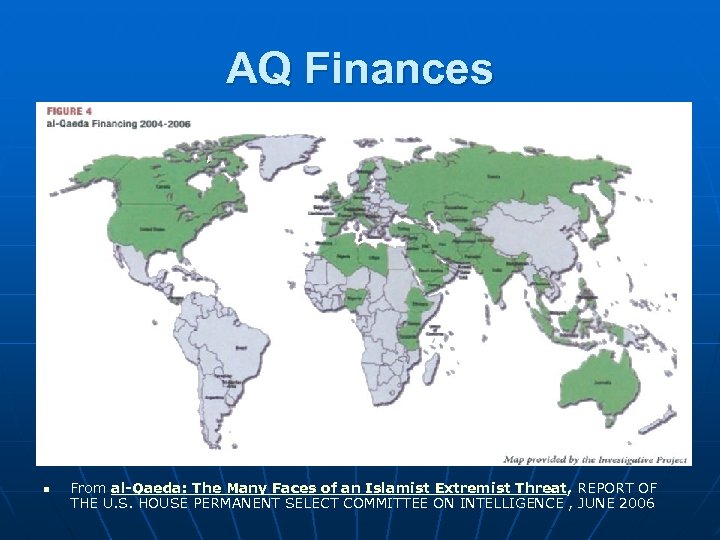 AQ Finances n From al-Qaeda: The Many Faces of an Islamist Extremist Threat , REPORT OF THE U. S. HOUSE PERMANENT SELECT COMMITTEE ON INTELLIGENCE , JUNE 2006
 4. Strategy and Tactics The Debate: The Far Enemy 0 r The Near Enemy Writings on Strategy n Abu Bakr Naji, The Management of Savagery n Article on Mustafa Setmariam Nasar (Abu Musab al-Suri)
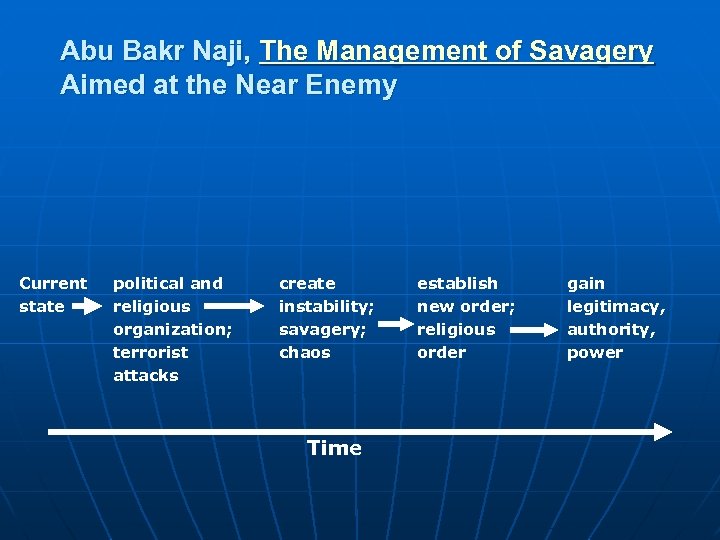 Abu Bakr Naji, The Management of Savagery Aimed at the Near Enemy Current state political and religious organization; terrorist attacks create instability; savagery; chaos Time establish new order; religious order gain legitimacy, authority, power
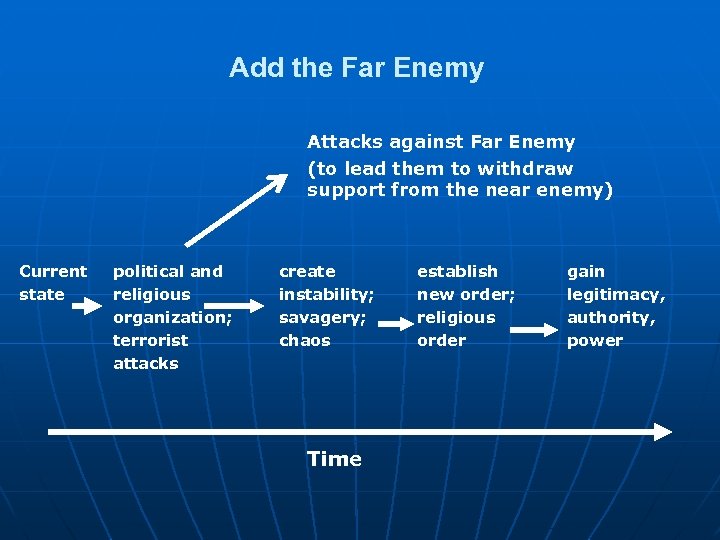 Add the Far Enemy Attacks against Far Enemy (to lead them to withdraw support from the near enemy) Current state political and religious organization; terrorist attacks create instability; savagery; chaos Time establish new order; religious order gain legitimacy, authority, power
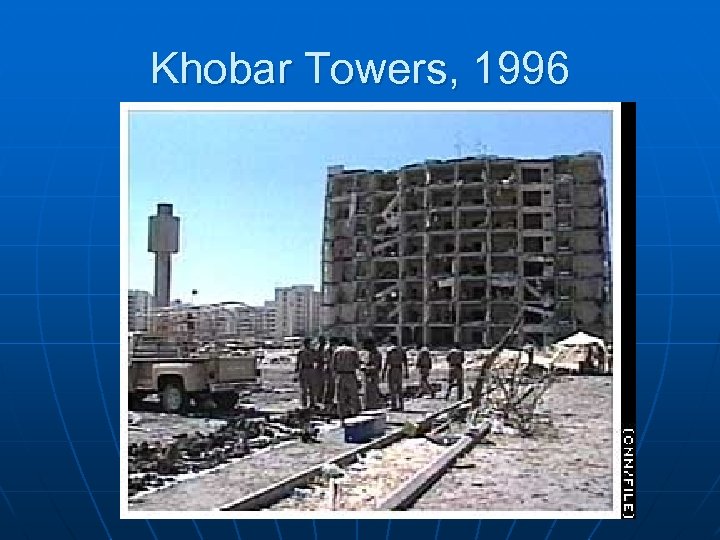 Khobar Towers, 1996
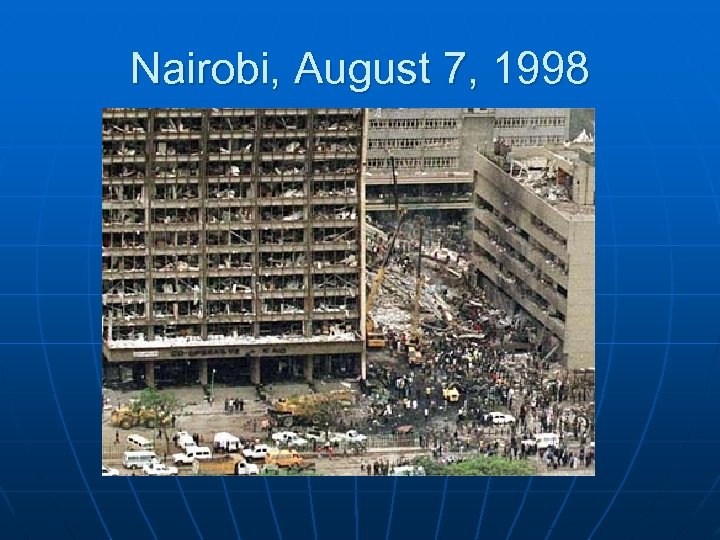 Nairobi, August 7, 1998
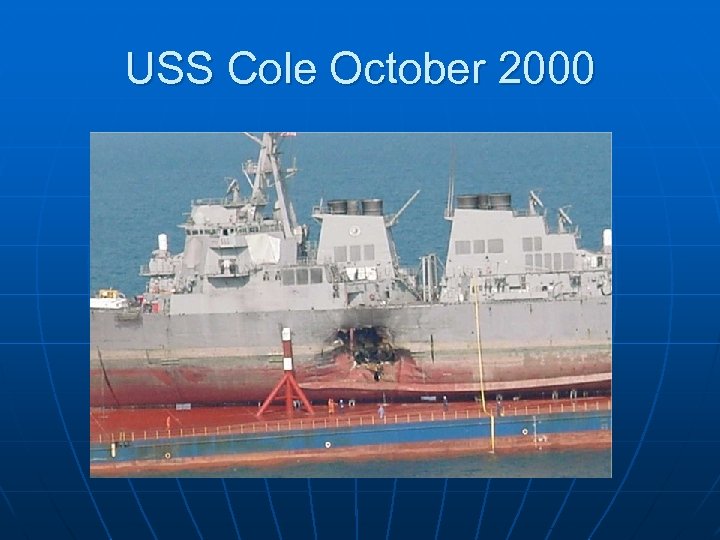 USS Cole October 2000
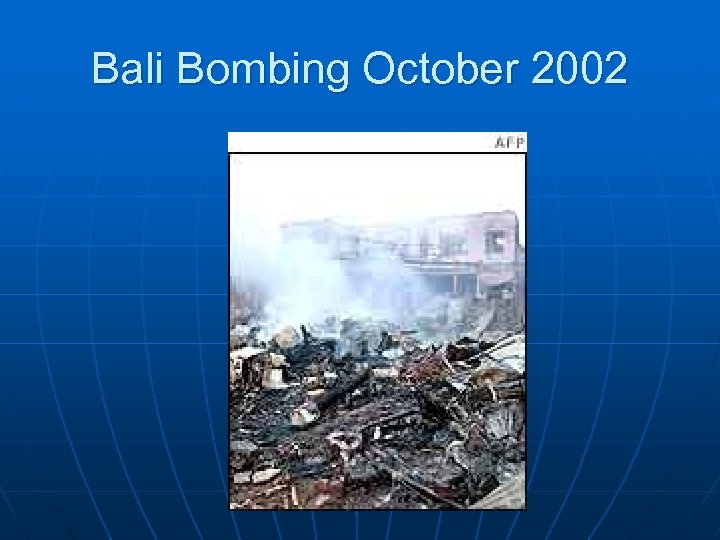 Bali Bombing October 2002
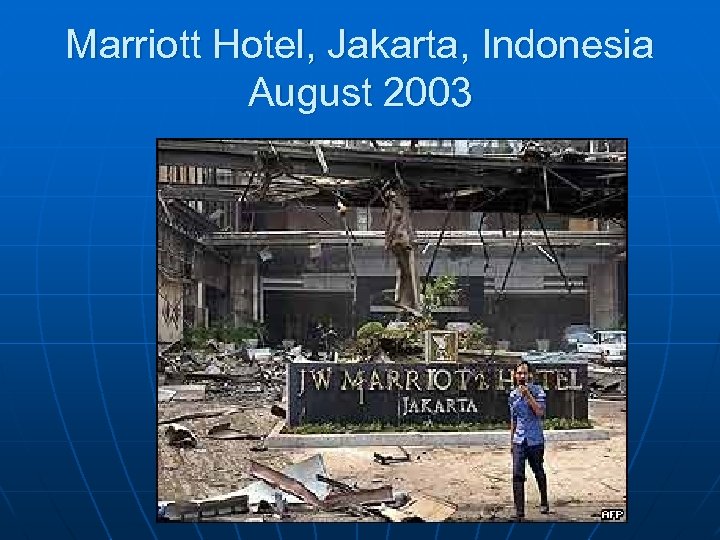 Marriott Hotel, Jakarta, Indonesia August 2003
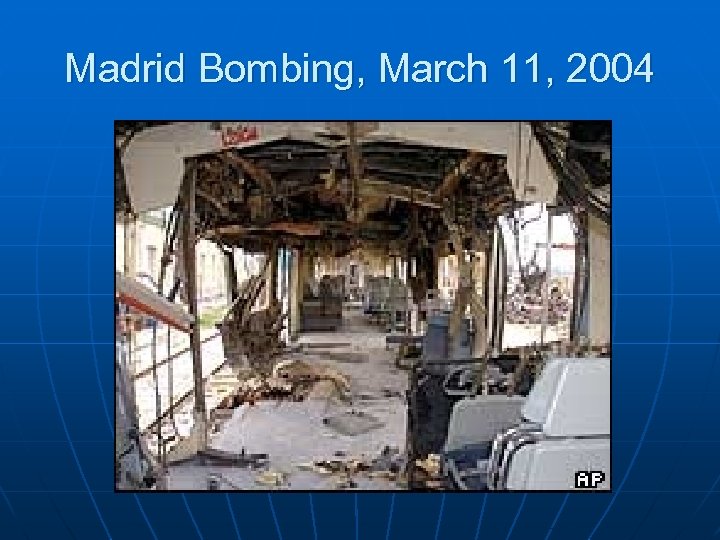 Madrid Bombing, March 11, 2004
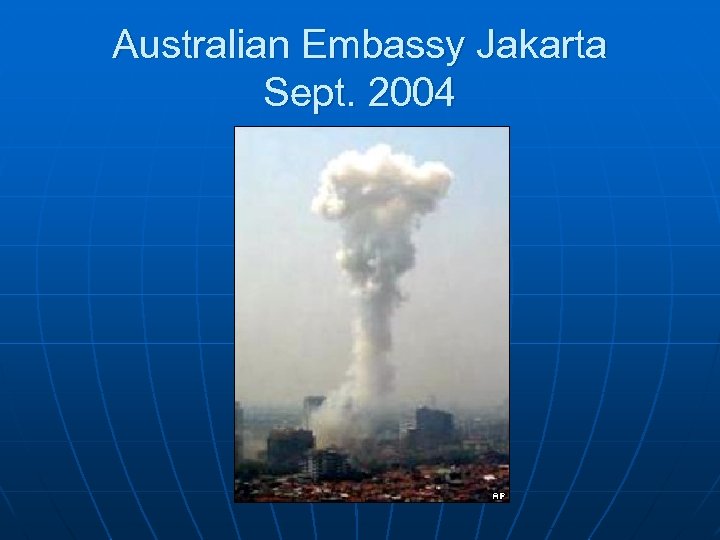 Australian Embassy Jakarta Sept. 2004
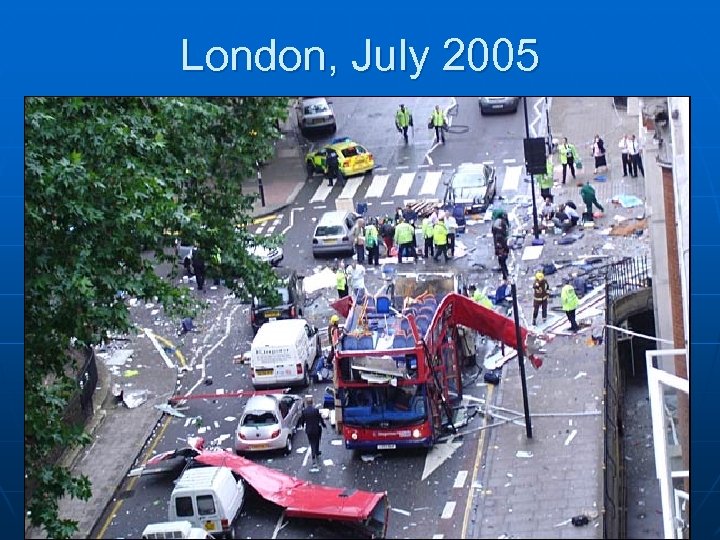 London, July 2005
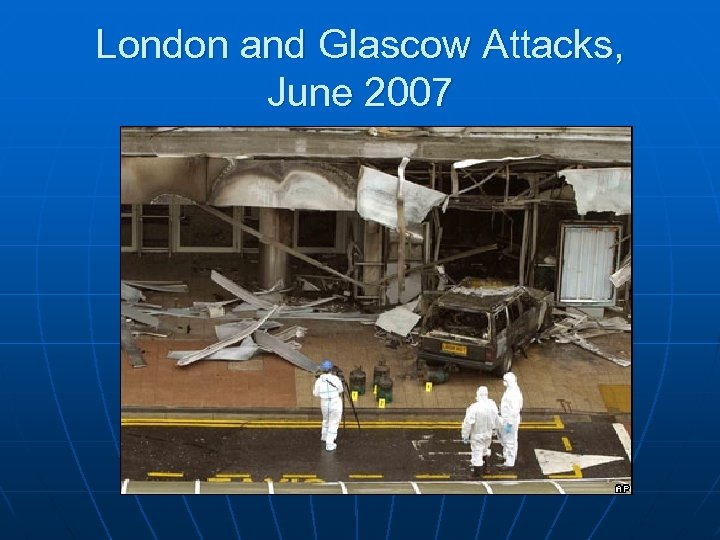 London and Glascow Attacks, June 2007
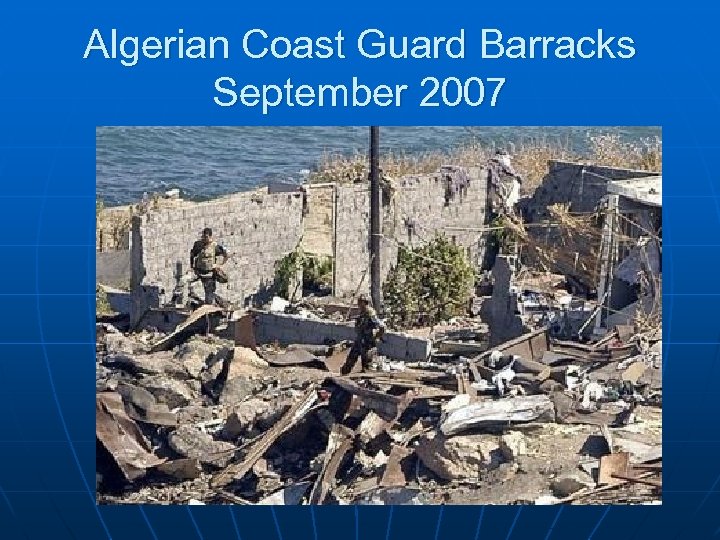 Algerian Coast Guard Barracks September 2007
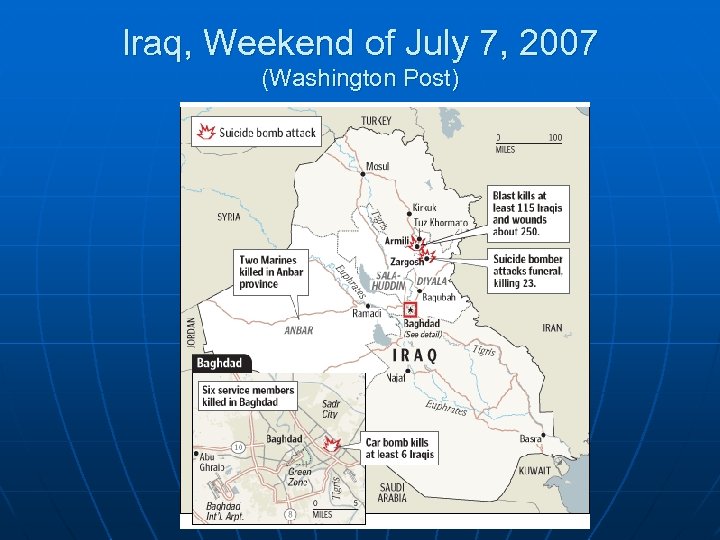 Iraq, Weekend of July 7, 2007 (Washington Post)
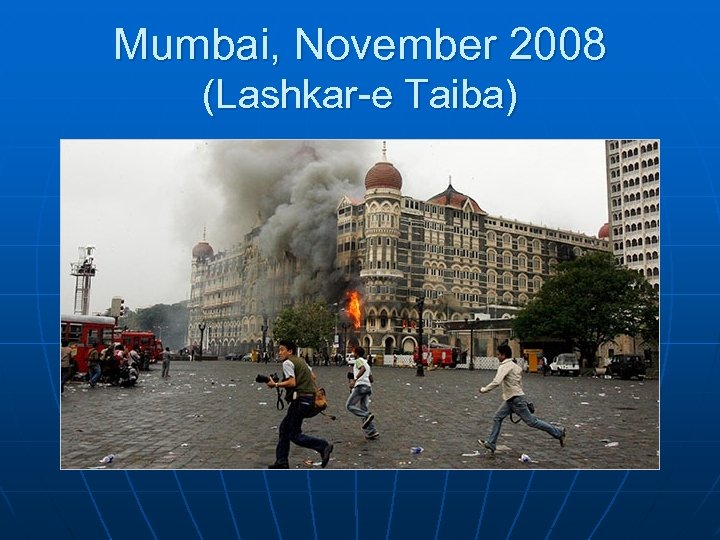 Mumbai, November 2008 (Lashkar-e Taiba)
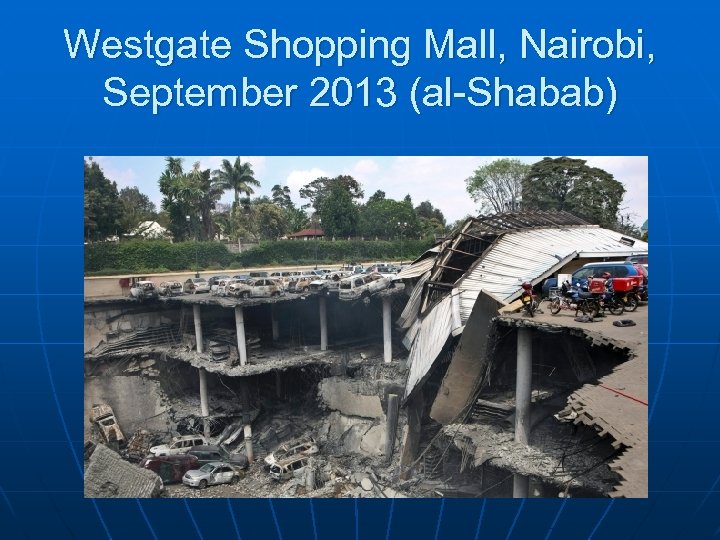 Westgate Shopping Mall, Nairobi, September 2013 (al-Shabab)
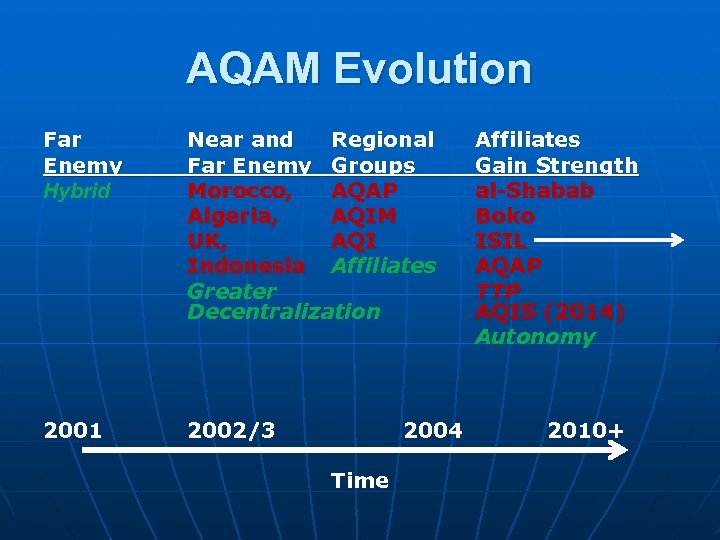 AQAM Evolution Far Enemy Hybrid Near and Regional Far Enemy Groups Morocco, AQAP Algeria, AQIM UK, AQI Indonesia Affiliates Greater Decentralization 2001 2002/3 2004 Time Affiliates Gain Strength al-Shabab Boko ISIL AQAP TTP AQIS (2014) Autonomy 2010+
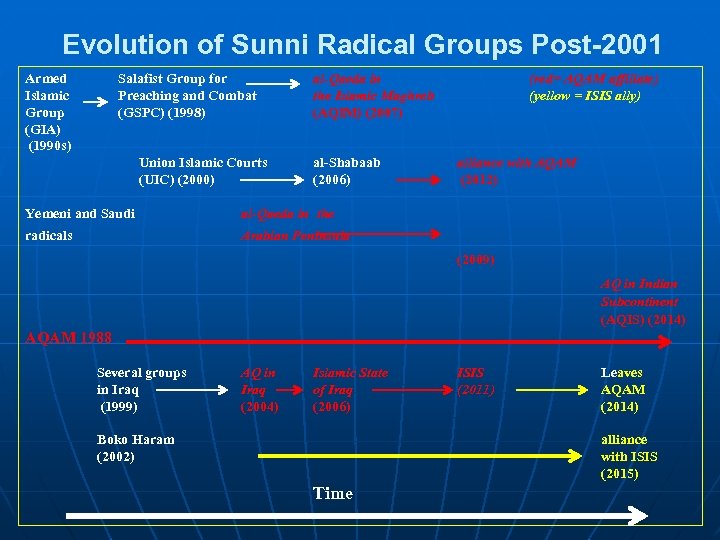 Evolution of Sunni Radical Groups Post-2001 Armed Islamic Group (GIA) (1990 s) Salafist Group for Preaching and Combat (GSPC) (1998) Union Islamic Courts (UIC) (2000) al-Qaeda in the Islamic Maghreb (AQIM) (2007) al-Shabaab (2006) Yemeni and Saudi alliance with AQAM (2012) al-Qaeda in the radicals (red= AQAM affiliate) (yellow = ISIS ally) Arabian Peninsula (2009) AQ in Indian Subcontinent (AQIS) (2014) AQAM 1988 Several groups in Iraq (1999) AQ in Iraq (2004) Islamic State of Iraq (2006) Boko Haram (2002) ISIS (2011) Leaves AQAM (2014) alliance with ISIS (2015) Time
 5. Counterterrorism Measures
 6. Non-Violent Activities