


 Скачать презентацию Analysing Adverts These icons indicate that teacher s notes
5eec0e82b7358c6e3ee5ea88f38ae5db.ppt
- Количество слайдов: 31
 Analysing Adverts These icons indicate that teacher’s notes or useful web addresses are available in the Notes Page. This icon indicates that a worksheet accompanies this slide. This icon indicates that the slide contains activities created in Flash. These activities are not editable. For more detailed instructions, see the Getting Started presentation. 1 of 39 © Boardworks Ltd 2006
 Introduction Where do we find advertisements? Write some ideas on the TV screen. Did you think of all of these? on television in magazines on public transport on the radio in newspapers on billboards 2 of 39 © Boardworks Ltd 2006
 Purpose Advertisements can serve a variety of different purposes. To persuade us to buy a specific product To increase our ‘brand awareness’ To persuade us to use a particular service To inform us about a specific issue Think of three adverts you have seen or heard Can you think of any others? recently and decide what their purposes©are. Ltd 2006 3 of 39 Boardworks
 Persuasion Advertisers must persuade us to buy their idea, whether it is a product, service, brand, or issue. How exactly do they achieve this? Here are some ideas: They make it sound as exciting and interesting as possible. They try to make us believe that it will enhance our lives. 4 of 39 They make it sound like the best possible example of its kind that we can buy. They try to make us believe that everyone else has or wants this product. © Boardworks Ltd 2006
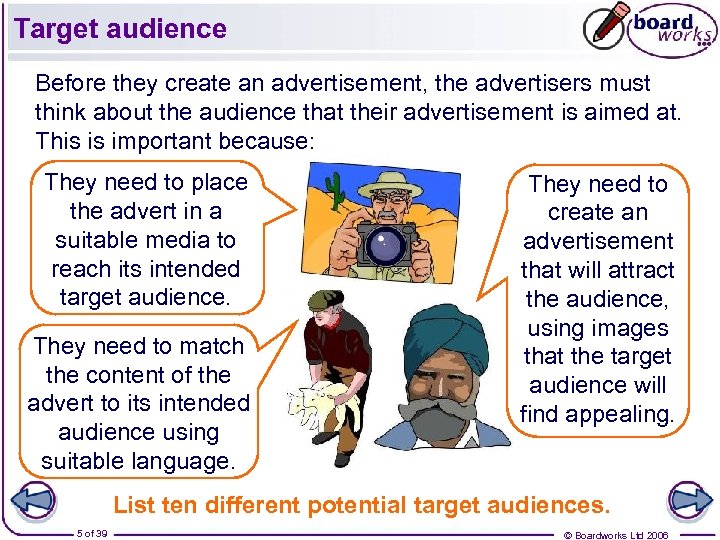 Target audience Before they create an advertisement, the advertisers must think about the audience that their advertisement is aimed at. This is important because: They need to place the advert in a suitable media to reach its intended target audience. They need to match the content of the advert to its intended audience using suitable language. They need to create an advertisement that will attract the audience, using images that the target audience will find appealing. List ten different potential target audiences. 5 of 39 © Boardworks Ltd 2006
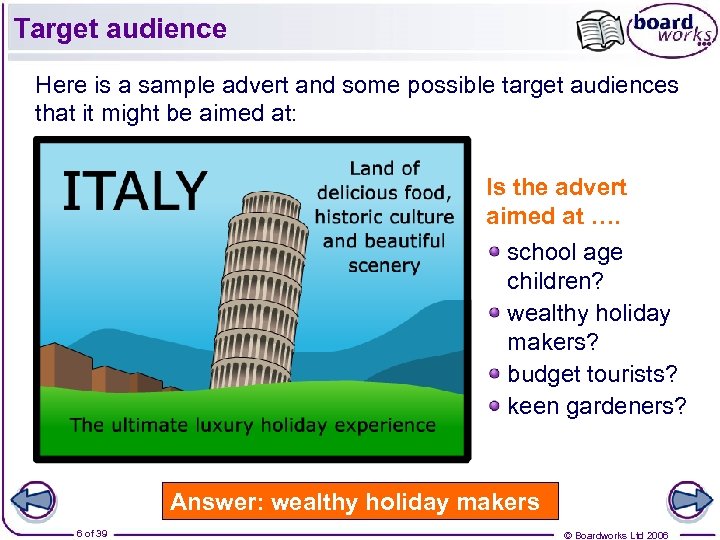 Target audience Here is a sample advert and some possible target audiences that it might be aimed at: Is the advert aimed at …. school age children? wealthy holiday makers? budget tourists? keen gardeners? Answer: wealthy holiday makers 6 of 39 © Boardworks Ltd 2006
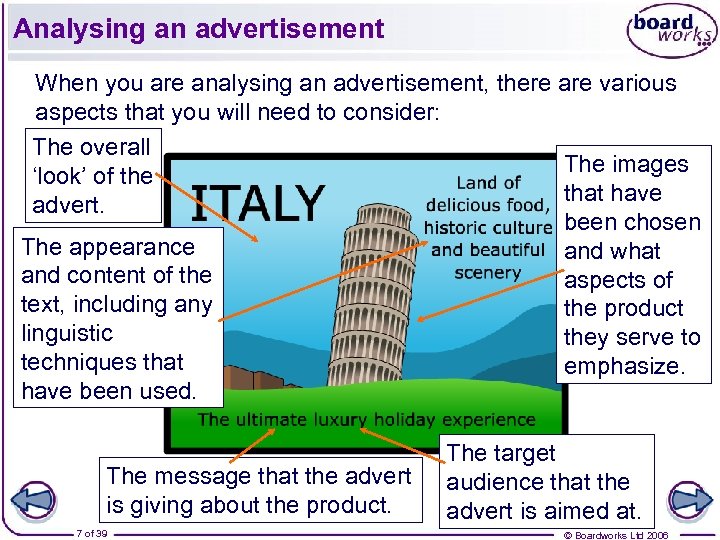 Analysing an advertisement When you are analysing an advertisement, there are various aspects that you will need to consider: The overall The images ‘look’ of the that have advert. been chosen The appearance and what and content of the aspects of text, including any the product linguistic they serve to techniques that emphasize. have been used. The message that the advert is giving about the product. 7 of 39 The target audience that the advert is aimed at. © Boardworks Ltd 2006
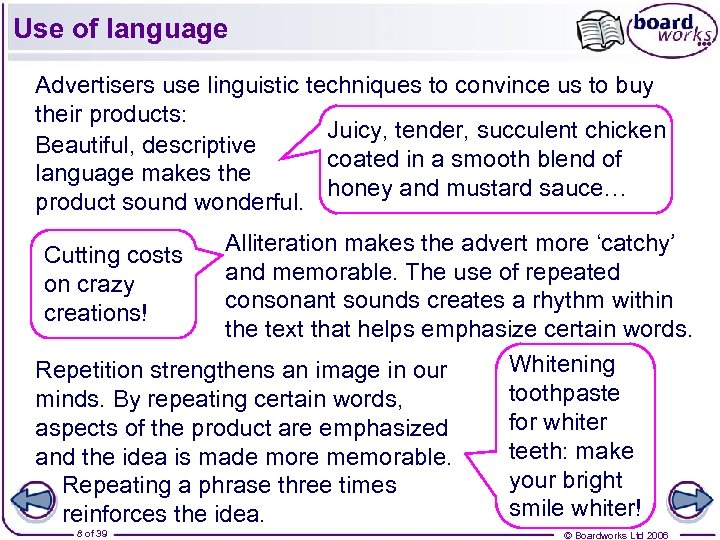 Use of language Advertisers use linguistic techniques to convince us to buy their products: Juicy, tender, succulent chicken Beautiful, descriptive coated in a smooth blend of language makes the honey and mustard sauce… product sound wonderful. Alliteration makes the advert more ‘catchy’ and memorable. The use of repeated consonant sounds creates a rhythm within the text that helps emphasize certain words. Whitening Repetition strengthens an image in our toothpaste minds. By repeating certain words, for whiter aspects of the product are emphasized teeth: make and the idea is made more memorable. your bright Repeating a phrase three times smile whiter! reinforces the idea. Cutting costs on crazy creations! 8 of 39 © Boardworks Ltd 2006
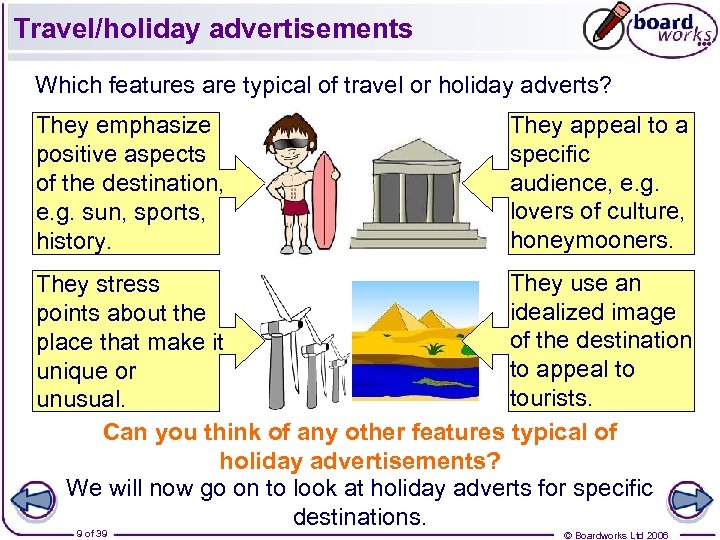 Travel/holiday advertisements Which features are typical of travel or holiday adverts? They emphasize positive aspects of the destination, e. g. sun, sports, history. They appeal to a specific audience, e. g. lovers of culture, honeymooners. They use an They stress idealized image points about the of the destination place that make it to appeal to unique or tourists. unusual. Can you think of any other features typical of holiday advertisements? We will now go on to look at holiday adverts for specific destinations. 9 of 39 © Boardworks Ltd 2006
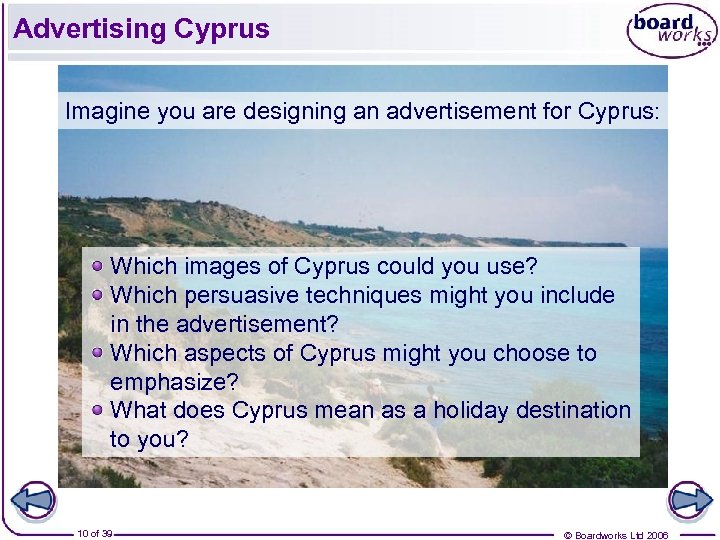 Advertising Cyprus Imagine you are designing an advertisement for Cyprus: Which images of Cyprus could you use? Which persuasive techniques might you include in the advertisement? Which aspects of Cyprus might you choose to emphasize? What does Cyprus mean as a holiday destination to you? 10 of 39 © Boardworks Ltd 2006
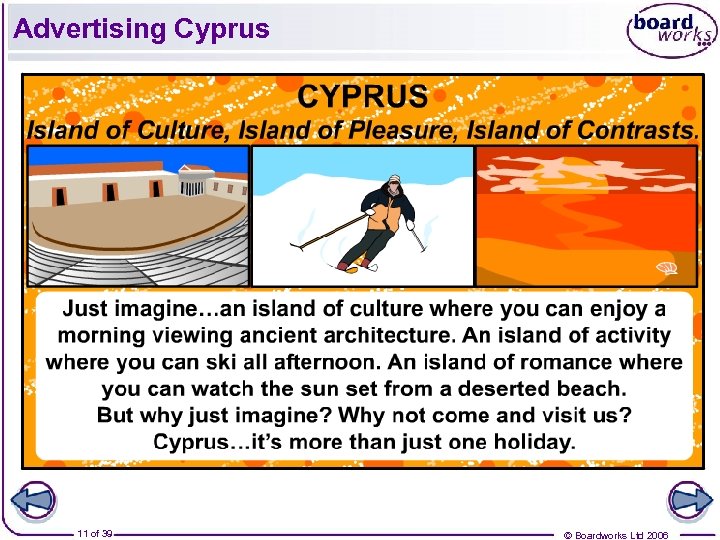 Advertising Cyprus 11 of 39 © Boardworks Ltd 2006
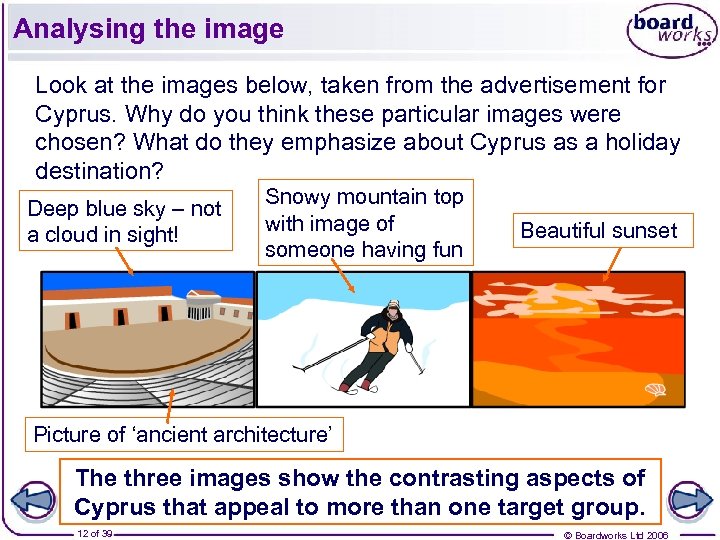 Analysing the image Look at the images below, taken from the advertisement for Cyprus. Why do you think these particular images were chosen? What do they emphasize about Cyprus as a holiday destination? Deep blue sky – not a cloud in sight! Snowy mountain top with image of someone having fun Beautiful sunset Picture of ‘ancient architecture’ The three images show the contrasting aspects of Cyprus that appeal to more than one target group. 12 of 39 © Boardworks Ltd 2006
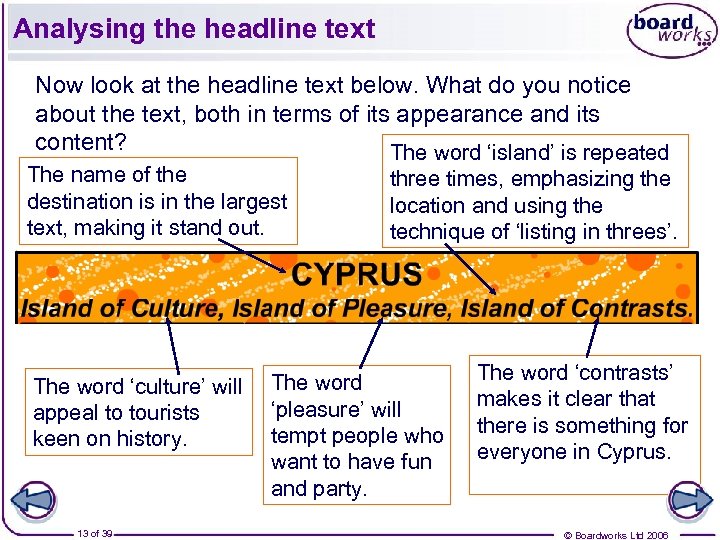 Analysing the headline text Now look at the headline text below. What do you notice about the text, both in terms of its appearance and its content? The word ‘island’ is repeated The name of the destination is in the largest text, making it stand out. The word ‘culture’ will appeal to tourists keen on history. 13 of 39 three times, emphasizing the location and using the technique of ‘listing in threes’. The word ‘pleasure’ will tempt people who want to have fun and party. The word ‘contrasts’ makes it clear that there is something for everyone in Cyprus. © Boardworks Ltd 2006
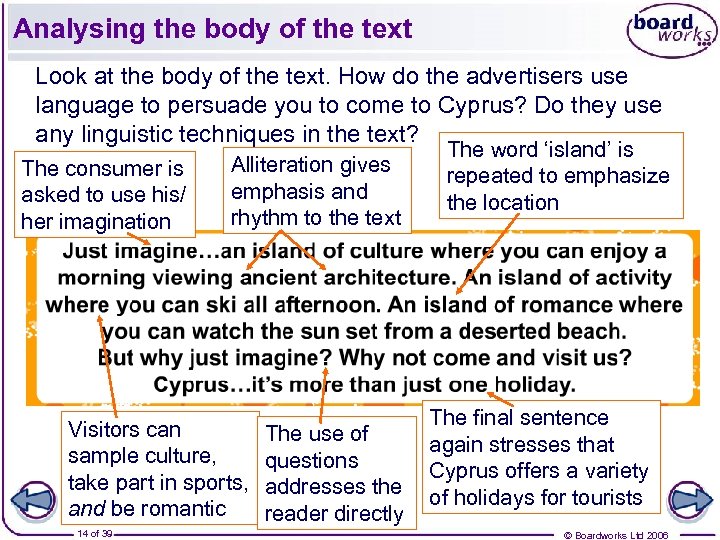 Analysing the body of the text Look at the body of the text. How do the advertisers use language to persuade you to come to Cyprus? Do they use any linguistic techniques in the text? The consumer is asked to use his/ her imagination Alliteration gives emphasis and rhythm to the text Visitors can sample culture, take part in sports, and be romantic 14 of 39 The use of questions addresses the reader directly The word ‘island’ is repeated to emphasize the location The final sentence again stresses that Cyprus offers a variety of holidays for tourists © Boardworks Ltd 2006
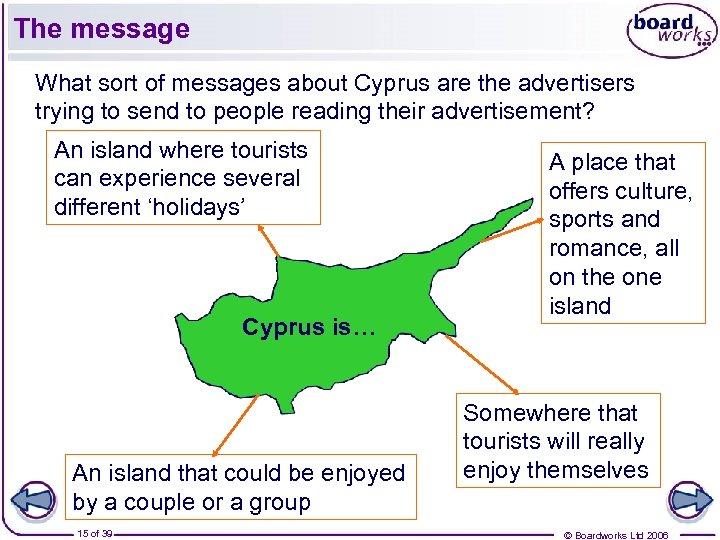 The message What sort of messages about Cyprus are the advertisers trying to send to people reading their advertisement? An island where tourists can experience several different ‘holidays’ Cyprus is… An island that could be enjoyed by a couple or a group 15 of 39 A place that offers culture, sports and romance, all on the one island Somewhere that tourists will really enjoy themselves © Boardworks Ltd 2006
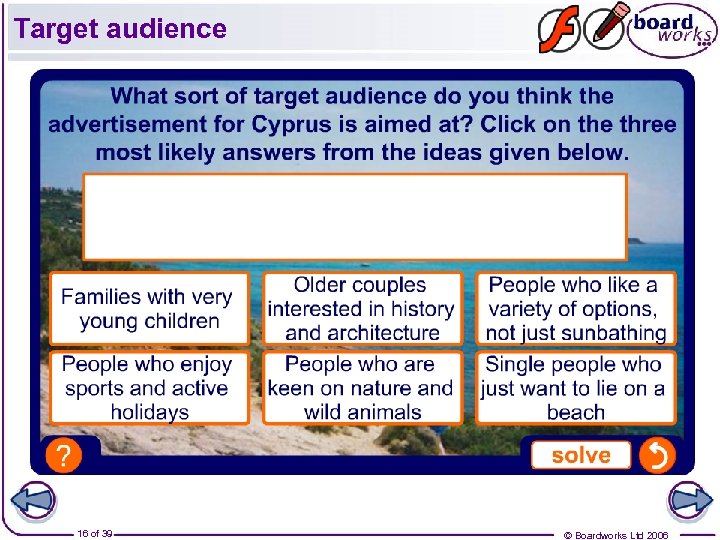 Target audience 16 of 39 © Boardworks Ltd 2006
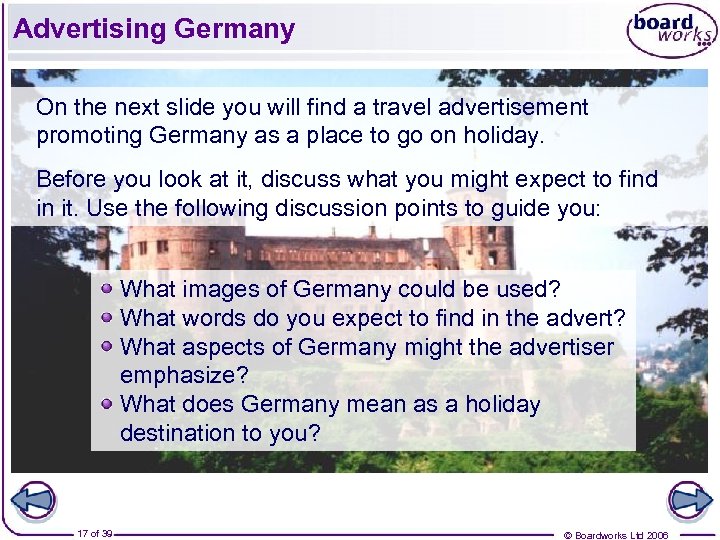 Advertising Germany On the next slide you will find a travel advertisement promoting Germany as a place to go on holiday. Before you look at it, discuss what you might expect to find in it. Use the following discussion points to guide you: What images of Germany could be used? What words do you expect to find in the advert? What aspects of Germany might the advertiser emphasize? What does Germany mean as a holiday destination to you? 17 of 39 © Boardworks Ltd 2006
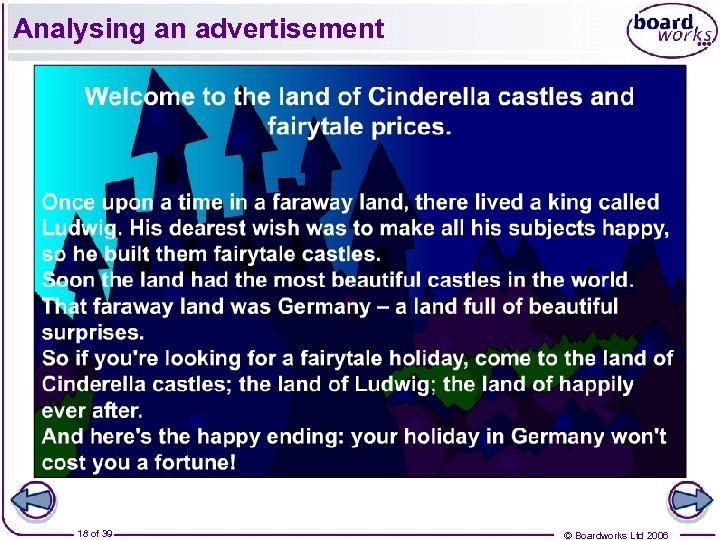 Analysing an advertisement 18 of 39 © Boardworks Ltd 2006
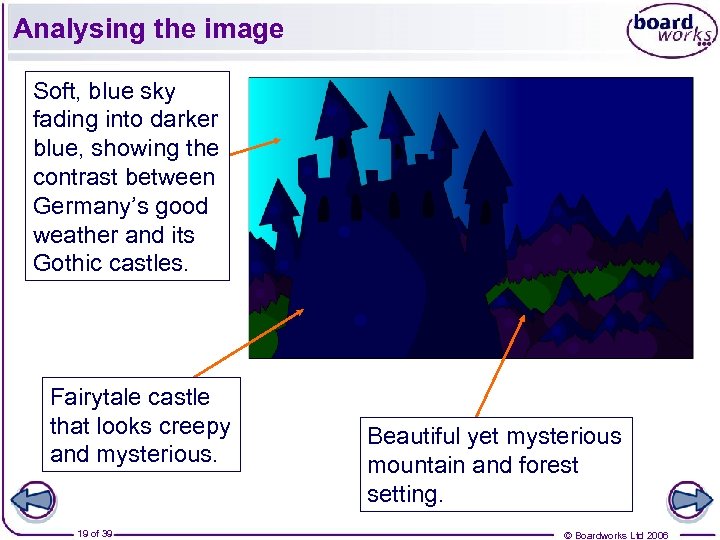 Analysing the image Soft, blue sky fading into darker blue, showing the contrast between Germany’s good weather and its Gothic castles. Fairytale castle that looks creepy and mysterious. 19 of 39 Beautiful yet mysterious mountain and forest setting. © Boardworks Ltd 2006
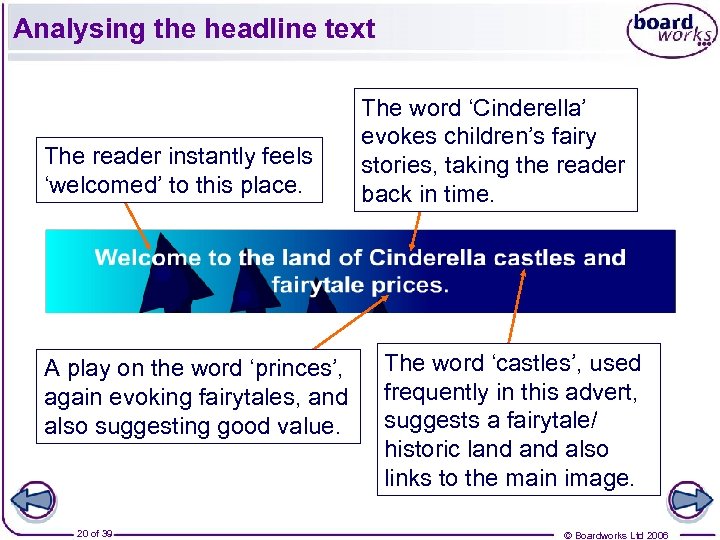 Analysing the headline text The reader instantly feels ‘welcomed’ to this place. A play on the word ‘princes’, again evoking fairytales, and also suggesting good value. 20 of 39 The word ‘Cinderella’ evokes children’s fairy stories, taking the reader back in time. The word ‘castles’, used frequently in this advert, suggests a fairytale/ historic land also links to the main image. © Boardworks Ltd 2006
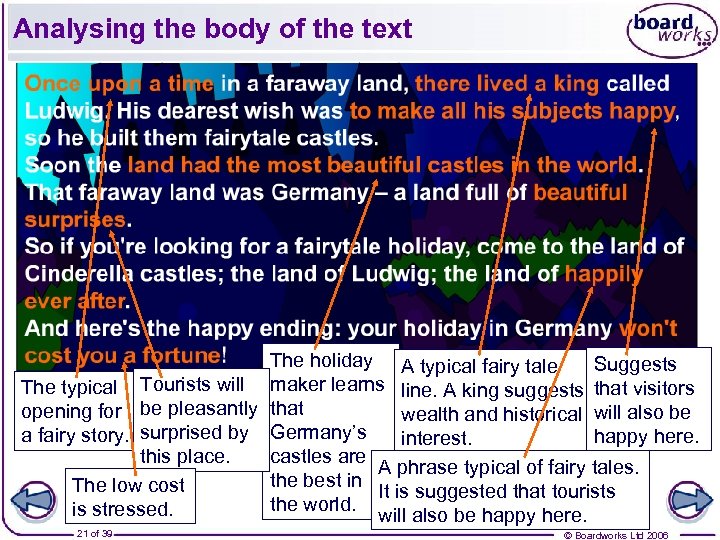 Analysing the body of the text The holiday A typical fairy tale Suggests The typical Tourists will maker learns line. A king suggests that visitors opening for be pleasantly that wealth and historical will also be a fairy story. surprised by Germany’s happy here. interest. castles are this place. A phrase typical of fairy tales. the best in The low cost It is suggested that tourists the world. is stressed. will also be happy here. 21 of 39 © Boardworks Ltd 2006
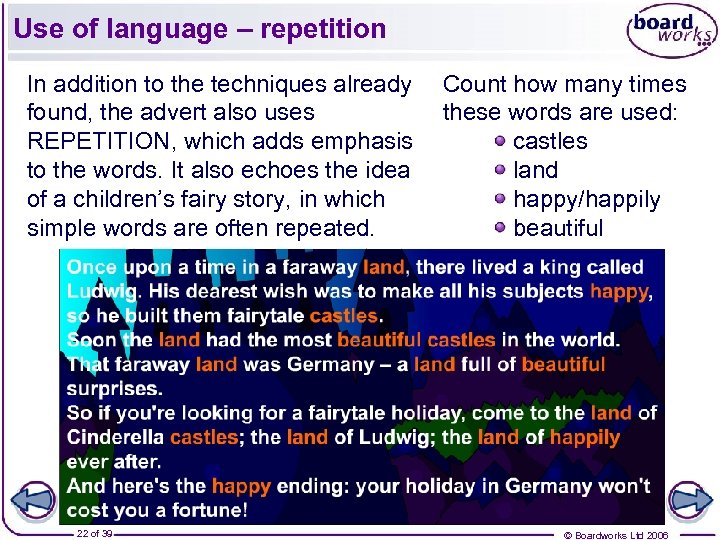 Use of language – repetition In addition to the techniques already found, the advert also uses REPETITION, which adds emphasis to the words. It also echoes the idea of a children’s fairy story, in which simple words are often repeated. 22 of 39 Count how many times these words are used: castles land happy/happily beautiful © Boardworks Ltd 2006
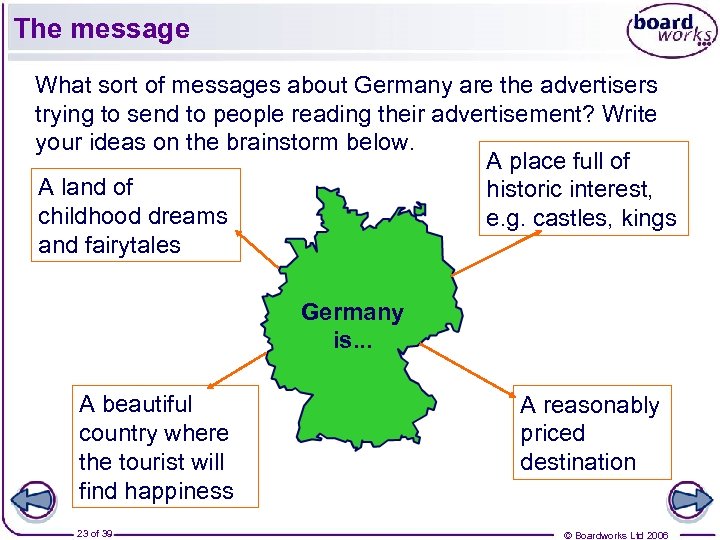 The message What sort of messages about Germany are the advertisers trying to send to people reading their advertisement? Write your ideas on the brainstorm below. A place full of A land of historic interest, childhood dreams e. g. castles, kings and fairytales Germany is. . . A beautiful country where the tourist will find happiness 23 of 39 A reasonably priced destination © Boardworks Ltd 2006
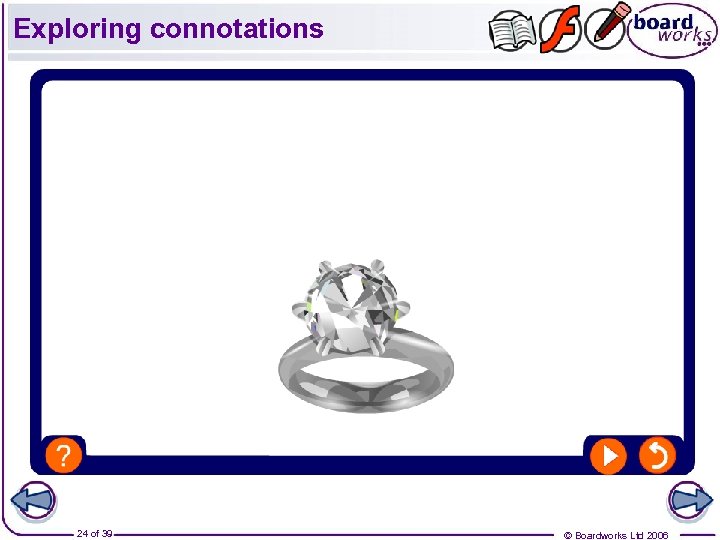 Exploring connotations 24 of 39 © Boardworks Ltd 2006
 Advertising India Let’s look at a travel advertisement promoting India as a place to go on holiday. Before you look at the advert, discuss what you might expect to find in it. Use the questions below to guide you. Which images of India could be used? Which words do you expect to find in the advertisement? Which aspects of India might the advertiser emphasize? What does India mean as a holiday destination to you? How do your expectations of an advertisement for India differ from one for Germany or Cyprus? 25 of 39 © Boardworks Ltd 2006
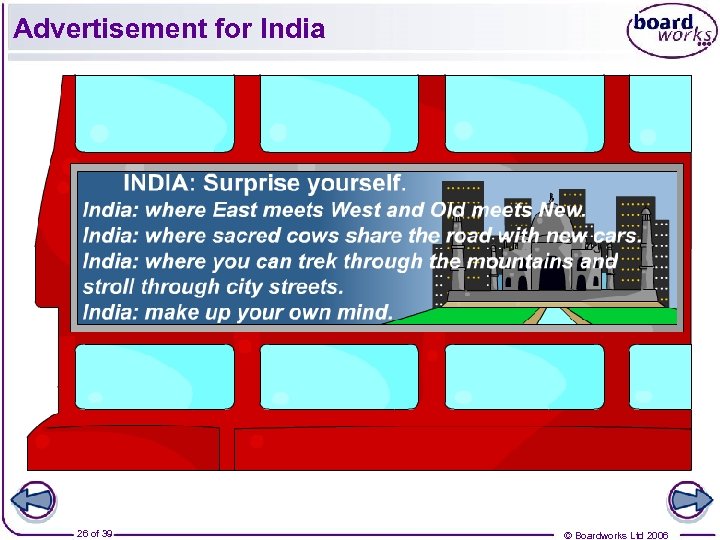 Advertisement for India 26 of 39 © Boardworks Ltd 2006
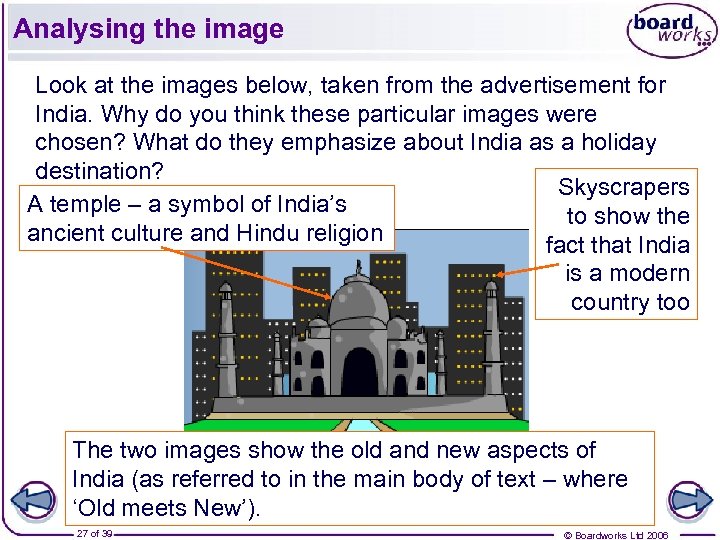 Analysing the image Look at the images below, taken from the advertisement for India. Why do you think these particular images were chosen? What do they emphasize about India as a holiday destination? Skyscrapers A temple – a symbol of India’s to show the ancient culture and Hindu religion fact that India is a modern country too The two images show the old and new aspects of India (as referred to in the main body of text – where ‘Old meets New’). 27 of 39 © Boardworks Ltd 2006
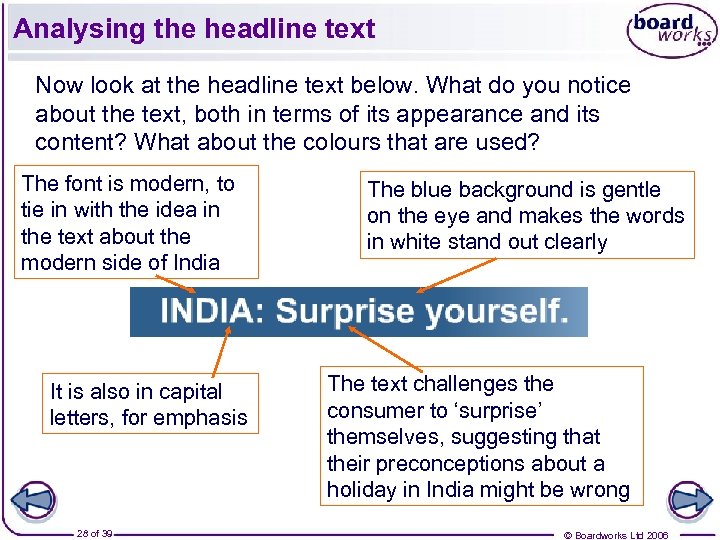 Analysing the headline text Now look at the headline text below. What do you notice about the text, both in terms of its appearance and its content? What about the colours that are used? The font is modern, to tie in with the idea in the text about the modern side of India It is also in capital letters, for emphasis 28 of 39 The blue background is gentle on the eye and makes the words in white stand out clearly The text challenges the consumer to ‘surprise’ themselves, suggesting that their preconceptions about a holiday in India might be wrong © Boardworks Ltd 2006
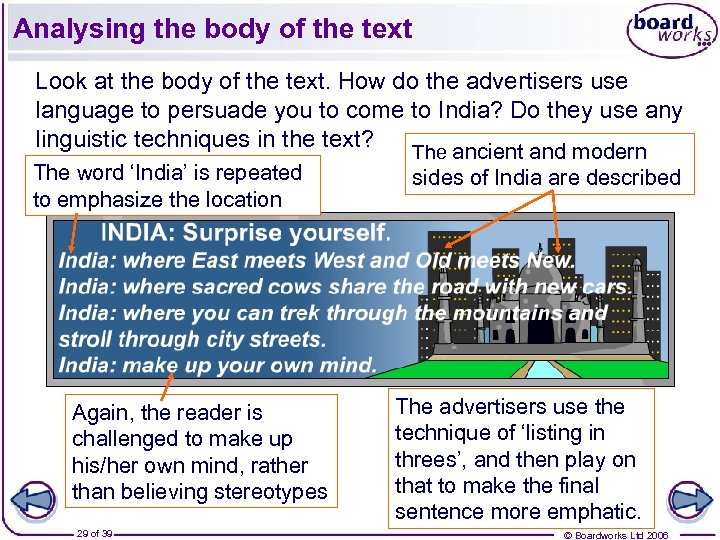 Analysing the body of the text Look at the body of the text. How do the advertisers use language to persuade you to come to India? Do they use any linguistic techniques in the text? The word ‘India’ is repeated to emphasize the location Again, the reader is challenged to make up his/her own mind, rather than believing stereotypes 29 of 39 The ancient and modern sides of India are described The advertisers use the technique of ‘listing in threes’, and then play on that to make the final sentence more emphatic. © Boardworks Ltd 2006
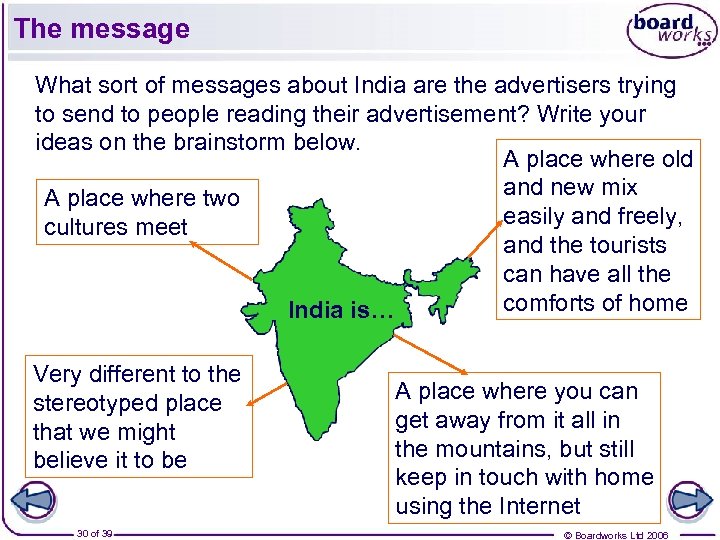 The message What sort of messages about India are the advertisers trying to send to people reading their advertisement? Write your ideas on the brainstorm below. A place where old and new mix A place where two easily and freely, cultures meet and the tourists can have all the comforts of home India is… Very different to the stereotyped place that we might believe it to be 30 of 39 A place where you can get away from it all in the mountains, but still keep in touch with home using the Internet © Boardworks Ltd 2006
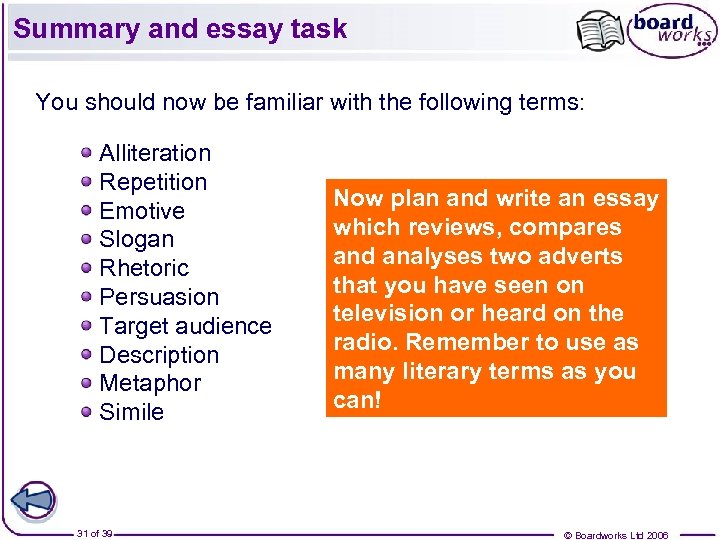 Summary and essay task You should now be familiar with the following terms: Alliteration Repetition Emotive Slogan Rhetoric Persuasion Target audience Description Metaphor Simile 31 of 39 Now plan and write an essay which reviews, compares and analyses two adverts that you have seen on television or heard on the radio. Remember to use as many literary terms as you can! © Boardworks Ltd 2006