Скачать презентацию Anaesthesia protocol development Insights from National societies regarding
1ffa43e7673f8c3990bb9d6ef1d274b4.ppt
- Количество слайдов: 25
 Anaesthesia protocol development: Insights from National societies regarding new antiplatelets, new anticoagulants and haemostatic agents G Ogweno Dept Of Medical Physiology Kenyatta University
 Factors contributing to protocol based healthcare Cost pressures Technological advances Increase in management-led decision making Consumer awareness Value for money movement Availability of information Non-clinicians with the authority to question effectiveness • International consensus • Professional accountability • Changing demographic profile • •
 Why protocols in anaesthesia? • To ‘standadize’ medical care, increase quality , effectiveness, specificity, sensitivity, resoluteness and patient outcomes=clinical pathways • ‘Experts’ best faith efforts to offer reasonable pathways for patient management • To enhance best evidence based practice
 What are protocols? • Special set of rules defining relationship=communication • Based on current evidence • Identify most important questions related to clinical practice, possible options and outcomes=decision points and course of action • Identify, summarise, evaluate highest quality evidence, risk vs benefit and cost effectiveness
 Forms of protocols • Summarized consensus statements on best practice • Guidelines: diagnosis, treatment by national associations • Clinical pathways • Trials: clinical, research
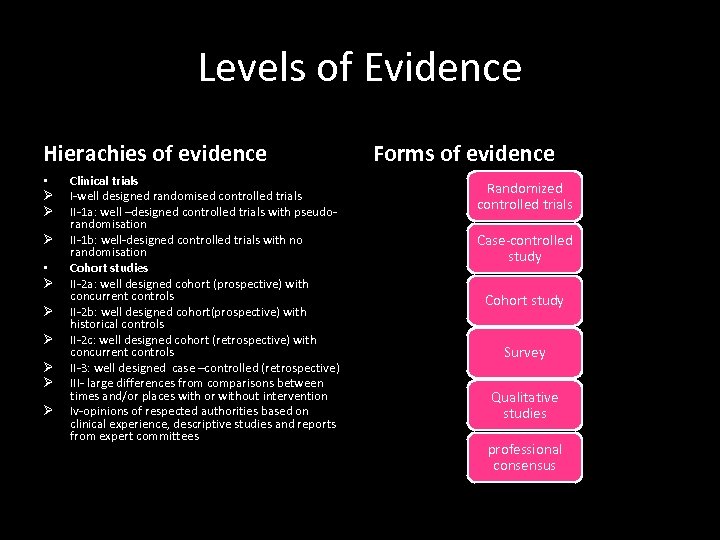 Levels of Evidence Hierachies of evidence • Ø Ø Ø Clinical trials I-well designed randomised controlled trials II-1 a: well –designed controlled trials with pseudorandomisation II-1 b: well-designed controlled trials with no randomisation Cohort studies II-2 a: well designed cohort (prospective) with concurrent controls II-2 b: well designed cohort(prospective) with historical controls II-2 c: well designed cohort (retrospective) with concurrent controls II-3: well designed case –controlled (retrospective) III- large differences from comparisons between times and/or places with or without intervention Iv-opinions of respected authorities based on clinical experience, descriptive studies and reports from expert committees Forms of evidence Randomized controlled trials Case-controlled study Cohort study Survey Qualitative studies professional consensus
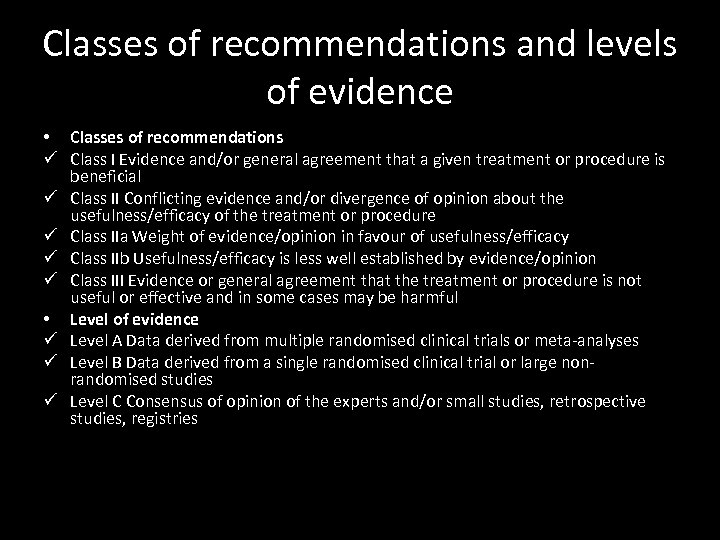 Classes of recommendations and levels of evidence • Classes of recommendations ü Class I Evidence and/or general agreement that a given treatment or procedure is beneficial ü Class II Conflicting evidence and/or divergence of opinion about the usefulness/efficacy of the treatment or procedure ü Class IIa Weight of evidence/opinion in favour of usefulness/efficacy ü Class IIb Usefulness/efficacy is less well established by evidence/opinion ü Class III Evidence or general agreement that the treatment or procedure is not useful or effective and in some cases may be harmful • Level of evidence ü Level A Data derived from multiple randomised clinical trials or meta-analyses ü Level B Data derived from a single randomised clinical trial or large nonrandomised studies ü Level C Consensus of opinion of the experts and/or small studies, retrospective studies, registries
 Perioperative Anticoagulation q. Indications • Patients on Anticoagulation undergoing surgery q Pitfalls • Over Anticoagulation or premature use results in significantly increased bleeding complications • Bleeding complications result in transfusions and stopping Anticoagulation which risks clots
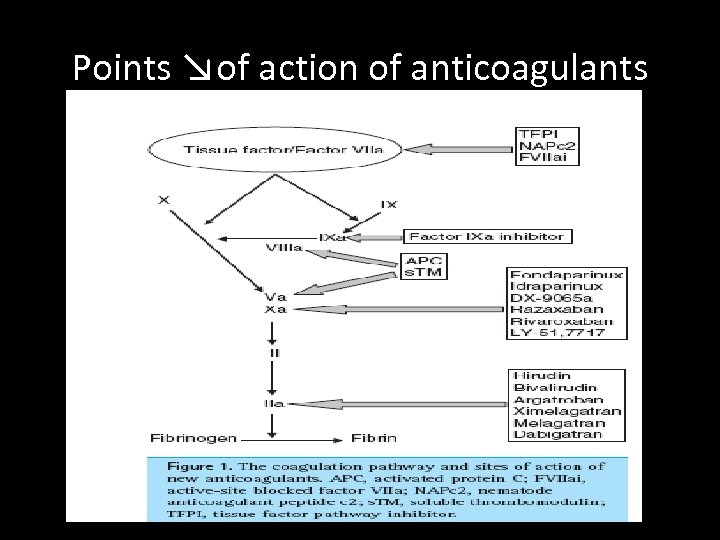 Points ↘of action of anticoagulants
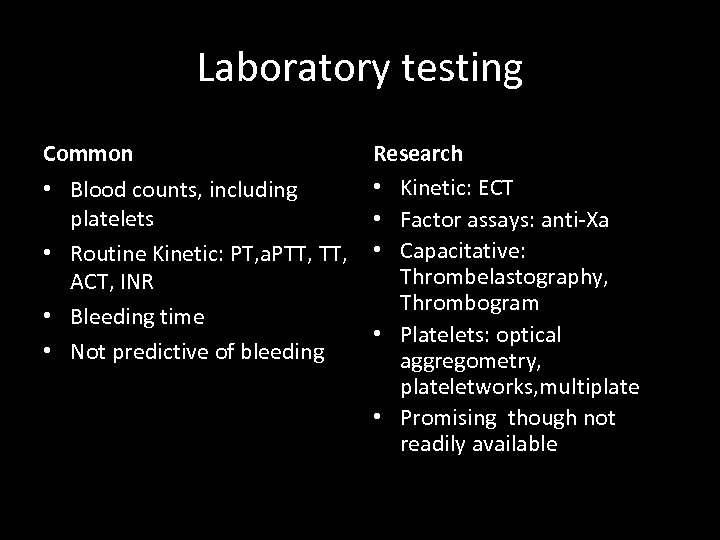 Laboratory testing Common • Blood counts, including platelets • Routine Kinetic: PT, a. PTT, ACT, INR • Bleeding time • Not predictive of bleeding Research • Kinetic: ECT • Factor assays: anti-Xa • Capacitative: Thrombelastography, Thrombogram • Platelets: optical aggregometry, plateletworks, multiplate • Promising though not readily available
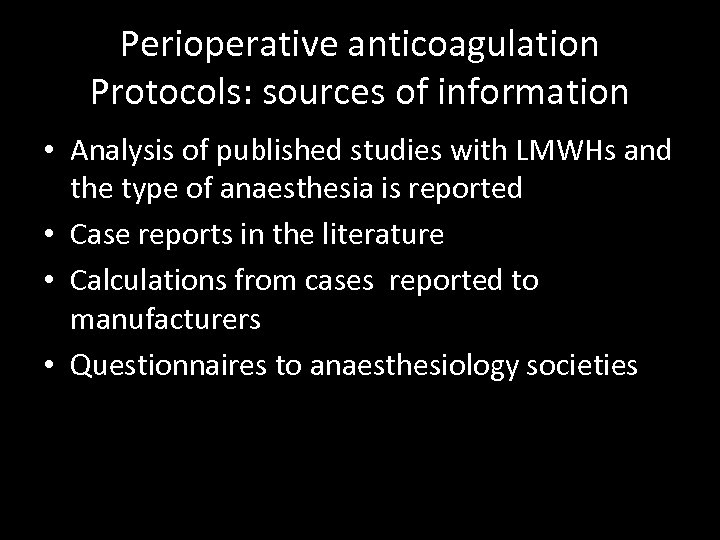 Perioperative anticoagulation Protocols: sources of information • Analysis of published studies with LMWHs and the type of anaesthesia is reported • Case reports in the literature • Calculations from cases reported to manufacturers • Questionnaires to anaesthesiology societies
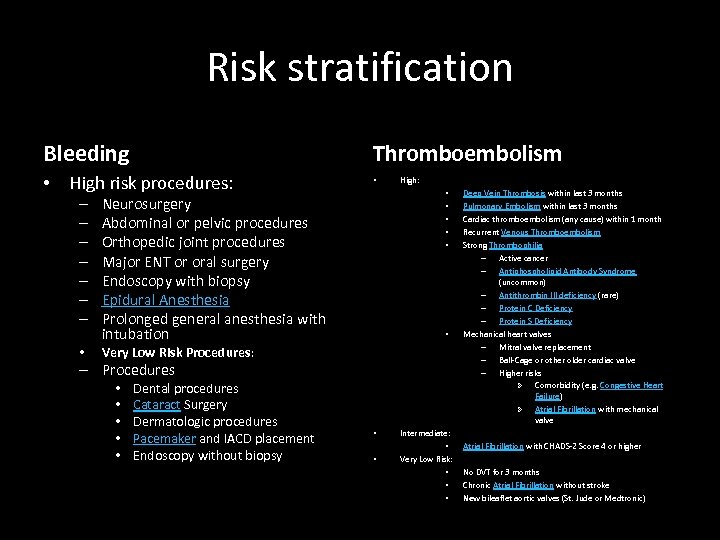 Risk stratification Bleeding • Thromboembolism High risk procedures: – – – – • • High: • • • Neurosurgery Abdominal or pelvic procedures Orthopedic joint procedures Major ENT or oral surgery Endoscopy with biopsy Epidural Anesthesia Prolonged general anesthesia with intubation • Very Low Risk Procedures: – Procedures • • • Dental procedures Cataract Surgery Dermatologic procedures Pacemaker and IACD placement Endoscopy without biopsy • Intermediate: • Deep Vein Thrombosis within last 3 months Pulmonary Embolism within last 3 months Cardiac thromboembolism (any cause) within 1 month Recurrent Venous Thromboembolism Strong Thrombophilia – Active cancer – Antiphospholipid Antibody Syndrome (uncommon) – Antithrombin III deficiency (rare) – Protein C Deficiency – Protein S Deficiency Mechanical heart valves – Mitral valve replacement – Ball-Cage or other older cardiac valve – Higher risks » Comorbidity (e. g. Congestive Heart Failure) » Atrial Fibrillation with mechanical valve Very Low Risk: • • Atrial Fibrillation with CHADS-2 Score 4 or higher No DVT for 3 months Chronic Atrial Fibrillation without stroke New bileaflet aortic valves (St. Jude or Medtronic)
 Central neural blockade (CNB) in anticoagulated patients: Risks • Symptomatic spinal/epidural haematoma • greatest risk appears effective during insertion or removal of spinal or epidural needles or catheters • SSEH do NOT necessarily progress to permanent neurological damage • Risk of SSEH appears higher for epidural than spinal-especially traumatic or difficult access • Not all vascular traumatic damage recognizable
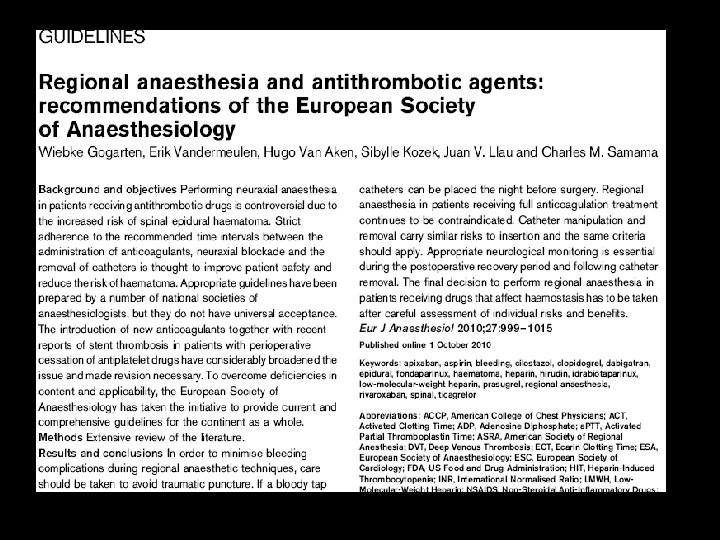
 LMWH and spinal Haematoma In US • Enoxaparin introduced US in 1992=dose 30 mg bd • More than 40 cases of spinal haematomas for 1 st 5 years of use • 1997: FDA issued warning, manufacturers to adjust insert • ASRA tasked to provide guidelines • Horlocker et al analysed case reports/ series of complications introduction of enoxaparin • ASRA consesus conferences in 1998, 2002, 2007 and 2007
 Highlights of US Guidelines • Anticoagulation is not an absolute contraindication for regional anesthesia • Regional anesthesia may be safely performed provided risk stratification is done • No added risk at prophylactic doses • Complications may be independent of drug action: patient related, procedure specific • Cases to be judged on individual basis and exercise caution= continous vigilance • Recognizes data insufficiency
 European perspectives • LMWH-enoxaparin many years experience@40 mg od • Moen et al 2004 review of severe neurological complications between 1990 -1999 Ø 1, 260, 000 spinal blocks Ø 450, 000 epidurals including 200, 000 labor epidurals
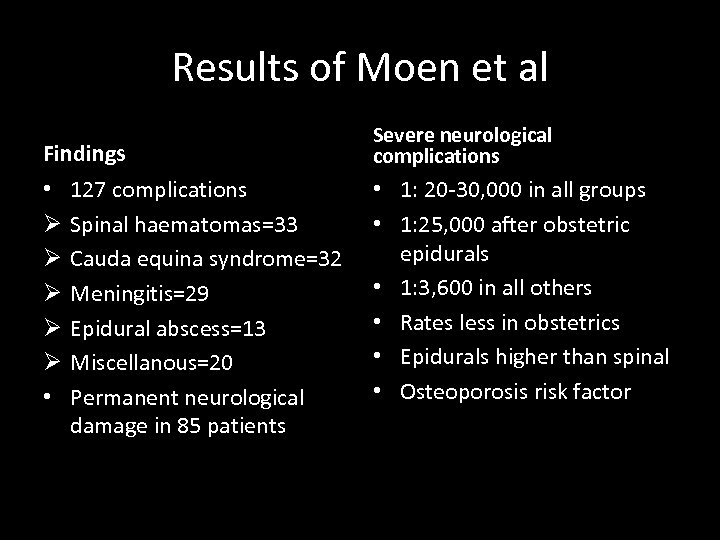 Results of Moen et al Findings • Ø Ø Ø • 127 complications Spinal haematomas=33 Cauda equina syndrome=32 Meningitis=29 Epidural abscess=13 Miscellanous=20 Permanent neurological damage in 85 patients Severe neurological complications • 1: 20 -30, 000 in all groups • 1: 25, 000 after obstetric epidurals • 1: 3, 600 in all others • Rates less in obstetrics • Epidurals higher than spinal • Osteoporosis risk factor
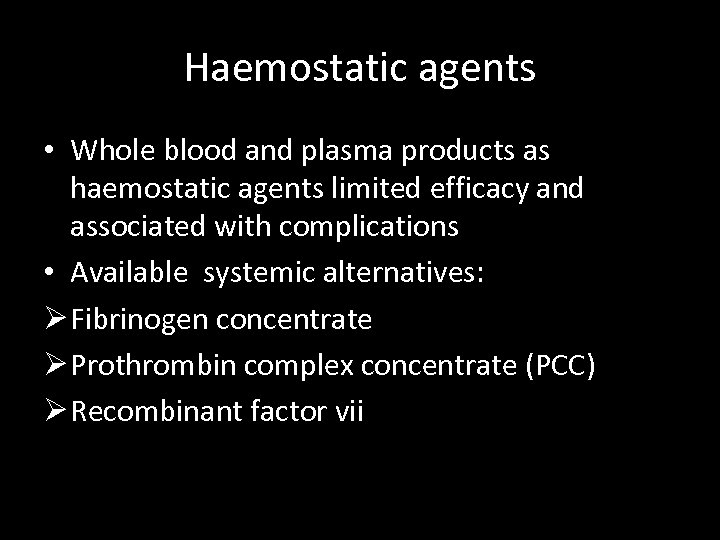 Haemostatic agents • Whole blood and plasma products as haemostatic agents limited efficacy and associated with complications • Available systemic alternatives: Ø Fibrinogen concentrate Ø Prothrombin complex concentrate (PCC) Ø Recombinant factor vii
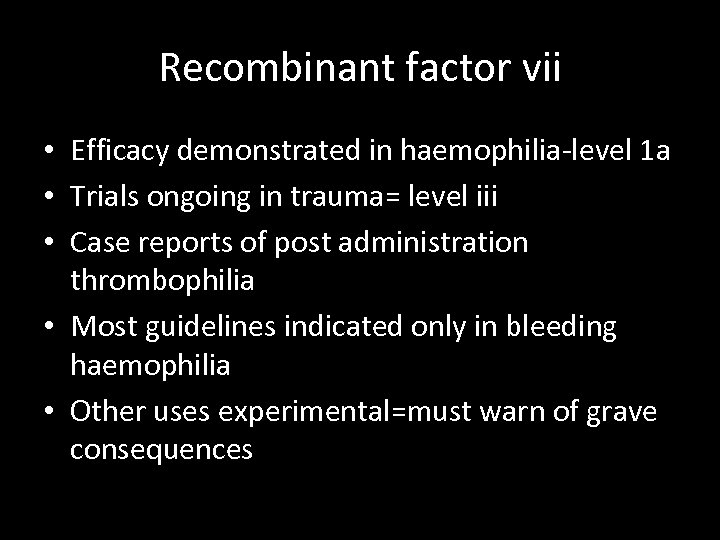 Recombinant factor vii • Efficacy demonstrated in haemophilia-level 1 a • Trials ongoing in trauma= level iii • Case reports of post administration thrombophilia • Most guidelines indicated only in bleeding haemophilia • Other uses experimental=must warn of grave consequences
 European perspectives on haemostatic agents • Efforts to eradicate use of FFP • Use of capacitative tests strongly recommended, if available • Strong recommendation on identification and replacement of individual factors • Austrian OGARI: use of fibrinogen and PCC as opposed to FFP in trauma
 Anesthetic management of patients receiving antiplatelet medications Exert diverse effects on platelet function Impossible to extrapolate between groups No wholly accepted test to guide therapy Appear to represent no added risk for CNB complications-actual risk unknown • Bleeding risk may be increased by concurrent use of other antithrombotic medications • Cyclooxygenase-2 inhibitors minimal effect on platelets, could be considered as alternatives • •
 Limitations of Guidelines • • Desired level of evidence does not exist Subject to major flaws Failure to account for multiple comorbidities Tend to produce an average result Unintended consequences Poorly understood factors Too complicated Misuse of guidelines
 Conclusions • Perioperative management of haemostatic agents pose significant challenge • Guidelines may help minimize risks • Risks vs benefit should be carefully weighed in any protocol development • Good protocols should be simple to follow and based on facts • Unfortunately, NO such data exist for perioperative antithrombotic agents