


 Скачать презентацию An overview of the EICV 2 Enquête
d4e54bb460fe707be52ab17fc358d1ed.ppt
- Количество слайдов: 7
 An overview of the EICV 2 ( Enquête Intégrale sur les Conditions de Vie des ménages 2005 - 2006) HLCS (Integrated Household Living Conditions Survey 2005 -2006 ) 1
 OBJECTIVES • Estimation of poverty statistics • Information on current living conditions of the population and the change since 2000/2001 • Information for sectoral policy design particulary EDPRS 2
 DOMAINS COVERED BY EICV 2 3
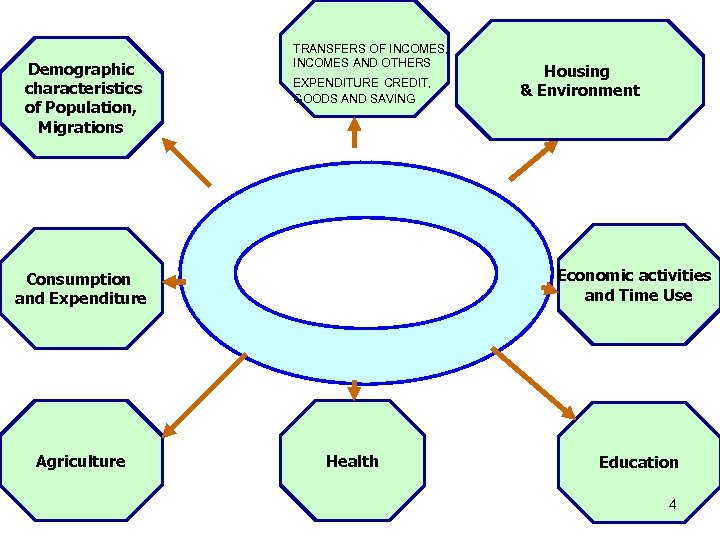 Demographic characteristics of Population, Migrations TRANSFERS OF INCOMES, INCOMES AND OTHERS EXPENDITURE CREDIT, GOODS AND SAVING Economic activities and Time Use Consumption and Expenditure Agriculture Housing & Environment Health Education 4
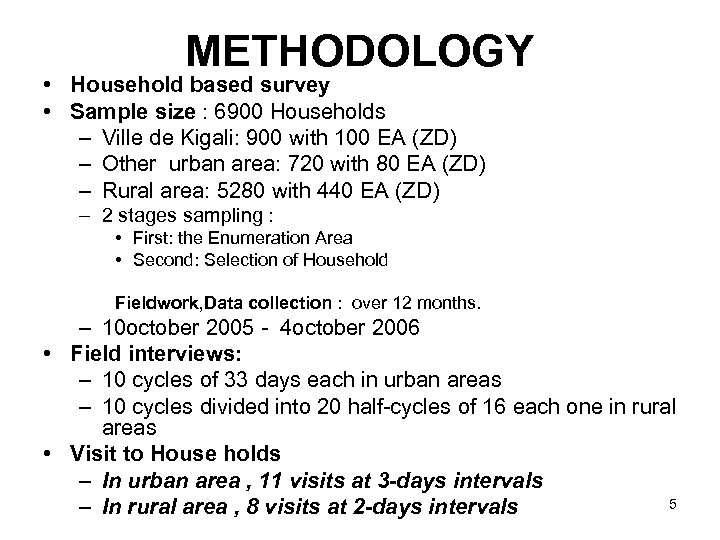 METHODOLOGY • Household based survey • Sample size : 6900 Households – Ville de Kigali: 900 with 100 EA (ZD) – Other urban area: 720 with 80 EA (ZD) – Rural area: 5280 with 440 EA (ZD) – 2 stages sampling : • First: the Enumeration Area • Second: Selection of Household Fieldwork, Data collection : over 12 months. – 10 october 2005 - 4 october 2006 • Field interviews: – 10 cycles of 33 days each in urban areas – 10 cycles divided into 20 half-cycles of 16 each one in rural areas • Visit to House holds – In urban area , 11 visits at 3 -days intervals 5 – In rural area , 8 visits at 2 -days intervals
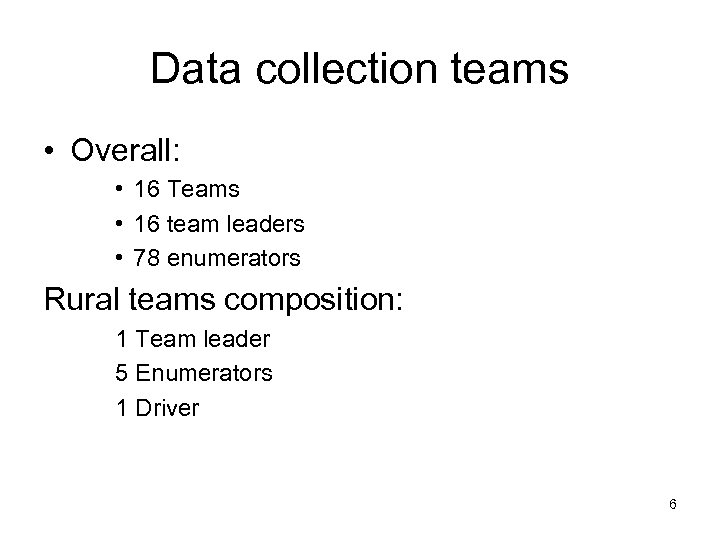 Data collection teams • Overall: • 16 Teams • 16 team leaders • 78 enumerators Rural teams composition: 1 Team leader 5 Enumerators 1 Driver 6
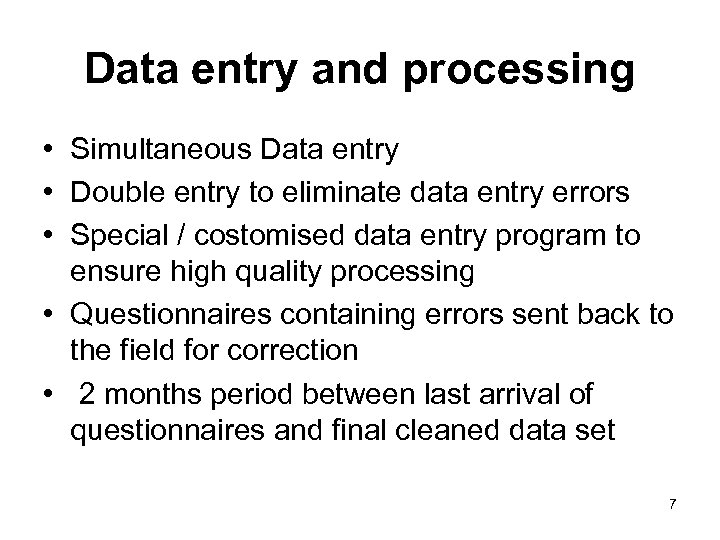 Data entry and processing • Simultaneous Data entry • Double entry to eliminate data entry errors • Special / costomised data entry program to ensure high quality processing • Questionnaires containing errors sent back to the field for correction • 2 months period between last arrival of questionnaires and final cleaned data set 7