


 Скачать презентацию An Open City The Role of Migration in
7fa747adc56f11f3917d127b1ad4a037.ppt
- Количество слайдов: 39
 An Open City: The Role of Migration in Cardiff Terry Threadgold Professor of Communication and Cultural Studies, Cardiff School of Journalism, Media and Cultural Studies Pro Vice Chancellor Staff, Cardiff University.
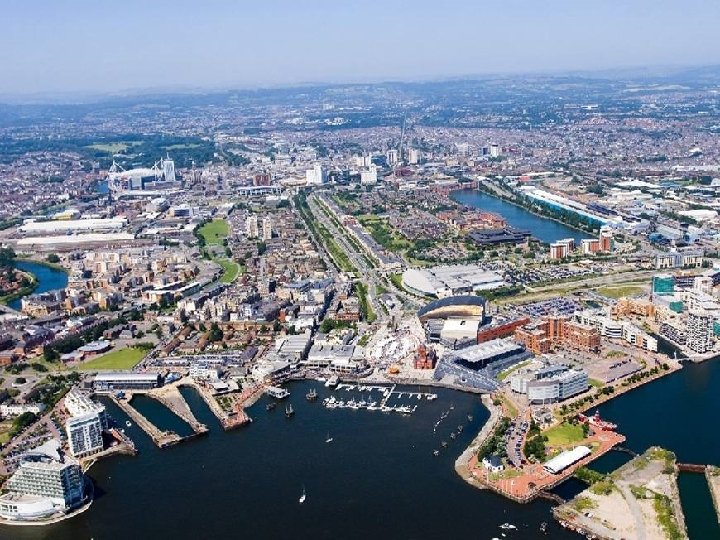
 The City of Cardiff • • Capital City for Wales Driver of the Welsh economy Population of 320, 000 people Modern and vibrant European city
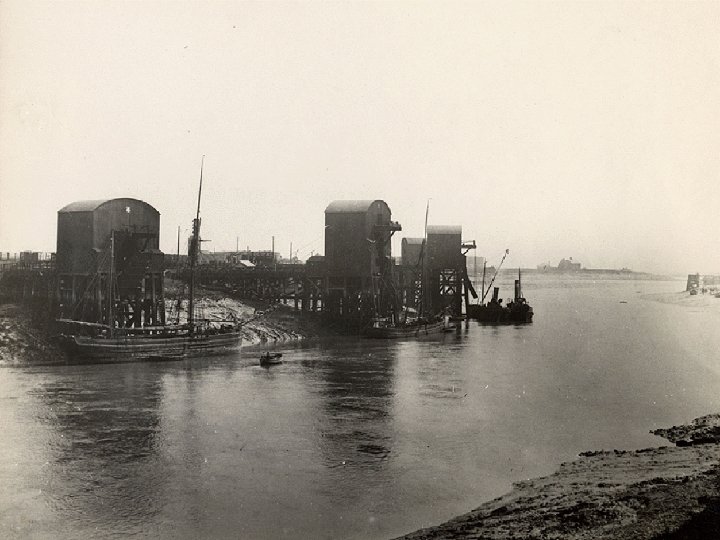
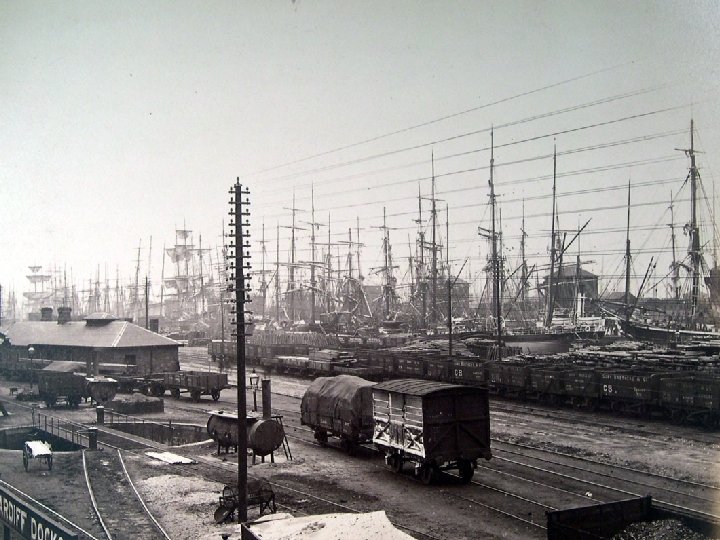
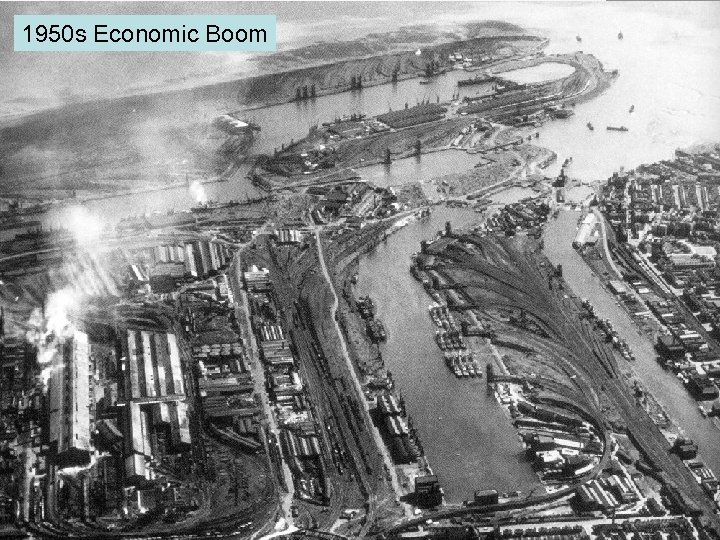 1950 s Economic Boom
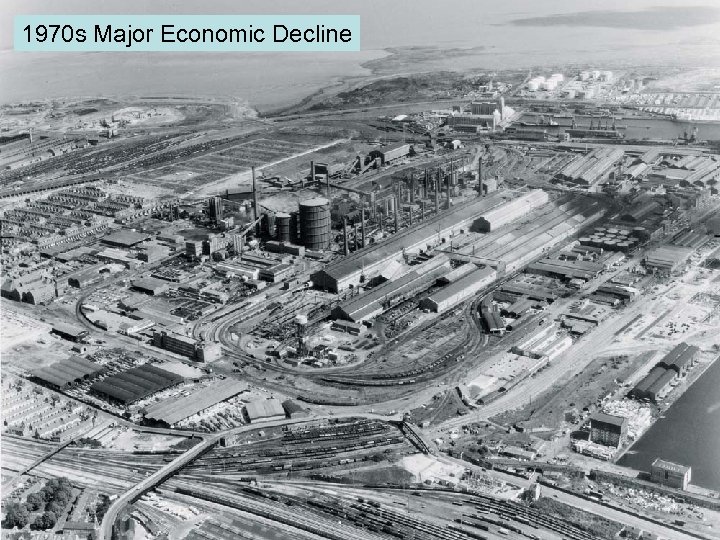 1970 s Major Economic Decline
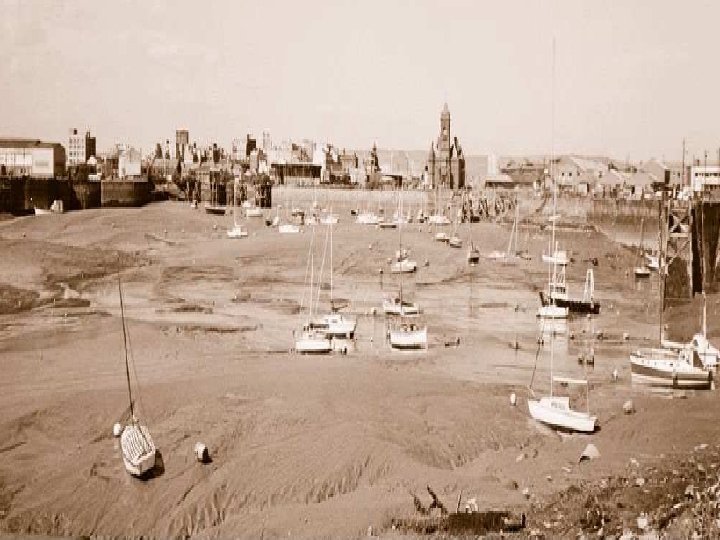
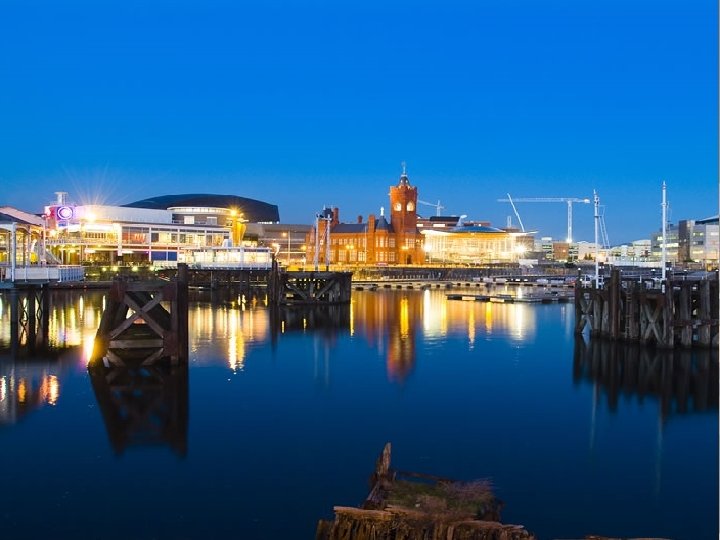
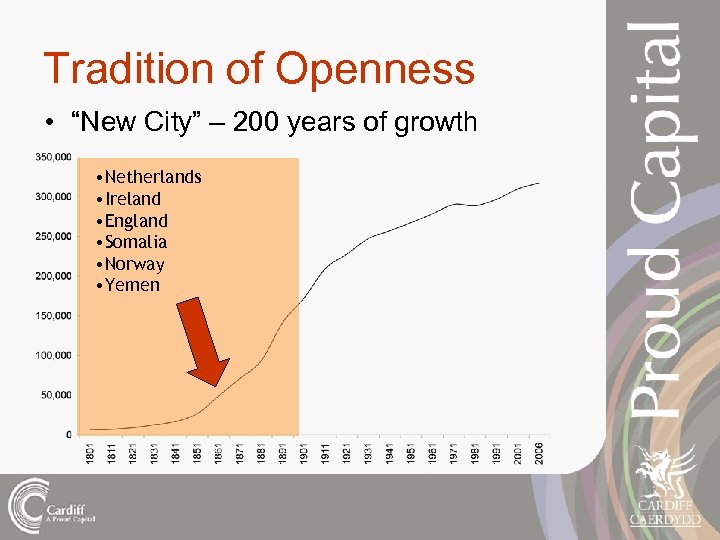 Tradition of Openness • “New City” – 200 years of growth • Netherlands • Ireland • England • Somalia • Norway • Yemen
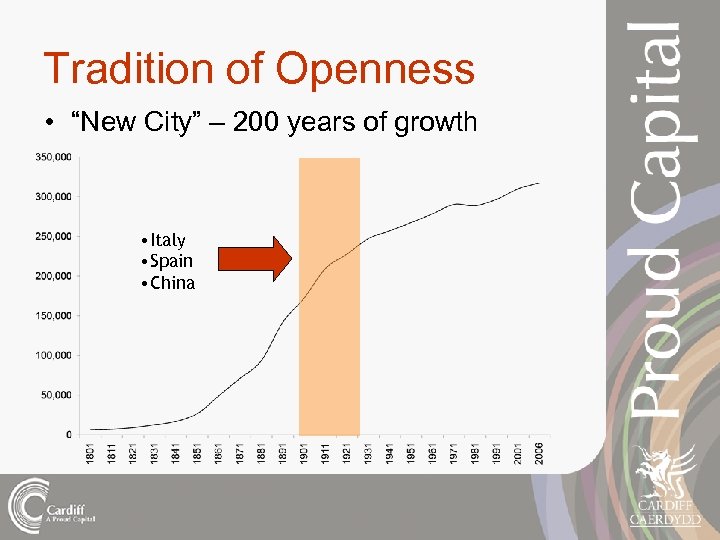 Tradition of Openness • “New City” – 200 years of growth • Italy • Spain • China
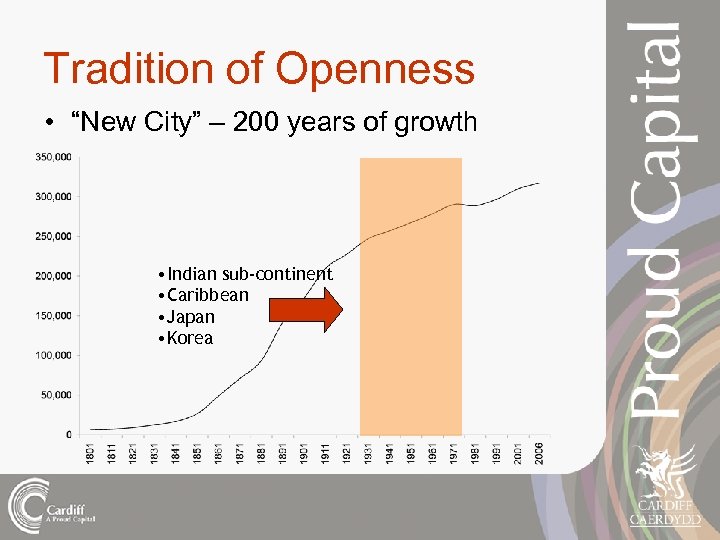 Tradition of Openness • “New City” – 200 years of growth • Indian sub-continent • Caribbean • Japan • Korea
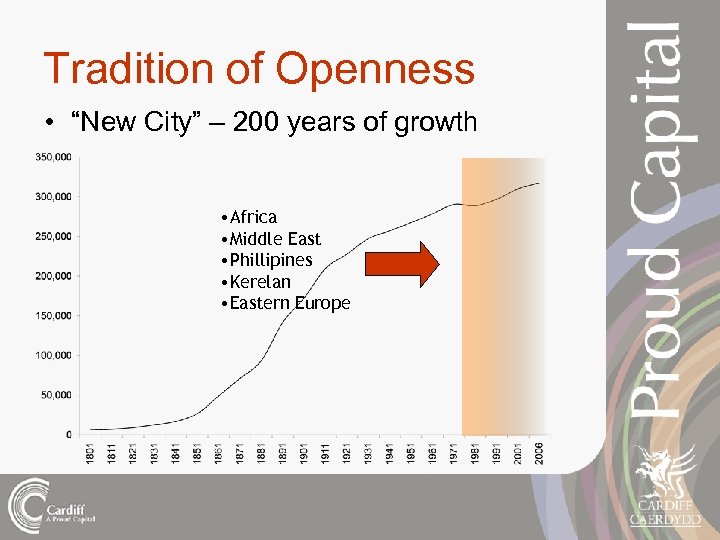 Tradition of Openness • “New City” – 200 years of growth • Africa • Middle East • Phillipines • Kerelan • Eastern Europe
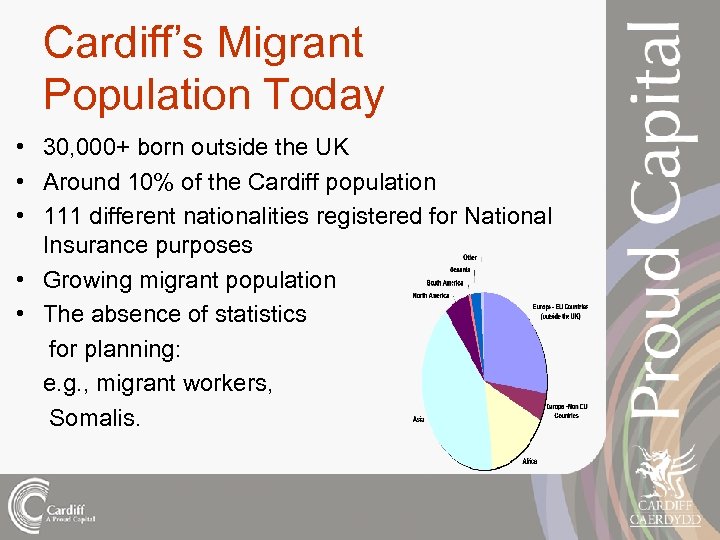 Cardiff’s Migrant Population Today • 30, 000+ born outside the UK • Around 10% of the Cardiff population • 111 different nationalities registered for National Insurance purposes • Growing migrant population • The absence of statistics for planning: e. g. , migrant workers, Somalis.
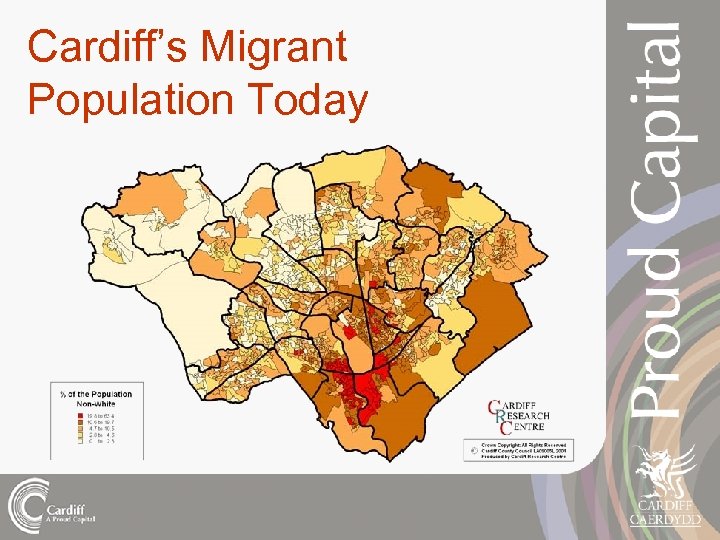 Cardiff’s Migrant Population Today
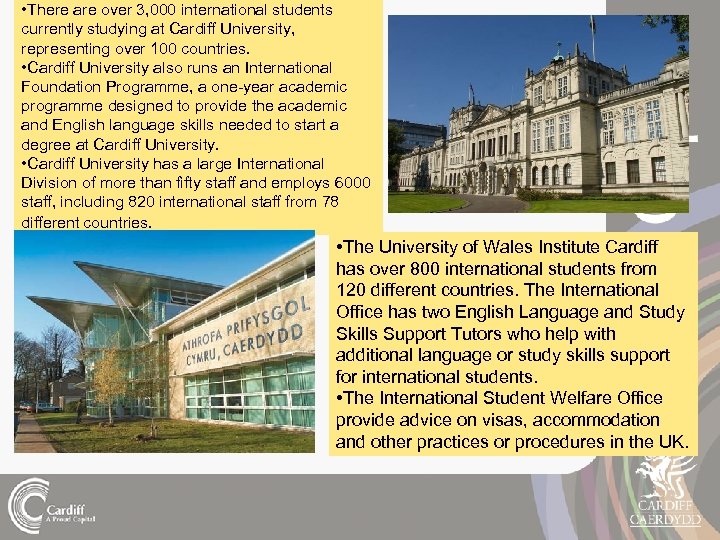 • There are over 3, 000 international students currently studying at Cardiff University, representing over 100 countries. • Cardiff University also runs an International Foundation Programme, a one-year academic programme designed to provide the academic and English language skills needed to start a degree at Cardiff University. • Cardiff University has a large International Division of more than fifty staff and employs 6000 staff, including 820 international staff from 78 different countries. • The University of Wales Institute Cardiff has over 800 international students from 120 different countries. The International Office has two English Language and Study Skills Support Tutors who help with additional language or study skills support for international students. • The International Student Welfare Office provide advice on visas, accommodation and other practices or procedures in the UK.
 Migration and Social Cohesion in South-East Wales (funded by the Joseph Rowntree Foundation) • This research was carried out in seven ‘communities’, or areas, In Cardiff in 2005 -6: • the long established Somali and Chinese communities; § the cross-ethnic groupings of Arabic speaking communities (including Yemeni, Iraqi and Sudanese groups but here excluding the Somalis); § a socio-economically deprived valleys community with a recent intake of migrant workers (Merthyr Tydfil);
 Migration and Social Cohesion in South-East Wales • the increasingly diverse but originally white working class Cathays ‘community’ located around Cardiff University; • the multi-ethnic and again originally white working and now often partly middle-class STAR (Splott, Tremorfa, Adamsdown and Roath) area of Cardiff; • the predominantly middle-class and partially Welsh speaking area of Llandaff which has been the site of considerable English and white immigration;
 Migration and Social Cohesion in South-East Wales • and a group of people we came to call ‘administrators’ because they construct or implement policy, or deliver services in areas regarded as central to integration (language support, housing, education, health, employment). • Included in this group were four media professionals. This was because of the recognized role of the media ‘in fuelling anxieties about migration’. • The majority of these people also belonged to the middle-class white ‘host’ community in Cardiff and Merthyr Tydfil.
 Research Questions • To explore the responses of different ‘host’ communities to new migration both historically and in the past ten years. • To focus as much on majority white as on ethnic minority communities. • To compare policy concerns with evidence based on lived realities.
 Methodology • 108 interviews, and 52 focus groups across seven communities/sites. • Began January 2005 and completed August 2006. • Participant observations. • Interviews with community leaders • Focus groups with community members. • The research was carried out by a team of 8 researchers, three speaking community languages
 The Welsh Context • We explored these things in the very specific and complex context of devolution in Wales where strategies and initiatives to do with immigration and asylum operate within the context of international, European and UK immigration, asylum and integration policies and legislation as well as: • the Welsh Assembly Government’s wider strategic all party agenda for Equality and Diversity
 The Research Context There is in fact surprisingly little knowledge about the social and economic disadvantage experienced by new migrants • Even less is known about the ways in which immigration can affect local areas or what the challenges are for new migrants and existing populations.
 Challenging the Policy Myths • • There is no evidence that community tensions are an inevitable consequence of new immigration. Our evidence indicates that the nature of relations varies according to: the local socio-economic context; the social class background and gender of both new immigrants and receiving communities; the history of previous settlement and the ethnic, age and class profile of the area; the actual and perceived ethnicity and class of new immigrants;
 • national and local media representations of immigration, asylum and migrant workers; • the legal status of new immigrants; • the success of local agencies and groups in mediating between established and incoming populations. This is true in both deprived and middle class areas.
 Findings: Work and Acceptance • There is a strong connection between community acceptance of new migrants and the ability of those migrants to work. • E. g. , the way diverse groups live and work side by side in relatively deprived areas. • In the more deprived areas of Cardiff all new migrants tend to be identified as ‘asylum seekers’ but are accepted once known to be ‘migrant workers’. • The acceptance of Chinese restaurant staff in middle class Llandaff because they work.
 Super Diversity not ‘Community’ • Diasporic or transnational communities with global links are not limited to the ethnic context; • These links do not necessarily have any impact on the capacity or willingness to integrate or on community cohesion; • Diaspora must be regarded as one normal way of living and being in the current global context. • Close knit communities of the traditional kind are in fact only found in the valleys context of Merthyr Tydfil in our research. • What is much more common is a very complex kind of ‘super diversity’.
 Who is Segregated? • There is is no evidence that ethnic minority groups are any more ‘segregated’ than receiving middle class and working class communities and none that they are any less well ‘integrated’ than some of those living in working class communities on council estates. ‘Integration’ is not used in these contexts. ‘Deprivation’ is.
 Recognising the Role of Social Class • Middle class ethnic community leaders and members with a level of education and experience which allows them to mix and negotiate with middle class ‘administrators’ make a huge, unrecognised, contribution to the local and national economy in their support of new migrants. • The same can be said of middle class ‘host’‘administrators’ and community members who work toward inclusion.
 Social Class and Race • Living in deprived, working class environments in Cardiff, has unexamined consequences for both integration and social cohesion. New migrants are anxious about alcohol and drugs and the behaviours of the youth in the host community. • Middle class asylum seekers, e. g. , from Sudan, live in the same poverty but have better community support and strategies of dealing with it than some other groups. • White immigration, whether middle class professional, student or migrant worker, appears to be invisible to local populations in Cardiff. At least it is not referred to as ‘immigration’.
 Lack of Communication • • There is evidence of a lack of communication between those who try to support incomers and the grassroots. Examples include the perceptions and realities of the Communities First Agenda in STAR, or misunderstandings about council initiatives to support Portugese migrant workers in Merthyr Tydfil.
 Intergenerational Issues • In many areas different age groups do live ‘parallel’ lives but that this does not necessarily produce tensions or lack of cohesion. E. g. , the older white working class residents in Cathays and the transient student populations; different age groups, Welsh speakers or the Chinese in Llandaff. • Where it does produce tensions, the tensions can be as much within communities as between them: e. g. , different age and gender dimensions within the Somali community interacting with different migration and settlement histories. • Inter-familial differences across all migrant groups produced by migration and the need to ‘integrate’.
 Factors which Inhibit Integration Fear of the outside: 1. In Llandaff people defined their communities in terms of the dangerous others outside it. 2. In Butetown and among the Somalis all over Cardiff it was ‘whiteness’ and what lay outside the community that could be alarming especially after 7/7 - the way ‘people look at you’ or ‘move away from you’. 3. With the Chinese it was often inadequate English which made them feel more comfortable among Chinese or means that the elderly do not access services to which they are entitled. 4. Undocumented workers (the Fujianese) often had no choice but to stay where they worked. 5. Myths about ‘others’ in both directions.
 Versions of Social Cohesion 1. 2. 3. In many areas of Cardiff (e. g. , STAR, Cathays, the Somalis), and among many groups (the Chinese, the Arab groups, Llandaff), huge diversity (and poverty and discrimination) is simply accommodated and lived with. The Merthyr situation with the influx of Portugese migrant workers is very different: attitudes are strong but community cohesion not greatly affected despite parallel lives. It is dealing with the issues of ‘integration’ which ultimately produces community and social cohesion. As one Somali focus group told us: having white friends alone does not solve the issues of poverty, ill health and unemployment with which they are faced.
 Economic Realities That has to mean acknowledging poverty and class difference; Dealing with the racism and discrimination which is evident in our research in every single area where integration is at risk (e. g. , language, housing, education, employment, health, community safety etc. ); Communicating more effectively Planning to work with the reality of super diversity rather than imagined communities.
 Approach to Governance and Diversity Community Strategy Vision: “To ensure that Cardiff is a world class European capital city with an exceptional “quality of life” and at the heart of a competitive city region. ” • Sets a long term vision and highlights the arrangements that enable the Strategy to be delivered; • Prepared in consultation with key strategic partners; • Developed using extensive consultation with local communities.
 Key Initiatives • Generic Activities – Impact Assessment – Involvement • Specific Activities – Monitoring – Equality Policy Team – Training – BME involvement – EMAS – ESOL – Leisure Outreach – Asylum and Refugee team – Health and Social Care – BME Housing Strategy
 Contemporary Migration Issues • Engagement • Council Focus Groups and consultation • REF activity • Planned communication activity • REF activity • Information from Migrants • Promotion of benefits Migration • Service Delivery • • ESOL Schools Health and Social Care Housing
 Contemporary Migration Issues • Community Safety • Combating racist harassment • Community cohesion • Combating economic exploitation – Work practices – Accommodation – Department of Work and Pensions