


 Скачать презентацию An Investigation of Cool Season Extratropical Cyclone Forecast
40063e4ab68f601420db06c09ed55a2b.ppt
- Количество слайдов: 24
 An Investigation of Cool Season Extratropical Cyclone Forecast Errors Within Operational Models Brian A. Colle 1 and Michael Charles 1, 2 1 2 School of Marine and Atmospheric Sciences Stony Brook University – SUNY National Centers for Environmental Prediction
 Motivation 1. Complete a long-term (5 -year) cyclone verification of the operational NCEP GFS and NAM models (several years since the last objective evaluation). 2. What synoptic flow patterns are associated with particular cyclone errors in operational models? 3. What is the impact of using the NCEP Short. Range Ensemble Forecast (SREF) system for cyclone prediction?
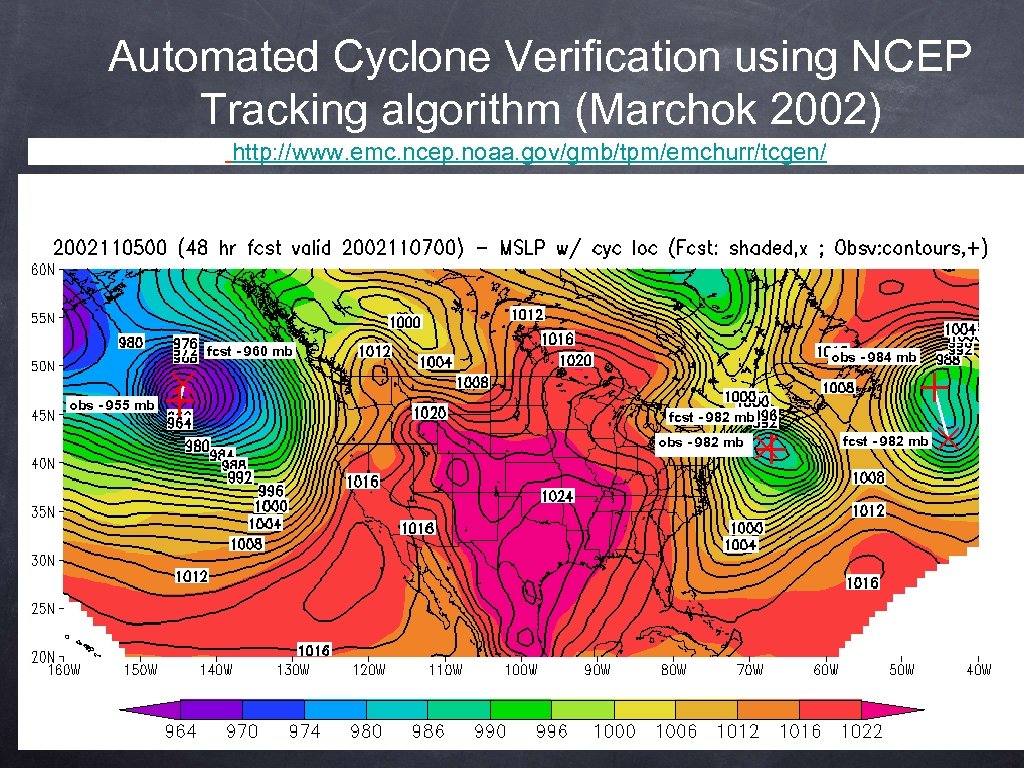 Automated Cyclone Verification using NCEP Tracking algorithm (Marchok 2002) http: //www. emc. ncep. noaa. gov/gmb/tpm/emchurr/tcgen/ fcst - 960 mb obs - 955 mb obs - 984 mb fcst - 982 mb obs - 982 mb fcst - 982 mb
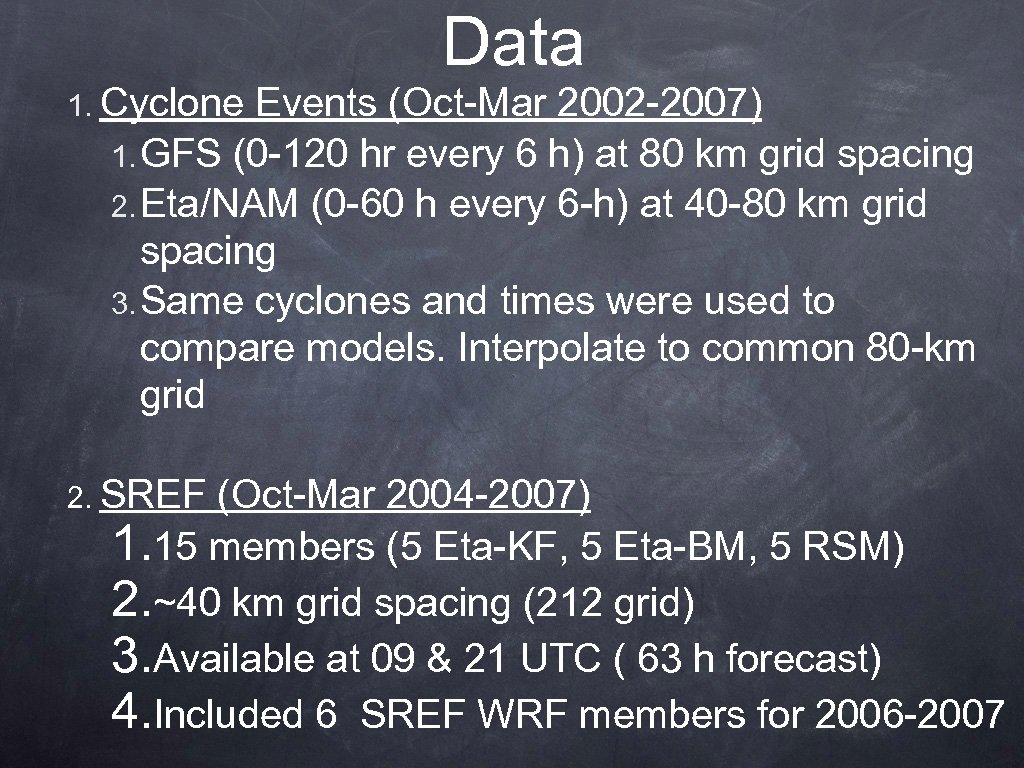 Data 1. Cyclone Events (Oct-Mar 2002 -2007) 1. GFS (0 -120 hr every 6 h) at 80 km grid spacing 2. Eta/NAM (0 -60 h every 6 -h) at 40 -80 km grid spacing 3. Same cyclones and times were used to compare models. Interpolate to common 80 -km grid 2. SREF (Oct-Mar 2004 -2007) 1. 15 members (5 Eta-KF, 5 Eta-BM, 5 RSM) 2. ~40 km grid spacing (212 grid) 3. Available at 09 & 21 UTC ( 63 h forecast) 4. Included 6 SREF WRF members for 2006 -2007
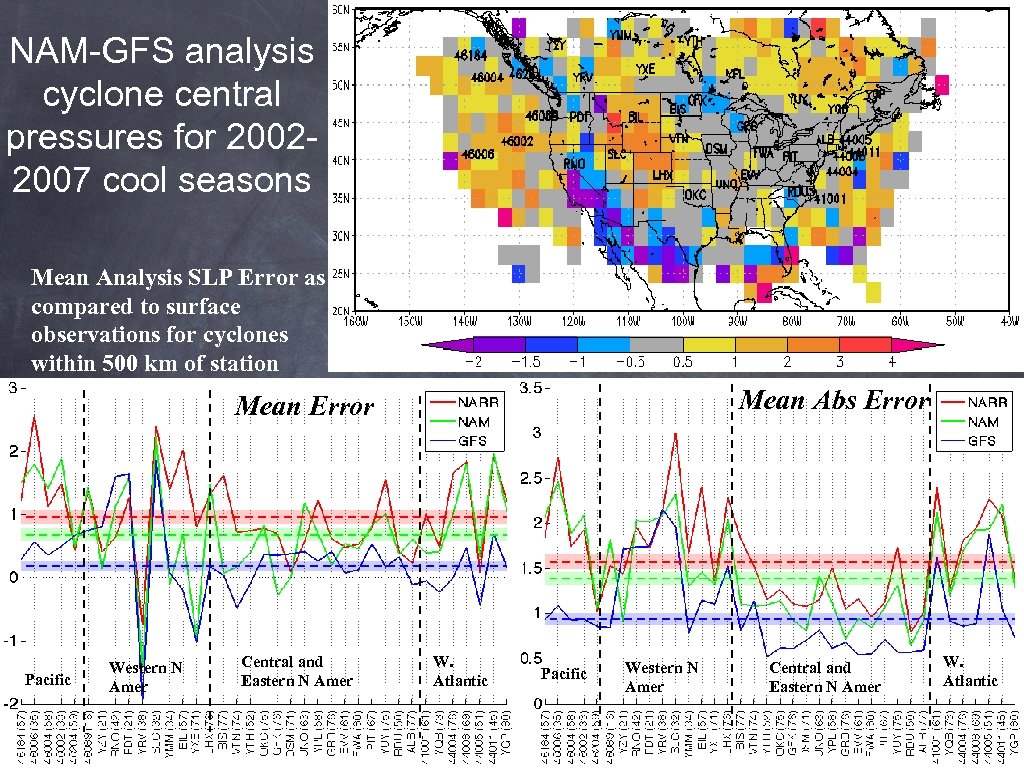 NAM-GFS analysis cyclone central pressures for 20022007 cool seasons Mean Analysis SLP Error as compared to surface observations for cyclones within 500 km of station Mean Abs Error Mean Error Pacific Western N Amer Central and Eastern N Amer W. Atlantic
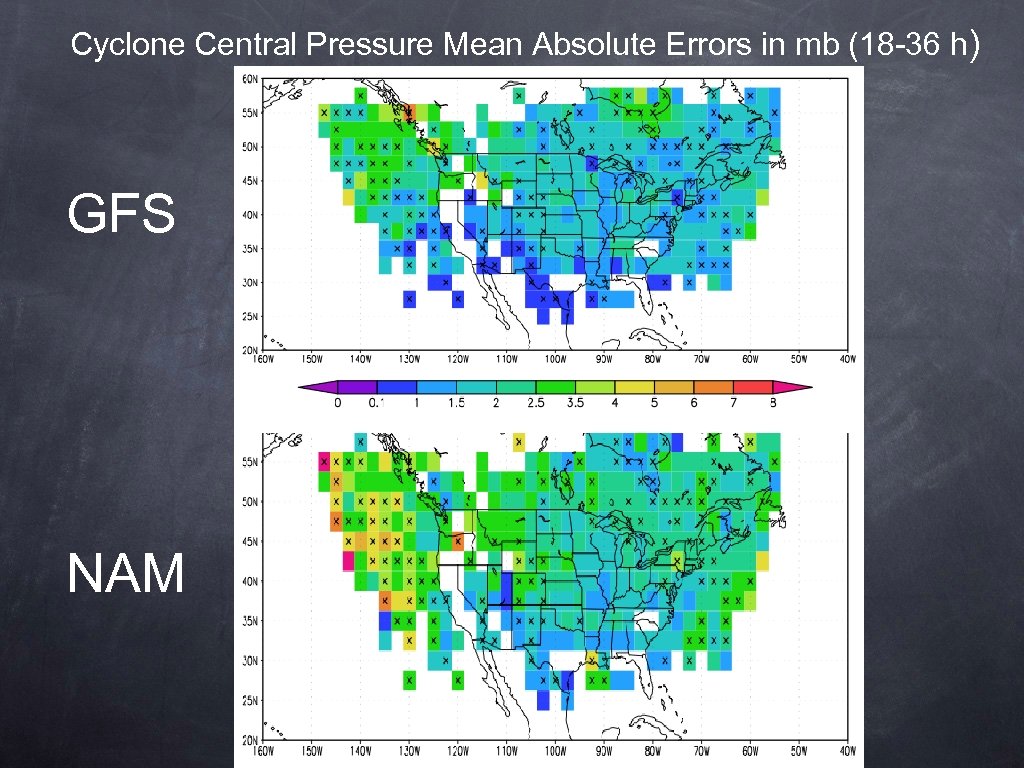 Cyclone Central Pressure Mean Absolute Errors in mb (18 -36 h) GFS NAM
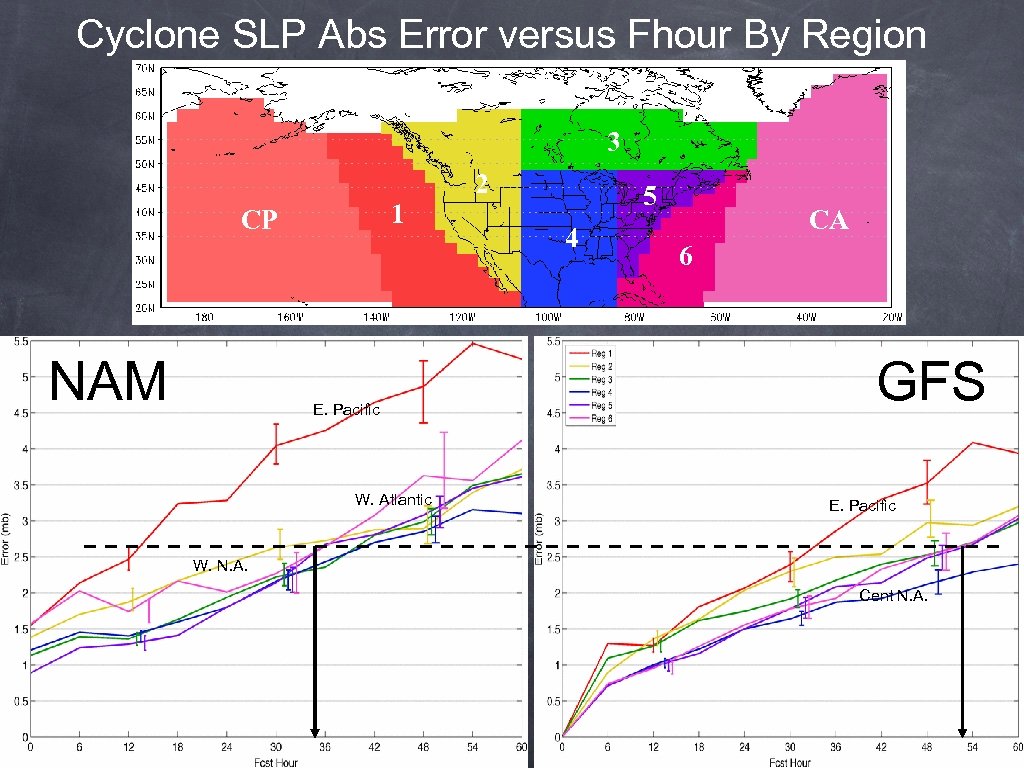 Cyclone SLP Abs Error versus Fhour By Region 3 1 CP NAM E. Pacific W. Atlantic 2 5 4 CA 6 GFS E. Pacific W. N. A. Cent N. A.
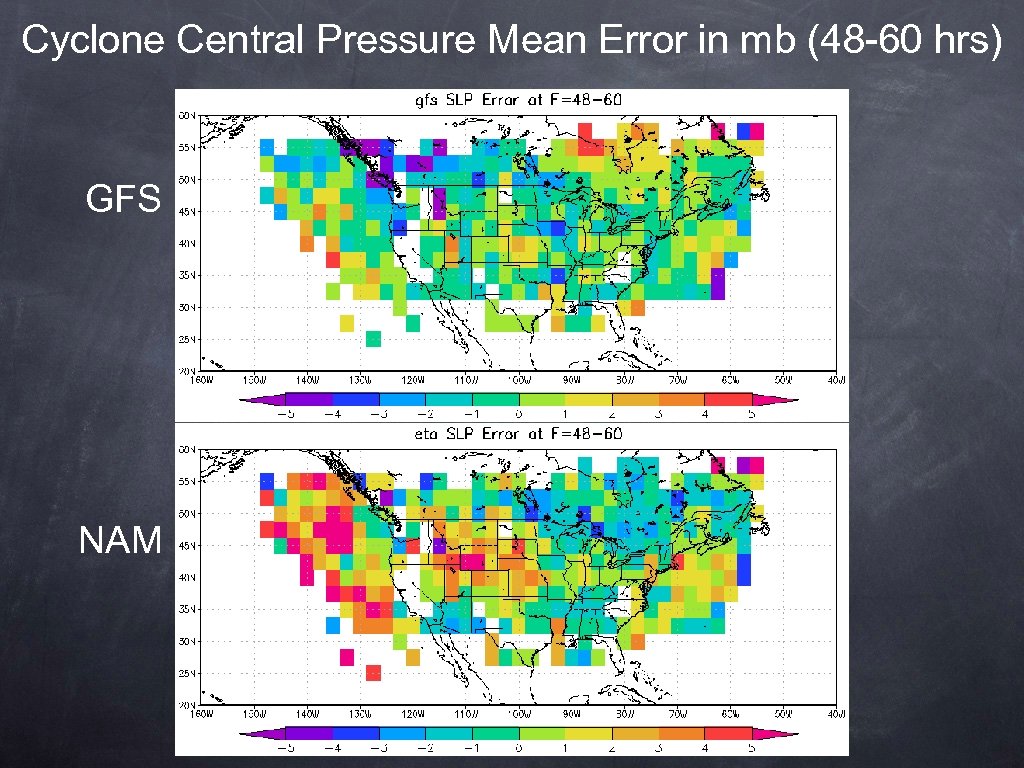 Cyclone Central Pressure Mean Error in mb (48 -60 hrs) GFS NAM
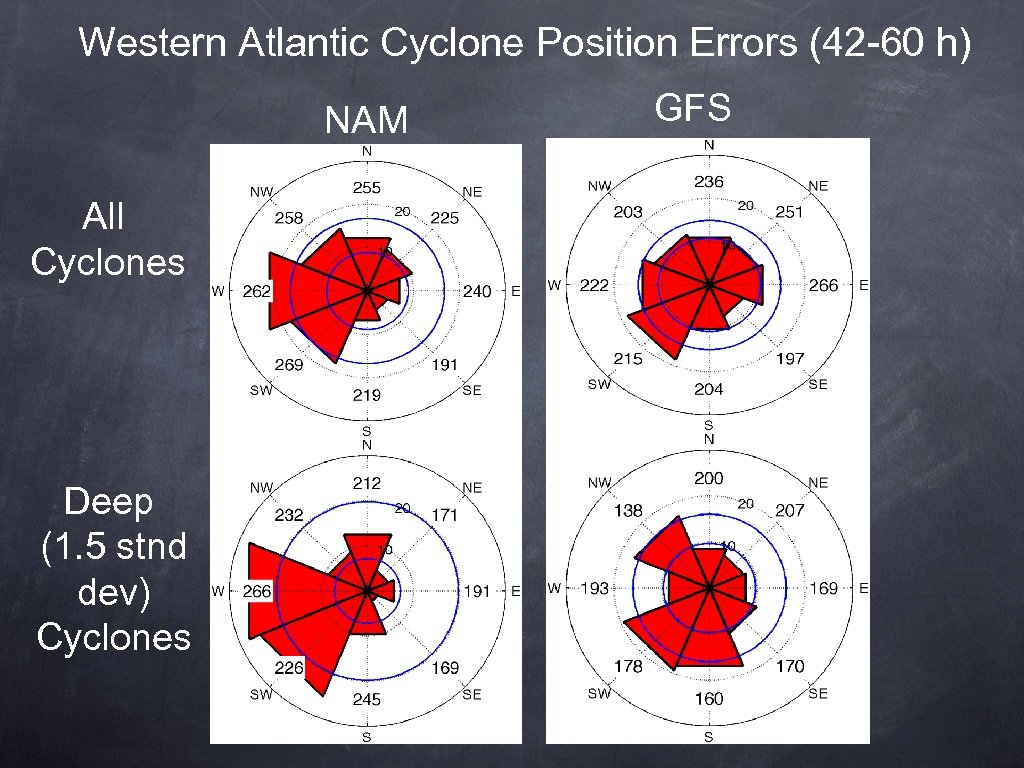 Western Atlantic Cyclone Position Errors (42 -60 h) NAM All Cyclones Deep (1. 5 stnd dev) Cyclones GFS
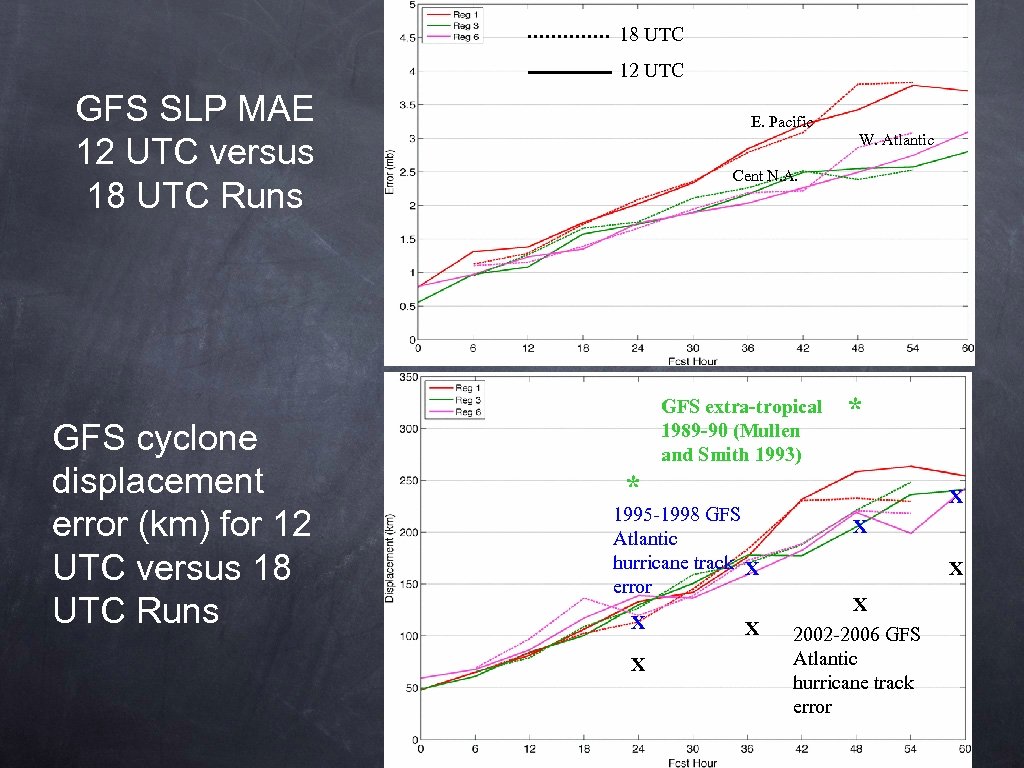 18 UTC 12 UTC GFS SLP MAE 12 UTC versus 18 UTC Runs GFS cyclone displacement error (km) for 12 UTC versus 18 UTC Runs E. Pacific W. Atlantic Cent N. A. GFS extra-tropical 1989 -90 (Mullen and Smith 1993) * * 1995 -1998 GFS Atlantic hurricane track X error X X X X 2002 -2006 GFS Atlantic hurricane track error
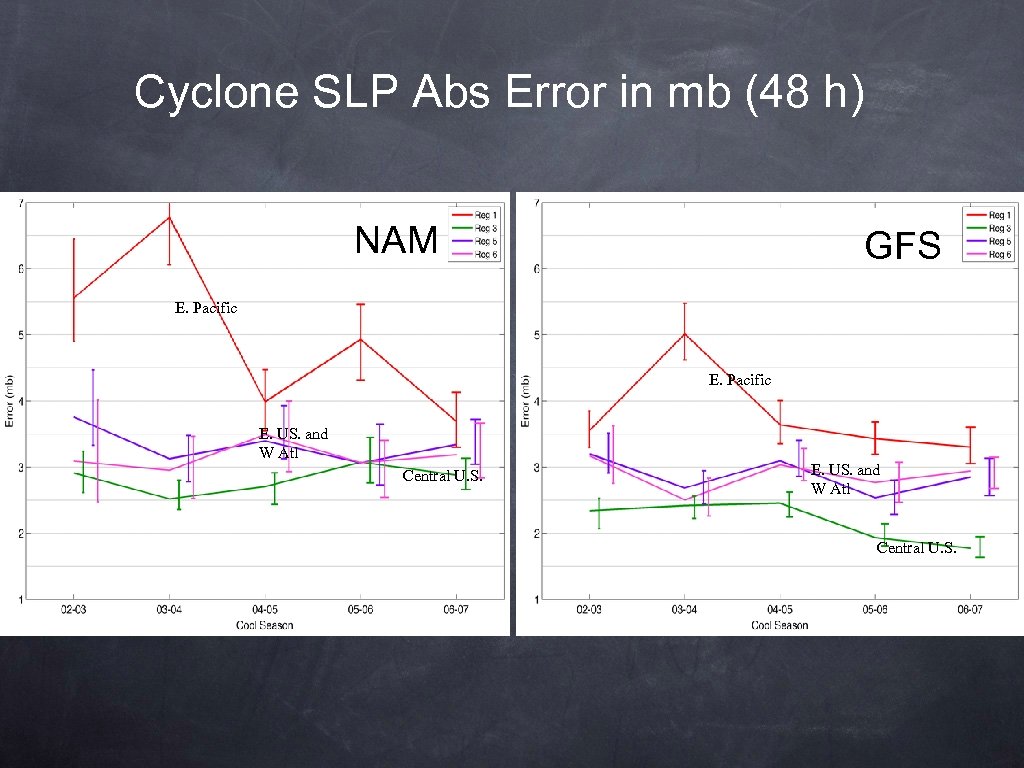 Cyclone SLP Abs Error in mb (48 h) NAM GFS E. Pacific E. US. and W Atl Central U. S.
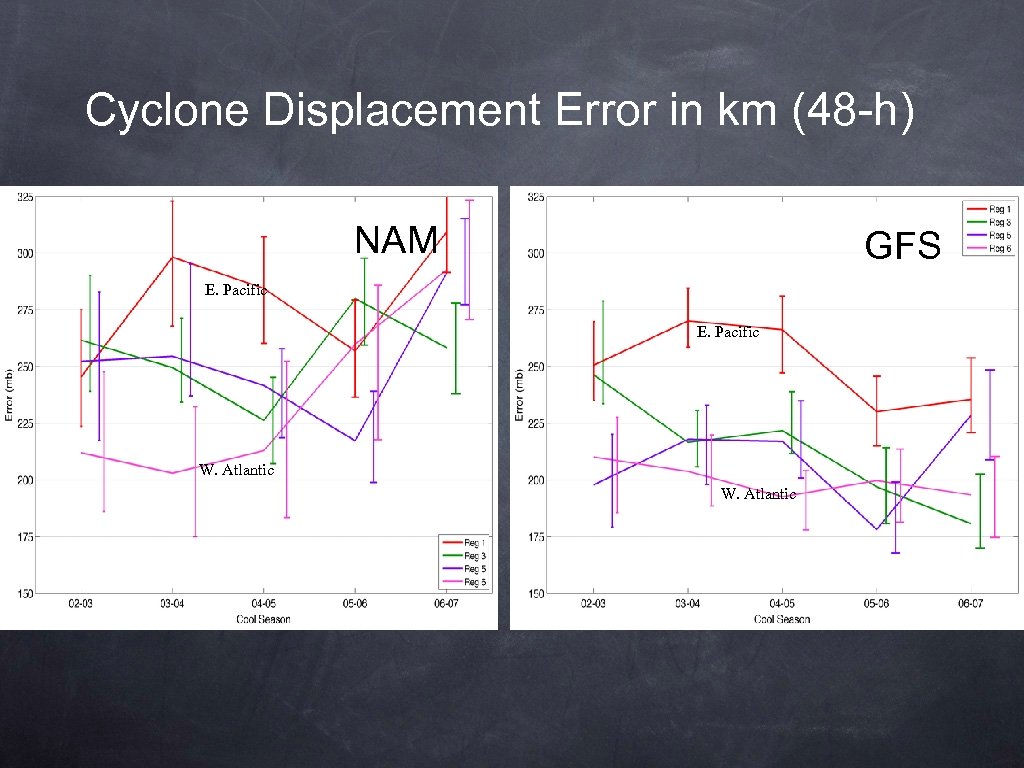 Cyclone Displacement Error in km (48 -h) NAM GFS E. Pacific W. Atlantic
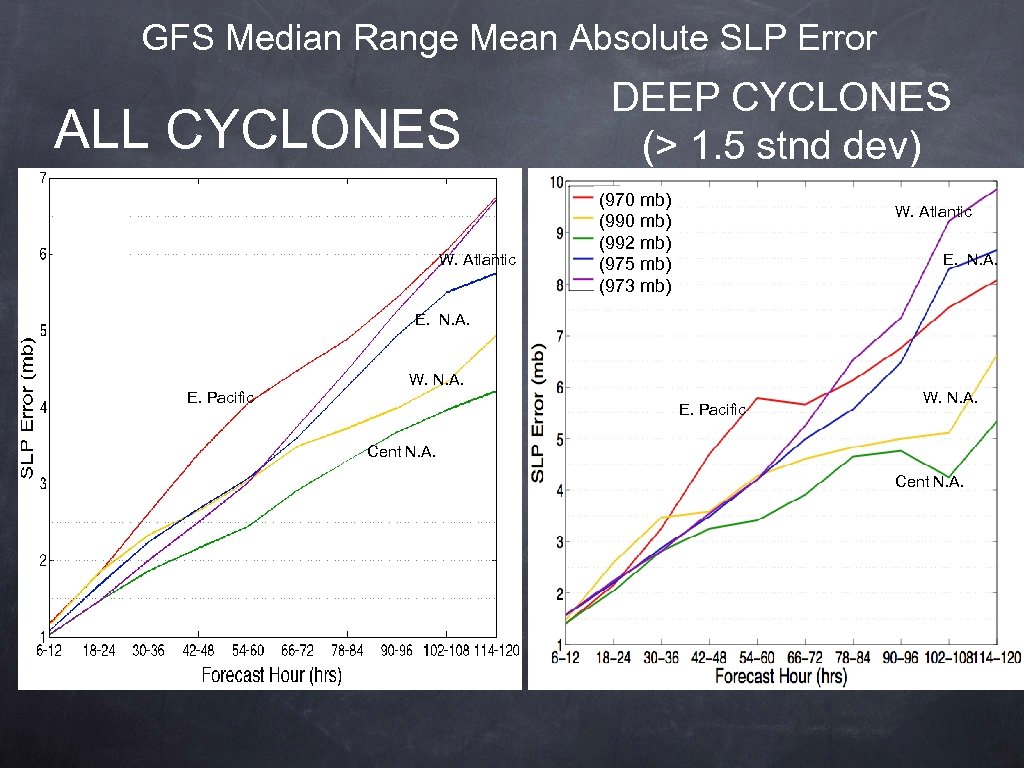 GFS Median Range Mean Absolute SLP Error ALL CYCLONES W. Atlantic DEEP CYCLONES (> 1. 5 stnd dev) (970 mb) (992 mb) (975 mb) (973 mb) W. Atlantic E. N. A. W. N. A. E. Pacific W. N. A. Cent N. A.
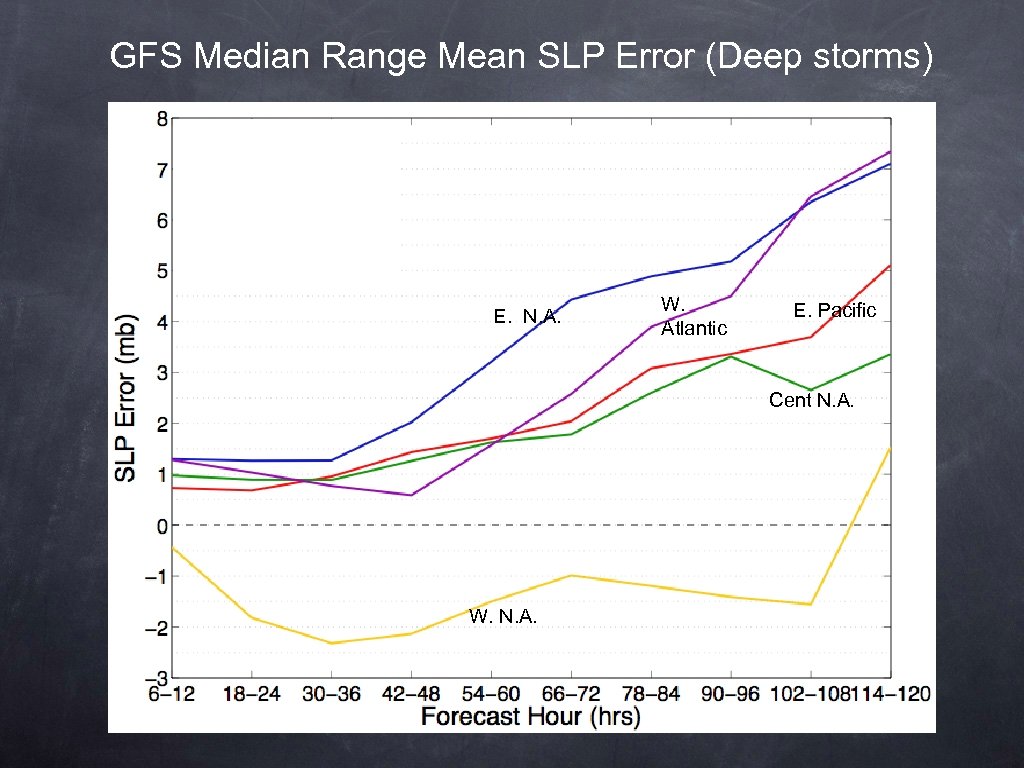 GFS Median Range Mean SLP Error (Deep storms) (970 mb) (992 mb) (975 mb) (973 mb) E. N. A. W. Atlantic E. Pacific Cent N. A. W. N. A.
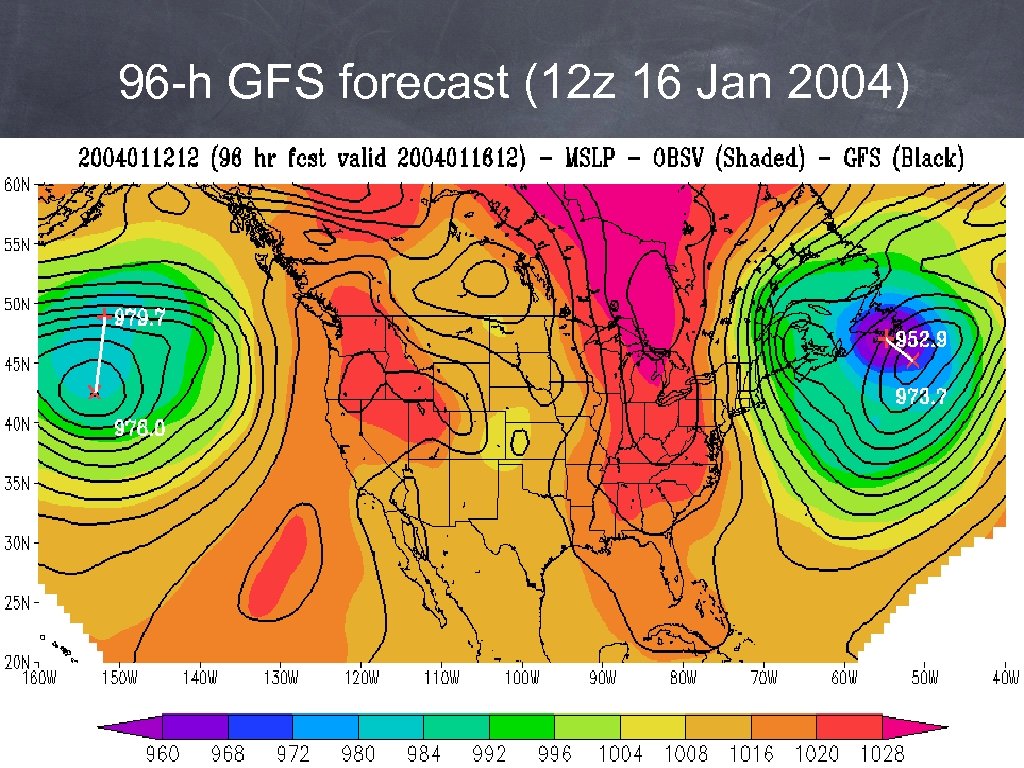 96 -h GFS forecast (12 z 16 Jan 2004)
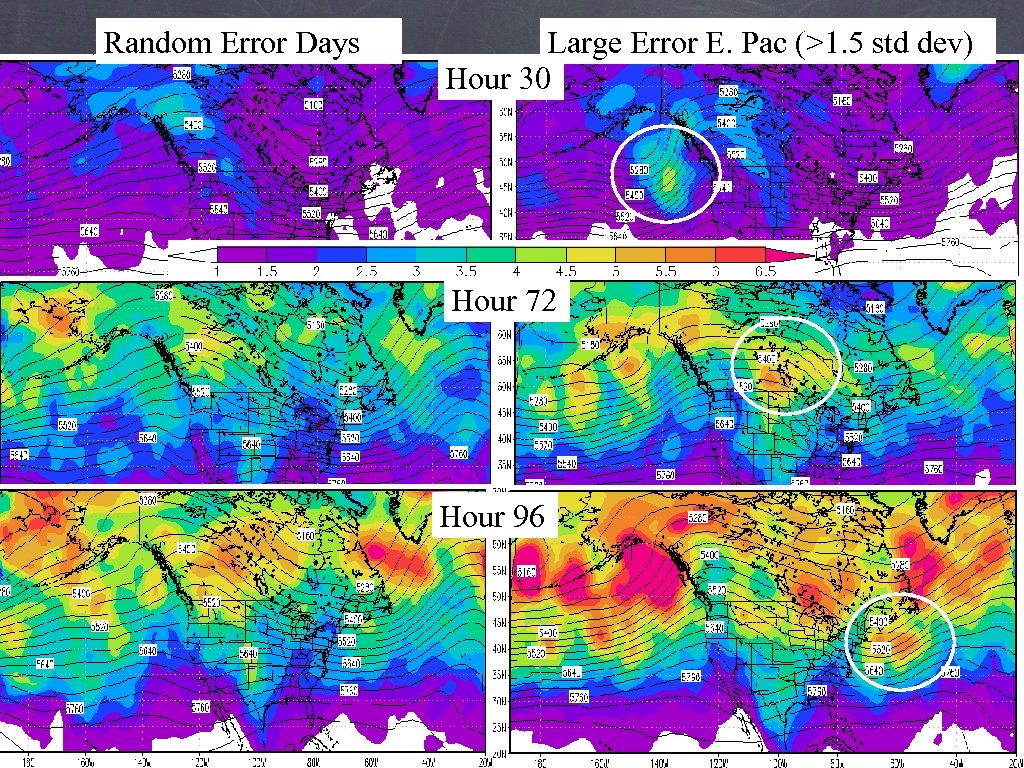 Random Error Days Large Error E. Pac (>1. 5 std dev) Hour 30 Hour 72 Hour 96
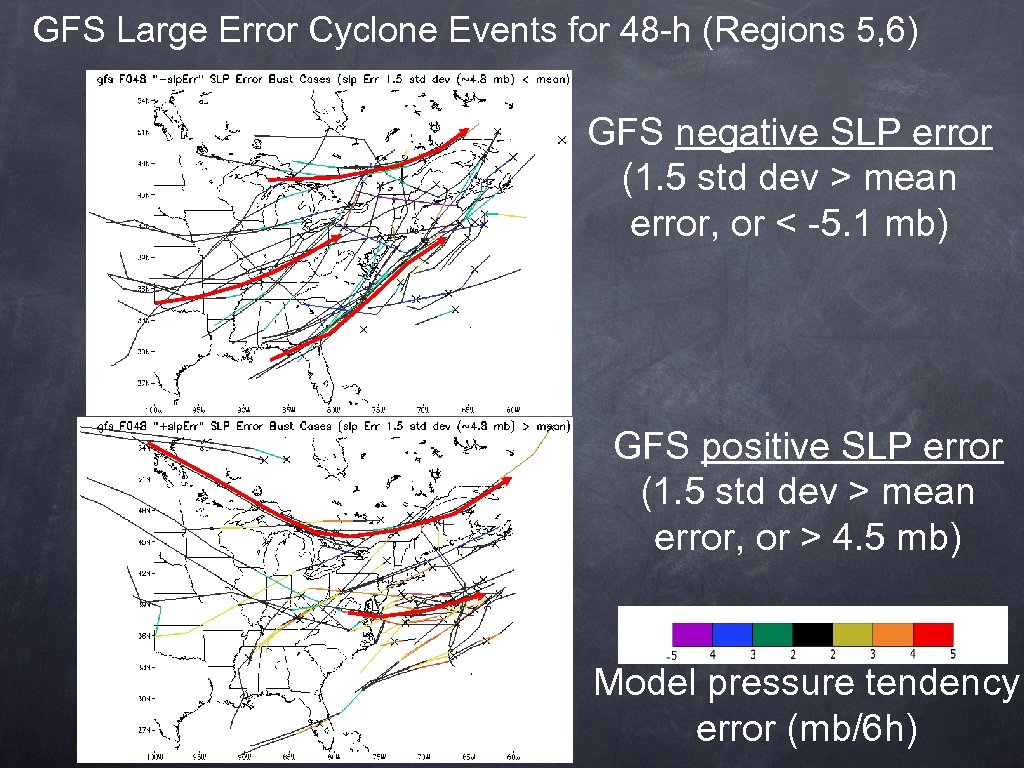 GFS Large Error Cyclone Events for 48 -h (Regions 5, 6) GFS negative SLP error (1. 5 std dev > mean error, or < -5. 1 mb) GFS positive SLP error (1. 5 std dev > mean error, or > 4. 5 mb) Model pressure tendency error (mb/6 h)
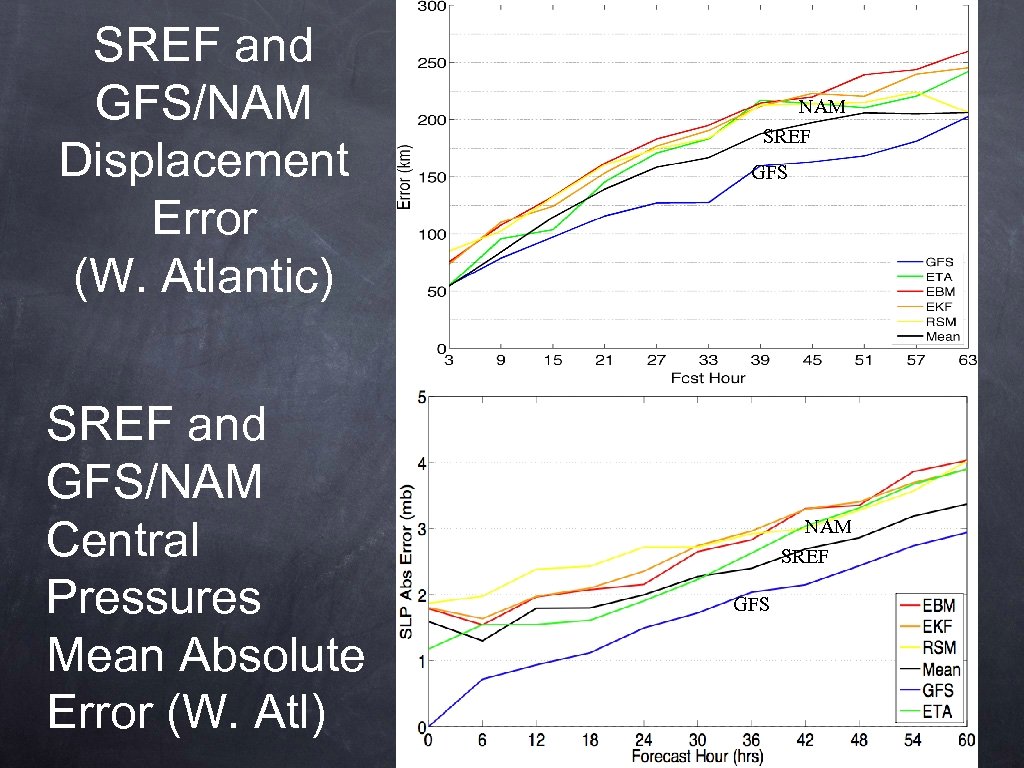 SREF and GFS/NAM Displacement Error (W. Atlantic) SREF and GFS/NAM Central Pressures Mean Absolute Error (W. Atl) NAM SREF GFS
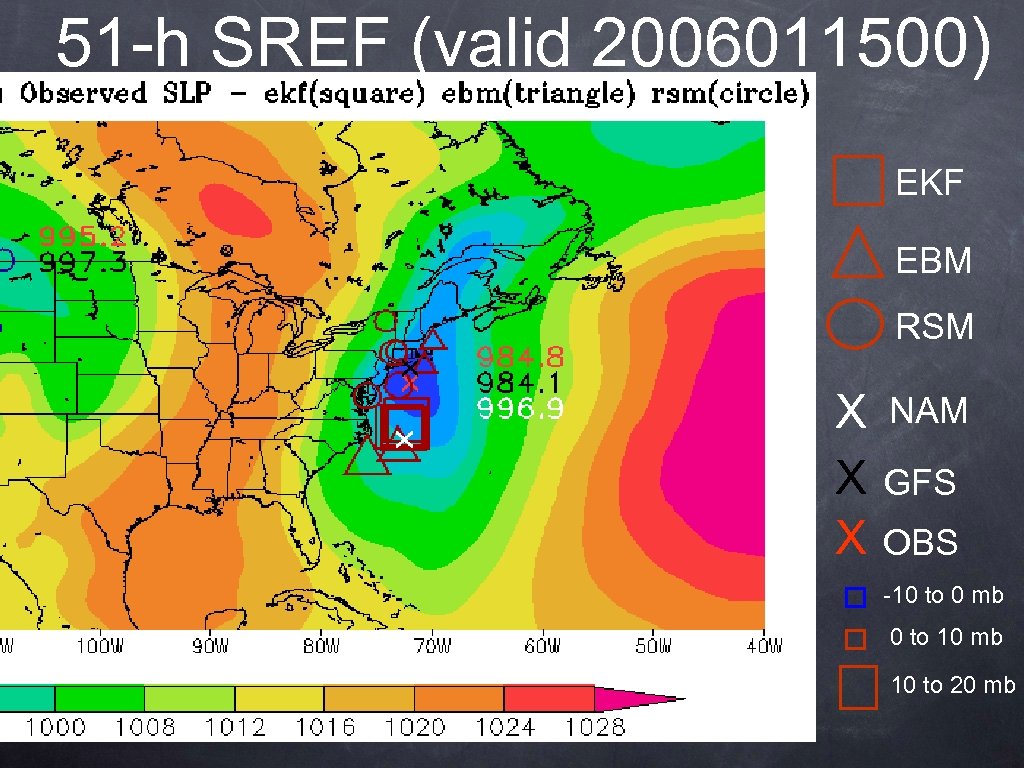 51 -h SREF (valid 2006011500) EKF EBM RSM X X X NAM GFS OBS -10 to 0 mb 0 to 10 mb 10 to 20 mb
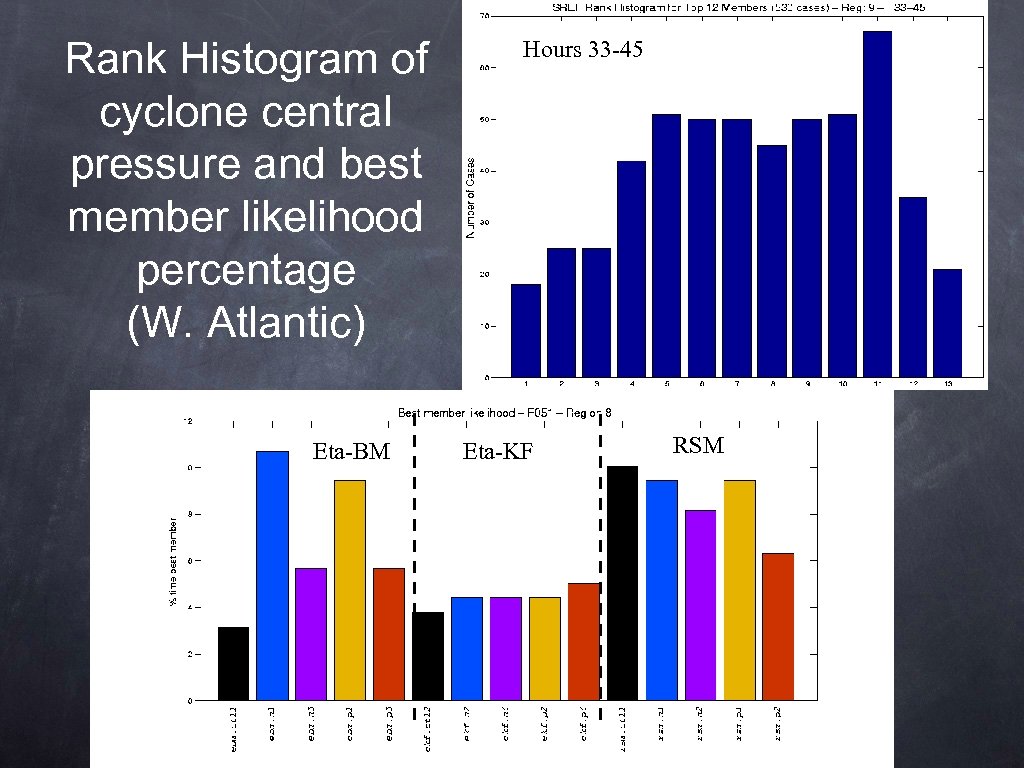 Rank Histogram of cyclone central pressure and best member likelihood percentage (W. Atlantic) Eta-BM Hours 33 -45 Eta-KF RSM
 Conclusions • GFS analysis for cyclones is significantly better than the NAM or NARR, especially over the oceanic regions. The NAM and NARR cyclones are too weak on average. • GFS cyclone forecasts have more skill than the NAM in all regions. NAM cyclones are too weak over the E. Pacific on average. By hour 84, W. Atlantic errors become comparable to the E. Pacific and the errors become greater than E. Pacific for deeper cyclones. The 09/21 z SREF has larger cyclone MAEs than the deterministic GFS and slightly less than NAM. The SREF pressures tends to be overdispersed in many locations. Some model cyclone biases for the eastern U. S. may favor specific storm tracks. Large cyclone errors over the E. Pacific can impact the western Atlantic 2 -3 days later. • •
 EXTRA SLIDES
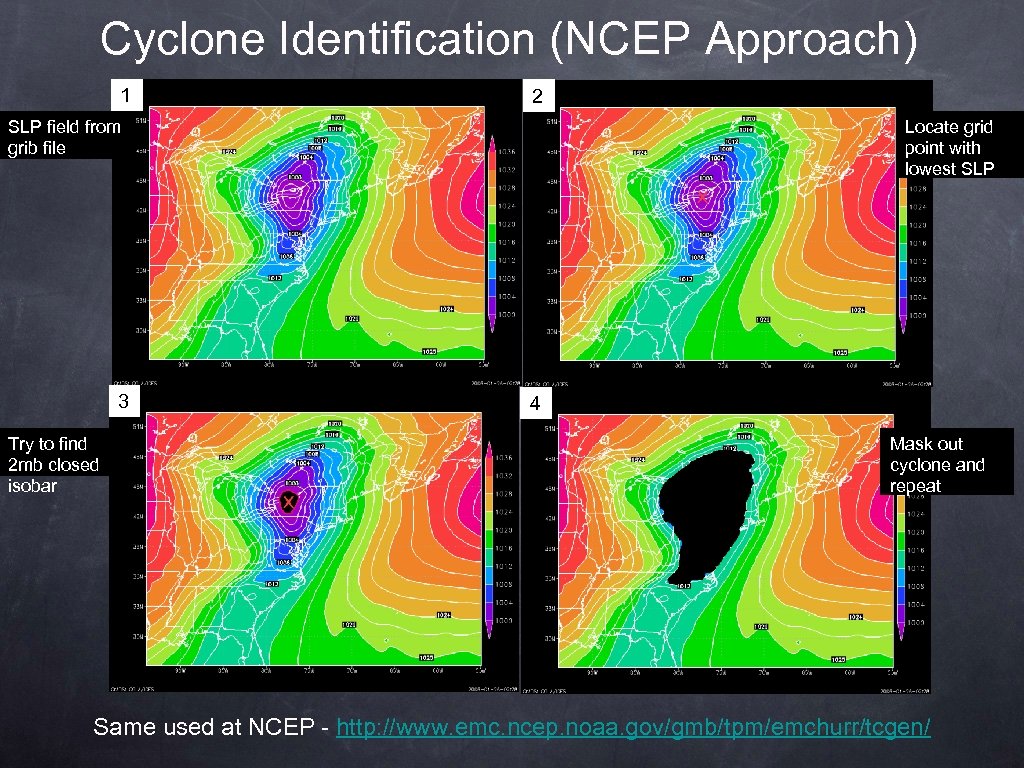 Cyclone Identification (NCEP Approach) 1 2 SLP field from grib file 3 Try to find 2 mb closed isobar Locate grid point with lowest SLP 4 Mask out cyclone and repeat Same used at NCEP - http: //www. emc. ncep. noaa. gov/gmb/tpm/emchurr/tcgen/
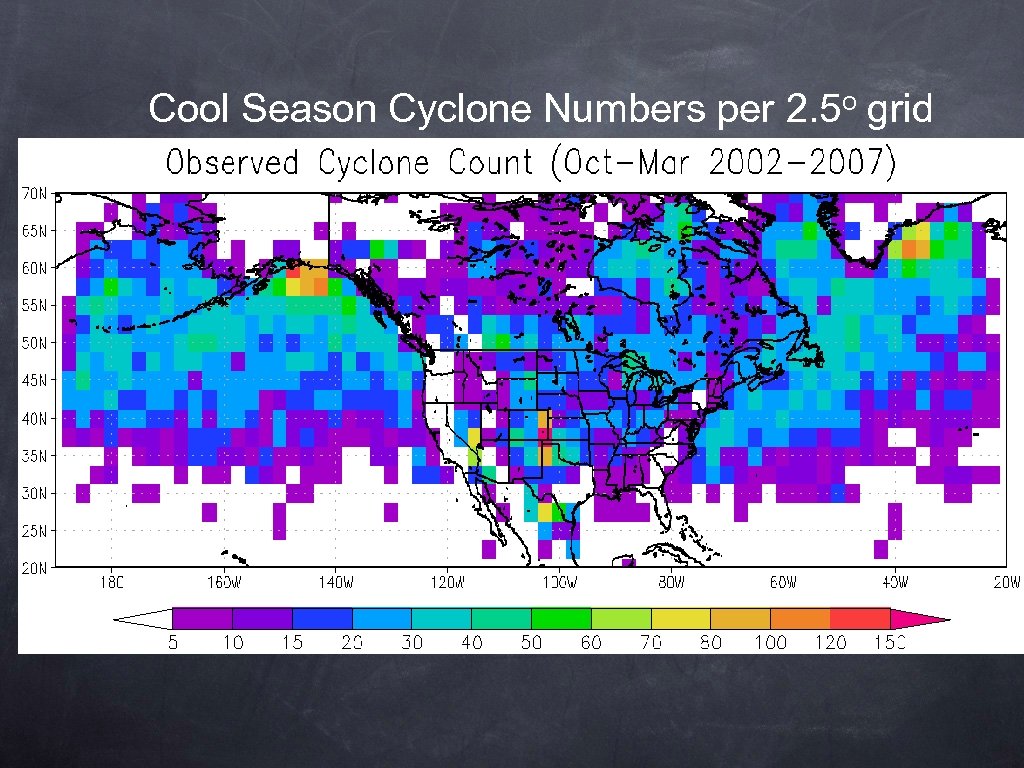 Cool Season Cyclone Numbers per 2. 5 o grid