


 Скачать презентацию An Investigation into Pharmaceutical manufacturing Performance and its
e79599d53a23f2c8bb6df72b22028204.ppt
- Количество слайдов: 26
 An Investigation into Pharmaceutical manufacturing Performance and its relationship to FDA oversight and enforcement actions Jeffrey T. Macher Jackson A. Nickerson Co-Principal Investigators April 24, 2003
 Presentation Agenda } Introduction to UC Berkeley CSM Research Program ØResearch program purpose and general approach. ØManufacturing metric scores. ØSummary of best practices. ØPreliminary conclusions. } Pharmaceutical Manufacturing Research Project ØDescription and approach. ØPrincipal investigator capabilities. ØResearch project funding, staffing and timeline.
 UC Berkeley CSM Research Program } Why? ØPerceived competitiveness gap among producers. } Charter ØMeasure manufacturing performance. ØIdentify underlying determinants of performance. ØBenchmark wafer fabrication across industry. ØCarry out focus studies of important practices. } Funding ØOriginally by Alfred P. Sloan Foundation; additional funding by Sloan, International SEMATECH , and semiconductor industry.
 Value from CSM Research Program } Developed a new industry standard set of benchmarks for measuring manufacturing performance. } Provided confidential “scorecard” to manufacturing fabs on how they performed against anonymous others. } Identified managerial, organizational, and technical practices underlying good (and poor) performance. } Identified advances in techniques for defect analysis, scheduling, process development, factory organization, etc. . } Industry view: Substantial positive financial impact to program participants.
 Research Dissemination } Benchmarking reports (most recent: March 2002). } Focus study reports (more than 50 reports to date). } Industry and conference presentations. } Extension classes for industry managers. } Academic research papers. } http: //euler. berkeley. edu/esrc/csm/index. html.
 Benchmarking Participants } 36 semiconductor manufacturing facilities studied: ØHyundai and Samsung (2) in Korea. ØTSMC (2) and UMC (2) in Taiwan. ØNEC, Oki, LSI Logic, Toshiba, Tohoku and Winbond in Japan. ØAMD, Cypress (2), DEC, Delco, Harris, IBM, Intel, LSI Logic, Lucent, Micron, Motorola, NSC, Sony/AMD and TI (2) in USA. ØDEC, ITT, Lucent, NSC (2) and ST Microelectronics in Europe. } Over the 1989 -2001 period and several technology classes.
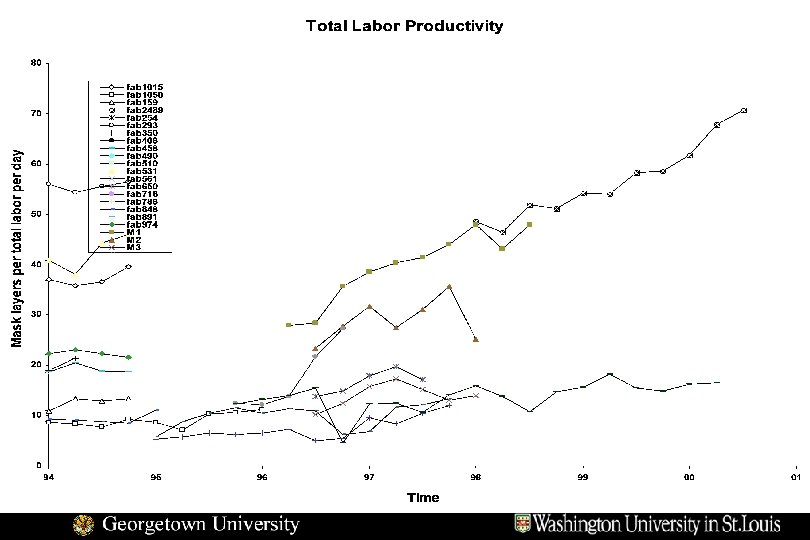
 Data Collection } Mail-Out Questionnaire (MOQ). Ø 3 -4 years of fab history. » Equipment and facilities. » Headcount and human resources data. » Production volumes, yields, cycle times, etc. . } Data entered into relational database. } Technical metric scores computed. ØYield, cycle time, equipment productivity, etc. .
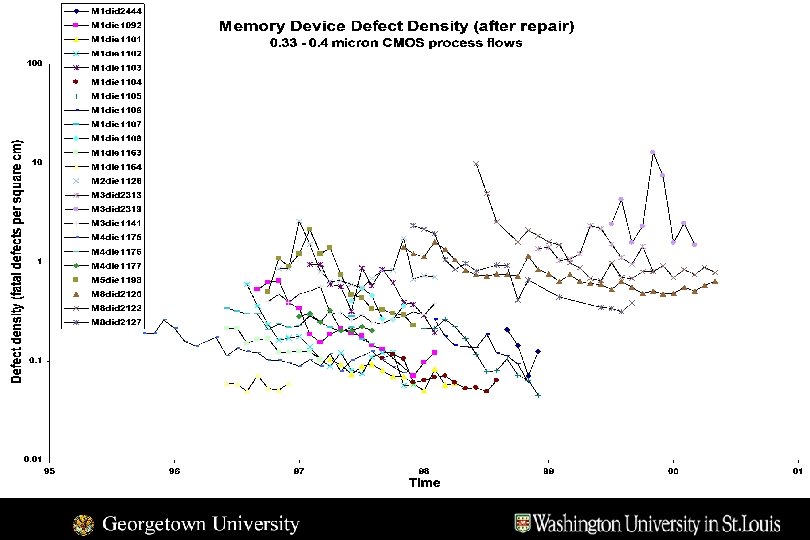
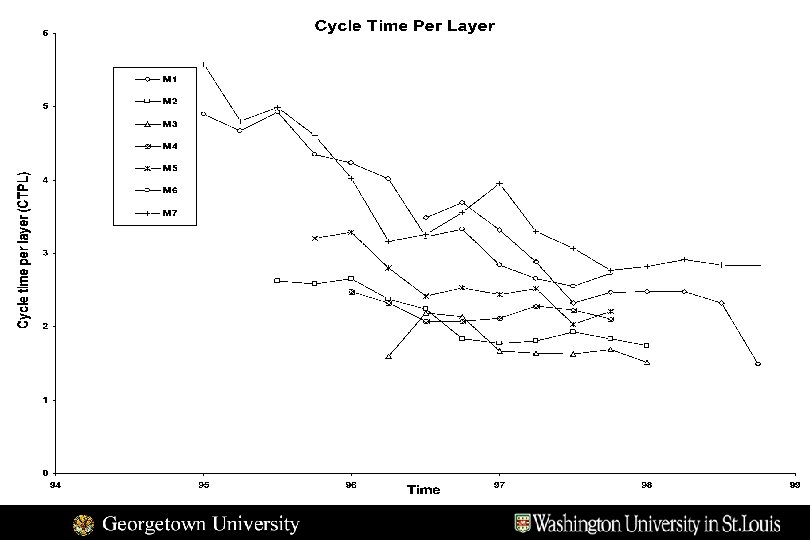
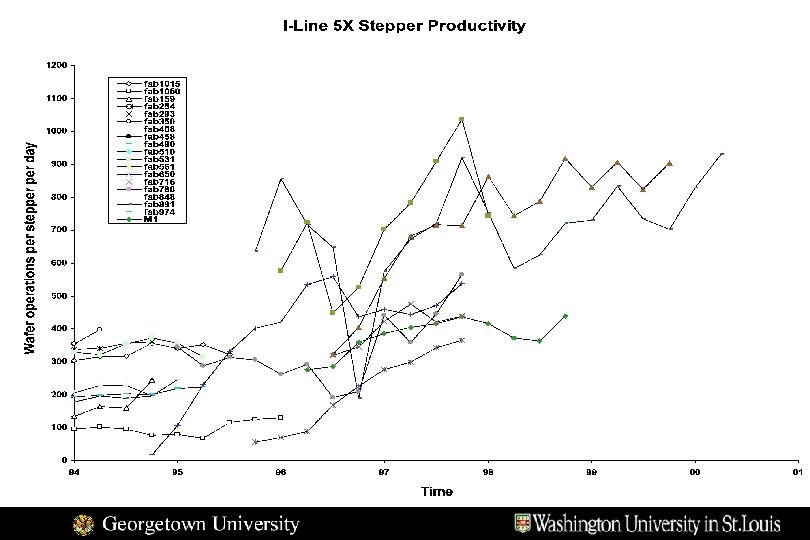
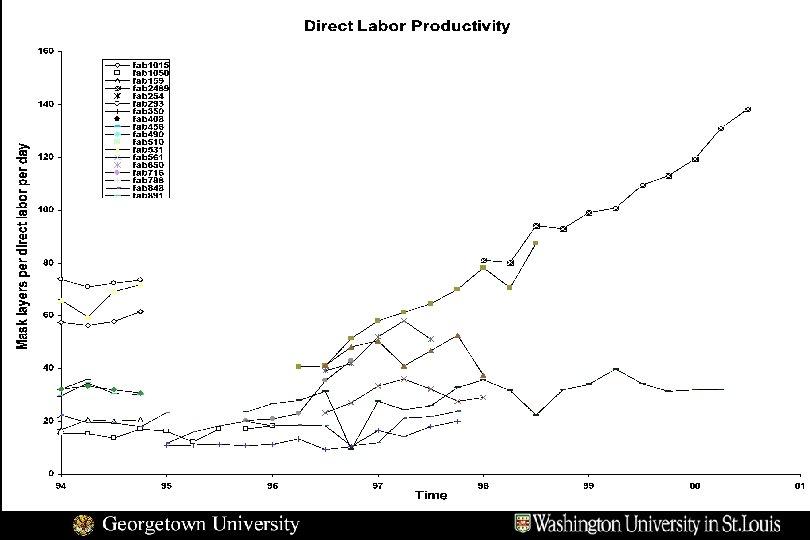
 Site Visits } Two – three day visit with a structured inquiry protocol. ØTeam of 6 -8 faculty and graduate students (plus interpreter when required). ØTour fab for evidence of self-measurement, communication, problem-solving activity. ØInterview cross-section of organization. » Managers, engineers, technicians, operators. ØConduct information sessions. » On approaches to problem areas (yield, equipment efficiency, cycle time, on-time delivery, new process introductions, etc. ). » On problem solving resources (CIM and information systems, process control, work teams, human resources development, etc. ).
 Determining Best Practices } Searched for managerial, technical or organizational practices that were correlated with metric scores. } Typically, a good practice positively influences several metric scores. ØParticipants tended to score well or score poorly across several metrics. } Even so, almost every participant had at least one practice that the other participants would benefit by adopting.
 Summary of major findings of CSM study } Wide variations in performance and focus. } Key operational practices: Ømistake-proof manufacturing, Ø“information” handling automation, Ødata collection and yield analysis integration, ØTPM and equipment efficiency measurement, Øequipment modification scheduling, Øautomated planning and scheduling. } Key organizational practices: Øteam-based problem-solving approaches, Ønew process development and transfer management, Ødivision of labor reductions.
 Summary of major findings of CSM study } Biggest single factor explaining performance is the focus or “religion” of organization: ØTQM and process control. ØStatistical analysis of yield vs. in-line data. ØCycle time reduction and on-time delivery. ØTPM and equipment throughput. } Weak performers in a given category do not have the relevant focus.
 Conclusions from CSM study } Independent of technological differences, performance differences among firms studied were substantial. } Various metrics have different levels of importance in different product segments. ØFast ramp of new production processes to high-yield, highvolume manufacturing is very important. ØRates of improvement in yields and throughput are very important.
 Conclusions from CSM study } Fast improvement requires rapid problem identification, characterization, and solution by a large, diverse team. } Common Themes of Successful Approaches: ØLeadership and development of personnel. ØOrganizational participation, communication, accountability, responsibility for improvement. ØInformation strategy and analytical techniques to support improvement; not blind automation. } Manufacturers could and did substantially improve performance by adopting “learnings” from CSM study.
 Pharmaceutical Manufacturing Research Project (PMRP) } Why? Ø Increasing capital intensity, product complexity, regulatory actions, product stock-outs. } Charter Ø Measure manufacturing performance and regulatory outcomes. Ø Benchmark pharmaceutical production across industry. Ø Identify underlying determinants of performance: regulatory, operational, managerial, and organizational. Ø Transfer “learning” to industry. Ø Advise FDA on structure of c. GMPs to facilitate performance improvement. } Funding Ø Seed funding from Georgetown and Washington University. Ø Seeking addition funding from foundations.
 Proposed Value from PMRP } Develop industry-standard set of benchmarks for measuring manufacturing performance. } Provided confidential “scorecard” to plants on how they performed against anonymous others. } Identified managerial, organizational, and technical practices underlying good (and poor) performance. } Identify regulatory effects on manufacturing performance. } Provide positive financial impact to program participants and provide insight to FDA on ways to structure c. GMPs for the 21 st Century
 PMRP Anticipated Research Dissemination } Benchmarking reports. } Industry, FDA, and conference presentations. } Extension classes for industry managers. } Academic research papers.
 PMRP Data Collection } Confidentiality agreement with FDA. } Separate confidentiality agreements with manufacturers. } Work with manufacturers to determine appropriate benchmarks. } Product is the unit of analysis. } Secure web-based questionnaire. } Follow-up visits for random sample of participants. } FDA actions and outcomes.
 PMRP Data Analysis } Assess manufacturing and regulatory performance as a function of managerial, technical organizational, and regulatory practices. } Account for product, technology, and locational factors in statistical analysis. } Identify best practices that can combine to improve manufacturing and regulatory performance.
 PMRP Principal Investigators } Jeffrey Macher, Georgetown University ØB. S. E. , Computer Engineering, University of Michigan. ØM. B. A. , Amos Tuck School of Business, Dartmouth College. ØPh. D. , Walter A. Haas School of Business, UC Berkeley. } Jackson Nickerson, Washington University in St. Louis ØB. S. M. E. , Worcester Polytechnic Institute. ØM. B. A. , M. S. M. E. , Ph. D. UC Berkeley. } Our combined research focuses on the intersection of organization and technology choice, business strategy, and performance.
 Next Steps } Currently in pilot phase. ØReceived cooperation of Dr. Janet Woodcock and CDER. ØInterviewing FDA personnel. ØSeeking level of interest and cooperation from industry. ØMeeting with various manufacturing entities. ØDevelop internet-based survey and plant visit protocol. } Data collection phase will begin later this year.