


 Скачать презентацию An Introductory Course on Modeling and Simulation David
412072349f24d7d249b9a39ca822003b.ppt
- Количество слайдов: 26
 An Introductory Course on Modeling and Simulation David Toth & Jeffrey Solka University of Mary Washington
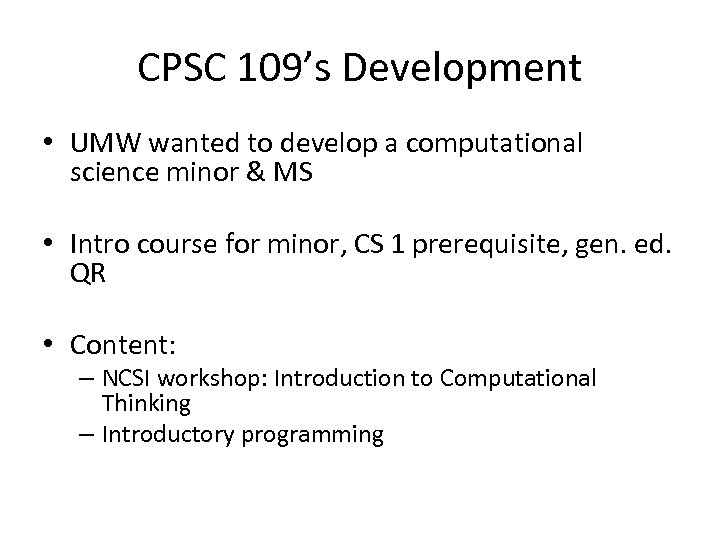 CPSC 109’s Development • UMW wanted to develop a computational science minor & MS • Intro course for minor, CS 1 prerequisite, gen. ed. QR • Content: – NCSI workshop: Introduction to Computational Thinking – Introductory programming
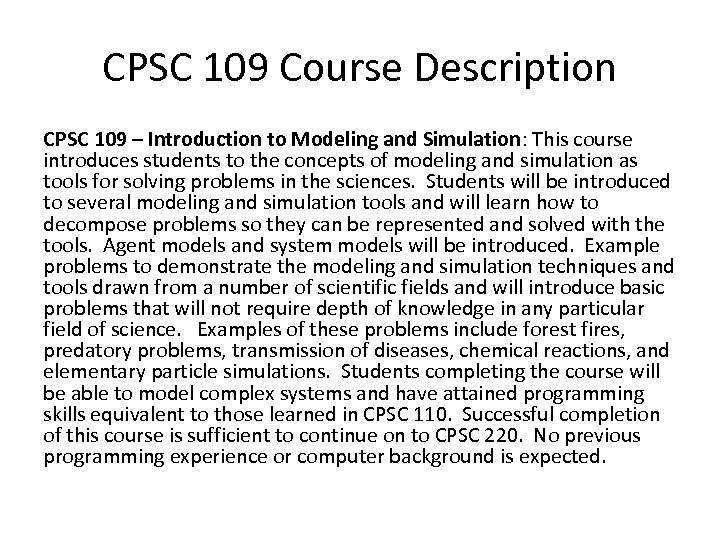
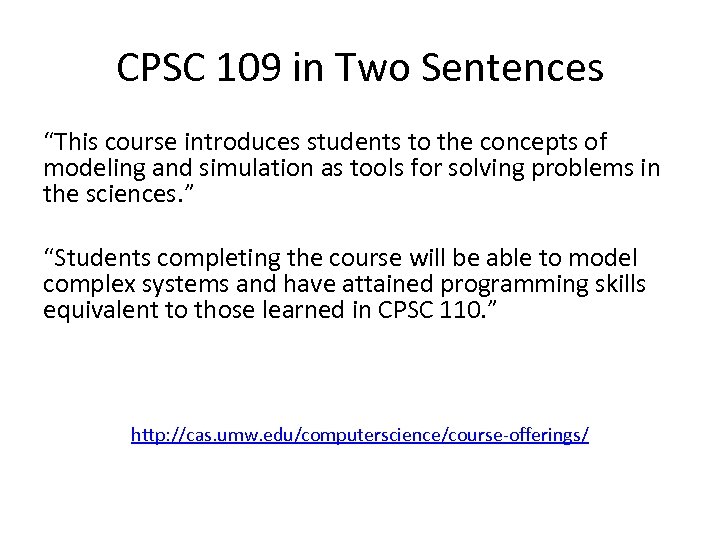 CPSC 109 in Two Sentences “This course introduces students to the concepts of modeling and simulation as tools for solving problems in the sciences. ” “Students completing the course will be able to model complex systems and have attained programming skills equivalent to those learned in CPSC 110. ” http: //cas. umw. edu/computerscience/course-offerings/
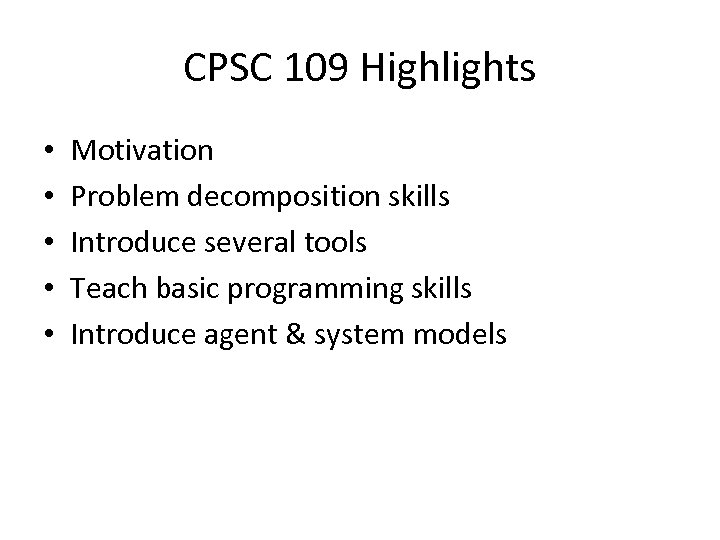 CPSC 109 Highlights • • • Motivation Problem decomposition skills Introduce several tools Teach basic programming skills Introduce agent & system models
 Motivation – Why to M & S • Often “wet lab” experiments are not - Nice Safe Legal Fast Cheap Reproducible Possible with current technology
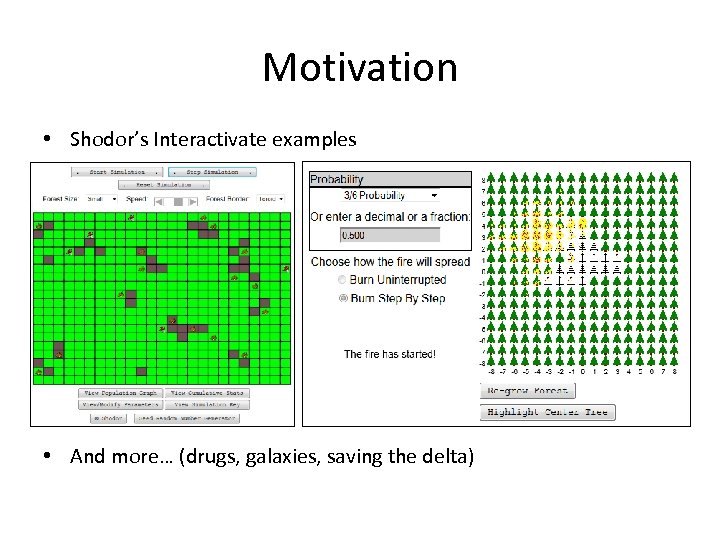 Motivation • Shodor’s Interactivate examples • And more… (drugs, galaxies, saving the delta)
 Problem Decomposition Skills • Warmup: read & dissect articles • M & S – Identify actors, actions, interactions – Brainstorm factors & assess importance (zombies, fish tank ammonia, house painters problem)
 Tools • • Panther (Scratch variant) Agent. Sheets Vensim Excel
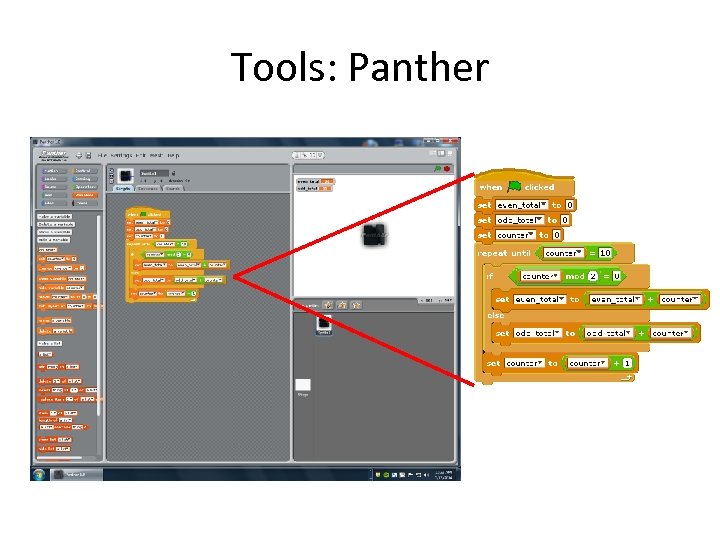 Tools: Panther
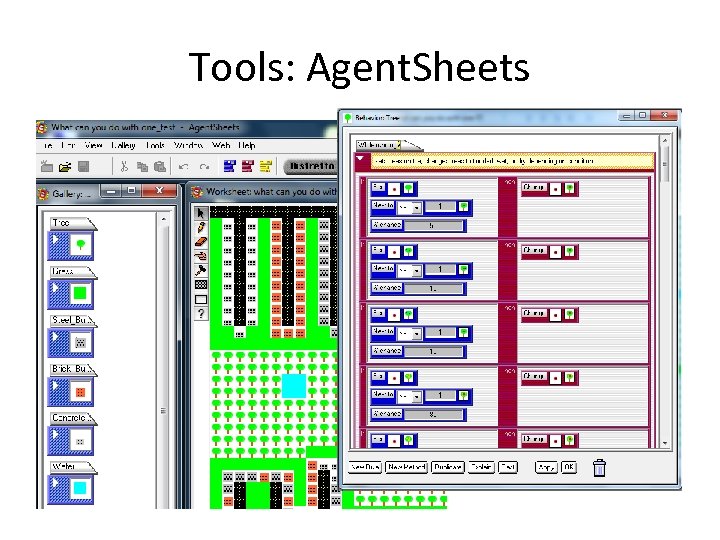 Tools: Agent. Sheets
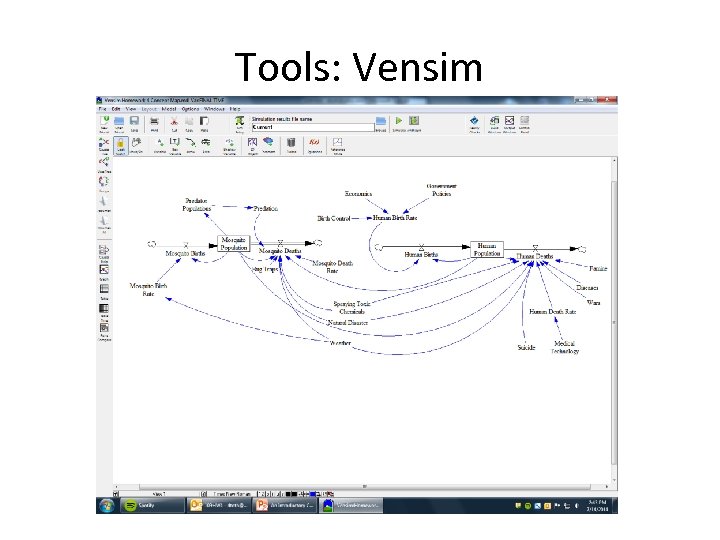 Tools: Vensim
 Tools: Excel
 Basic Programming Skills 1. 2. 3. 4. 5. Identify objective Devise algorithm in English Create pseudocode Create flowchart Translate into “code”
 Agent Models & System Models
 Assignments • Homework – Drug dosage simulation, greyhound chase (Panther) – Mosquitoes, people, & bats (Agent. Sheets) – Mosquito concept map (Vensim) • Exams – Mosquitoes (Panther) – Conway’s Game of Life (Agent. Sheets) – Monty Hall problem (Panther) – Carbon dioxide concept map (Vensim)
 Projects
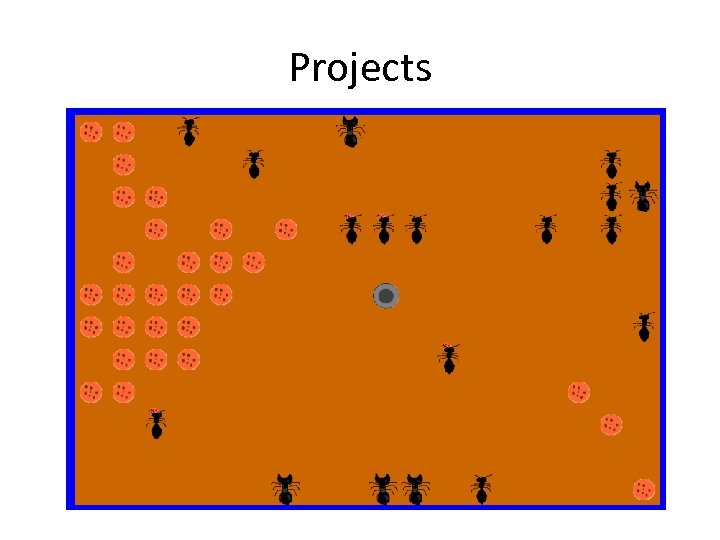 Projects
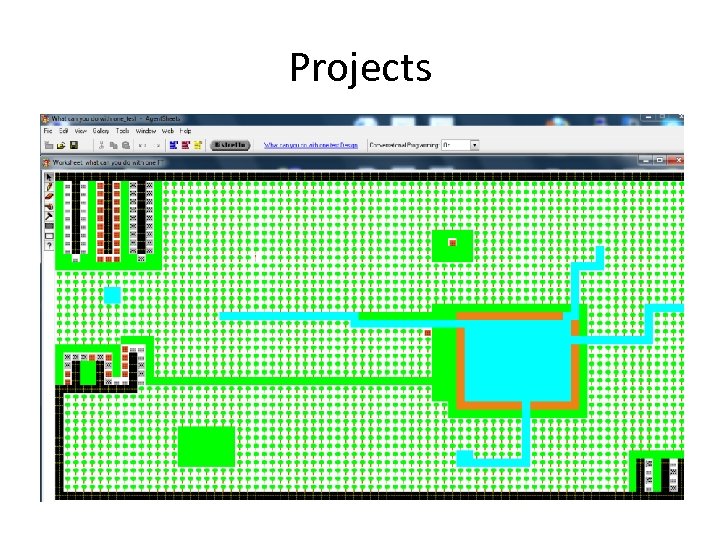 Projects
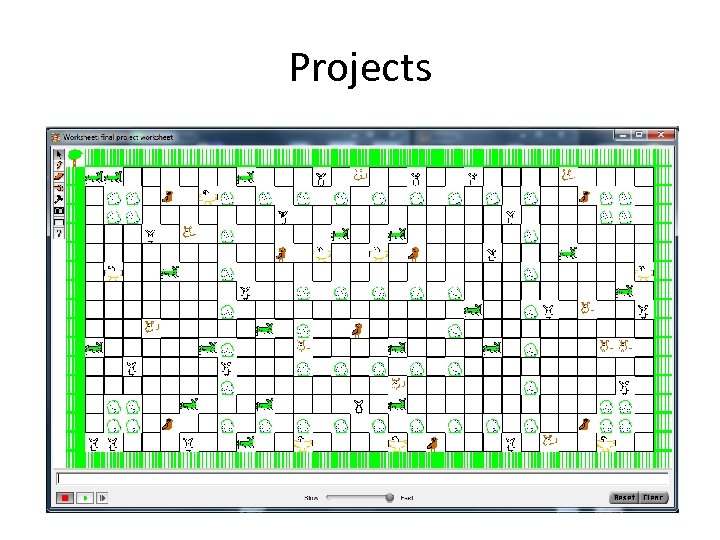
 Projects • • • Disease in the trenches WWII Colony collapse Crops Spread of rumors Catching a serial killer
 Our Experiences • Tools – Agent. Sheets – Panther / – Vensim – Excel (*yawn*) • Videos • Homeworks • Projects
 More Experiences • Box checkers didn’t take much away (do they ever? ) • Science & computer science majors took more away than others and did better • Tried to adapt to non-science audience to hold their interest (zombies, roulette)
 Outcomes • Positive course evaluations – “The best part of this course was being exposed to and getting to use different software packages to solve the same simulation and modeling problems. Good introductory course!” – “I enjoyed the class very much, and it gave me a very good idea of the fundamentals of Modeling and Simulation. ” – “Best parts about CPSC 109: learning about software that helps run simulations, ie. Agent. Sheets and Vensim. I also appreciated the exposure to Parallel Computing. ” • One biology major became a Blue Waters Summer Intern doing drug discovery
 Honors Version • Students work in teams to – Develop examples – Lead activities & discussions about those examples – Replaces midterm exam at 25% of course grade
 Follow-On Courses CPSC 220 – Computer Science 1 CPSC 420 – Simulation Techniques: An investigation of computer simulation techniques in the modeling of various systems. Includes an examination of various types of simulations including discrete event, Monte Carlo, and continuous time.
 David Toth University of Mary Washington → Centre College & Jeffrey Solka University of Mary Washington
 CPSC 109 Course Description CPSC 109 – Introduction to Modeling and Simulation: This course introduces students to the concepts of modeling and simulation as tools for solving problems in the sciences. Students will be introduced to several modeling and simulation tools and will learn how to decompose problems so they can be represented and solved with the tools. Agent models and system models will be introduced. Example problems to demonstrate the modeling and simulation techniques and tools drawn from a number of scientific fields and will introduce basic problems that will not require depth of knowledge in any particular field of science. Examples of these problems include forest fires, predatory problems, transmission of diseases, chemical reactions, and elementary particle simulations. Students completing the course will be able to model complex systems and have attained programming skills equivalent to those learned in CPSC 110. Successful completion of this course is sufficient to continue on to CPSC 220. No previous programming experience or computer background is expected.