


 Скачать презентацию An introduction to the English educationnal system
a87007362f60cb43dad0cabd314f9a4f.ppt
- Количество слайдов: 16
 An introduction to the English educationnal system
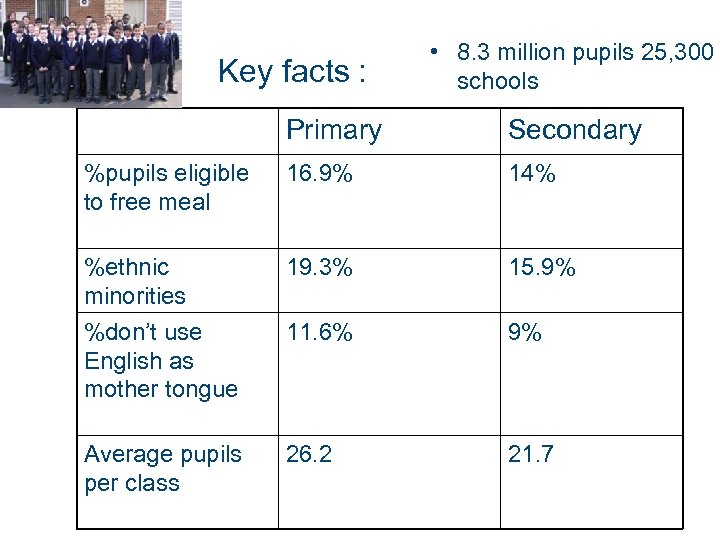 Key facts : • 8. 3 million pupils 25, 300 schools Primary Secondary %pupils eligible to free meal 16. 9% 14% %ethnic minorities %don’t use English as mother tongue 19. 3% 15. 9% 11. 6% 9% Average pupils per class 26. 2 21. 7
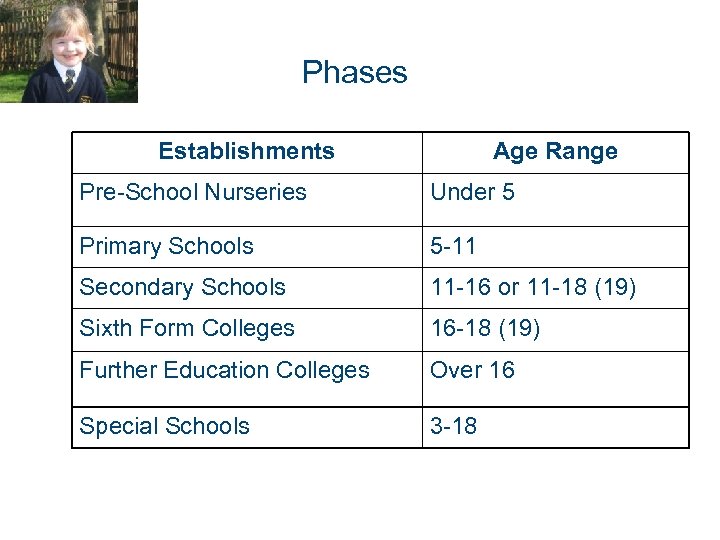 Phases Establishments Age Range Pre-School Nurseries Under 5 Primary Schools 5 -11 Secondary Schools 11 -16 or 11 -18 (19) Sixth Form Colleges 16 -18 (19) Further Education Colleges Over 16 Special Schools 3 -18
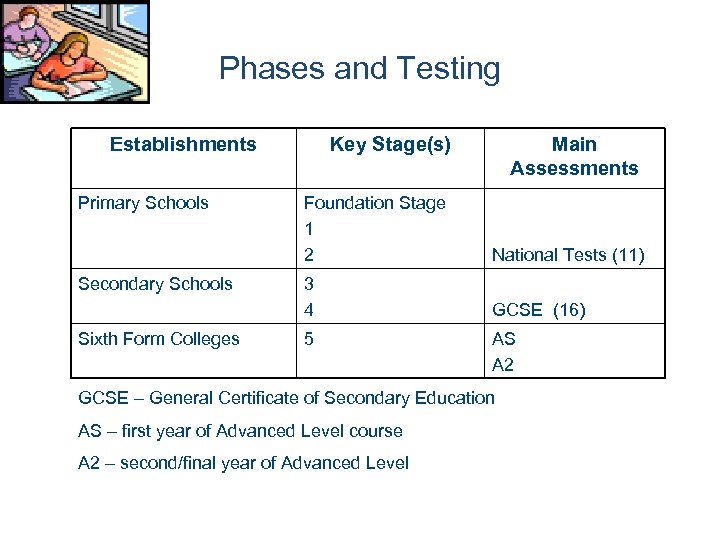 Phases and Testing Establishments Primary Schools Secondary Schools Sixth Form Colleges Key Stage(s) Main Assessments Foundation Stage 1 2 National Tests (11) 3 4 GCSE (16) 5 AS A 2 GCSE – General Certificate of Secondary Education AS – first year of Advanced Level course A 2 – second/final year of Advanced Level
 The Foundation Stage Curriculum • • • For children from birth to five years there are six areas of learning which all providers must address: Communication, language & Literacy Knowledge & Understanding of the World Physical Development Creative Development Personal, Social & Emotional Development Problem Solving, Reasoning & Numeracy
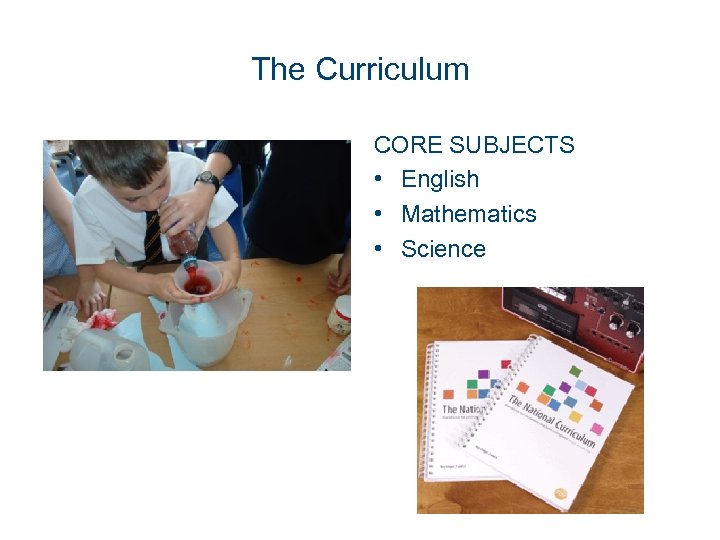 The Curriculum CORE SUBJECTS • English • Mathematics • Science
 The Curriculum • • • Art Geography History Music Design and Technology Information and Communications Technology • Physical Education • Religious Education • Sex and Relationship Education • Careers Education • Citizenship
 Curriculum 3: Key Stage 4 Students aged 14 -16 • Compulsory subjects, e. g. Mathematics • Entitlement subjects, e. g. Modern Foreign Language • ‘Options’ – examples: • Business Studies • Media Studies • Dance • Drama
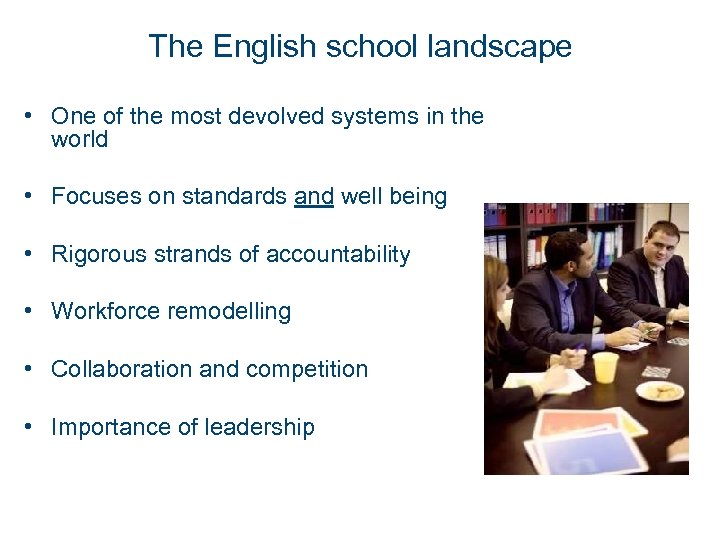 The English school landscape • One of the most devolved systems in the world • Focuses on standards and well being • Rigorous strands of accountability • Workforce remodelling • Collaboration and competition • Importance of leadership
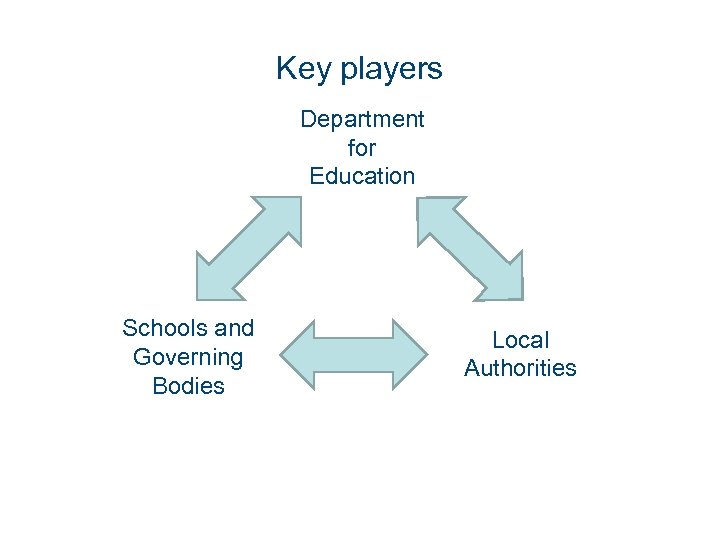 Key players Department for Education Schools and Governing Bodies Local Authorities
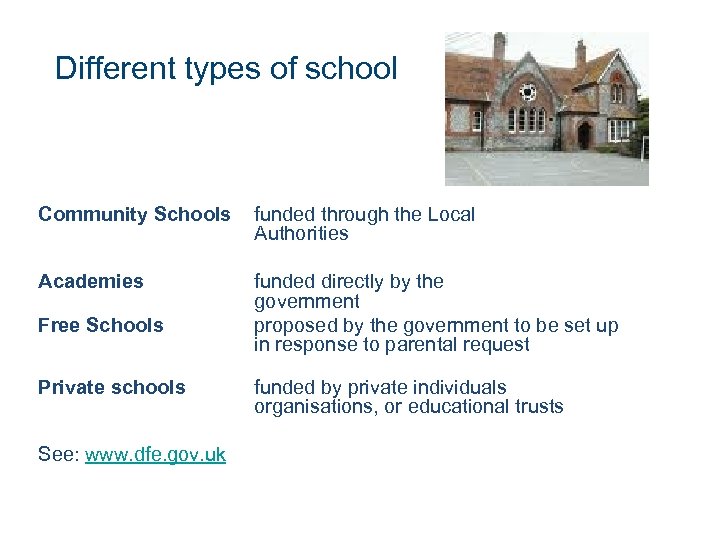 Different types of school Community Schools funded through the Local Authorities Academies funded directly by the government proposed by the government to be set up in response to parental request Free Schools Private schools See: www. dfe. gov. uk funded by private individuals organisations, or educational trusts
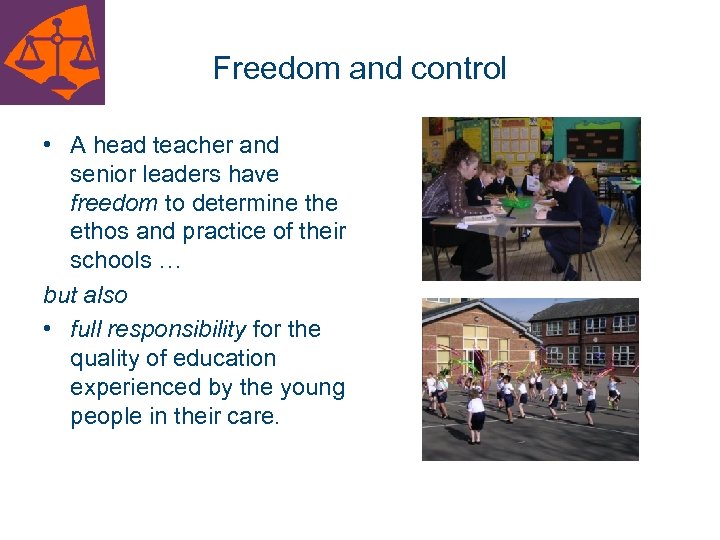 Freedom and control • A head teacher and senior leaders have freedom to determine the ethos and practice of their schools … but also • full responsibility for the quality of education experienced by the young people in their care.
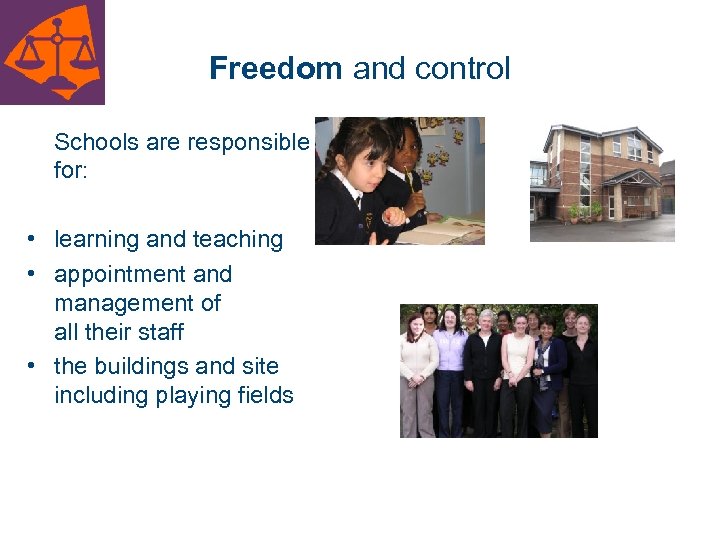 Freedom and control Schools are responsible for: • learning and teaching • appointment and management of all their staff • the buildings and site including playing fields
 Freedom and control • A headteacher is accountable to a Governing Body that represents parents, the community and often the Local Authority • There are national standards for headteachers • New headteachers must be accredited by the National Professional Qualification for Headship
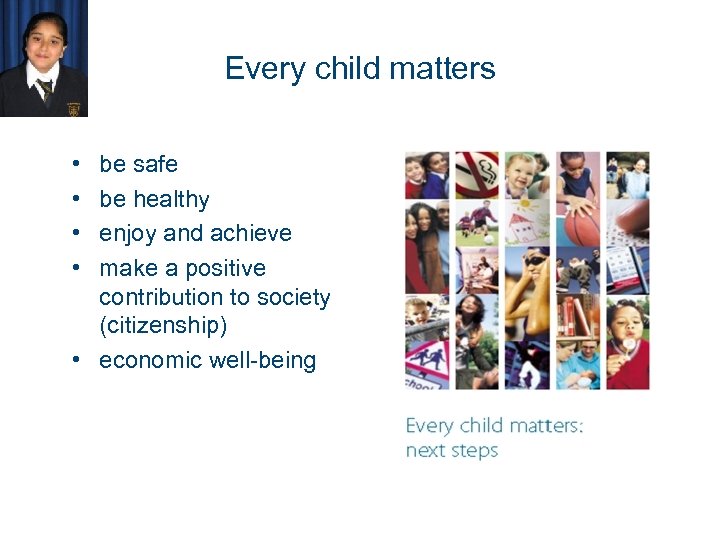 Every child matters • • be safe be healthy enjoy and achieve make a positive contribution to society (citizenship) • economic well-being
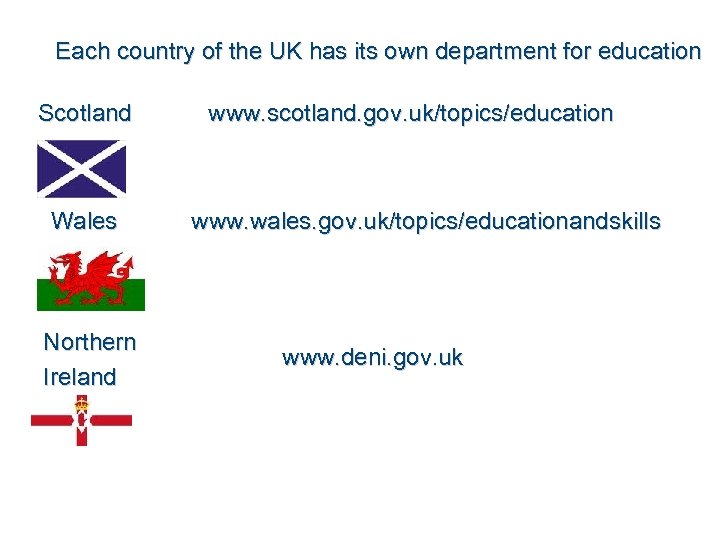 Each country of the UK has its own department for education Scotland Wales Northern Ireland www. scotland. gov. uk/topics/education www. wales. gov. uk/topics/educationandskills www. deni. gov. uk