


 Скачать презентацию An Introduction to the COGENT Modelling Environment 27
e64ea0800590a262ca791ffb960720dd.ppt
- Количество слайдов: 37
 An Introduction to the COGENT Modelling Environment 27 th International Conference of the Cognitive Science Society July 20 th, 2005 Stresa, Italy
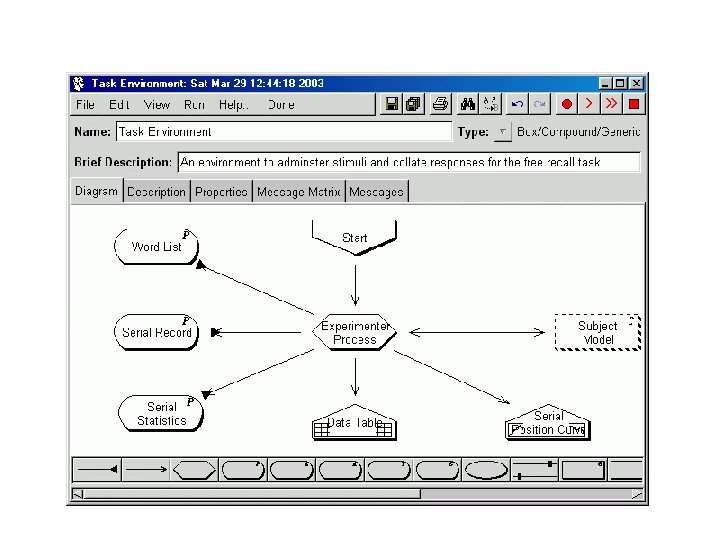
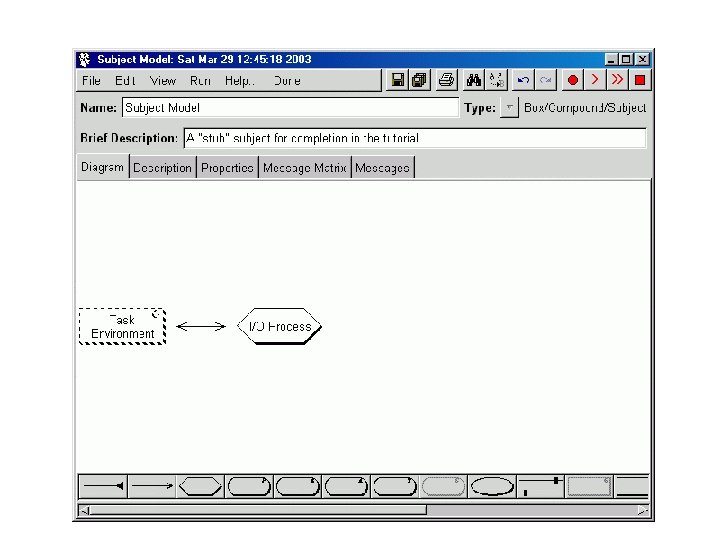
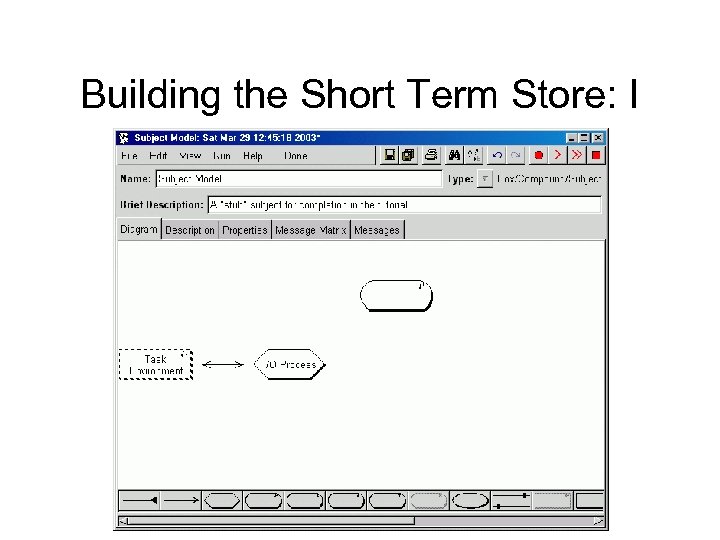
 Tutorial Overview • COGENT: Principal Features • The COGENT ‘Modal Model’ Model – – – The free recall task Task infrastructure within COGENT Building the Short-Term Store Adding the Long-Term Store Decay, time and rehearsal • Some advanced COGENT Features
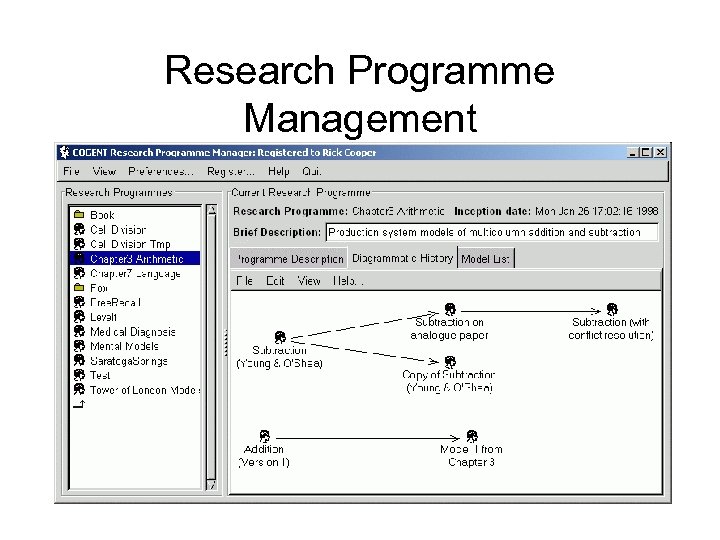
 COGENT: Principal Features • A visual programming environment; • A range of standard functional components; • An expressive rule-based modelling language; • Automated data visualisation tools; • A powerful model testing environment; and • Research programme management tools
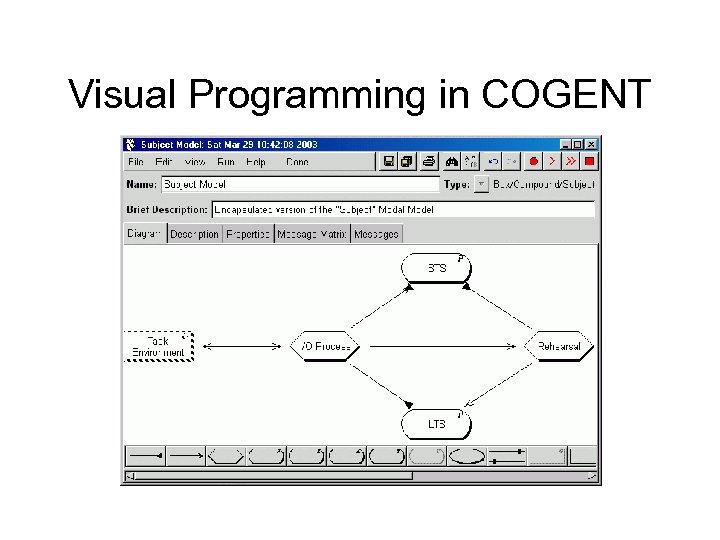 Visual Programming in COGENT
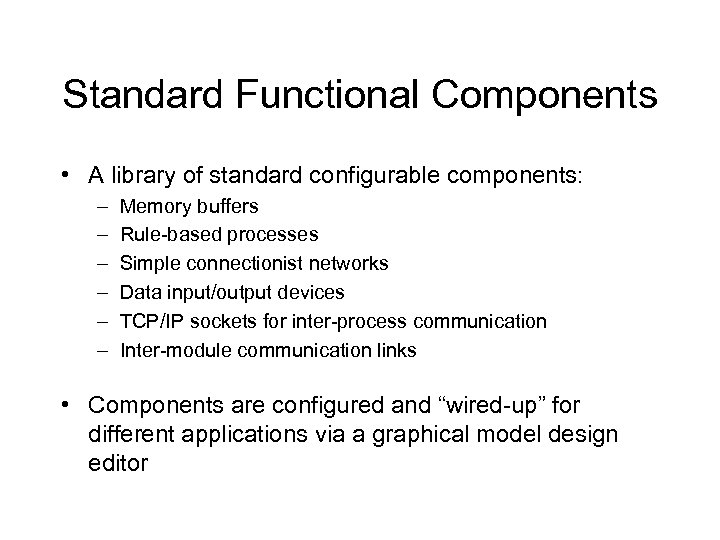 Standard Functional Components • A library of standard configurable components: – – – Memory buffers Rule-based processes Simple connectionist networks Data input/output devices TCP/IP sockets for inter-process communication Inter-module communication links • Components are configured and “wired-up” for different applications via a graphical model design editor
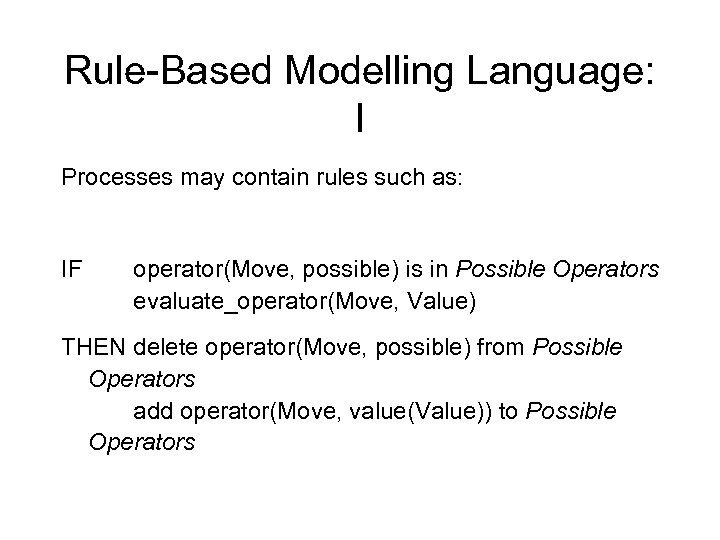 Rule-Based Modelling Language: I Processes may contain rules such as: IF operator(Move, possible) is in Possible Operators evaluate_operator(Move, Value) THEN delete operator(Move, possible) from Possible Operators add operator(Move, value(Value)) to Possible Operators
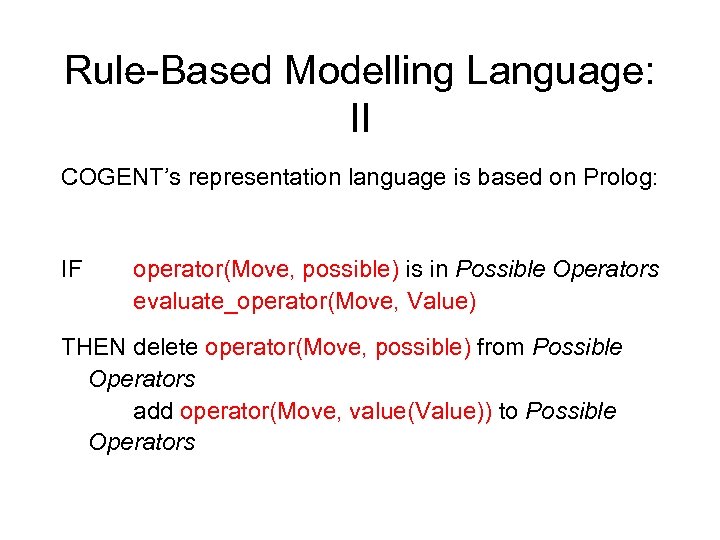 Rule-Based Modelling Language: II COGENT’s representation language is based on Prolog: IF operator(Move, possible) is in Possible Operators evaluate_operator(Move, Value) THEN delete operator(Move, possible) from Possible Operators add operator(Move, value(Value)) to Possible Operators
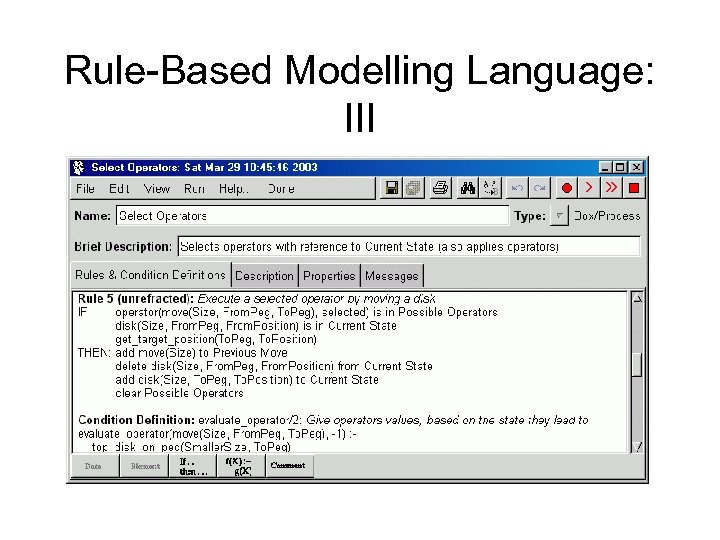 Rule-Based Modelling Language: III
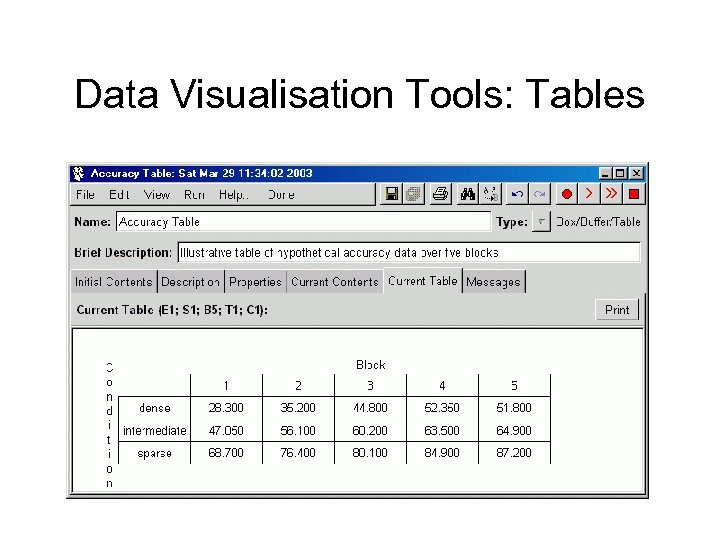 Data Visualisation Tools: Tables
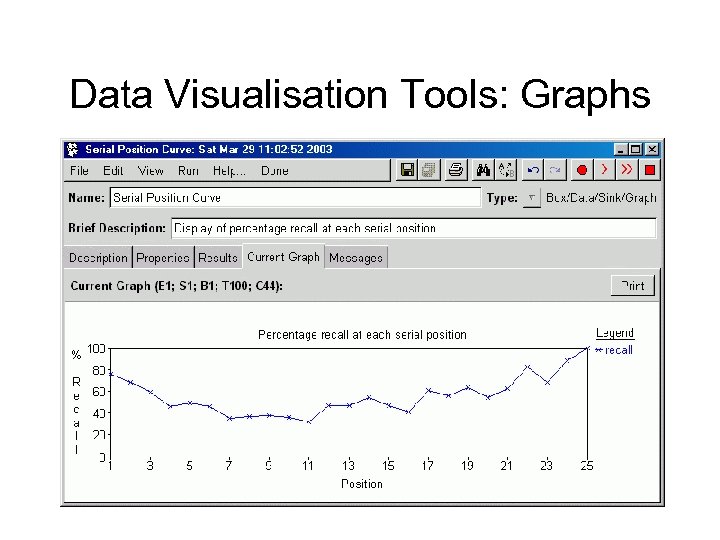 Data Visualisation Tools: Graphs
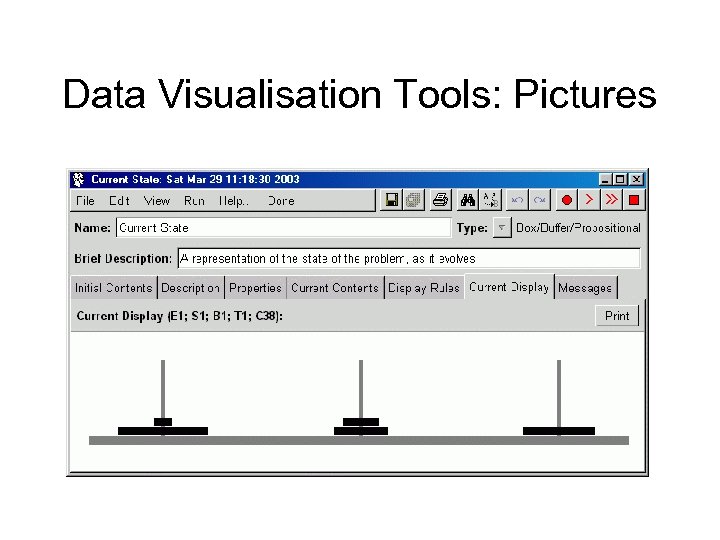 Data Visualisation Tools: Pictures
 The Model Testing Environment • Dynamically updated visualisation tools allow a model’s functioning to be examined while the model runs • Inter-component communication may be traced • A flexible “scripting” environment allows: – models to be run over multiple blocks of trials; – multiple “subjects” to be run over multiple blocks; – automated parameter varying “meta-experiments”.
 Research Programme Management
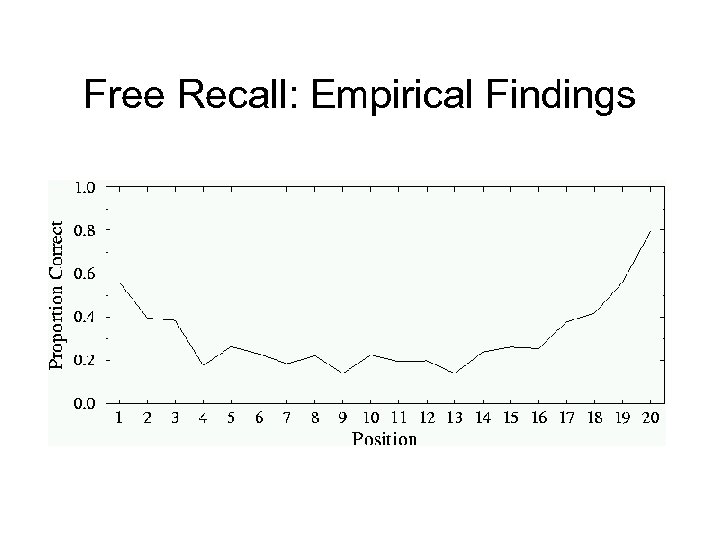
 The Tutorial Task: Free Recall • On each trial, the subject is presented with a list of 25 words • The subject is told to try to memorise the words • After an interval, the subject must recall as many words as possible (e. g. , Glanzer & Cunitz, 1966)
 Free Recall: Empirical Findings
 The Modal Model: Top Level
 Building the Short Term Store: I
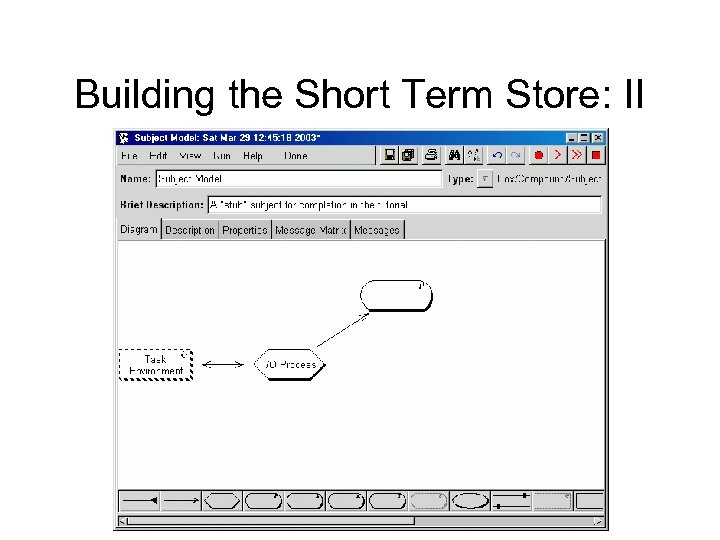 Building the Short Term Store: II
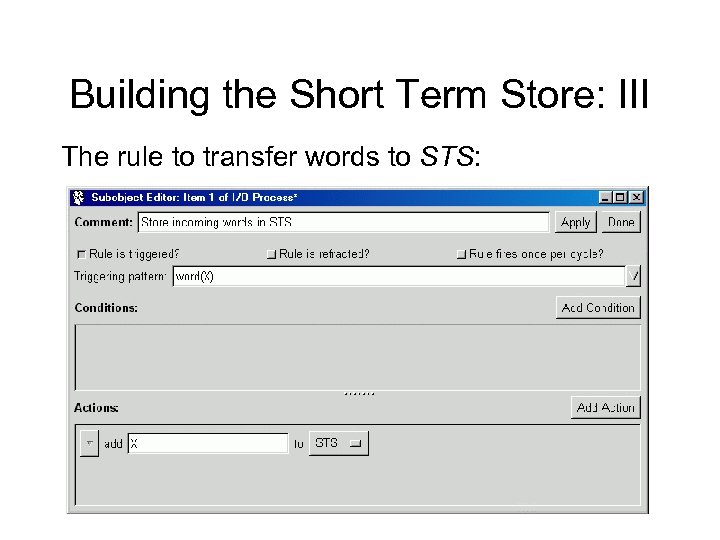 Building the Short Term Store: III The rule to transfer words to STS:
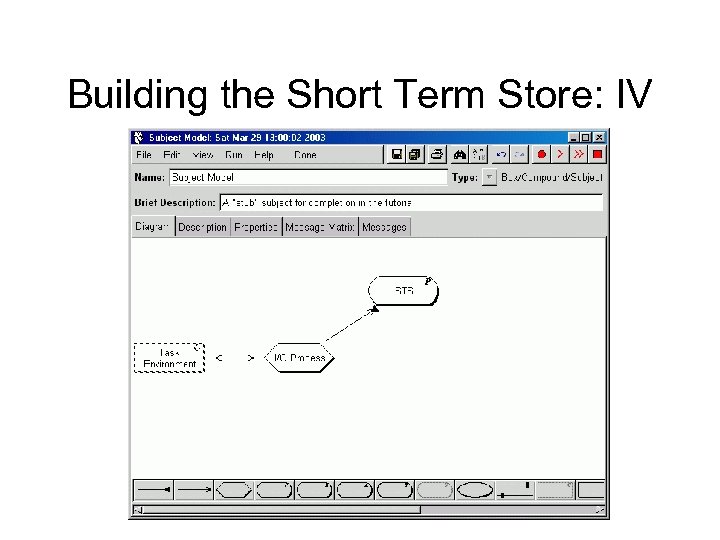 Building the Short Term Store: IV
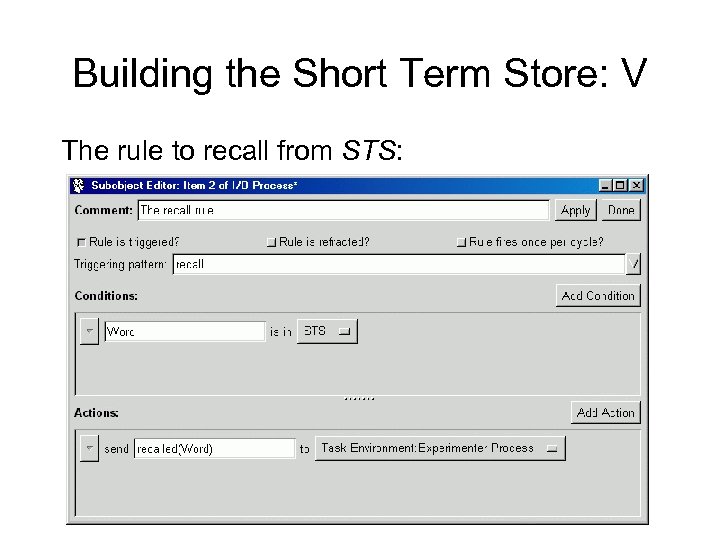 Building the Short Term Store: V The rule to recall from STS:
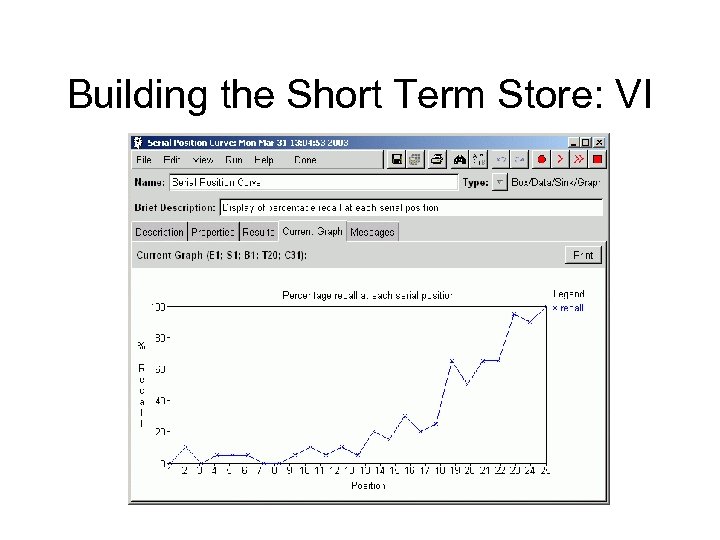 Building the Short Term Store: VI
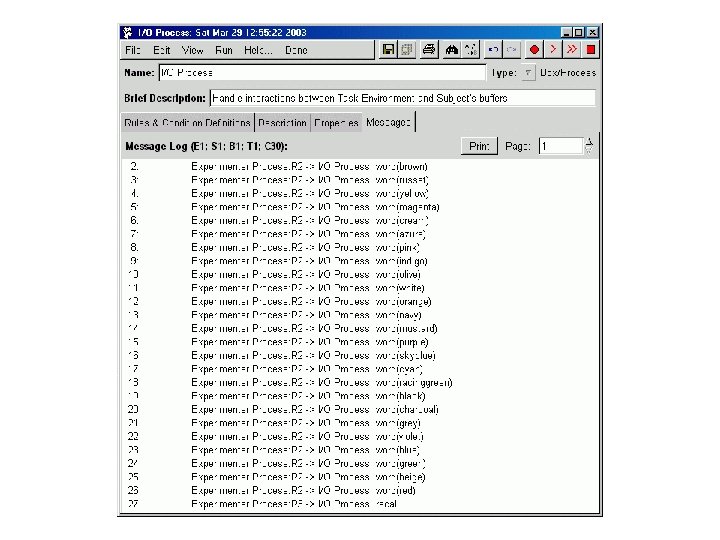
 Building the Short Term Store: VII • Run more trials. What happens to the curve? • Change the On Excess property of STS. What happens to the shape of the graph when you run a few trials? • Watch the Messages view of Input/Output. What happens there now when you run (or single-step) through a trial?
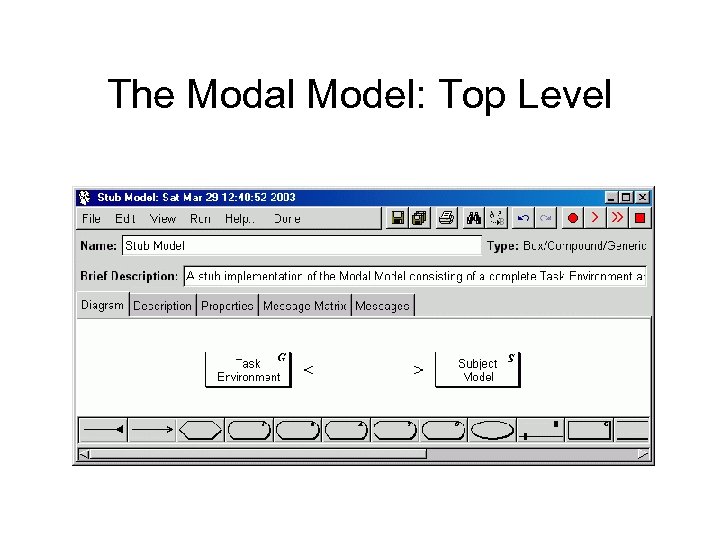
 Adding the Long Term Store: I The Modal Model also includes: • a long term store (LTS); • a rehearsal process to transfer information from STS to LTS; and • the possibility to recall from either STS or LTS
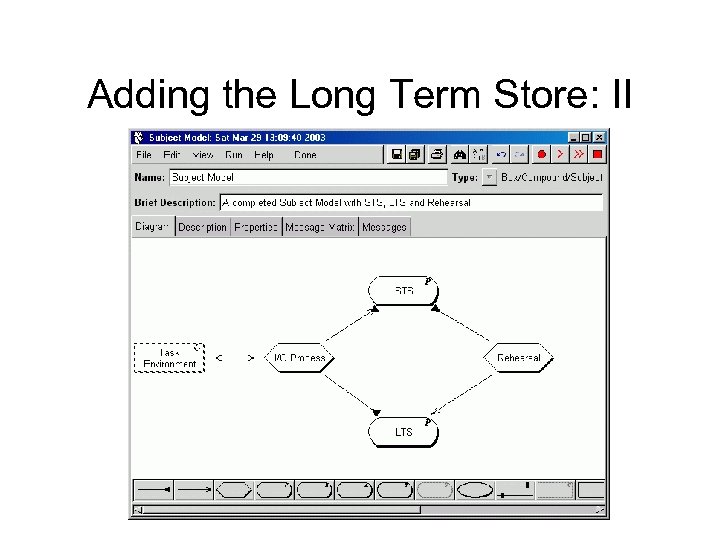 Adding the Long Term Store: II
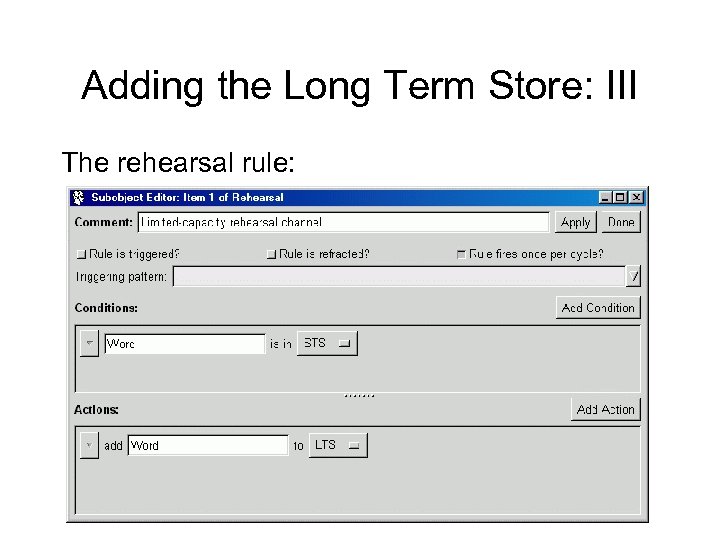 Adding the Long Term Store: III The rehearsal rule:
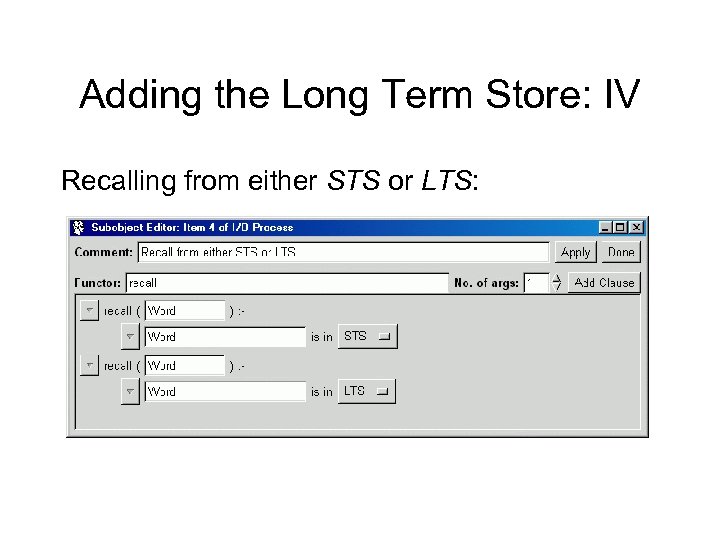 Adding the Long Term Store: IV Recalling from either STS or LTS:
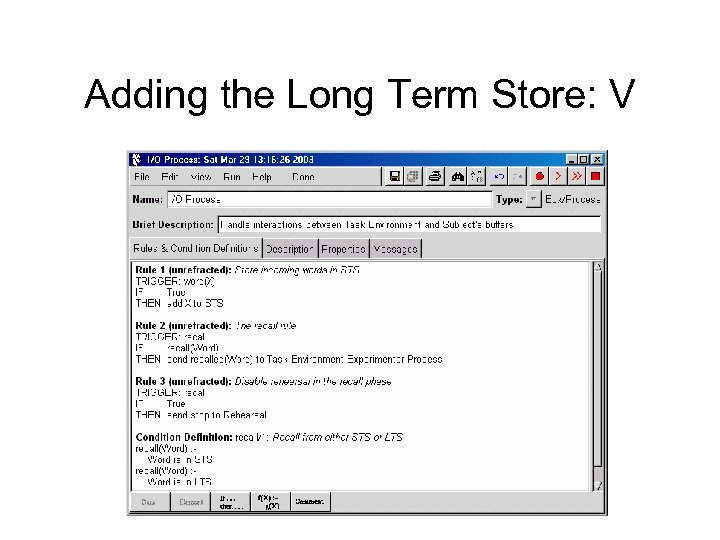 Adding the Long Term Store: V
 Adding the Long Term Store: VI • What causes the primacy effect arise? • Monitor the Input/Output box’s Messages view. Why does the model sometimes recalls the same word twice in the same trial. • The serial position curve still doesn’t look like the one in the introduction. Characterise any differences. Can you account for them?
 Decay, Time & Rehearsal: I • Add decay to LTS. Explore different decay rates. • Change the rehearsal rate by adding a copy of the rehearsal rule. • All memorised words are currently recalled in parallel. Make the recall process serial.
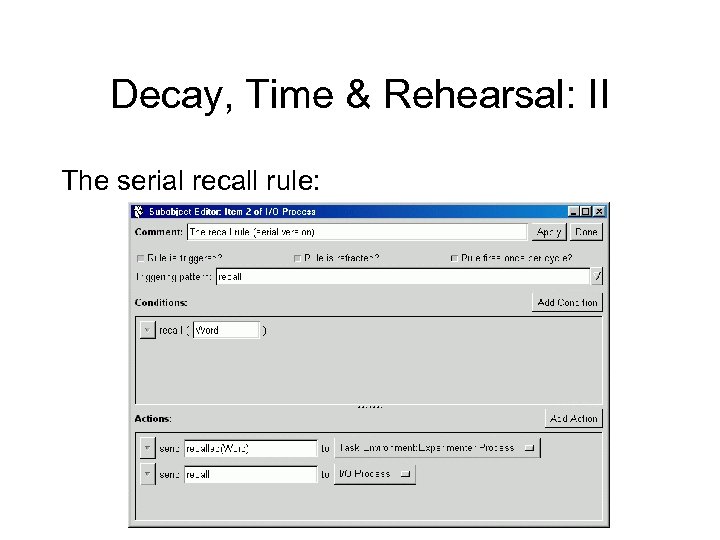 Decay, Time & Rehearsal: II The serial recall rule:
 Decay, Time & Rehearsal: III • Explore the effect of the Buffer Access property of each buffer. Play with these (and other) parameters to see how they affect the model’s behaviour. • The Experimenter system is written using standard COGENT. Try to discover how it works. • Find a principled solution to the problem of stopping rehearsal when recall commences
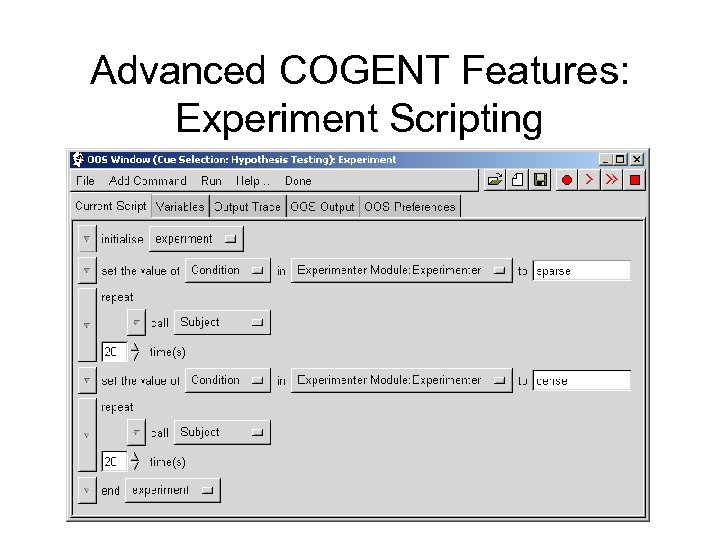 Advanced COGENT Features: Experiment Scripting
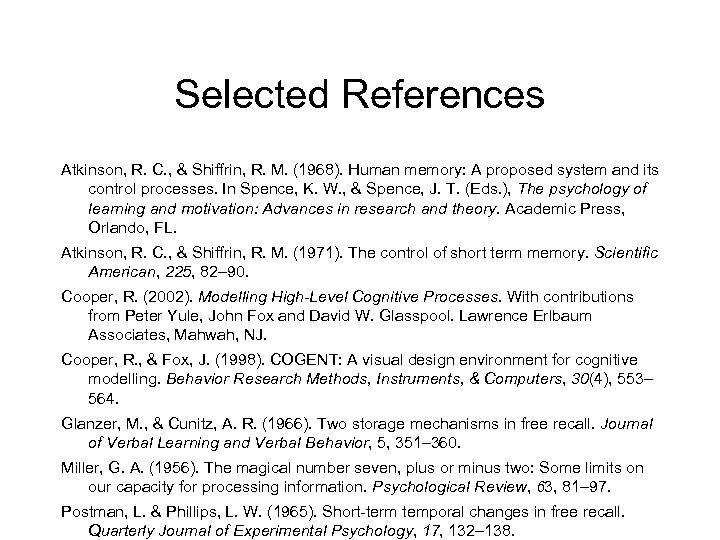 Selected References Atkinson, R. C. , & Shiffrin, R. M. (1968). Human memory: A proposed system and its control processes. In Spence, K. W. , & Spence, J. T. (Eds. ), The psychology of learning and motivation: Advances in research and theory. Academic Press, Orlando, FL. Atkinson, R. C. , & Shiffrin, R. M. (1971). The control of short term memory. Scientific American, 225, 82– 90. Cooper, R. (2002). Modelling High-Level Cognitive Processes. With contributions from Peter Yule, John Fox and David W. Glasspool. Lawrence Erlbaum Associates, Mahwah, NJ. Cooper, R. , & Fox, J. (1998). COGENT: A visual design environment for cognitive modelling. Behavior Research Methods, Instruments, & Computers, 30(4), 553– 564. Glanzer, M. , & Cunitz, A. R. (1966). Two storage mechanisms in free recall. Journal of Verbal Learning and Verbal Behavior, 5, 351– 360. Miller, G. A. (1956). The magical number seven, plus or minus two: Some limits on our capacity for processing information. Psychological Review, 63, 81– 97. Postman, L. & Phillips, L. W. (1965). Short-term temporal changes in free recall. Quarterly Journal of Experimental Psychology, 17, 132– 138.