


 Скачать презентацию An Introduction to Integrated Marketing Communication What
3a35240cf6f36452594fbc03badb625f.ppt
- Количество слайдов: 23
 An Introduction to Integrated Marketing Communication
 What is Promotion? l l l Communication process in marketing It is used to create a favorable predisposition toward brand concept, services, idea, or person. Implementing the three other marketing mix factors Achieving market segmentation, product differentiation, and positioning Enhancing revenues and profits
 Promotional Mix l A blend of communication tools and activities used by a firm l l l Advertising Sales Promotion Publicity/Public Relations Direct Marketing Interactive/Internet marketing Personal Selling
 Advertising l Any paid form of non-personal communication about an organization, product, service or idea by an identified sponsor.
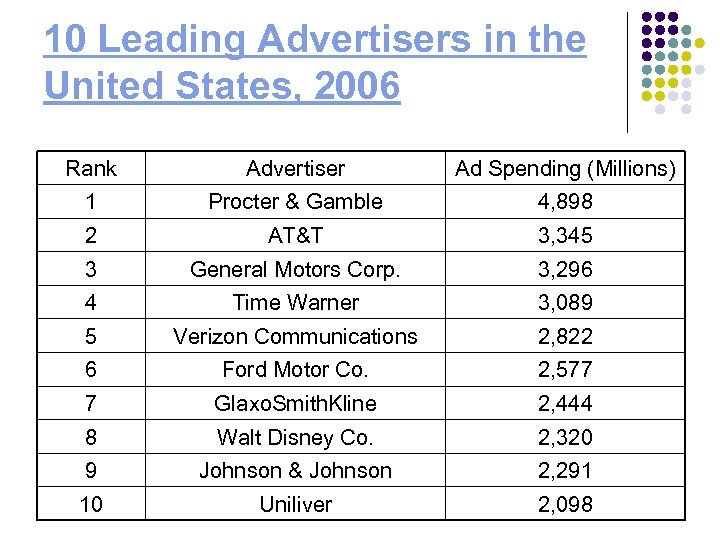 10 Leading Advertisers in the United States, 2006 Rank Advertiser Ad Spending (Millions) 1 Procter & Gamble 4, 898 2 AT&T 3, 345 3 General Motors Corp. 3, 296 4 Time Warner 3, 089 5 Verizon Communications 2, 822 6 Ford Motor Co. 2, 577 7 Glaxo. Smith. Kline 2, 444 8 Walt Disney Co. 2, 320 9 Johnson & Johnson 2, 291 10 Uniliver 2, 098
 台灣五大媒體廣告量 l l 2008年台灣五大媒體廣告量 2009年上半年台灣五大媒體廣告量
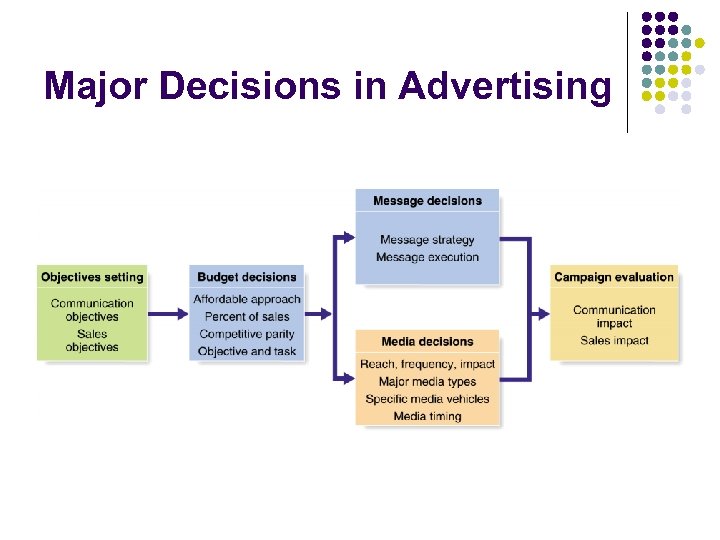 Major Decisions in Advertising
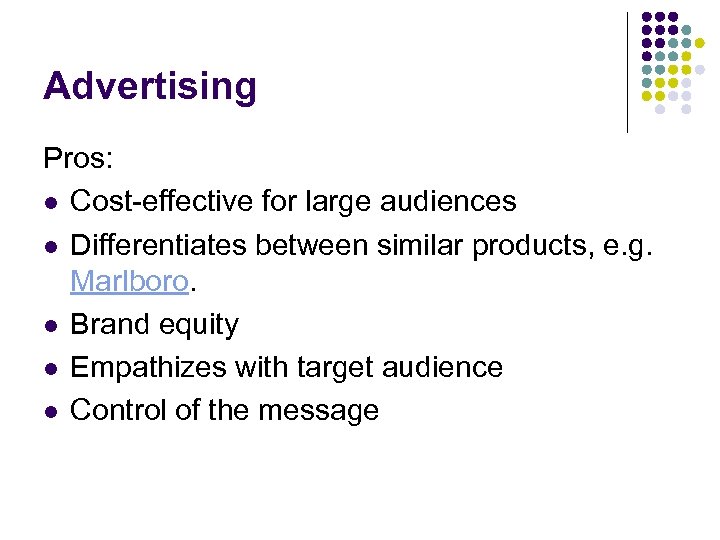 Advertising Pros: l Cost-effective for large audiences l Differentiates between similar products, e. g. Marlboro. l Brand equity l Empathizes with target audience l Control of the message
 Advertising Cons: l Media and production costs l l On average, U. S. advertisers pay $332, 000 to produce a single 30 -second television commercial; Nike’s “The Wall” – $2, 000. 25, 000~ 40, 000/10 sec. Effectiveness difficult to judge Credibility and image problems
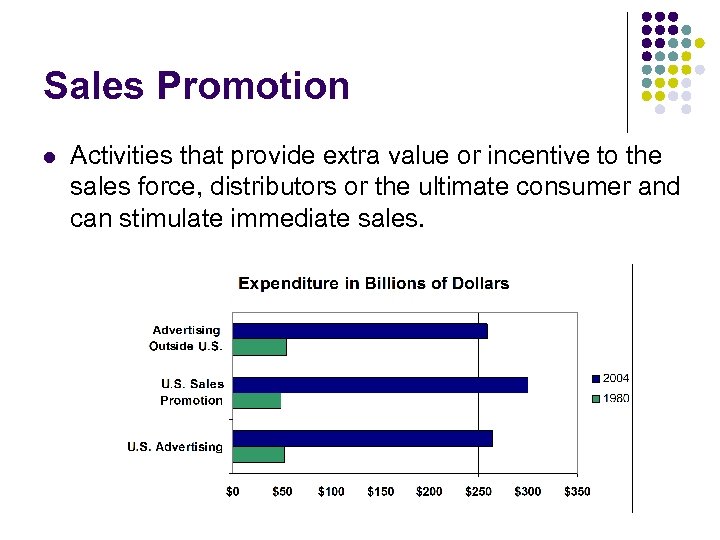 Sales Promotion l Activities that provide extra value or incentive to the sales force, distributors or the ultimate consumer and can stimulate immediate sales.
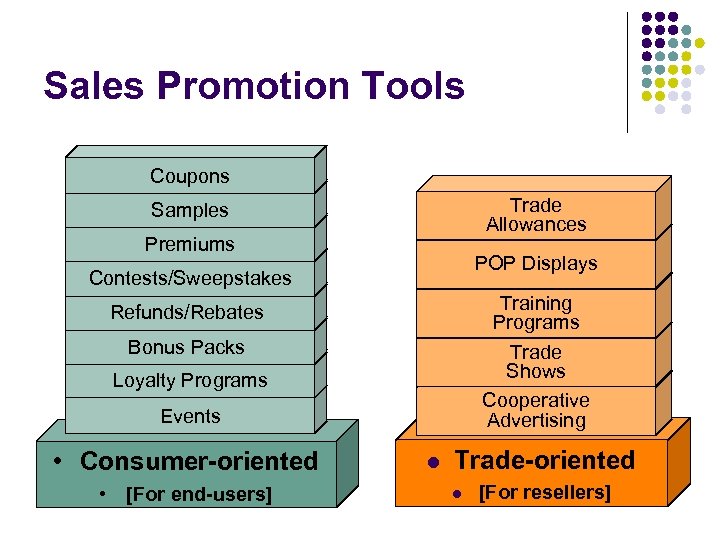 Sales Promotion Tools Coupons Trade Allowances Samples Premiums POP Displays Contests/Sweepstakes Training Programs Trade Shows Cooperative Advertising Refunds/Rebates Bonus Packs Loyalty Programs Events • Consumer-oriented • [For end-users] l Trade-oriented l [For resellers]
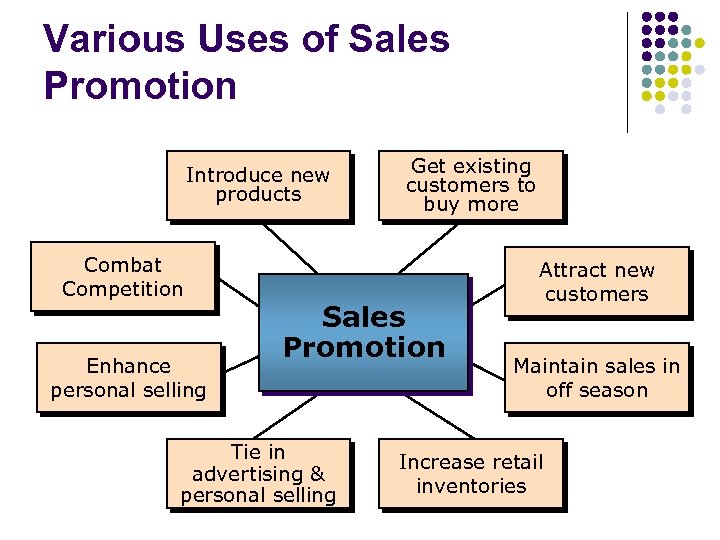 Various Uses of Sales Promotion Introduce new products Combat Competition Enhance personal selling Get existing customers to buy more Sales Promotion Tie in advertising & personal selling Attract new customers Maintain sales in off season Increase retail inventories
 Sales Promotion l Pros: l l l Extra incentive to consumer or retailer Appeals to price sensitive consumer Generates interest in product or ad Easier to measure, e. g. 7 -11 Hello Kitty: revenue↑ 11. 82%, profits↑ 29. 33%. Cons: l l l Short-run strategy Affects brand image, brand equity Stock problem
 Public Relations l l Building good relations with the company’s various publics by obtaining favorable publicity, building up a good corporate image, and handling or heading off unfavorable rumors, stories, and events. News stories, features, sponsorships, and events seem more real and believable to readers than ads do.
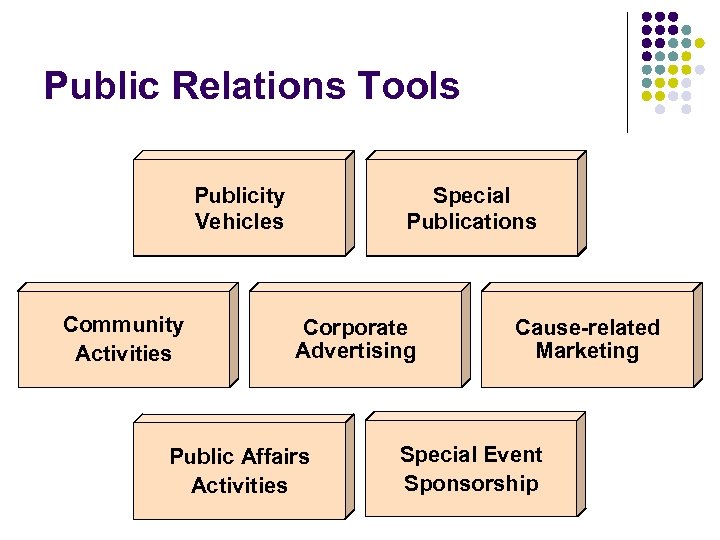 Public Relations Tools Publicity Vehicles Community Activities Special Publications Corporate Advertising Public Affairs Activities Cause-related Marketing Special Event Sponsorship
 Public Relations l Pros: l l Credibility Low cost News value generating word-of-mouth Cons: l l Lack of control Negative as well as positive
 Publicity (公關宣傳 ) l l Nonpersonal communications regarding an organization, product, service, or idea not directly paid or run under identified sponsorship. It usually comes in the form of a news story, editorial, or announcement about an organization and/or its products and services.
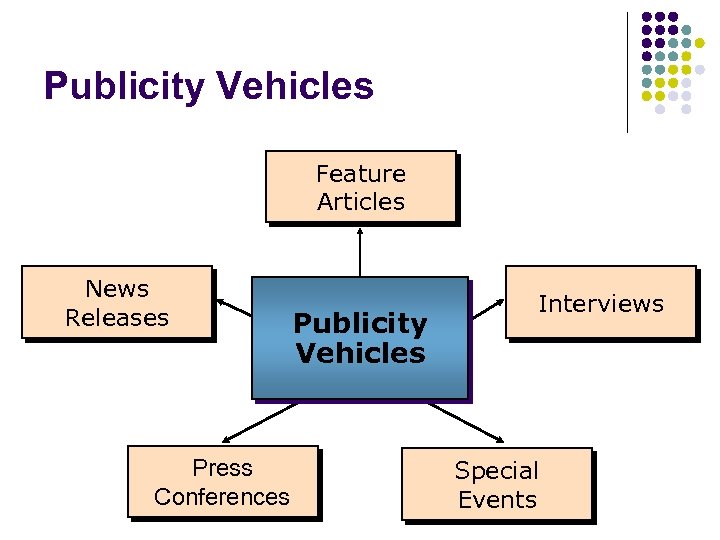 Publicity Vehicles Feature Articles News Releases Press Conferences Publicity Vehicles Interviews Special Events
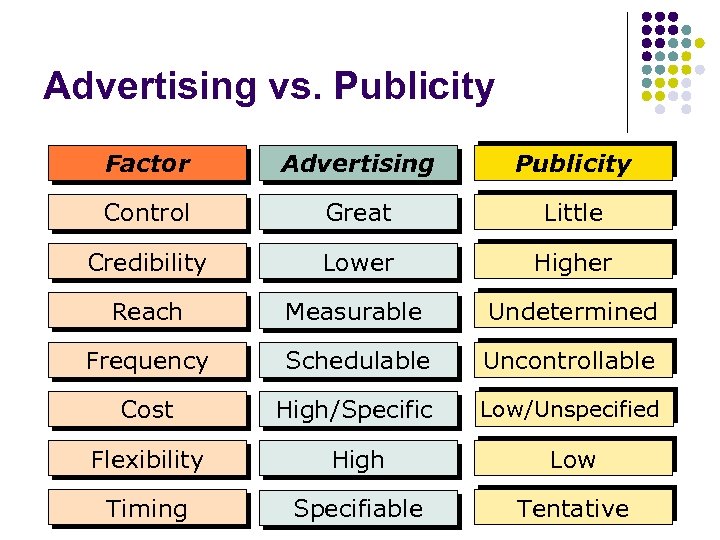 Advertising vs. Publicity Factor Advertising Publicity Control Great Little Credibility Lower Higher Reach Measurable Undetermined Frequency Schedulable Uncontrollable Cost High/Specific Low/Unspecified Flexibility High Low Timing Specifiable Tentative
 Direct Marketing l l Direct connections with carefully targeted individual consumers to both obtain an immediate response and cultivate lasting customer relationships. Four characteristics: nonpublic, immediate, customized, and interactive.
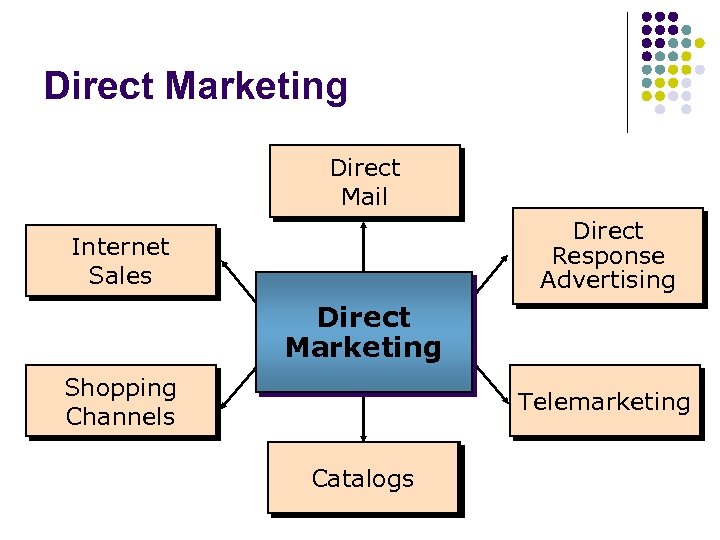 Direct Marketing Direct Mail Direct Response Advertising Internet Sales Direct Marketing Shopping Channels Telemarketing Catalogs
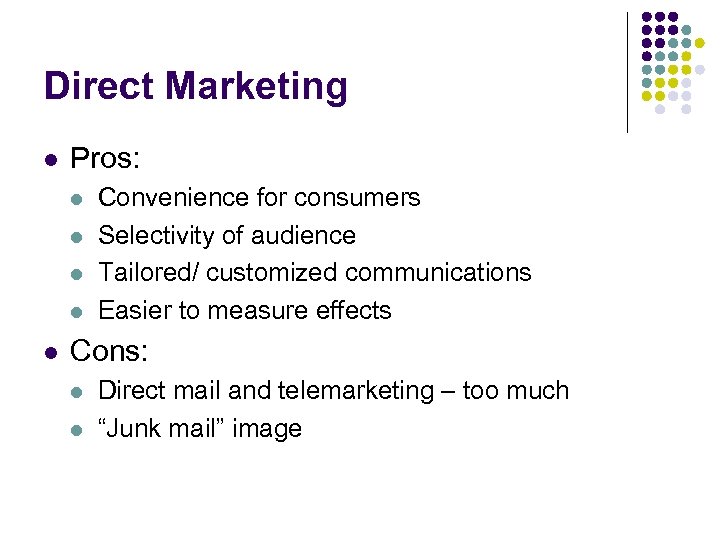 Direct Marketing l Pros: l l l Convenience for consumers Selectivity of audience Tailored/ customized communications Easier to measure effects Cons: l l Direct mail and telemarketing – too much “Junk mail” image
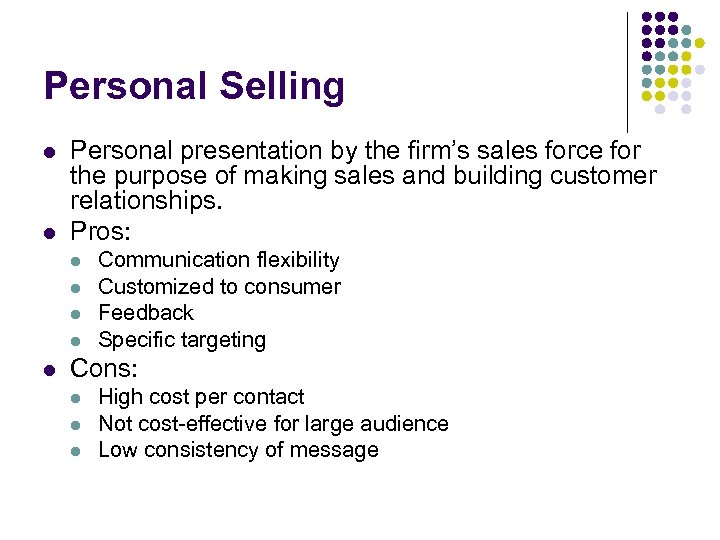 Personal Selling l l Personal presentation by the firm’s sales force for the purpose of making sales and building customer relationships. Pros: l l l Communication flexibility Customized to consumer Feedback Specific targeting Cons: l l l High cost per contact Not cost-effective for large audience Low consistency of message