 Скачать презентацию An Introduction to Functional Electrical Stimulation Presented by
5bb91efdda33b292edc6fc34c890a2c7.ppt
- Количество слайдов: 50



An Introduction to Functional Electrical Stimulation Presented by: Fereshteh Lagzi
Presentation Agenda Introduction History of FES systems main components Electrodes Muscles, Neural and electrical stimulation Examples of Commercial systems
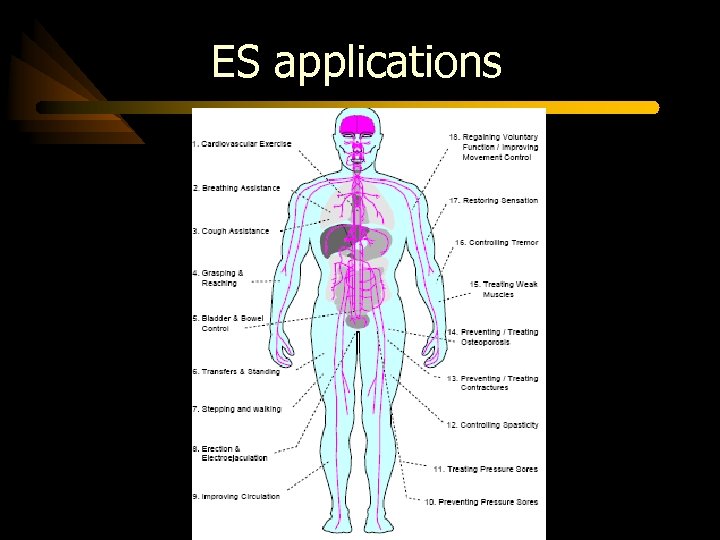
ES applications
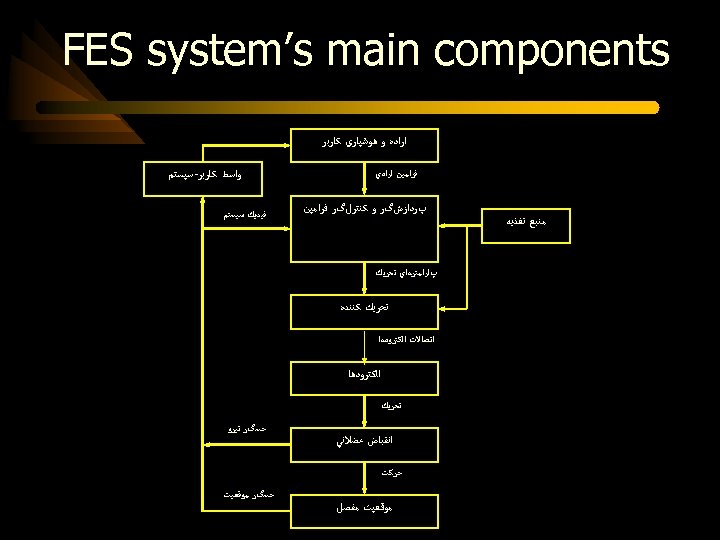
FES system’s main components ﺍﺭﺍﺩﻩ ﻭ ﻫﻮﺷﻴﺎﺭﻱ ﻛﺎﺭﺑﺮ ﻓﺮﺍﻣﻴﻦ ﺍﺭﺍﺩﻱ ﻣﻨﺒﻊ ﺗﻐﺬﻳﻪ پﺮﺩﺍﺯﺵگﺮ ﻭ ﻛﻨﺘﺮﻝگﺮ ﻓﺮﺍﻣﻴﻦ ﻭﺍﺳﻂ ﻛﺎﺭﺑﺮ- ﺳﻴﺴﺘﻢ ﻓﻴﺪﺑﻚ ﺳﻴﺴﺘﻢ پﺎﺭﺍﻣﺘﺮﻫﺎﻱ ﺗﺤﺮﻳﻚ ﻛﻨﻨﺪﻩ ﺍﺗﺼﺎﻻﺕ ﺍﻟﻜﺘﺮﻭﺩﻫﺎ ﺗﺤﺮﻳﻚ ﺍﻧﻘﺒﺎﺽ ﻋﻀﻼﻧﻲ ﺣﺴگﺮ ﻧﻴﺮﻭ ﺣﺮﻛﺖ ﻣﻮﻗﻌﻴﺖ ﻣﻔﺼﻞ ﺣﺴگﺮ ﻣﻮﻗﻌﻴﺖ
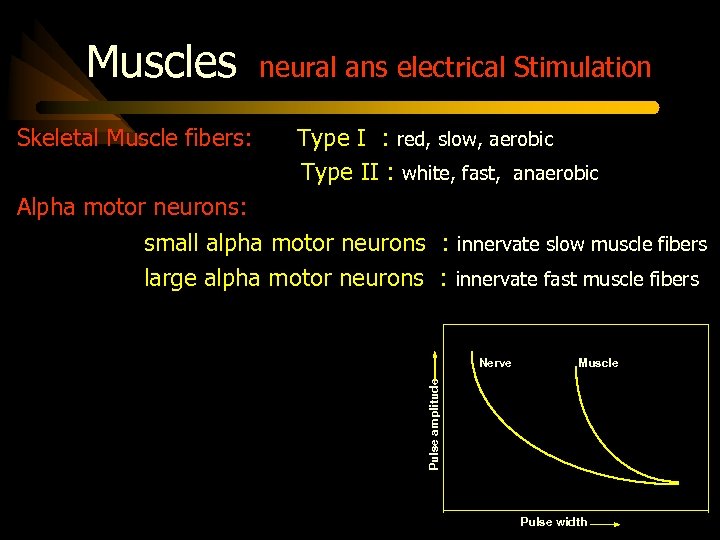
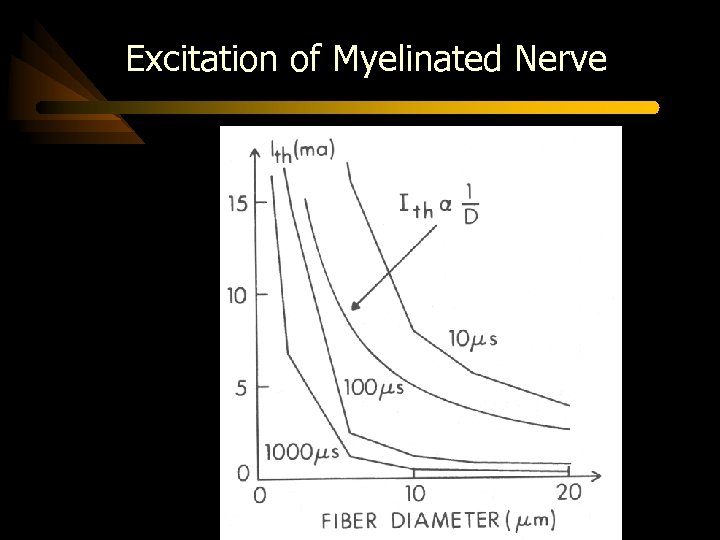
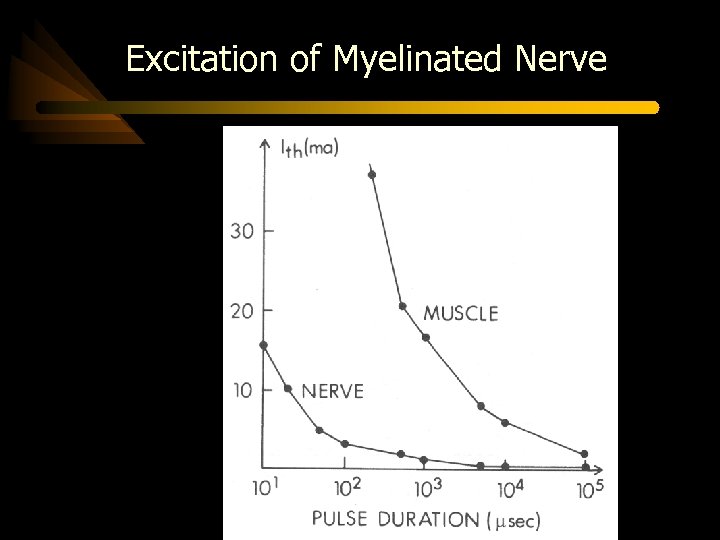
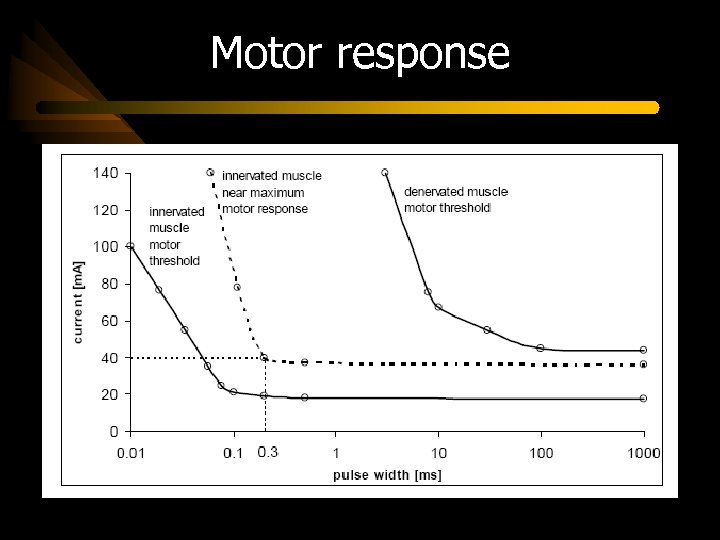
Muscles Skeletal Muscle fibers: neural ans electrical Stimulation Type I : red, slow, aerobic Type II : white, fast, anaerobic Alpha motor neurons: small alpha motor neurons : innervate slow muscle fibers large alpha motor neurons : innervate fast muscle fibers Muscle Pulse amplitude Nerve Pulse width
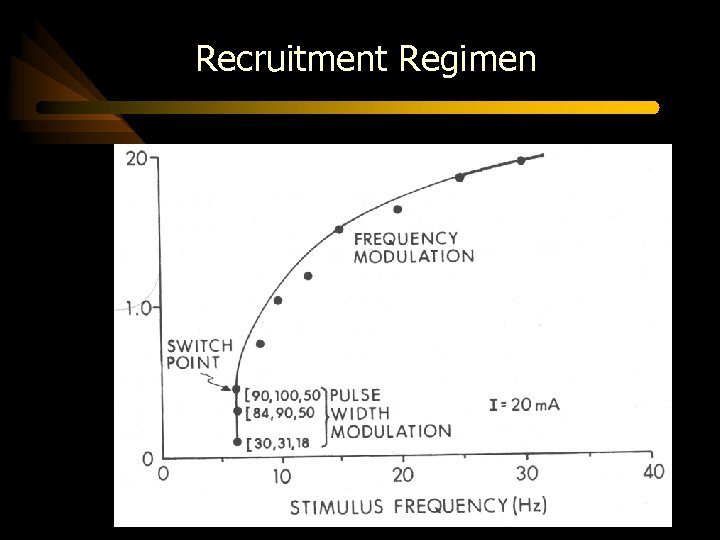
Muscles neural ans electrical Stimulation Muscle contraction mechanisms: recruitment : activation of an increasing number of motor units within a muscle on contraction temporal summation : increasing firing rate of active motor units During voluntary activation, recruitment and temporal summation are two mechanisms that regulate the strenght of muscle contraction, and usually these mechanisms act simultaneously
Types of Electrodes q. Polarizable electrodes: Ag q. Nonpolarizable electrodes: Ag_ Ag. Cl
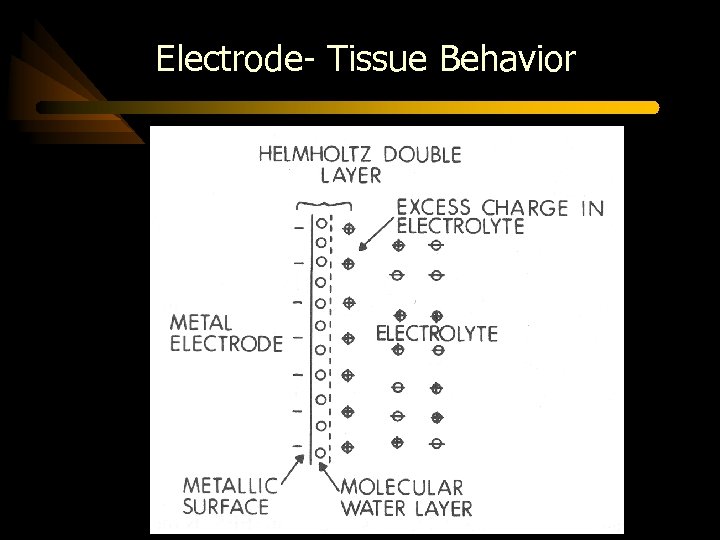
Electrode- Tissue Behavior
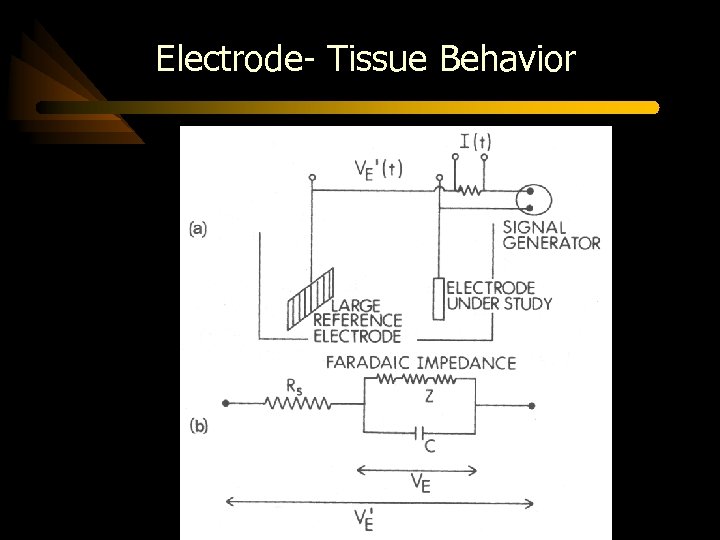
Electrode- Tissue Behavior
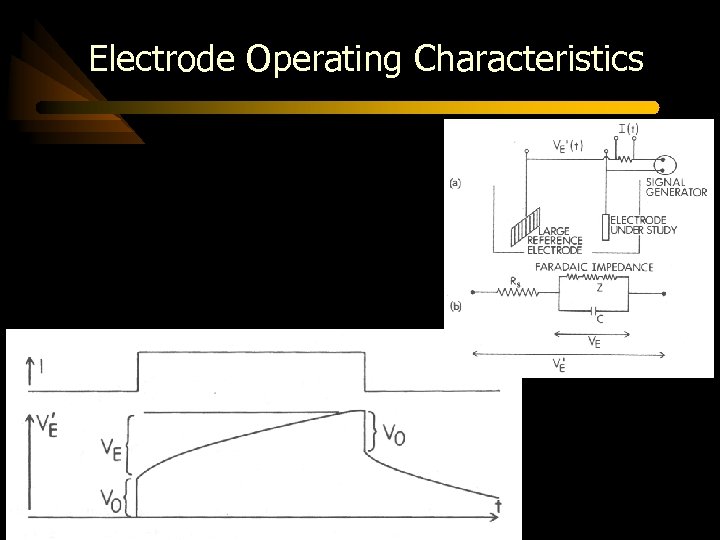
Electrode Operating Characteristics
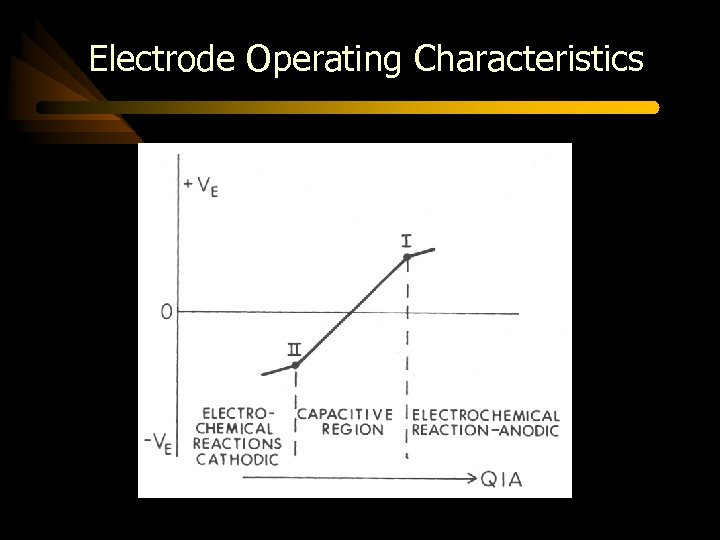
Electrode Operating Characteristics
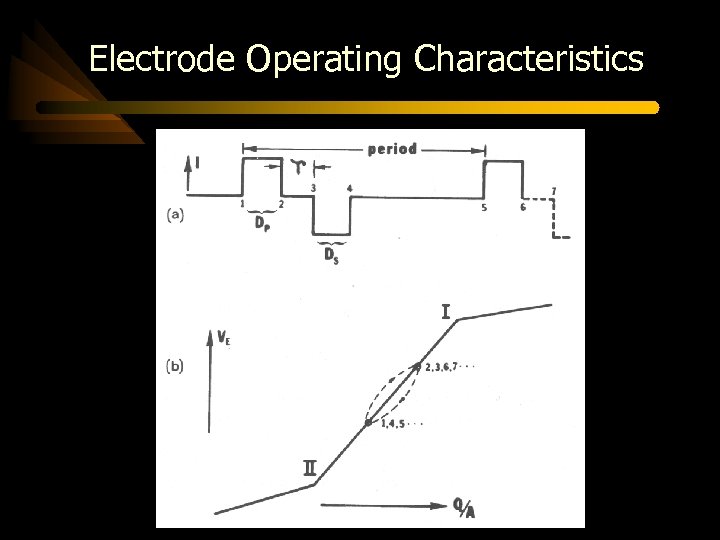
Electrode Operating Characteristics
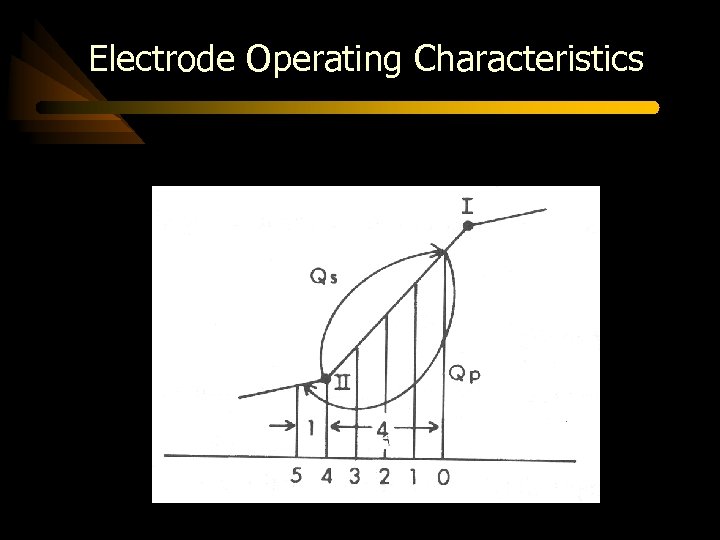
Electrode Operating Characteristics
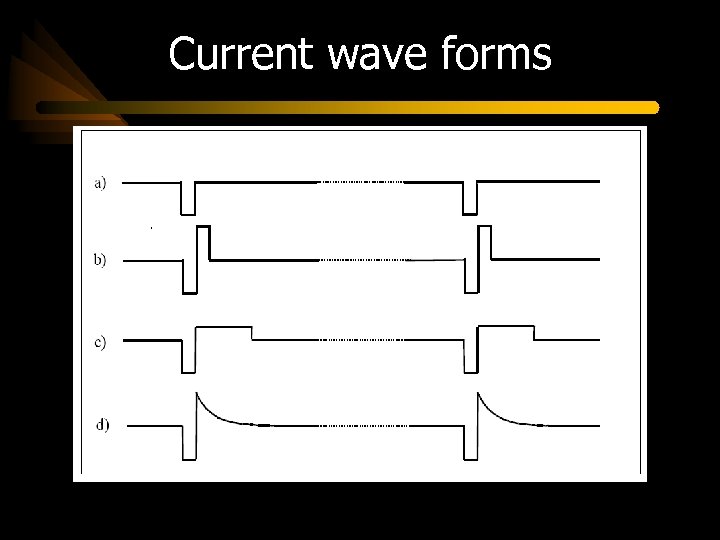
Current wave forms
Electrode Material In choosing the material for an electrode the following factors are of importance: (1) Passive compatibility of the material with tissue (2) Extent of reversible behavior (3) Mechanical compatibility with the tissue
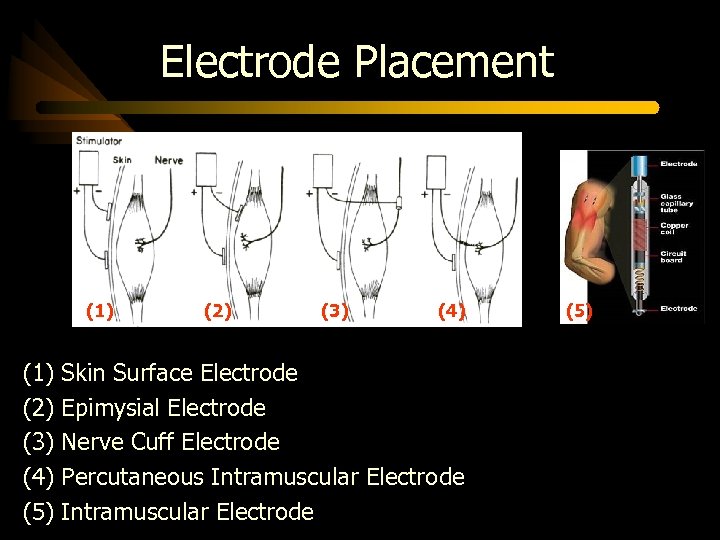
Electrode Placement (1) (2) (3) (4) (5) (2) (3) (4) Skin Surface Electrode Epimysial Electrode Nerve Cuff Electrode Percutaneous Intramuscular Electrode (5)
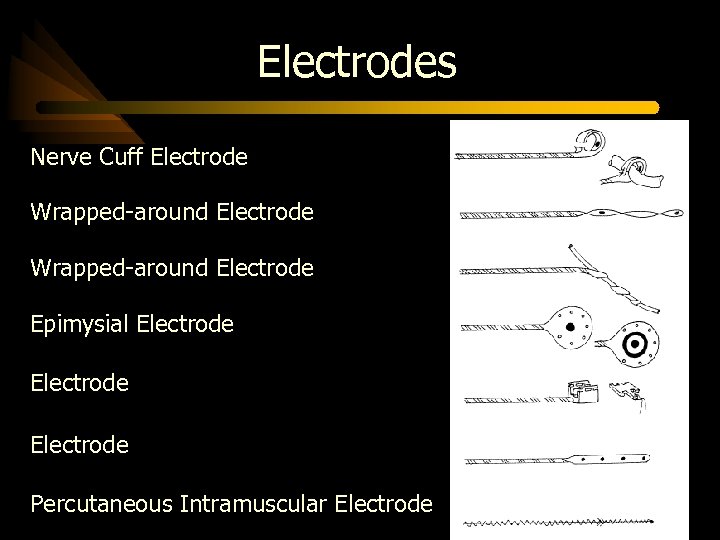
Electrodes Nerve Cuff Electrode Wrapped-around Electrode Epimysial Electrode Percutaneous Intramuscular Electrode
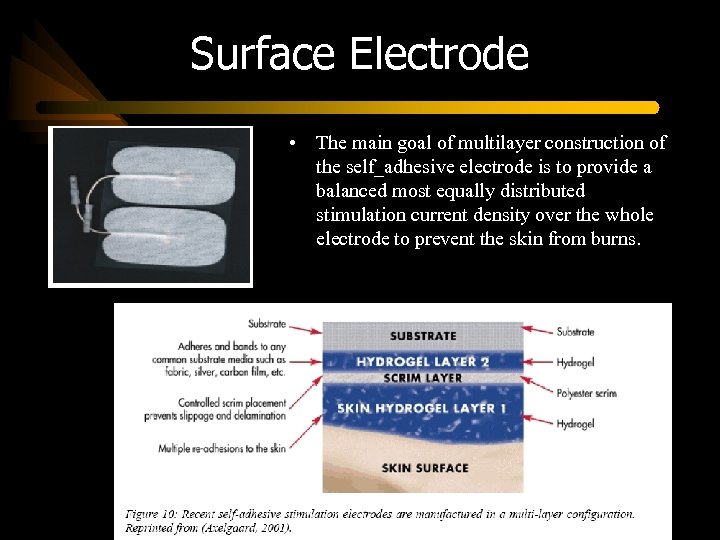
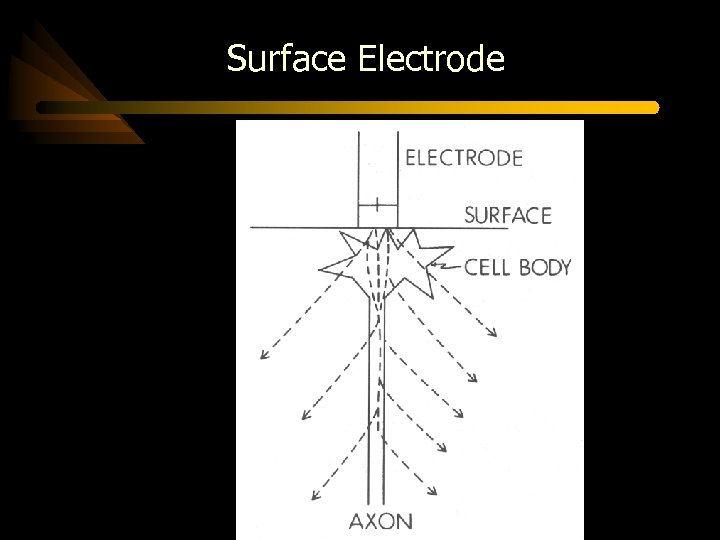
Surface Electrode • The main goal of multilayer construction of the self_adhesive electrode is to provide a balanced most equally distributed stimulation current density over the whole electrode to prevent the skin from burns.
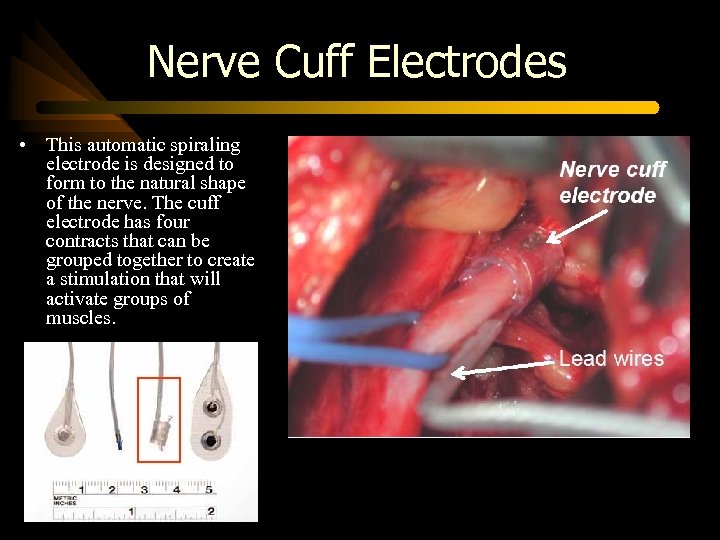
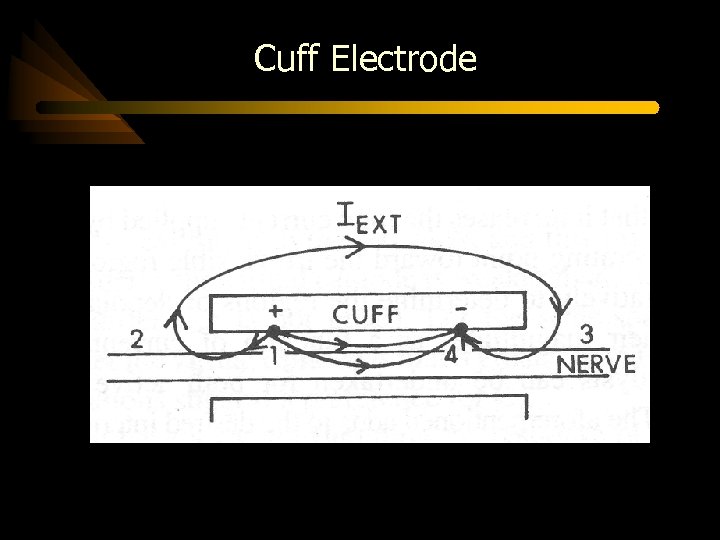
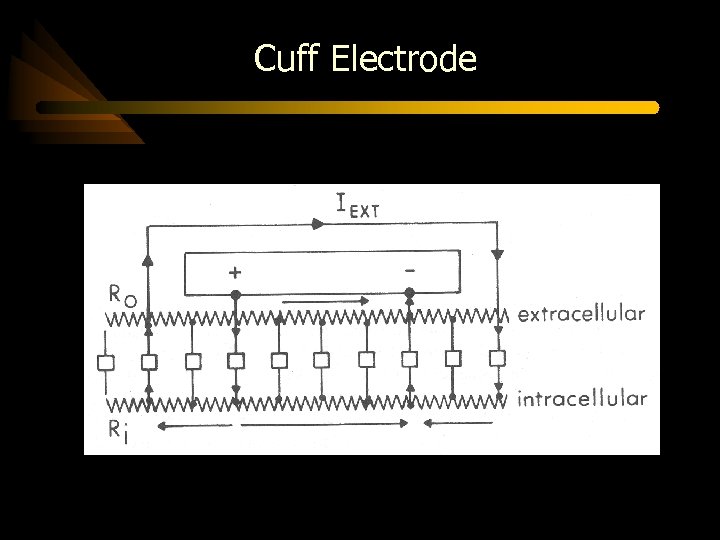
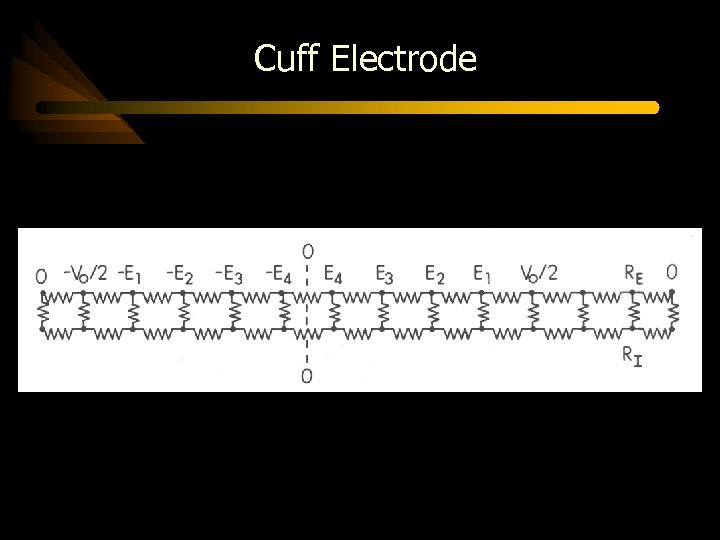
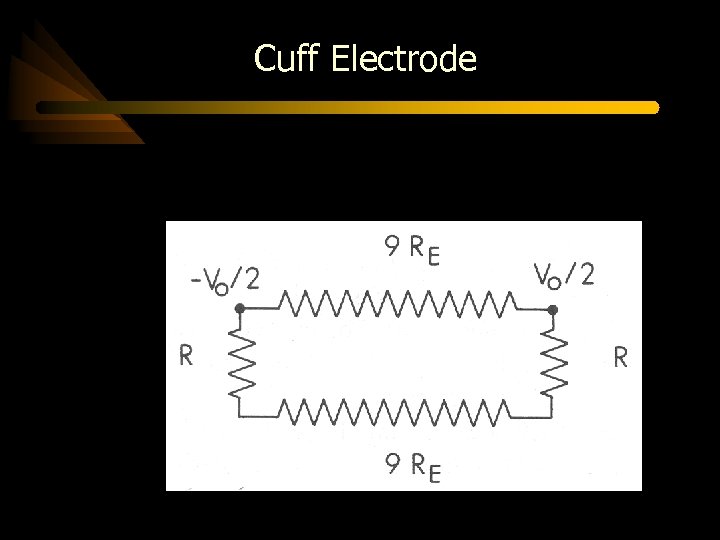
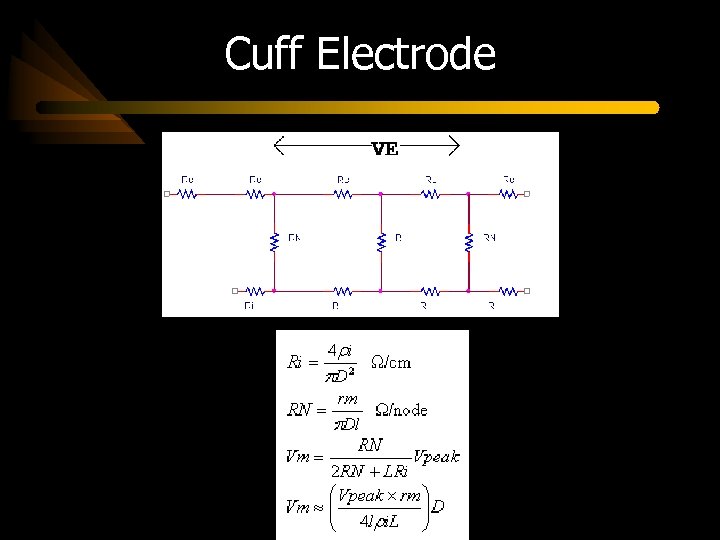
Nerve Cuff Electrodes • This automatic spiraling electrode is designed to form to the natural shape of the nerve. The cuff electrode has four contracts that can be grouped together to create a stimulation that will activate groups of muscles.
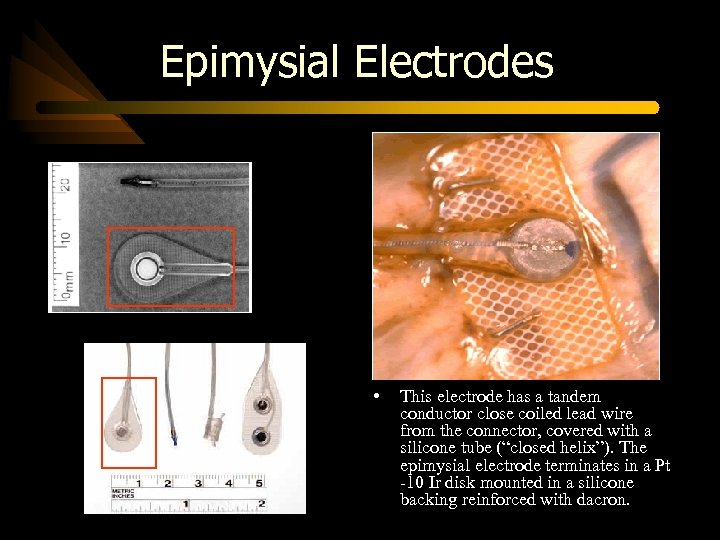
Epimysial Electrodes • This electrode has a tandem conductor close coiled lead wire from the connector, covered with a silicone tube (“closed helix”). The epimysial electrode terminates in a Pt -10 Ir disk mounted in a silicone backing reinforced with dacron.
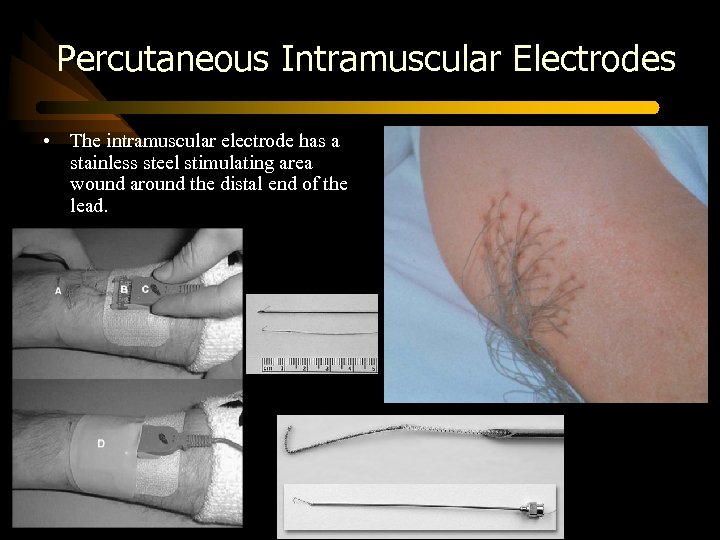
Percutaneous Intramuscular Electrodes • The intramuscular electrode has a stainless steel stimulating area wound around the distal end of the lead.
Cuff Electrode
Cuff Electrode
Cuff Electrode
Cuff Electrode
Cuff Electrode
Cuff Electrode
Surface Electrode
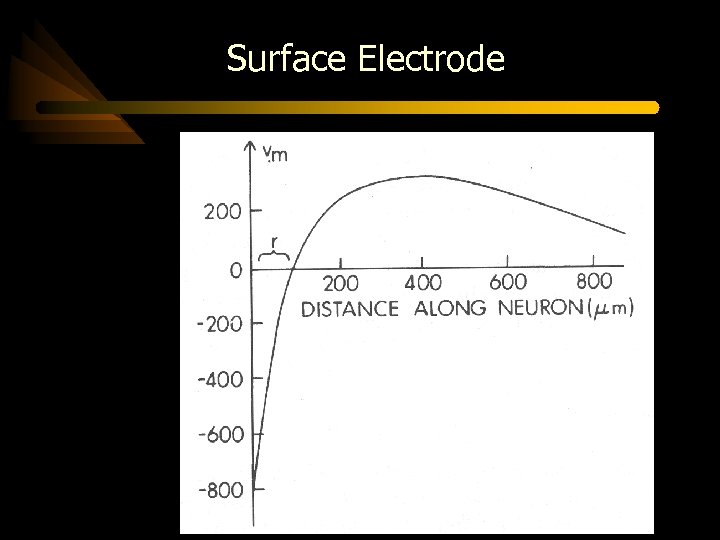
Surface Electrode
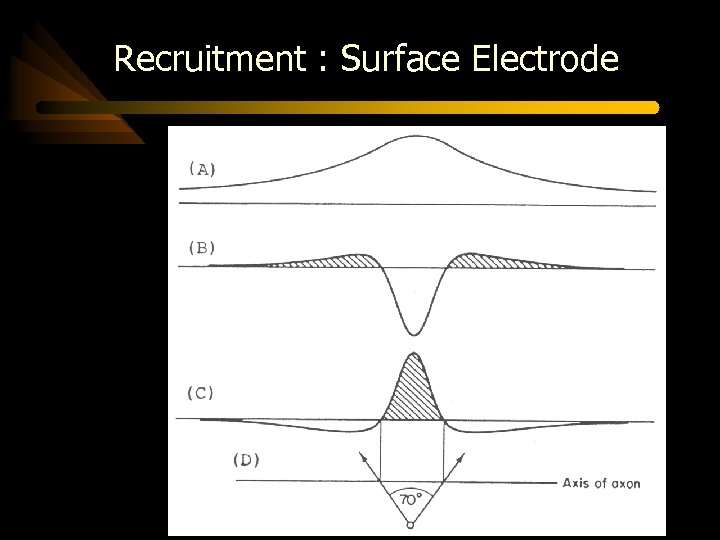
Recruitment : Surface Electrode
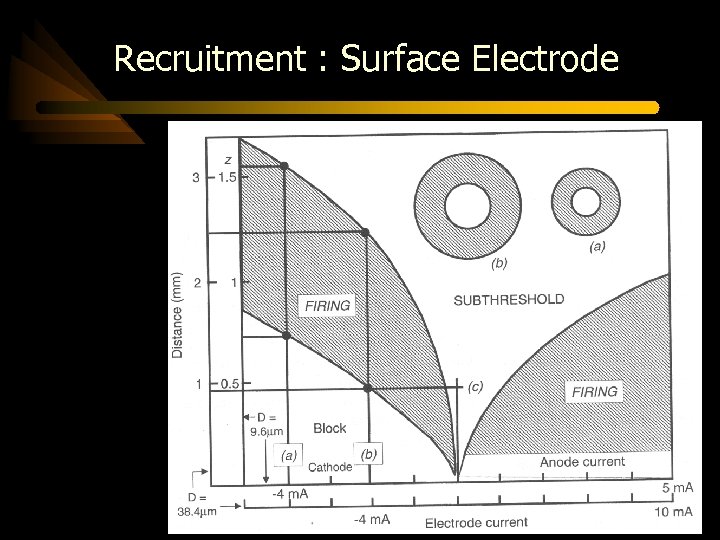
Recruitment : Surface Electrode
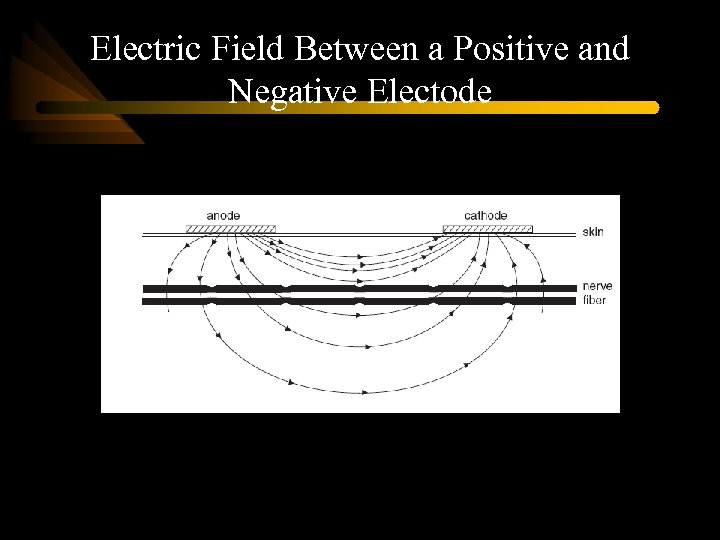
Electric Field Between a Positive and Negative Electode
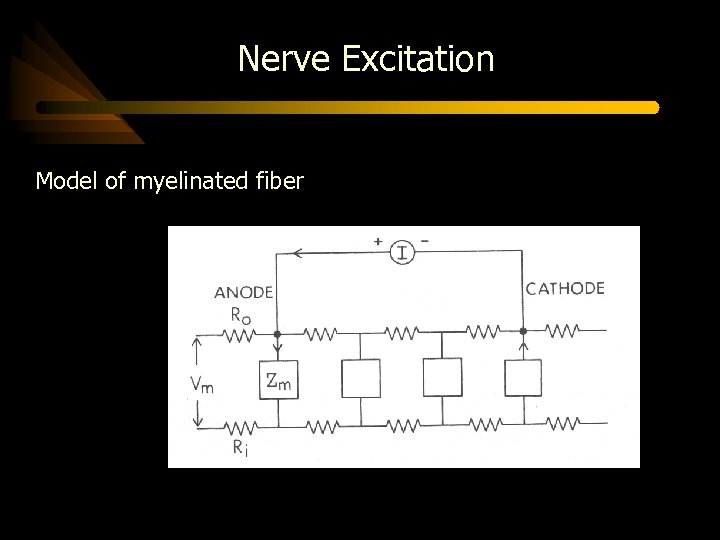
Nerve Excitation Model of myelinated fiber
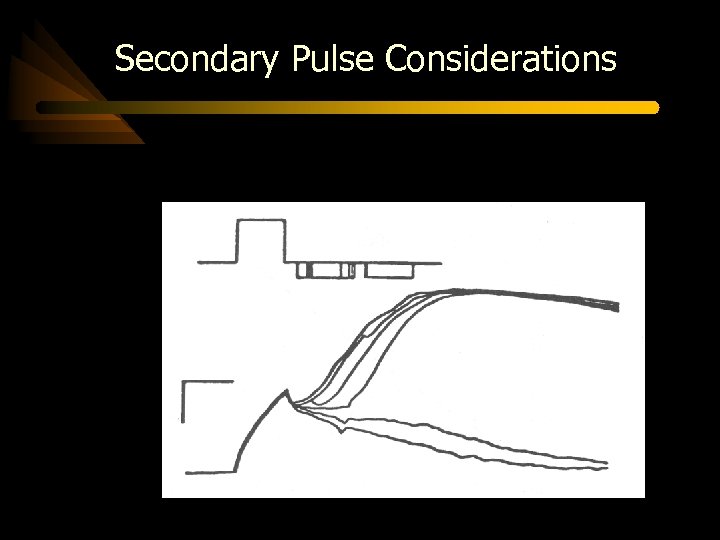
Secondary Pulse Considerations
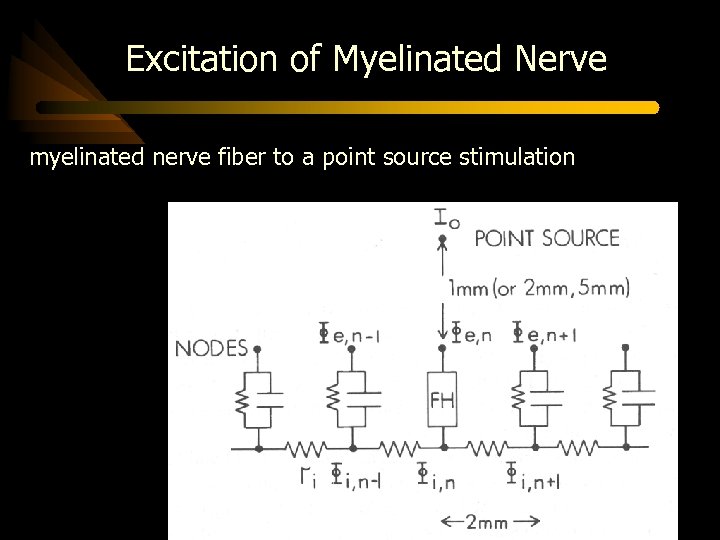
Excitation of Myelinated Nerve myelinated nerve fiber to a point source stimulation
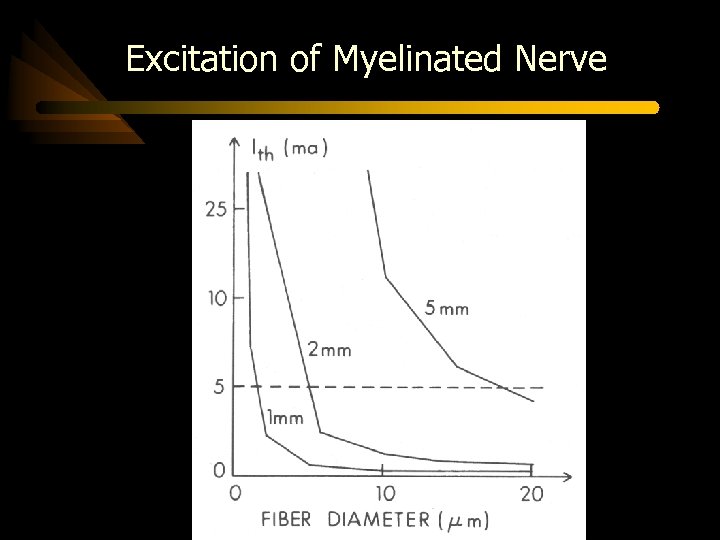
Excitation of Myelinated Nerve
Excitation of Myelinated Nerve
Excitation of Myelinated Nerve
Motor response
Recruitment Regimen

Examples of: Commercial FES Systems
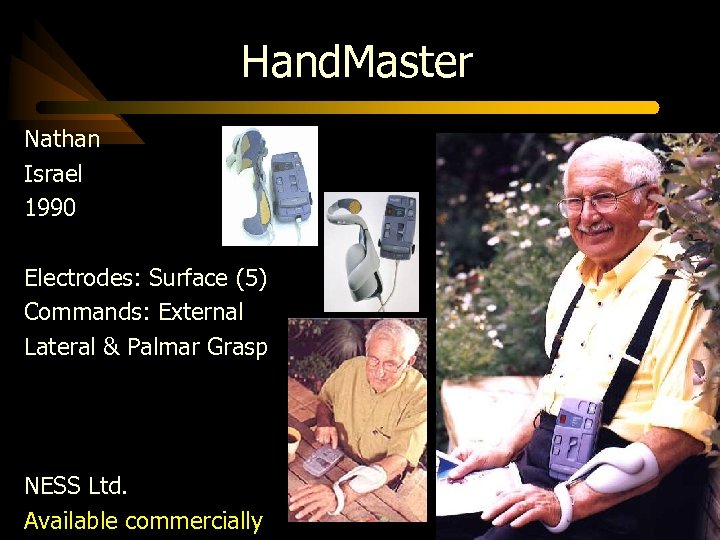
Hand. Master Nathan Israel 1990 Electrodes: Surface (5) Commands: External Lateral & Palmar Grasp NESS Ltd. Available commercially
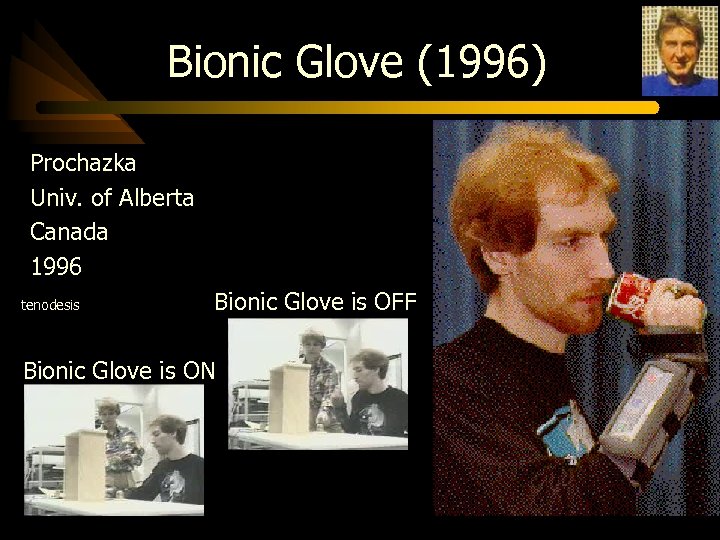
Bionic Glove (1996) Prochazka Univ. of Alberta Canada 1996 tenodesis Bionic Glove is OFF Bionic Glove is ON
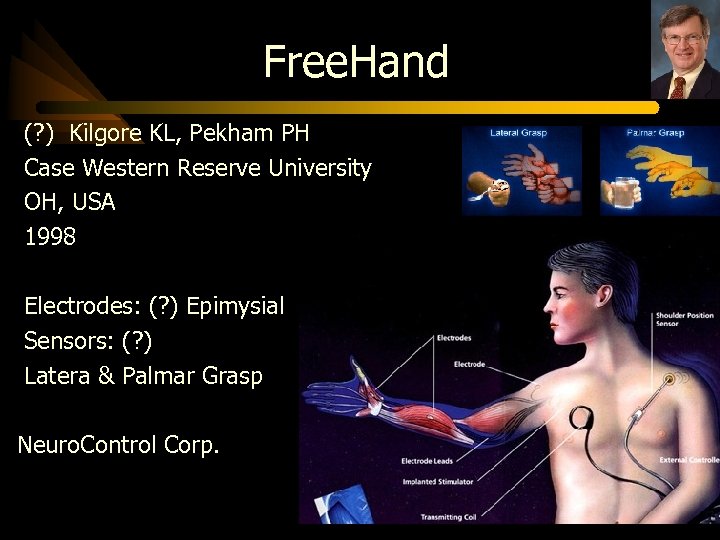
Free. Hand (? ) Kilgore KL, Pekham PH Case Western Reserve University OH, USA 1998 Electrodes: (? ) Epimysial Sensors: (? ) Latera & Palmar Grasp Neuro. Control Corp.
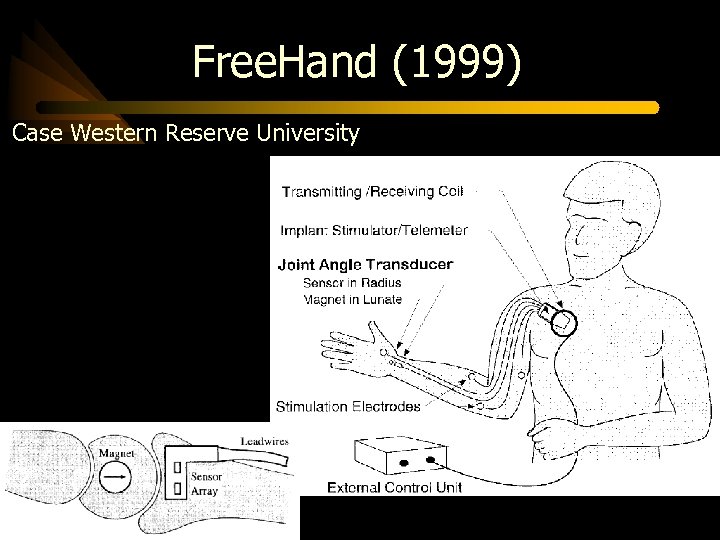
Free. Hand (1999) Case Western Reserve University
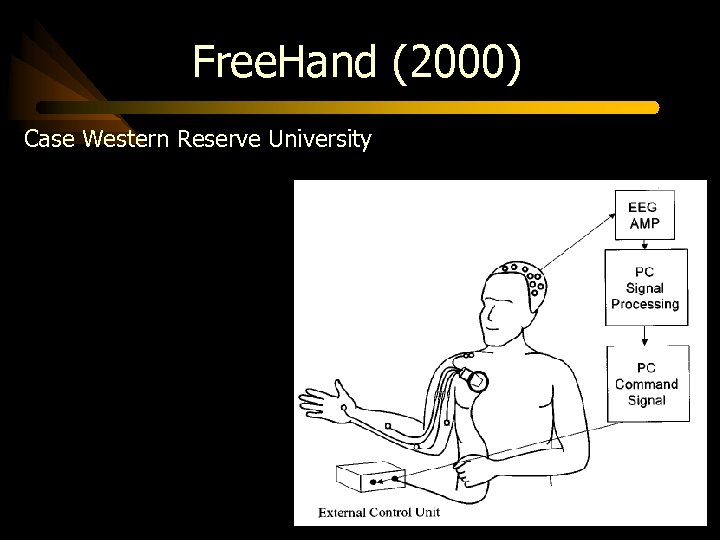
Free. Hand (2000) Case Western Reserve University
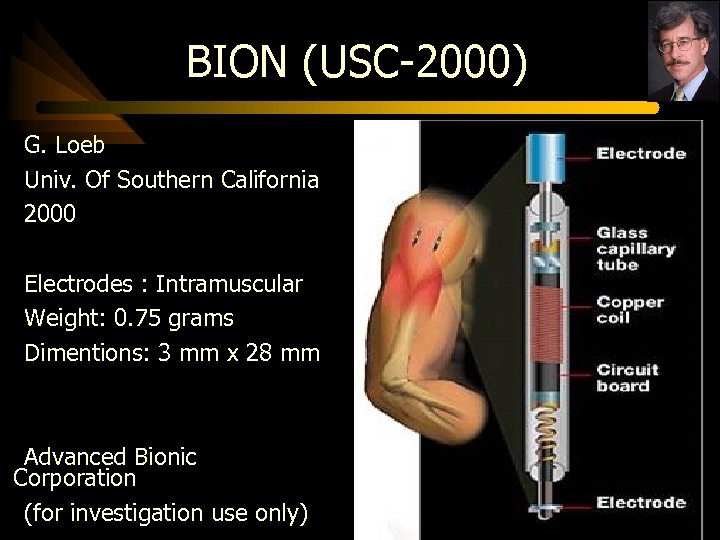
BION (USC-2000) G. Loeb Univ. Of Southern California 2000 Electrodes : Intramuscular Weight: 0. 75 grams Dimentions: 3 mm x 28 mm Advanced Bionic Corporation (for investigation use only)
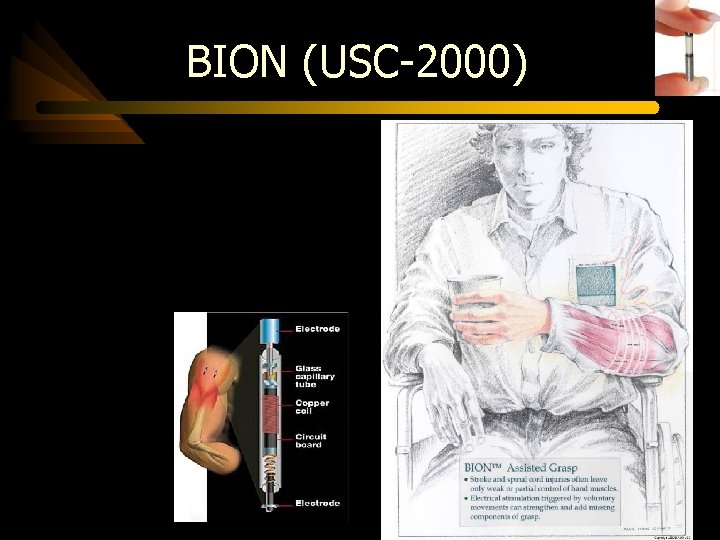
BION (USC-2000)

THANK YOU VERY MUCH For your Attention
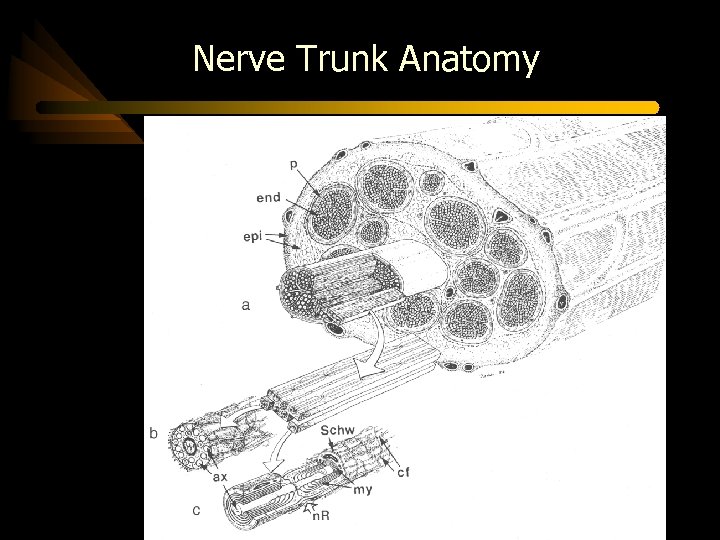
Nerve Trunk Anatomy
Скачать презентацию An Introduction to Functional Electrical Stimulation Presented by
5bb91efdda33b292edc6fc34c890a2c7.ppt