


 Скачать презентацию An introduction to cause-of-death statistics Department of Health
bf85d624c6e677a3bf345df259e31dde.ppt
- Количество слайдов: 32
 An introduction to cause-of-death statistics Department of Health Statistics and Information Systems Presented by Doris Ma Fat (mafatd@who. int) Health Statistics and Informatics
 Outline of this presentation Overview of cause of death Health Statistics and Information Systems Challenges in collecting and compiling good data Tools and way forward
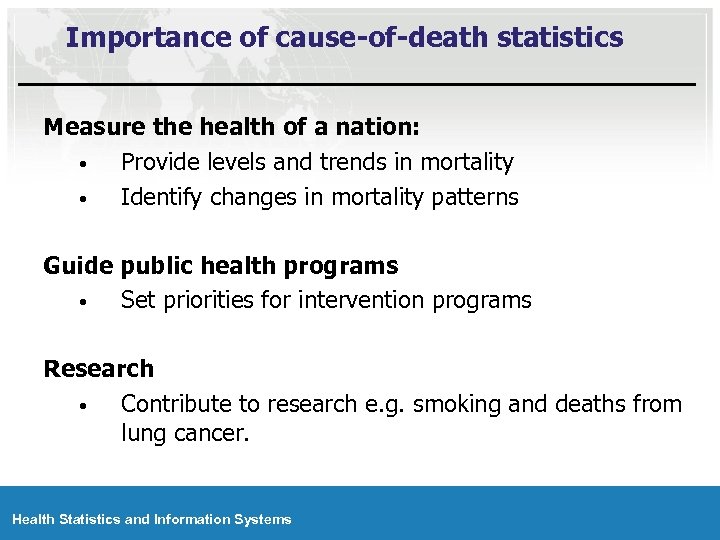 Importance of cause-of-death statistics Measure the health of a nation: • Provide levels and trends in mortality • Identify changes in mortality patterns Guide public health programs • Set priorities for intervention programs Research • Contribute to research e. g. smoking and deaths from lung cancer. Health Statistics and Information Systems
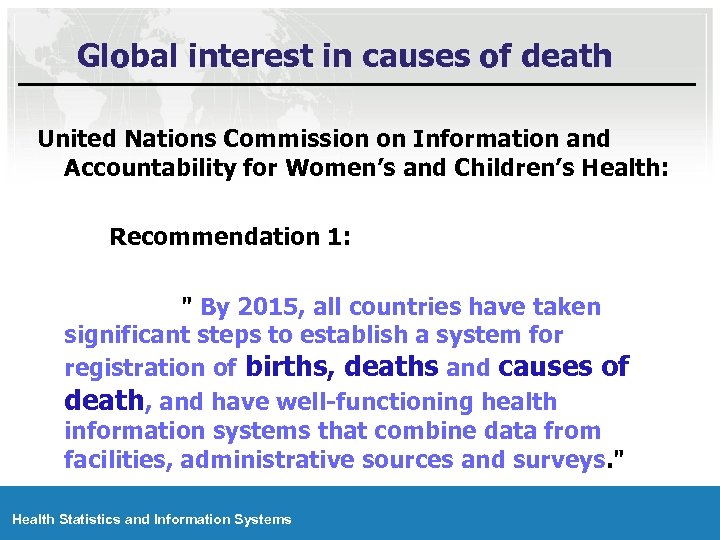 Global interest in causes of death United Nations Commission on Information and Accountability for Women’s and Children’s Health: Recommendation 1: " By 2015, all countries have taken significant steps to establish a system for registration of births, deaths and causes of death, and have well-functioning health information systems that combine data from facilities, administrative sources and surveys. " Health Statistics and Information Systems
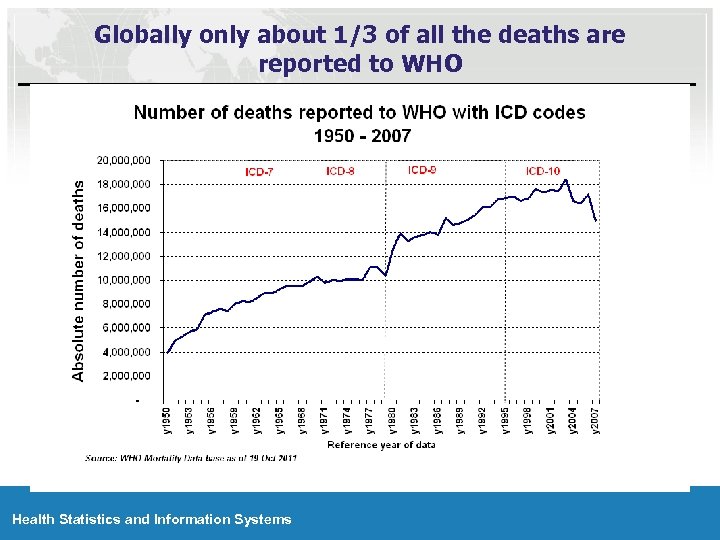 Globally only about 1/3 of all the deaths are reported to WHO Health Statistics and Information Systems
 Africa and Asia: low number of reported deaths Health Statistics and Information Systems
 Data on deaths by age, sex and cause not widely available Health Statistics and Information Systems
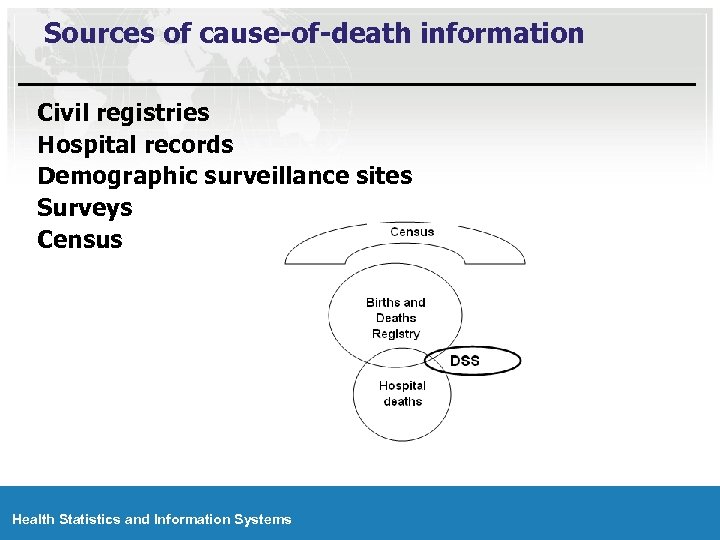 Sources of cause-of-death information Civil registries Hospital records Demographic surveillance sites Surveys Census Health Statistics and Information Systems
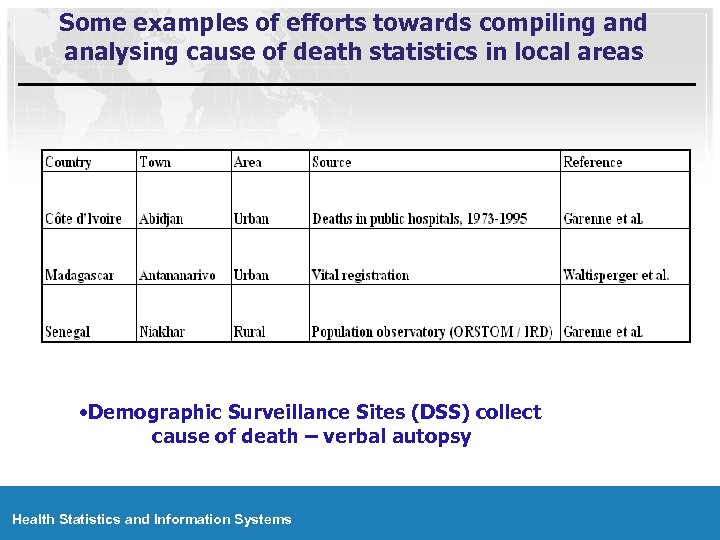 Some examples of efforts towards compiling and analysing cause of death statistics in local areas • Demographic Surveillance Sites (DSS) collect cause of death – verbal autopsy Health Statistics and Information Systems
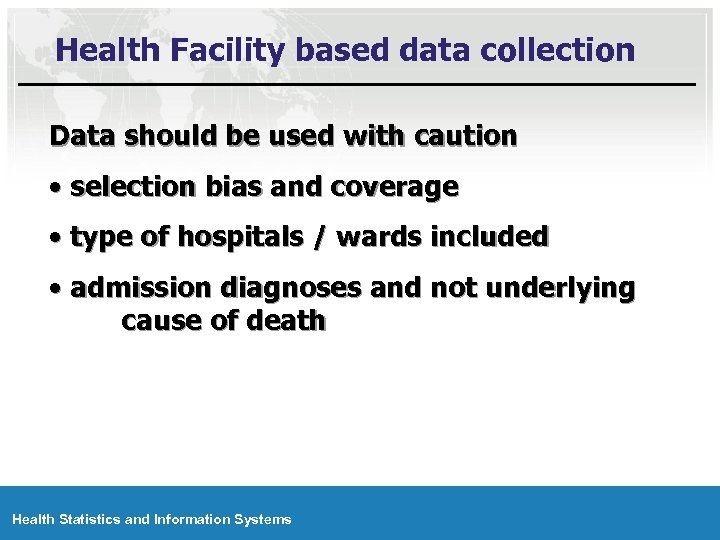 Health Facility based data collection Data should be used with caution • selection bias and coverage • type of hospitals / wards included • admission diagnoses and not underlying cause of death Health Statistics and Information Systems
 Civil registries based data collection Existence of a legal framework: laws and regulations make it obligatory to register death -> the right to obtain a death certificate Standards are followed: UN or WHO definitions and recommendations Data collection is done as part of established government routine and continuous functions Health Statistics and Information Systems
 Estimated coverage of civil registration and gross national income per head (int. USD) Health Statistics and Information Systems Source: WHO Counts? 1 Lancet, 29 Oct 2007
 Recording the cause of death at country level consists of several steps Health Statistics and Information Systems
 Standards enhance the comparability of mortality data The International Statistical Classification of Causes of Death and Related Health Problems (ICD) – to code and compare causes. Latest revision-> ICD-10 The International Form of Medical Certification of Cause of Death – to record all the conditions relating to the death ICD rules – to select the underlying cause of death Health Statistics and Information Systems
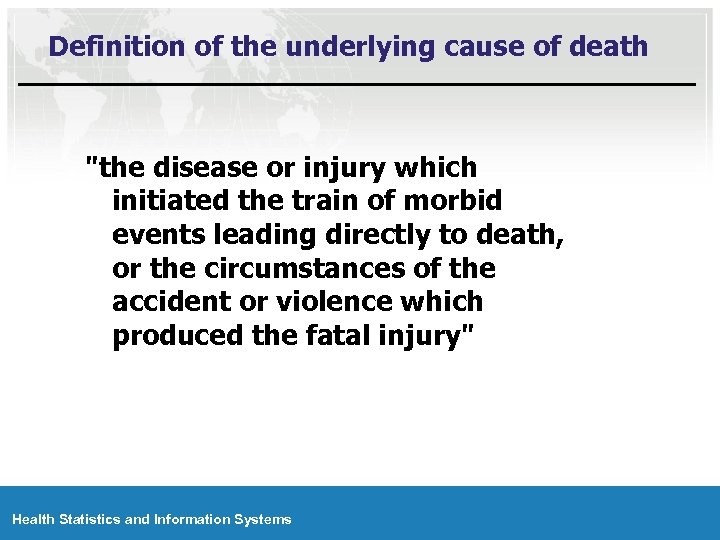 Definition of the underlying cause of death "the disease or injury which initiated the train of morbid events leading directly to death, or the circumstances of the accident or violence which produced the fatal injury" Health Statistics and Information Systems
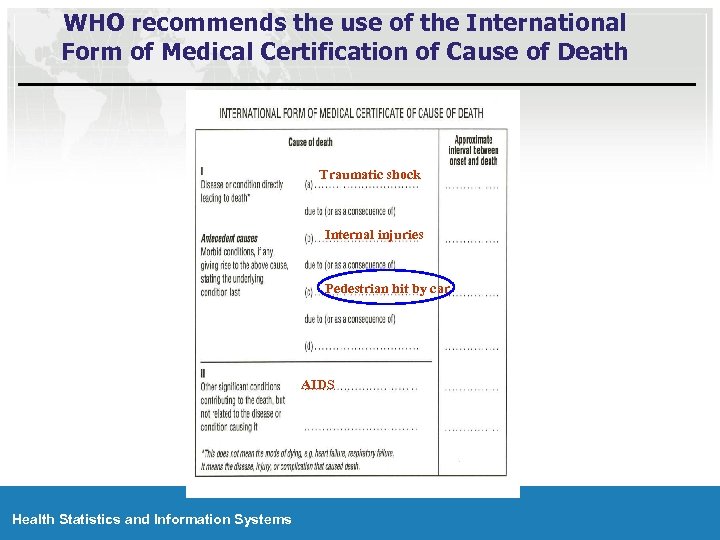 WHO recommends the use of the International Form of Medical Certification of Cause of Death Traumatic shock Internal injuries Pedestrian hit by car AIDS Health Statistics and Information Systems
 Outline of this presentation Overview of cause of death Challenges in collecting and compiling good data Health Statistics and Information Systems Tools and way forward
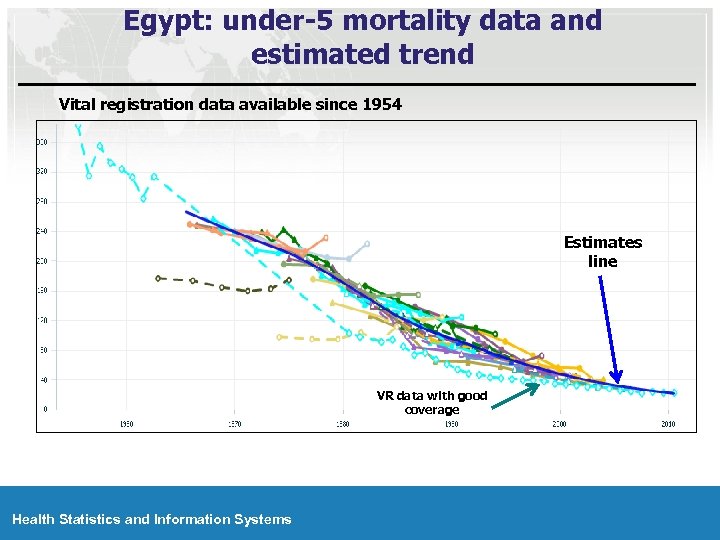 Egypt: under-5 mortality data and estimated trend Vital registration data available since 1954 Estimates line VR data with good coverage Health Statistics and Information Systems
 Egypt causes of death: Around half of all deaths are ill-defined -> problematic to use Examples of ill-defined causes: cardiac arrest, heart failure, respiratory failure, unknown cause Health Statistics and Information Systems
 Some potential sources of biases Type of certifiers – authorised doctors/any medically qualified practitioner/nurses Certification practice – variations in medical culture and cause of death attribution Coding practices Social stigma or pressures Changes in ICD revision, e. g. from ICD-9 to ICD-10 Health Statistics and Information Systems
 Mauritius – Trends in mortality from diabetes ICD-7 ICD-8 Health Statistics and Information Systems ICD-9 ICD-10
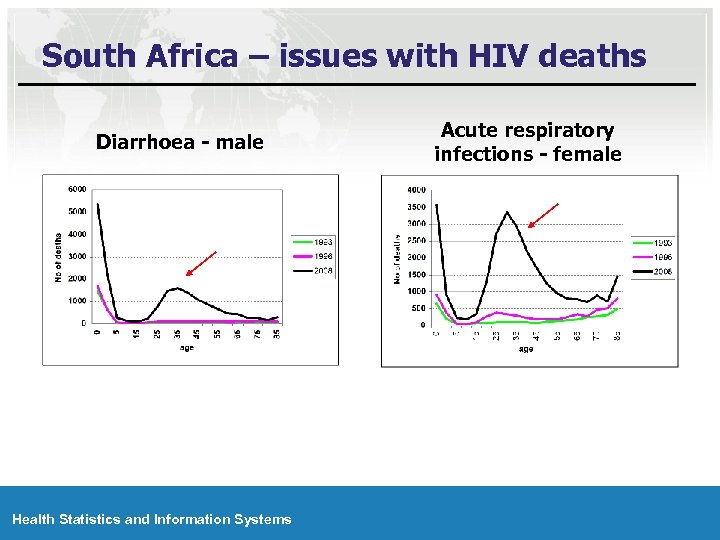 South Africa – issues with HIV deaths Diarrhoea - male Health Statistics and Information Systems Acute respiratory infections - female
 Outline of this presentation Overview of cause of death Health Statistics and Information Systems Challenges in collecting and compiling good data Tools and way forward
 Tools available • Assessment tool: "Improving the quality and use of birth, death and cause-of-death information" • http: //whqlibdoc. who. int/publications/2010/9789241547970_eng. pdf • ICD-10 electronic training tool : Facilitates the implementation of the International Classification of Diseases http: //apps. who. int/classifications/apps/icd 10 training/ • ANACOD – Analysing mortality levels and causes-ofdeath builds analytical capacity to assess the quality of mortality statistics Request for the tool, email: healthstat@who. int Health Statistics and Information Systems
 Health Statistics and Information Systems
 WHO Collaborating Centres for the Family of International Classifications (WHO-FIC) Established to assist WHO and users with the development and implementation of WHO-FIC classifications including ICD-10 Health Statistics and Information Systems
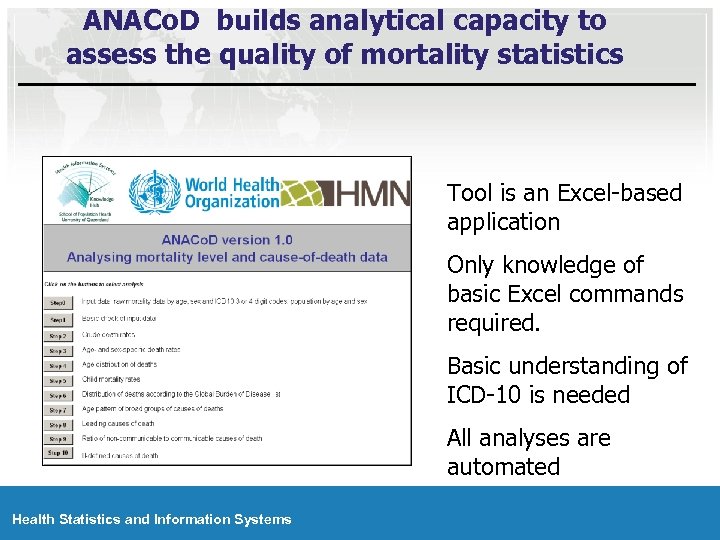 ANACo. D builds analytical capacity to assess the quality of mortality statistics Tool is an Excel-based application Only knowledge of basic Excel commands required. Basic understanding of ICD-10 is needed All analyses are automated Health Statistics and Information Systems
 Innovation to overcome infrastuctural barriers m. Health or mobile health: the use of mobile devices to support practice of medical and public health • Rapid rise of mobile phones in developing countries -> emergence of m. Health from preventing famine to delivery of health care services • m. Health now gradually being used for alerting and considered for registering births and deaths Health Statistics and Information Systems
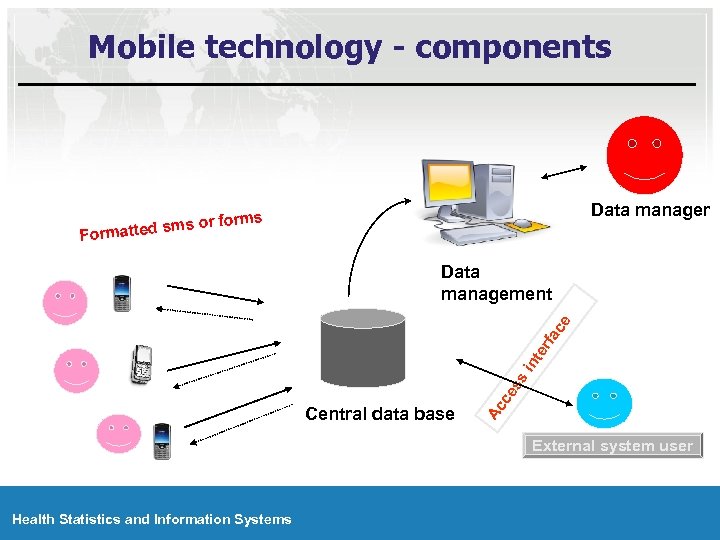 Mobile technology - components s or form rmatted sm Fo Data manager s Ac Central data base ce ss in te rfa ce Data management External system user Health Statistics and Information Systems
 Verbal autopsy to obtain cause of death Interview conducted with the family members of the deceased using a standard questionnaire Review of the responses to the questonnaire by a physician or computer-assisted algorithms to obtain the most probable underlying cause of death WHO is currently developing a short version of the questionnaire to use on mobile phones Health Statistics and Information Systems
 In summary Cause of death statistics are useful to understand which diseases kill and how many people die Collection of cause-of-death data requires strong collaboration between Ministry of Health, Department of Civil Registration, National Bureau of Statistics Cause of death collection done within a legal framework is more likely to be continuous Innovation in information technology helps to overcome infrastructural barriers Health Statistics and Information Systems
 Thank you Health Statistics and Information Systems