 Скачать презентацию AN EMPLOYER S EYE VIEW ON EMPLOYABILITY AND PDP
95a9d681227442cdd102b34ceb19e18d.ppt
- Количество слайдов: 23




AN EMPLOYER’S EYE VIEW ON EMPLOYABILITY AND PDP Carl Gilleard Chief Executive, AGR

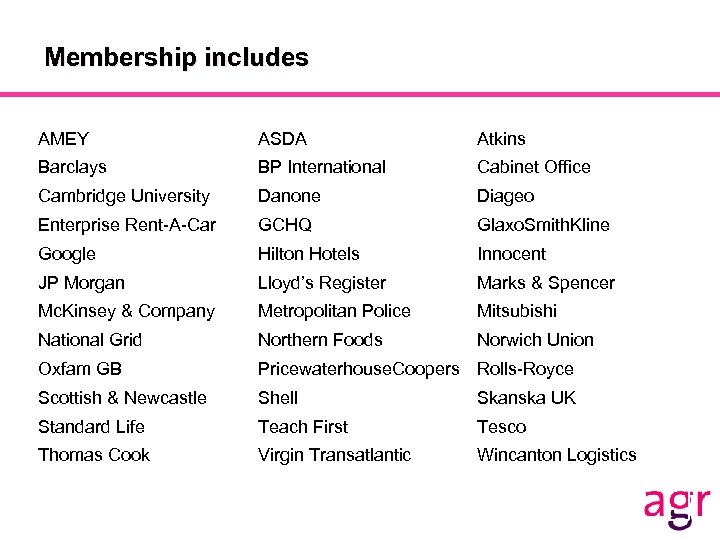
Membership includes AMEY ASDA Atkins Barclays BP International Cabinet Office Cambridge University Danone Diageo Enterprise Rent-A-Car GCHQ Glaxo. Smith. Kline Google Hilton Hotels Innocent JP Morgan Lloyd’s Register Marks & Spencer Mc. Kinsey & Company Metropolitan Police Mitsubishi National Grid Northern Foods Norwich Union Oxfam GB Pricewaterhouse. Coopers Rolls-Royce Scottish & Newcastle Shell Skanska UK Standard Life Teach First Tesco Thomas Cook Virgin Transatlantic Wincanton Logistics
In the world of work – Change is the only constant and the only certainty is uncertainty
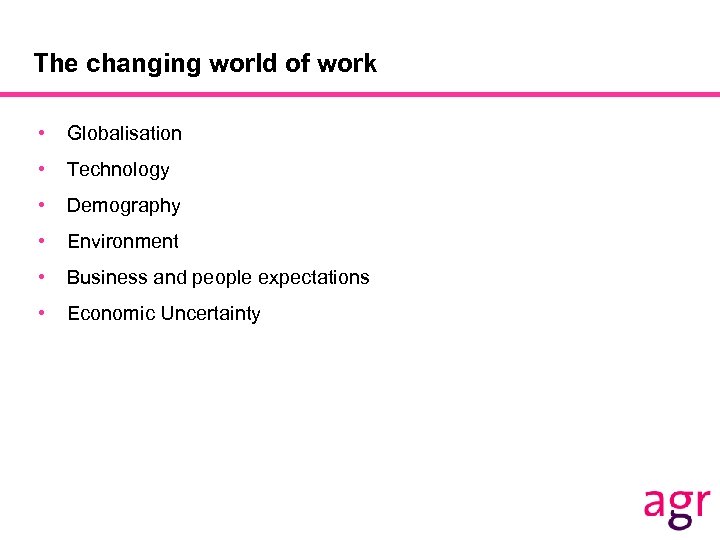
The changing world of work • Globalisation • Technology • Demography • Environment • Business and people expectations • Economic Uncertainty
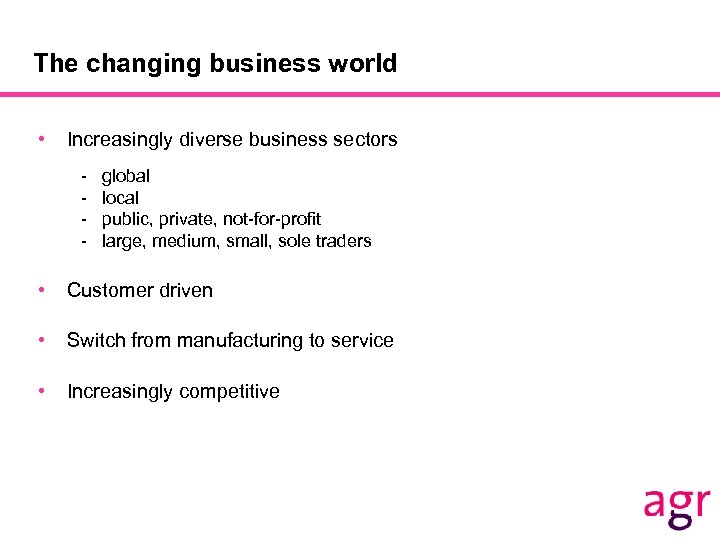
The changing business world • Increasingly diverse business sectors - global local public, private, not-for-profit large, medium, small, sole traders • Customer driven • Switch from manufacturing to service • Increasingly competitive
“India wants your lunch and China wants your dinner” Professor Richard Scase
Changes at work will impact on: • What we do • How we do it • When we do it • Where we do it • The speed at which change occurs and how we cope with it • The demand for skills, knowledge and understanding “The knowledge economy demands a better educated, more highly skilled and flexible workforce”
The working environment in the future • The war for top talent will continue unabated • Work performance will be judged on results, not time spent • Roles will be defined by behaviours and outcomes rather than tasks • Greater emphasis on project working and networking • Many workers will have more than one boss • Some will have more than one employer • More of us will work remotely
Careers in the future • The end of a ‘job for life’ • Start later, end later • Most will have several careers • Many will experience spells of unemployment • Many graduates will go into ‘non-graduate’ jobs • Flatter structures, fewer promotions • More flexibility and less certainty
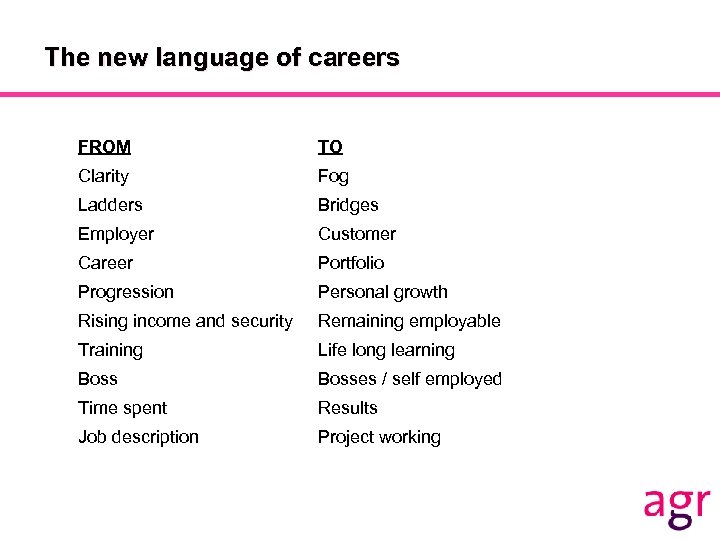
The new language of careers FROM TO Clarity Fog Ladders Bridges Employer Customer Career Portfolio Progression Personal growth Rising income and security Remaining employable Training Life long learning Bosses / self employed Time spent Results Job description Project working
“No such thing as a career path. It’s crazy paving and you have to lay it yourself!” If Only I’d Known
“A degree is merely a license to hunt” If Only I’d Known
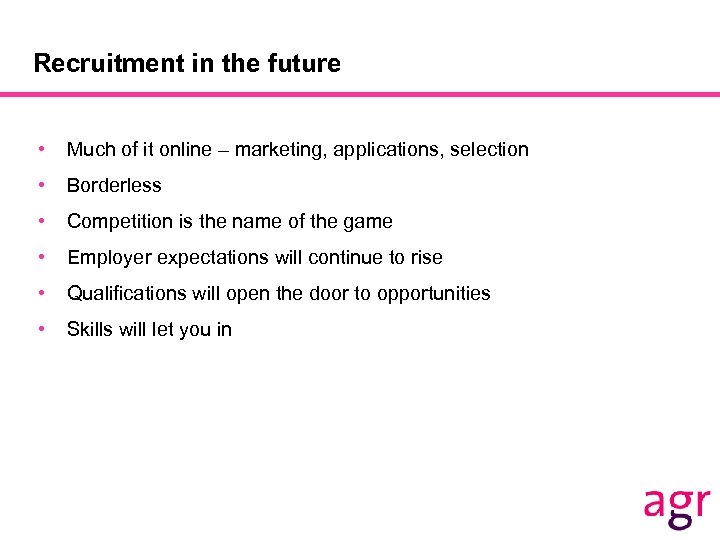
Recruitment in the future • Much of it online – marketing, applications, selection • Borderless • Competition is the name of the game • Employer expectations will continue to rise • Qualifications will open the door to opportunities • Skills will let you in
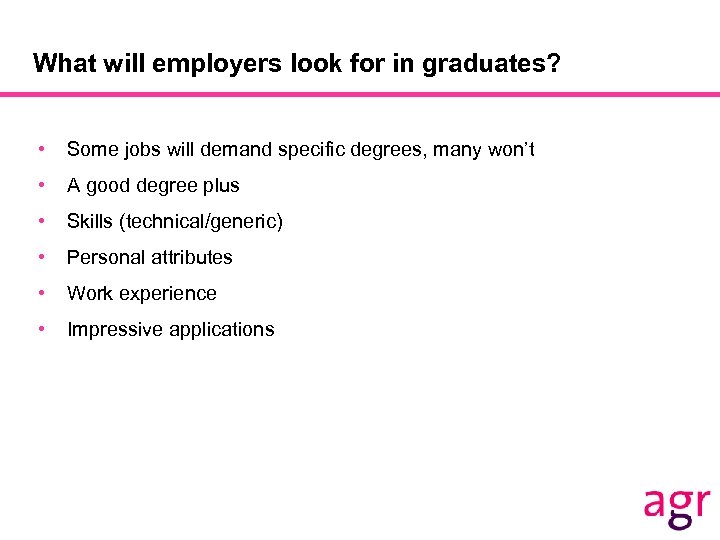
What will employers look for in graduates? • Some jobs will demand specific degrees, many won’t • A good degree plus • Skills (technical/generic) • Personal attributes • Work experience • Impressive applications
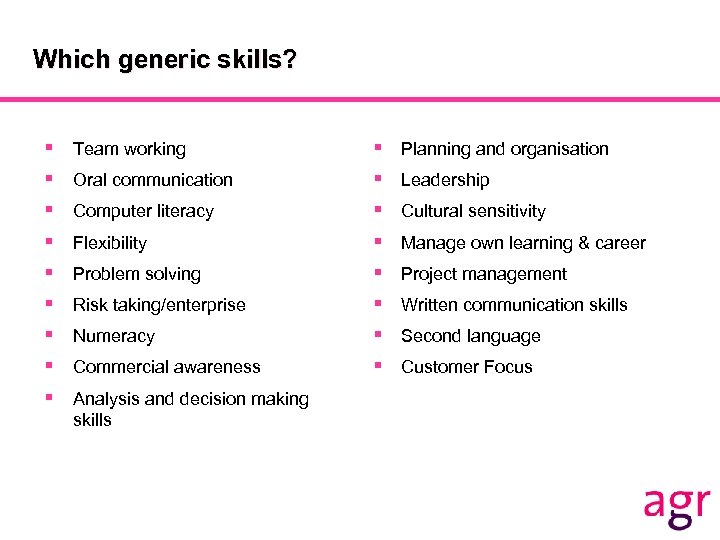
Which generic skills? § § § § § Team working Oral communication Computer literacy Flexibility Problem solving Risk taking/enterprise Numeracy Commercial awareness Analysis and decision making skills § § § § Planning and organisation Leadership Cultural sensitivity Manage own learning & career Project management Written communication skills Second language Customer Focus
“Have you got Oomph? ”
“The labour market has changed beyond recognition in the last decade; in a word it has gone global. If businesses can’t find the skills or work attitudes that they need in a national workplace, they can perfectly well recruit elsewhere. They don’t have to hire people from the UK education system. And they don’t have to locate their activities in the UK. ” Richard Lambert Director General of the CBI
“To be employed is to be at risk To be employable is to be secure”
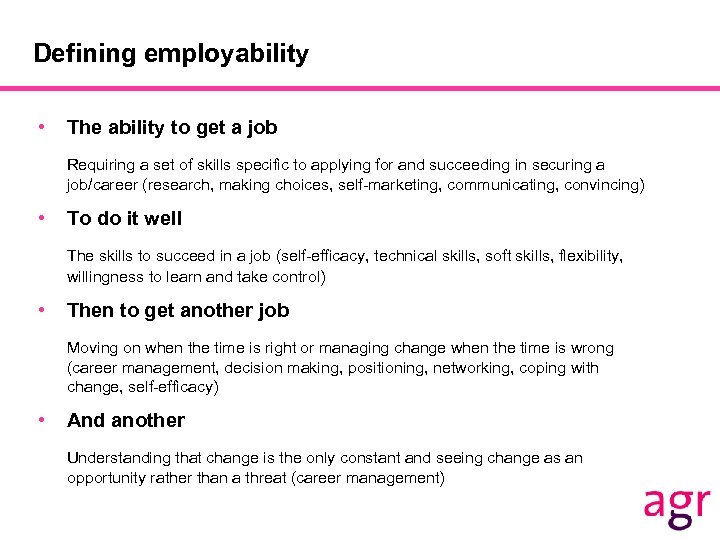
Defining employability • The ability to get a job Requiring a set of skills specific to applying for and succeeding in securing a job/career (research, making choices, self-marketing, communicating, convincing) • To do it well The skills to succeed in a job (self-efficacy, technical skills, soft skills, flexibility, willingness to learn and take control) • Then to get another job Moving on when the time is right or managing change when the time is wrong (career management, decision making, positioning, networking, coping with change, self-efficacy) • And another Understanding that change is the only constant and seeing change as an opportunity rather than a threat (career management)
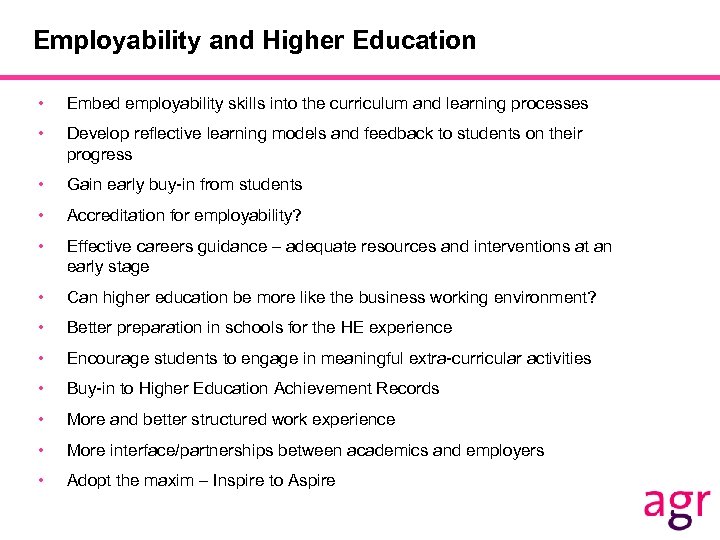
Employability and Higher Education • Embed employability skills into the curriculum and learning processes • Develop reflective learning models and feedback to students on their progress • Gain early buy-in from students • Accreditation for employability? • Effective careers guidance – adequate resources and interventions at an early stage • Can higher education be more like the business working environment? • Better preparation in schools for the HE experience • Encourage students to engage in meaningful extra-curricular activities • Buy-in to Higher Education Achievement Records • More and better structured work experience • More interface/partnerships between academics and employers • Adopt the maxim – Inspire to Aspire
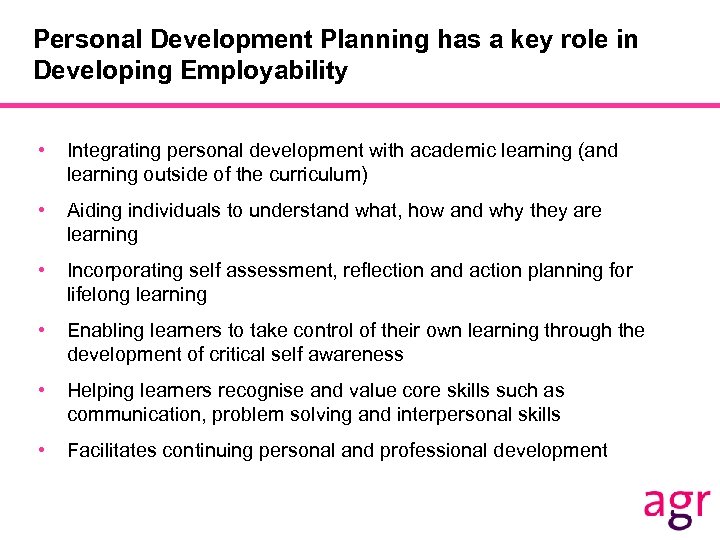
Personal Development Planning has a key role in Developing Employability • Integrating personal development with academic learning (and learning outside of the curriculum) • Aiding individuals to understand what, how and why they are learning • Incorporating self assessment, reflection and action planning for lifelong learning • Enabling learners to take control of their own learning through the development of critical self awareness • Helping learners recognise and value core skills such as communication, problem solving and interpersonal skills • Facilitates continuing personal and professional development

QUESTIONS?
Скачать презентацию AN EMPLOYER S EYE VIEW ON EMPLOYABILITY AND PDP
95a9d681227442cdd102b34ceb19e18d.ppt