


 Скачать презентацию An asteroseismic data-interpretation pipeline for Kepler Travis Metcalfe
34142d31823821dca99b64045658de4d.ppt
- Количество слайдов: 8
 An asteroseismic data-interpretation pipeline for Kepler Travis Metcalfe (NCAR)
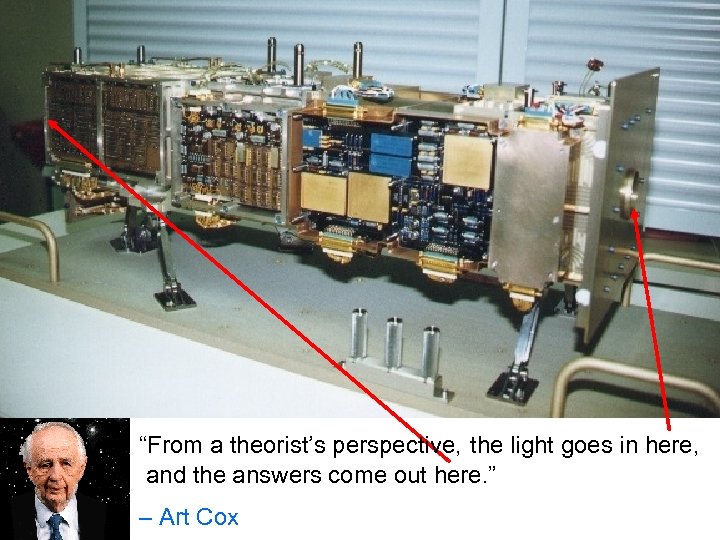 “From a theorist’s perspective, the light goes in here, and the answers come out here. ” – Art Cox
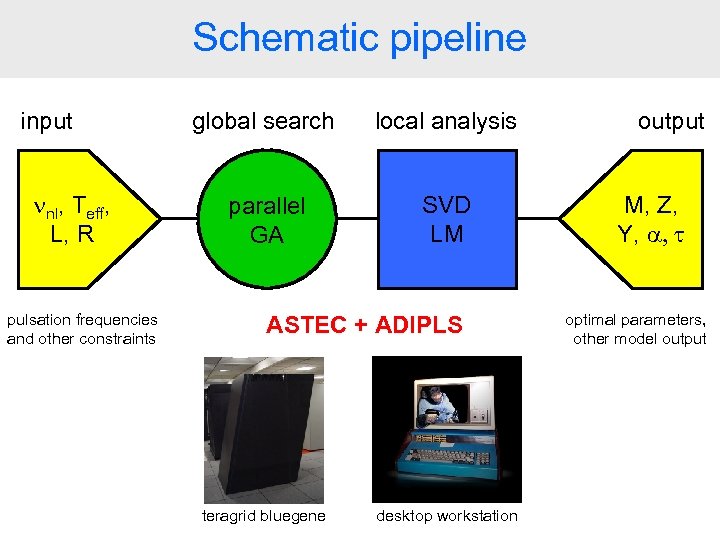 Schematic pipeline input nnl, Teff, L, R pulsation frequencies and other constraints global search local analysis parallel GA SVD LM ASTEC + ADIPLS teragrid bluegene desktop workstation output M, Z, Y, a, t optimal parameters, other model output
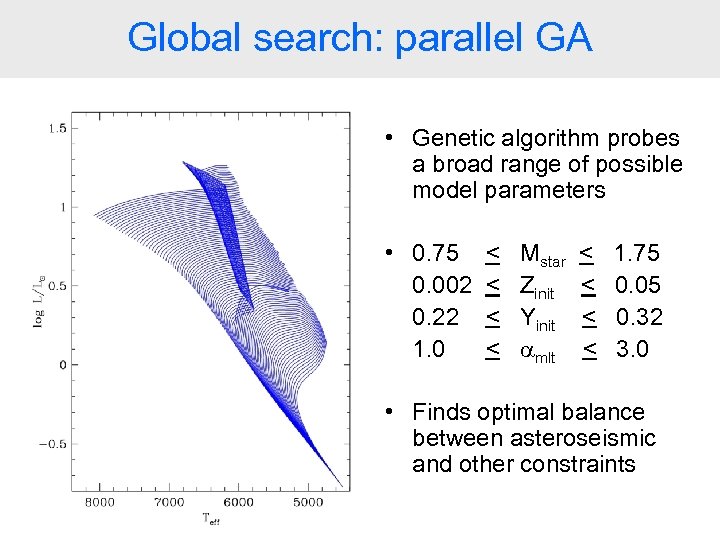 Global search: parallel GA • Genetic algorithm probes a broad range of possible model parameters • 0. 75 0. 002 0. 22 1. 0 < < Mstar Zinit Yinit amlt < < 1. 75 0. 05 0. 32 3. 0 • Finds optimal balance between asteroseismic and other constraints
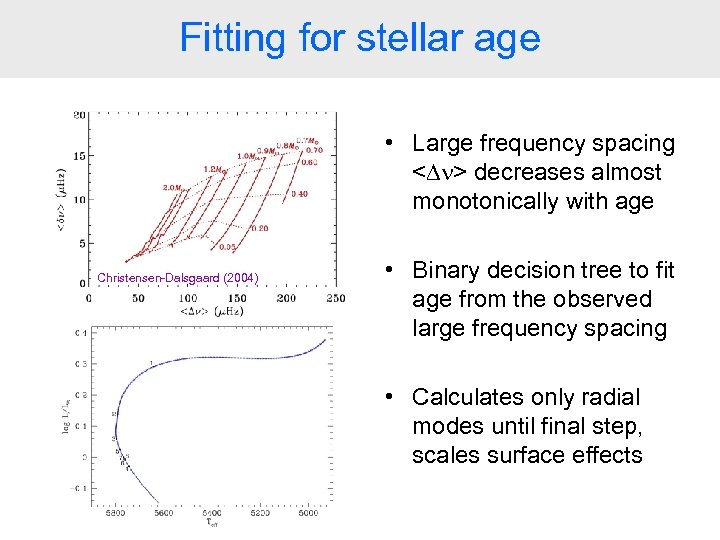 Fitting for stellar age • Large frequency spacing
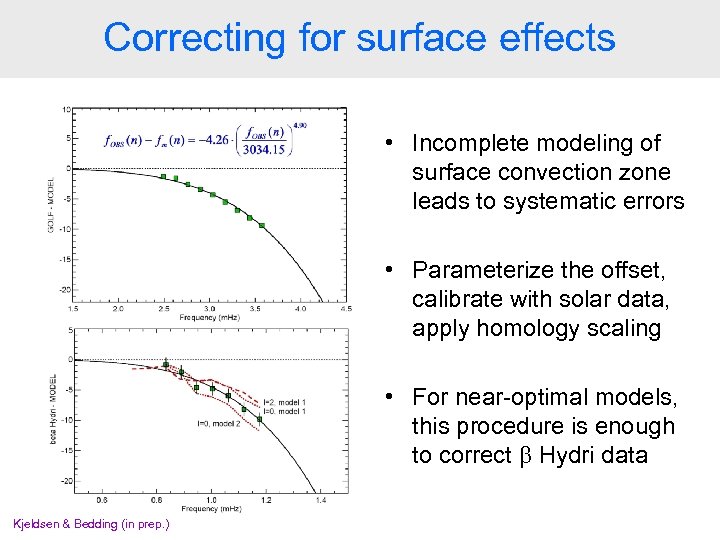 Correcting for surface effects • Incomplete modeling of surface convection zone leads to systematic errors • Parameterize the offset, calibrate with solar data, apply homology scaling • For near-optimal models, this procedure is enough to correct b Hydri data Kjeldsen & Bedding (in prep. )
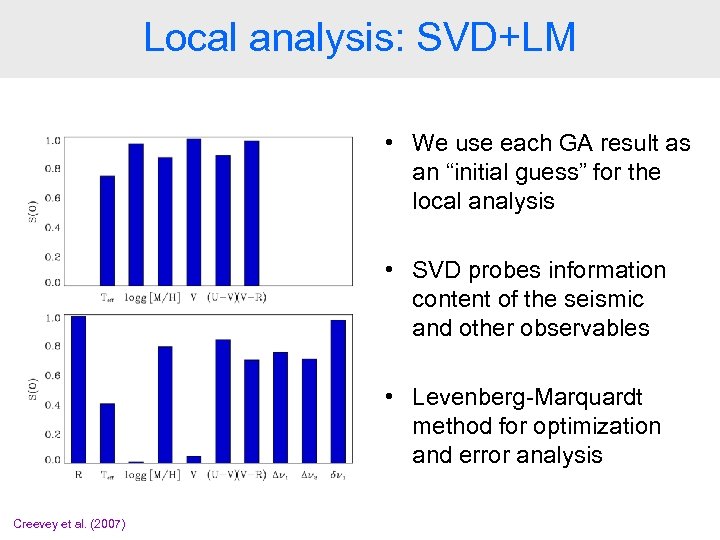 Local analysis: SVD+LM • We use each GA result as an “initial guess” for the local analysis • SVD probes information content of the seismic and other observables • Levenberg-Marquardt method for optimization and error analysis Creevey et al. (2007)
 The Future • Apply to existing ground-based asteroseismic observations to calibrate the method – initially on Sun-as-a-star data, then for other stars. • Refine this objective automated pipeline using space-based asteroseismic data, allowing for hundreds of analyses simultaneously. • Provide on-demand model-fitting through the Tera. Grid as a “Science Gateway” project? (input: frequency list, output: optimal model) IBM Bluegene/L system