 Скачать презентацию An ambulance referral network- does it improve access
75fa8bdf2ccf5bb2d3d0bdb0370b0df2.ppt
- Количество слайдов: 24



An ambulance referral network- does it improve access to emergency obstetrics? Tayler-Smith K, Zachariah R, Manzi M, Van den Boogaard W, Nyandwi G, Reid T, De Plecker E, Lambert V, Nicolai M, Goetghebuer S, Christiaens B, Ndelema B, Kabangu A, Manirampa J, Harries AD Médecins Sans Frontières Burundi Ministry of Health International Union against Tuberculosis and Lung Disease London School of Hygiene and Tropical Medicine

Burundi
Background - Burundi • • High maternal mortality ratio – 800 maternal deaths /100, 000 live births (200 x more than in Sweden) High neonatal mortality – 42 / 1000 live births (20 X more than Belgium)) Main reasons: Poor access to and availability of Emergency Obstetric and Neonatal Care (Em. ONC) Since 2006, MSF has managed an intervention in rural Burundi including setting up a referral system
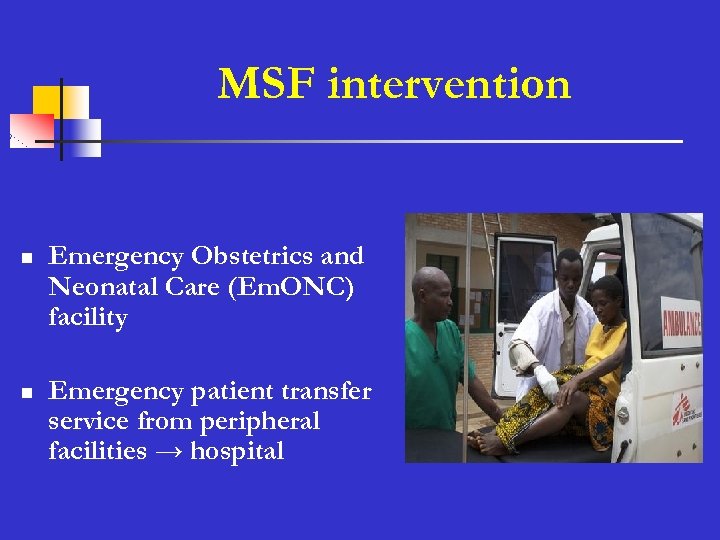
MSF intervention n Emergency Obstetrics and Neonatal Care (Em. ONC) facility n Emergency patient transfer service from peripheral facilities → hospital
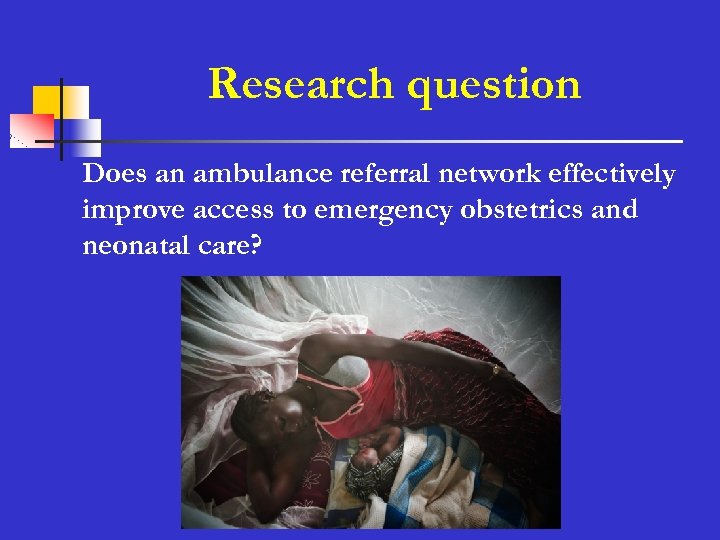
Research question n Does an ambulance referral network effectively improve access to emergency obstetrics and neonatal care?
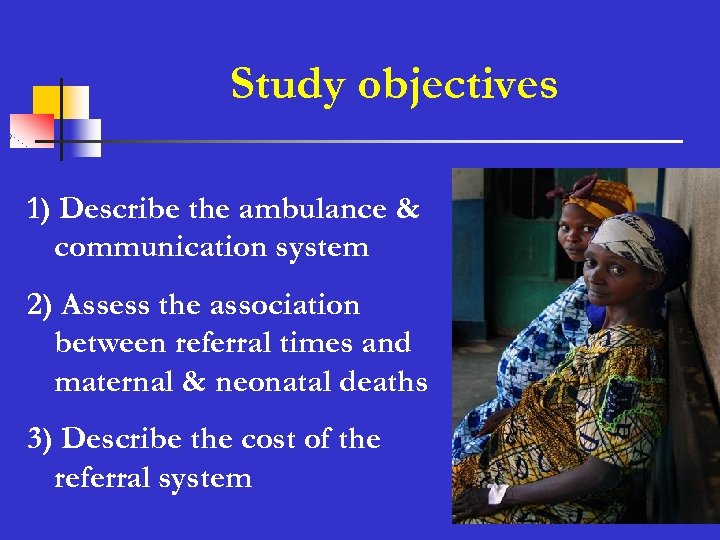
Study objectives 1) Describe the ambulance & communication system 2) Assess the association between referral times and maternal & neonatal deaths 3) Describe the cost of the referral system
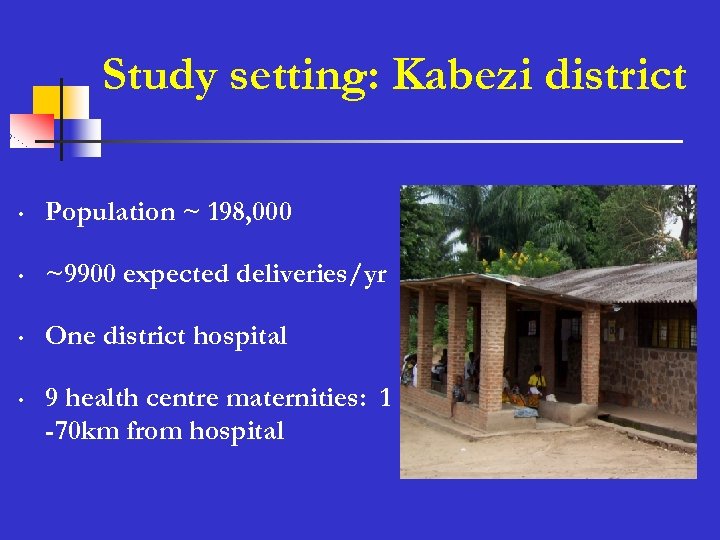
Study setting: Kabezi district • Population ~ 198, 000 • ~9900 expected deliveries/yr • One district hospital • 9 health centre maternities: 1 -70 km from hospital
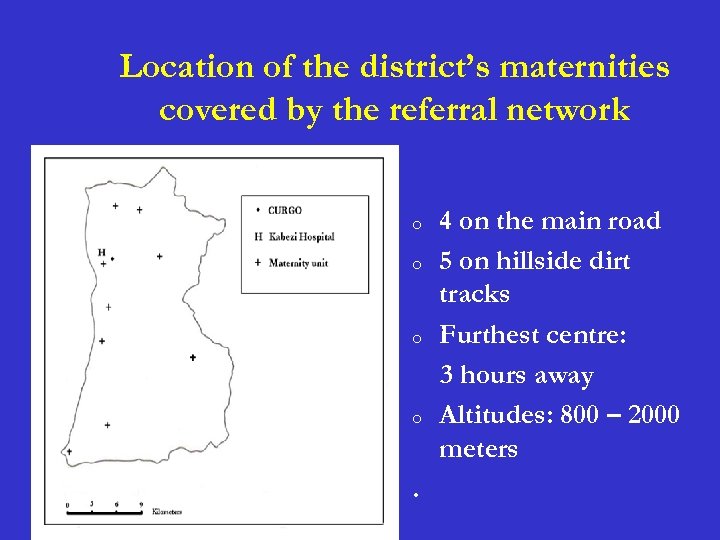
Location of the district’s maternities covered by the referral network o o . 4 on the main road 5 on hillside dirt tracks Furthest centre: 3 hours away Altitudes: 800 – 2000 meters
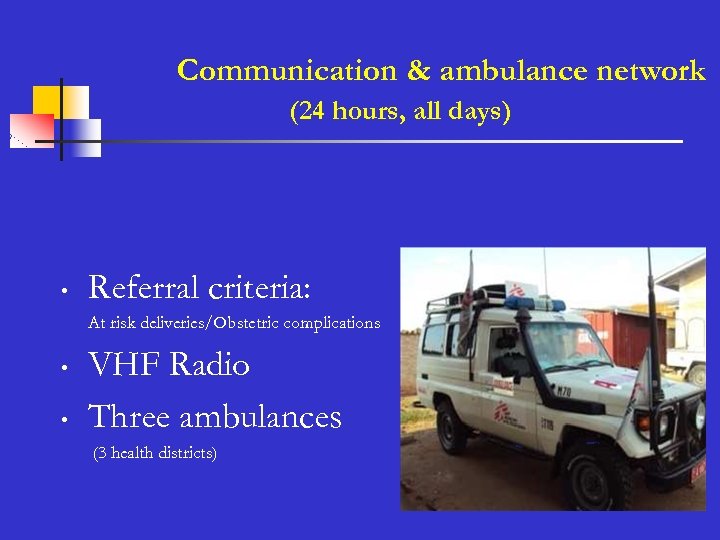
Communication & ambulance network (24 hours, all days) • Referral criteria: At risk deliveries/Obstetric complications • • VHF Radio Three ambulances (3 health districts)
Referral criteria to CURGO At risk for complicated delivery • • • Previously > 5 deliveries First pregnancy and height < 1. 5 m History of obstetric fistula Obstetric Complications • • • Complication of abortion Mal presentation of foetus Post partum haemorrhage
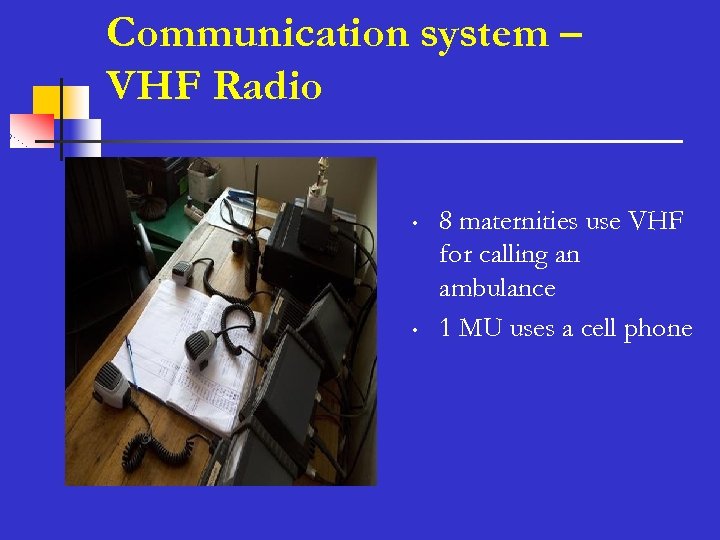
Communication system – VHF Radio • • 8 maternities use VHF for calling an ambulance 1 MU uses a cell phone
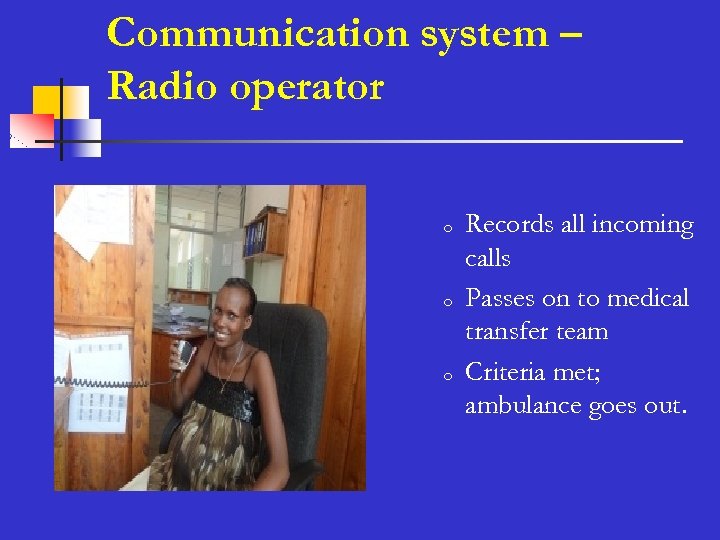
Communication system – Radio operator o o o n Records all incoming calls Passes on to medical transfer team Criteria met; ambulance goes out.
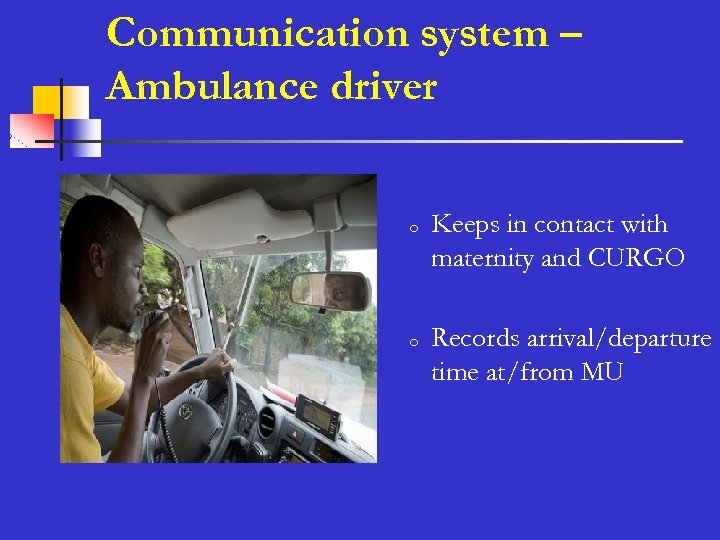
Communication system – Ambulance driver o o n Keeps in contact with maternity and CURGO Records arrival/departure time at/from MU
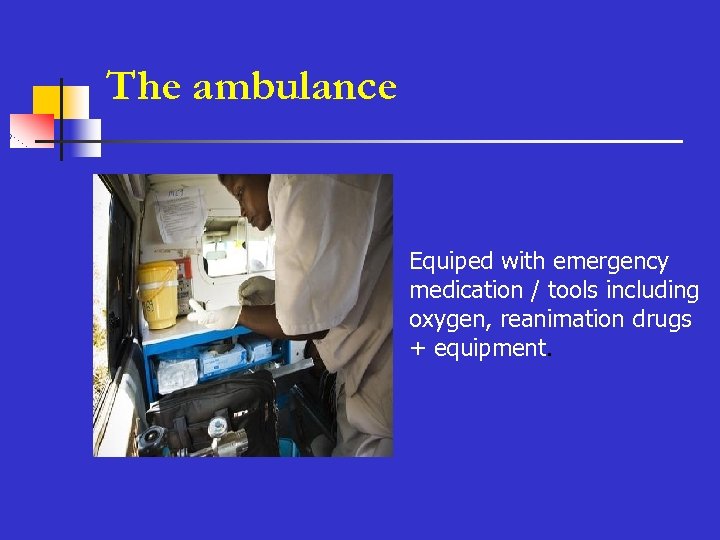
The ambulance Equiped with emergency medication / tools including oxygen, reanimation drugs + equipment. n
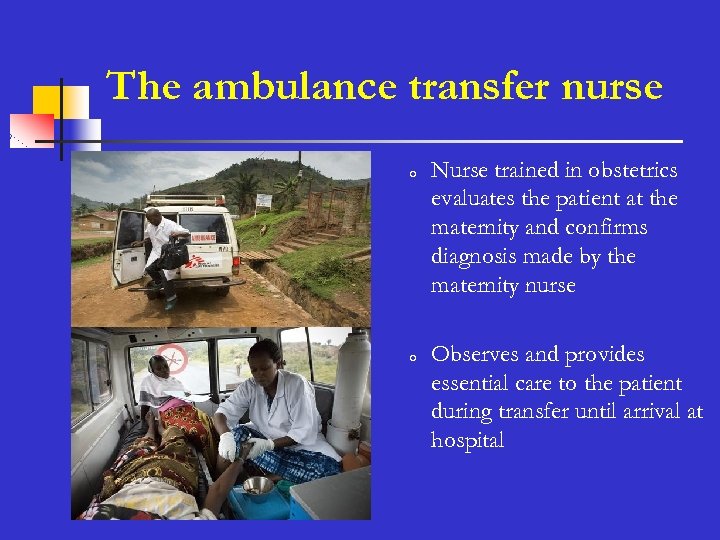
The ambulance transfer nurse o o Nurse trained in obstetrics evaluates the patient at the maternity and confirms diagnosis made by the maternity nurse Observes and provides essential care to the patient during transfer until arrival at hospital
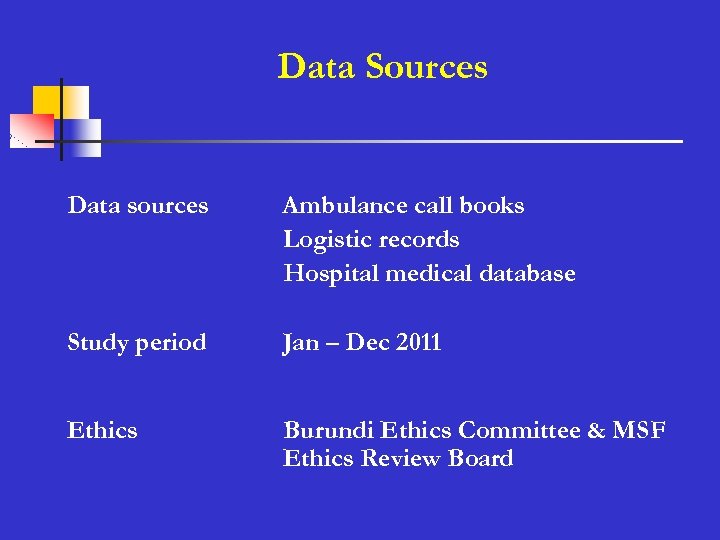
Data Sources Data sources Ambulance call books Logistic records Hospital medical database Study period Jan – Dec 2011 Ethics Burundi Ethics Committee & MSF Ethics Review Board
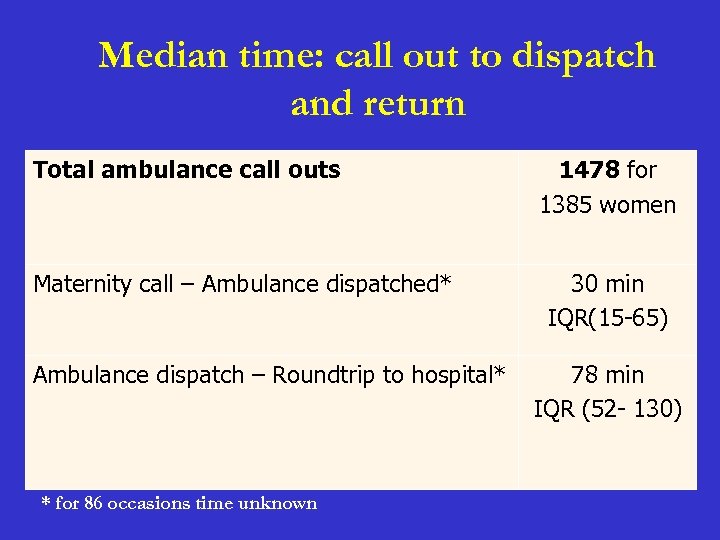
Median time: call out to dispatch and return Total ambulance call outs Maternity call – Ambulance dispatched* Ambulance dispatch – Roundtrip to hospital* * for 86 occasions time unknown 1478 for 1385 women 30 min IQR(15 -65) 78 min IQR (52 - 130)
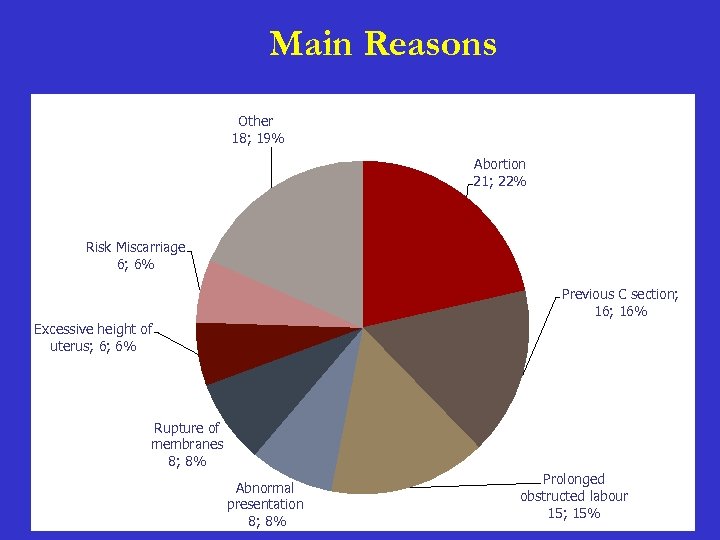
Main Reasons Other 18; 19% Abortion 21; 22% Risk Miscarriage 6; 6% Previous C section; 16% Excessive height of uterus; 6; 6% Rupture of membranes 8; 8% Abnormal presentation 8; 8% Prolonged obstructed labour 15; 15%
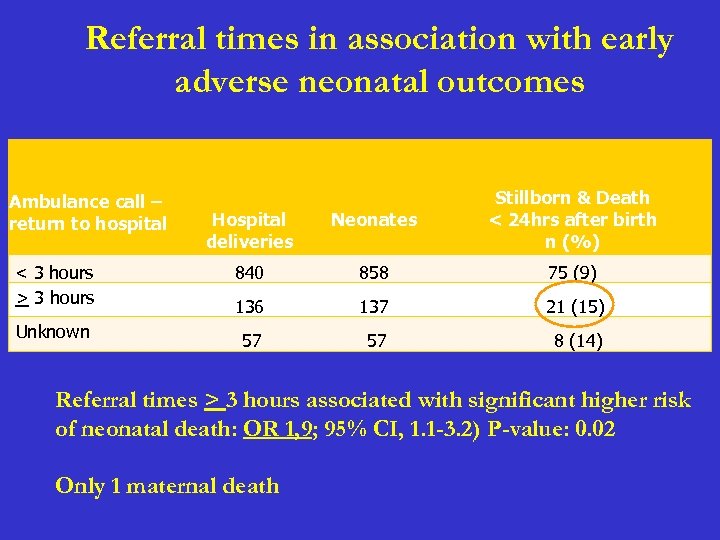
Referral times in association with early adverse neonatal outcomes Hospital deliveries Neonates Stillborn & Death < 24 hrs after birth n (%) < 3 hours > 3 hours 840 858 75 (9) 136 137 21 (15) Unknown 57 57 8 (14) Ambulance call – return to hospital Referral times > 3 hours associated with significant higher risk of neonatal death: OR 1, 9; 95% CI, 1. 1 -3. 2) P-value: 0. 02 Only 1 maternal death
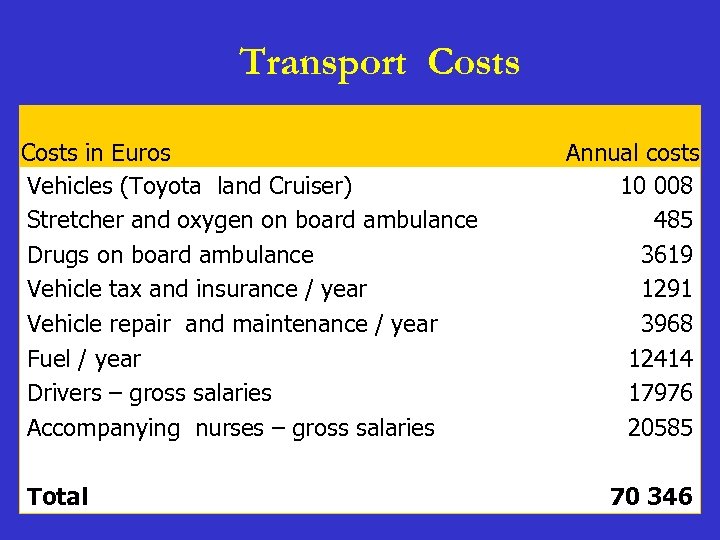
Transport Costs in Euros Vehicles (Toyota land Cruiser) Stretcher and oxygen on board ambulance Drugs on board ambulance Vehicle tax and insurance / year Vehicle repair and maintenance / year Fuel / year Drivers – gross salaries Accompanying nurses – gross salaries Total Annual costs 10 008 485 3619 1291 3968 12414 17976 20585 70 346
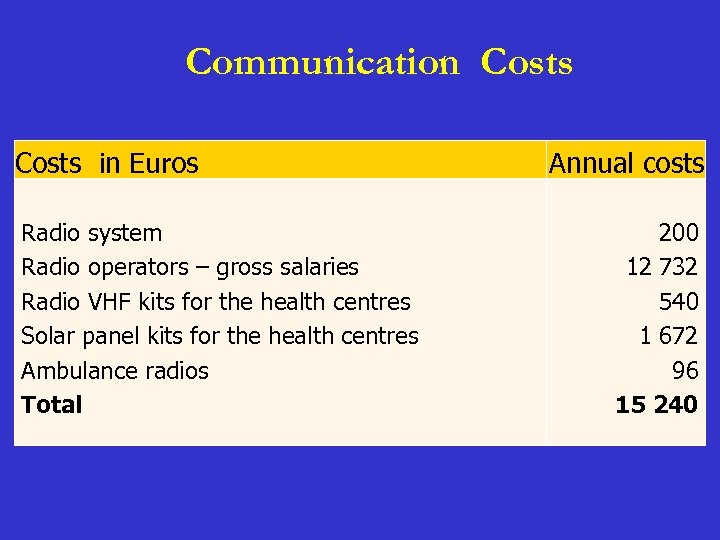
Communication Costs in Euros Radio system Radio operators – gross salaries Radio VHF kits for the health centres Solar panel kits for the health centres Ambulance radios Total Annual costs 200 12 732 540 1 672 96 15 240
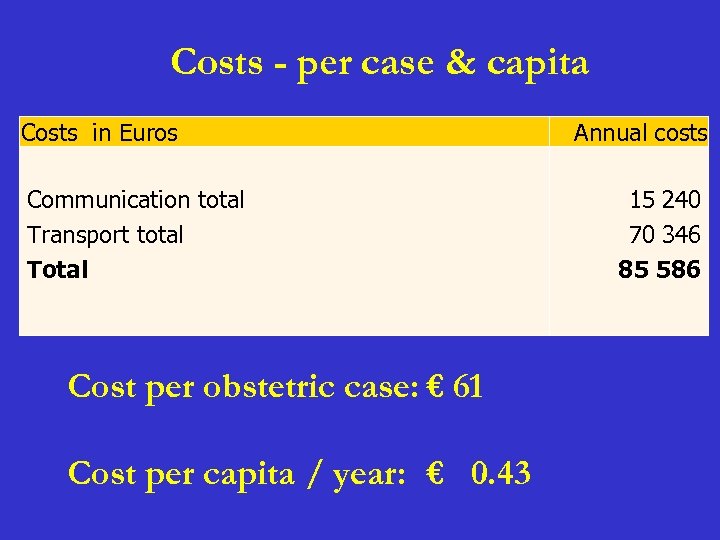
Costs - per case & capita Costs in Euros Communication total Transport total Total Cost per obstetric case: € 61 Cost per capita / year: € 0. 43 Annual costs 15 240 70 346 85 586
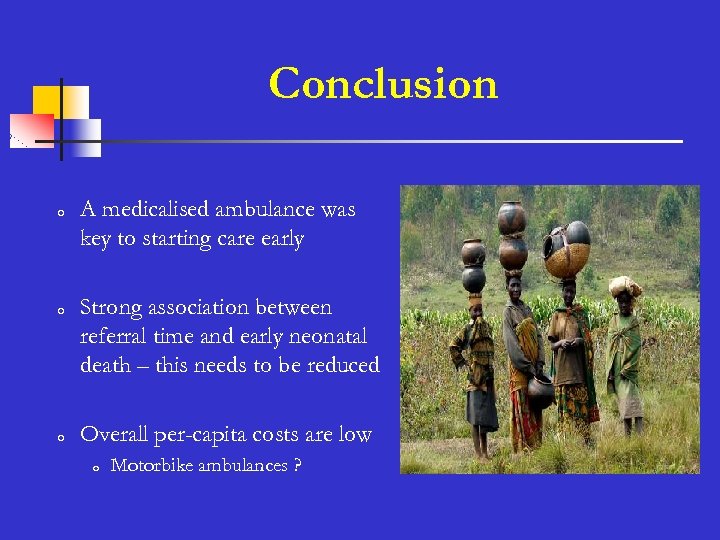
Conclusion o o o A medicalised ambulance was key to starting care early Strong association between referral time and early neonatal death – this needs to be reduced Overall per-capita costs are low o Motorbike ambulances ?
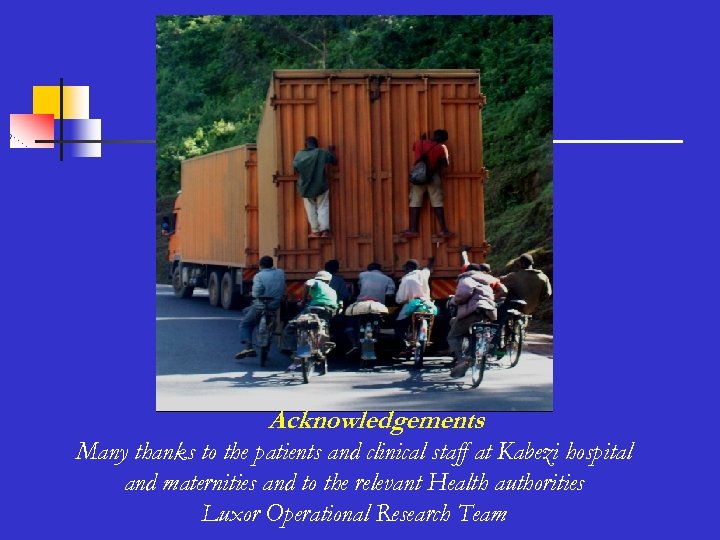
Acknowledgements Many thanks to the patients and clinical staff at Kabezi hospital and maternities and to the relevant Health authorities Luxor Operational Research Team
Скачать презентацию An ambulance referral network- does it improve access
75fa8bdf2ccf5bb2d3d0bdb0370b0df2.ppt