


 Скачать презентацию An Age of Reforms Revolutions of 1848
d96f6b8ce080f845d7b5095322029bfd.ppt
- Количество слайдов: 12
 An Age of Reforms
 Revolutions of 1848 u Although 1848 revolutions (fueled by nationalism and liberalism-natural rights, equality, reform)were largely unsuccessful, they made rulers want to stop political rebellion and therefore led to reforms – 1867: Benjamin Disraeli grants the vote to working class in Britain (result of Chartist movement beginning in 1830 s) – 1870 s: Prussia (under Bismarck) gives universal suffrage, grants freedom to Jews, extends rights of press, and promotes education; becomes the most powerful German nation
 Background u Industrial Revolution – Emergence of capitalism – More stratified social classes – Leads to opponents of capitalism u Conservatism-people who want things to stay at the “status quo” will battle with nationalism & liberalism to stop changes
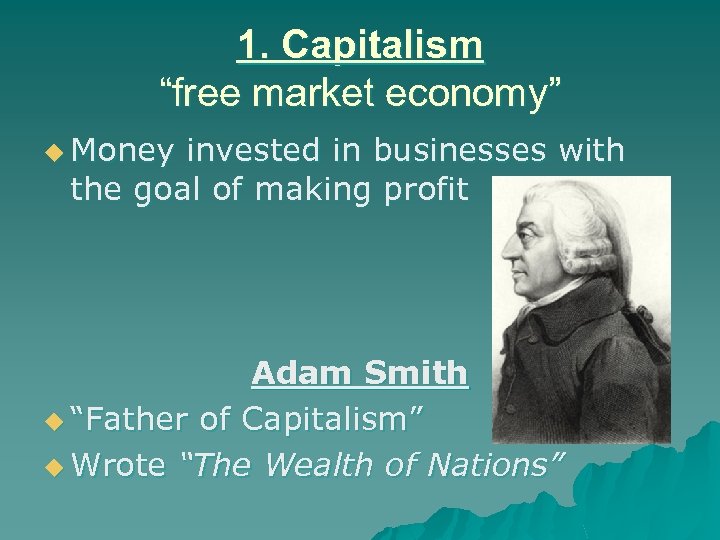 1. Capitalism “free market economy” u Money invested in businesses with the goal of making profit Adam Smith u “Father of Capitalism” u Wrote “The Wealth of Nations”
 Laissez Faire “the Foundation of Capitalism” u French for “let do” or “leave alone" u Little government involvement
 2. Socialism “command economy” u Economic system where the factors of production… – Are owned by the PUBLIC – Operate for the welfare of ALL u The government actively plans the economy.
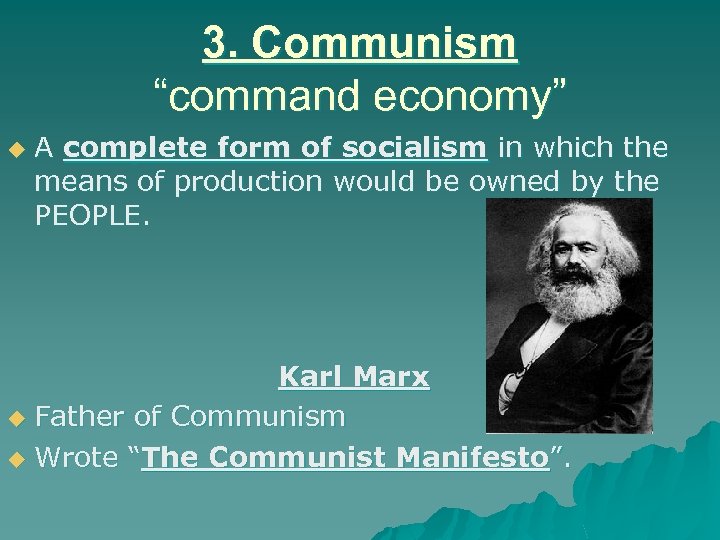 3. Communism “command economy” u A complete form of socialism in which the means of production would be owned by the PEOPLE. Karl Marx u Father of Communism u Wrote “The Communist Manifesto”.
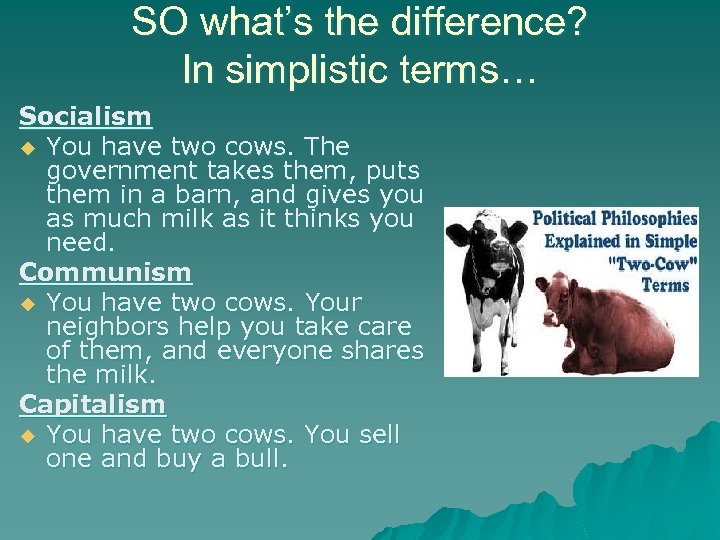 SO what’s the difference? In simplistic terms… Socialism u You have two cows. The government takes them, puts them in a barn, and gives you as much milk as it thinks you need. Communism u You have two cows. Your neighbors help you take care of them, and everyone shares the milk. Capitalism u You have two cows. You sell one and buy a bull.
 Reform Movement—Unions u Unions- Workers joined together for reform u Collective Bargaining- negotiations between workers and their employers u Strike- refusal to work
 Results Better Working Conditions like. . . u Shortened work times for children u Limited work day to 10 hours u Better pay
 Other Reform Movements William Wilberforce- fought for abolition of slavery, Britain abolished slavery in 1833 u Feminism-1900, education, suffrage u Romanticism- early 1800 s, emotion was the key to human experience u Liberalism- pushed for political reform that involved less government interference; continue to support nationalist movements u
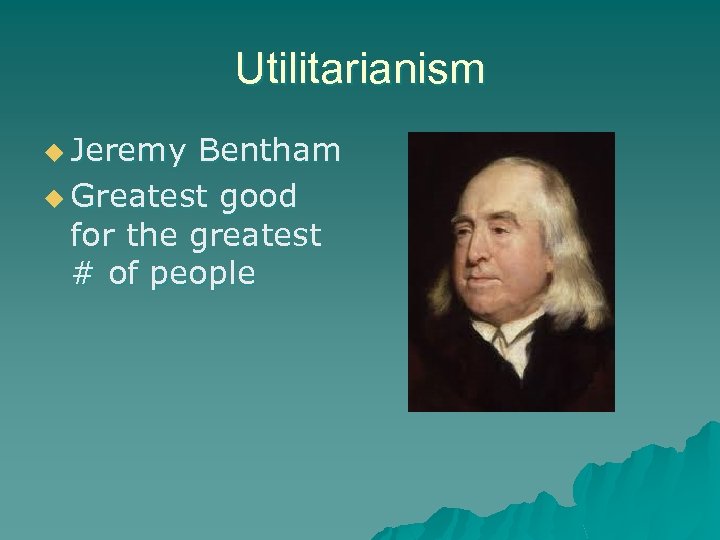 Utilitarianism u Jeremy Bentham u Greatest good for the greatest # of people