 Скачать презентацию AMNESTY INTERNATIONAL Myanmar Briefing Human rights concerns a
b52643a60bde655aad9b93d333cf2228.ppt
- Количество слайдов: 13



AMNESTY INTERNATIONAL Myanmar Briefing Human rights concerns a month after Cyclone Nargis
1. Introduction 2. Forcible displacement & restrictions on movement 3. Violations in the context of the constitutional referendum 4. Forcible displacement from monasteries 5. Obstructing or misusing aid 6. Corruption & diversion of aid 7. Discrimination & conditionality of aid 8. Conclusion & recommendations
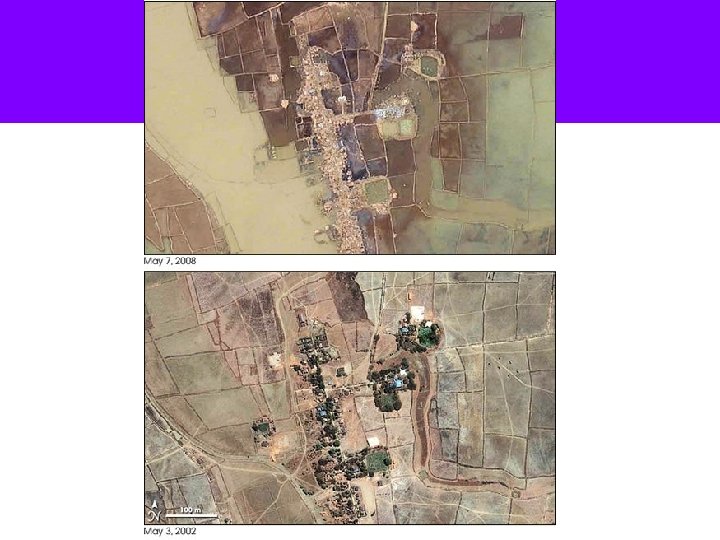
Introduction • On May 2 and 3 2008, Cyclone Nargis devastated much of southern Myanmar, especially the densely populated Ayeyarwady delta and areas close to the country’s most populous city, Yangon. • However, Myanmar’s govt, the State Peace & Development Council (SPDC), refused to acknowledge the scope of the disaster and provided little assistance to the 2. 4 million survivors of the cyclone.
Introduction (cont. ) • On May 23, the SPDC finally agreed to allow int’l assistance in response to tremendous int’l pressure. • Delivery of aid started on a massive scale, but there were insufficient mechanisms to ensure effective distribution due to the corruption of the SPDC. • http: //kr. youtube. com/watch? v=NSe 5 a. PNZm 8 c
Forcible displacement & restrictions on movement • As of early June, the UN estimated that some 550, 000 people resided in temporary settlements. • Just days after the cyclone, the govt forcibly displace cyclone survivors from resettlement sites to their homes. • Case : Authorities in Yangon removed more than 3, 000 survivors from an official camp in Yangon Division. They gave these survivors US $7 and a small portion of rice.
Violations in the context of the constitutional referendum • The authorities forcibly displaced survivors from shelters so that they could hold the delayed constitutional referendum on May 24 in those locations. • On May 10 in Yangon, the authorities forced displaced persons staying in schools to leave so that the schools could be used as polling stations.
Forcible displacement from monasteries • The authorities did not want displaced persons to seek shelter in monasteries and associate with monks. This was especially true in Yangon, where many monks had led the mass protest demonstrations against the SPDC in Sept. 2007.
Obstructing or misusing aid • Until May 26, the SPDC blocked all int’l assistance to the delta which was administered by int’l staff and humanitarian organizations. • Both private donors and non-SPDC-affiliated doctors have been denied access by the authorities in the nonofficial camps.
Corruption & diversion of aid • Authorities have stored most int’l aid supplies in govt warehouses, while the Ministry of Foreign Affairs decided where, when, and to whom it was distributed. • Police arrested a large group of private donors when they refused to hand over their supplies to the authorities as directed.
Discrimination & conditionality of aid • The Myanmar authorities have conditioned the provision of cyclone-related aid or assistance for people on their willingness to work or join the army. • Amnesty Int’l is concerned that the SPDC may use civilians in the Delta forced labor.
Conclusion & recommendations Amnesty Int’l urges the SPDC to ensure: - Survivors of the cyclone immediately receive necessary food, shelter, and health care; - Full, unimpeded access to all affected area for humanitarian workers, including independent monitors; - That all displaced people are able to return voluntarily, in safety and with dignity to their homes, or resettle in another part of the country; - Genuine consultation with displaced persons, including vulnerable groups, such as children and ethnic minorities, in the planning of their return or settlement and reintegration; - Protection of women and other vulnerable groups - http: //kr. youtube. com/watch? v=yq. Wc. LKHEPzg

THANK YOU FOR YOUR ATTENTION!!
Скачать презентацию AMNESTY INTERNATIONAL Myanmar Briefing Human rights concerns a
b52643a60bde655aad9b93d333cf2228.ppt