 Скачать презентацию Americans vs the British Britain was first
9dae7638f9d0e7431efec36b25522490.ppt
- Количество слайдов: 38



Americans vs. the British • Britain was first to the game—and didn’t want competition! • Britain forbade the export of textile machinery—and mechanics!—to America. • Samuel Slater sneaked out. . . (more to come) • To compete, the U. S. passed the protective tariff of 1816. . . And Francis Cabot Lowell helped the process along!
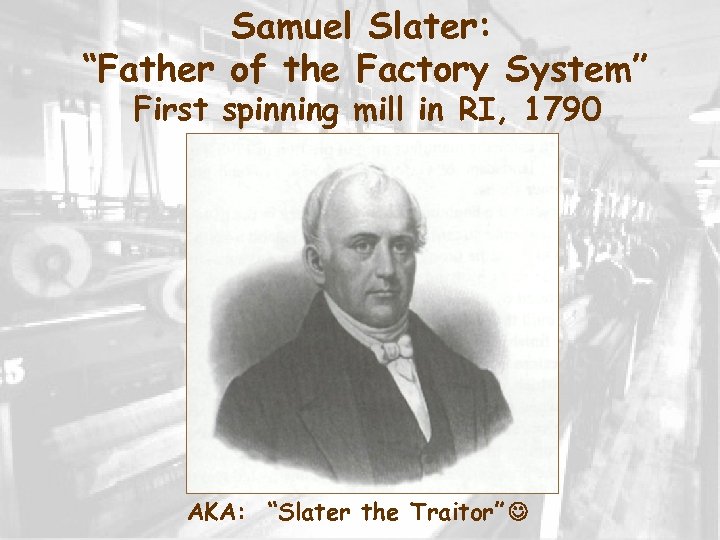
Samuel Slater: “Father of the Factory System” First spinning mill in RI, 1790 AKA: “Slater the Traitor”
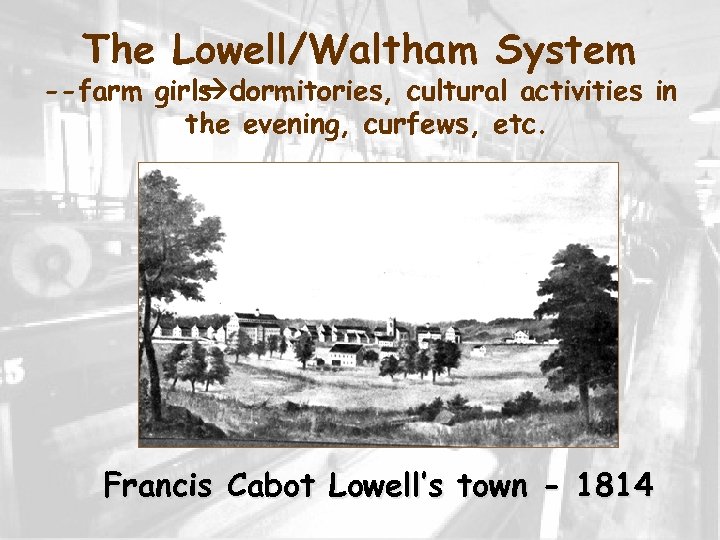
The Lowell/Waltham System --farm girls dormitories, cultural activities in the evening, curfews, etc. Francis Cabot Lowell’s town - 1814
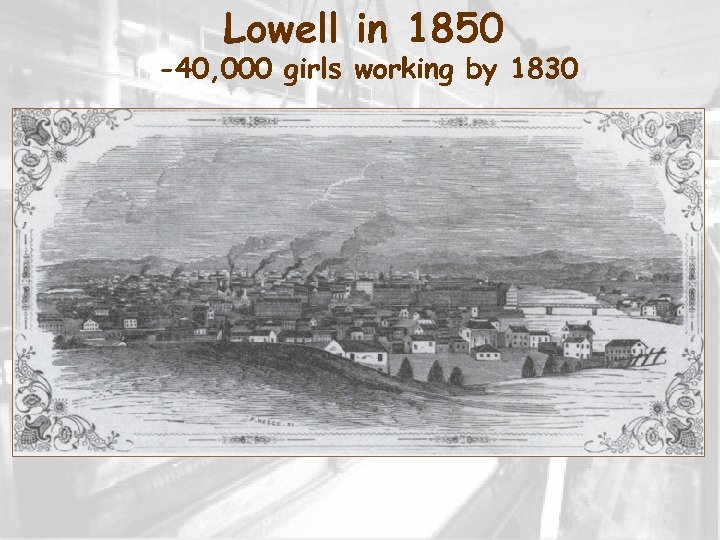
Lowell in 1850 -40, 000 girls working by 1830
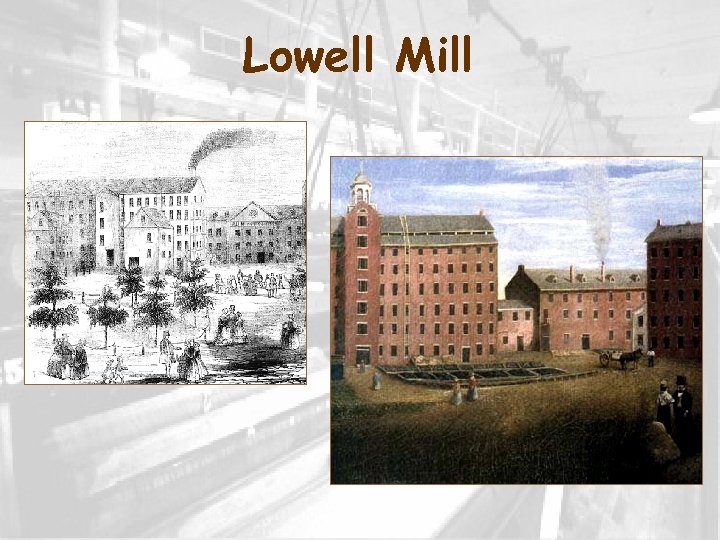
Lowell Mill
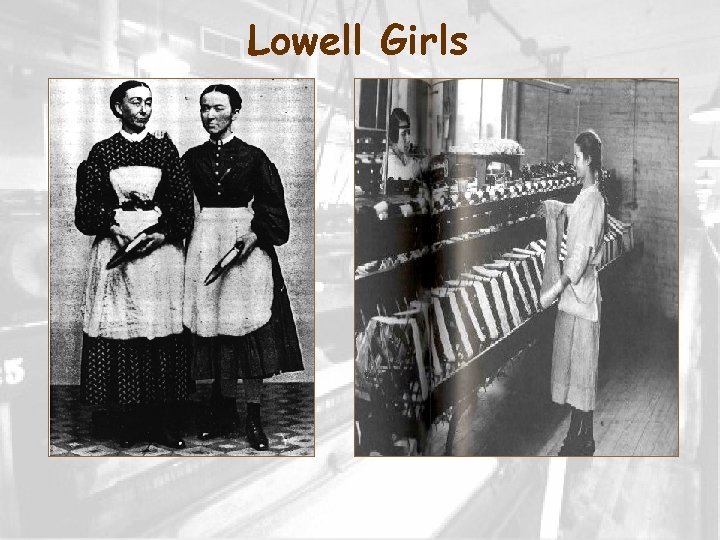
Lowell Girls
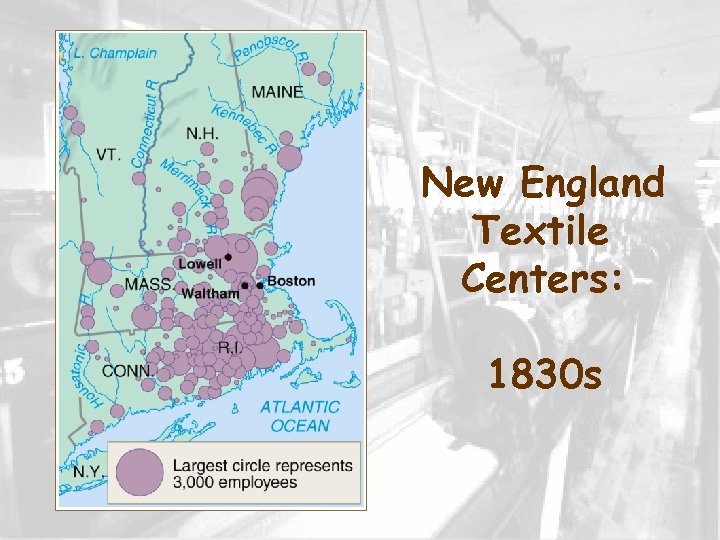
New England Textile Centers: 1830 s
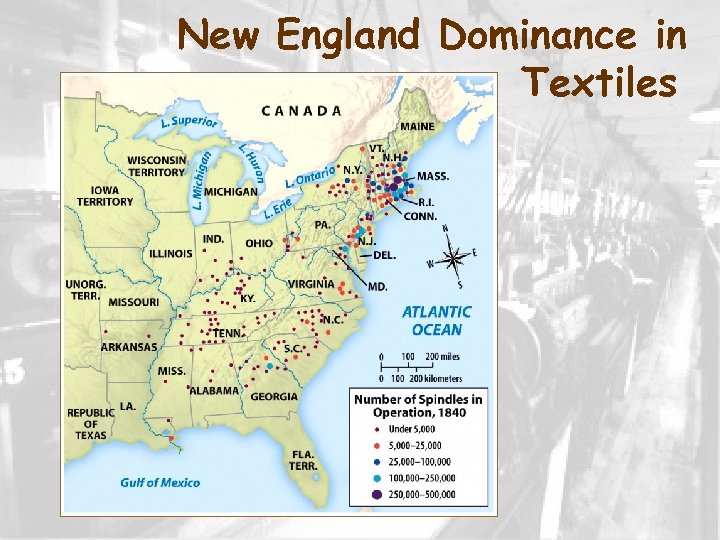
New England Dominance in Textiles
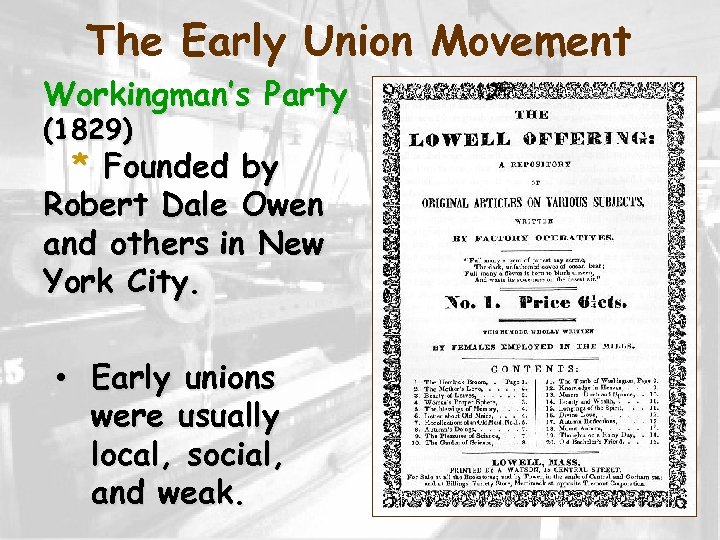
The Early Union Movement Workingman’s Party (1829) * Founded by Robert Dale Owen and others in New York City. • Early unions were usually local, social, and weak.
Resourcefulness & Experimentation p. Americans were willing to try anything. p. They were first copiers, then innovators. 1800 41 patents were approved. 1860 4, 357 “ “ “
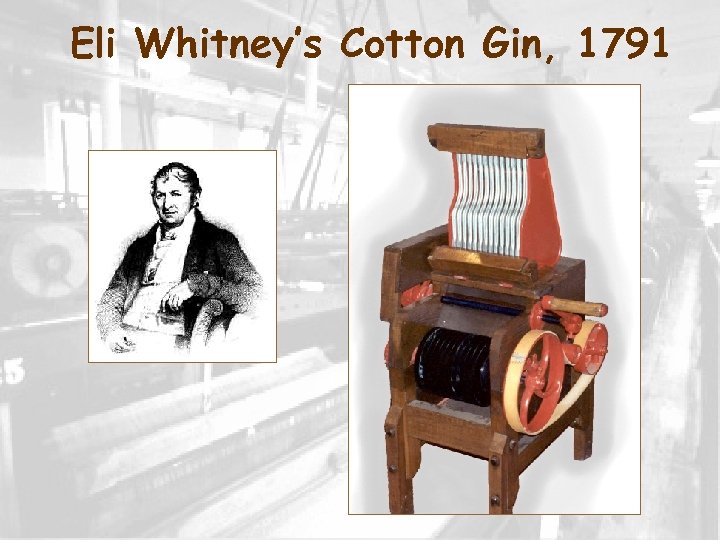
Eli Whitney’s Cotton Gin, 1791
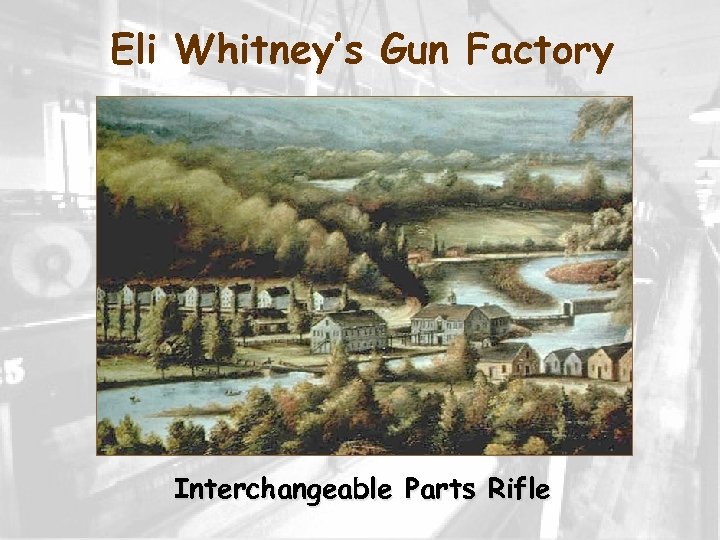
Eli Whitney’s Gun Factory Interchangeable Parts Rifle
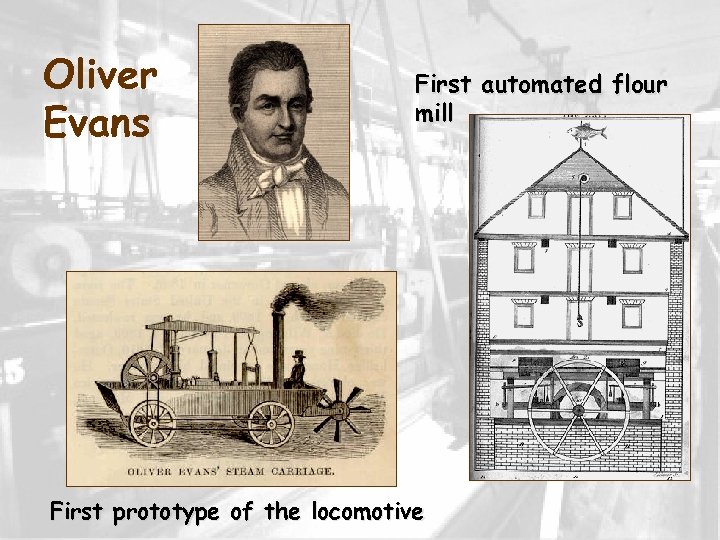
Oliver Evans First automated flour mill First prototype of the locomotive
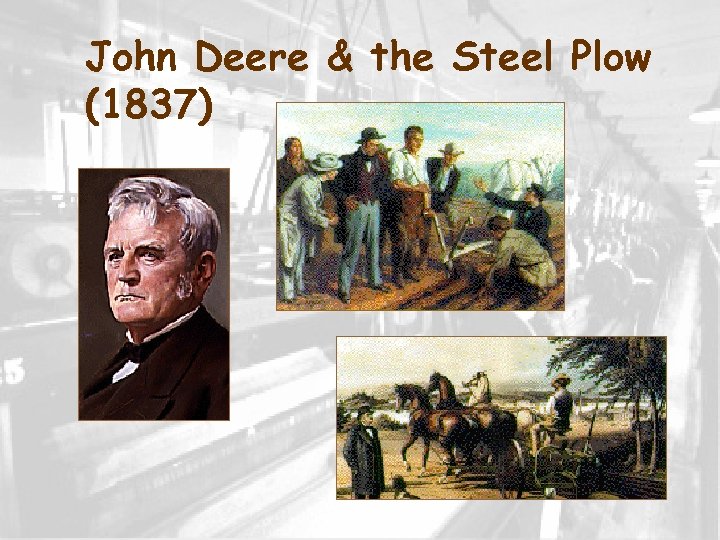
John Deere & the Steel Plow (1837)
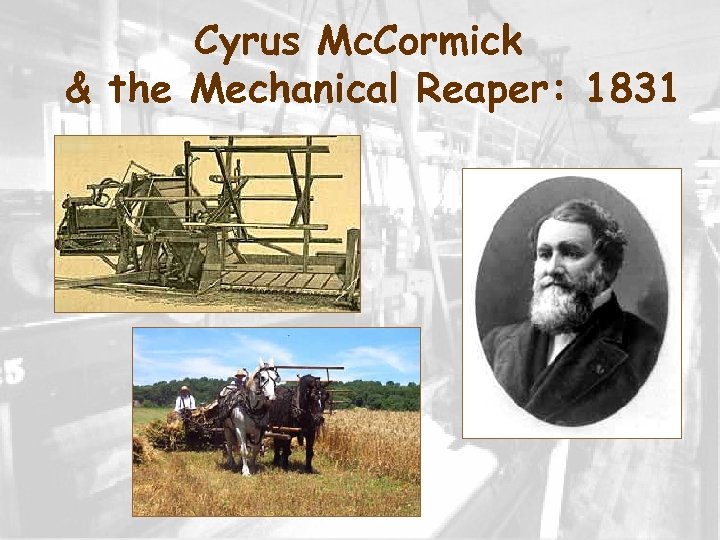
Cyrus Mc. Cormick & the Mechanical Reaper: 1831
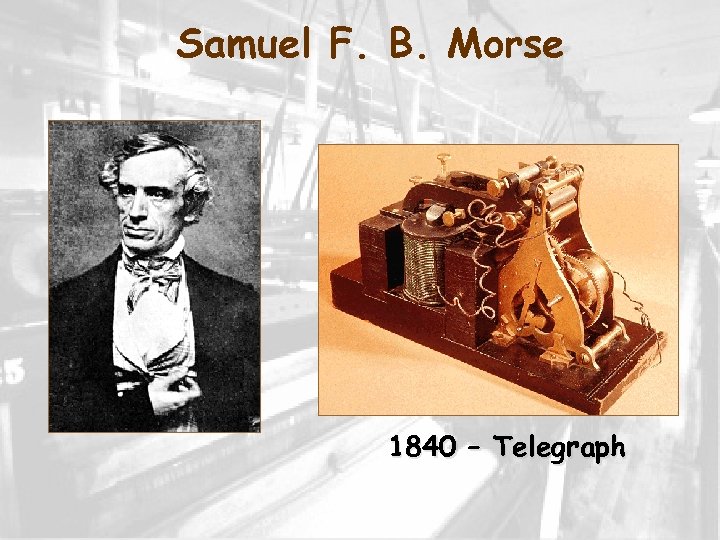
Samuel F. B. Morse 1840 – Telegraph
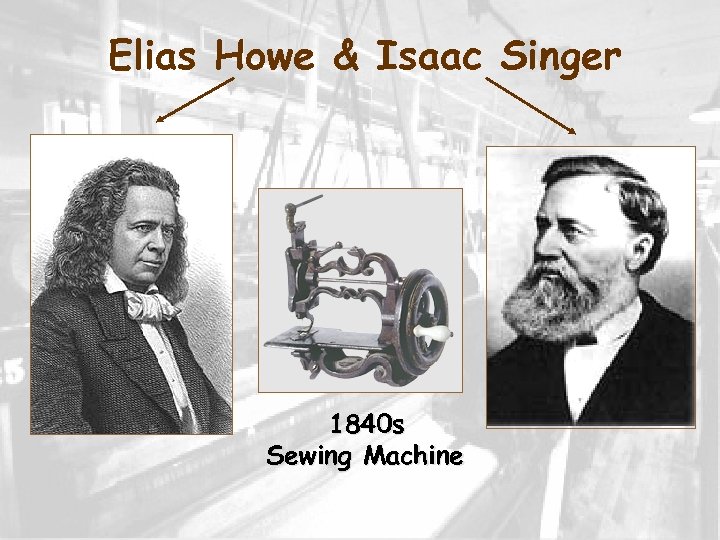
Elias Howe & Isaac Singer 1840 s Sewing Machine
The “American Dream” z They all regarded material advance as the natural fruit of American republicanism & proof of the country’s virtue and promise. A German visitor in the 1840 s, Friedrich List, observed: Anything new is quickly introduced here, including all of the latest inventions. There is no clinging to old ways. The moment an American hears the word “invention, ” he pricks up his ears.
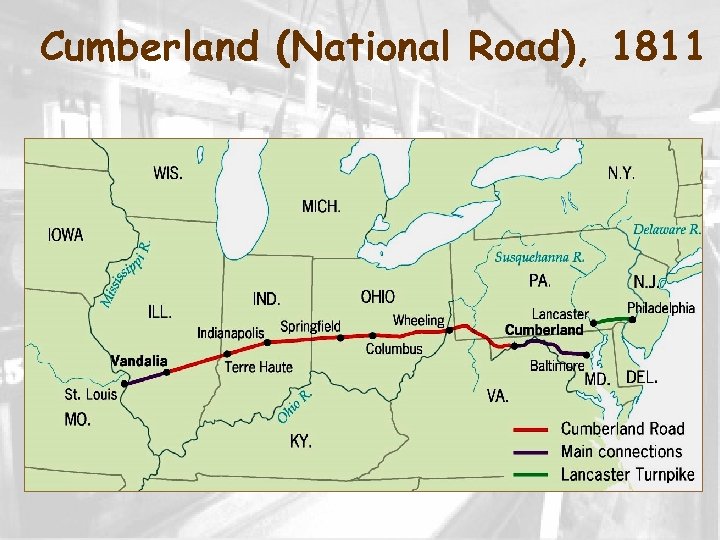
Cumberland (National Road), 1811
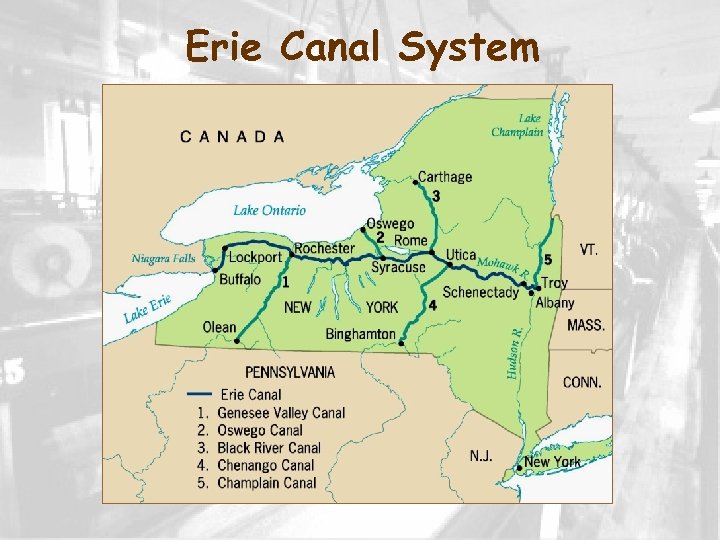
Erie Canal System
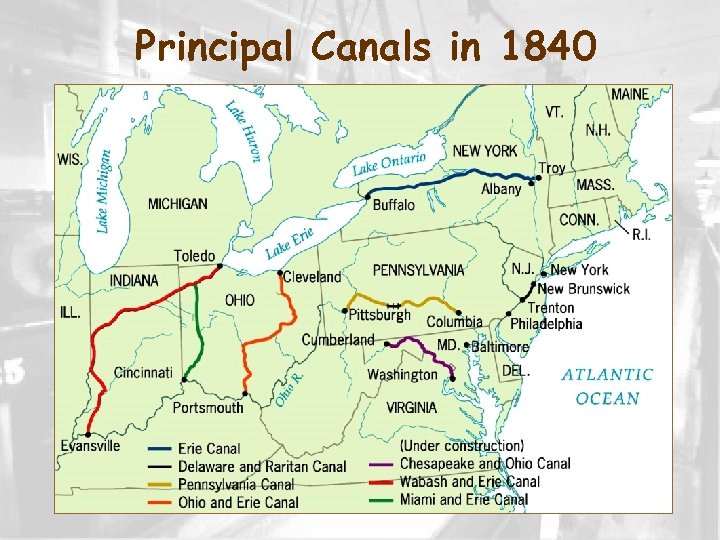
Principal Canals in 1840
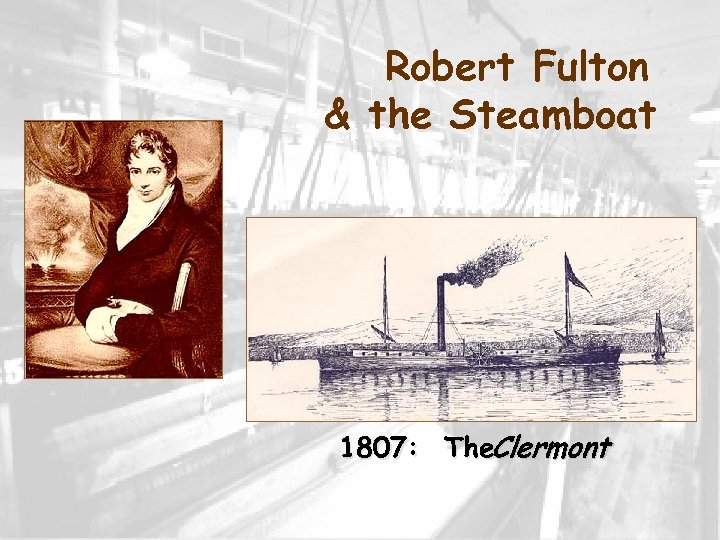
Robert Fulton & the Steamboat 1807: The. Clermont
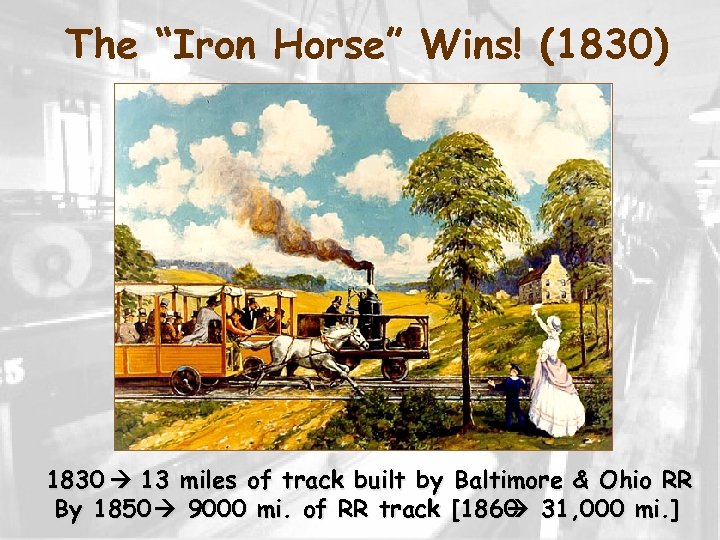
The “Iron Horse” Wins! (1830) 1830 13 miles of track built by Baltimore & Ohio RR By 1850 9000 mi. of RR track [1860 31, 000 mi. ]
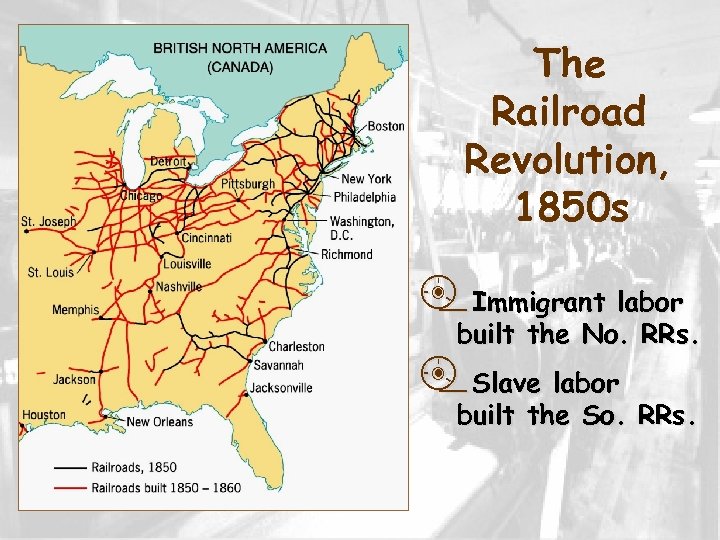
The Railroad Revolution, 1850 s p. Immigrant labor built the No. RRs. p. Slave labor built the So. RRs.
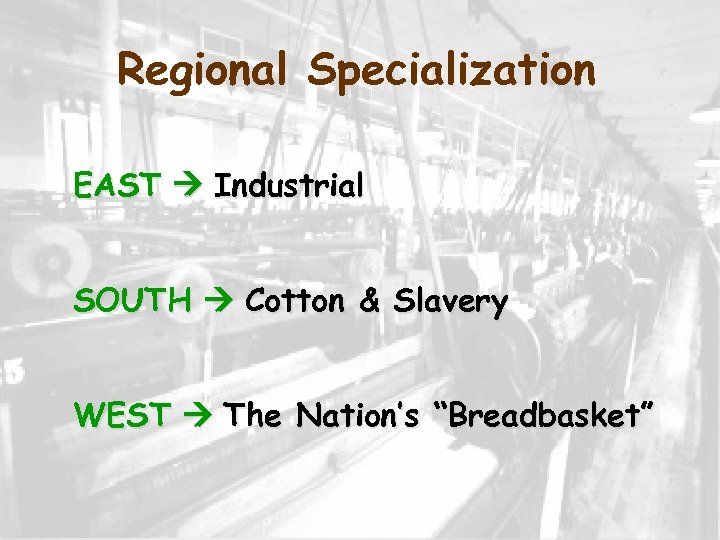
Regional Specialization EAST Industrial SOUTH Cotton & Slavery WEST The Nation’s “Breadbasket”
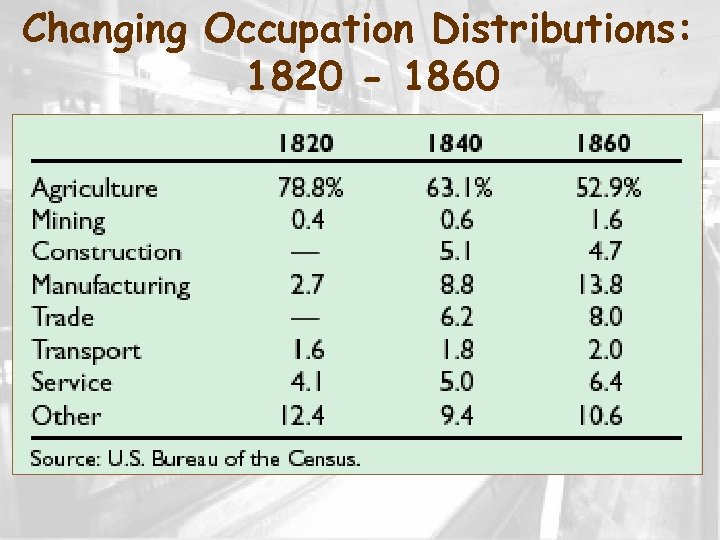
Changing Occupation Distributions: 1820 - 1860
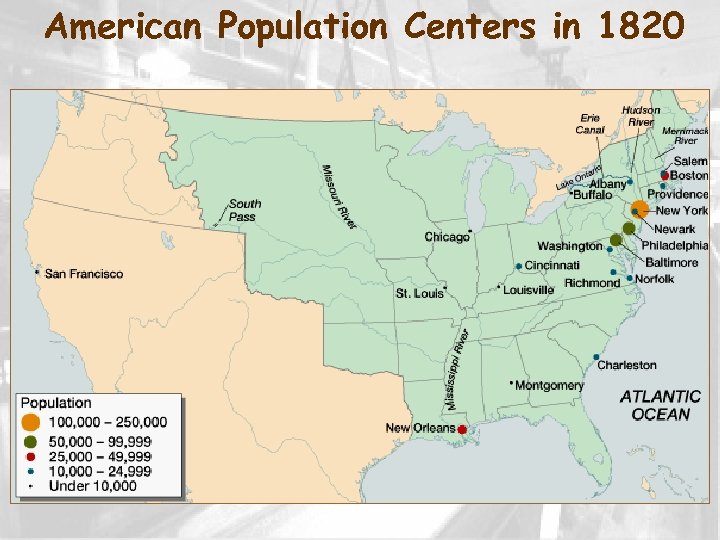
American Population Centers in 1820
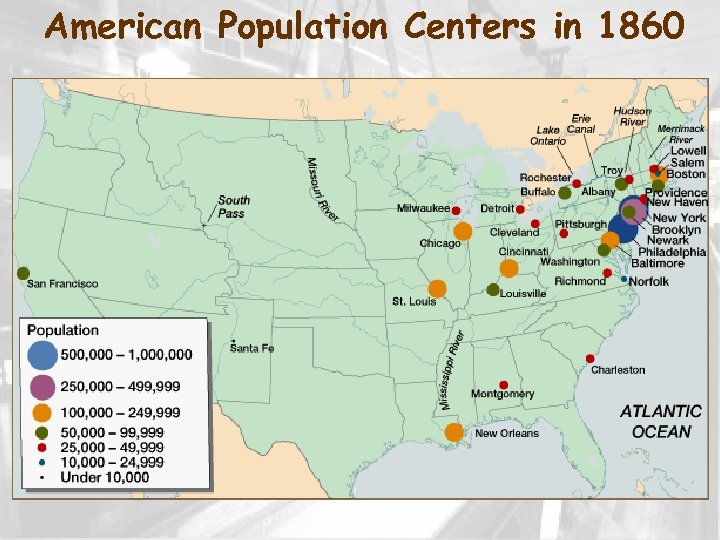
American Population Centers in 1860
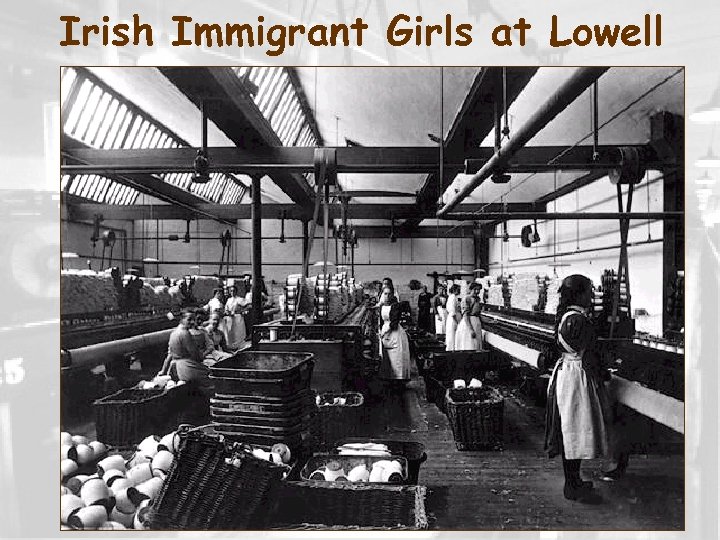
Irish Immigrant Girls at Lowell
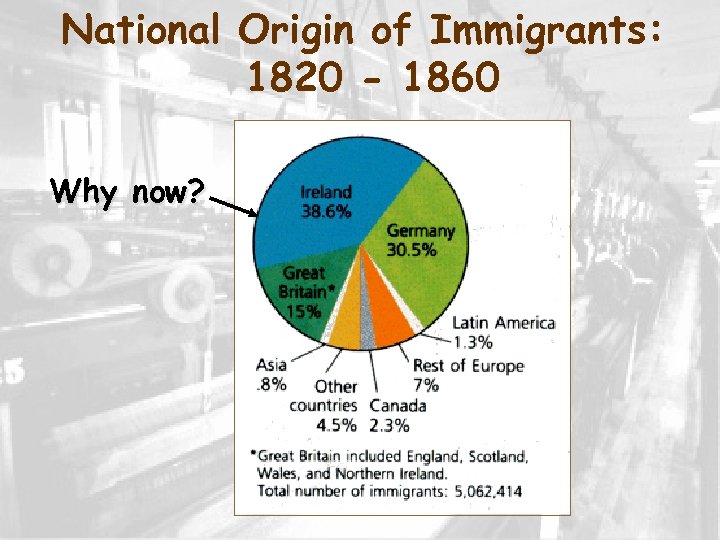
National Origin of Immigrants: 1820 - 1860 Why now?
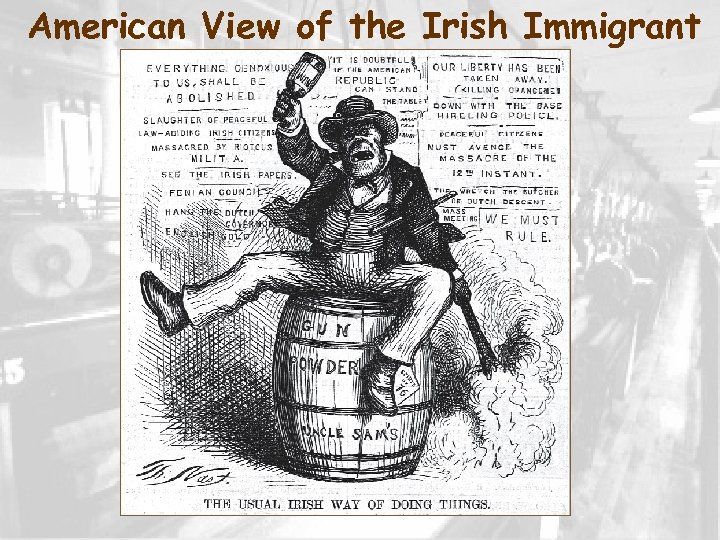
American View of the Irish Immigrant
Distribution of Wealth v v During the American Revolution, 45% of all wealth in the top 10% of the population. 1845 Boston top 4% owned over 65% of the wealth. 1860 Philadelphia top 1% owned over 50% of the wealth. The gap between rich and poor was widening!
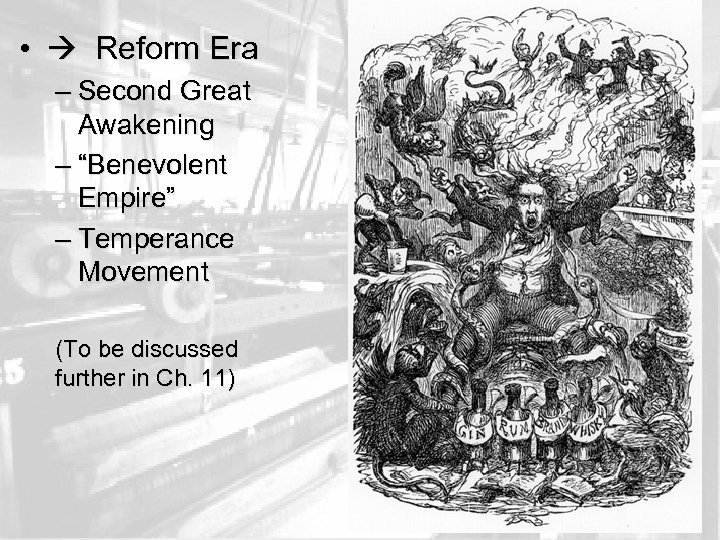
• Reform Era – Second Great Awakening – “Benevolent Empire” – Temperance Movement (To be discussed further in Ch. 11)
Скачать презентацию Americans vs the British Britain was first
9dae7638f9d0e7431efec36b25522490.ppt