


 Скачать презентацию American University in Central Asia Week 8 Instructor
Week 11 Joint.pptx
- Количество слайдов: 66
 American University in Central Asia Week 8: Instructor: Tolkunbek Abdygulov 2011
 Chapter 8 Knox Today we will study: How existing economies were transformed into colonial ones. The major ways in which colonial economies were enmeshed and maintained within the world economy. The importance of frameworks of administration introduced by Europeans. The cultural mechanisms that facilitated integration into the world economy.
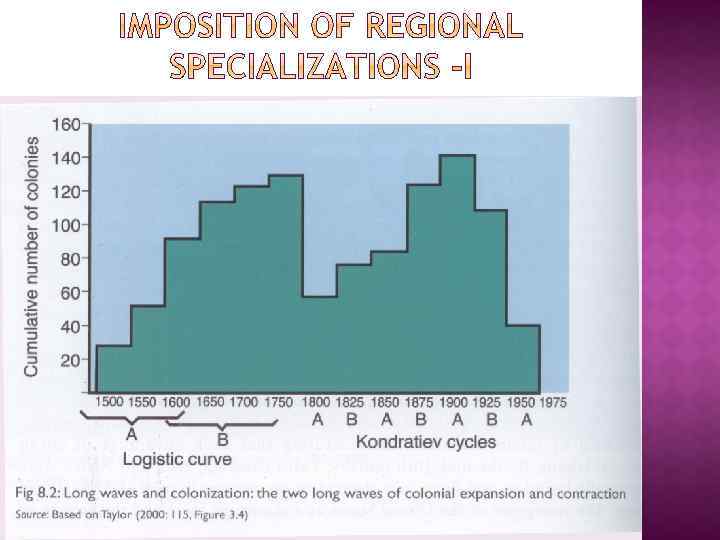
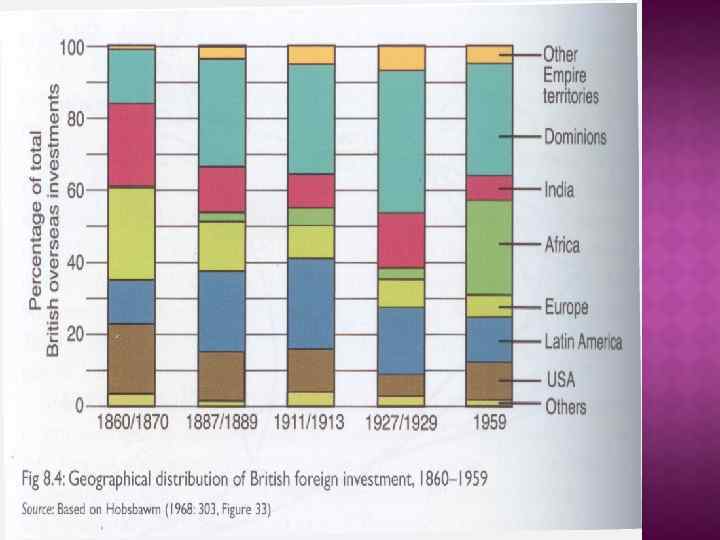
 The modern world economy began with the global expansion of trade and conquest by European merchants, adventurers and statesmen. Territorial conquest, and the planting of either settler enclaves or slave plantations and mining enterprises were the major features of European expansion throughout the 18 th century. The emergence of capital export as a major stimulus to intervention and domination, as profit rates in the periphery exceeded those in core.
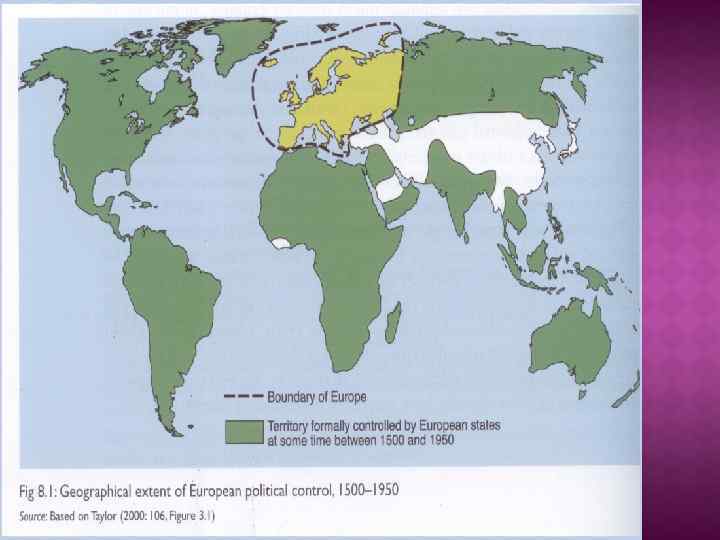
 Often colonies became extremely dependent on monoculture in order to confer the blessings of comparative advantage. The division between ‘developed’ and ‘underdeveloped’ economies grew enormously. During the early years of incorporation into the world economy the periphery tended to become specialized in extraction of raw materials and production of plantation crops, sometimes supplemented by labour-intensive manufacturing that took advantage of cheap colonial labour. A process of decolonization began with the independence of the south Asian countries in 1947.
 In 19 century: whole regions were made to specialize in the production of a specific raw material (such as gold, spices or cotton), food crop (such as bananas) or ‘stimulant’ (such as tea or tobacco). ‘choice’ of commodity was often imposed by force or through market domination. Creation of banana plantations affected many areas, especially in Central America.
 {It} enabled the Company to offset political pressures in any one host country. Dispersal also allowed it to take advantage of suitable environments in different locations, thus reducing the chance that floods, hurricanes, soil depletion and plant diseases could bring production to a halt in any one of them. To further reduce these risks, the Company acquired a great deal more land than it could use at any one time, to hold as a reserve against the future. In some areas it formed relationships with local cultivators who grew bananas and then sold them to the Company. Wolf (1982: 324)
 How was it that regional specialization that began in late 19 th century was possible? And how did it evolve over time? Answering this question requires us to focus on the means by which an integrated world economy was created: flows of capital investment, networks of communication and marketing, movements of commodities and people, and transportation – urban networks as channels of diffusion and concentration.
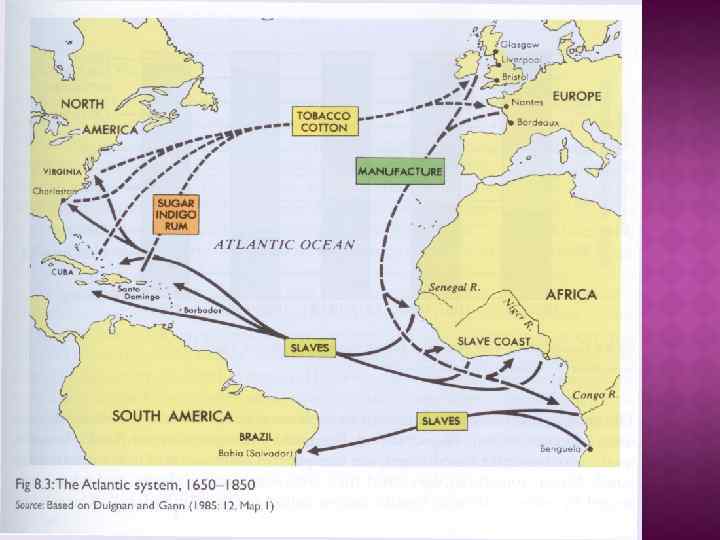
 The period 1860 -70 inherited from the earlier centuries of colonial expansion two major systems of economic interaction: An Atlantic system built on the ‘triangular trade’ between Europe, Africa and the Americas A Eurasian system built on trade with India, East Asia and Southeast Asia.
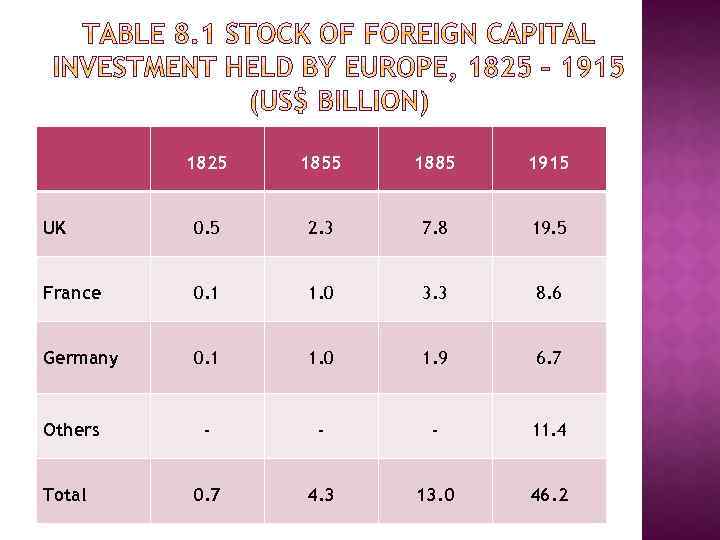 1825 1855 1885 1915 UK 0. 5 2. 3 7. 8 19. 5 France 0. 1 1. 0 3. 3 8. 6 Germany 0. 1 1. 0 1. 9 6. 7 - - - 11. 4 0. 7 4. 3 13. 0 46. 2 Others Total
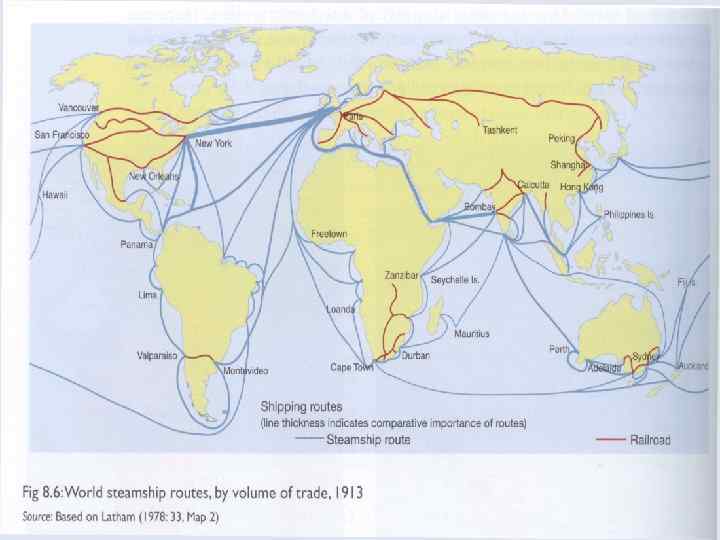
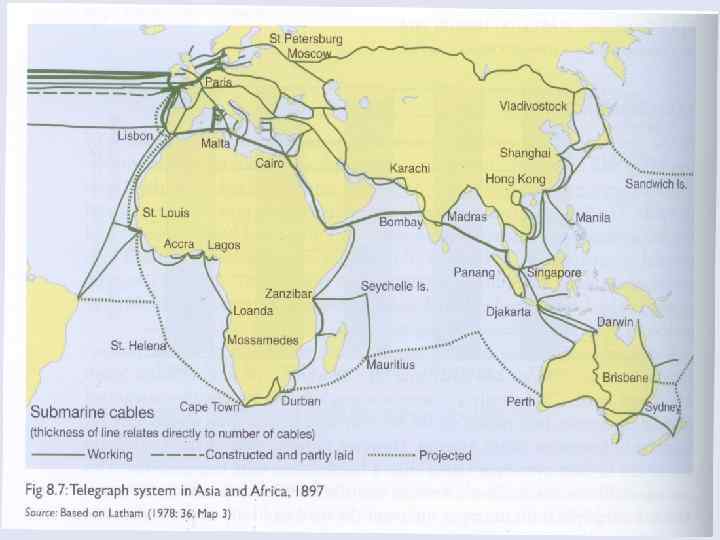
 At the global level the colonial system was bound together by a network of steamship and communication (postal, telegraph and, alter, telephone) routs. By 1913 the world economy was effectively integrated by a system of regularly scheduled steamship routs. A world telegraph system enabled orders to be placed and shipments to be embarked for a large number of ports around the world.
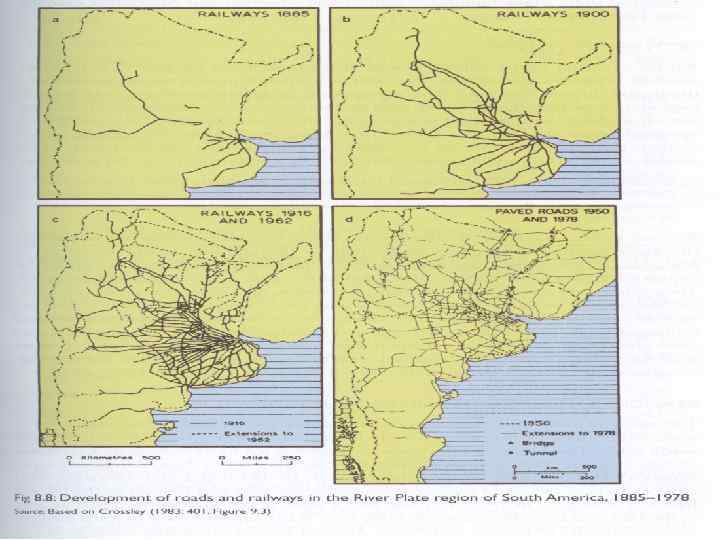
 The colonial system also put limits on the growth of the dominant or primate cities. There was only a limited stimulus to the growth of distinctive urban economy. {C}olonial activities often stimulated the growth of secondary cities. In some cases they were encouraged to grow as colonial administrative posts or as transfer and processing centres for the exploitation of mineral and agricultural resources in the interior of a country,
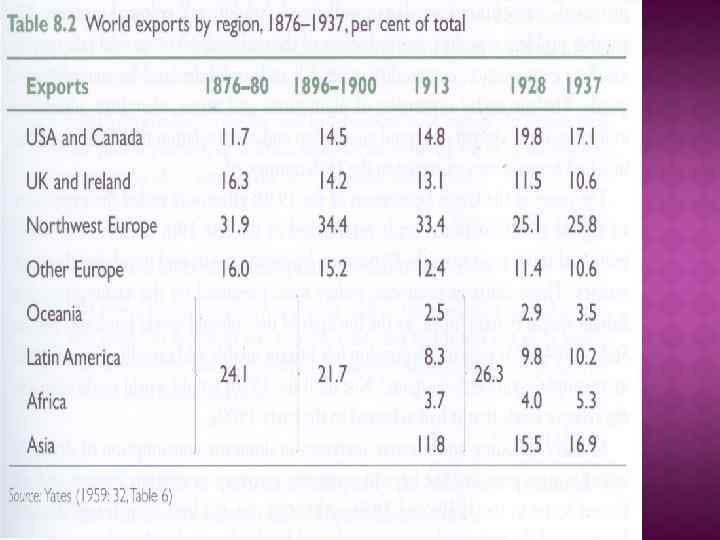
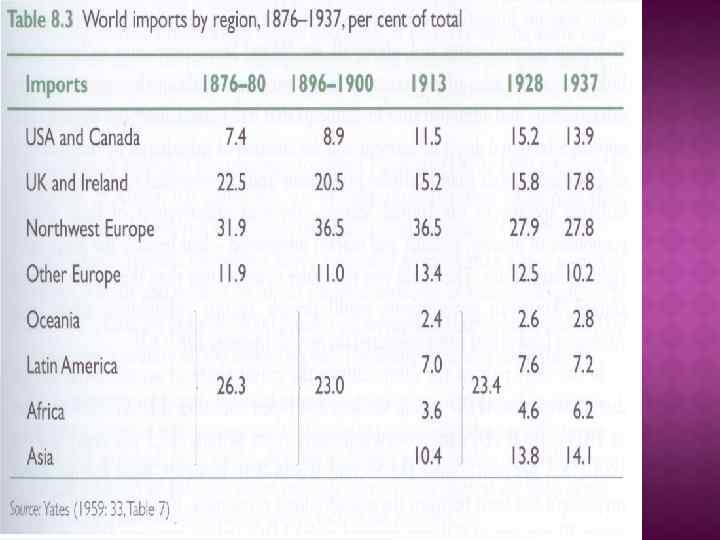
 The outcome of the new extension of the world economy and the intensification of trade withing regions that were already incorporated was a substantial increase in world trade. The nature of the system of trade has led to its naming as a crossover system trade.
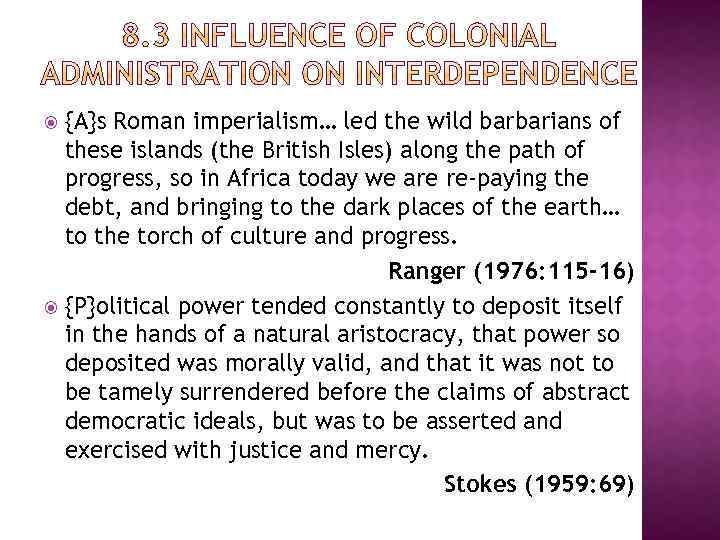 {A}s Roman imperialism… led the wild barbarians of these islands (the British Isles) along the path of progress, so in Africa today we are re-paying the debt, and bringing to the dark places of the earth… to the torch of culture and progress. Ranger (1976: 115 -16) {P}olitical power tended constantly to deposit itself in the hands of a natural aristocracy, that power so deposited was morally valid, and that it was not to be tamely surrendered before the claims of abstract democratic ideals, but was to be asserted and exercised with justice and mercy. Stokes (1959: 69)
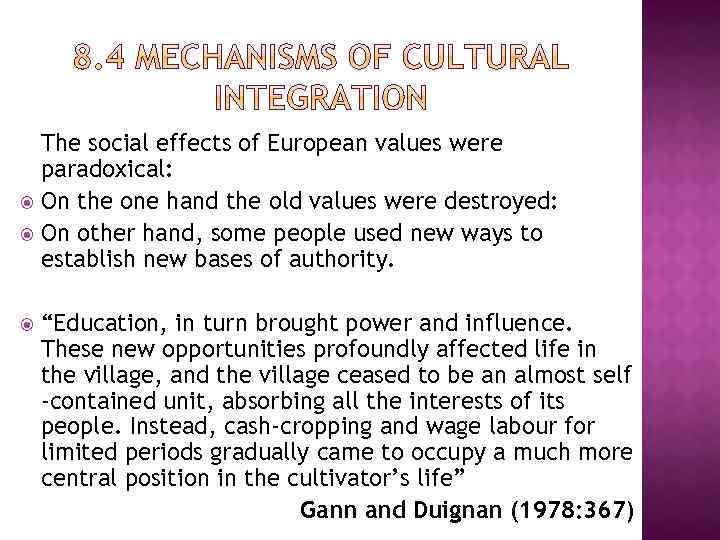 The social effects of European values were paradoxical: On the one hand the old values were destroyed: On other hand, some people used new ways to establish new bases of authority. “Education, in turn brought power and influence. These new opportunities profoundly affected life in the village, and the village ceased to be an almost self -contained unit, absorbing all the interests of its people. Instead, cash-cropping and wage labour for limited periods gradually came to occupy a much more central position in the cultivator’s life” Gann and Duignan (1978: 367)
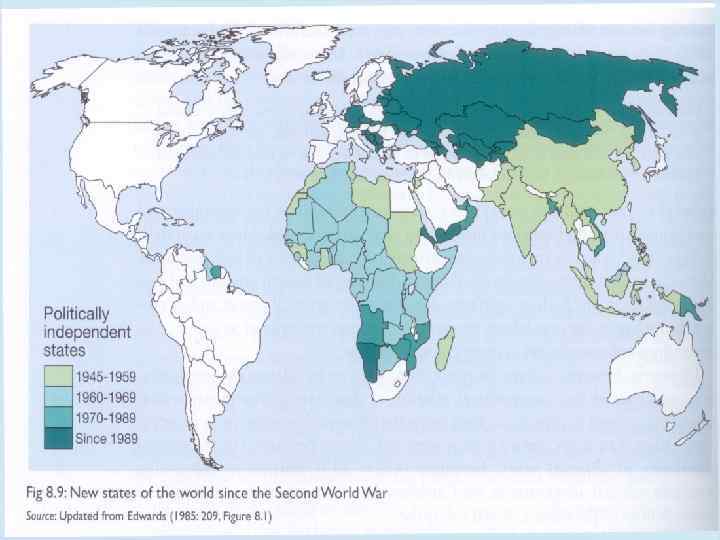
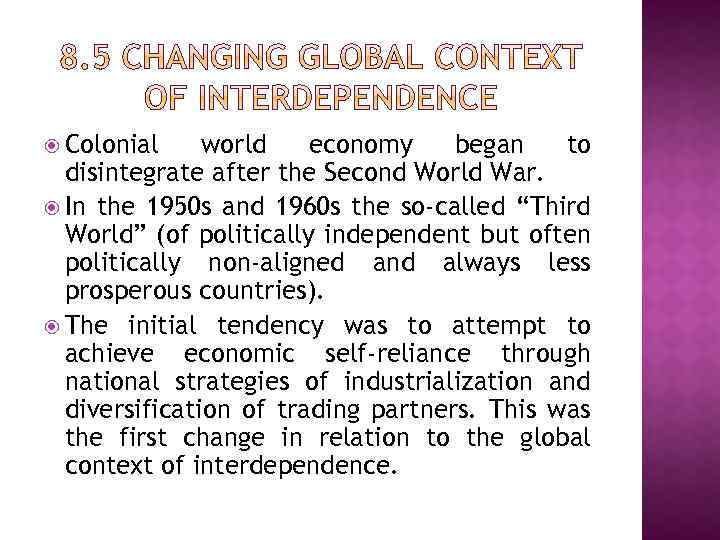 Colonial world economy began to disintegrate after the Second World War. In the 1950 s and 1960 s the so-called “Third World” (of politically independent but often politically non-aligned and always less prosperous countries). The initial tendency was to attempt to achieve economic self-reliance through national strategies of industrialization and diversification of trading partners. This was the first change in relation to the global context of interdependence.
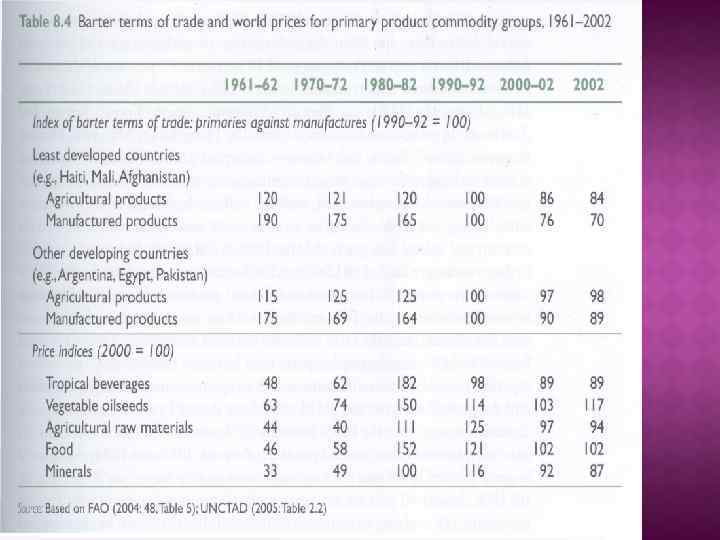
 The barter terms of trade (the ratio between the prices of exports and the prices of imports) for many of the basic commodities exported to the ‘core’ have deteriorated. The promotion of industry came from either protection – from reserving domestic markets for domestic industry – or, later, establishing export enclaves and attracting foreign and local capital to finance branch plants.
 Transnational corporations (TNCs) have long been active in LDCs. TNCs tended at first to duplicate plants around in order to gain access to protected markets or to make use of local raw materials. Tn. Cs involvement in LDCs has also involved what is known as global sourcing. In particular, labourintensive stages (as in the product life-cycle model) can be located to take advantage of both the enormous international spread in wage levels and the exchange rate fluctuations between currencies that have been a feature of the world economy since the early 1970.
 By the 1970 s several groups have emerged and can be distinguished: First, there are those NICs that have grown rapidly and are important exporters of manufactured goods (South Korea, Taiwan, Hong Kong, Malaysia, and Thailand); Second, countries that experienced reasonable growth until the late 1970 s but because of high debt loads struggled during the 1980 particular (Argentina, Brazil and Philippines); Third, low income countries mainly in Sub. Saharah Africa and Asia,
 New models appeared to replace previous ones. Perhaps the three most important ones today are based on: 1. a synthesis of liberal reforms and social democracy as practiced in parts of western Europe 2. The Chinese experiment in globalization since 1978 3. Islamic economic practices.
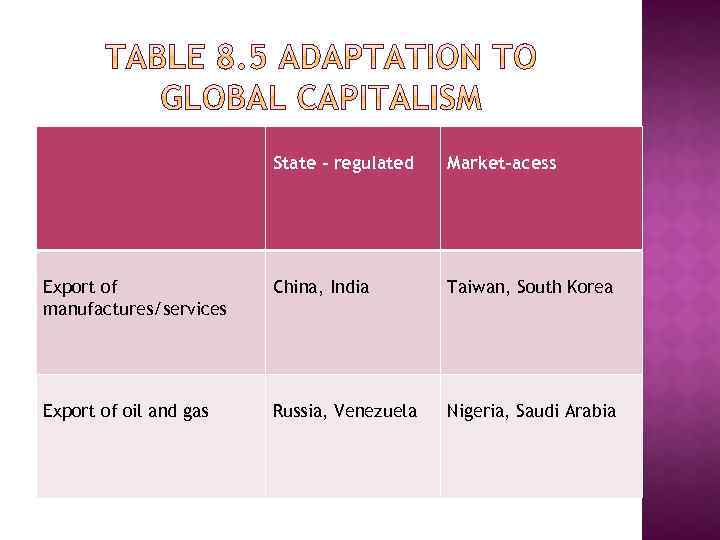 State - regulated Market-acess Export of manufactures/services China, India Taiwan, South Korea Export of oil and gas Russia, Venezuela Nigeria, Saudi Arabia
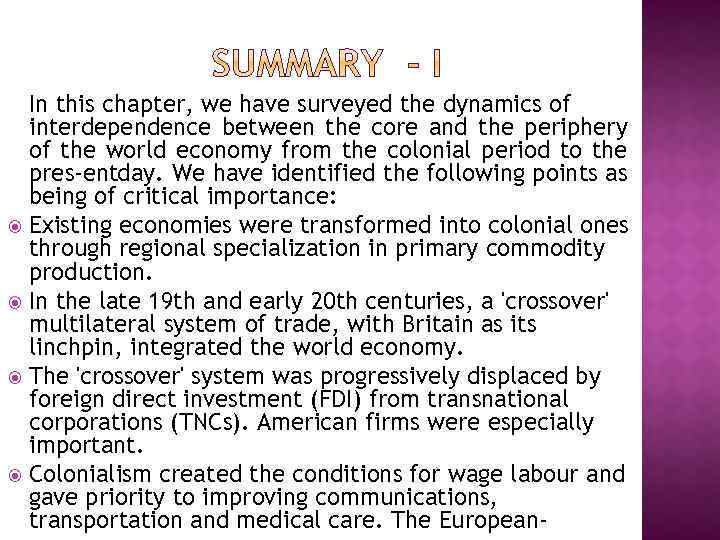 In this chapter, we have surveyed the dynamics of interdependence between the core and the periphery of the world economy from the colonial period to the pres entday. We have identified the following points as being of critical importance: Existing economies were transformed into colonial ones through regional specialization in primary commodity production. In the late 19 th and early 20 th centuries, a 'crossover' multilateral system of trade, with Britain as its linchpin, integrated the world economy. The 'crossover' system was progressively displaced by foreign direct investment (FDI) from transnational corporations (TNCs). American firms were especially important. Colonialism created the conditions for wage labour and gave priority to improving communications, transportation and medical care. The European-
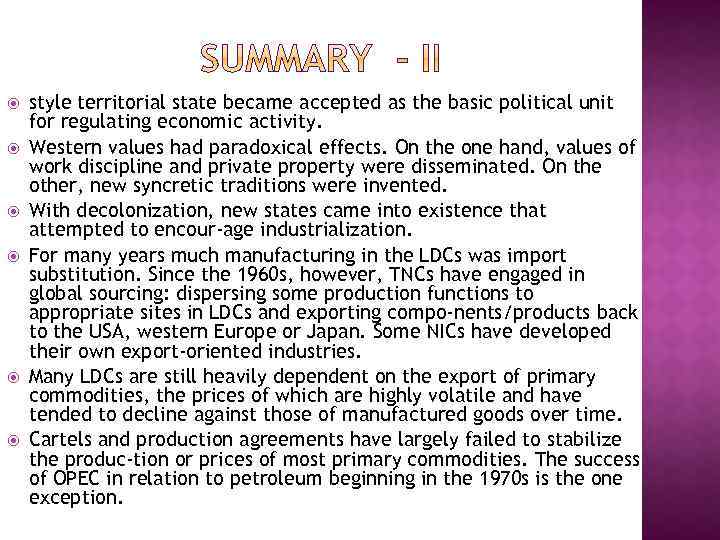 style territorial state became accepted as the basic political unit for regulating economic activity. Western values had paradoxical effects. On the one hand, values of work discipline and private property were disseminated. On the other, new syncretic traditions were invented. With decolonization, new states came into existence that attempted to encour age industrialization. For many years much manufacturing in the LDCs was import substitution. Since the 1960 s, however, TNCs have engaged in global sourcing: dispersing some production functions to appropriate sites in LDCs and exporting compo nents/products back to the USA, western Europe or Japan. Some NICs have developed their own export-oriented industries. Many LDCs are still heavily dependent on the export of primary commodities, the prices of which are highly volatile and have tended to decline against those of manufactured goods over time. Cartels and production agreements have largely failed to stabilize the produc tion or prices of most primary commodities. The success of OPEC in relation to petroleum beginning in the 1970 s is the one exception.
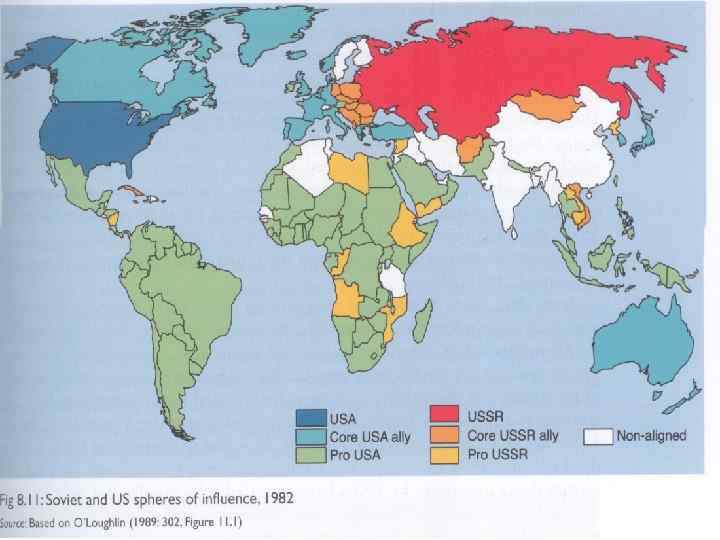
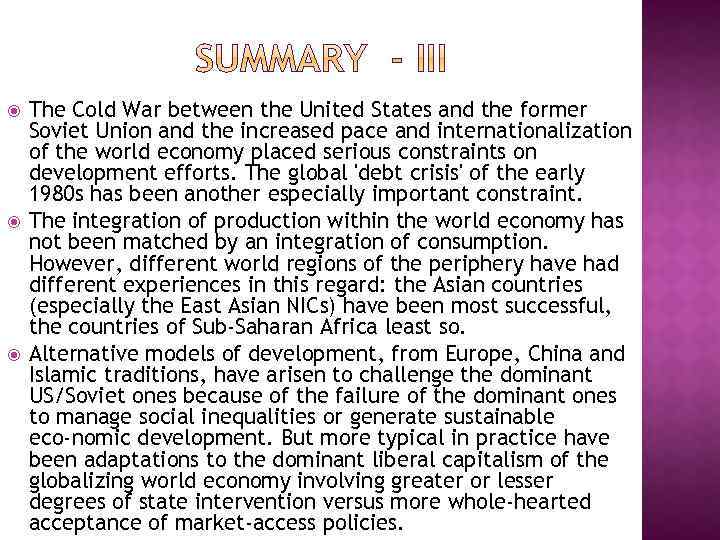 The Cold War between the United States and the former Soviet Union and the increased pace and internationalization of the world economy placed serious constraints on development efforts. The global 'debt crisis' of the early 1980 s has been another especially important constraint. The integration of production within the world economy has not been matched by an integration of consumption. However, different world regions of the periphery have had different experiences in this regard: the Asian countries (especially the East Asian NICs) have been most successful, the countries of Sub-Saharan Africa least so. Alternative models of development, from Europe, China and Islamic traditions, have arisen to challenge the dominant US/Soviet ones because of the failure of the dominant ones to manage social inequalities or generate sustainable eco nomic development. But more typical in practice have been adaptations to the dominant liberal capitalism of the globalizing world economy involving greater or lesser degrees of state intervention versus more whole-hearted acceptance of market-access policies.
 American University in Central Asia Week 8: Instructor: Tolkunbek Abdygulov 2011
 Chapter 9 Knox Today we will learn the contemporary state of agriculture in the ‘periphery’ of the world economy. Our lecture is organized as follows: First, we will study importance of agriculture as an economic sector and stress the dual trends of increased agricultural production for the world market and decreased food self-reliance; Second, we will learn the general relationships between land, labour and capital in the periphery with special attention to efforts at rural land reform; Third, we will look, on the capitalisation of agriculture in the periphery by transnational corporations; Forth and last, we will study the role of science and technology in agriculture in the periphery, especially in the form of the so-called Green Revolution.
 Malassis (1975) identifies four types of agricultural system in the periphery: 1. The ‘customary’ farm involving common ownership of land for both cultivation and grazing; 2. The ‘feudal or semi-feudal’ estate , hacienda and latifundia; 3. ‘peasant agriculture’, including minifundia (small, subsistence farms), commercial farms and share cropping; 4. Capitalist plantation or merchandized agriculture based on wage labour.
 While many of the men migrate to find work, they leave behind the women, whose largely unrecorded role in agriculture includes tending to the fields and the animals. Women also do most of the domestic work: processing food crops, preparing meals, fetching water, collecting fuel wood, and caring for the children, elderly and sick. “However, although women have the primary responsibility for managing resources, they usually do not have control. National law or local customs often deny women they right to secure title or inherit land, which means they have no collateral to raise credit and improve their conditions. UNFPA (2001: 7)
 ‘Merchandized agriculture’ and export crops have become of greatest importance in Latin America. ‘Resource-poor’ agriculture, producing a range of crops, predominates in Sub-Saharan Africa and areas of poor soils and drainage elsewhere.
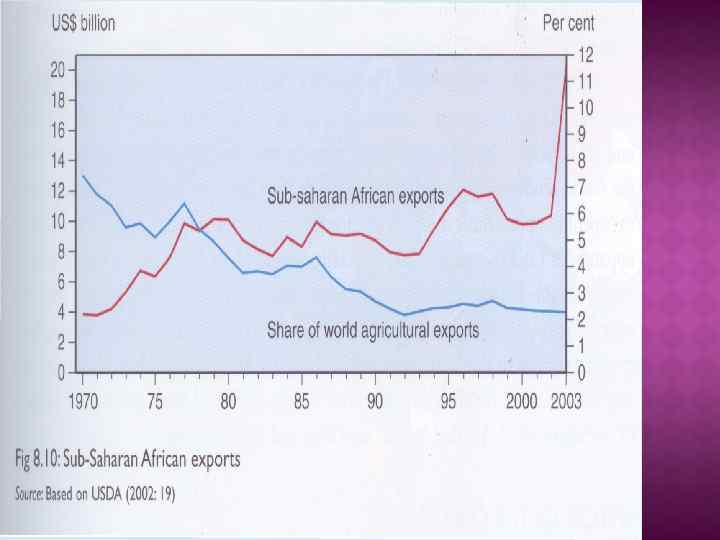
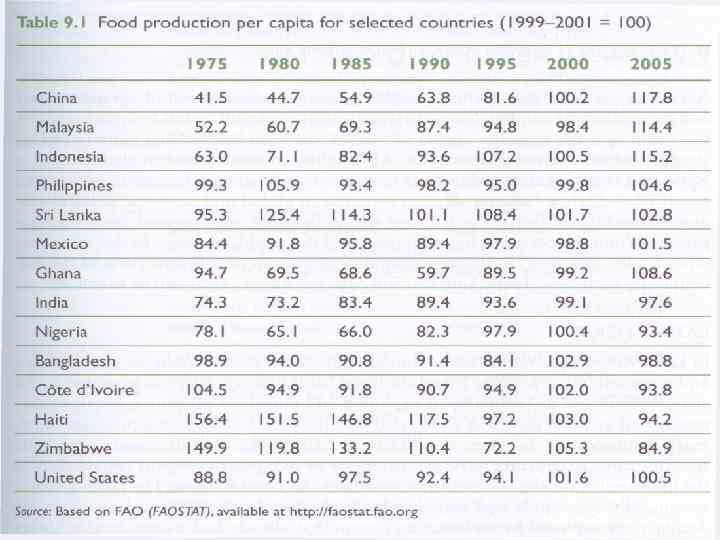
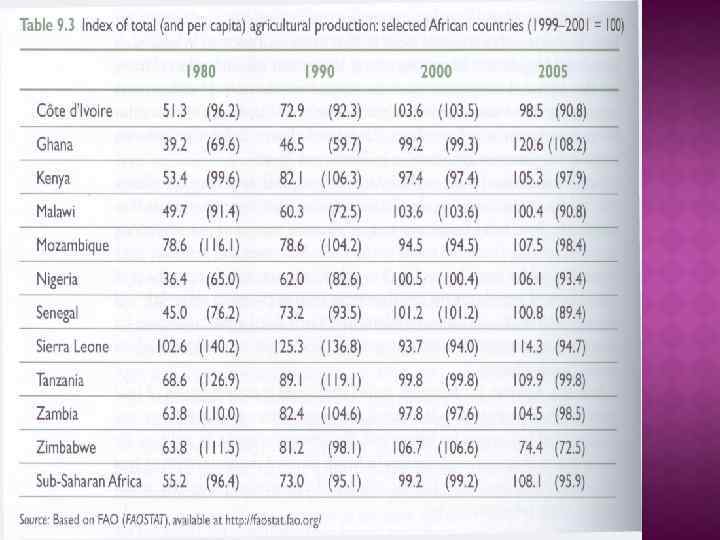
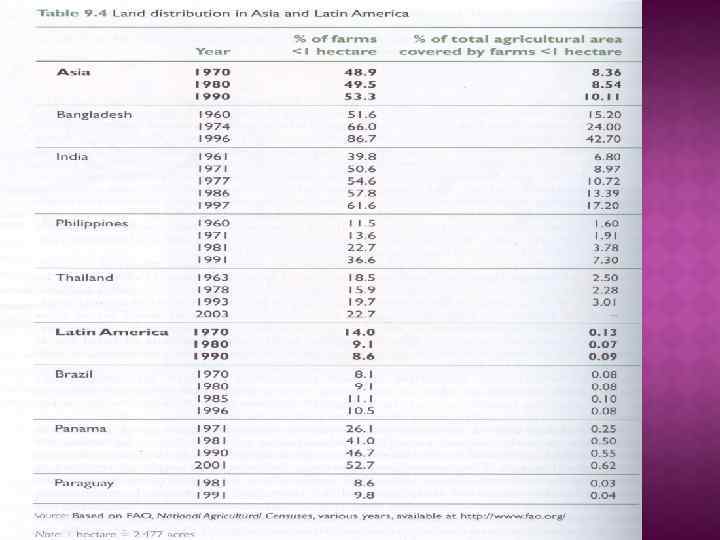
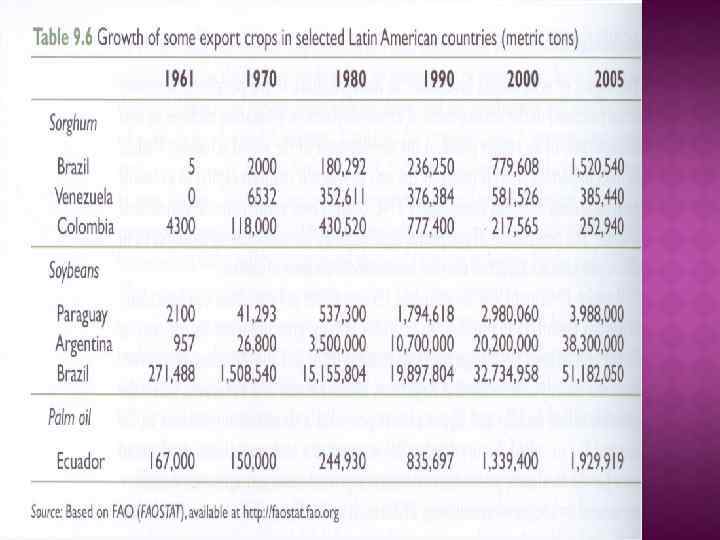
 Each of the three major regions of the periphery/semi-periphery faces distinctive problems with respect to its agriculture. For Latin America, it is the expansion of export crops at the expense of local food crops. As a consequence , food imports are often necessary. For Sub-Saharan Africa, it is the total deterioration of agriculture in the face of population pressure on marginal land, low productivity, government bias against investment in agriculture and fluctuations in export earnings. For Asia, production of cereals has increased greatly but prices have been low because of global ‘gluts’.
 In this section we will study the mix of ‘old’ and ‘new’ in the agricultural organization of different parts of the contemporary: Latin America, Sub-Saharan Africa, Asia. Agriculture in the contemporary periphery rests on a foundation of agrarian history and recent changes can only be understood in this context. Some features of landholding systems and rural life have persisted from the period of incorporation into the world economy.
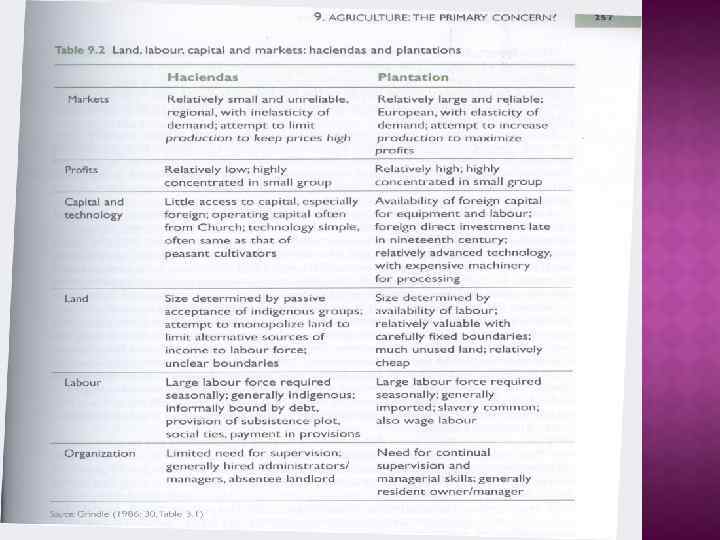
 In Latin America, conquest and colonial domination created patterns of subsistence and commercial agriculture based on large landholdings. Between 1850 s and 1930 s the various countries of Latin America came to be depend on the export of one or two primary export commodities to the industrial countries. The older hacienda system, went into decline to be replaced by a plantation system.
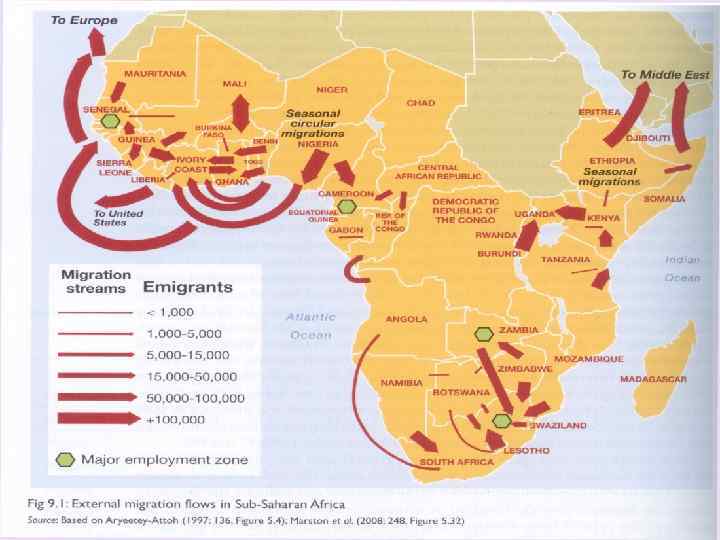
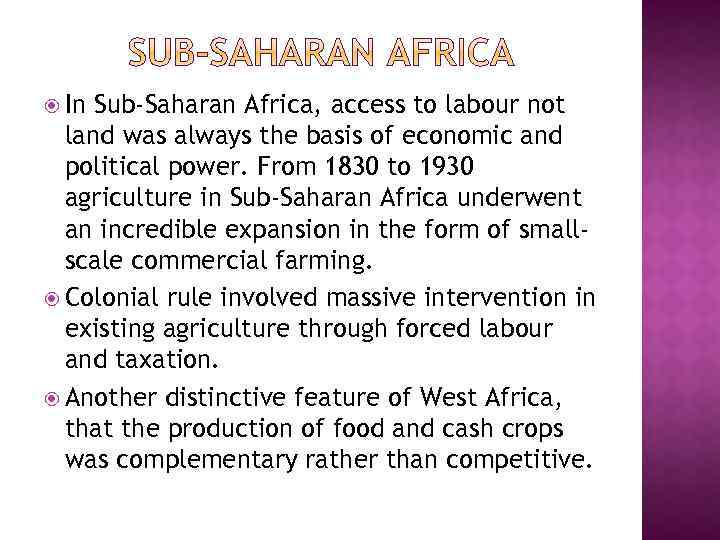 In Sub-Saharan Africa, access to labour not land was always the basis of economic and political power. From 1830 to 1930 agriculture in Sub-Saharan Africa underwent an incredible expansion in the form of smallscale commercial farming. Colonial rule involved massive intervention in existing agriculture through forced labour and taxation. Another distinctive feature of West Africa, that the production of food and cash crops was complementary rather than competitive.
 “A men have become more involved in commercial cropping and non-farm occupations, so women have become increasingly responsible for the cultivation of food staples. This is especially true in those areas where the out-migration of men is persistent, and it could be argued that the expansion of commercial cropping and the industrial labour force has been built on the backs of women farmers”
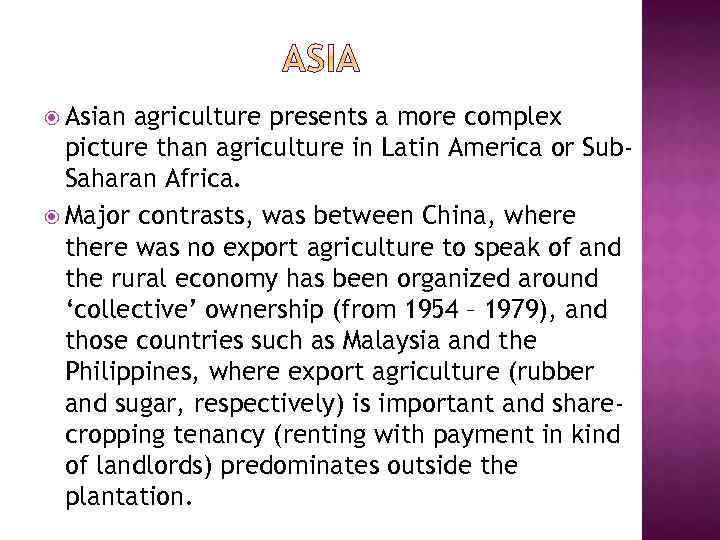 Asian agriculture presents a more complex picture than agriculture in Latin America or Sub. Saharan Africa. Major contrasts, was between China, where there was no export agriculture to speak of and the rural economy has been organized around ‘collective’ ownership (from 1954 – 1979), and those countries such as Malaysia and the Philippines, where export agriculture (rubber and sugar, respectively) is important and sharecropping tenancy (renting with payment in kind of landlords) predominates outside the plantation.
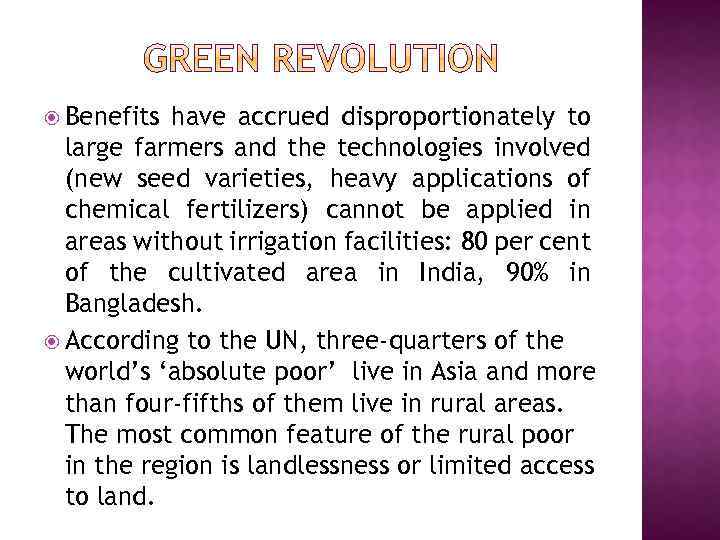 Benefits have accrued disproportionately to large farmers and the technologies involved (new seed varieties, heavy applications of chemical fertilizers) cannot be applied in areas without irrigation facilities: 80 per cent of the cultivated area in India, 90% in Bangladesh. According to the UN, three-quarters of the world’s ‘absolute poor’ live in Asia and more than four-fifths of them live in rural areas. The most common feature of the rural poor in the region is landlessness or limited access to land.
 Land reform, is overwhelmingly a sociopolitical process rather than a technical one of choosing a model and then following it. Between 1960 and the early 1970 s, virtually every country in Latin America and Asia passed land reform laws. A wide range of arguments have been proposed to justify a role for land reform in agricultural development.
 1. 2. 3. 4. ‘Conservative’ argument: land reform is minimal concession for political stabilization. ‘Liberal’ argument: land reform is needed to create a class of capitalist farmers and expand the domestic market. ‘Populist’ argument: small farms are more efficient (and equitable) than large ones. ‘Radical’ argument: peasants are rapidly being dispossessed of their status as independent producers and are prisoners of cheap food policies and agro-export policies, consequently land reform towards collective production (collective farms, state farms) is necessary, if insufficient, for economic development.
 Over the past 20 years there has been a substantial increase in direct and indirect investment by TNCs attracted by cheap land labour, appropriate physical conditions, improved infrastructure and a decline in the relative profitability of other sorts of investment, have increased their involvement in export-oriented agriculture and the production and distribution of seeds, pesticides and fertilizers. Six ‘new agricultural countries’. Four concentrated in Latin America: Argentina, Brazil, Chile and Mexico. The other two are Hungary and Thailand.
 “Throughout the region, tenants and sharecroppers were replaced by agricultural workers, and permanent workers were displaced by part time labourers. Given these changes, landowners could minimize the cost of maintaining a labour force through periods when it was not needed and expend cropping or live stocking areas ty taking over lands that had been assigned to resident labourers, tenants, and sharecroppers. Labour costs were thus reduced for the entrepreneur, and the available pool of labourers, forced to provide for their own maintenance during inactive periods, was enlarged”. Grindle (1986: 98)
 The peaant has to combine several sources of credit, on occasion all of them, in order to bring off the miracle of continuing to produce without dying of starvation. He does it through a set of elaborate and sometimes convoluted strategies. Some people plant peanuts only in order to finance the fertilizer s for the corn crop. Others use official credit to finance planting a cornfield or for buying corn for consumption in the months of scarcity, while they resort to the local bourgeoisie or the big monopolists in order to finance a field of tomatos and onions. Many turn to users (money lenders) to cover the cost of an illness or a fiesta…. .
 In some area peasants have also supplemented their incomes by switching to the cultivation of drug crops. In three Latin American countries, Peru, Colombia and Bolivia, the value of cocaine exports is estimated to be US$690 million per annum. The drug business is not new. It has ancient roots, In the 19 th century opening up China to export of opium from India was one of the main causes of the war between Britain and China that was, as a result, called the Opium War.
 Tremendous increase in demand for beef in the United States as a result of the emergence of fastfood franchises such as Mc. Donalds and Burger. King; A number of TNCs and individuals found it profitable to respond to the demand for beef from Central America. Some very large US companies became involved through subsidiaries and joint ventures. Other TNCs became involved in supplying the beef business with inputs (grass seed, barbed wire, fertilizers, feed grains and veterinary suppliers). The Central American ‘beef boom’ ended in the 1980 s, however, due to declining international beef prices and reduced US demand as a real incomes stagnated and consumers became more health conscious.
 “Scientific agriculture’ – this involved creating ‘new’ breads of cattle by combining ‘beefier’ attributes with high resistance to pest and tropical heat, transforming pasture management by sowing higher yield grasses and fertilizers, enhancing water suppliers by digging new wells and pounds and providing better veterinary care for cattle herds. Yields have been significantly increased. “Scientific agriculture’ – is largely an instrument of commercialization and capitalization rather than a mechanism for improving agricultural productivity and production per se.
 Agriculture is often given a subsidiary role in models of development followed by governments even when it is a vital source of sustenance and employment. For a variety of reasons, national government pricing and credit policies have tended to drain agriculture in favor of the industrial-urban sector. The three continents of the periphery - Africa, Asia and Latin America - differ significantly in terms of agricultural organization and performance. It is also important to recognize that in agriculture in the LDCs, it is the women rather than the men who are overwhelmingly more important as the source of workers, especially in Sub-Saharan Africa. There is a long history of commercial agriculture in the periphery. Until recently, however, it was a plantation or export enclave sector surrounded by a largely subsistence sector.
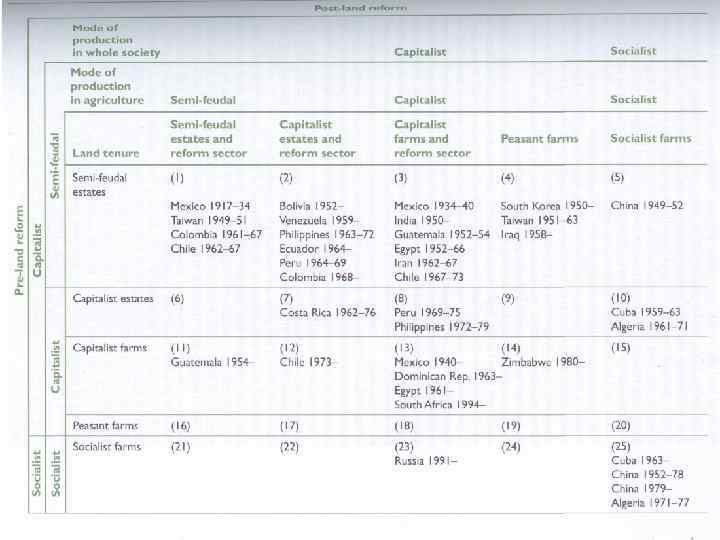
 Rural land reform has tended to encourage the development of capitalist agricul ture rather than benefit the interests of peasant farmers. Rural land reform, and the recent activities of governments and transnational corporations have produced a much more widespread commercialization and capitalization (increasingly capital-intensive type) of agriculture. This has been most marked in Latin America but can also be seen elsewhere. 'Scientific' agriculture has tended to reflect and reinforce the capitalization of agriculture even as it has increased yields for a limited number of agricultural products, mainly a few staples such as rice and wheat and those in export trade.