


 Скачать презентацию American University in Central Asia Week 5 Instructor
Week 5 Joint.pptx
- Количество слайдов: 50
 American University in Central Asia Week 5: Instructor: Tolkunbek Abdygulov 2011
 Chapter 4 Knox the emergence of an embryonic world economy centered on Europe, and described by Robert Reynolds as : ‘leaders, drivers, persuaders, shapers, crushers and builders’ of the rest of the world’s economies and societies Chapter 5 Knox outline the evolution of the economic geography of the industrial core regions Analyze the major processes involved in the relative ascent and decline of countries and regions within the industrial core areas.
 At one time all societies were minisystems: ‘A minisystem is an entity that has within it a complete division of labor, and a single cultural framework’ Immanuil Wallerstein World-systems: units with a single spatial division of labour but multiple cultural systems. In the case of a unit with a common political system, there is a world empire; where there is no political integration, there is world economy.
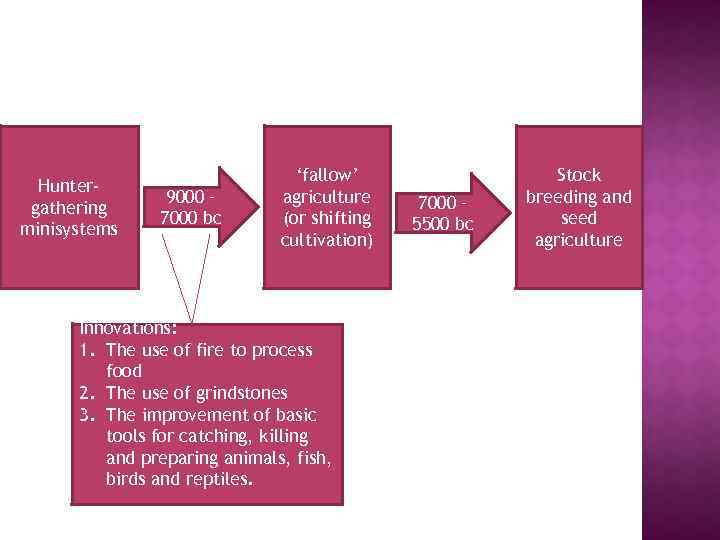 Huntergathering minisystems 9000 – 7000 bc ‘fallow’ agriculture (or shifting cultivation) Innovations: 1. The use of fire to process food 2. The use of grindstones 3. The improvement of basic tools for catching, killing and preparing animals, fish, birds and reptiles. 7000 – 5500 bc Stock breeding and seed agriculture
 1. 2. The change in social organization that resulted from the establishment of settled agriculture. The previous communal social order was steadily replaced by a kinordered system that laid basis for a new, stratified social structure. The increased volume and reliability of food suppliers allowed much higher population densities and encouraged the proliferation of settled agricultural villages. Development of non-agricultural crafts and beginning of barter trade.
 Emergence of cities and city systems ‘urbanization developed independently in different regions, more or less in the wake of the local completion of the agricultural transition’ (3000 BC – Mesopotamian valleys, 2500 BC – Indus Valley, 1800 BC China). As long as growth was maintained, therefore, the empire would have to be continually enlarged, with an increasing number of urban control centers.

 Major changes in patterns of economic activity were gradual and incremental, even in ‘hearth’ areas of ‘core’ regions. Such changes were generally preceded by the development of critical innovations, particularly in technology and economic organization. Such innovations were a necessary but not sufficient conditions to bring about radical change; institutional and sociopolitical changes were also necessary in order to exploit them.
 Demographic The factors were also critical. law of diminishing returns provided an early impetus for territorial expansion. Colonization was pivotal in the development of hierarchical urban systems and improved transportation.
 Transition from feudalism to merchant capitalism – 13 century Creation of the world-system in the 16 th -17 th centuries Proto-industrialization in early 18 th
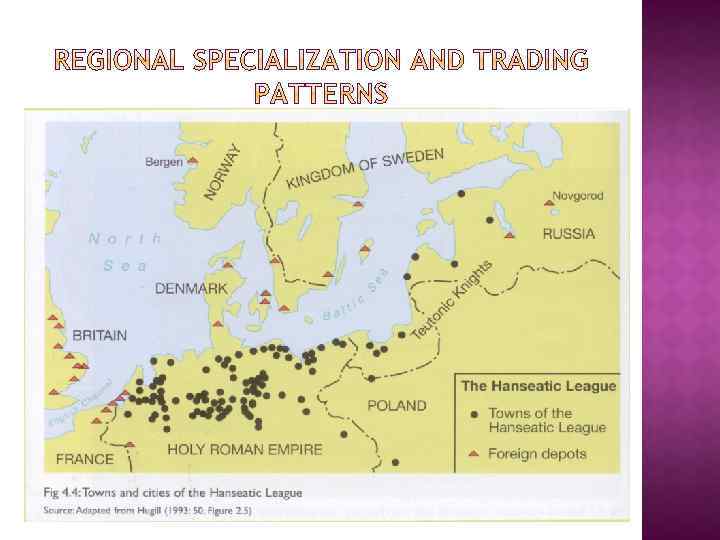
 I. Mediterranean region (Byzantioum, Italian city states, and Muslim North Africa) II. Chinese empire III. Central Asia and Russia to Mongolia IV. The indian ocean/Red sea V. Baltic area
 Pursue of economic opportunities overseas ( colonizing mission) Absence of imperial form (which requires administration and defense of a huge population and land masses) Europe’s agriculture focused on the production of cattle and wheat( require a lot of land).
 Land intensity (yields rose – steady rise in population) The Hundred year war (resulted in increase in taxation economic downturn consumption fell) Increase in size of the towns
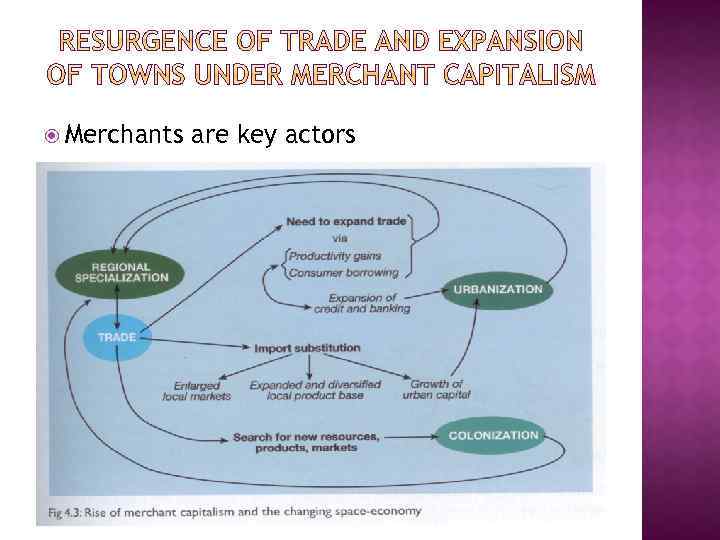 Merchants are key actors
 “Mercantile success required the merchants to buy a cheaply as possible, and to sell as expensively as possible; it also demanded that they trade in a large a volume of goods as possible… This created a contradiction, however, for the producers were also consumers, so that if prices they received were low, they could not afford to buy large quantities of other goods and thus satisfy the demands of the merchant class as a whole. A consequence of this was a great pressure on producers, to increase volume of goods offered for sale, which meant increasing their productivity, while merchants put pressure on consumers to buy more even if this meant them borrowing money in order to afford their purchases. Both … processes involved producers rising loans which they had to repay with interest; to achieve the latter, they had to produce more (or, if they were employees rather than independent workers, to work harder)” Johnston (1980: 33 -4)
 Consolidation of merchant capitalism in 15 th and 16 th centuries, due to innovations in the organization of business and finance: Banking Loan system Credit transfers Company partnership Shares in stock Speculations in commodity futures Commercial insurance Courier/news
 Was due combination of innovations in shipbuilding, navigation and naval ordinance
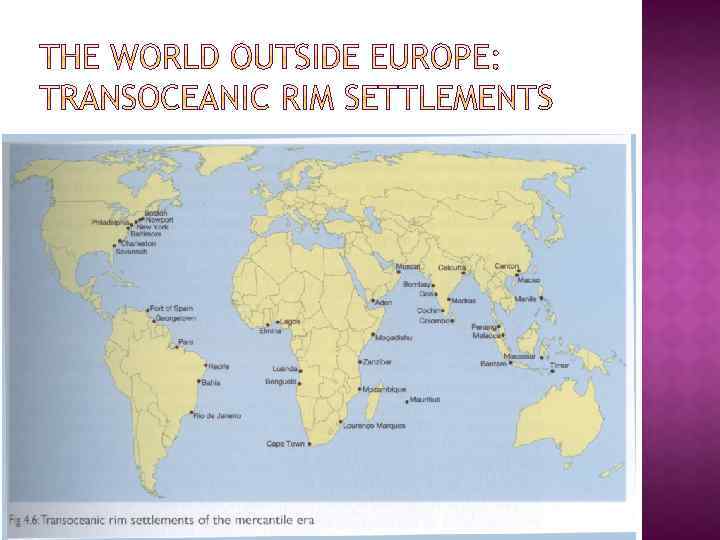
 The emergence of true “world economy”, involving long distance interaction based on sophisticated spatial division of labor. The progress elaboration of the world economy, with competitive (price-setting) markets penetrating into more and more space, and more commodities, was uneven. Emergence of core areas The spatial organization of the European spaceeconomy Distinctive pattern of settlement and urbanization
 American University in Central Asia Week 5: Instructor: Tolkunbek Abdygulov 2011
 Industrial revolution: Revolution in the techniques and organization of manufacturing. Transport technology and engineering (particularly the development of canals and railway systems). But technological advance was really part of a wider economic, social and political transition.
 “Prior to 1800, living standards in the world economy were roughly constant over the very long run: per capita wage income, output and consumption did not grow. Modern industrial economies, on the other hand, enjoy unprecedented and seemingly endless growth in living standards” Hansen and Prescott (2002: 1202)
 The existence of industry organized on capitalist lines by entrepreneurs employing wage labour and producing commodities for sale in regional and national markets. The existence of capital, that had been accumulated through trading provided the means for entrepreneurs to finance investment in capital-intensive but highly productive technology of the Industrial Revolution
 Pursuit of new ways of exploiting internal economies of scale and external economies of scale Exploitation of new, cheaper sources of labor and/ or raw materials and energy penetration of new (i. e. , overseas) markets for existing products. Development of new products, either through new inventions (e. g. , video recorders, microcomputers) or by the ‘commodification’ of activities previously performed within the household (e. g. , food processing and preparation) Acceptance of increasingly formalized relations with labour unions and governments, in order to establish a more stable context ( economic, social and political) in which to operate.
 A new technologies shifted the margins of profitability in different kinds of enterprises, so the fortunes of specialized places shifted. Regimes of accumulations – interrelated complexes of production, consumption and income distribution based on the ways in which capitalist firms are organized. Mode of regulation –or set of local and historical economic and political arrangements and institutions that emerges to provide appropriate management for the operation of the successive regimes of accumulation (e. g. monetary and wage regulation, particular government-business relationship, trading regulation, etc. ) and technology systems within the wider national and international context.
 1. 2. 3. 4. Regulating the monetary system and financial mechanisms Regulating wages and collective bargaining Facilitating (or, in some circumstances, constraining) competition, and establishing the relations between the private sector and the public economy. Establishing the roles of governments at various spatial scales
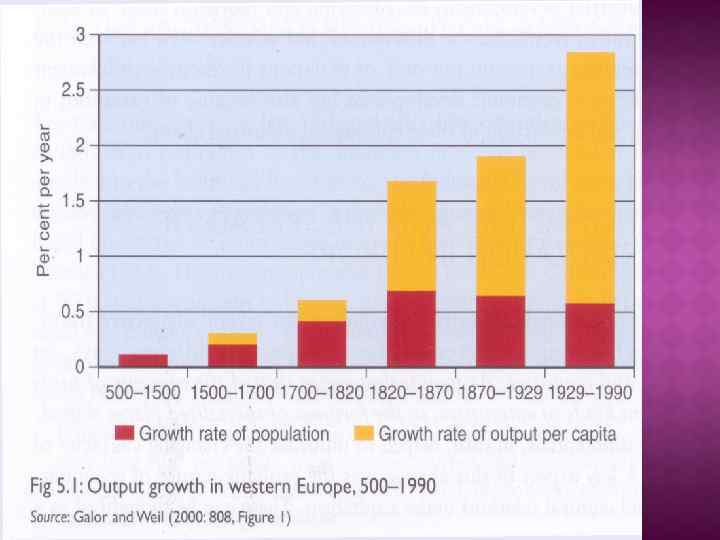
 1. 2. 3. 1970 – consisted of several local hearth areas of ‘proto-industrialization’, which were localized near mineral recourses and sources of water power. (Cornwall, north WALLES, Tyneside and etc. ) 1970 -1820, reinforced the position of those embryo industrial regions. 1820 -1850, expansion of the railway system.
 Industrialization began spread to continental Europe It did not take the form of a straightforward spatial diffusion of industrialization or ‘modernization’ due to the emergence of new technology system. New technology system – based on coal. Steel, heavy engineering, steam power and railways.
 Drawing on new resources Development of new labour practices (the spread of wage-labour norms) Development of new corporate structures (large limited-liability firms that were national rather than local in scope) New relationships between governments and industry (increased government regulation of, and investment in, key industries)
 The revolutionary and Napolionic Wars of early 19 th century. This suppressed industrial expansion, and allowed British industries to forge still further ahead on the basis of new technology system) Differential contemporaneusness, whereby new technologies, ideas and market conditions reached different regions simultaneously but affected them in very different ways because they were differently equipped to respond them.
 ‘Legislation permitting the easy formation of joint-stock companies spread quickly across Europe in the 1850 s, and their contribution to over speculation and widespread bankruptcies in the less sophisticated European economies has often been commented on. In banking, the backward economies, using the experience of the pioneers, could bypass some of the difficulties of the latter by enjoying the benefits of more efficient banks, ahead, as it were, of their own stage of economic growth. ’ Pollard(1981: 188 -9)
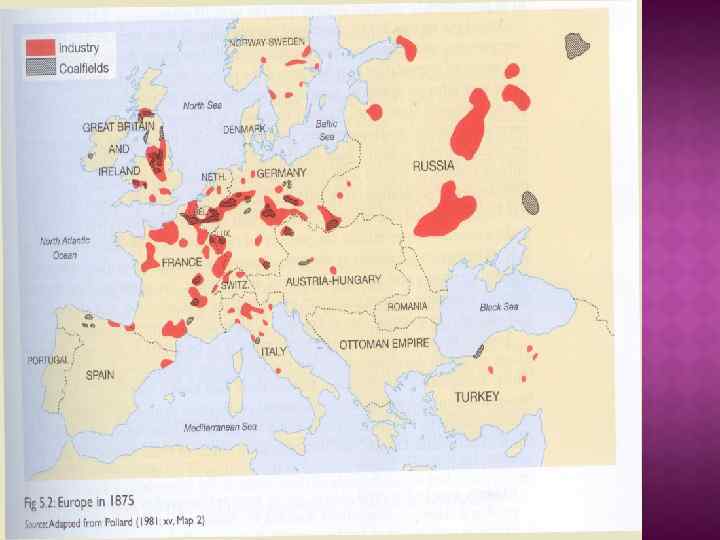
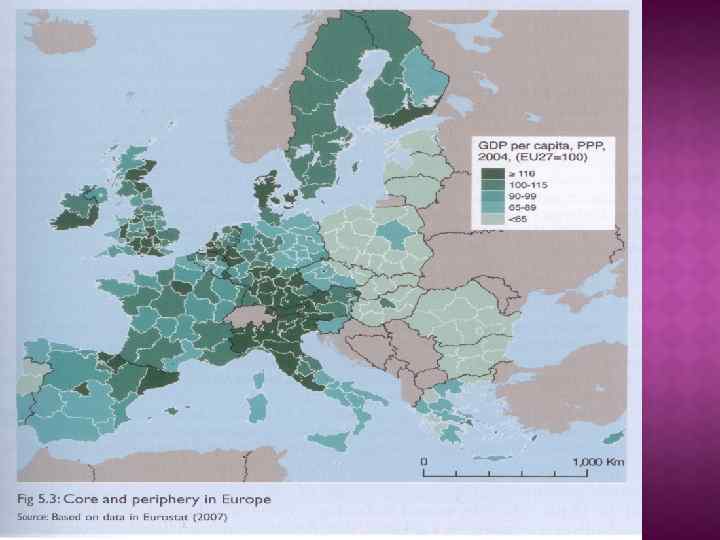
 1. Peripheral Europe (most of the Iberean peninsula, northern Scandinavia, Ireland, Southern Italy, Bakans) – their entrepreneurs and governments often felt compelled to adopt the new technologies and forms of organization that had served the pioneer regions well, despite the reality of very different economic geographic settings in the periphery.
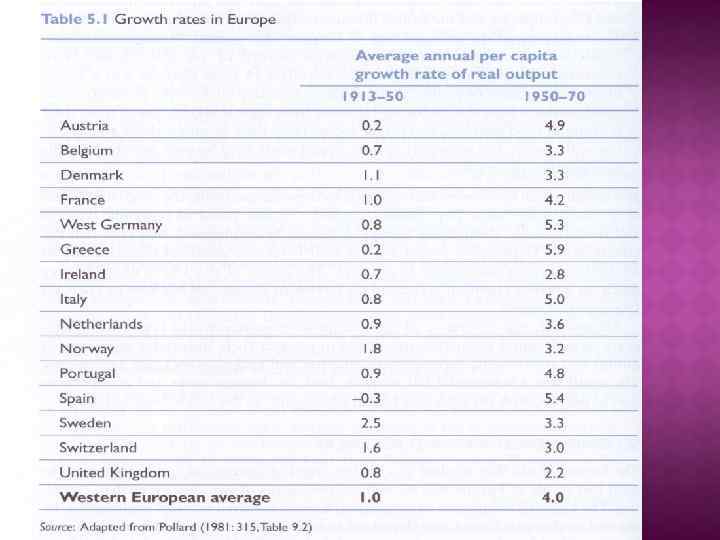
 2. Dislocation and Depression THE RELATIVE DECLINE OF Europe as a producer compared with the rest of the world (43% of world production and 59% of trade in 1913, compared to 34% and 59% in 1923). THE REDRAWING OF THE POLITICAL MAP OF EUROPE. ( 38 independent economic units instead of 26; 27 currencies instead of 14; and 20, 000 extra kilometres of national boundaries. )
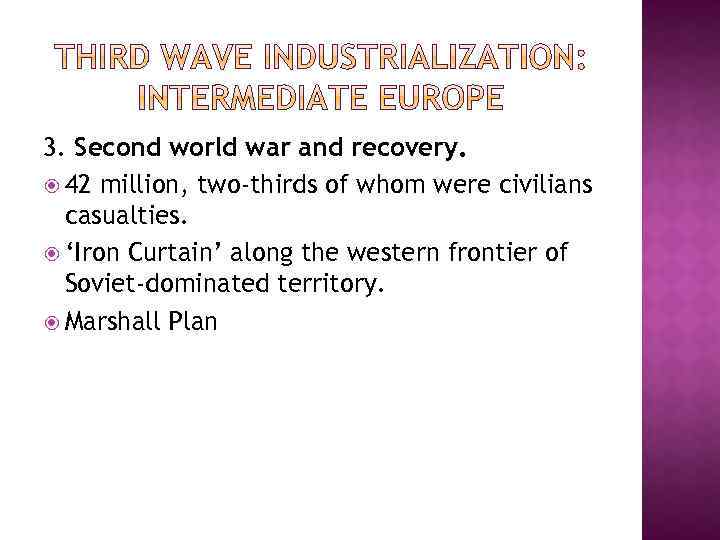 3. Second world war and recovery. 42 million, two-thirds of whom were civilians casualties. ‘Iron Curtain’ along the western frontier of Soviet-dominated territory. Marshall Plan
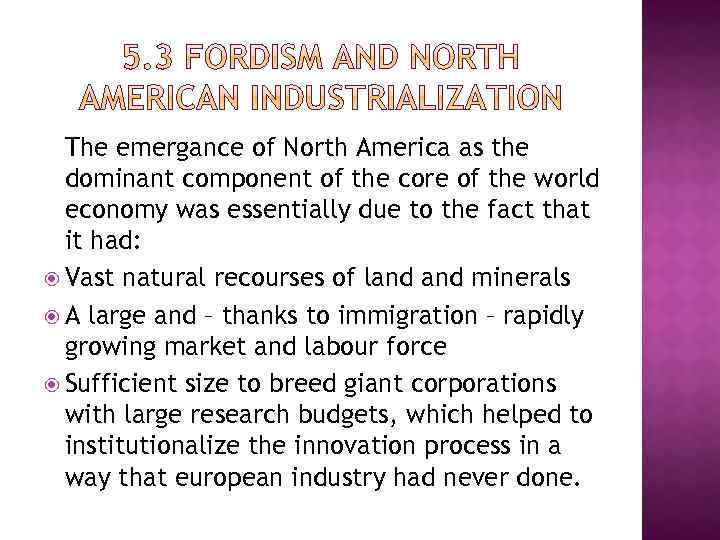 The emergance of North America as the dominant component of the core of the world economy was essentially due to the fact that it had: Vast natural recourses of land minerals A large and – thanks to immigration – rapidly growing market and labour force Sufficient size to breed giant corporations with large research budgets, which helped to institutionalize the innovation process in a way that european industry had never done.
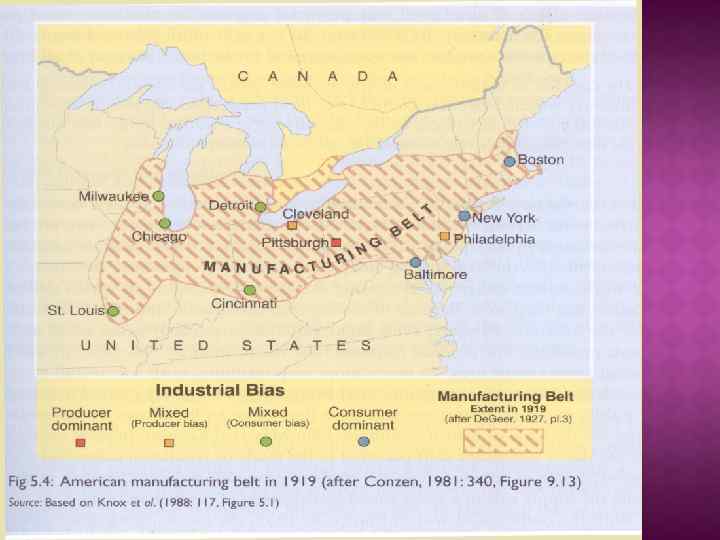
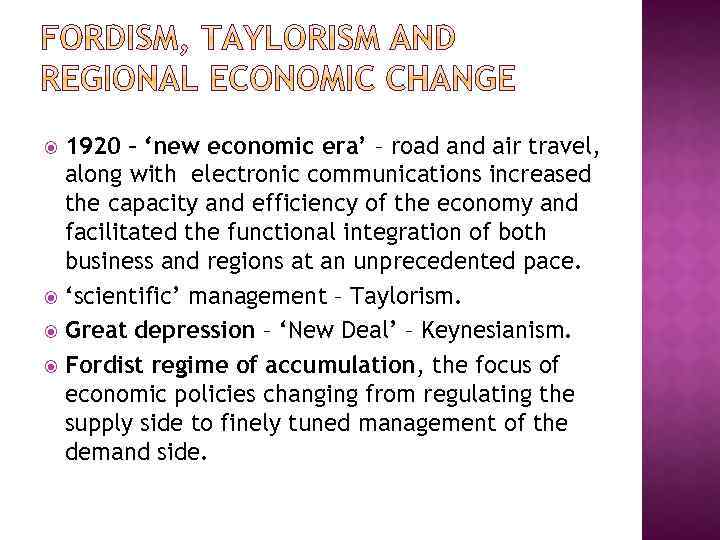 1920 – ‘new economic era’ – road and air travel, along with electronic communications increased the capacity and efficiency of the economy and facilitated the functional integration of both business and regions at an unprecedented pace. ‘scientific’ management – Taylorism. Great depression – ‘New Deal’ – Keynesianism. Fordist regime of accumulation, the focus of economic policies changing from regulating the supply side to finely tuned management of the demand side.
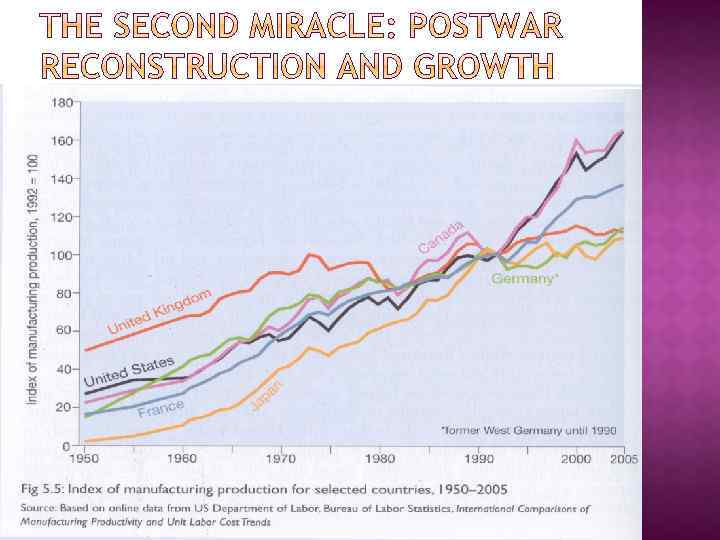
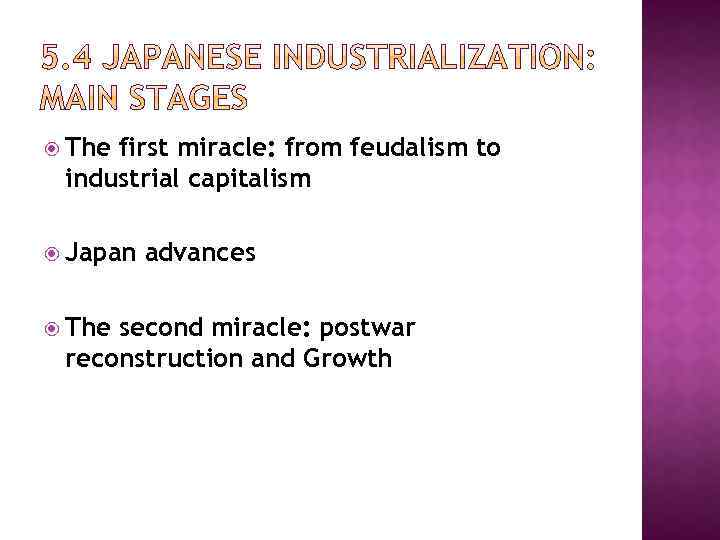 The first miracle: from feudalism to industrial capitalism Japan The advances second miracle: postwar reconstruction and Growth
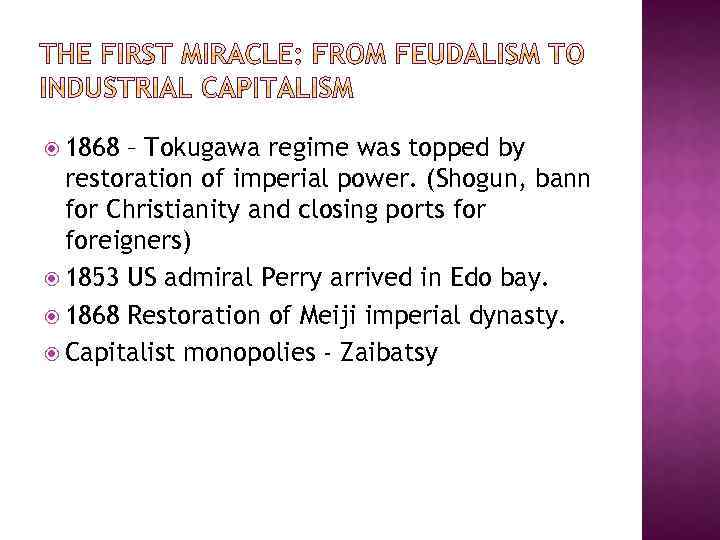 1868 – Tokugawa regime was topped by restoration of imperial power. (Shogun, bann for Christianity and closing ports foreigners) 1853 US admiral Perry arrived in Edo bay. 1868 Restoration of Meiji imperial dynasty. Capitalist monopolies - Zaibatsy
 During the first world war major supplier of textiles, armaments and industrial equipment on world markets. 1919 -1929. Steel manufacturing, engineering and textiles were further developed and aircraft and automobile industries were established. Local innovations began to emerge, weakening the dependence on western technology and providing an important comparative advantage.
 distribution of natural resources - with iron ore and coal exercising a central role in the industrial era demographic change - particularly (1) the timing of the demographic transition in relation to industrialization and (2) the role of large-scale migrations in rela tion to changing labour markets technological change - including improvements and innovations in transport and communications colonialism and territorial expansion as responses to the law of diminishing returns changes in institutional and sociopolitical settings changes in the spatial distribution of investment in response to the shifting com parative advantages enjoyed by producers in different areas import substitution as a mechanism of ascent within the world economy militarism and geopolitical change as a mechanism of ascent within the world economy.
 extension of the world economy to a global scale with a corresponding extension of the spatial division of labour and the consequent intensification of the interde-pendencies between core, semi-periphery and periphery replacement of 'liberal' merchant capitalism with a competitive and, later, an increasingly organized form of industrial capitalism characterized by distinct, specialized regional economies organized around growing urban centres eclipse of the European core of the world economy by the ascent of the United States and Japan emergence of distinctive core-periphery contrasts within the industrial core terri tories of the world economy
 agglomeration of industrial activity as a result of the logic of economies of scale and the multiplier effect modification of urban systems by the addition of new kinds of towns and cities -mining towns, heavy manufacturing centres, power centres and transport nodes - and the rapid growth of larger pre-industrial cities as they benefited dispropor tionately (because of their established markets, entrepreneurship, trading links and commercial infrastructure) from the various growth impulses that character ize industrialization imprint of cyclical fluctuations in the pace and nature of economic activity 'differential of contemporaneousness' in regional economic development a phenomenon linked to the uneven impacts of the process of technological diffu sion and changing technology systems adaptation of private firms to the changing opportunities and constraints of different technology systems, resulting in evolving 'regimes of accumulation', from simple manufacturing, through machinofacture, to Fordism adaptation of wider society to these changing regimes of accumulation, resulting in another evolutionary process - that of changing modes of regulation - in which the increasing intervention of governments in economic development was the single most important development emergence of an 'organized' form of capitalism, founded on the power and authority of independent countries, characterized by a sophisticated interdepend ence of firms, industries, regions and governments, and forming the basis for core-periphery relationships at various geographic scales.