 Скачать презентацию American Revolution Pre-Revolution and Governments British Parliament
ead9ec4ffd955f64778620c616797eb3.ppt
- Количество слайдов: 73



American Revolution
Pre-Revolution and Governments British Parliament -Molasses Act – 1733 -Tax on Molasses imported from French, Dutch, and Spanish islands in the West Indies - Hurt New England rum production (can only use British molasses) Not strictly enforced because of bribery
Sugar Act - 1764 Replaced the Molasses Act Also taxed coffee and wine imports Used as a way to pay off war debts
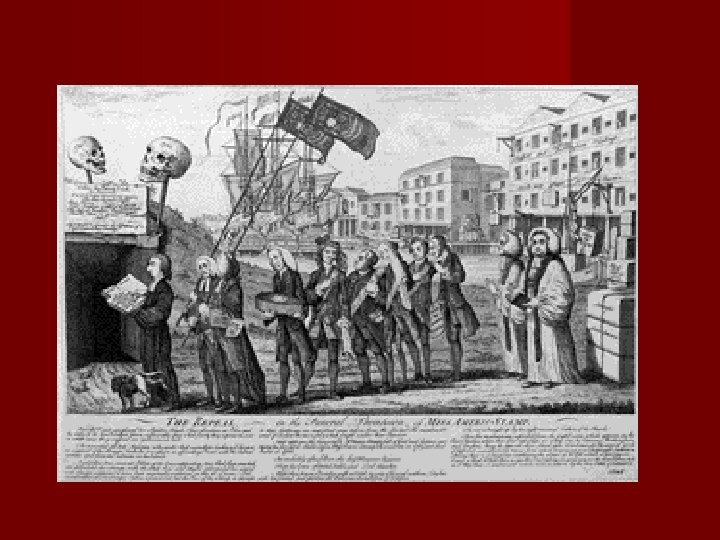
Stamp Act - 1765 Tax on printed material Violation – fines or jail Repealed in 1766
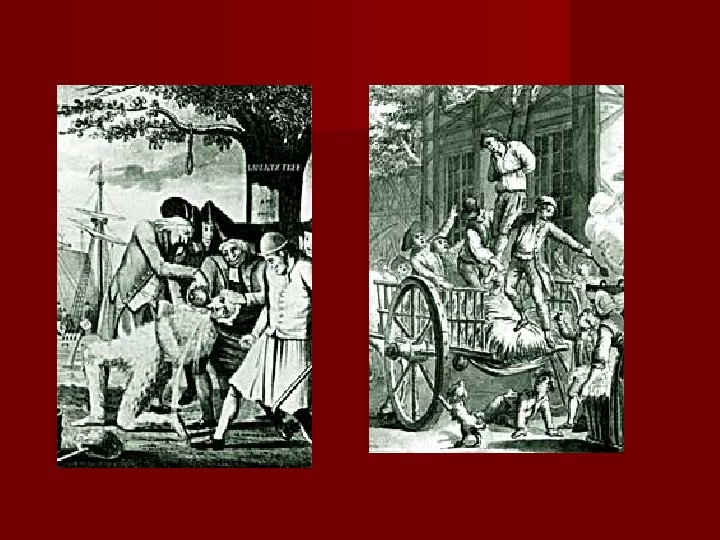
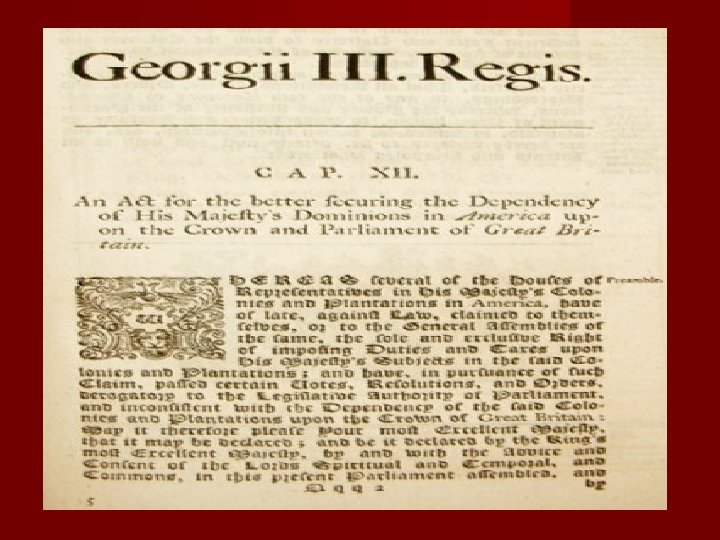
Declaratory Act - 1766 Said Parliament has the right to make laws for Americans “in all cases whatsoever” Colonists were not represented
Townshend Acts - 1767 Import tax on lead, glass, paper, paint, and tea Hated by the colonists Colonists refused to import goods (boycott) Boycott – Refusal to buy goods
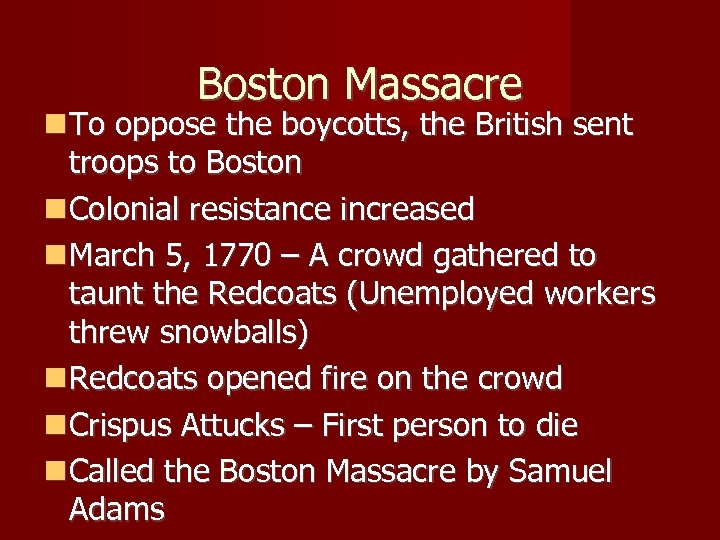
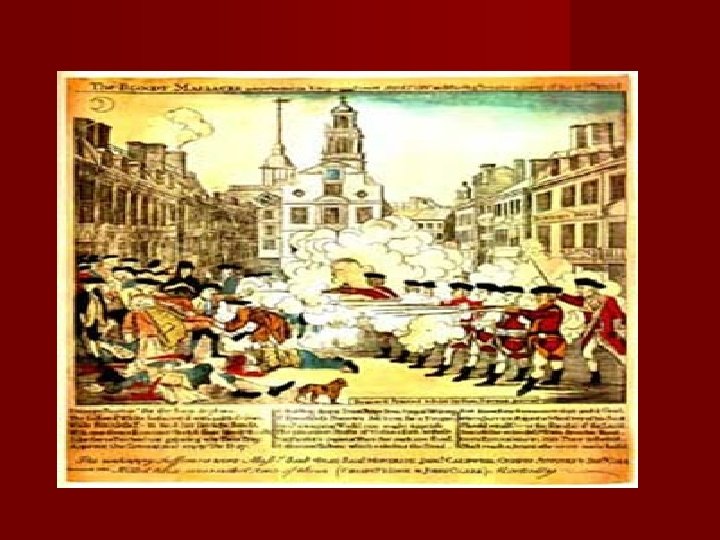
Boston Massacre To oppose the boycotts, the British sent troops to Boston Colonial resistance increased March 5, 1770 – A crowd gathered to taunt the Redcoats (Unemployed workers threw snowballs) Redcoats opened fire on the crowd Crispus Attucks – First person to die Called the Boston Massacre by Samuel Adams
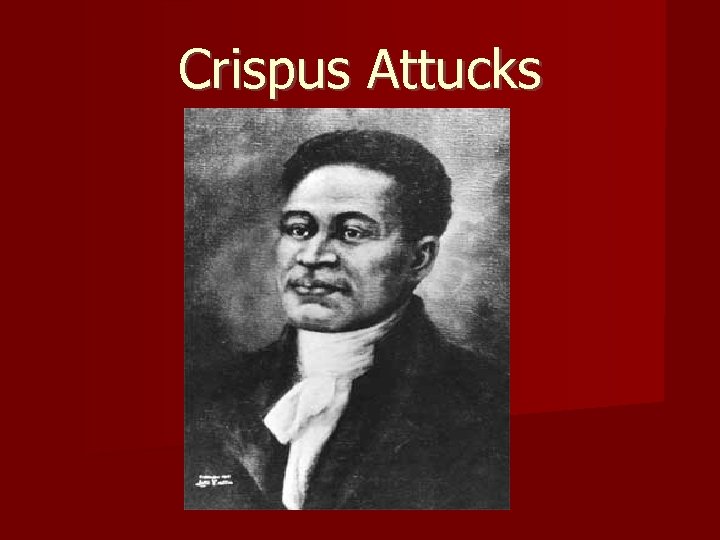
Crispus Attucks
Boston Tea Party - 1773 Ended a three year truce between England the colonies British east India Company was in financial difficulty Parliament voted to cancel all taxes on tea in England increased the tax for the colonies Colonists were angered Colonial tea merchants were hurt Colonists organized against the East India Company’s tea
Boston Tea Party (continued) New York and Philadelphia – Ships were forced to turn back Boston – tea party was organized - Disguised as Indians, colonists boarded three ships and threw 342 chests of tea into the Harbor - This was the first great act of defiance against England
Intolerable Acts King George III wanted to punish the colonists He advised Parliament to pass new laws - Port of Boston closed until tea was paid for ($75, 000, $500, 000 today) - British officials charged with violence would be tried in England, not America - British troops can be quartered in any Massachusetts town, even in private homes - Only one town meeting per year in Massachusetts Boston and all of Massachusetts would suffer severely Passed to show Americans who was boss
First Continental Congress The Intolerable Acts gave colonists a reason to unite Colonists felt they would lose all freedoms one by one The First Continental Congress met in Philadelphia in Sept. 1774 All colonies were represented except Georgia Declaration of Rights and Grievances – denounce steps taken by British to violate colonists charters and rights
First Continental Congress (continued) Rules were set up - Cut off trade with England - Urged local manufacturers to set up shops - Urged a cutback on financial extravagance - No horse race betting or other types of gambling - No shows, plays, or other types of entertainment Established the Association - Local groups will enforce the rules - Very successful - began to control how people ate, drank, and
Minutemen Volunteer armies/militia from New England Quaker Blues – Militia from Pennsylvania South – Wealthy plantation owners started militias These militias fought the British on many fronts - Lexington and Concord – April 1775 - Lexington – First battle of the Revolutionary War “The Shot heard ‘round the world” Paul Revere’s ride
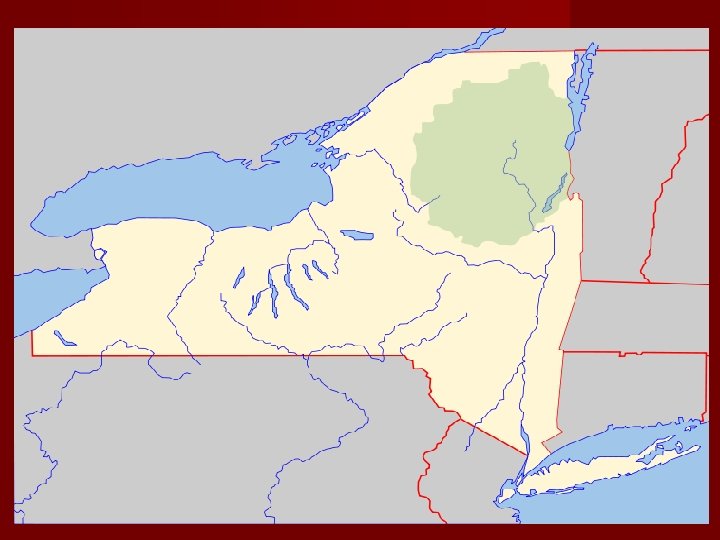
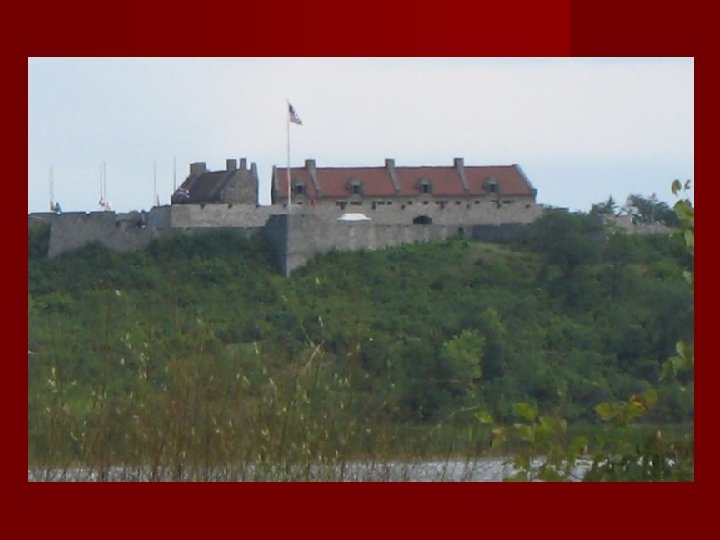
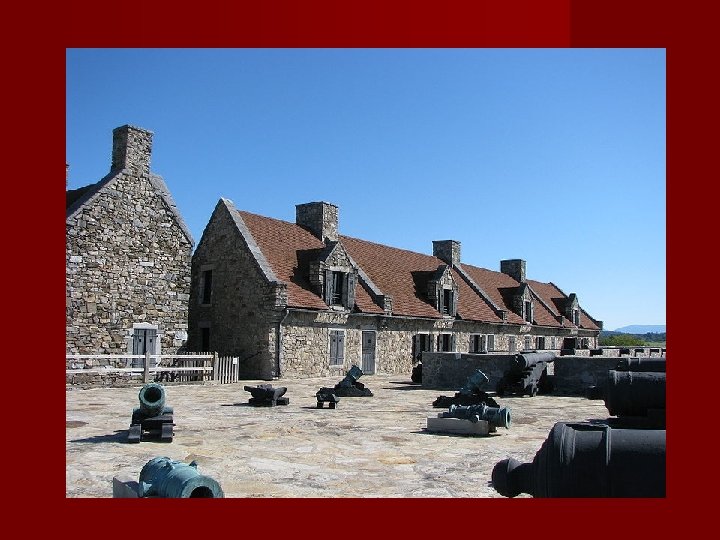
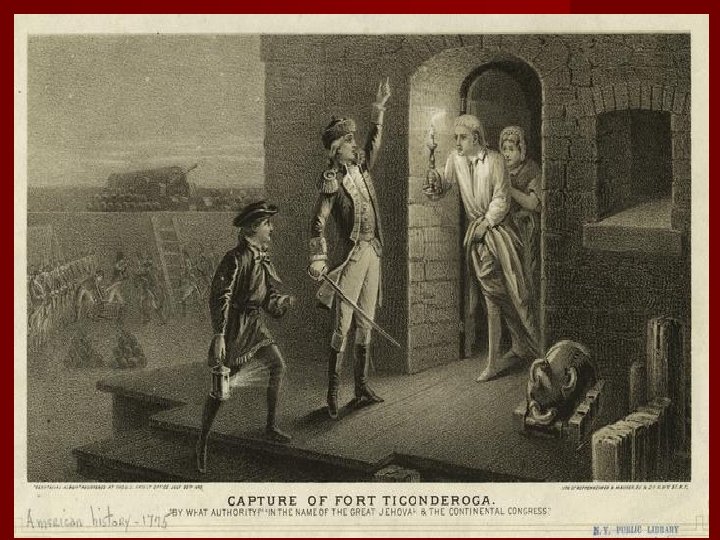
Fort Ticonderoga Green Mountain Boys – Militia from Vermont led by Ethan Allen Defeated small groups of British and took over the fort Importance - Took over important shipping route between Lake George and Lake Champlain - Got ammunition from the fort
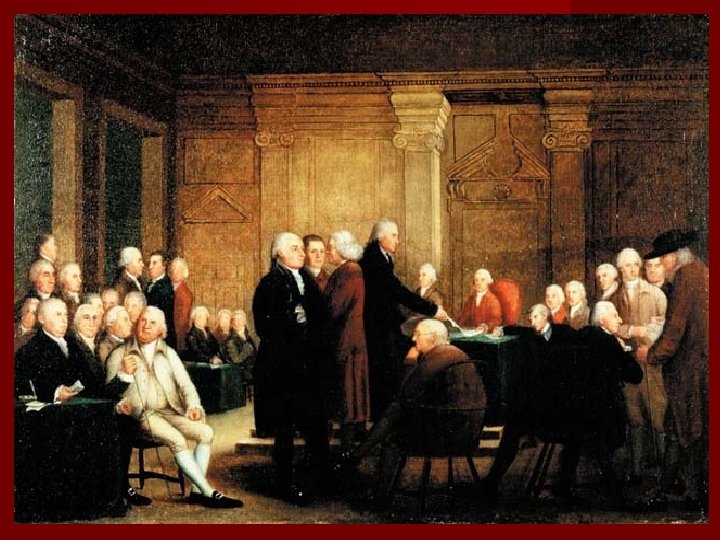
Second Continental Congress Met in Philadelphia in May 1775 First form of central government in U. S. Began steps in organizing for war Important decisions: - Ask colonies for war supplies and troops - Send agents to France for financial help Officially named the first army “Continental Army” - Chose George Washington as commander - Experienced - Ability - Keep the South aligned with the middle and New England colonies (Washington was from Virginia)
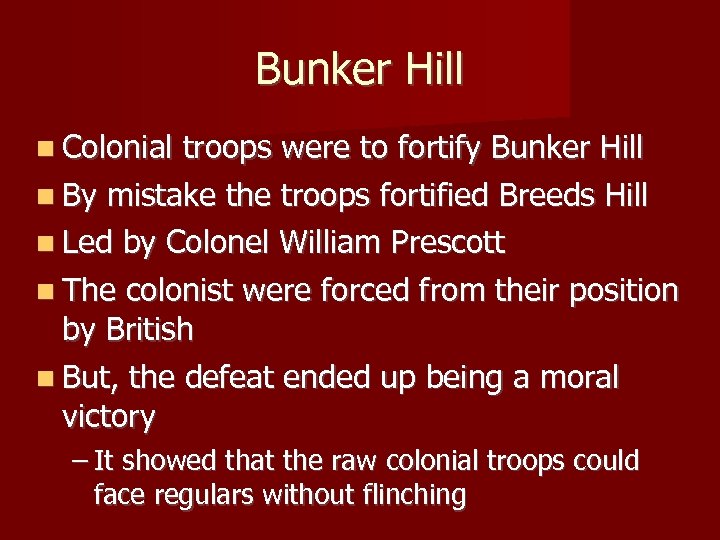
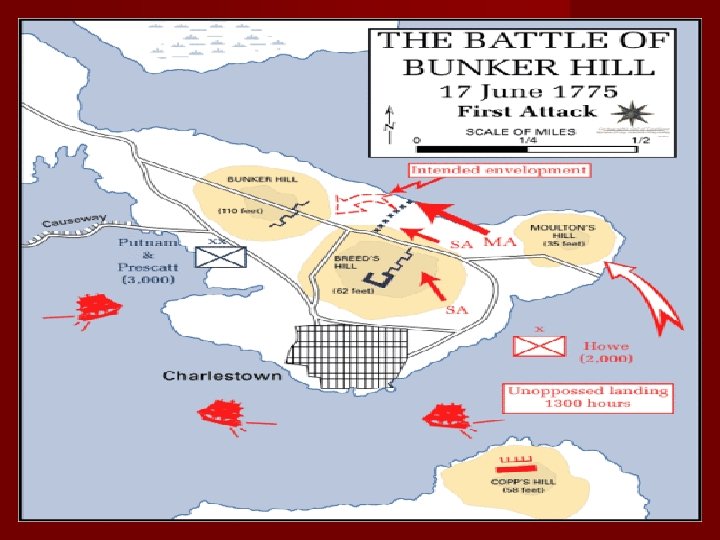
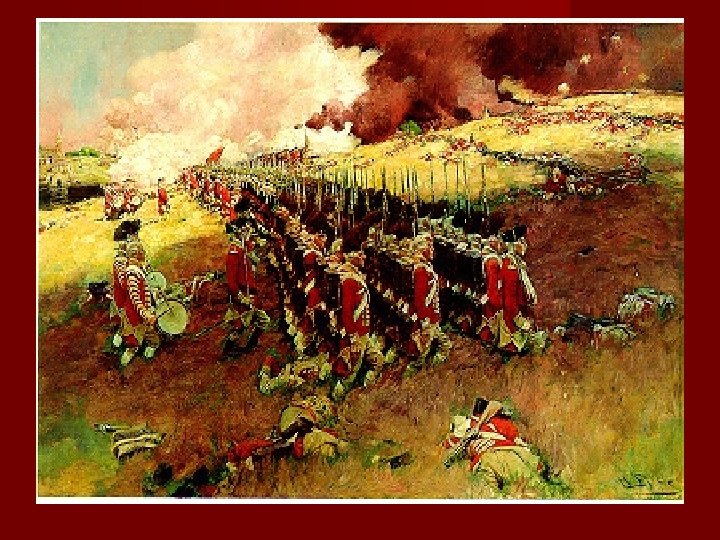
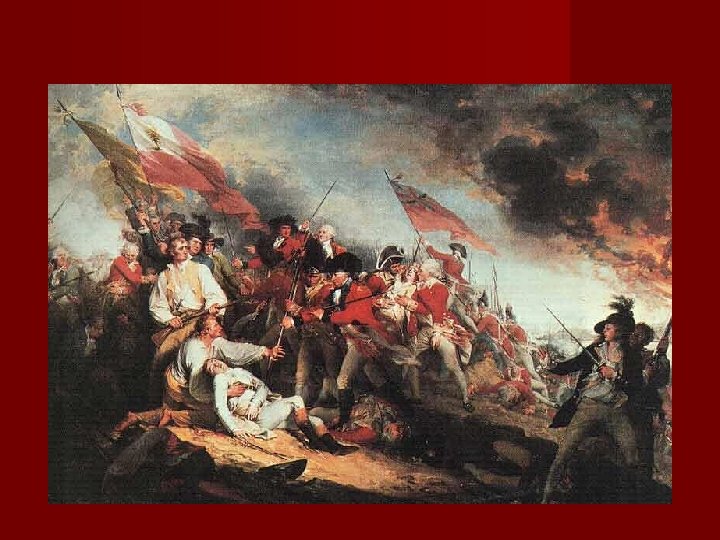
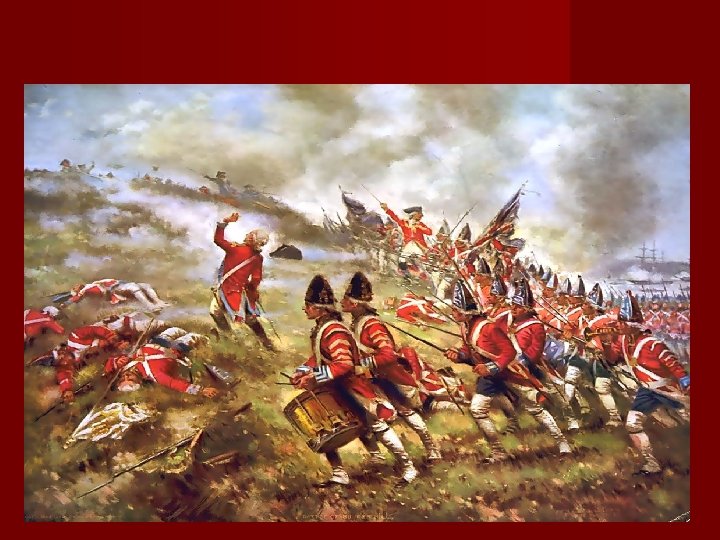
Bunker Hill Colonial troops were to fortify Bunker Hill By mistake the troops fortified Breeds Hill Led by Colonel William Prescott The colonist were forced from their position by British But, the defeat ended up being a moral victory – It showed that the raw colonial troops could face regulars without flinching
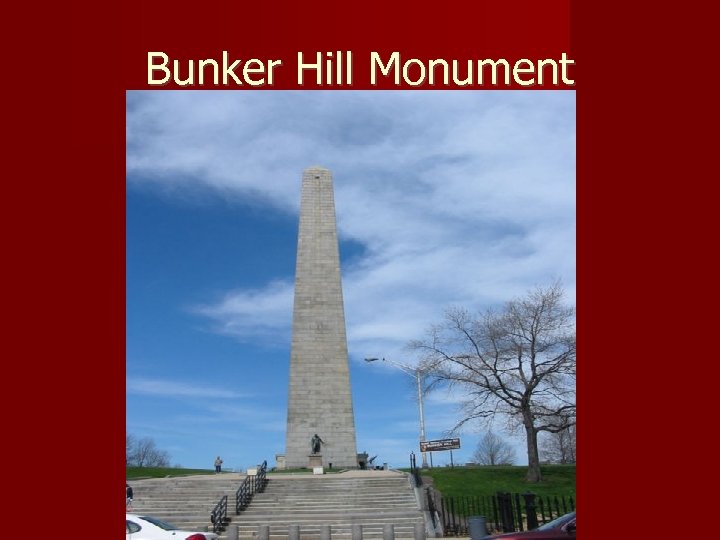
Bunker Hill Monument
Revolution King George III was very inflexible He refused to sign the Olive Branch Petition (Call for peace) He wanted loyalists to punish American leaders as traitors He ordered a blockade of ports He was unable to get troops so he had to hire Hessians – German soldiers
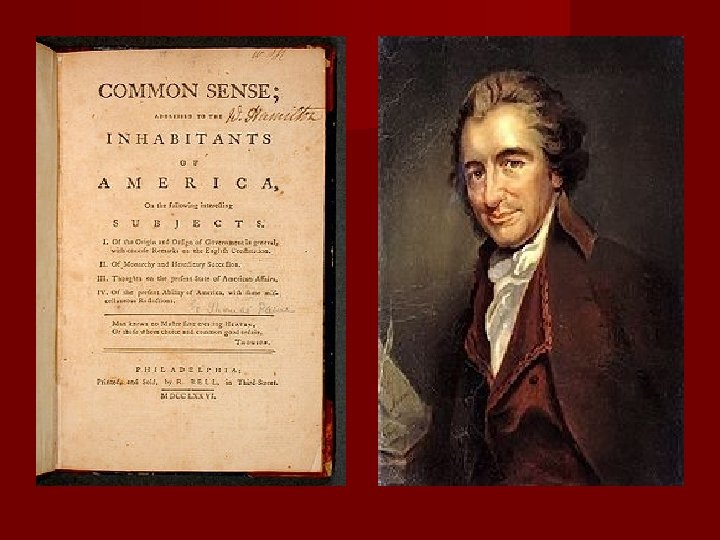
Common Sense Book written by Thomas Paine (English radical living in America) Attacked the monarchy, particularly George III Said America would gain if separate from England This book had a tremendous effect on the colonies: - Virginia – Royal Governor was expelled - North Carolina – Militia repelled a Red Coat landing - South Carolina – An attack on Charleston was stopped - Boston – 2, 000 men set up cannons (from Ticonderoga) overlooking Boston. The British left the city
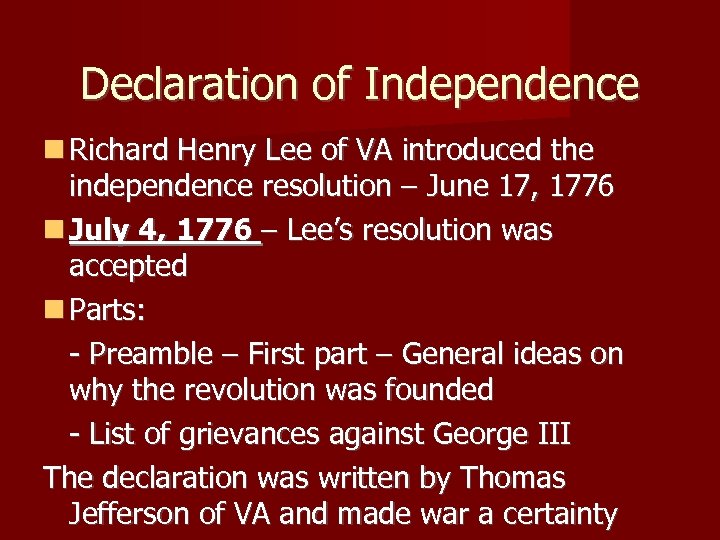
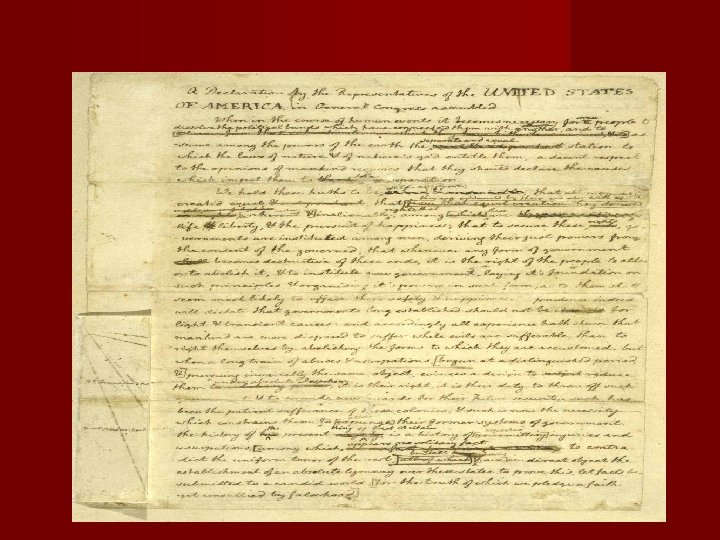
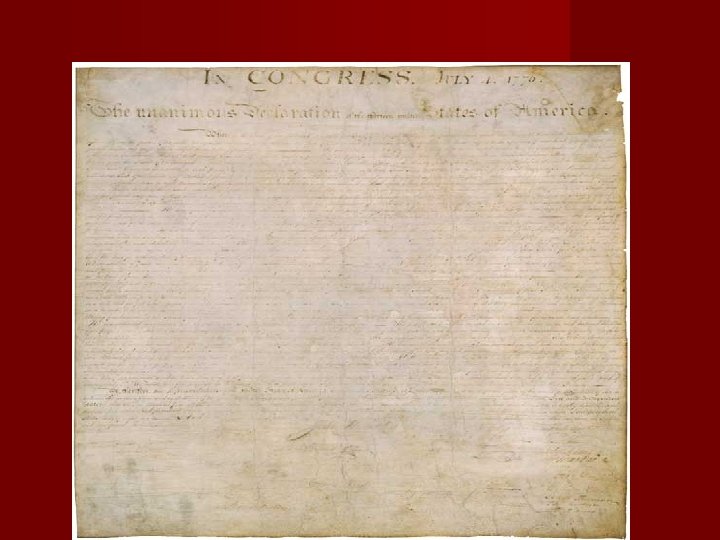
Declaration of Independence Richard Henry Lee of VA introduced the independence resolution – June 17, 1776 July 4, 1776 – Lee’s resolution was accepted Parts: - Preamble – First part – General ideas on why the revolution was founded - List of grievances against George III The declaration was written by Thomas Jefferson of VA and made war a certainty
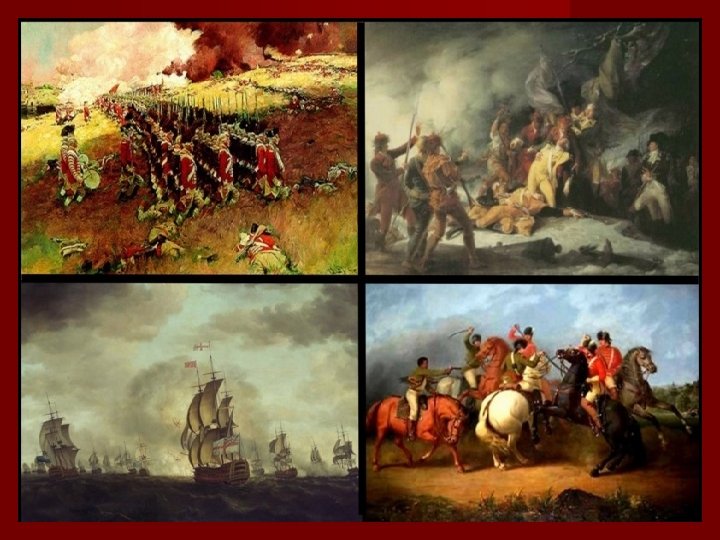
What Favored a British Victory? Government - British had a strong government - Colonies barely had a government Money - Britain – had a lot of money to pay troops and buy food and supplies - Colonies – no power to tax - Soldiers were not paid or fed at times Troops - Britain- Had more disciplined troops and more trained officers - Colonies had militia British had sea power - Could strike anywhere on east coast - ships to resupply army
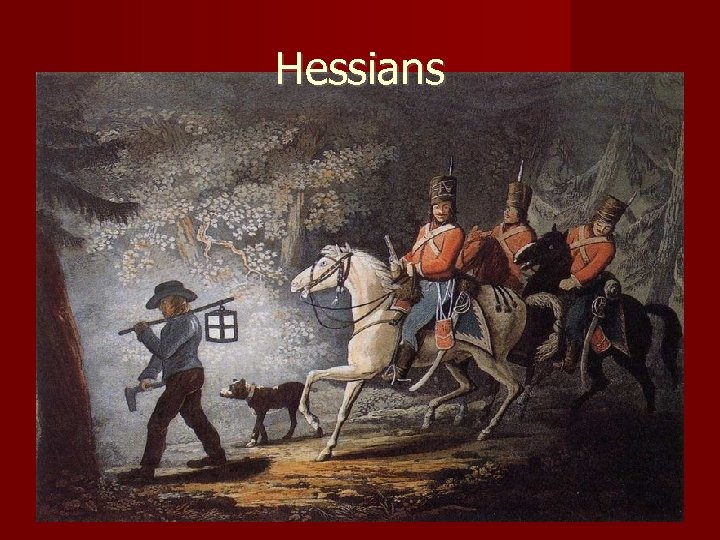
Hessians
What Favored an American Victory? Homefield Advantage - Colonies needed to hang on – only total destruction would equal a British victory - Population was scattered – British could not win by just taking big cities British had to travel across the Atlantic Ocean The war was not popular in Britain - British recruited criminals and vagrants - British used Hessians (Germans) – some deserted and joined the Continental Army Superior leadership Foreign help - France
War Begins New York City – Aug. 1776 – 32, 000 British troops were sent along with 30 warships British easily defeated Washington and 20, 000 ill-trained militia New York City was held by the British until the war’s end Washington fled and was followed Continental Congress fled Philadelphia and went to Baltimore
Trenton - Dec. 26, 1776 Held by Hessians under Colonel Ralls – who called Americans “country clowns” Washington - Knew the Hessians would be drunk on Christmas - Crossed the Delaware River on Dec. 2526 - 1, 000 out of 1, 300 Hessians were killed or captured, including Ralls (killed)
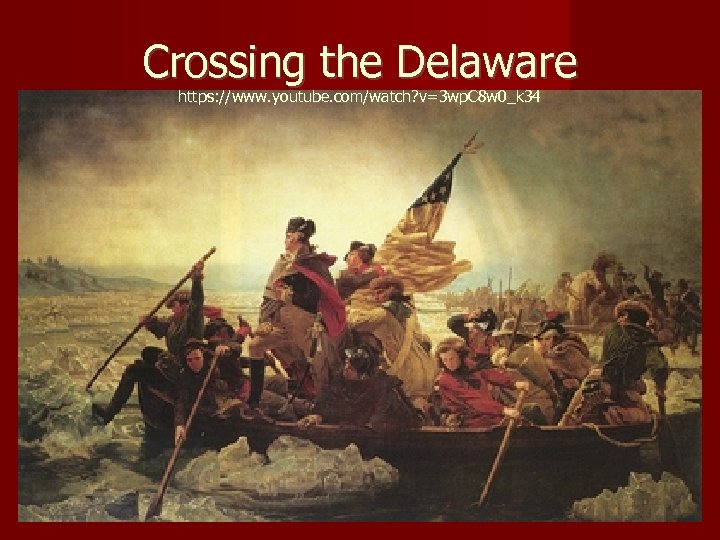
Crossing the Delaware https: //www. youtube. com/watch? v=3 wp. C 8 w 0_k 34
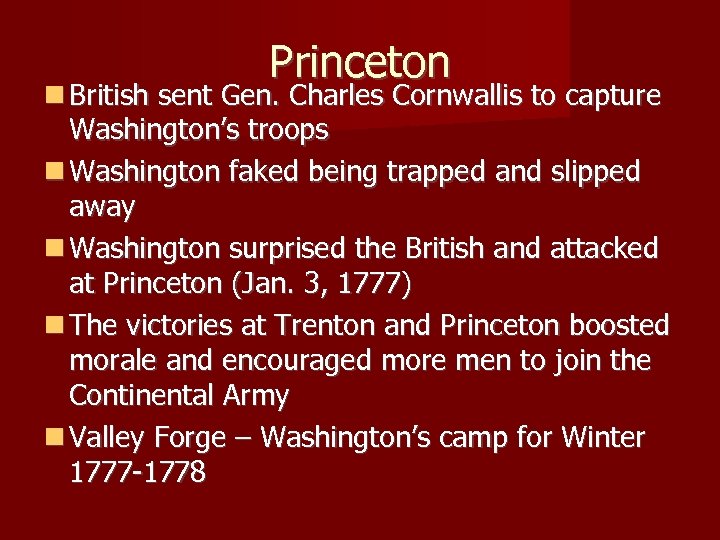
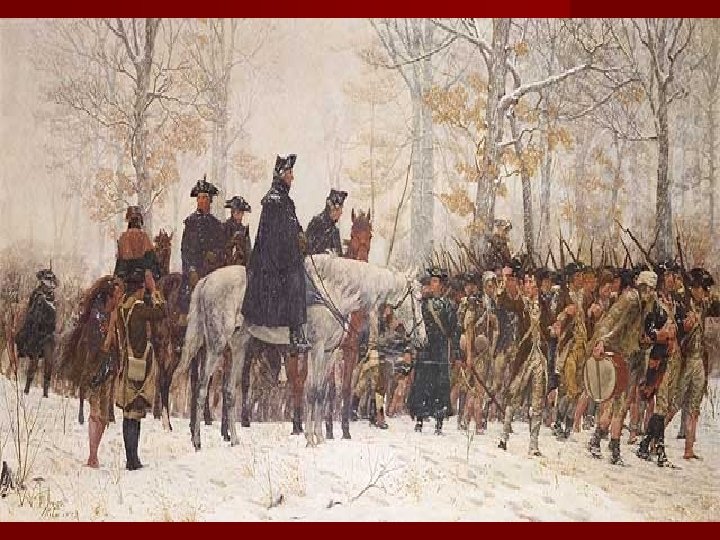
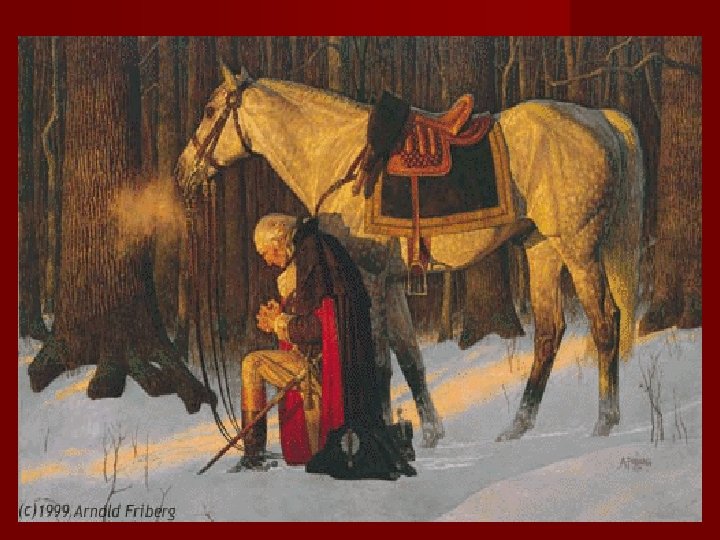
Princeton British sent Gen. Charles Cornwallis to capture Washington’s troops Washington faked being trapped and slipped away Washington surprised the British and attacked at Princeton (Jan. 3, 1777) The victories at Trenton and Princeton boosted morale and encouraged more men to join the Continental Army Valley Forge – Washington’s camp for Winter 1777 -1778
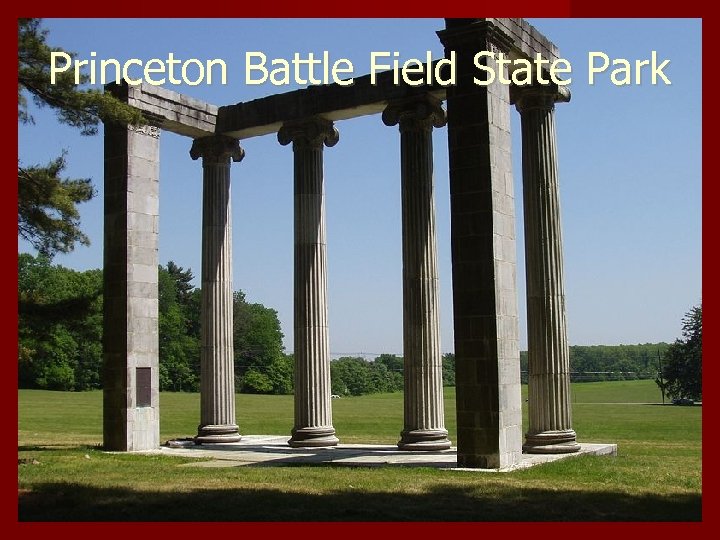
Princeton Battle Field State Park
Saratoga – Oct. 1777 Americans were unsuccessful at invading Canada, but it diverted British troops British took Philadelphia because of victories at Brandywine and Germantown Miscommunication – British army headed for upstate New York, went to Philadelphia instead Washington sent troops from Philadelphia to New York to meet with American Gen. Horatio Gates New York – British were advancing, using Indians to attack civilians New York and New England militias gathered to stop the attacks
Saratoga (continued) British Gen. John Burgoyne was surrounded - No food - Unable to retreat Ticonderoga - unable to advance to Albany - Surrendered
French Aid Brought on by American victory at Saratoga The French supplied money and troops Ben Franklin – served as ambassador to France
Monmouth, New Jersey – June 28, 1778 After Saratoga, many militiamen returned home to their farms Washington and his men were starving at Valley Forge British were living comfortably in Philadelphia 1778 – British evacuate Philly and went to New Jersey toward New York Washington attacked the British supply “train” at Monmouth, but lost the battle This was the last major battle in the North
The South The British concentrated their efforts in the South beginning 1778 They thought they would have more loyalist support Guerrilla Warfare was used by the Americans Francis Marion – “The Swamp Fox” - Repeatedly defeated British forces
Yorktown, Virginia Combined American and French campaign A French fleet from the West Indies blockaded the Chesapeake Bay This kept British troops from reaching Gen. Cornwallis French army sailed from Rhode Island to Virginia Washington took his troops from NY to VA Cornwallis was trapped and surrendered Oct. 1781 Yorktown was the last battle of the war
Treaty of Paris Treaty that ended the Revolution The American victory at Yorktown and victories by France and Spain in Europe forced Britain to seek peace The treaty was not signed until 1783 because France and Spain kept fighting the British Terms: - American independence - American land extended from the Atlantic Ocean to the Mississippi River - Open trade American Peace Commissioners – Ben Franklin, John Adams, and John Jay
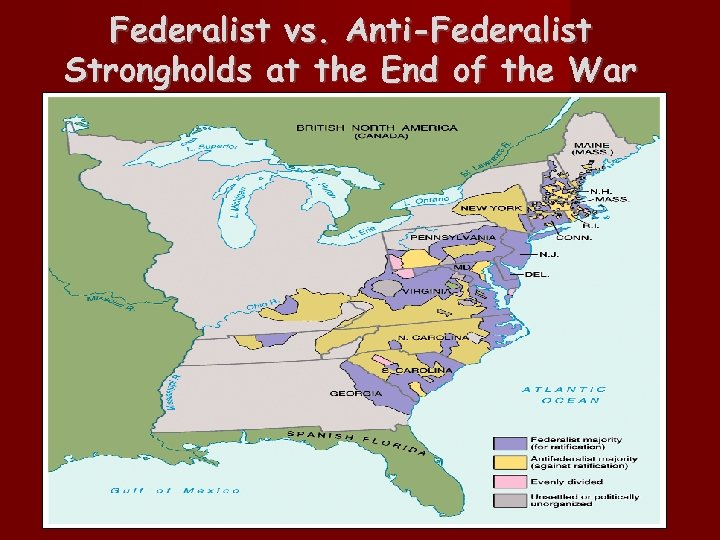
Federalist vs. Anti-Federalist Strongholds at the End of the War
Articles of Confederation Government formed after Yorktown Adopted by the Continental Congress – Nov. 1777 Not ratified until March 1, 1781 Designed to set up a formal union Established a Congress - elected - delegates by population Powers - wage war - make treaties - establish a postal system - Coin money
Weaknesses of the Articles of Confederation A unicameral Congress [9 of 13 votes to pass a law]. 13 out of 13 to amend. Representatives were frequently absent. Could not tax or raise armies. No executive or judicial branches.
State Constitutions Republicanism. Most had strong governors with veto power. Most had bicameral legislatures. Property required for voting. Some had universal white male suffrage. Most had bills of rights. Many had a continuation of state-established religions while others disestablished religion.
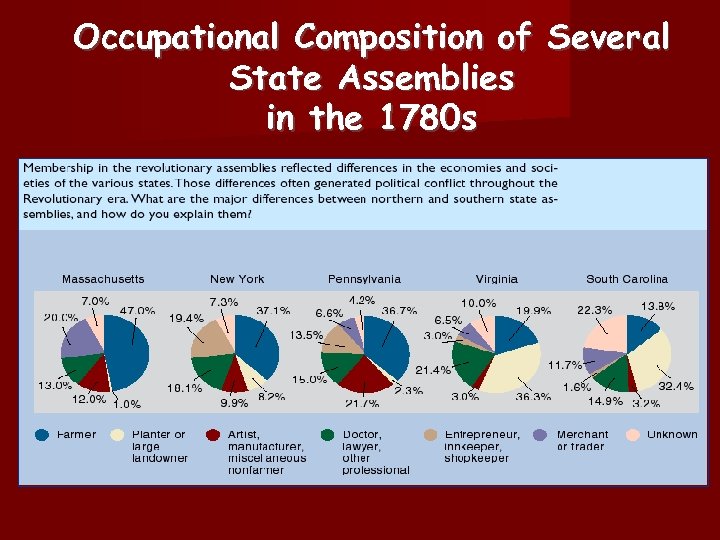
Occupational Composition of Several State Assemblies in the 1780 s
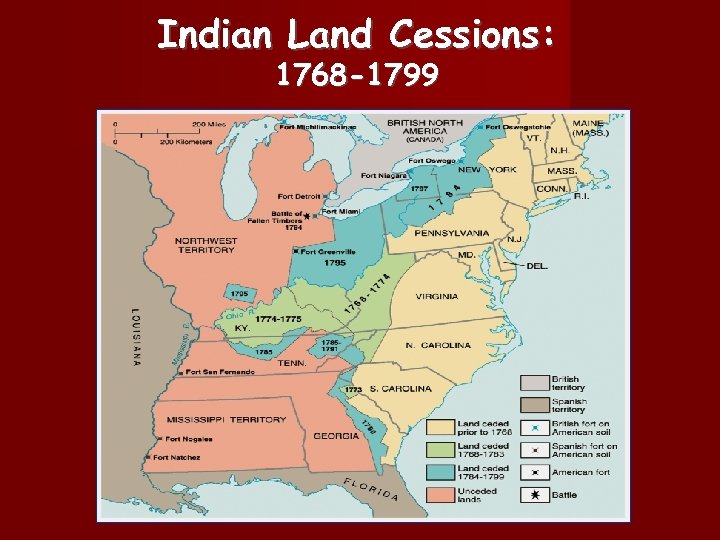
Indian Land Cessions: 1768 -1799
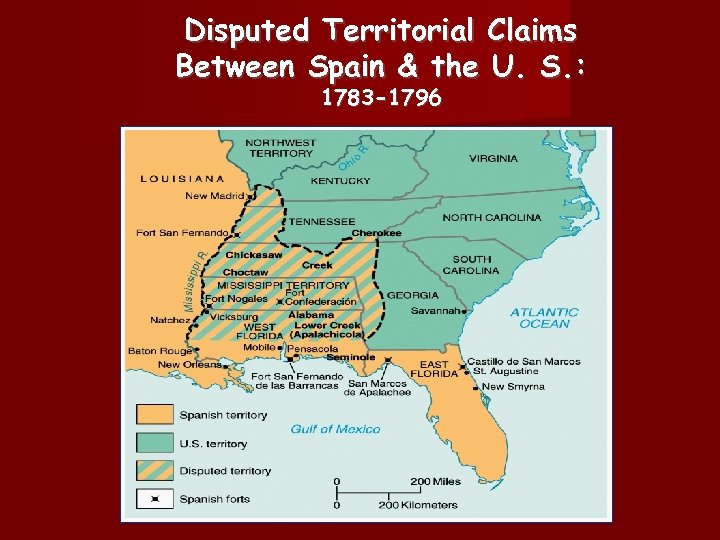
Disputed Territorial Claims Between Spain & the U. S. : 1783 -1796
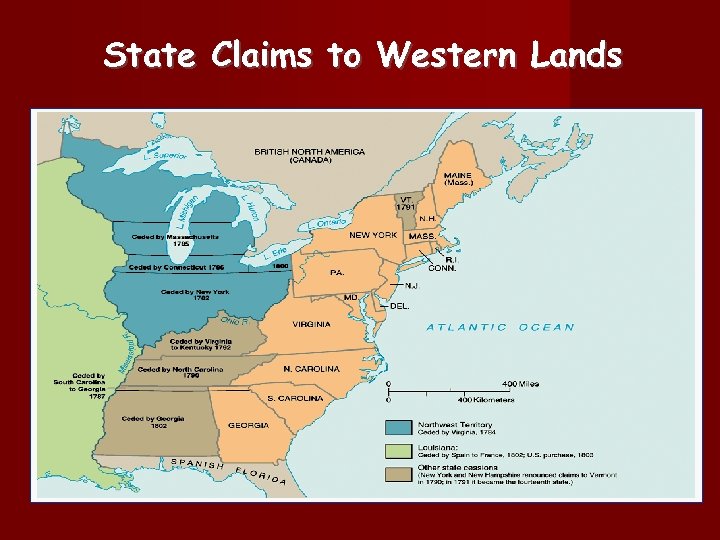
State Claims to Western Lands
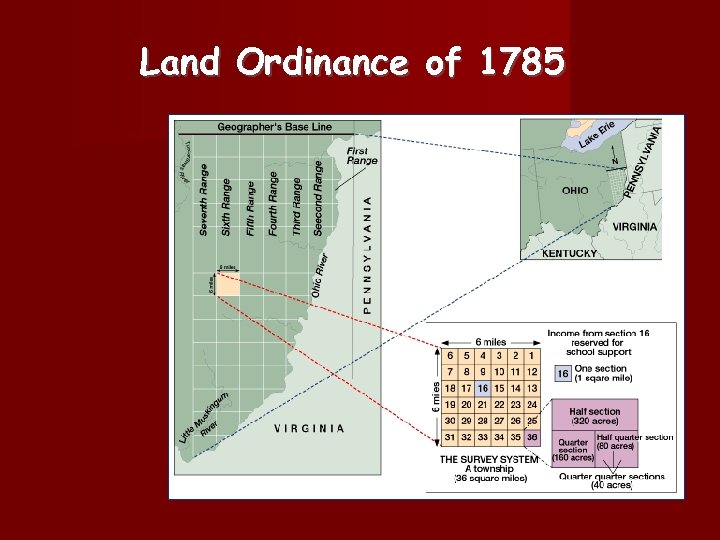
Land Ordinance of 1785
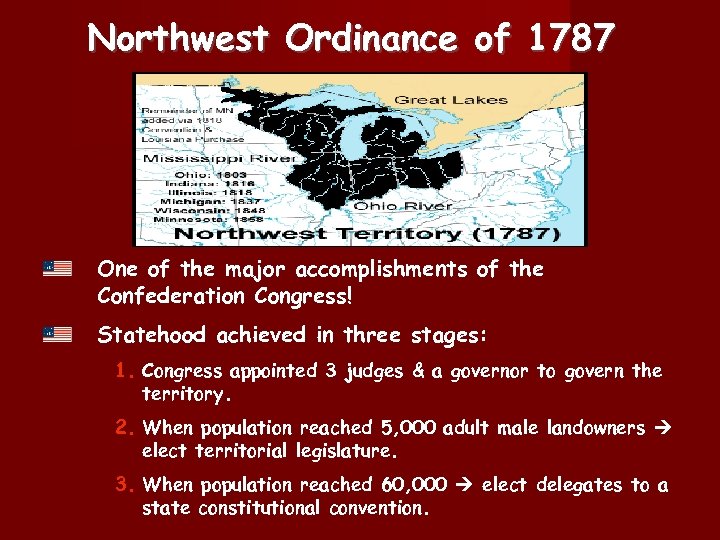
Northwest Ordinance of 1787 One of the major accomplishments of the Confederation Congress! Statehood achieved in three stages: 1. Congress appointed 3 judges & a governor to govern the territory. 2. When population reached 5, 000 adult male landowners elect territorial legislature. 3. When population reached 60, 000 elect delegates to a state constitutional convention.
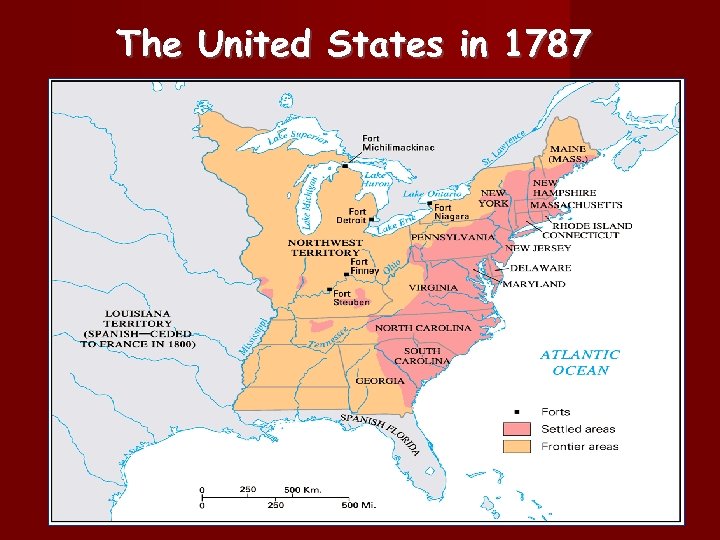
The United States in 1787
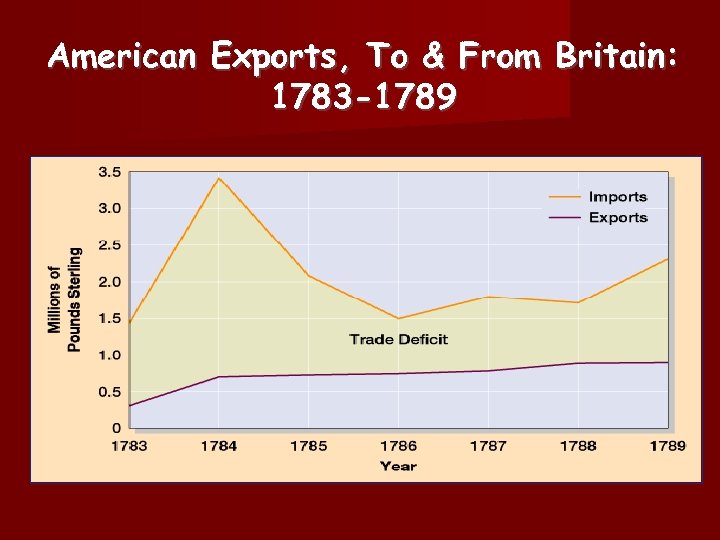
American Exports, To & From Britain: 1783 -1789
![Annapolis Convention (1786) 12 representatives from 5 states [NY, NJ, PA, DE, VA] GOAL](https://present5.com/presentation/ead9ec4ffd955f64778620c616797eb3/image-69.jpg "Annapolis Convention (1786) 12 representatives from 5 states [NY, NJ, PA, DE, VA] GOAL")
Annapolis Convention (1786) 12 representatives from 5 states [NY, NJ, PA, DE, VA] GOAL address barriers that limited trade and commerce between the states. Not enough states were represented to make any real progress. Sent a report to the Congress to call a meeting of all the states to meet in Philadelphia to examine areas broader than just trade and commerce.
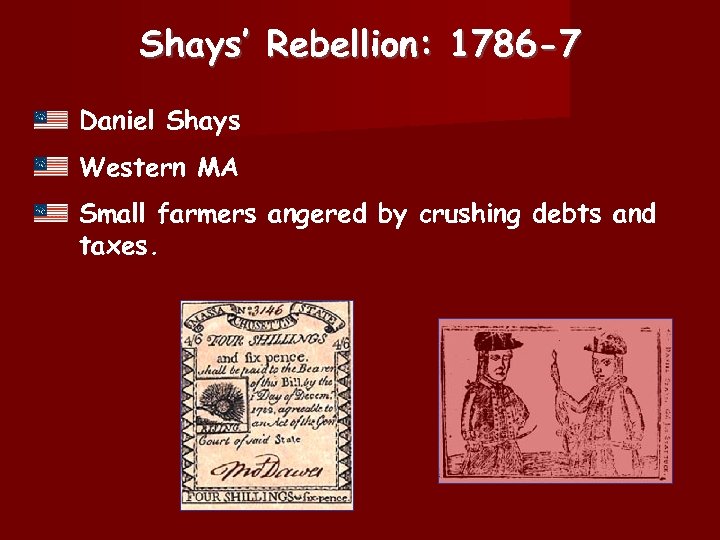
Shays’ Rebellion: 1786 -7 Daniel Shays Western MA Small farmers angered by crushing debts and taxes.
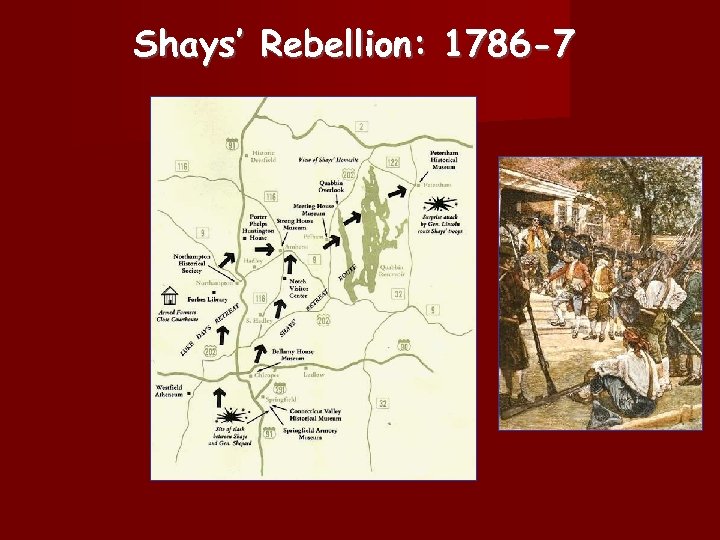
Shays’ Rebellion: 1786 -7
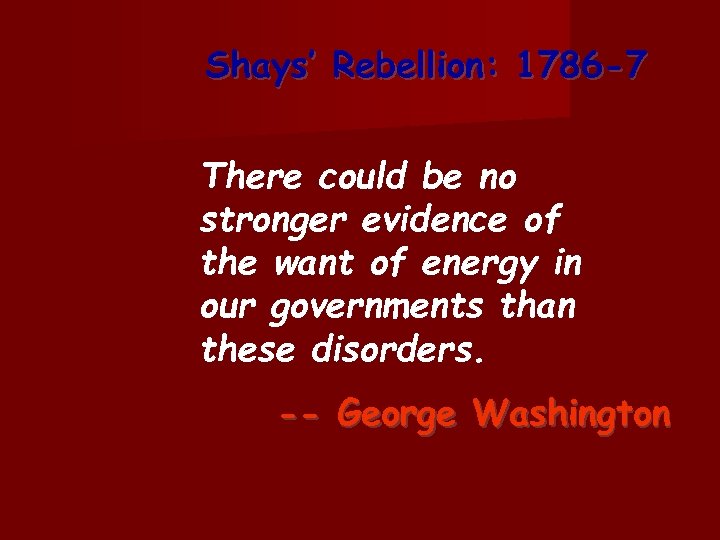
Shays’ Rebellion: 1786 -7 There could be no stronger evidence of the want of energy in our governments than these disorders. -- George Washington
The Articles were too weak to work effectively - No executive branch to enforce laws - No powers to collect taxes
Скачать презентацию American Revolution Pre-Revolution and Governments British Parliament
ead9ec4ffd955f64778620c616797eb3.ppt