


 Скачать презентацию America in the 1950 s n 1 2
df89de6bd3dca0b3ab12910c11ceecbc.ppt
- Количество слайдов: 26
 America in the 1950 s n 1. 2. 3. 4. 5. Overview: Major themes Fear of communism at home A weary population seeks stability & a chance at the “American Dream” An era of conformity The impact of the automobile Rock ‘N Roll and TV
 The 2 nd Red Scare n Fear of communism: the Red Scare (1950 s) House Committee on Un-American Activities (“HUAC”) and the “Hollywood 10”: 1. 3. 1947 launched investigation of movie industry (was Hollywood making movies with subtle communist propaganda to “brainwash” the public? ) HUAC identified 10 people who might be involved…they refused to answer q’s… sent to prison for failure to cooperate "Are you now or have you ever been a member of the Communist Party? "
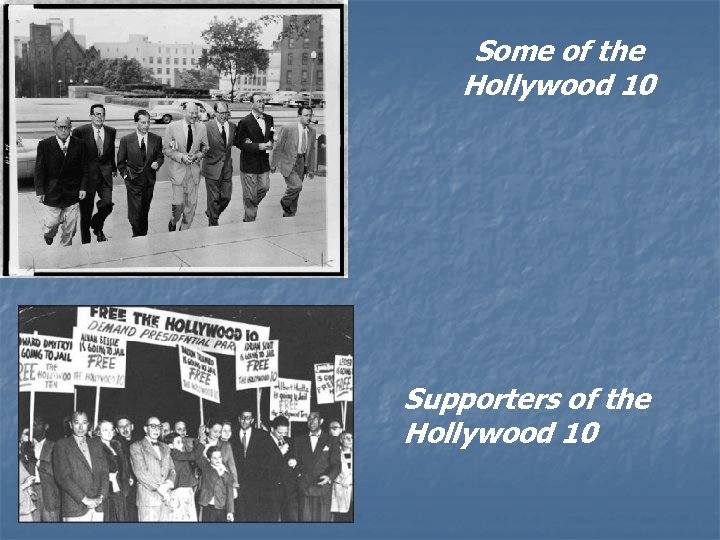 Some of the Hollywood 10 Supporters of the Hollywood 10
 As a result… n n A number of people working in the entertainment industry were “blacklisted”… Their names were on a mythical list that made them “lepers”…no one would hire them…some made a modest living working under an alias…some committed suicide…
 David Merrill was Hollywood’s hottest director in the early 1950 s…
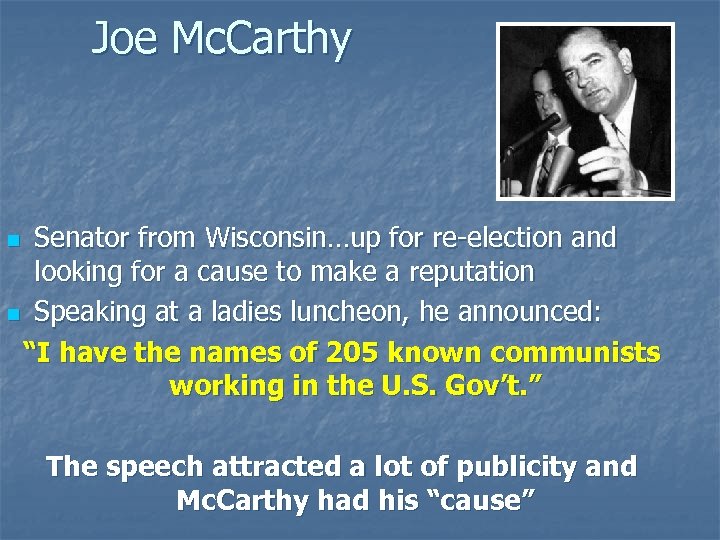 Joe Mc. Carthy Senator from Wisconsin…up for re-election and looking for a cause to make a reputation n Speaking at a ladies luncheon, he announced: “I have the names of 205 known communists working in the U. S. Gov’t. ” n The speech attracted a lot of publicity and Mc. Carthy had his “cause”
 “Mc. Carthyism” = “witch hunts” n n What made Mc. Carthy a phenomenon were his tactics…crude, an obnoxious bully who rarely had any hard evidence, only accusations Simply being suspected of having a tie to communism could be enough to destroy a life or a career….
 Mc. Carthy’s downfall n n Claimed the U. S. Army had known communists working from within Congressional investigation & hearings (“Army-Mc. Carthy Hearings”) were televised (1954) American public witnessed his bullying of witnesses & public support plummeted Famed reporter Edward R. Murrow and CBS stood up to Mc. Carthy…
 Good Night and Good Luck Warner Independent Pictures (2005)
 1950 s America n So…in this Cold War climate of fear and suspicion, what did daily life look like for the average guy and his family?
 Core Values and Goals Americans weary of struggle: the Great Depression of the 1930 s… n Followed by a horrible world war… n Followed by a new fear of a communist takeover or even worse, nuclear holocaust n
 Many had a dream… n n n Get married Start a family Get a good, steady job with a big company…get promoted…retire after 30 years Own a home Raise the kids away from the city Have some stability in life In short: live the “American Dream”
 American Dream: Family n Returning GI’s got married and started having kids: the Baby Boomers (born between 1946 -62)
 American Dream: Home Ownership n Serviceman’s Readjustment Act (“G. I. Bill”) – passed by Congress 1946 2 important features: 1. 2. US gov’t. paid for college tuition Federally guaranteed low interest loans enabled young families to buy homes and start businesses Significance? Expanding middle class
 American Dream: Home Ownership n Severe housing shortage n William Levitt used efficient, assembly-line methods to mass-produce houses n Levitt- father of modern American suburbia
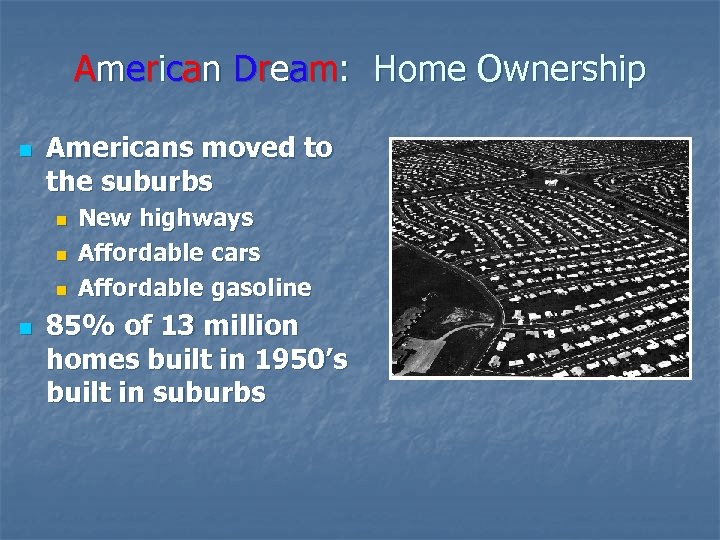 American Dream: Home Ownership n Americans moved to the suburbs n n New highways Affordable cars Affordable gasoline 85% of 13 million homes built in 1950’s built in suburbs
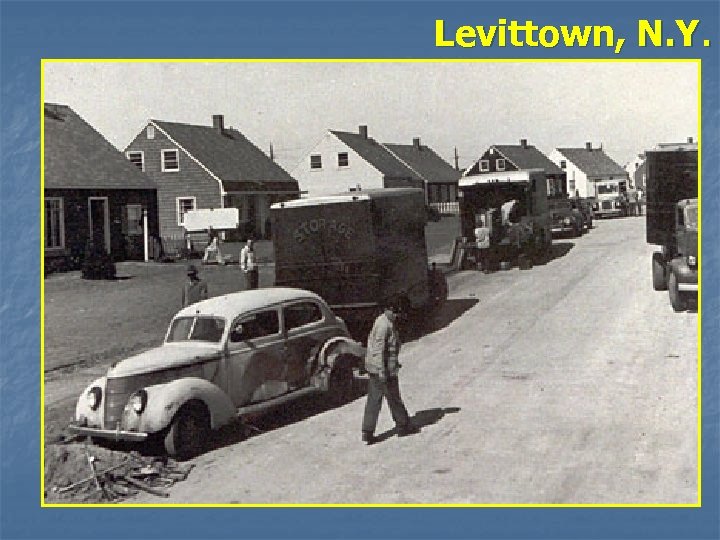 Levittown, N. Y.
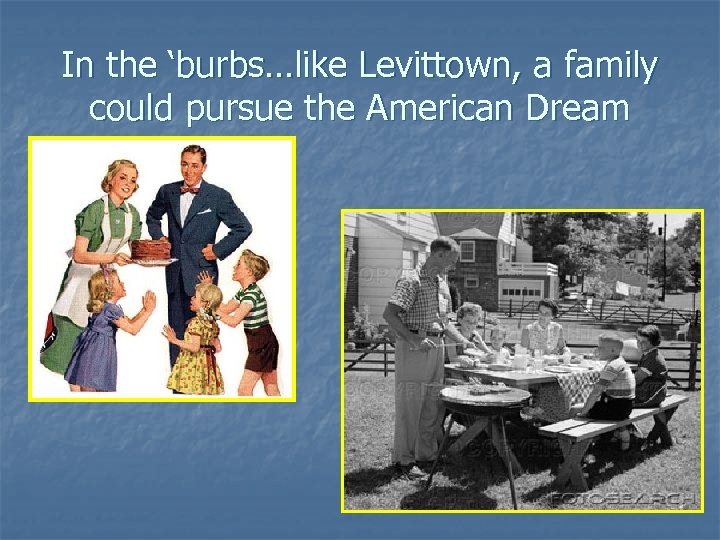 In the ‘burbs…like Levittown, a family could pursue the American Dream
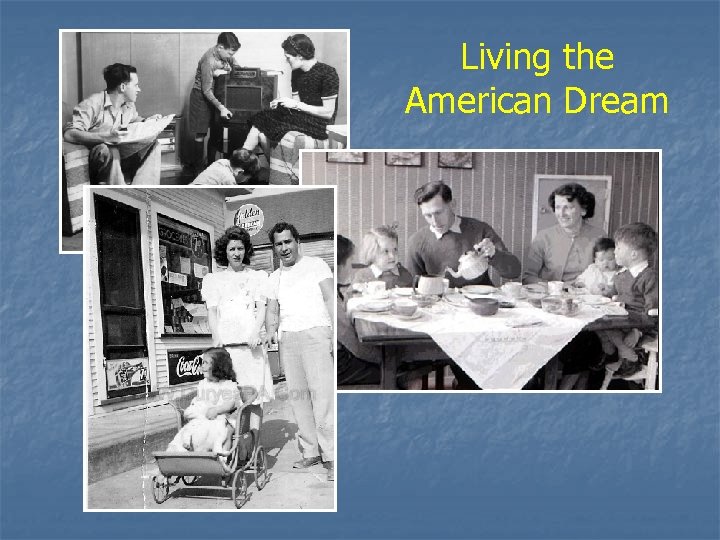 Living the American Dream
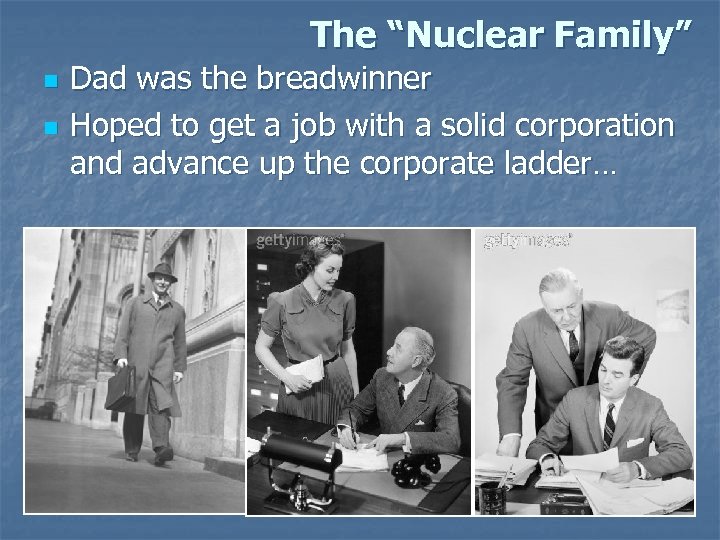 The “Nuclear Family” n n Dad was the breadwinner Hoped to get a job with a solid corporation and advance up the corporate ladder…
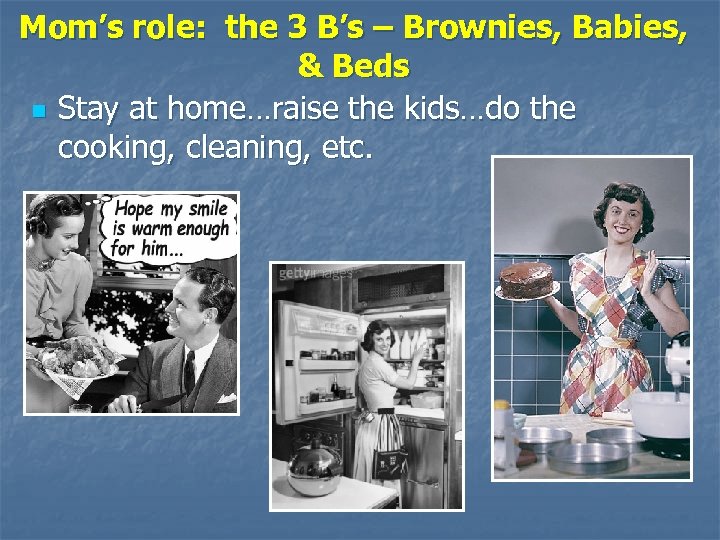 Mom’s role: the 3 B’s – Brownies, Babies, & Beds n Stay at home…raise the kids…do the cooking, cleaning, etc.
 The kids n Innocent…honest…naïve And TV portrayed the ideal American family like the Cleavers:
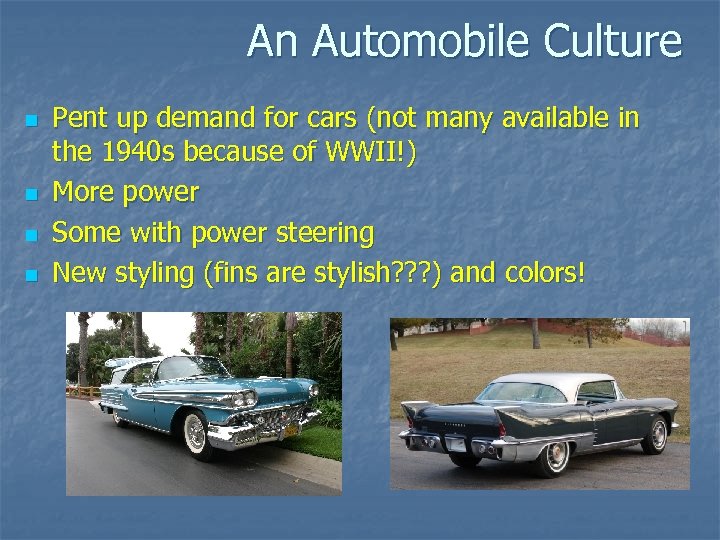 An Automobile Culture n n Pent up demand for cars (not many available in the 1940 s because of WWII!) More power Some with power steering New styling (fins are stylish? ? ? ) and colors!
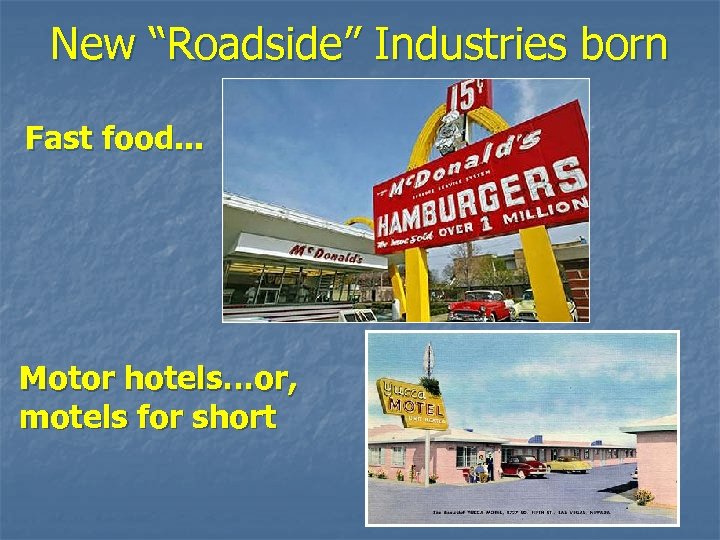 New “Roadside” Industries born Fast food. . . Motor hotels…or, motels for short
 More effects of the car culture: n n n Americans didn’t have to live in the noisy, crowded, cities… The explosive growth of the suburbs Levitt’s success was copied by others (still done today? )
 End of Part I Powerpoint