


 Скачать презентацию America Immigration and the Immigrant Church I once
0e19359f5e3d04c61798f25e49d7f35e.ppt
- Количество слайдов: 51
 America, Immigration, and the Immigrant Church “I once set out to study the role of the immigrant in American history, and found the immigrant was American history” Oscar Handlin
 A. Americans and Immigrants --Positive or Negative attitude? 1882: Give me your tired, your poor, your huddled masses, yearning to breathe free; the wretched refuse of your teeming shore; Send these, the homeless, tempest tossed to me. I lift my lamp beside the Golden Door. Emma Lazarus
 Negative • “All Europe is coming across the ocean…and what shall we do with them? They increase our taxes, eat our bread and encumber our streets, and not one in twenty is competent to keep himself. ” Philip Hone, 1836, future mayor of New York • “If I had the power, I would erect a gallows at every landing place and suspend every cursed Irishman as soon as he steps on our shore. ” Anonymous, 1840 s
 What is an American? • Definition based on ---Declaration of Independence ---Constitution ---Bill of Rights America is an idea; or as Archibald Mac. Leish put it, “America is promises. ” As such, the country should have little difficulty accepting immigrants.
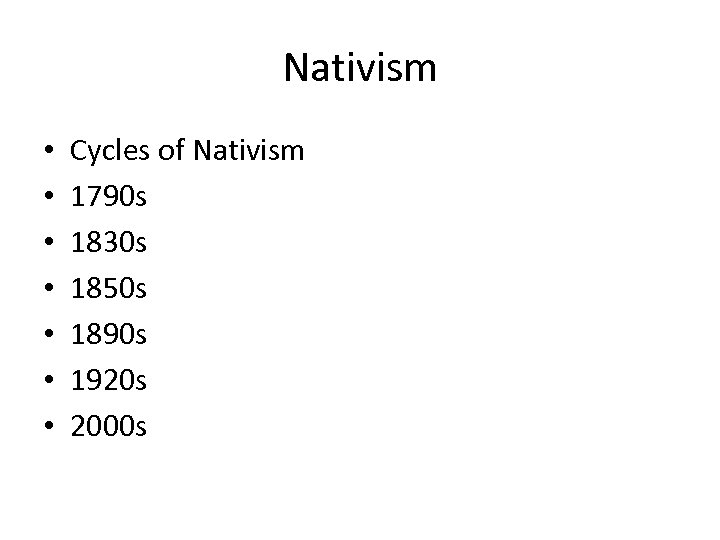 Nativism • • Cycles of Nativism 1790 s 1830 s 1850 s 1890 s 1920 s 2000 s
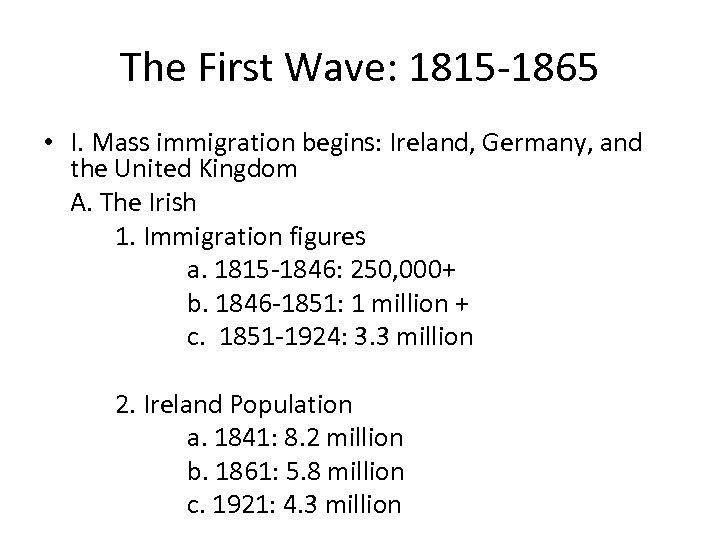 The First Wave: 1815 -1865 • I. Mass immigration begins: Ireland, Germany, and the United Kingdom A. The Irish 1. Immigration figures a. 1815 -1846: 250, 000+ b. 1846 -1851: 1 million + c. 1851 -1924: 3. 3 million 2. Ireland Population a. 1841: 8. 2 million b. 1861: 5. 8 million c. 1921: 4. 3 million
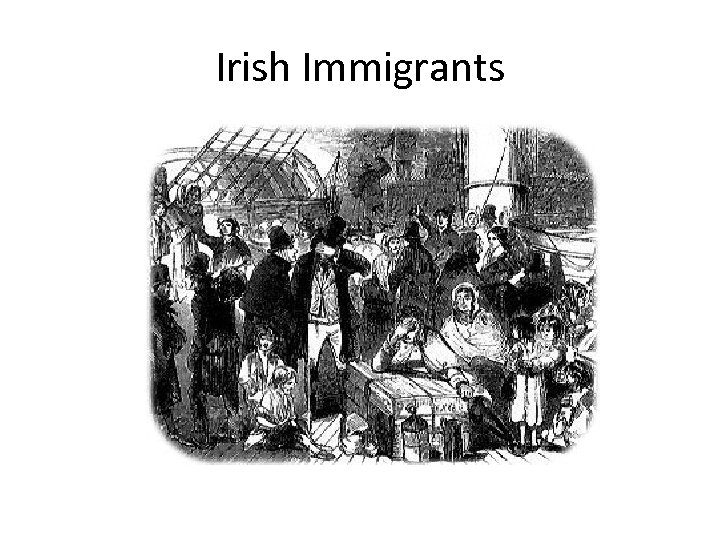 Irish Immigrants
 3. Irish Potato famine: 1846 -1851 • “ The average peasant survived on about 10 pounds of potatoes per day and sold his grain, poultry, cattle, and pigs to generate cash for rent. ” • “They all knew Irishmen could live on anything and there was plenty of grass in the fields, even though the potato crop should fail. ” Duke of Cambridge
 Irish 4. Irish immigrants: urban, working class on east coast 5. Men: unskilled labor. Way out: Church, labor, politics, civil service 6. Women: domestics. Way out: Sisterhood, teaching
 Irish Catholicism 7. Combative, aggressive Catholicism: centuries of conflict with Protestant England: Identity conflated 8. Archbishop Patrick W. Riordan dedicating St. Patrick’s Seminary “I have placed this work under the patronage of a great Apostle, St. Patrick…because he is the patron saint of a great Catholic race which has suffered more than any other for religion’s sake—the most devoted, the most generous, the most priest loving race within the fold of the Church of Christ. ”
 Irish 9. Virtues: chastity and celibacy : Jansenist influence : famine Result: Priesthood, Sisterhood Public House: alcoholism
 Irish Catholicism in US 10. 1815 -1850: popular Catholicity 11. 1850 s: devotional revolution in Ireland US: Mass and sacraments Catholics 12. Priest and sisters: Over 60% 13. Bishops: 1789 -1935: 286 of 464 14. Parish becomes central institution: occupies entire city block
 Americanization Czech immigrant woman: “I wish I had an American name like Kelly, O’Brien, or O’Sullivan. ” IRISH CATHOLICISM CAME TO DEFINE US CATHOLICISM
 Immigrant Church: Not a Monolith Bishop Carroll: “Catholics should form not, Irish, nor English or French Congregations, but Catholic. American Congregations and Churches. ” “The Irish find it difficult to discard their affection for everything that concerns Old Hybernia and thus would like to establish here an Irish Catholic Church. Germans stay on their own and do not want to have anything to do with the Irish. Frenchmen, in many instances, would like indeed a Roman, Apostolic Catholic Church, but would like to dress her up a la francaise. New York priest, 1853
 B. Germans 1. Immigration figures a. 1815 -1860: 1. 5 million(1/3 Catholic) b. 1860 -1900: 3. 5 million c. 1815 -1929: 5. 5 million 2. Causes for immigration a. Economic dislocation b. Revolutions of 1848 c. kulturkampf
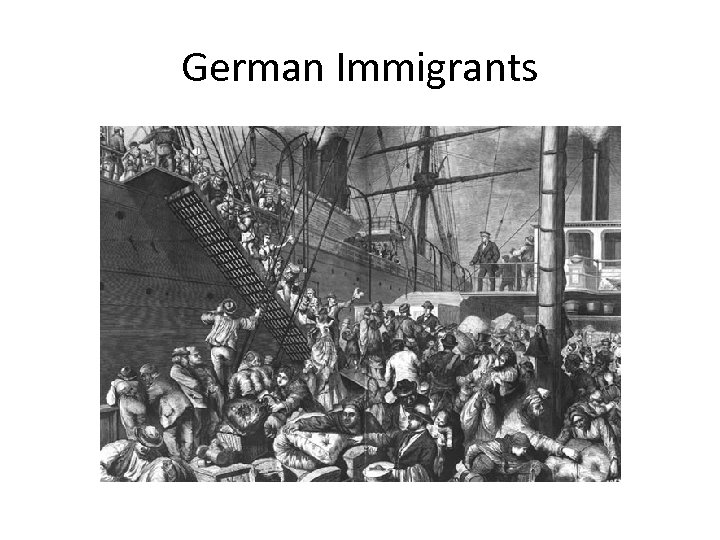 German Immigrants
 Germans 3. Settlement: more middle class, more western German triangle: Cincinnati, Milwaukee, St. Louis 4. German Catholics: Outsiders a. Protestant American b. German Protestants and Free thinkers c. Irish Catholics
 German Catholicism 5. “Germans came not to establish something new, but to re-establish something old. ” Mack Walker 6. National Parish: by 1900 336 First: 1787 Holy Trinity in Philadelphia “To keep up their respective nation and language. ” “Language saves faith. ” John Martin Henni
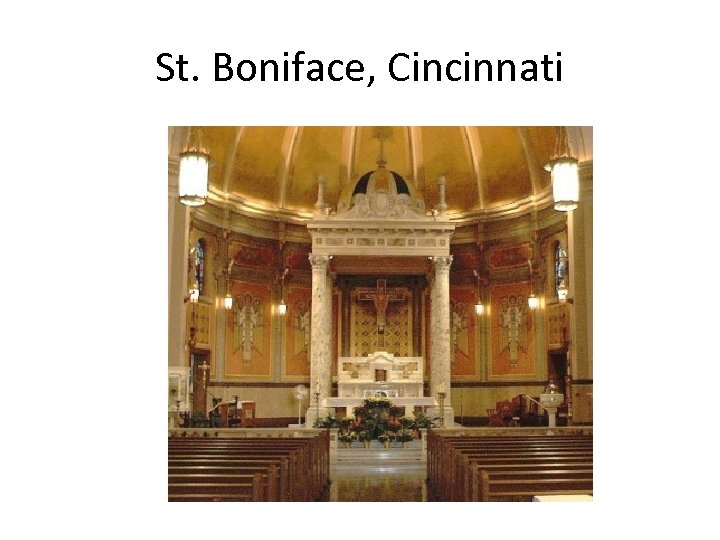 St. Boniface, Cincinnati
 “The English speaking parish is the greatest of all dangers since experience teaches that even in places where there are English Catholic churches but no German speaking priests, German Catholics will become indifferent to the Church within a short time and in due course will be even worse than Protestants and pagans. ” German guide book
 7. Catholic School “A parish without a parochial school is not a Catholic parish. The parochial school is a rock foundation. Without it all else is valueless—a priest’s work without a parochial can only be half done and is very discouraging. ” (1908) “By all means keep your children away from public schools which properly ought to be called pagan schools or even worse. ”
 8. Parish life a. Rich liturgy “Germans love the beauty of the church edifice and the pomp of ceremonies, belfries and bells, organs and sacred music, processions, feast days, sodalities, and the most solemn celebration of First Communion and weddings. ”(1886) b. trustee or finance board: lay involvement
 Battle with the Irish American Church 1. Peter Abbelen Memorial, 1886 “…it is certainly not clear why Catholic Germans should be kept in a position inferior to that of the Irish. ” “Let the ‘Americanization’ of the Germans be a slow and natural process. ” 2. American Bishops Response “Is each nation to have a bishop of its own? ”
 Peter Paul Cahensly 1. The St. Raphaelsverein for the Care of Immigrants, 1883 2. Cahensly Memorial, 1891 “Catholicism in the American republic up to the present has suffered the loss of 16 million souls. ”
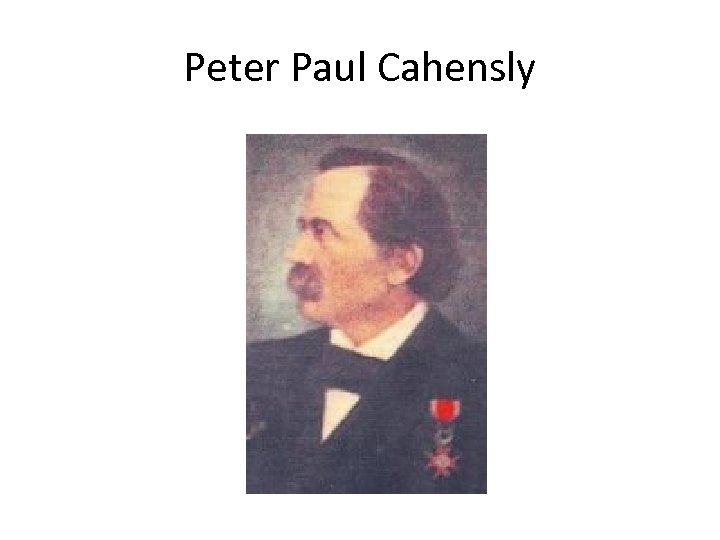 Peter Paul Cahensly
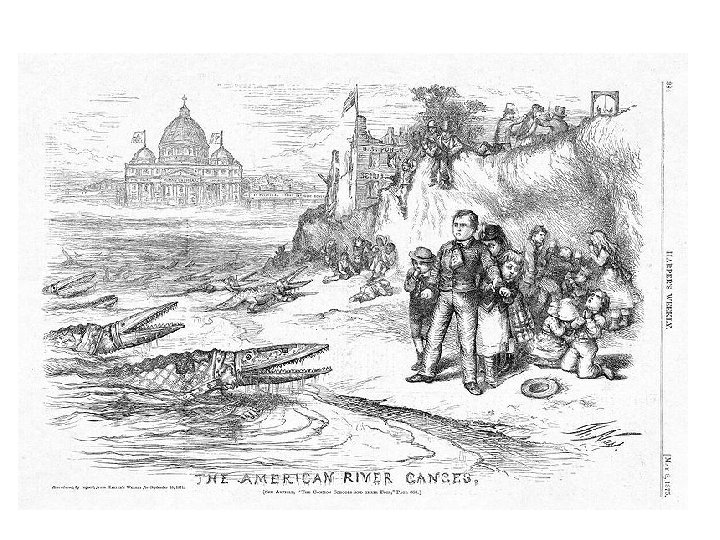
 C. Anti-Catholicism 1. In the 19 th century America thought of itself as a Protestant nation. 2. By 1860, Catholicism was the single largest denomination in the United States 3. Forms of anti-Catholicism a. Samuel F. B. Morse “Imminent Dangers to the Free Institutions of the United States” (1834) “It is a fact that the agents for these foreign despots are, for the most part, Jesuits. ”
 Morse continued …the otherwise unaccountable increase in Roman Catholic cathedrals, churches, colleges, convents, nunneries, etc. , in every part of the country; in the sudden increase of Catholic emigration; in the increased clannishness of the Roman Catholics, and the boldness with which their leaders are experimenting on the character of the American people. ”(1834) emphasis mine
 Attack b. violence: attack on the Ursuline Convent, 1834 c. Maria Monk, The Awful Disclosures of the Hotel Dieu Monastery in Montreal (1836) d. political: Know Nothing Party (1850 s) “Americans must rule America. ’
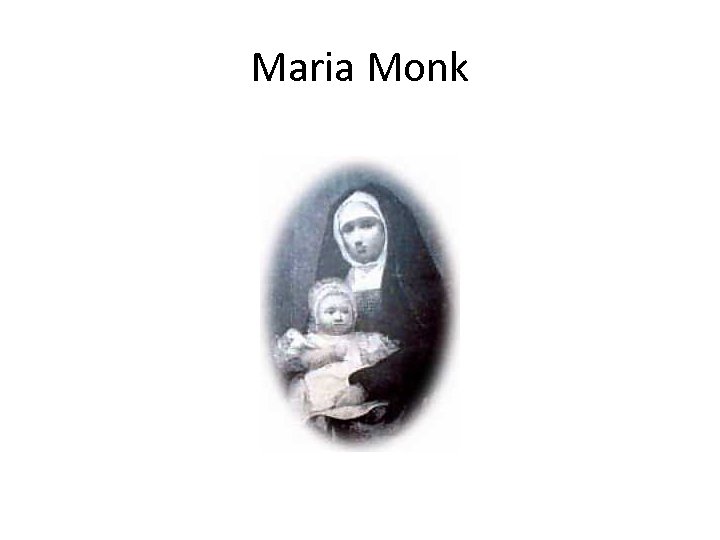 Maria Monk
 4. Catholics and the Presidency a. Al Smith (1928) --Encyclical controversy: Atlantic Monthly --”Unpack” b. John F. Kennedy (1960) --Jackie Kennedy --Houston Ministerial Association
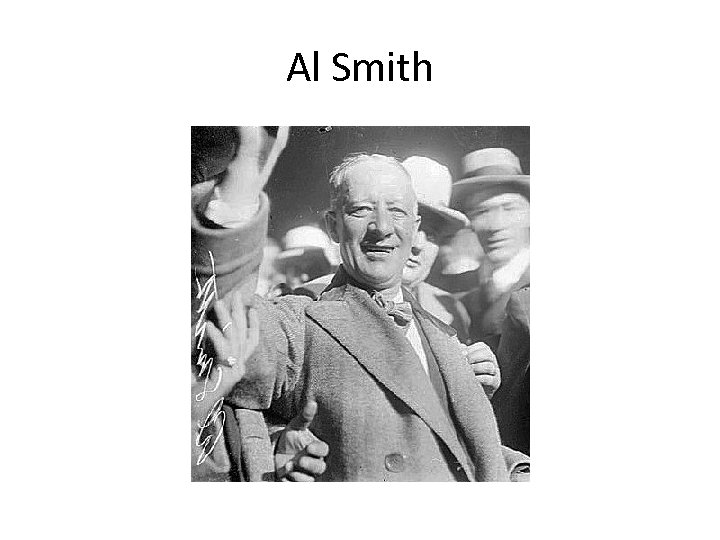 Al Smith
 Catholic Response to anti-Catholicism 1. Creation of separate Catholic culture: parallel universe --schools, hospitals, orphanages, homes for the elderly, institutions of charity 2. Immigrant Church: Church’s primary concern the preservation of the immigrant’s faith
 The Second Wave: 1880 -1924 1. Mass immigration from Poland, Italy, Eastern, Southern and Central Europe --more foreign, more radical --industrial unrest 2. Polish immigration --1870 -1920: 2 million 3. Italian Immigration --1800 -1900: 960, 000 --1900 -1920: 3, 150, 000+ (Birds of Passage)
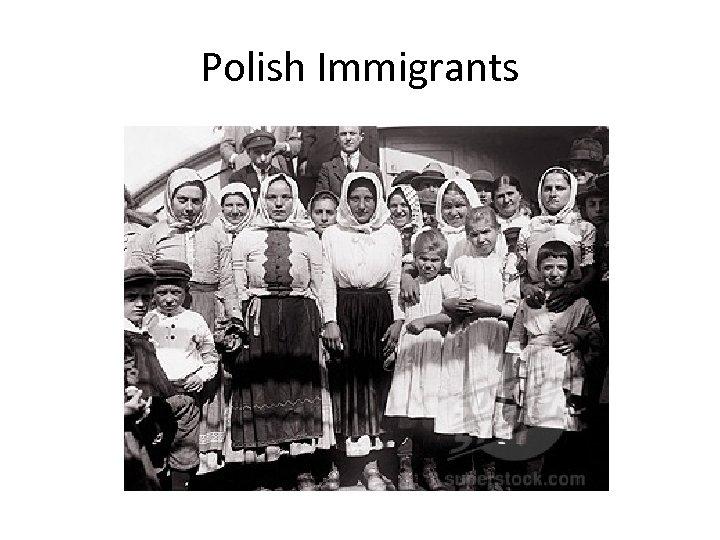 Polish Immigrants
 Polish and Italian 4. Both settle primarily in the east: Italians in New York City Polish in NYC, Detroit Milwaukee, Buffalo, especially Chicago 5. Both nations divided --Polish partitioned until 1918 --Italian unification 1870 6. National difference on Catholic identity --Italian: anti-clericalism --Polish: passionate identification with Catholicism
 Polish Catholicism 1. Strong devotional culture --most devout --Easter duty, Wigilia, Three Kings, Swieconka 2. Like Germans, recreate Polish village life 3. Parish central: “The Polish Catholic who does not belong to any parish is homeless—without any support or help he will not be able to meet the test. ” 4. Importance of School 5. Respect for pastor, but…
 Strong Laity 6. Conflict : St. Stanislaus Kostka, Chicago “…the parish stood in open opposition to its rector…finally the excitement reached a point where it nearly ended fatally. One night 6 masked men rang the doorbell of Priest Juszkiewicz and when he opened the door they beat him severely, threatening him with death if he did not leave the parish…Finally Priest Juszkiewicz left the parish. ”
 Battle for a Polish Bishop 1. Wenceslaus Kruszka—polygot bishops for polyglot dioceses “…whosoever dares to accept the duties in a polyglot diocese, without being polyglot himself…commits a mortal sin. ” 1901 2. Schism: Polish National Catholic Church created, 1895 -1904 --Scranton, Chicago, Buffalo
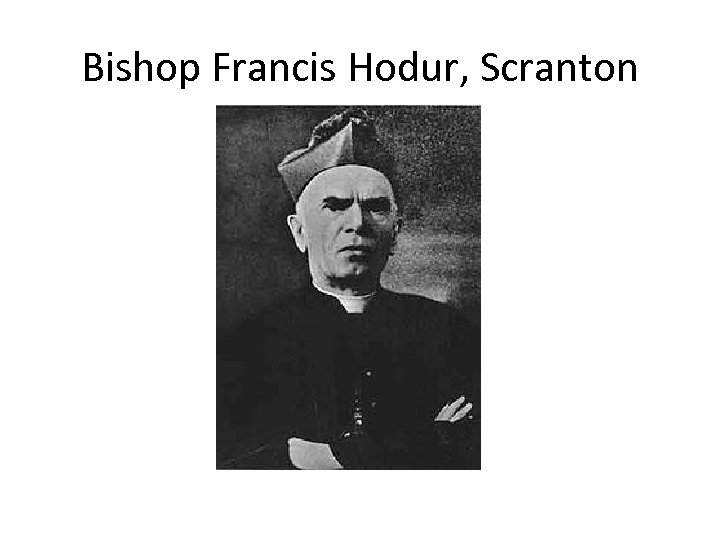 Bishop Francis Hodur, Scranton
 Polish Church War 3. First Bishop: Paul Rhode, Chicago, 1907 4. Struggle continues, violence Condemnation: “The agitation for Polish bishops in the United States has assumed such a character, especially in our province, that it becomes positively subversive and destructive of Catholic faith, loyalty, discipline and order. ”Bishops of Milwaukee Province, 1912
 Italian Catholics: Another Kind of Problem 1. Different piety “The fact is that the Catholic Church in America is to the mass of Italians almost like a new religion. ” “It is a very delicate matter to tell the soveriegn pontiff how utterly faithless his contrymen really are. ”
 Italian piety 1. 2. 3. 4. Baptisms, weddings, funerals Festas Campanilismo Clientilismo: saints as mediators
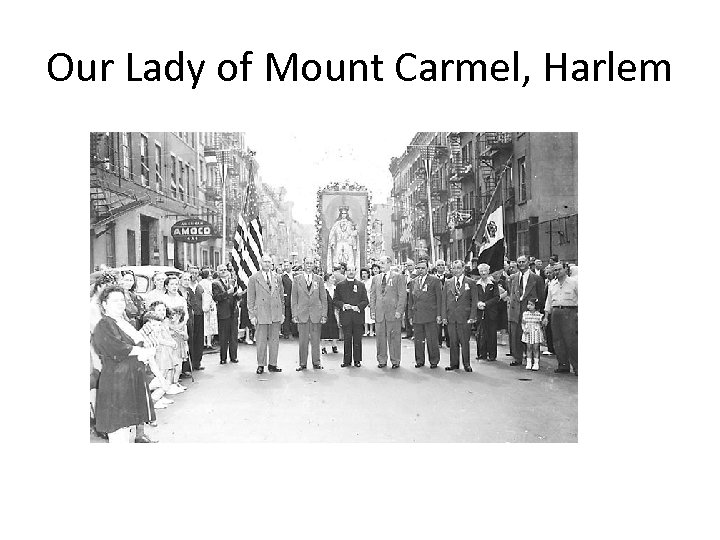 Our Lady of Mount Carmel, Harlem
 Models of Assimilation 1. Melting Pot: E pluribus unum --Israel Zangwill, 1909 -- “What then is the American, the new man? . . . Here individuals are melted into a new race of men, whose labors and posterity will one day cause great changes in the world. ” Jean de Crevecoeur, 1782
 Models 2. Americanization 3. Anglo Saxon racialism: scientific racism --Madison Grant, The Passing of the Great Race, 1916 4. Cultural pluralism: Horace Kallen
 Immigrant Restriction 1. 1924 National Quota Act --preference for northern and western Europeans --discriminates against eastern, central, and southern Europeans --Asians banned, except Filipinos
 Church in US 1. Era of immigrant church subsides 2. Institutional consolidation 3. Retreat from National parish 4. Significant middle class develops 5. Anti-communism
 New Immigrants, 1965 --present 1. 2. 3. 4. Immigrant Reform Legislation, 1965 Prior to 1965: 60%+ European By 1980 s, 80% Asian and Latin American Significant Catholic groups: Mexican, Filipino, Vietnamese
 Our Lady of Guadalupe “I am thy merciful mother… I shall listen to your sorrows, and free you from all your misery, grief and anguish. ”
 Richard Rodriguez “Above , all mediators there was Mary, Santa Maria, the Mother. Whereas at school the primary mediator was Christ, at home that rule was assumed by the Mexican Virgin, Nuestra Senora de Guadalupe, the focus of devotion and pride for Mexican Catholics. The Mexicam Mary ‘honored our people” my mother would say, ‘she could have appeared to anyone in the whole world, but she appeared to a Mexican, ’ someone like us. And she appeared, I could see from her picture, as a young Indian maiden—dark just like me. .