 Скачать презентацию AMCP Format for Formulary Submissions Presentation Developed for
a95ce8a0de5d0821d730e678cd2e8da0.ppt
- Количество слайдов: 57



AMCP Format for Formulary Submissions Presentation Developed for the Academy of Managed Care Pharmacy February 2015
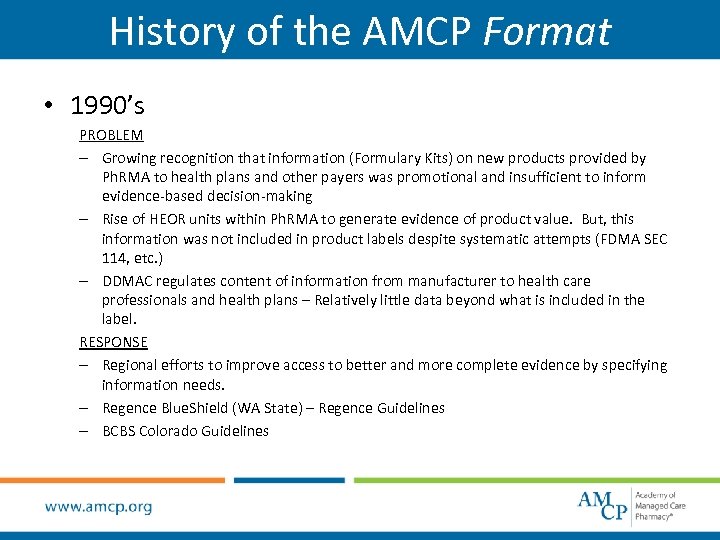
History of the AMCP Format • 1990’s PROBLEM – Growing recognition that information (Formulary Kits) on new products provided by Ph. RMA to health plans and other payers was promotional and insufficient to inform evidence-based decision-making – Rise of HEOR units within Ph. RMA to generate evidence of product value. But, this information was not included in product labels despite systematic attempts (FDMA SEC 114, etc. ) – DDMAC regulates content of information from manufacturer to health care professionals and health plans – Relatively little data beyond what is included in the label. RESPONSE – Regional efforts to improve access to better and more complete evidence by specifying information needs. – Regence Blue. Shield (WA State) – Regence Guidelines – BCBS Colorado Guidelines
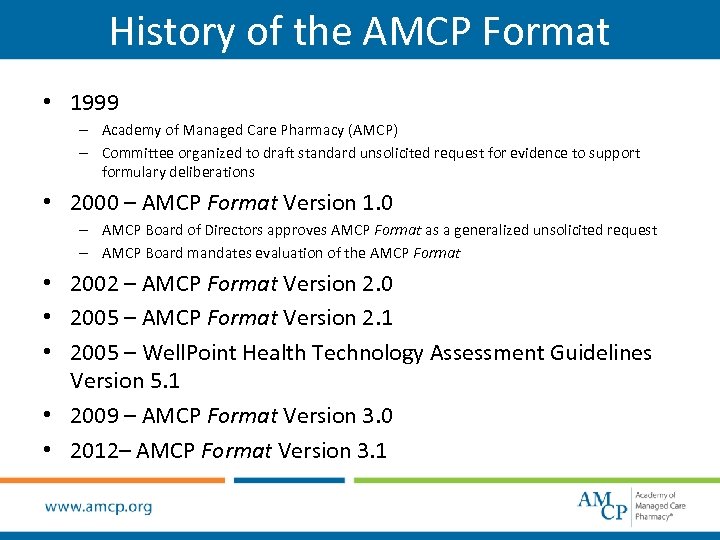
History of the AMCP Format • 1999 – Academy of Managed Care Pharmacy (AMCP) – Committee organized to draft standard unsolicited request for evidence to support formulary deliberations • 2000 – AMCP Format Version 1. 0 – AMCP Board of Directors approves AMCP Format as a generalized unsolicited request – AMCP Board mandates evaluation of the AMCP Format • 2002 – AMCP Format Version 2. 0 • 2005 – AMCP Format Version 2. 1 • 2005 – Well. Point Health Technology Assessment Guidelines Version 5. 1 • 2009 – AMCP Format Version 3. 0 • 2012– AMCP Format Version 3. 1
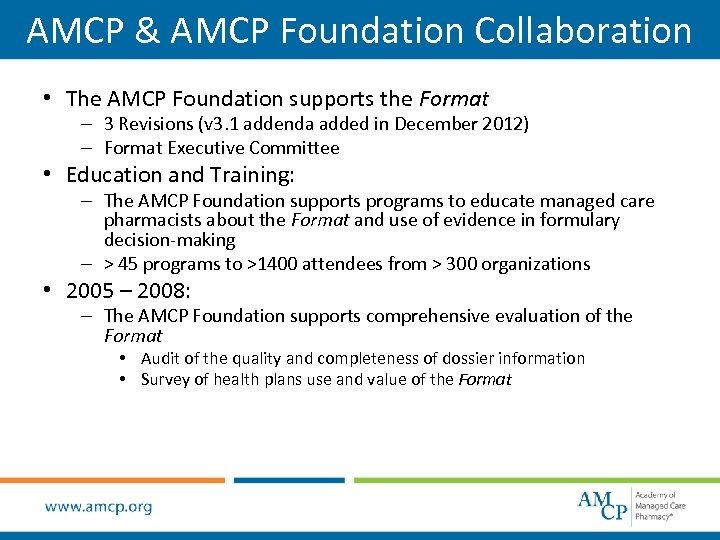
AMCP & AMCP Foundation Collaboration • The AMCP Foundation supports the Format – 3 Revisions (v 3. 1 addenda added in December 2012) – Format Executive Committee • Education and Training: – The AMCP Foundation supports programs to educate managed care pharmacists about the Format and use of evidence in formulary decision-making – > 45 programs to >1400 attendees from > 300 organizations • 2005 – 2008: – The AMCP Foundation supports comprehensive evaluation of the Format • Audit of the quality and completeness of dossier information • Survey of health plans use and value of the Format
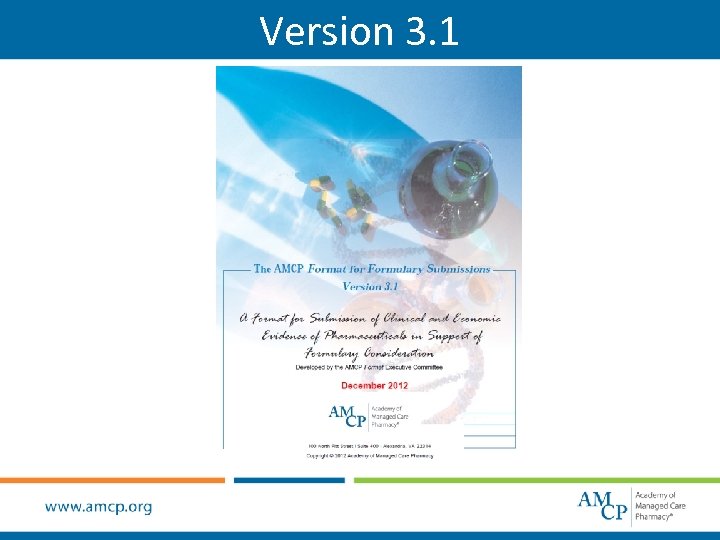
Version 3. 1
Updates in Version 3. 1 • Changes to this version are limited to the inclusion of three addenda: – Companion Diagnostic Tests – Comparative Effectiveness Research – Specialty Pharmaceuticals
The AMCP Format is: a process to obtain a standardized set of data and information about a drug from its manufacturer to support reimbursement and/or formulary placement consideration
Role of the Format • Support informed selection of pharmaceuticals, biologics, and vaccines by: – Standardizing and communicating product and supporting program information requirements – Requiring projections of product impact on both the organization and its enrolled patient population – Requesting information on the value of products – Making evidence and rationale supporting all choice(s) more clear, transparent and evaluable by decision makers
Goals of the Format Process • Improve the timeliness, quality, scope, and relevance of information available to healthcare system evaluators (P&T Committees or other technology assessment committees) • Streamline the data acquisition and review process for healthcare system staff (eg, pharmacists)
AMCP Format: Implications for the Pharmaceutical Industry • Increased responsibility for providing a complete data set, including economic impact information • Provides the opportunity to establish the value of a new product with evidence • A new competitive environment
AMCP Format: Implications for Health Plans • Must evaluate the quality and content of submissions received • Will incorporate outcomes and economic evaluation data into formulary decisions • Must get clinical staff and P&T Committee members educated on PE studies or bring in outside consultants
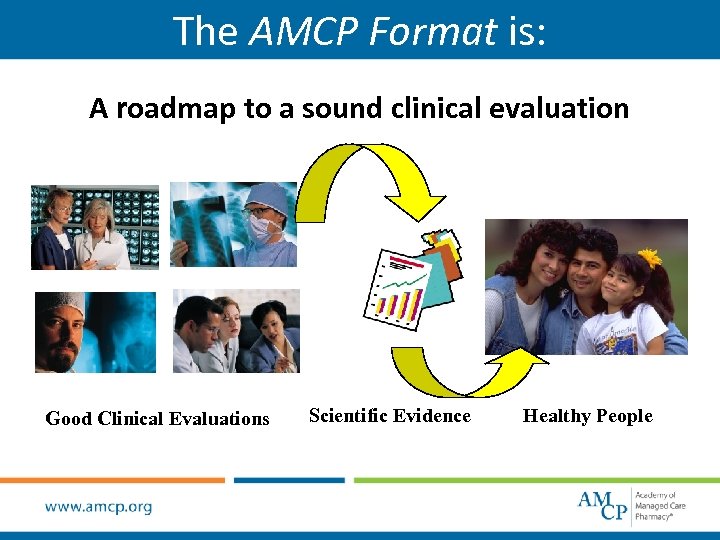
The AMCP Format is: A roadmap to a sound clinical evaluation Good Clinical Evaluations Scientific Evidence Healthy People
The AMCP Format… • A template or guide, not a mandate • Identifies core informational and analytical needs formulary submissions • Focuses formulary decisions on system wide impact • Adaptable to individual plan needs • Neither static or overly prescriptive
What dossiers do (if done well) • Put your (new or old) product on a level playing field with other drugs • Open door to full P&T review • Show the value of your product – in full or sub -population • Show scientific credibility • Include both on-label and off-label scientific data • Help guide development of clinical guidelines
Potential Benefits • • Improved communication and cooperation Explicit evidentiary requirements Standardized process Allows plan to focus – less on acquisition cost and rebates – more on outcomes and value • Outcomes models should offer flexibility to meet the needs of individual health plans
Specific Issues • • • Confidentiality Request vs requirement Dossiers for all products or just new Criteria for determining adequacy of dossier Sharing data with manufacturers Relevance vs standardization – AMCP Format sections imply large degree of customization for individual plans – Manufacturers need reasonable standardization to support Format
Current Environment • >150 million members in health plans and PBMs using the AMCP Format • MCOs in different stages of AMCP Format implementation • Wide acceptance by pharmaceutical companies – Dossiers are a part of overall marketing planning • Similar submission requirements in other countries – Great Britain, Australia, Canada, other countries
AMCP e. Dossier System • A centralized, secure, web-based platform that provides qualified Heath Care Decision Makers (HCDMs) the opportunity to easily access, review, and evaluate research to make informed, evidence-based decisions. • It combines the familiar structure of paper-based dossiers with web technologies that are flexible and interactive, while remaining in compliance with regulatory standards for unsolicited requests. – Registration on the AMCP e. Dossier System is free to qualified HCDMs (i. e. , those individuals who are directly involved in making formulary and/or benefit design decisions on behalf of a health organization or system).
AMCP e. Dossier System • For interested manufacturers, the AMCP e. Dossier System Team will convert product dossiers into e. Dossiers and make them accessible, via the System. Manufacturers pay a subscription fee for disseminating product dossiers via the System. • Access to any product e. Dossier requires an unsolicited request by a HCDM and direct authorization by the product’s manufacturer. • Among several benefits, the AMCP e. Dossier System: – Provides the opportunity to more efficiently evaluate critical information needed to determine product value; – Streamlines the overall processes of requesting, reviewing, and applying scientific evidence in the decision making process; – Offers an innovative delivery method to improve the use of dossiers; and – Adheres to critically important regulatory requirements
Health System Guidelines for Manufacturers Evidentiary Requirements for Formulary Submission
1. 0 EXECUTIVE SUMMARY Justify the value of the product • Replaces Section 4 of the previous version (Version 2. 1) of the AMCP Format for Formulary Submissions and represents the principal opportunity for a manufacturer to briefly summarize the value of its product. • The manufacturer should briefly describe the clinical and economic information presented in the dossier using the layout prescribed in Sections 1. 1 and 1. 2 and state the expected per unit product cost. • Based on this information, the manufacturer should articulate a value argument to justify these expected expenditures for this product in the context of its anticipated effects on the clinical evidence, health outcomes, and the economic consequences for the healthcare system.
1. 0 EXECUTIVE SUMMARY CLINICAL AND ECONOMIC VALUE OF THE PRODUCT • 1. 1 Clinical Benefits • 1. 2 Economic Benefits • 1. 3 Conclusions
1. 1 CLINICAL BENEFITS • Begin with the FDA-approved indication for the drug and a short (1 to 2 paragraph) synopsis of the efficacy and safety information (from the prescribing information and clinical trials). • Summarize (No more than 1 page) the clinical benefits of the PROPOSED THERAPY, in terms of: – Efficacy and Effectiveness – Safety/tolerability – Shortcomings of current treatment and the unmet medical need that the PROPOSED THERAPY addresses
1. 2 ECONOMIC BENEFITS • Summarize (No more than 1 page) the economic benefits of the PROPOSED THERAPY, in terms of: – Cost per unit – Context of the proposed cost: potential clinical benefits provided (including quality of life benefits) and potential economic benefits (including savings or cost offsets) – Shortcomings of otherapies • Briefly present results of any observational research or economic data, with inclusion of the PMPM (per member per month) or ICER (international cost-effectiveness ratio) result at minimum. • Briefly summarize other published information on the cost or economic impact of the product (such as impact of resource utilization or other cost offsets).
1. 3 CONCLUSIONS • Summarize the value of the PROPOSED THERAPY in 1 to 2 paragraphs (No more than ½ page). • Highlight key points regarding the clinical and economic advantages and uniqueness of the product are highlighted. • Based on the information presented in Sections 2 to 5 that follow, conclusions should include a statement regarding the expected impact of the product relative to other available treatment options both pharmaceutical and non-pharmaceutical.
2. 0 PRODUCT INFORMATION & DISEASE DESCRIPTION • 2. 1 Product Description • 2. 2 Place of the Product in Therapy – 2. 2. 1 Disease Description – 2. 2. 2 Approaches to Treatment – 2. 2. 3 Relevant Treatment Guidelines and Consensus Statements from National and/or International Bodies • 2. 3 Evidence for Pharmacogenomic Tests and Drugs
2. 1 PRODUCT DESCRIPTION Manufacturers are required to provide detailed information about their product. They should compare the new product with other agents commonly used to treat the condition, whether or not these products are currently on the healthcare system’s formulary. The product description consists of information that traditionally has been incorporated in a product monograph, Package Insert (PI) or formulary kit as described below. It also contains information that goes beyond the scope of the package insert, monograph and formulary kit that can only be provided pursuant to an unsolicited request. (20 pages max) NEW EVIDENCE GUIDELINES: If the technology under consideration is a Companion Diagnostic Test or Specialty Pharmaceutical and/or evidence from Comparative Effectiveness Research is included in the dossier follow new ADDENDUM guidelines
2. 1 PRODUCT DESCRIPTION Components that should be supplied: • • • Generic, brand name and therapeutic class of the product, b. All dosage forms, including strengths • and package sizes, c. The National Drug Code (NDC) for all formulations, d. The ASP and WAC cost per unit size. • (The payers contract price, if available, should be included as well). • e. AHFS or other Drug Classification f. FDA approved indication(s) and the date approval was granted (or is expected to be • granted). Also other significant off-label uses and potential new indications being studied. • g. Pharmacology h. Pharmacokinetic/Pharmacodynamic i. Contraindications/Warnings Precautions/Adverse Effects j. Interactions (with suggestions on how to avoid them) – Drug/Drug – Drug/Food – Drug/Disease k. Dosing and Administration l. Access, e. g. restrictions on distribution, supply limitations, anticipated shortages, and/or prescribing restrictions. m. Co-Prescribed/Concomitant Therapies, including dosages, and recommended use of other agents or treatments with the product. Concise comparison of PI information with the primary comparator products in the same therapeutic area.
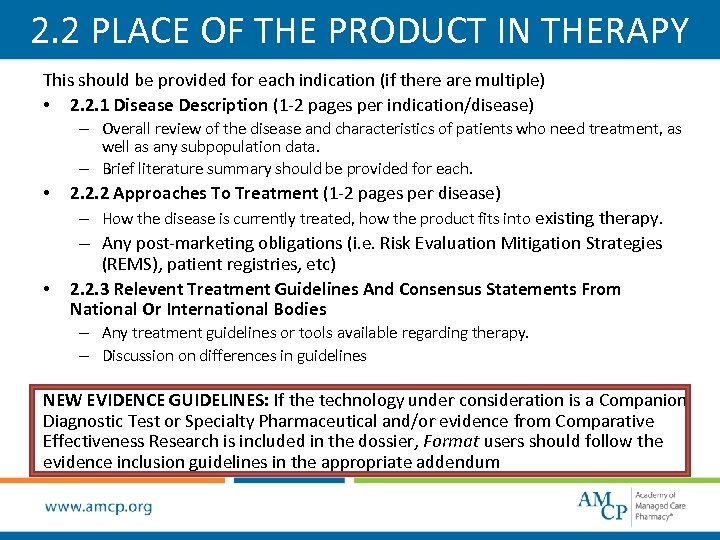
2. 2 PLACE OF THE PRODUCT IN THERAPY This should be provided for each indication (if there are multiple) • 2. 2. 1 Disease Description (1 -2 pages per indication/disease) – Overall review of the disease and characteristics of patients who need treatment, as well as any subpopulation data. – Brief literature summary should be provided for each. • 2. 2. 2 Approaches To Treatment (1 -2 pages per disease) – How the disease is currently treated, how the product fits into existing therapy. • – Any post-marketing obligations (i. e. Risk Evaluation Mitigation Strategies (REMS), patient registries, etc) 2. 2. 3 Relevent Treatment Guidelines And Consensus Statements From National Or International Bodies – Any treatment guidelines or tools available regarding therapy. – Discussion on differences in guidelines NEW EVIDENCE GUIDELINES: If the technology under consideration is a Companion Diagnostic Test or Specialty Pharmaceutical and/or evidence from Comparative Effectiveness Research is included in the dossier, Format users should follow the evidence inclusion guidelines in the appropriate addendum
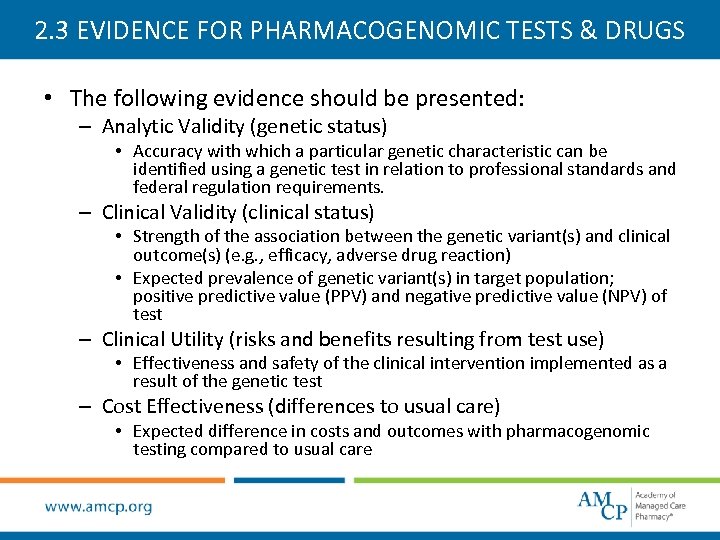
2. 3 EVIDENCE FOR PHARMACOGENOMIC TESTS & DRUGS • The following evidence should be presented: – Analytic Validity (genetic status) • Accuracy with which a particular genetic characteristic can be identified using a genetic test in relation to professional standards and federal regulation requirements. – Clinical Validity (clinical status) • Strength of the association between the genetic variant(s) and clinical outcome(s) (e. g. , efficacy, adverse drug reaction) • Expected prevalence of genetic variant(s) in target population; positive predictive value (PPV) and negative predictive value (NPV) of test – Clinical Utility (risks and benefits resulting from test use) • Effectiveness and safety of the clinical intervention implemented as a result of the genetic test – Cost Effectiveness (differences to usual care) • Expected difference in costs and outcomes with pharmacogenomic testing compared to usual care
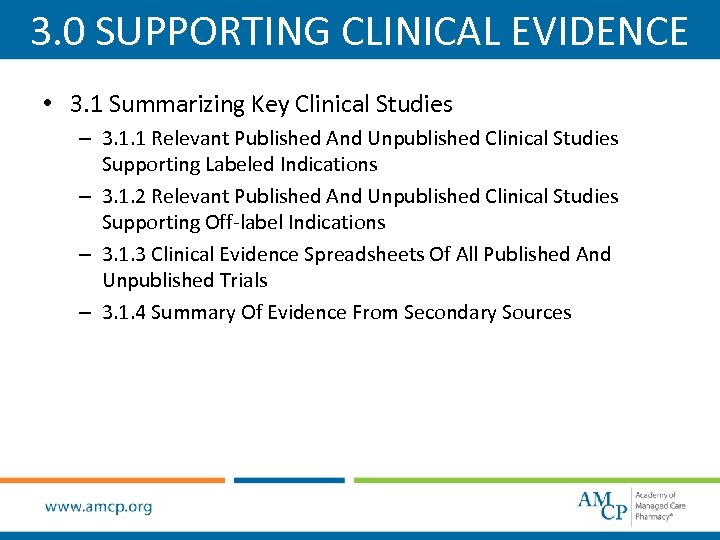
3. 0 SUPPORTING CLINICAL EVIDENCE • 3. 1 Summarizing Key Clinical Studies – 3. 1. 1 Relevant Published And Unpublished Clinical Studies Supporting Labeled Indications – 3. 1. 2 Relevant Published And Unpublished Clinical Studies Supporting Off-label Indications – 3. 1. 3 Clinical Evidence Spreadsheets Of All Published And Unpublished Trials – 3. 1. 4 Summary Of Evidence From Secondary Sources
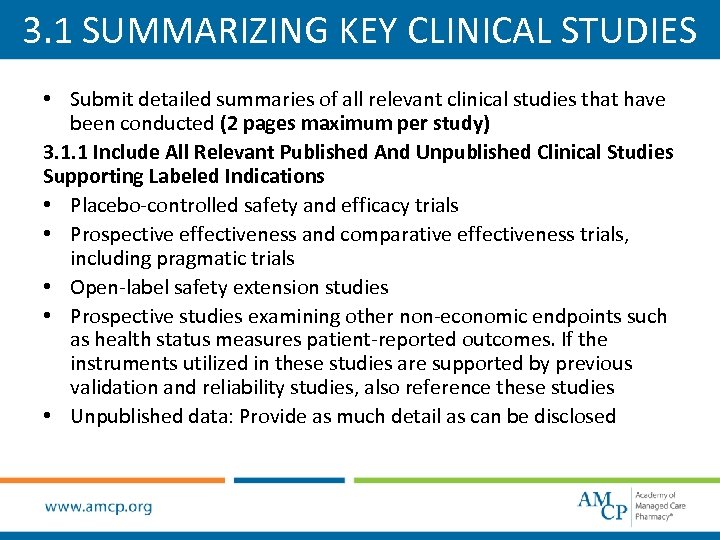
3. 1 SUMMARIZING KEY CLINICAL STUDIES • Submit detailed summaries of all relevant clinical studies that have been conducted (2 pages maximum per study) 3. 1. 1 Include All Relevant Published And Unpublished Clinical Studies Supporting Labeled Indications • Placebo-controlled safety and efficacy trials • Prospective effectiveness and comparative effectiveness trials, including pragmatic trials • Open-label safety extension studies • Prospective studies examining other non-economic endpoints such as health status measures patient-reported outcomes. If the instruments utilized in these studies are supported by previous validation and reliability studies, also reference these studies • Unpublished data: Provide as much detail as can be disclosed
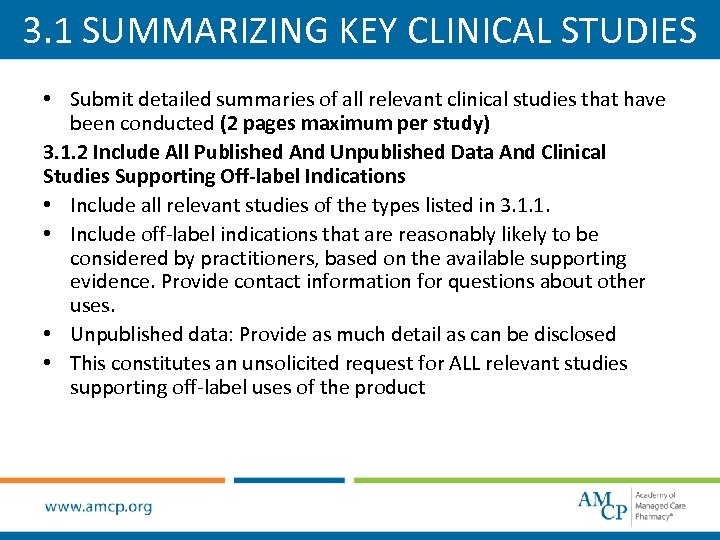
3. 1 SUMMARIZING KEY CLINICAL STUDIES • Submit detailed summaries of all relevant clinical studies that have been conducted (2 pages maximum per study) 3. 1. 2 Include All Published And Unpublished Data And Clinical Studies Supporting Off-label Indications • Include all relevant studies of the types listed in 3. 1. 1. • Include off-label indications that are reasonably likely to be considered by practitioners, based on the available supporting evidence. Provide contact information for questions about other uses. • Unpublished data: Provide as much detail as can be disclosed • This constitutes an unsolicited request for ALL relevant studies supporting off-label uses of the product
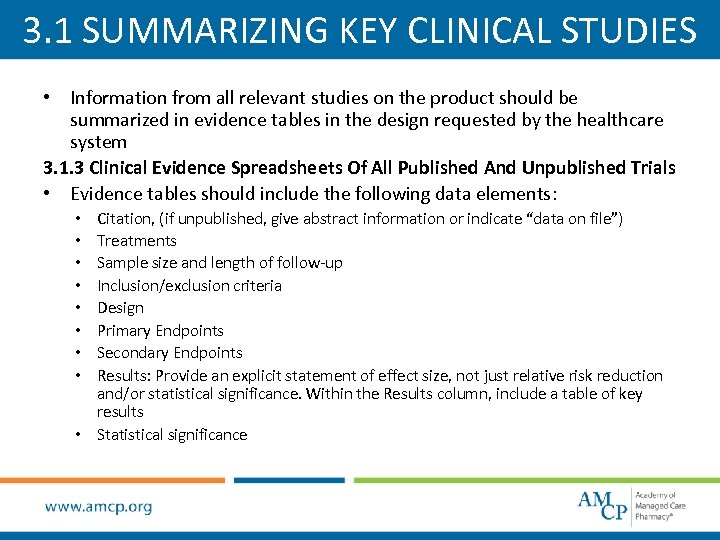
3. 1 SUMMARIZING KEY CLINICAL STUDIES • Information from all relevant studies on the product should be summarized in evidence tables in the design requested by the healthcare system 3. 1. 3 Clinical Evidence Spreadsheets Of All Published And Unpublished Trials • Evidence tables should include the following data elements: Citation, (if unpublished, give abstract information or indicate “data on file”) Treatments Sample size and length of follow-up Inclusion/exclusion criteria Design Primary Endpoints Secondary Endpoints Results: Provide an explicit statement of effect size, not just relative risk reduction and/or statistical significance. Within the Results column, include a table of key results • Statistical significance • •
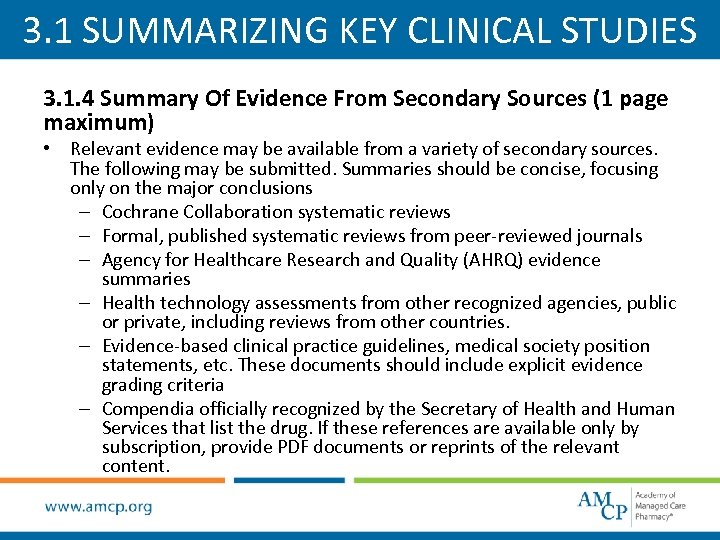
3. 1 SUMMARIZING KEY CLINICAL STUDIES 3. 1. 4 Summary Of Evidence From Secondary Sources (1 page maximum) • Relevant evidence may be available from a variety of secondary sources. The following may be submitted. Summaries should be concise, focusing only on the major conclusions – Cochrane Collaboration systematic reviews – Formal, published systematic reviews from peer-reviewed journals – Agency for Healthcare Research and Quality (AHRQ) evidence summaries – Health technology assessments from other recognized agencies, public or private, including reviews from other countries. – Evidence-based clinical practice guidelines, medical society position statements, etc. These documents should include explicit evidence grading criteria – Compendia officially recognized by the Secretary of Health and Human Services that list the drug. If these references are available only by subscription, provide PDF documents or reprints of the relevant content.
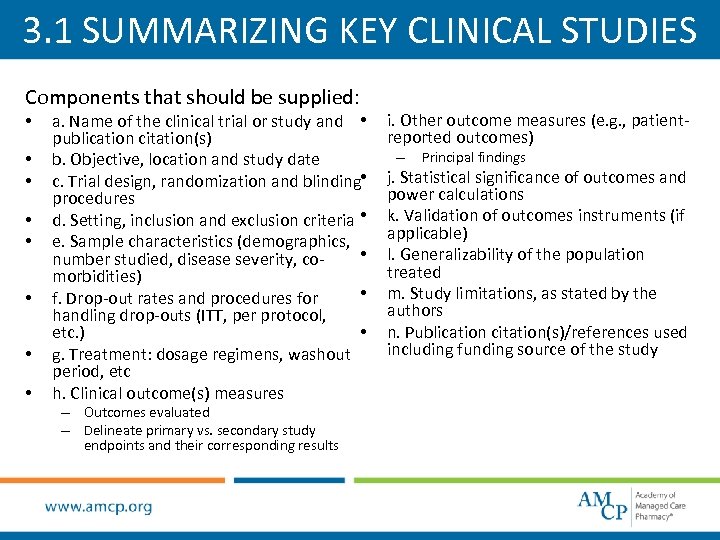
3. 1 SUMMARIZING KEY CLINICAL STUDIES Components that should be supplied: • • a. Name of the clinical trial or study and • publication citation(s) b. Objective, location and study date c. Trial design, randomization and blinding • procedures d. Setting, inclusion and exclusion criteria • e. Sample characteristics (demographics, • number studied, disease severity, comorbidities) • f. Drop-out rates and procedures for handling drop-outs (ITT, per protocol, • etc. ) g. Treatment: dosage regimens, washout period, etc h. Clinical outcome(s) measures – Outcomes evaluated – Delineate primary vs. secondary study endpoints and their corresponding results i. Other outcome measures (e. g. , patientreported outcomes) – Principal findings j. Statistical significance of outcomes and power calculations k. Validation of outcomes instruments (if applicable) l. Generalizability of the population treated m. Study limitations, as stated by the authors n. Publication citation(s)/references used including funding source of the study
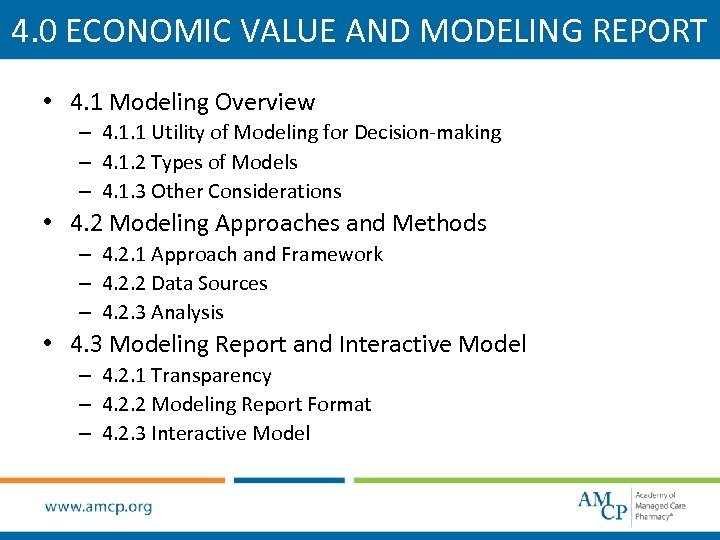
4. 0 ECONOMIC VALUE AND MODELING REPORT • 4. 1 Modeling Overview – 4. 1. 1 Utility of Modeling for Decision-making – 4. 1. 2 Types of Models – 4. 1. 3 Other Considerations • 4. 2 Modeling Approaches and Methods – 4. 2. 1 Approach and Framework – 4. 2. 2 Data Sources – 4. 2. 3 Analysis • 4. 3 Modeling Report and Interactive Model – 4. 2. 1 Transparency – 4. 2. 2 Modeling Report Format – 4. 2. 3 Interactive Model
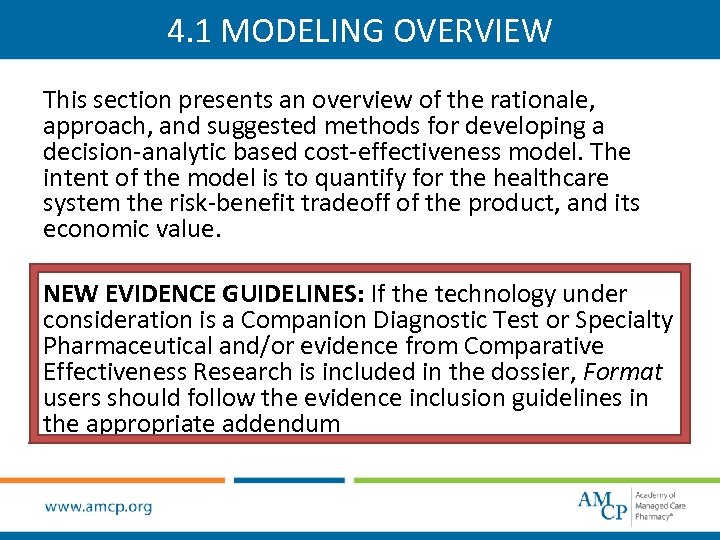
4. 1 MODELING OVERVIEW This section presents an overview of the rationale, approach, and suggested methods for developing a decision-analytic based cost-effectiveness model. The intent of the model is to quantify for the healthcare system the risk-benefit tradeoff of the product, and its economic value. NEW EVIDENCE GUIDELINES: If the technology under consideration is a Companion Diagnostic Test or Specialty Pharmaceutical and/or evidence from Comparative Effectiveness Research is included in the dossier, Format users should follow the evidence inclusion guidelines in the appropriate addendum
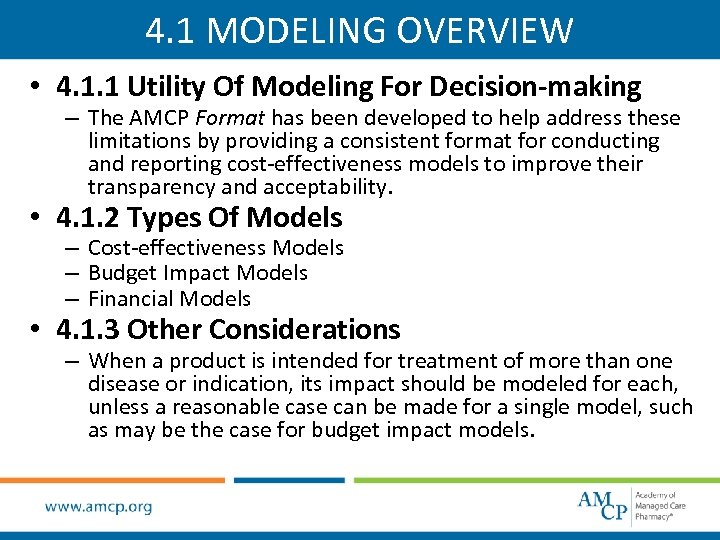
4. 1 MODELING OVERVIEW • 4. 1. 1 Utility Of Modeling For Decision-making – The AMCP Format has been developed to help address these limitations by providing a consistent format for conducting and reporting cost-effectiveness models to improve their transparency and acceptability. • 4. 1. 2 Types Of Models – Cost-effectiveness Models – Budget Impact Models – Financial Models • 4. 1. 3 Other Considerations – When a product is intended for treatment of more than one disease or indication, its impact should be modeled for each, unless a reasonable case can be made for a single model, such as may be the case for budget impact models.
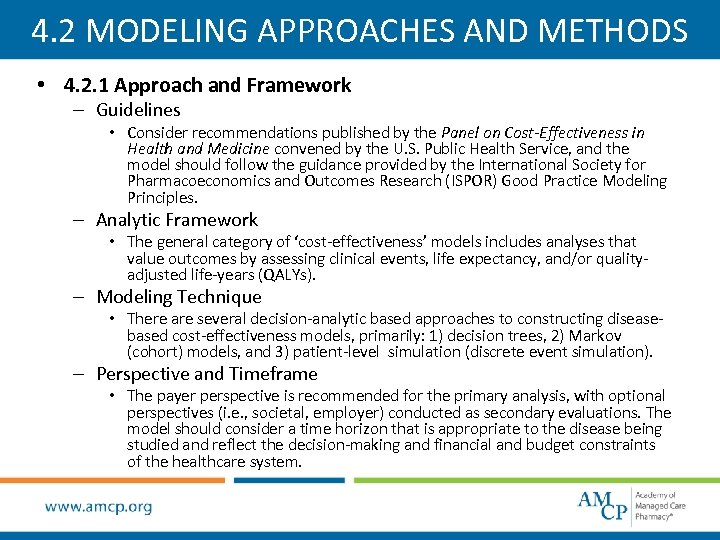
4. 2 MODELING APPROACHES AND METHODS • 4. 2. 1 Approach and Framework – Guidelines • Consider recommendations published by the Panel on Cost-Effectiveness in Health and Medicine convened by the U. S. Public Health Service, and the model should follow the guidance provided by the International Society for Pharmacoeconomics and Outcomes Research (ISPOR) Good Practice Modeling Principles. – Analytic Framework • The general category of ‘cost-effectiveness’ models includes analyses that value outcomes by assessing clinical events, life expectancy, and/or qualityadjusted life-years (QALYs). – Modeling Technique • There are several decision-analytic based approaches to constructing diseasebased cost-effectiveness models, primarily: 1) decision trees, 2) Markov (cohort) models, and 3) patient-level simulation (discrete event simulation). – Perspective and Timeframe • The payer perspective is recommended for the primary analysis, with optional perspectives (i. e. , societal, employer) conducted as secondary evaluations. The model should consider a time horizon that is appropriate to the disease being studied and reflect the decision-making and financial and budget constraints of the healthcare system.
4. 2 MODELING APPROACHES AND METHODS • 4. 2. 2 Data Sources – Drug Effectiveness – Drug Safety data – Economic data – Utilities – Demographic and practice pattern data – Surrogate markers – Expert opinion – Efficacy vs. Effectiveness
4. 2 MODELING APPROACHES AND METHODS • 4. 2. 3 Analysis – Base-case estimates • The expected (average) clinical and economic outcomes should be calculated for each strategy evaluated, as well as incremental costs, effectiveness, and cost effectiveness – Sensitivity Analysis • Comprehensive one-way sensitivity analysis of all parameters in the model is strongly recommended, including assessment of impacts on both incremental effectiveness (e. g. , QALYs) and cost effectiveness
4. 3 MODELING REPORT AND INTERACTIVE MODEL • 4. 3. 1 Transparency – Transparency and clarity of presentation are a necessity. • 4. 3. 2 Modeling Report Format – Introduction/Background, Methods, Results, Limitations, Discussion. A 500 word abstract following this same format should be provided on the first page of the modeling report, and include an explicit description of the key drivers of the model results identified in sensitivity and scenario analyses. • 4. 3. 3 Interactive Model – Model Characteristics – Model Accessibility
5. 0 OTHER SUPPORTING EVIDENCE • 5. 1 Summarizing Other Relevant Evidence (2 page maximum per study) – 5. 1. 1 Include Published And Unpublished Studies Supporting Labeled And Off-label Indications • Refer to Section 3. 1 and 3. 1. 1 for items to be included in the study summaries and for relevance and grading criteria. – 5. 1. 2 Evidence Table Spreadsheets • Information from all studies described in this section should be summarized in evidence tables -spreadsheet format NEW EVIDENCE GUIDELINES: If the technology under consideration is a Companion Diagnostic Test or Specialty Pharmaceutical and/or evidence from Comparative Effectiveness Research is included in the dossier, Format users should follow the evidence inclusion guidelines in the appropriate addendum
6. 0 SUPPORTING INFORMATION • 6. 1 References Contained In Dossiers – Include citations for all known published clinical and economic studies in the bibliography section. • 6. 2 Dossiers And Economic Models
COMPANION DIAGNOSTIC TESTS (CDT) ADDENDUM The objectives of this addendum are to: • Provide drug and companion diagnostic test (CDT) developers with guidance for the provision of clinical and economic evidence in health technology assessments, and • Inform drug and CDT manufacturers, P&T committees, Medical Technology Assessment committees, and other coverage and reimbursement decision-makers about appropriate types of evidence for a CDT so that well-informed evaluations can be performed. The information complements existing information in the AMCP Format for Formulary Submissions, Version 3. 1. The following sections provide background information on CDTs and recommendations for the development and content of both: • Evidence dossiers for drugs with CDTs and • Stand-alone evidence dossiers for CDTs
COMPANION DIAGNOSTIC TESTS (CDT) ADDENDUM Implementation of dossier requests for CDTs using the Format may be complicated by the variety of potential relationships between a drug/biologic manufacturer and CDT manufacturer/provider. The following are possible CDT development scenarios (in no order of preference): • CDT co-developed with drug, and FDA-approved together with drug • CDT developed independently of drug, typically after drug approval • CDT developed independently and targeted for class of medications
COMPANION DIAGNOSTIC TESTS (CDT) ADDENDUM Recommendations when developing dossiers for CDTs 1. The CDT is co-developed with the drug or biologic: – 2. • The evidence for the safety, efficacy, and value of the drug/biologic will be inherently linked to the CDT. The drug/biologic manufacturer should provide these data as part of the drug/biologic dossier in the AMCP Format. The CDT is developed independently of the drug or biologic: – If the CDT is required in the drug/biologic label, the drug/biologic manufacturer should provide data on the clinical validity, clinical utility, and economic value of both the CDT and the drug/biologic in the drug/biologic dossier developed in the Format. Information on the analytic validity of the test should be provided in the dossier as feasible. 1. If the CDT is not required in the drug/biologic label, then the CDT developer should provide a “CDT dossier” that provides Evidence Requirements For Diagnostic Tests. The CDT is developed independently and is targeted for a class of medications. – The CDT developer should provide a “CDT dossier” that provides information as outlined in Section IV below specific to drugs in the targeted drug class.
COMPARATIVE EFFECTIVENESS RESEARCH (CER) ADDENDUM This addendum provides a brief introduction to the evolving field and method related to comparative effectiveness research and its importance to the format. Federal initiatives have stimulated interest among stakeholders in the development and use of comparative evidence to support clinical decision making. The AMCP format makes clear that comparative evidence is a necessary component of a comprehensive product dossier, regardless of the methodology used to generate the evidence (eg. , Systematic reviews or modeling studies).
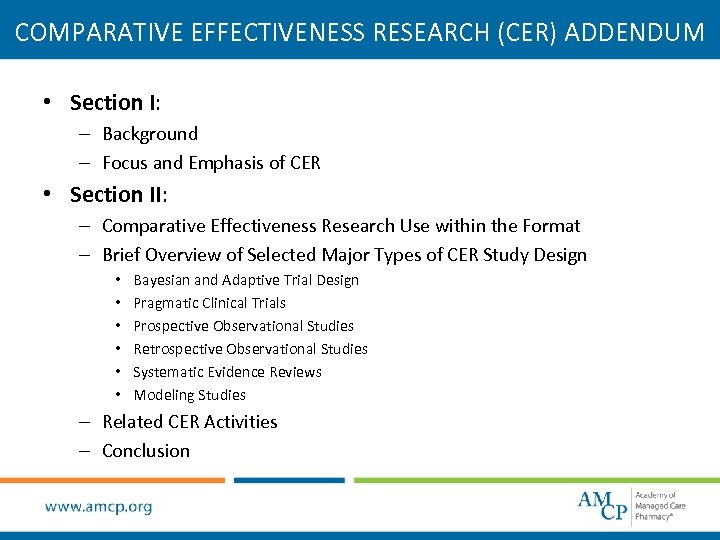
COMPARATIVE EFFECTIVENESS RESEARCH (CER) ADDENDUM • Section I: – Background – Focus and Emphasis of CER • Section II: – Comparative Effectiveness Research Use within the Format – Brief Overview of Selected Major Types of CER Study Design • • • Bayesian and Adaptive Trial Design Pragmatic Clinical Trials Prospective Observational Studies Retrospective Observational Studies Systematic Evidence Reviews Modeling Studies – Related CER Activities – Conclusion
SPECIALTY PHARMACEUTICALS ADDENDUM This section intends to explain where the particular characteristics of these drugs fit into the existing Format, and where special considerations, if any, are needed. This current framework for sharing evidence has been designed to communicate clinical and economic value for most technologies and is flexible enough to cover both traditional and specialty drugs
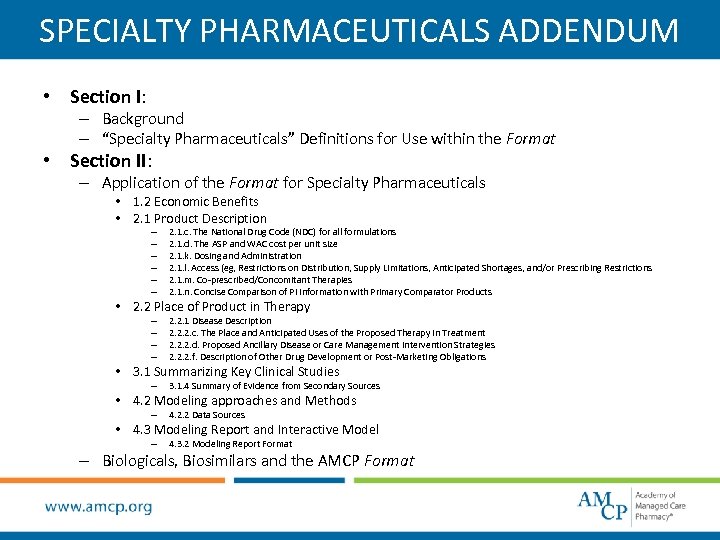
SPECIALTY PHARMACEUTICALS ADDENDUM • Section I: – Background – “Specialty Pharmaceuticals” Definitions for Use within the Format • Section II: – Application of the Format for Specialty Pharmaceuticals • 1. 2 Economic Benefits • 2. 1 Product Description – – – 2. 1. c. The National Drug Code (NDC) for all formulations 2. 1. d. The ASP and WAC cost per unit size 2. 1. k. Dosing and Administration 2. 1. l. Access (eg, Restrictions on Distribution, Supply Limitations, Anticipated Shortages, and/or Prescribing Restrictions 2. 1. m. Co-prescribed/Concomitant Therapies 2. 1. n. Concise Comparison of PI Information with Primary Comparator Products • 2. 2 Place of Product in Therapy – – 2. 2. 1 Disease Description 2. 2. 2. c. The Place and Anticipated Uses of the Proposed Therapy in Treatment 2. 2. 2. d. Proposed Ancillary Disease or Care Management Intervention Strategies 2. 2. 2. f. Description of Other Drug Development or Post-Marketing Obligations • 3. 1 Summarizing Key Clinical Studies – 3. 1. 4 Summary of Evidence from Secondary Sources • 4. 2 Modeling approaches and Methods – 4. 2. 2 Data Sources • 4. 3 Modeling Report and Interactive Model – 4. 3. 2 Modeling Report Format – Biologicals, Biosimilars and the AMCP Format
Reality Check – The Format • Does: – Identify evidence needed – Define how it should be presented – Provide more complete data for a sound P&T decision • Does not: – Provide a precise answer – Define the decision-making process – Guarantee better decisions – Guarantee lower health care expenditures
Formulary (New) Drug Evaluation Tool Short Form A. Evidence of need - Is there compelling evidence of a need to add this drug to our formulary? B. Efficacy – What is the evidence to support the claims for this drug? C. Safety – What safety issues need to be considered? D. Misuse impact potential – If placed on the formulary, what is the potential for misuse or overuse? E. Cost Issues – Can we justify the cost of this drug? F. Decision-making information, calculations, timing and process – What is the strength and quality of evidence and information available to the Committee? What is status and quality of the review process at our institution?
Final Note: “The AMCP Format has the potential to serve as a national, unifying template for P&T committees to consider clinical and economic information in a systematic and rigorous fashion. It is a welcome development for a U. S. health system that is in need of more rigorous evaluation of evidence. ” Peter J. Neumann, Sc. D, Foreword to the AMCP Format for Formulary Submissions, Version 2. 1, April 2005.
Reference • AMCP Foundation. The AMCP Format for Formulary Submissions. Version 3. 1. A Format For Submission Of Clinical And Economic Evidence Of Pharmaceuticals In Support Of The Formulary Consideration. Alexandria, VA: Academy of Managed Care Pharmacy; December 2012. Available at: http: //www. amcp. org/practice-resources/amcp-format-formularysubmisions. pdf
Thank you to AMCP member Jay Jackson for creating this slide deck for 2015.
Скачать презентацию AMCP Format for Formulary Submissions Presentation Developed for
a95ce8a0de5d0821d730e678cd2e8da0.ppt