


 Скачать презентацию Amazing huge forests the lungs of our planet
rainforests.pptx
- Количество слайдов: 16
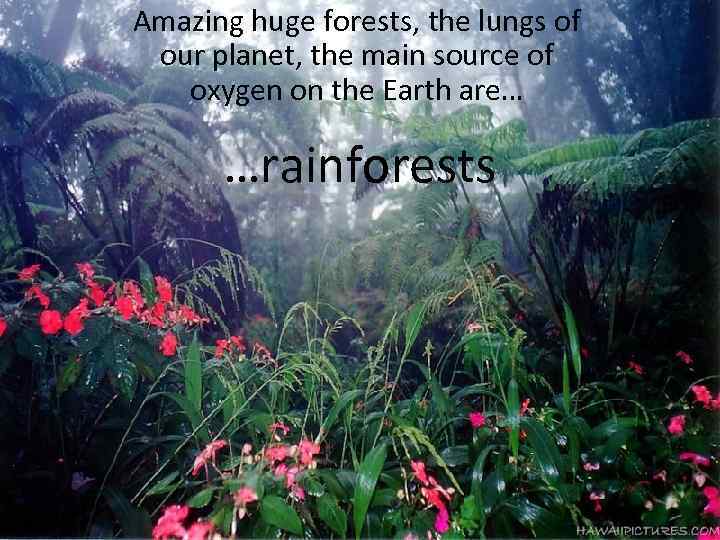 Amazing huge forests, the lungs of our planet, the main source of oxygen on the Earth are… …rainforests
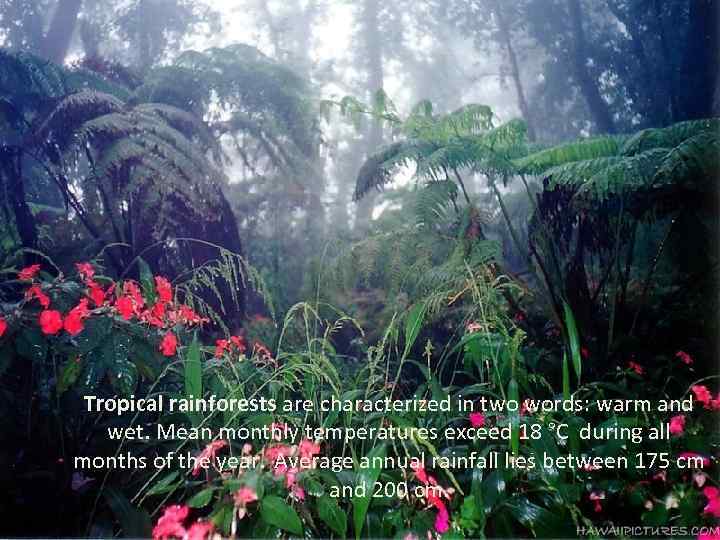 Tropical rainforests are characterized in two words: warm and wet. Mean monthly temperatures exceed 18 °C during all months of the year. Average annual rainfall lies between 175 cm and 200 cm.
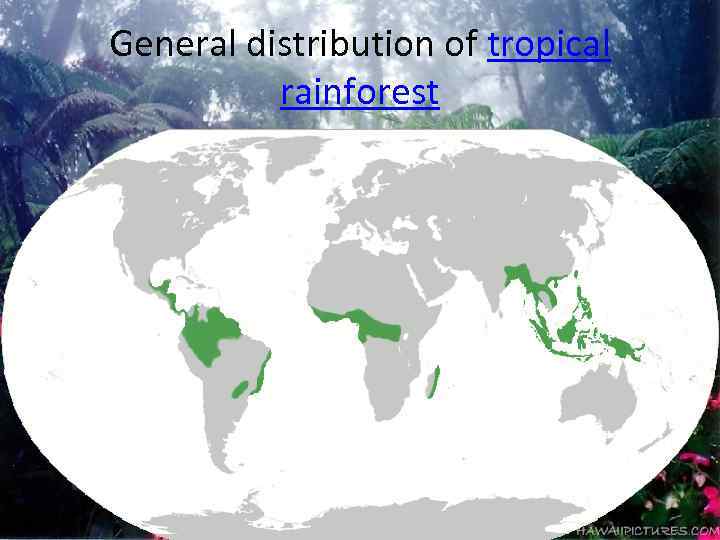 General distribution of tropical rainforest
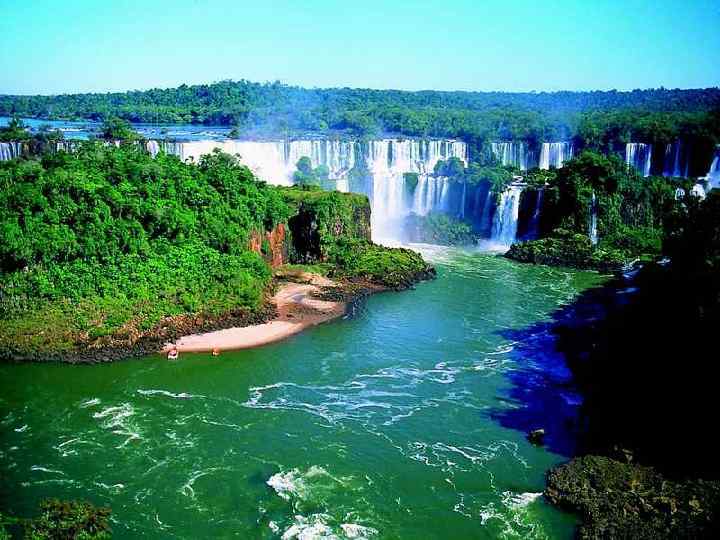
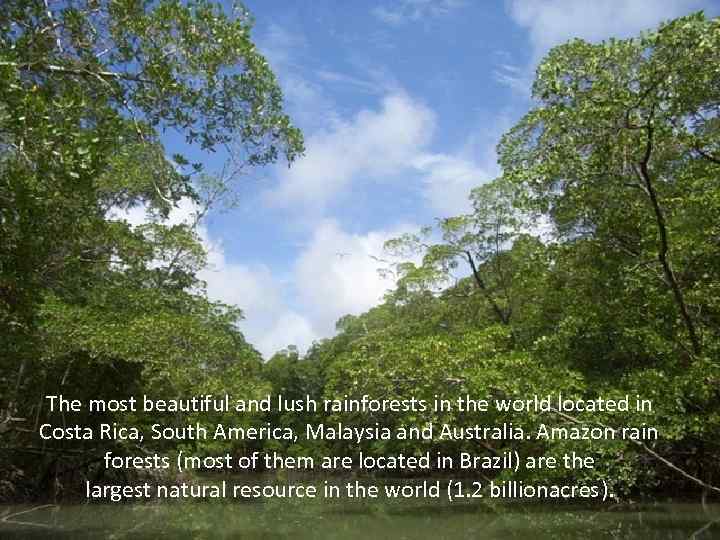 The most beautiful and lush rainforests in the world located in Costa Rica, South America, Malaysia and Australia. Amazon rain forests (most of them are located in Brazil) are the largest natural resource in the world (1. 2 billionacres).
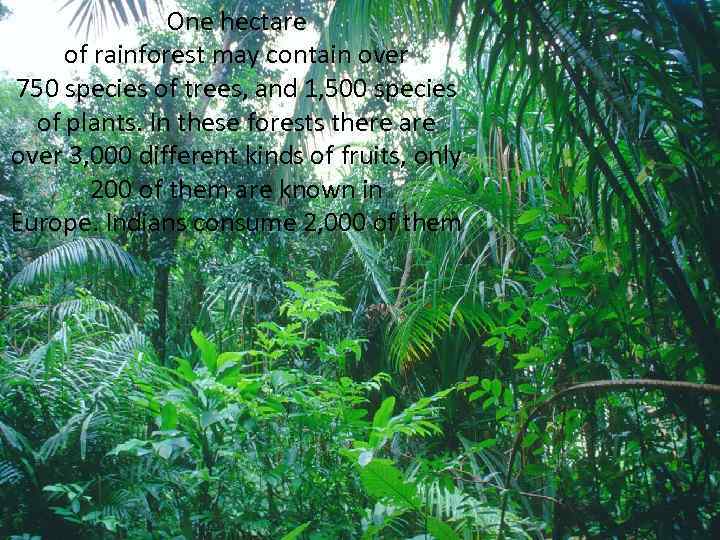 One hectare of rainforest may contain over 750 species of trees, and 1, 500 species of plants. In these forests there are over 3, 000 different kinds of fruits, only 200 of them are known in Europe. Indians consume 2, 000 of them
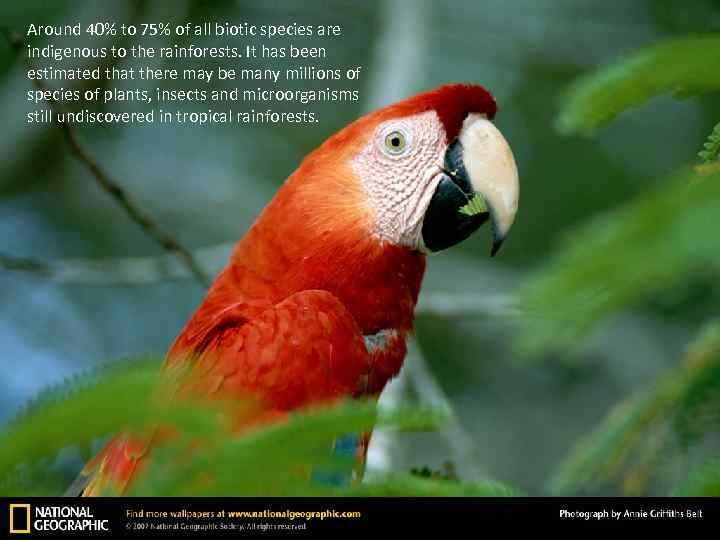 Around 40% to 75% of all biotic species are indigenous to the rainforests. It has been estimated that there may be many millions of species of plants, insects and microorganisms still undiscovered in tropical rainforests.
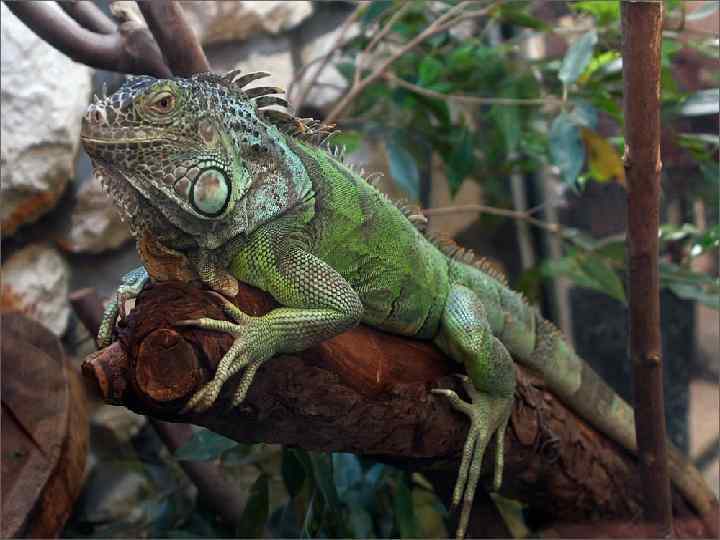
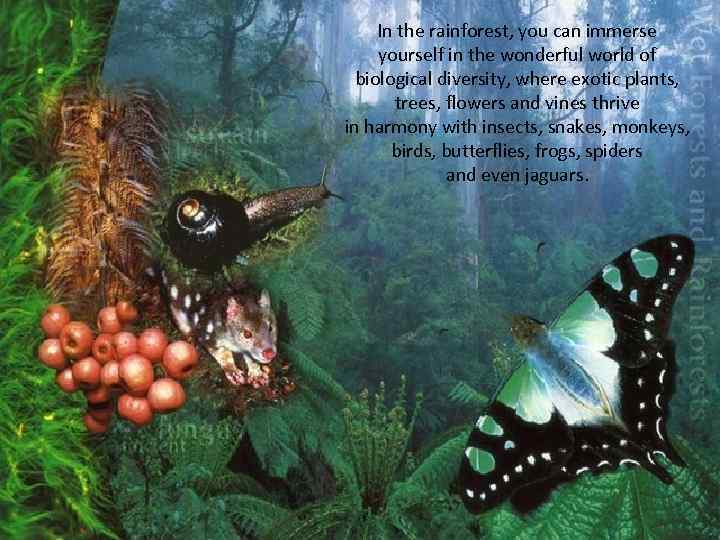 In the rainforest, you can immerse yourself in the wonderful world of biological diversity, where exotic plants, trees, flowers and vines thrive in harmony with insects, snakes, monkeys, birds, butterflies, frogs, spiders and even jaguars.
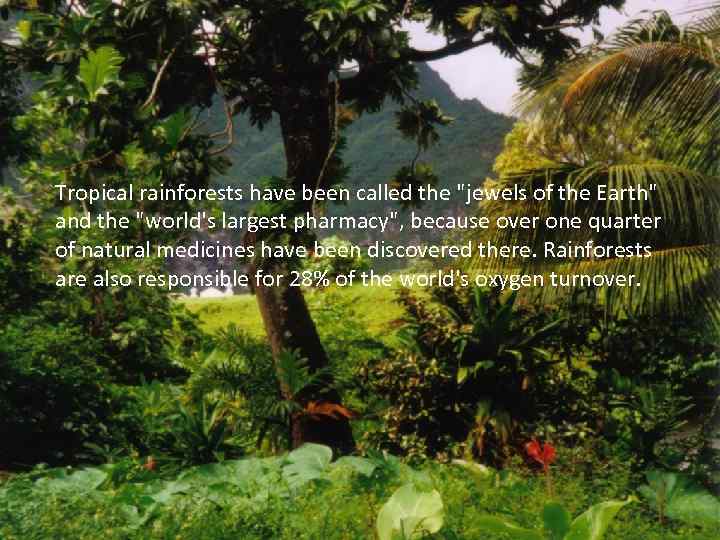 Tropical rainforests have been called the "jewels of the Earth" and the "world's largest pharmacy", because over one quarter of natural medicines have been discovered there. Rainforests are also responsible for 28% of the world's oxygen turnover.
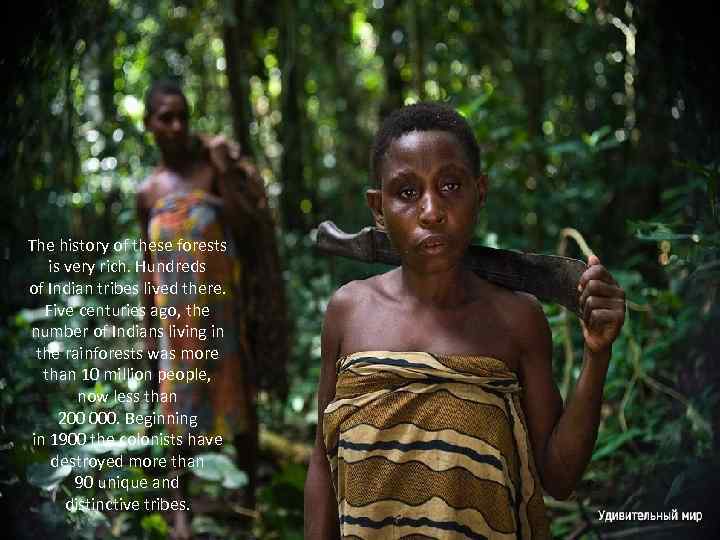 The history of these forests is very rich. Hundreds of Indian tribes lived there. Five centuries ago, the number of Indians living in the rainforests was more than 10 million people, now less than 200 000. Beginning in 1900 the colonists have destroyed more than 90 unique and distinctive tribes.
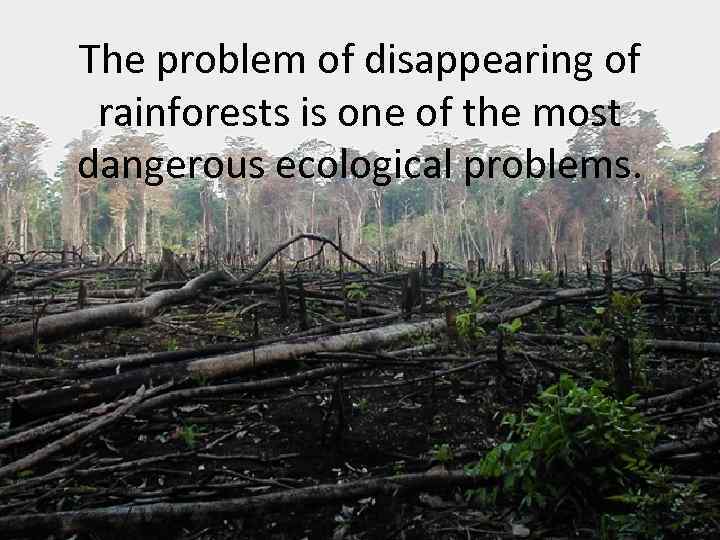 The problem of disappearing of rainforests is one of the most dangerous ecological problems.
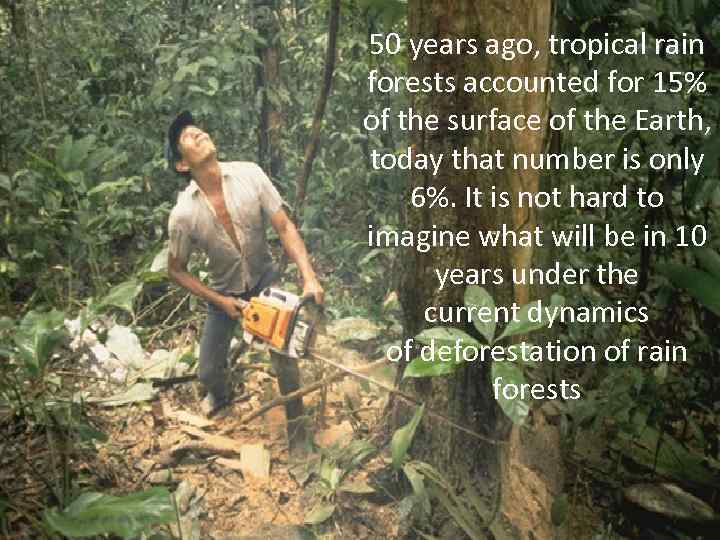 50 years ago, tropical rain forests accounted for 15% of the surface of the Earth, today that number is only 6%. It is not hard to imagine what will be in 10 years under the current dynamics of deforestation of rain forests
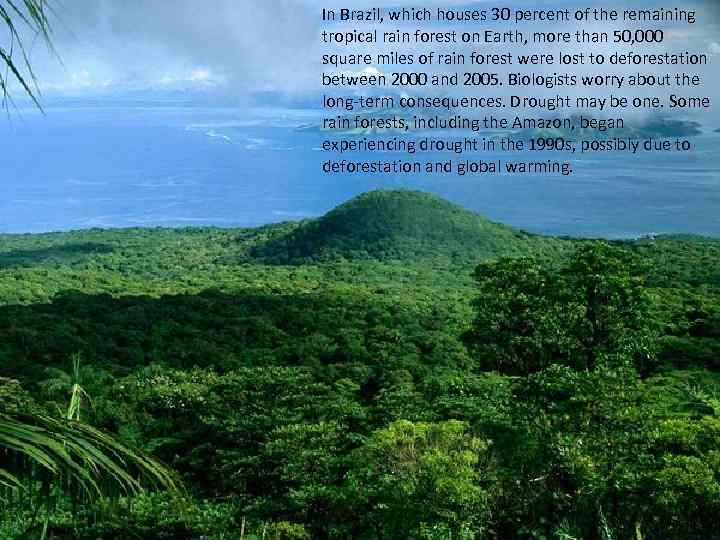 In Brazil, which houses 30 percent of the remaining tropical rain forest on Earth, more than 50, 000 square miles of rain forest were lost to deforestation between 2000 and 2005. Biologists worry about the long-term consequences. Drought may be one. Some rain forests, including the Amazon, began experiencing drought in the 1990 s, possibly due to deforestation and global warming.
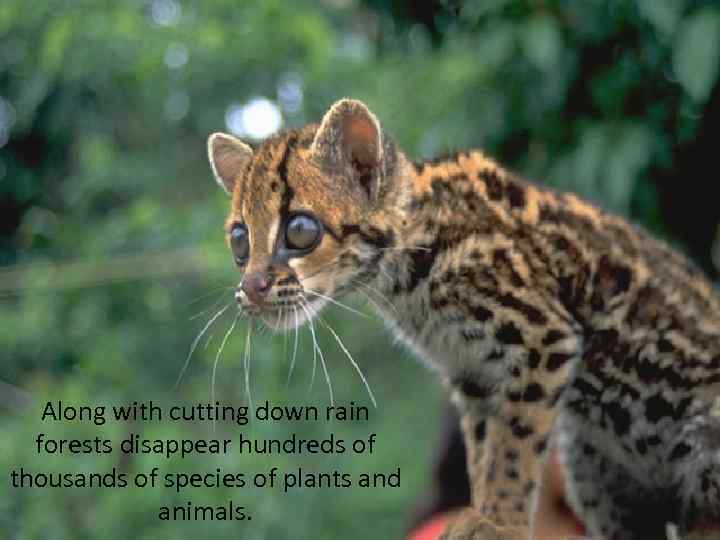 Along with cutting down rain forests disappear hundreds of thousands of species of plants and animals.
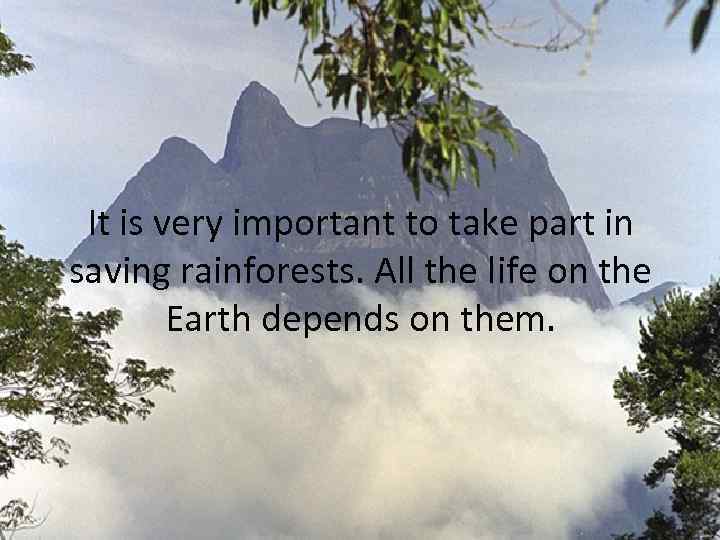 It is very important to take part in saving rainforests. All the life on the Earth depends on them.