 Скачать презентацию Amateur Beacons for the st Century 21 Andy
69e0bc1f47876b7ed5debb7fc064f400.ppt
- Количество слайдов: 34



Amateur Beacons for the st Century 21 Andy Talbot G 4 JNT / G 8 IMR September 2010
What is a Beacon ? A Transmitter at a Known Location That transmits a prestored message, With Limited Information Content, Continuously, or Periodically, On a Known Frequency, For reception by anyone
What do we want beacons for ? Band openings, but there’s nobody on! Is there anybody out there, is the band dead? I can’t hear anyone, is it working? Frequency Calibration Antenna and Bearing setup
What do we have now HF Beacons IARU Beacon chain 14 - 28 MHz, Five Frequencies CW and Power Stepped Carrier – 10 seconds Time Sequenced • Poor frequency stability / accuracy
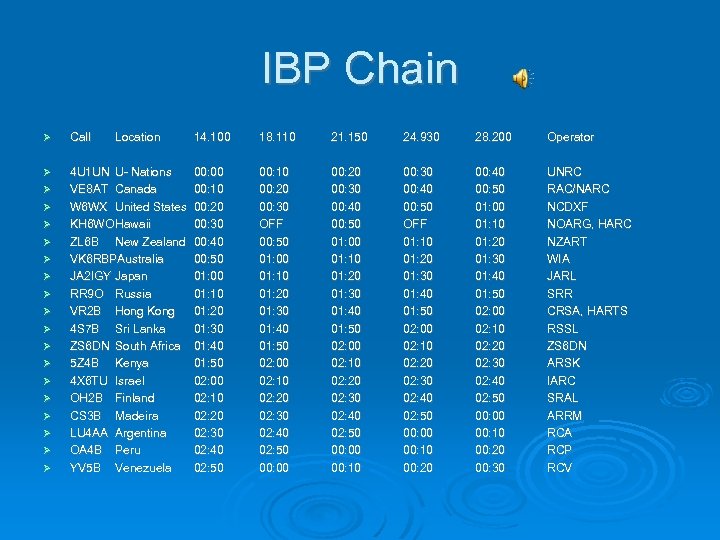
IBP Chain Call 4 U 1 UN U- Nations VE 8 AT Canada W 6 WX United States KH 6 WO Hawaii ZL 6 B New Zealand VK 6 RBPAustralia JA 2 IGY Japan RR 9 O Russia VR 2 B Hong Kong 4 S 7 B Sri Lanka ZS 6 DN South Africa 5 Z 4 B Kenya 4 X 6 TU Israel OH 2 B Finland CS 3 B Madeira LU 4 AA Argentina OA 4 B Peru YV 5 B Venezuela Location 14. 100 18. 110 21. 150 24. 930 28. 200 Operator 00: 00 00: 10 00: 20 00: 30 00: 40 00: 50 01: 00 01: 10 01: 20 01: 30 01: 40 01: 50 02: 00 02: 10 02: 20 02: 30 02: 40 02: 50 00: 10 00: 20 00: 30 OFF 00: 50 01: 00 01: 10 01: 20 01: 30 01: 40 01: 50 02: 00 02: 10 02: 20 02: 30 02: 40 02: 50 00: 00 00: 20 00: 30 00: 40 00: 50 01: 00 01: 10 01: 20 01: 30 01: 40 01: 50 02: 00 02: 10 02: 20 02: 30 02: 40 02: 50 00: 00 00: 10 00: 30 00: 40 00: 50 OFF 01: 10 01: 20 01: 30 01: 40 01: 50 02: 00 02: 10 02: 20 02: 30 02: 40 02: 50 00: 00 00: 10 00: 20 00: 40 00: 50 01: 00 01: 10 01: 20 01: 30 01: 40 01: 50 02: 00 02: 10 02: 20 02: 30 02: 40 02: 50 00: 00 00: 10 00: 20 00: 30 UNRC RAC/NARC NCDXF NOARG, HARC NZART WIA JARL SRR CRSA, HARTS RSSL ZS 6 DN ARSK IARC SRAL ARRM RCA RCP RCV
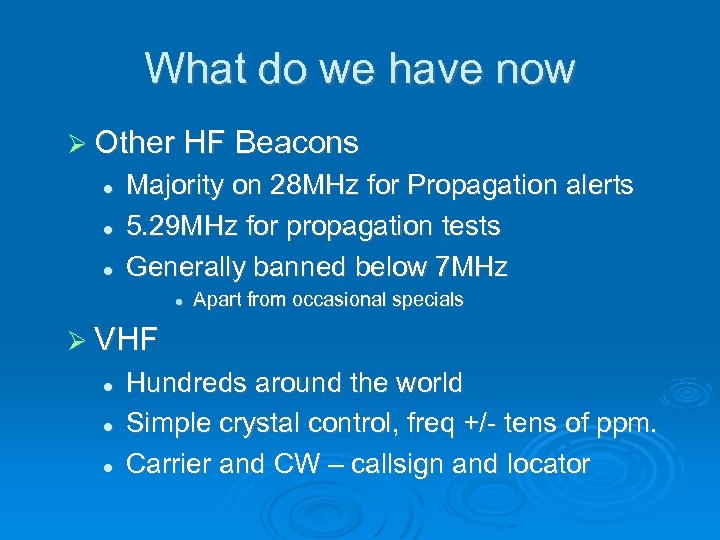
What do we have now Other HF Beacons Majority on 28 MHz for Propagation alerts 5. 29 MHz for propagation tests Generally banned below 7 MHz Apart from occasional specials VHF Hundreds around the world Simple crystal control, freq +/- tens of ppm. Carrier and CW – callsign and locator
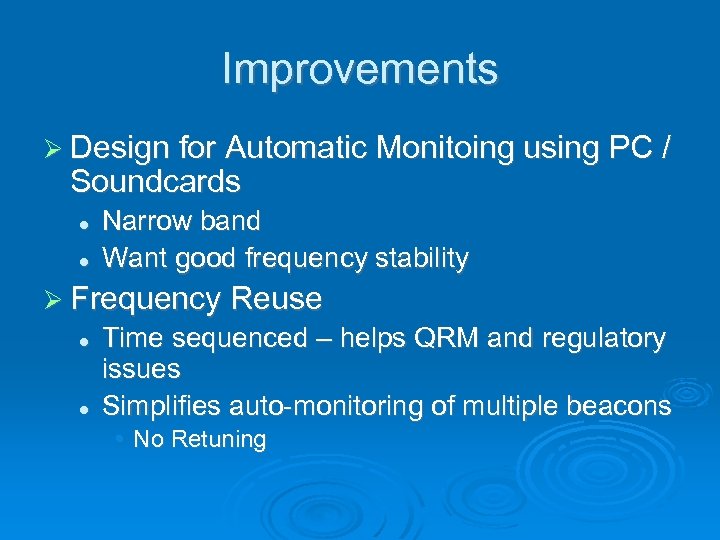
Improvements Design for Automatic Monitoing using PC / Soundcards Narrow band Want good frequency stability Frequency Reuse Time sequenced – helps QRM and regulatory issues Simplifies auto-monitoring of multiple beacons • No Retuning
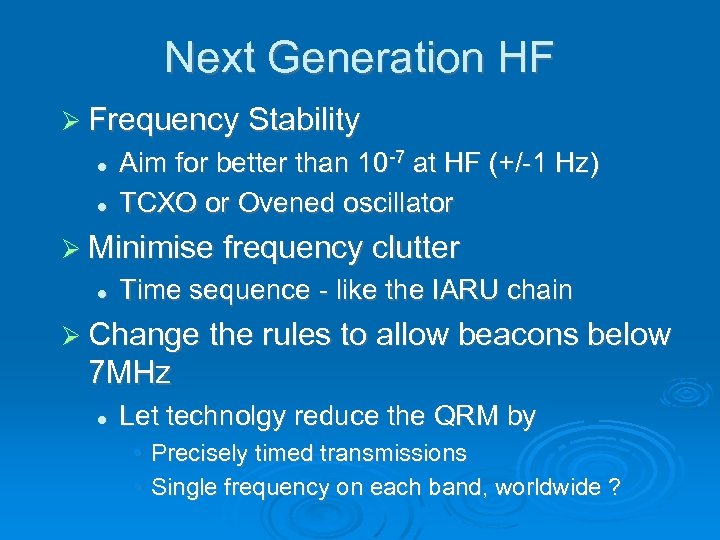
Next Generation HF Frequency Stability Aim for better than 10 -7 at HF (+/-1 Hz) TCXO or Ovened oscillator Minimise frequency clutter Time sequence - like the IARU chain Change the rules to allow beacons below 7 MHz Let technolgy reduce the QRM by • Precisely timed transmissions • Single frequency on each band, worldwide ?
WSPR ? ? • Already Well Established • Reporting Website in place • Automated reports How About a Network of WSPR Beacons ?
Data Modes PSK 31 or RTTY could carry information Propagation state, band openings Site telemetry Unique time signature confirms reception Time / Temperature / Pressure / ? ? ? Status of other beacons QSL / Report Checking
Next Generation VHF Decent Frequency accuracy Ovened crystal or GPS locked Look for 10 -9 accuracy (sub Hz) for auto search Add weak signal data modes JT 65 Extended period of coherent carrier for very narrow band integration PSK reversals for time-of-flight mewasurement
Microwave Beacons Often Used when / Portable for : Frequency calibration Dish and Bearing setup Propagation Monitoring
Microwave Beacons Frequency accuracy even more important as They are often used for calibration We need a lot more μWave beacons to ensure everyone can hear at least one on each band Personal beacons Attended or unattended Licensing easier at microwaves
What is needed – where shall we go? Some Examples of next-generation beacons are already out there….
The 5 MHz beacon chain GB 3 RAL GB 3 WES GB 3 ORK transmit in sequence. • 1 minute every 15 GPS timed Power steps over 54 d. B for audible S/N estimation TCXO frequency control (few Hz) The system was designed for automatic logging (G 3 PLX software) Cover a complete sunspot cycle
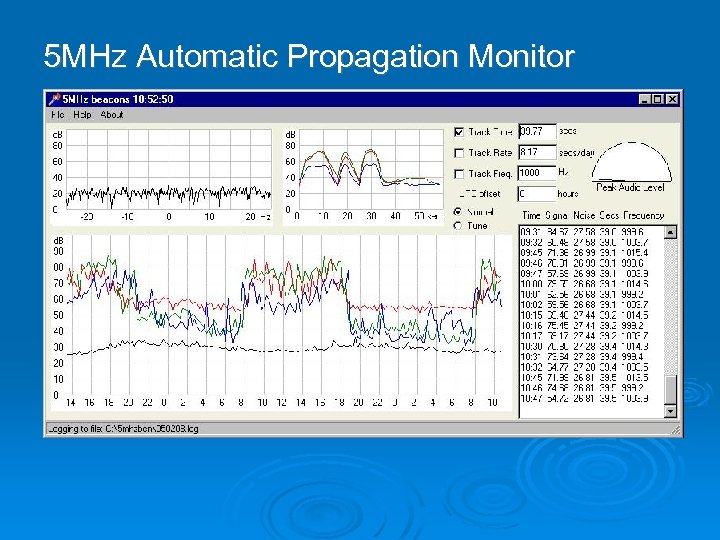
5 MHz Automatic Propagation Monitor
GB 3 SSS 1. 96 MHz / 3. 6 MHz Temporary beacon for winter transatlantic propagation tests from Poldhu 1 Nov to end Jan 2007 Year later on 3. 6 MHz Sequence similar to the 5 MHz beacons 1 / 15 minutes, power steps, carrier PSK 31 message – decoded in Canada All waveforms generated in DDS chip
GB 3 VHF 144. 43 MHz Wrotham, Kent GPS Controlled frequency and time JT 65, CW, 1 pps PSK Two minute repeat cycle Generic beacon driver concept Up to 16 thirty second time slots can each be allocated to different modes
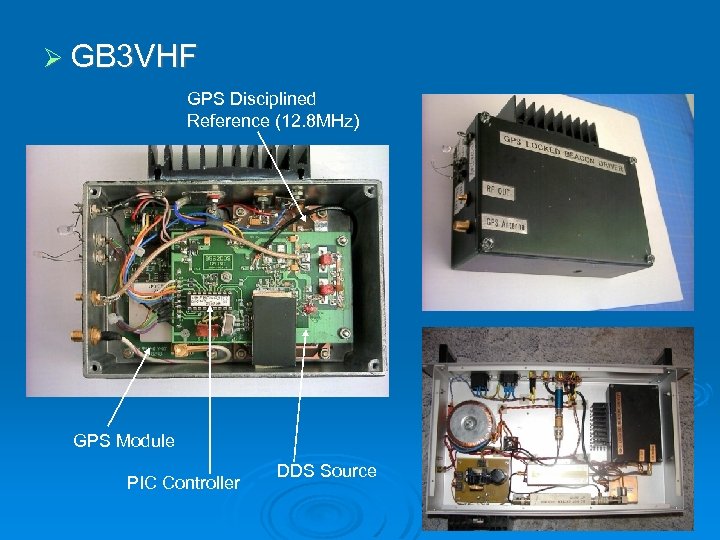
GB 3 VHF GPS Disciplined Reference (12. 8 MHz) GPS Module PIC Controller DDS Source
GB 3 RAL VHF Chain 40. 05 50. 05 60. 05, 70. 05 MHz Phase coherent from GPS Locked master reference JT 65, CW, 1 pps PSK Two minute repeat cycle
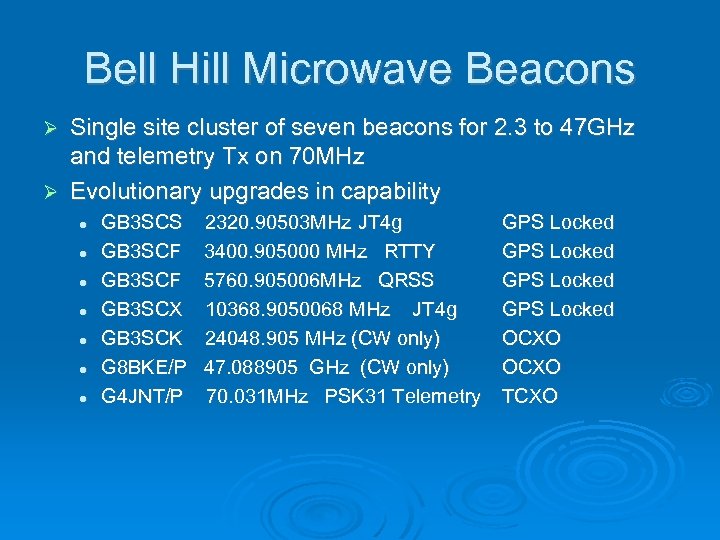
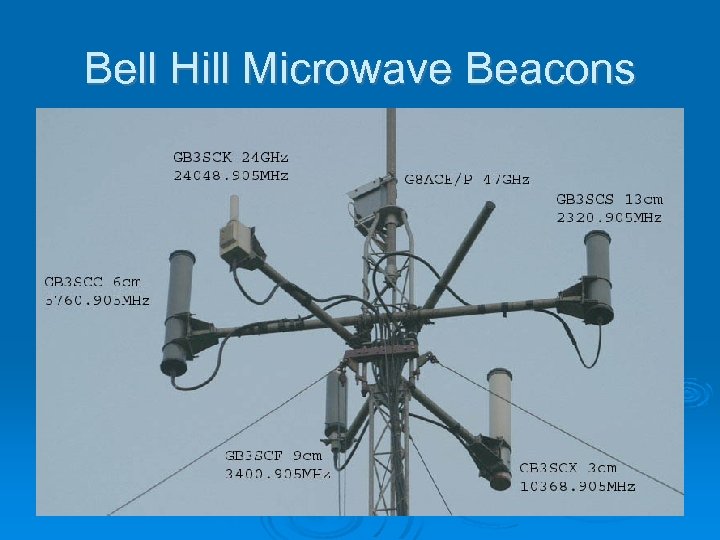
Bell Hill Microwave Beacons Single site cluster of seven beacons for 2. 3 to 47 GHz and telemetry Tx on 70 MHz Evolutionary upgrades in capability GB 3 SCS GB 3 SCF GB 3 SCX GB 3 SCK G 8 BKE/P G 4 JNT/P 2320. 90503 MHz JT 4 g 3400. 905000 MHz RTTY 5760. 905006 MHz QRSS 10368. 9050068 MHz JT 4 g 24048. 905 MHz (CW only) 47. 088905 GHz (CW only) 70. 031 MHz PSK 31 Telemetry GPS Locked OCXO TCXO
Bell Hill Microwave Beacons
Beacon Hardware
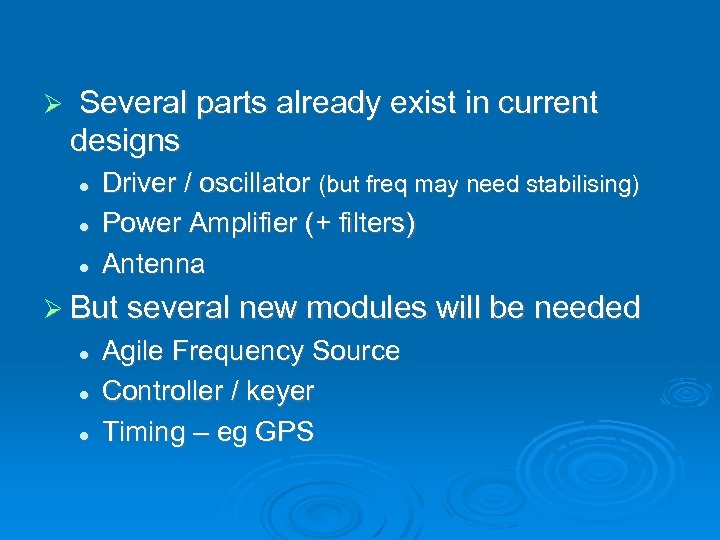
Several parts already exist in current designs Driver / oscillator (but freq may need stabilising) Power Amplifier (+ filters) Antenna But several new modules will be needed Agile Frequency Source Controller / keyer Timing – eg GPS
Power Amplifier Power Steps, PSK 31 etc need a linear PA For low duty cycle time sequenced, simple class A or A/B MOSFET design is ideal Broadband – so useable over multiple bands (beware filtering needs) High duty cycle with no linear modes Class C design is better suited. Particularly at VHF / UHF Frequency Multiplication
Frequency Source Crystal oscillator Single frequency, no data modes Poor Frequency Stability Use oven or clip-on heater DDS Directly useable at HF and low VHF • • • Spurii need cleaning up for higher frequencies GB 3 VHF - additional crystal filter μWave beacons, lock crystal oscillator to DDS O/P Direct generation of most data modes Clock from standard frequency reference (10 MHz)
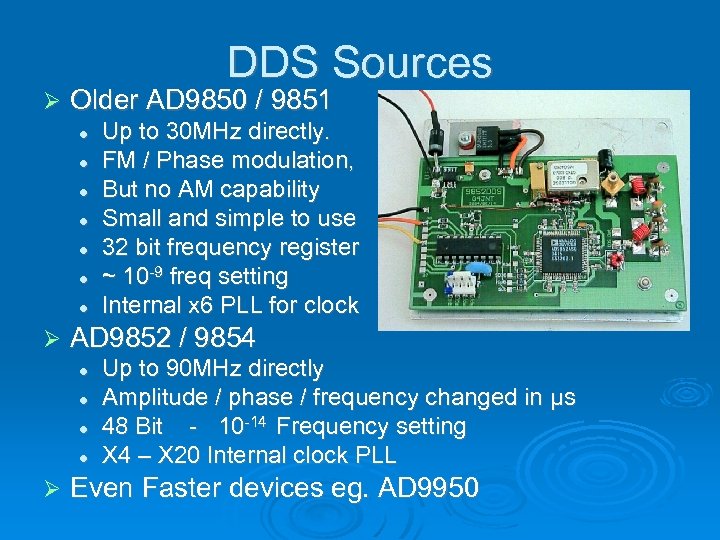
DDS Sources Older AD 9850 / 9851 AD 9852 / 9854 Up to 30 MHz directly. FM / Phase modulation, But no AM capability Small and simple to use 32 bit frequency register ~ 10 -9 freq setting Internal x 6 PLL for clock Up to 90 MHz directly Amplitude / phase / frequency changed in μs 48 Bit - 10 -14 Frequency setting X 4 – X 20 Internal clock PLL Even Faster devices eg. AD 9950
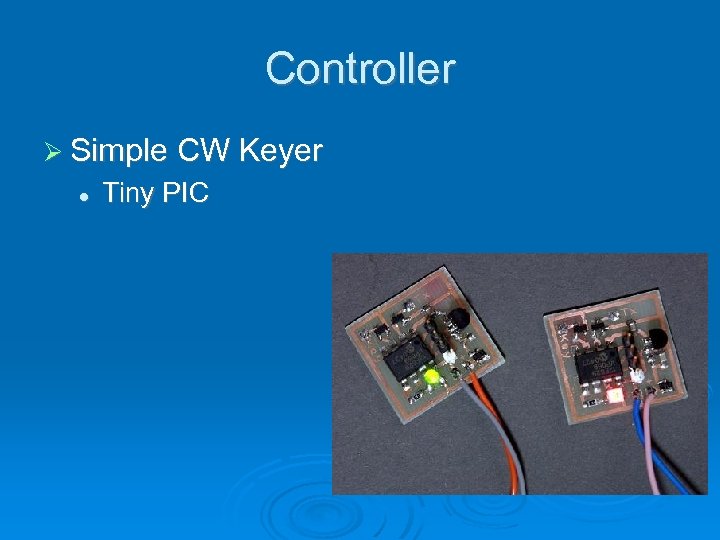
Controller Simple CW Keyer Tiny PIC
More Advanced Controller Microcontroller eg. PIC ‘Workhorse’ 16 F 628 has enough power for most controller tasks Reprogramme a Direct Digital Synthesizer in real time to generate data modes AD 9852 100μs to reprogramme (serial) PSK 31, JT 65, FSK 441 and RTTY demonstrated already. Accept external data / telemetry inputs
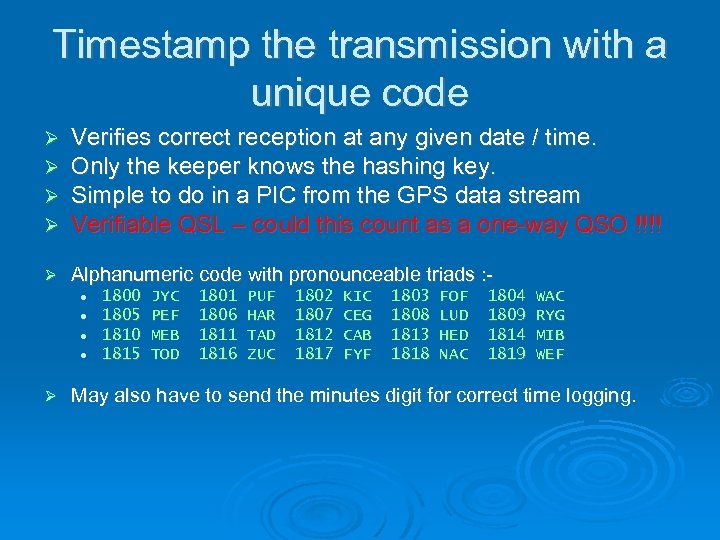
Timestamp the transmission with a unique code Verifies correct reception at any given date / time. Only the keeper knows the hashing key. Simple to do in a PIC from the GPS data stream Verifiable QSL – could this count as a one-way QSO !!!! Alphanumeric code with pronounceable triads : 1800 1805 1810 1815 JYC PEF MEB TOD 1801 1806 1811 1816 PUF HAR TAD ZUC 1802 1807 1812 1817 KIC CEG CAB FYF 1803 1808 1813 1818 FOF LUD HED NAC 1804 1809 1814 1819 WAC RYG MIB WEF May also have to send the minutes digit for correct time logging.
Repeater Beacons Add a receiver and data decoding Decode your callsign sent to it Reply with acknowledgement and report Who will be the first ?
Reverse Beacon Instead of a Transmitter Just a receiver with Internet Connection You transmit to it It reports to the web site, shows spectrum There a number of these at LF, Ideal for antenna / transmitter tests OR, phone up, transmit and listen (Modest) premium rate phone number could finance it
And talking of Finance. . . Beacons Cost Money Site Rental (Bell Hill £ 500 per year) Electricity (Bell Hill 200 Watts 24/7) Operators travelling Costs for maintenance And, of course, the hardware itself http: //www. scrbg. org/donate/ Hamfest Stand
Questions ?
Скачать презентацию Amateur Beacons for the st Century 21 Andy
69e0bc1f47876b7ed5debb7fc064f400.ppt