 Скачать презентацию am big u ous Pronunciation am-ˈbi-gyə-wəs Function adjective Etymology Latin ambiguus
2b6b62d90ddaa08a4d4981bf2b3b14a7.ppt
- Количество слайдов: 15



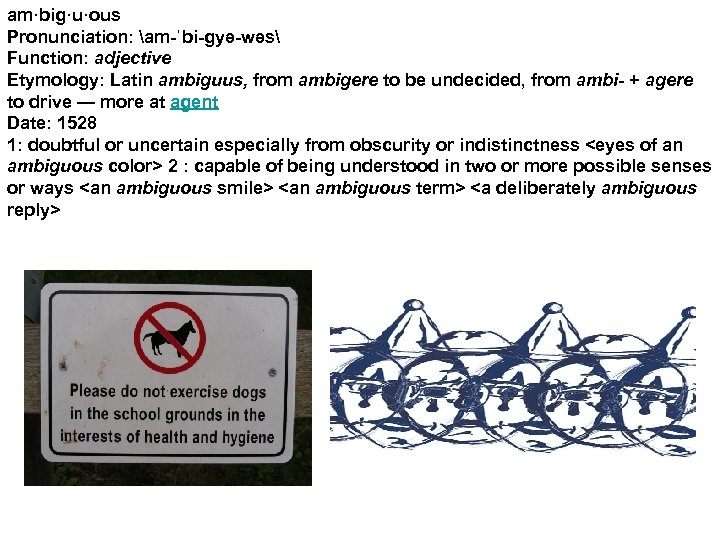
am·big·u·ous Pronunciation: am-ˈbi-gyə-wəs Function: adjective Etymology: Latin ambiguus, from ambigere to be undecided, from ambi- + agere to drive — more at agent Date: 1528 1: doubtful or uncertain especially from obscurity or indistinctness <eyes of an ambiguous color> 2 : capable of being understood in two or more possible senses or ways <an ambiguous smile> <an ambiguous term> <a deliberately ambiguous reply>
![boy·cott Pronunciation: [boi-kot] Function verb (used with object) Etymology : after Charles C. Boycott](https://present5.com/presentation/2b6b62d90ddaa08a4d4981bf2b3b14a7/image-2.jpg "boy·cott Pronunciation: [boi-kot] Function verb (used with object) Etymology : after Charles C. Boycott")
boy·cott Pronunciation: [boi-kot] Function verb (used with object) Etymology : after Charles C. Boycott (1832– 97), English estate manager in Ireland, against whom nonviolent coercive tactics were used in 1880 1. to combine in abstaining from, or preventing dealings with, as a means of intimidation or coercion: to boycott a store. 2. to abstain from buying or using: to boycott foreign products. Boycott can be confused with embargo.

![gar·goyle Pronunciation [gahr-goil] Show IPA Function: noun Etymology: 1250– 1300; ME gargoile < OF](https://present5.com/presentation/2b6b62d90ddaa08a4d4981bf2b3b14a7/image-4.jpg "gar·goyle Pronunciation [gahr-goil] Show IPA Function: noun Etymology: 1250– 1300; ME gargoile < OF")
gar·goyle Pronunciation [gahr-goil] Show IPA Function: noun Etymology: 1250– 1300; ME gargoile < OF gargouille, gargoule lit. , throat; see gargle 1. a grotesquely carved figure of a human or animal. 2. a spout, terminating in a grotesque representation of a human or animal figure with open mouth, projecting from the gutter of a building for throwing rain water clear of a building.
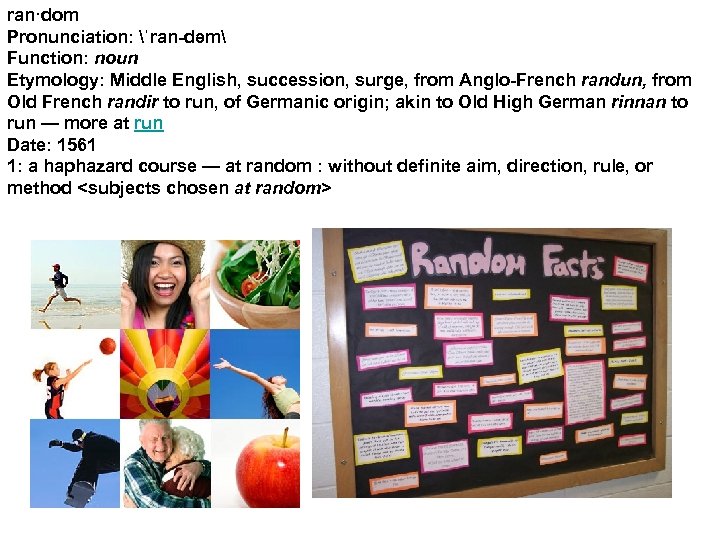
ran·dom Pronunciation: ˈran-dəm Function: noun Etymology: Middle English, succession, surge, from Anglo-French randun, from Old French randir to run, of Germanic origin; akin to Old High German rinnan to run — more at run Date: 1561 1: a haphazard course — at random : without definite aim, direction, rule, or method <subjects chosen at random>
![ger·ry·man·der Pronunciation: [jer-i-man-der, ger-] Function: noun Etymology : 1812, Americanism ; after E. Gerry](https://present5.com/presentation/2b6b62d90ddaa08a4d4981bf2b3b14a7/image-6.jpg "ger·ry·man·der Pronunciation: [jer-i-man-der, ger-] Function: noun Etymology : 1812, Americanism ; after E. Gerry")
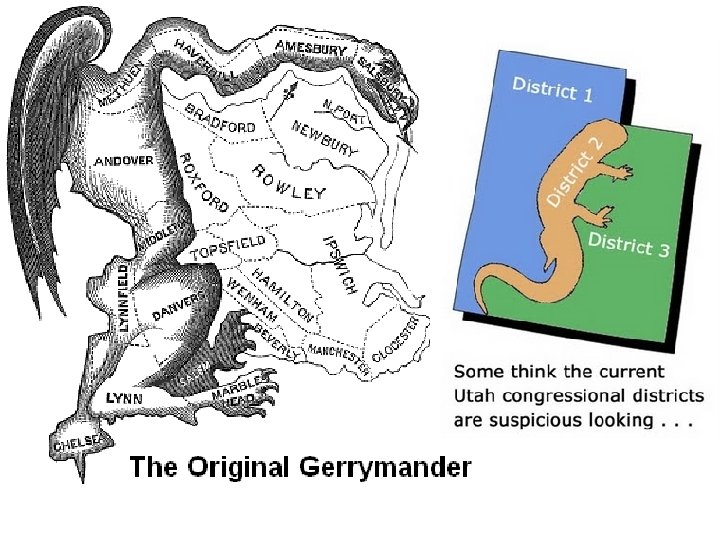
ger·ry·man·der Pronunciation: [jer-i-man-der, ger-] Function: noun Etymology : 1812, Americanism ; after E. Gerry (governor of Massachusetts, whose party redistricted the state in 1812) + ( sala ) mander, from the fancied resemblance of the map of Essex County, Mass. , to this animal, after the redistricting 1. U. S. Politics. the dividing of a state, county, etc. , into election districts so as to give one political party a majority in many districts while concentrating the voting strength of the other party into as few districts as possible.
![fra·grance Pronunciation: [frey-gruh ns] Function: noun Etymology 1660– 70; < F < LL frāgrantia.](https://present5.com/presentation/2b6b62d90ddaa08a4d4981bf2b3b14a7/image-8.jpg "fra·grance Pronunciation: [frey-gruh ns] Function: noun Etymology 1660– 70; < F < LL frāgrantia.")
fra·grance Pronunciation: [frey-gruh ns] Function: noun Etymology 1660– 70; < F < LL frāgrantia. See fragrant, -ance 1. the quality of being fragrant; a sweet or pleasing scent. 2. perfume, cologne, toilet water, or the like. Synonyms: perfume.
![fur·tive Pronunciation [fur-tiv] Function: adjective Etymology 1480– 90; < L furtīvus, equiv. to furt](https://present5.com/presentation/2b6b62d90ddaa08a4d4981bf2b3b14a7/image-9.jpg "fur·tive Pronunciation [fur-tiv] Function: adjective Etymology 1480– 90; < L furtīvus, equiv. to furt")
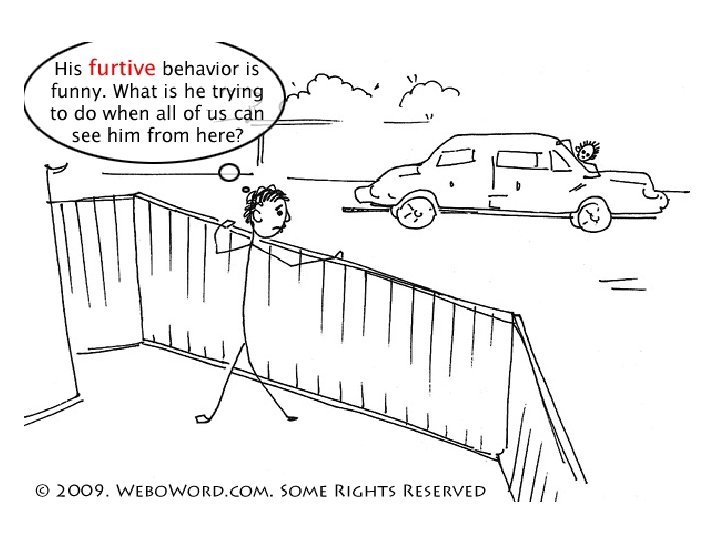
fur·tive Pronunciation [fur-tiv] Function: adjective Etymology 1480– 90; < L furtīvus, equiv. to furt ( um ) theft (cf. fūr thief) 1. taken, done, used, etc. , surreptitiously or by stealth; secret: a furtive glance. 2. sly; shifty: a furtive manner. Synonyms : 1. clandestine, covert. 2. underhand, cunning.
![gru·el·ing Pronunciation [groo-uh-ling, groo-ling] Function: adjective Etymology: 850– 55; slang gruel punishment (n. ),](https://present5.com/presentation/2b6b62d90ddaa08a4d4981bf2b3b14a7/image-11.jpg "gru·el·ing Pronunciation [groo-uh-ling, groo-ling] Function: adjective Etymology: 850– 55; slang gruel punishment (n. ),")
gru·el·ing Pronunciation [groo-uh-ling, groo-ling] Function: adjective Etymology: 850– 55; slang gruel punishment (n. ), punish (v. ) 1. exhausting; very tiring; arduously severe: the grueling Boston marathon. 2. any trying or exhausting procedure or experience.
![gus·to Pronunciation: [guhs-toh] Function: noun, plural -toes. Etymology : 1620– 30; < It <](https://present5.com/presentation/2b6b62d90ddaa08a4d4981bf2b3b14a7/image-12.jpg "gus·to Pronunciation: [guhs-toh] Function: noun, plural -toes. Etymology : 1620– 30; < It <")
gus·to Pronunciation: [guhs-toh] Function: noun, plural -toes. Etymology : 1620– 30; < It < L gustus; 1. hearty or keen enjoyment, as in eating or drinking, or in action or speech in general: to dance with gusto. 2. individual taste or liking. —Synonyms: 1. enthusiasm, delight, relish, zest, spirit, fervor.
![met·a·phor Pronunciation: [met-uh-fawr, -fer] Function: noun Etymology 1525– 35; < L metaphora < Gk](https://present5.com/presentation/2b6b62d90ddaa08a4d4981bf2b3b14a7/image-13.jpg "met·a·phor Pronunciation: [met-uh-fawr, -fer] Function: noun Etymology 1525– 35; < L metaphora < Gk")
met·a·phor Pronunciation: [met-uh-fawr, -fer] Function: noun Etymology 1525– 35; < L metaphora < Gk metaphorá a transfer, akin to metaphérein to transfer. 1: a figure of speech in which a term or phrase is applied to something to which it is not literally applicable in order to suggest a resemblance. “A mighty fortress is our god. ” mixed metaphor: 1: the use in the same expression of two or more metaphors that are incongruous or illogical when combined. "So now what we are dealing with is the rubber meeting the road, and instead of biting the bullet on these issues, we just want to punt. " (Chicago Tribune, cited by The New Yorker, August 13, 2007) "Mr. Speaker, I smell a rat. I see him floating in the air. But mark me, sir, I will nip him in the bud. " This sort of mixed metaphor may occur when a speaker is so familiar with the figurative sense of a phrase ("smell a rat, " "nip in the bud") that he fails to recognize the absurdity that results from a literal reading.
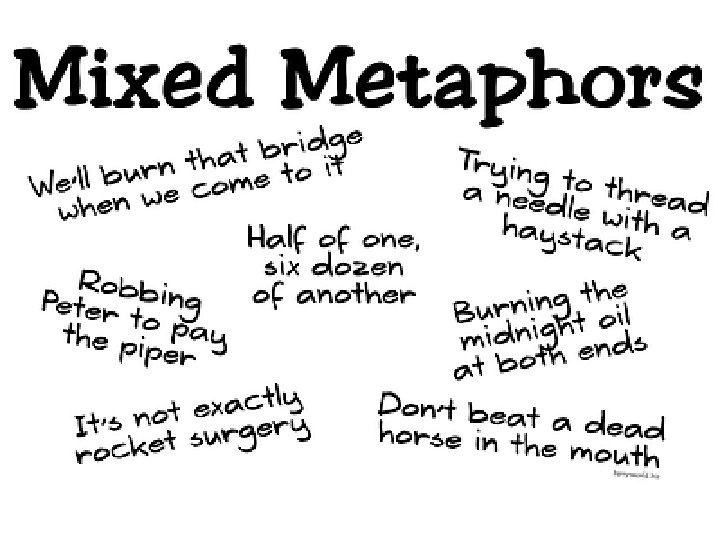
More mixed metaphors: All right, I'll admit that I have a very odd sense of humor, but I just loving mixing up metaphors. I mean, sure, I could cross that bridge when I come to it, but it's so much more interesting to burn it instead. And why look for a needle in a haystack when I could try threading one with a haystack instead? I mean, it's not exactly rocket surgery. .
Скачать презентацию am big u ous Pronunciation am-ˈbi-gyə-wəs Function adjective Etymology Latin ambiguus
2b6b62d90ddaa08a4d4981bf2b3b14a7.ppt