 Скачать презентацию Alzheimer s Disease Update on Evidence-Based Treatment Guidelines Debra
2ba37b422cabe1616de044accdab790e.ppt
- Количество слайдов: 63



Alzheimer’s Disease: Update on Evidence-Based Treatment Guidelines Debra Cherry, Ph. D Freddi Segal-Gidan, PA-C, Ph. D Bradley R. Williams, Pharm. D, CGP On behalf of the California Workgroup on Guidelines for Alzheimer’s Disease Management
Objectives Identify the typical signs and symptoms associated with Alzheimer’s disease and other dementias. Discuss the roles of cholinergic manipulation and NMDA inhibition in the treatment of Alzheimer’s disease symptoms. Recognize behavior disturbances commonly displayed by patients with dementia. Develop a therapeutic strategy for treating agitated behaviors in Alzheimer’s disease.
Mrs. R. L. is a retired librarian who visits her physician for a routine follow-up for her osteoarthritis, GERD, and glaucoma. She has enjoyed her 3 years of retirement, but reports that recently her husband has been worried about her memory. Mrs. L. states that she had started writing reminder notes, “which don’t always help. ” She admits to reading less than she used to; she also drives less because “traffic is such a problem. ”
Mrs. R. L. Mr. L. reports that his wife often returns from grocery shopping having forgotten to pick up several things that she intended to buy. At other times she will wander through the house, looking in drawers or closets for items that she had put away for safe-keeping. Although they used to go out to dinner at least once a week, they now go much less frequently because Mrs. L. states that “I just never know what to order, and it’s not as much fun as it used to be. ”
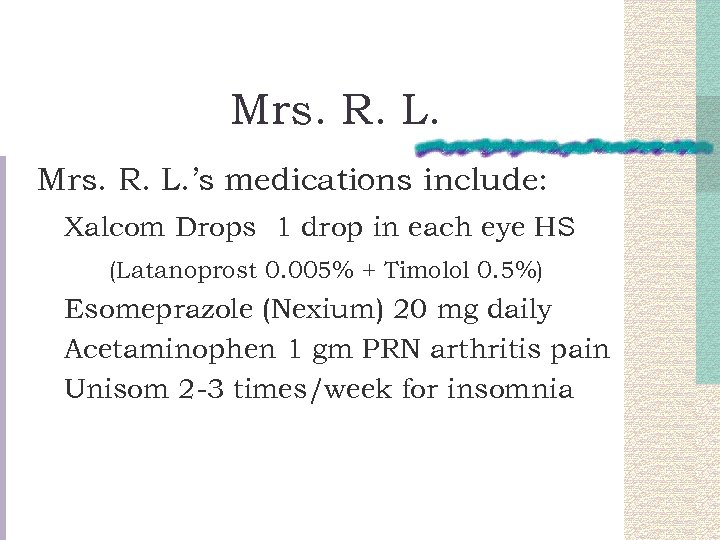
Mrs. R. L. ’s medications include: Xalcom Drops 1 drop in each eye HS (Latanoprost 0. 005% + Timolol 0. 5%) Esomeprazole (Nexium) 20 mg daily Acetaminophen 1 gm PRN arthritis pain Unisom 2 -3 times/week for insomnia
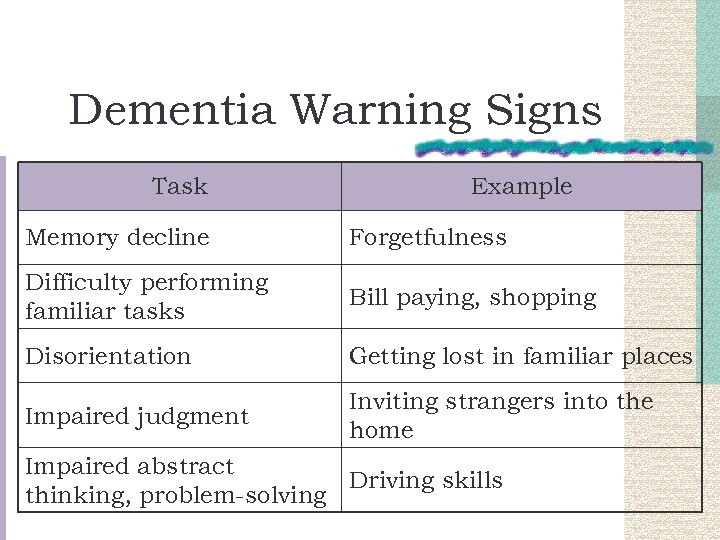
Dementia Warning Signs Task Example Memory decline Forgetfulness Difficulty performing familiar tasks Bill paying, shopping Disorientation Getting lost in familiar places Impaired judgment Inviting strangers into the home Impaired abstract Driving skills thinking, problem-solving
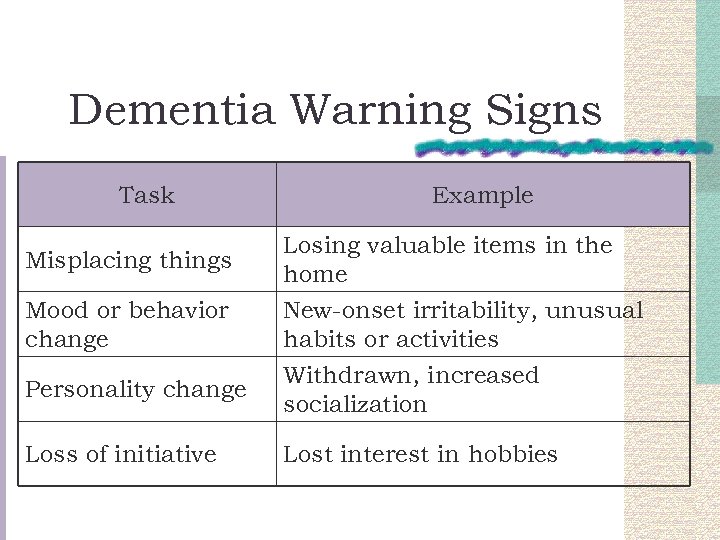
Dementia Warning Signs Task Example Misplacing things Losing valuable items in the home Mood or behavior change New-onset irritability, unusual habits or activities Personality change Withdrawn, increased socialization Loss of initiative Lost interest in hobbies
What signs and symptoms are present in Mrs. R. L. that suggest that she may have a dementia?
AD Management Assessment Treatment Patient & Family Education & Support Legal Considerations
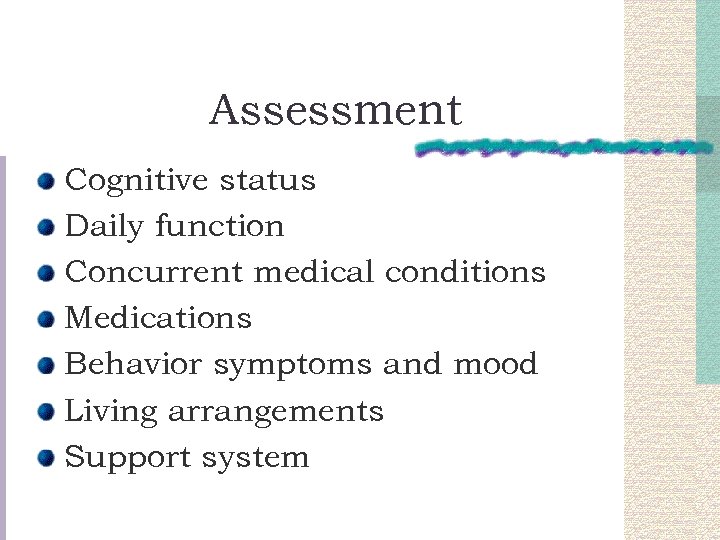
Assessment Cognitive status Daily function Concurrent medical conditions Medications Behavior symptoms and mood Living arrangements Support system
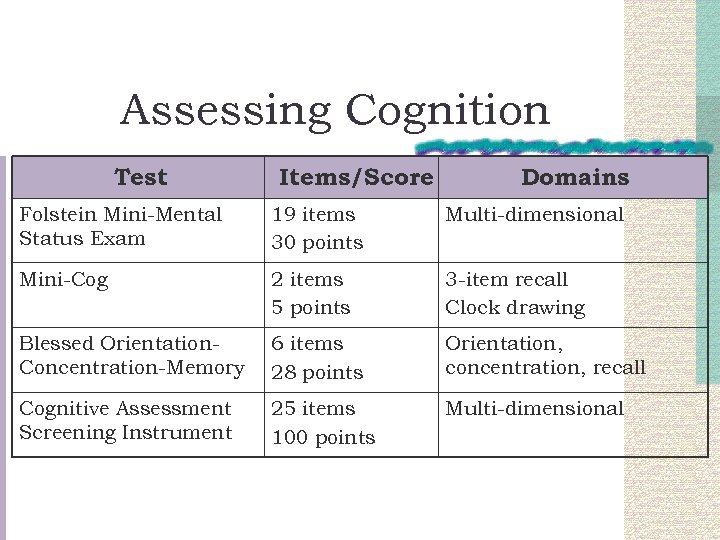
Assessing Cognition Test Items/Score Domains Folstein Mini-Mental Status Exam 19 items 30 points Multi-dimensional Mini-Cog 2 items 5 points 3 -item recall Clock drawing Blessed Orientation. Concentration-Memory 6 items 28 points Orientation, concentration, recall Cognitive Assessment Screening Instrument 25 items 100 points Multi-dimensional
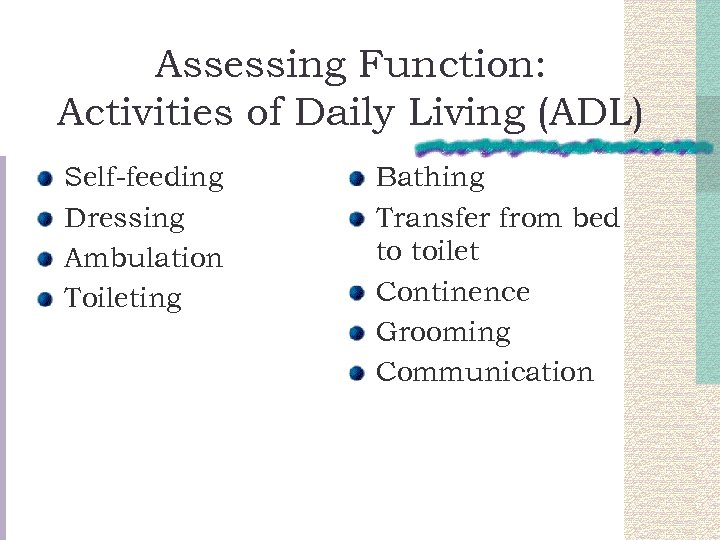
Assessing Function: Activities of Daily Living (ADL) Self-feeding Dressing Ambulation Toileting Bathing Transfer from bed to toilet Continence Grooming Communication
Assessing Function: Instrumental ADL (IADL) Writing Reading Cooking Cleaning Shopping Doing laundry Climbing stairs Using telephone Managing medication Managing money Ability to perform outside work Ability to travel (public transportation)
Concurrent Conditions Chronic disease Ability to manage Impact on function Delirium New problems Infection Cancer
Medications & Cognition Anticholinergics Benzodiazepines Sleep aids Antipsychotics Narcotics Muscle relaxants NSAIDs Anti-arrhythmics Antihypertensives Cimetidine Corticosteroids Hypoglycemic agents
Behavior and Mood Agitation Restlessness Irritability Aggression Psychosis Delusions Paranoia Hallucinations Depression Withdrawal Sleep disturbances Appetite changes Apathy Loss if interest
Living Arrangements Declining ability for self-care Patient autonomy vs. need for care Safety issues Rugs, appliances Driving Abuse and neglect Dependence Caregiver stress
Support System Spouse Ability to care for patient Family Community support Alzheimer’s Association Religious or other groups Health care resources Advance directives
How would you evaluate Mrs. R. L. regarding her condition? What concerns do you have regarding her care and situation?
Treatment Strategies Early diagnosis Family education Early treatment intervention Effective management of concurrent conditions Ongoing caregiver support
Pharmacists Can… Serve as an information resource Local Alzheimer’s Association chapters www. alz. org 1. 800. 272. 3900 Medic. Alert + Safe Return program Social service agencies Senior centers Adult day care
Helping Families Manage Meds Evaluate risk for additional, drug-induced cognitive impairment (e. g. , anticholinergics) Explain potential adverse effects Instruct families how to monitor Assess the ability of patients and caregivers to adhere to a medication regimen Adherence aids Simplify medication regimen
Disease Modifying Approaches Cholinergic manipulation Cholinesterase inhibitors All agents block acetylcholinesterase activity Rivastigmine also blocks butyrylcholinesterase Galantamine stimulates cholinergic receptors NMDA antagonist Reduces glutamate activity Regulates calcium entry into cells
Available Agents Donepezil (Aricept®) Starting dose is therapeutic CYP 1 A 2 substrate Galantamine (Razadyne®) Initial dose is not therapeutic Probably first to go generic Rivastigmine (Exelon®) Patch reduces GI effects Renal excretion
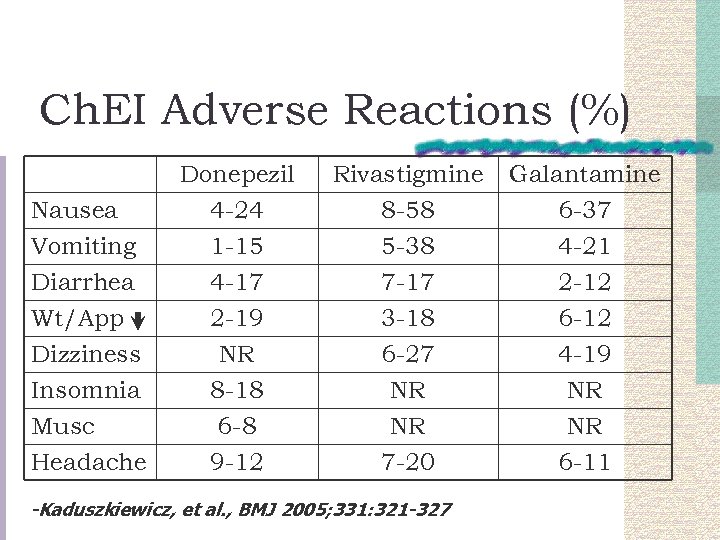
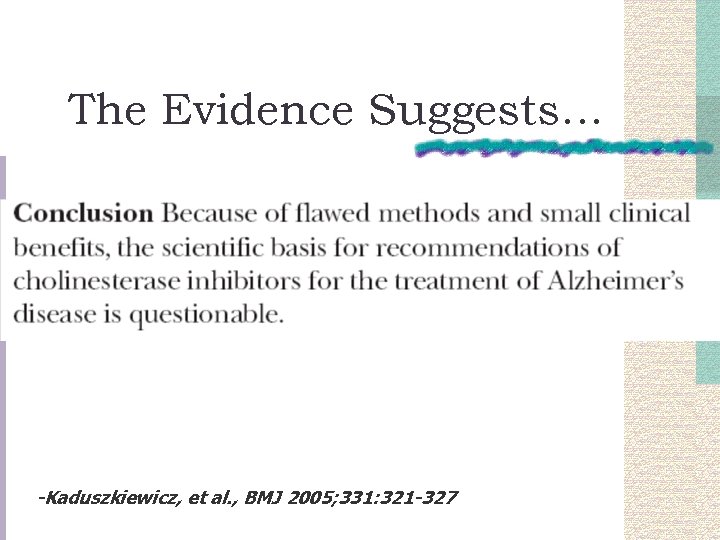
Ch. EI Adverse Reactions (%) Nausea Vomiting Diarrhea Donepezil 4 -24 1 -15 4 -17 Rivastigmine 8 -58 5 -38 7 -17 Galantamine 6 -37 4 -21 2 -12 Wt/App Dizziness Insomnia Musc Headache 2 -19 NR 8 -18 6 -8 9 -12 3 -18 6 -27 NR NR 7 -20 6 -12 4 -19 NR NR 6 -11 -Kaduszkiewicz, et al. , BMJ 2005; 331: 321 -327
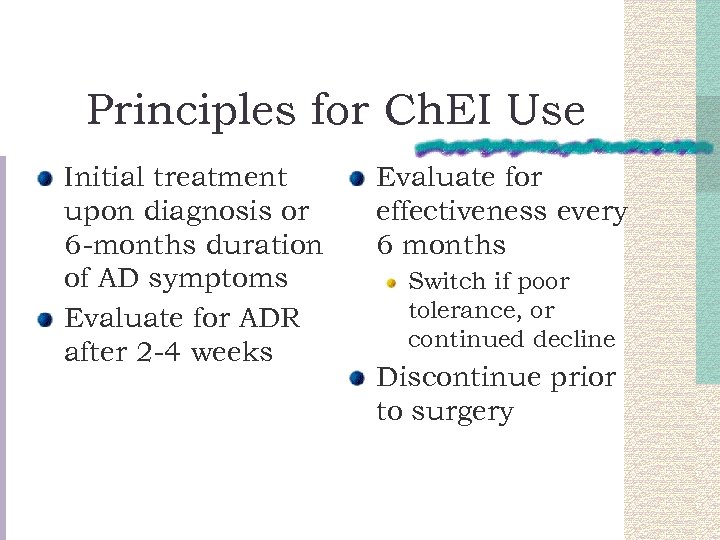
Principles for Ch. EI Use Initial treatment upon diagnosis or 6 -months duration of AD symptoms Evaluate for ADR after 2 -4 weeks Evaluate for effectiveness every 6 months Switch if poor tolerance, or continued decline Discontinue prior to surgery
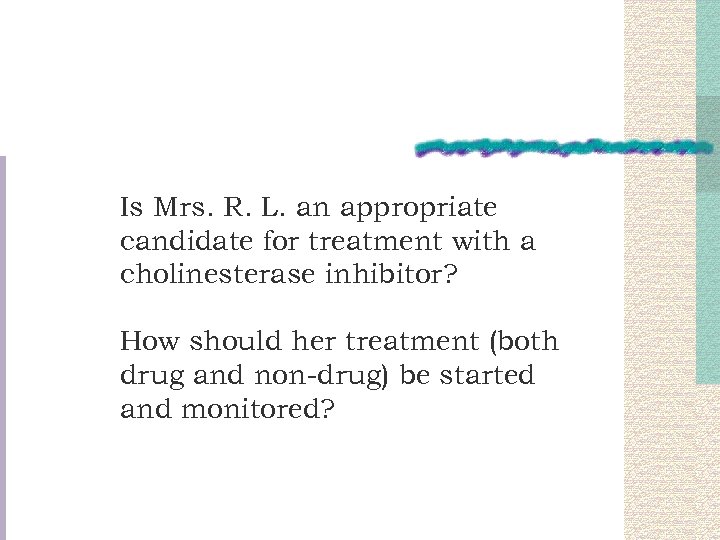
Is Mrs. R. L. an appropriate candidate for treatment with a cholinesterase inhibitor? How should her treatment (both drug and non-drug) be started and monitored?
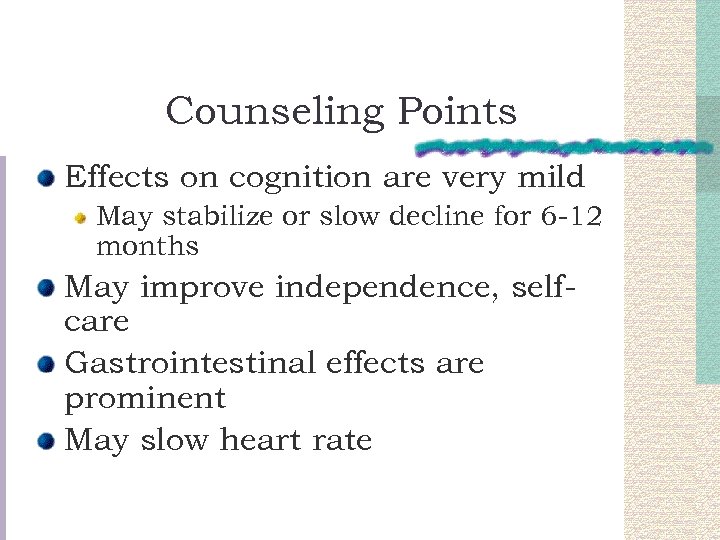
Counseling Points Effects on cognition are very mild May stabilize or slow decline for 6 -12 months May improve independence, selfcare Gastrointestinal effects are prominent May slow heart rate
The Evidence Suggests… -Kaduszkiewicz, et al. , BMJ 2005; 331: 321 -327
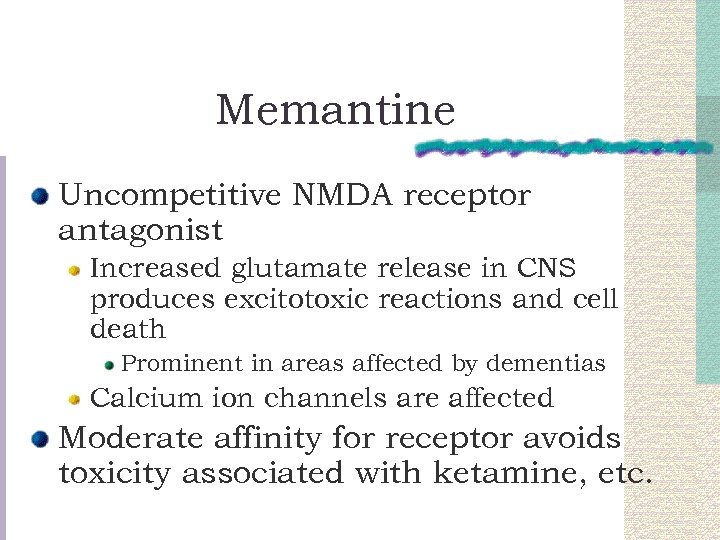
Memantine Uncompetitive NMDA receptor antagonist Increased glutamate release in CNS produces excitotoxic reactions and cell death Prominent in areas affected by dementias Calcium ion channels are affected Moderate affinity for receptor avoids toxicity associated with ketamine, etc.
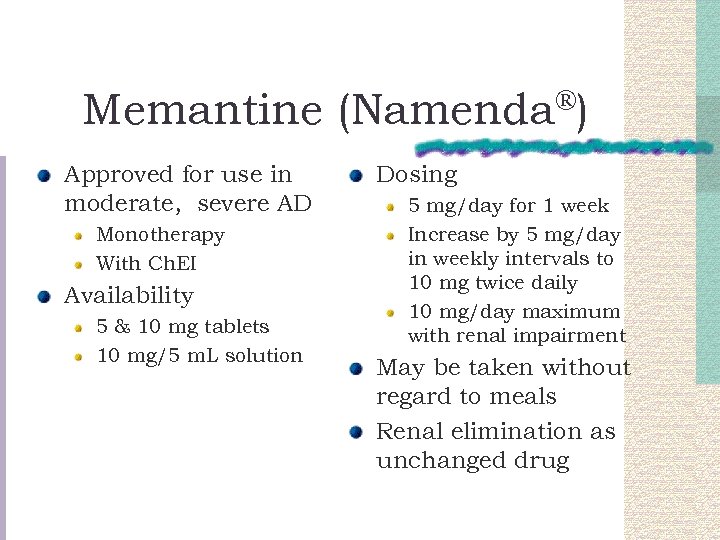
Memantine (Namenda®) Approved for use in moderate, severe AD Monotherapy With Ch. EI Availability 5 & 10 mg tablets 10 mg/5 m. L solution Dosing 5 mg/day for 1 week Increase by 5 mg/day in weekly intervals to 10 mg twice daily 10 mg/day maximum with renal impairment May be taken without regard to meals Renal elimination as unchanged drug
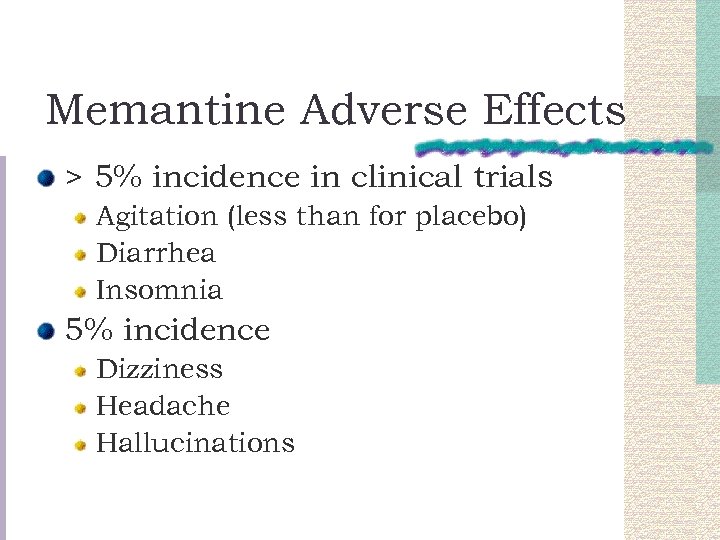
Memantine Adverse Effects > 5% incidence in clinical trials Agitation (less than for placebo) Diarrhea Insomnia 5% incidence Dizziness Headache Hallucinations
Memantine Effects in moderate AD Slower decline in overall function and in loss of activities of daily living No significant effect on cognition Systematic reviews have reported small to no clinically relevant effect
Principles for Memantine Use Treat upon reaching mild to moderate AD symptoms Typically used as adjunct to Ch. EI Evaluate for ADR after 2 -4 weeks Evaluate for effectiveness every 6 months Discontinue prior to surgery
Behavior Symptoms Most difficult for both patients and caregivers Behavior symptoms contribute to: Patient distress Caregiver burnout Excess disability Institutionalization
Treatment Recommendations Treat behavioral symptoms and mood disorders using: Non-pharmacologic approaches, such as environmental modification, task simplification, appropriate activities, etc. IF non-pharmacological approaches prove unsuccessful, THEN use medications, targeted to specific behaviors, if clinically indicated. Note that side effects may be serious and significant.
Treatment: Increase Level of Function and Delay Disease Progression Behavioral interventions Adult day services Exercise and recreation Medications
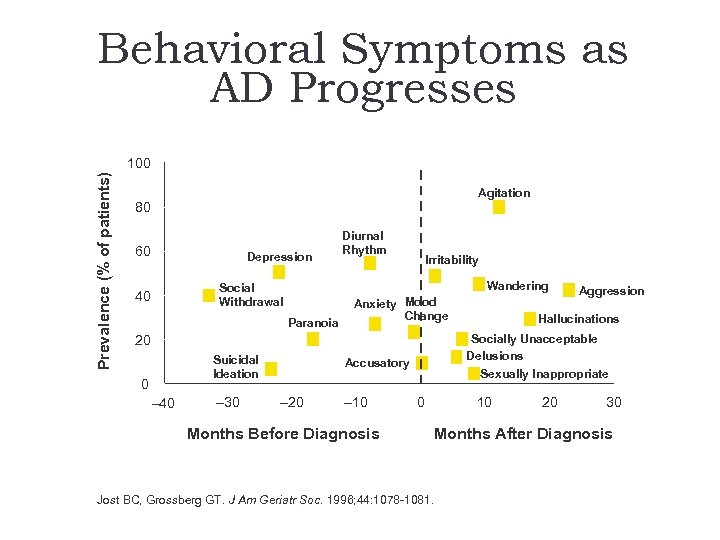
Behavioral Symptoms as AD Progresses Prevalence (% of patients) 100 Agitation 80 60 Depression Irritability Wandering Social Withdrawal 40 Diurnal Rhythm Paranoia Anxiety Mood Change 20 Suicidal Ideation 0 – 40 – 30 – 10 Months Before Diagnosis Hallucinations Socially Unacceptable Delusions Sexually Inappropriate Accusatory – 20 Aggression 0 10 20 30 Months After Diagnosis Jost BC, Grossberg GT. J Am Geriatr Soc. 1996; 44: 1078 -1081.
Mrs. R. L. starts to realize she has Alzheimer’s disease. She becomes depressed. She is dysphoric, has lost her appetite, and feels helpless and hopeless. Her husband reports that he is becoming frustrated and doesn’t know how to help her.
What is your assessment of Mrs. L. ’s condition? Is she a candidate for antidepressant treatment? What should be done to assist her & her husband?
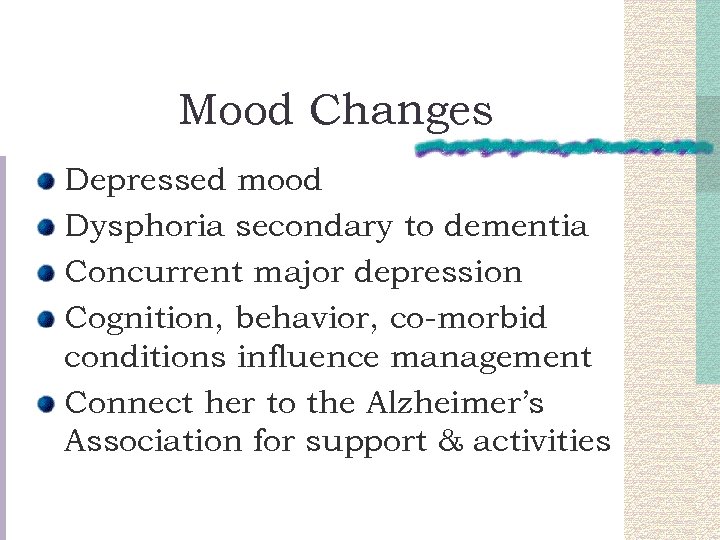
Mood Changes Depressed mood Dysphoria secondary to dementia Concurrent major depression Cognition, behavior, co-morbid conditions influence management Connect her to the Alzheimer’s Association for support & activities
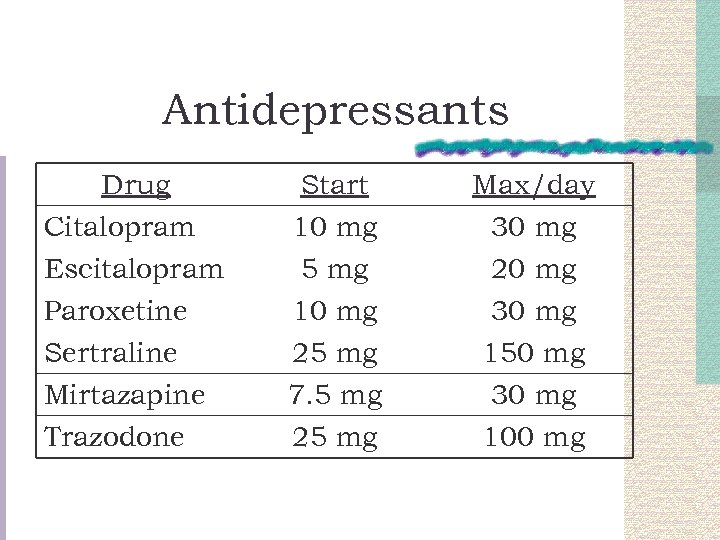
Antidepressants Drug Start Max/day Citalopram Escitalopram 10 mg 5 mg 30 mg 20 mg Paroxetine 10 mg 30 mg Sertraline 25 mg 150 mg Mirtazapine Trazodone 7. 5 mg 25 mg 30 mg 100 mg
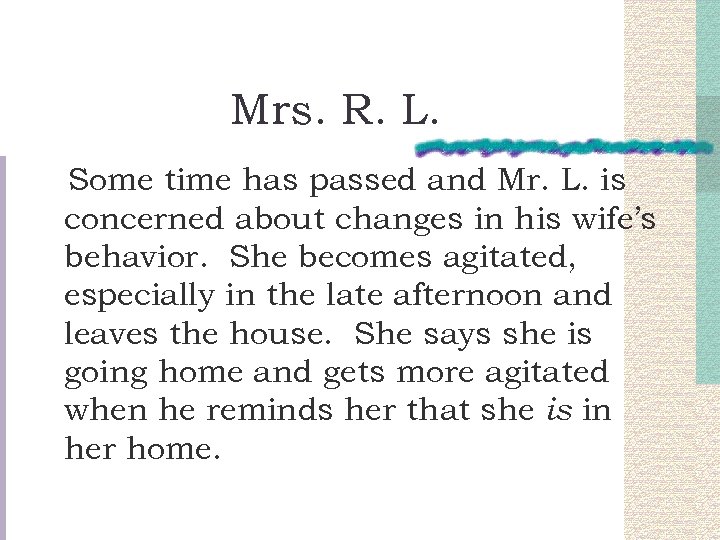
Mrs. R. L. Some time has passed and Mr. L. is concerned about changes in his wife’s behavior. She becomes agitated, especially in the late afternoon and leaves the house. She says she is going home and gets more agitated when he reminds her that she is in her home.
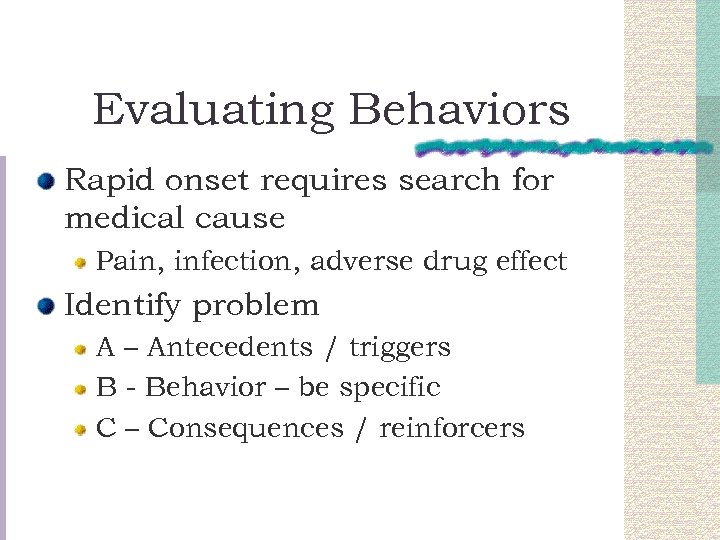
Evaluating Behaviors Rapid onset requires search for medical cause Pain, infection, adverse drug effect Identify problem A – Antecedents / triggers B - Behavior – be specific C – Consequences / reinforcers
What may be triggering Mrs. L. ’s behavior? What does this behavior mean to her? How should these symptoms be managed?
Common Causes of Behaviors Health Difficult tasks Confusing environment Communication breakdown Patient’s perceptions of the situation
Behavior Management Principles Non-drug management generally provides better results Assess likelihood that pharmacotherapy will be beneficial Target medication to specific behavior Avoid caregiver interpretation of PRN orders Consider the patient's health status Consider drug pharmacokinetic and pharmacodynamic properties
Non-drug Strategies Avoid startling patient Don’t argue incorrect statements Employ distractions Safety-proof living areas One-step commands
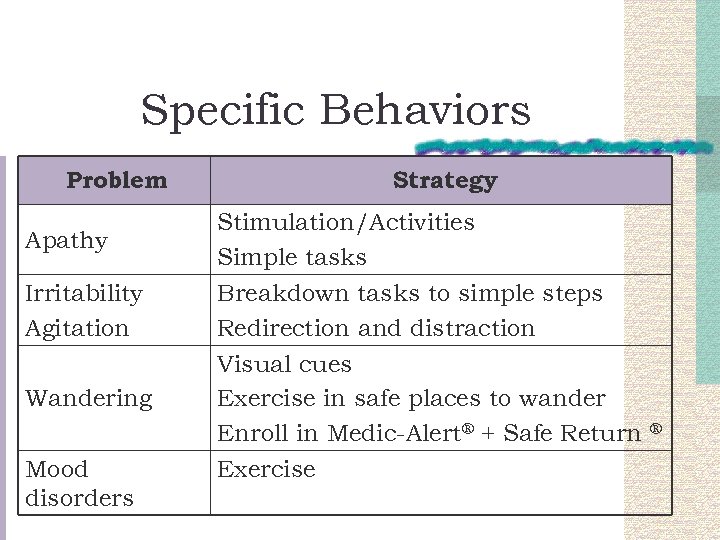
Specific Behaviors Problem Apathy Irritability Agitation Wandering Mood disorders Strategy Stimulation/Activities Simple tasks Breakdown tasks to simple steps Redirection and distraction Visual cues Exercise in safe places to wander Enroll in Medic-Alert® + Safe Return Exercise ®
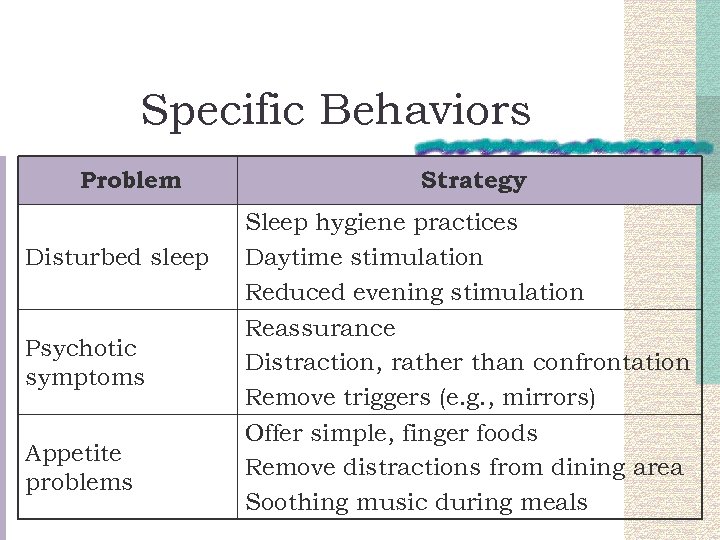
Specific Behaviors Problem Disturbed sleep Psychotic symptoms Appetite problems Strategy Sleep hygiene practices Daytime stimulation Reduced evening stimulation Reassurance Distraction, rather than confrontation Remove triggers (e. g. , mirrors) Offer simple, finger foods Remove distractions from dining area Soothing music during meals
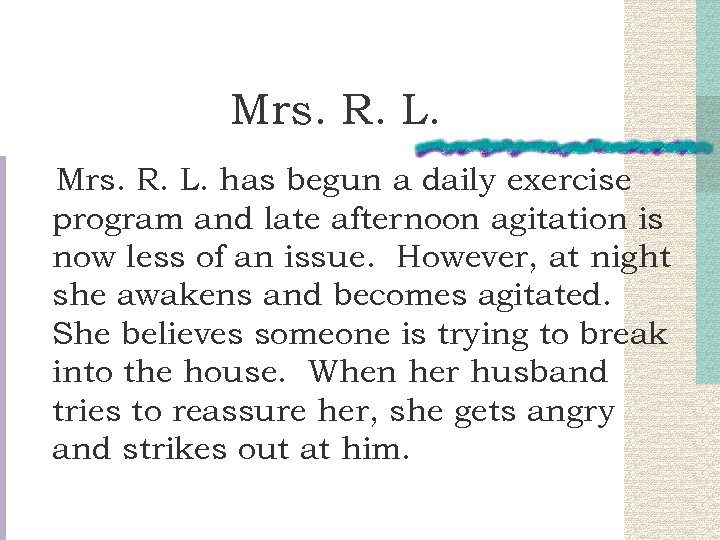
Mrs. R. L. has begun a daily exercise program and late afternoon agitation is now less of an issue. However, at night she awakens and becomes agitated. She believes someone is trying to break into the house. When her husband tries to reassure her, she gets angry and strikes out at him.
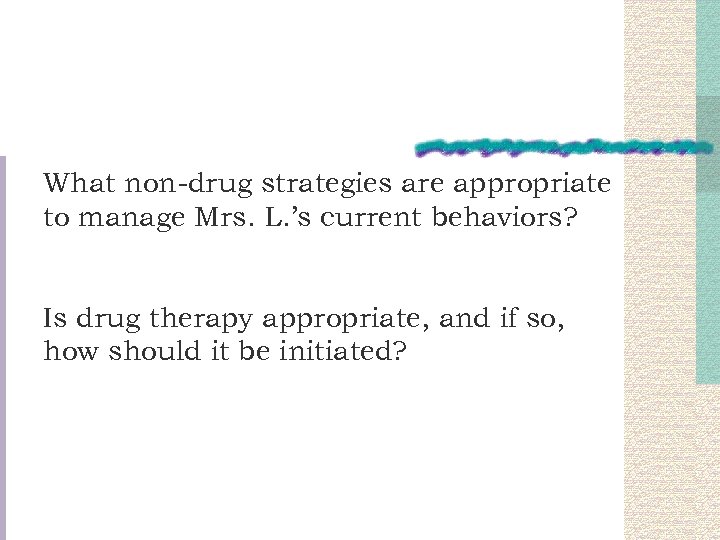
What non-drug strategies are appropriate to manage Mrs. L. ’s current behaviors? Is drug therapy appropriate, and if so, how should it be initiated?
Managing Anxiety Reassure, don’t ignore Distract - engage person in other activities Music, simple tasks, hobby-type activities Simplify the environment Cover windows and mirrors; use night lights
Anxiolytics Short-term use for anxiety in early stages Benzodiazepine use is discouraged Use short-acting agents, if necessary Trazodone 25 mg is an effective agent for anxiety or insomnia Periodically re-assess need Taper BZDP downward to avoid seizures
Managing Aggression Identify the cause (noise, fear, etc. ) Focus on the person’s feelings Avoid getting angry or upset Simplify the environment to limit distractions Music, exercise, etc. as a soothing activity Shift the focus to another activity
Antipsychotic Agents Effective for acute aggressive episodes Some benefit for delusions, hallucinations Bedtime dose for initial treatment Very low doses often sufficient Discontinue periodically to assess continued need Increased risk for stroke, weight gain
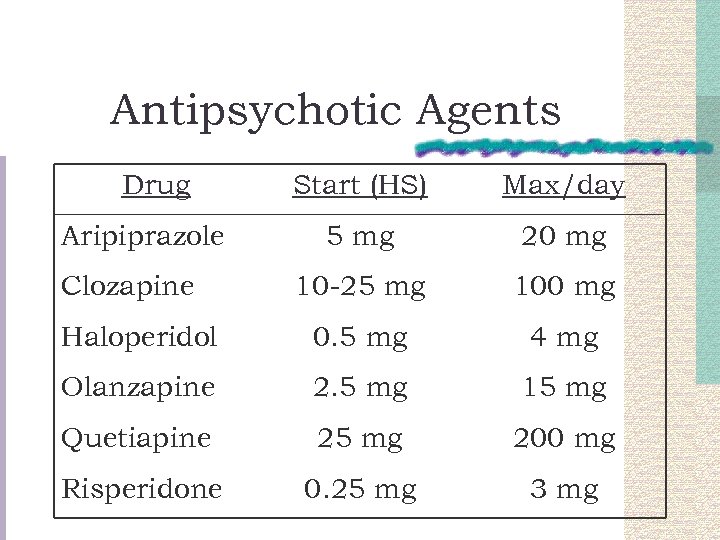
Antipsychotic Agents Drug Start (HS) Max/day 5 mg 20 mg 10 -25 mg 100 mg Haloperidol 0. 5 mg 4 mg Olanzapine 2. 5 mg 15 mg Quetiapine 25 mg 200 mg Risperidone 0. 25 mg 3 mg Aripiprazole Clozapine
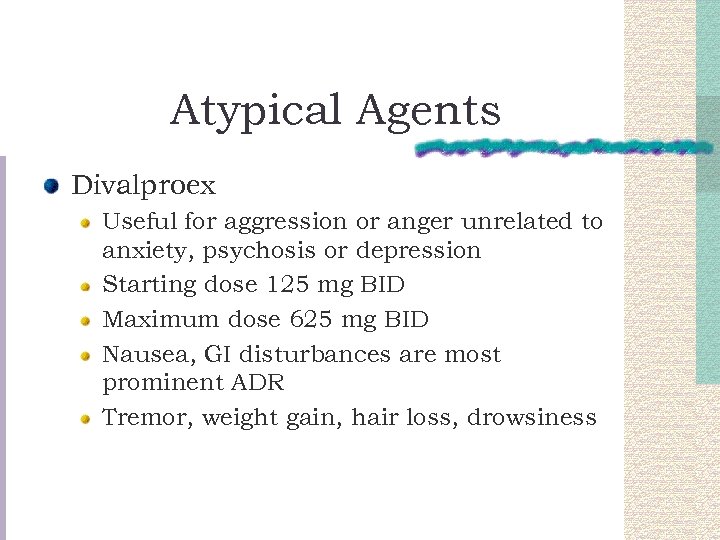
Atypical Agents Divalproex Useful for aggression or anger unrelated to anxiety, psychosis or depression Starting dose 125 mg BID Maximum dose 625 mg BID Nausea, GI disturbances are most prominent ADR Tremor, weight gain, hair loss, drowsiness
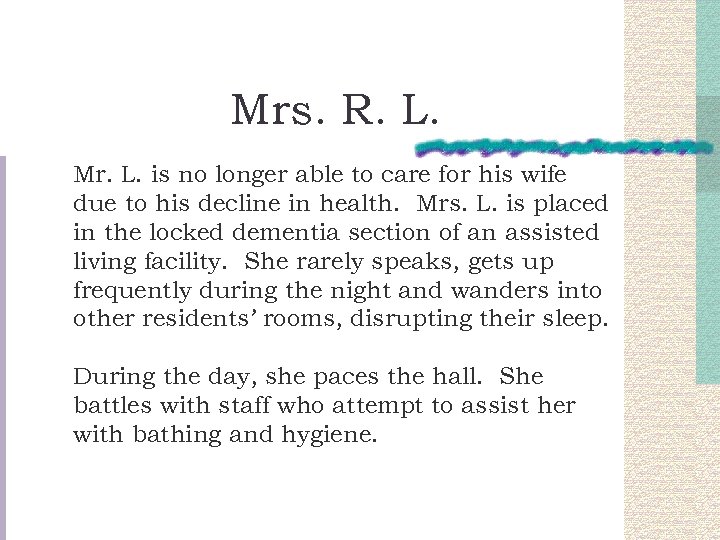
Mrs. R. L. Mr. L. is no longer able to care for his wife due to his decline in health. Mrs. L. is placed in the locked dementia section of an assisted living facility. She rarely speaks, gets up frequently during the night and wanders into other residents’ rooms, disrupting their sleep. During the day, she paces the hall. She battles with staff who attempt to assist her with bathing and hygiene.
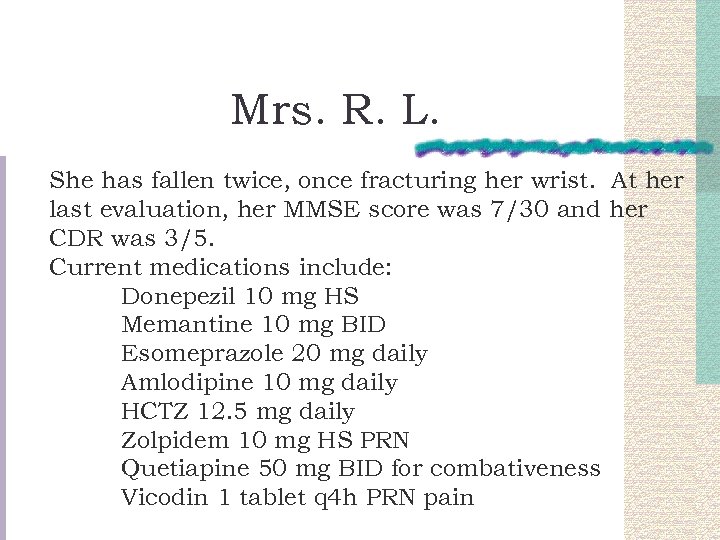
Mrs. R. L. She has fallen twice, once fracturing her wrist. At her last evaluation, her MMSE score was 7/30 and her CDR was 3/5. Current medications include: Donepezil 10 mg HS Memantine 10 mg BID Esomeprazole 20 mg daily Amlodipine 10 mg daily HCTZ 12. 5 mg daily Zolpidem 10 mg HS PRN Quetiapine 50 mg BID for combativeness Vicodin 1 tablet q 4 h PRN pain
What factors are contributing to her current behaviors? What changes, if any, do you recommend in her medication regimen?
Summary Early diagnosis is essential The pharmacist should: Evaluate ALL medications Refer to community resources Work with the patient and caregivers Ensure medication regimens are simple Minimize medication changes, and avoid changes during transition times Communicate with all health care providers

Questions? …
Скачать презентацию Alzheimer s Disease Update on Evidence-Based Treatment Guidelines Debra
2ba37b422cabe1616de044accdab790e.ppt