Скачать презентацию ALTERNATIVE REGULATORY STRATEGIES AND THE ROLE OF PRIVATE
e558ed5c92488ad19e7acbffa77ce70c.ppt
- Количество слайдов: 20
 ALTERNATIVE REGULATORY STRATEGIES AND THE ROLE OF PRIVATE CONTRACTS José A. Gómez-Ibáñez ACCC, July 2010 OUTLINE: l SOURCES OF MONOPOLY POWER l ANALOGY TO PROCUREMENT l RANGE OF REGULATORY STRATEGIES l ROLE OF PRIVATE CONTRACTS
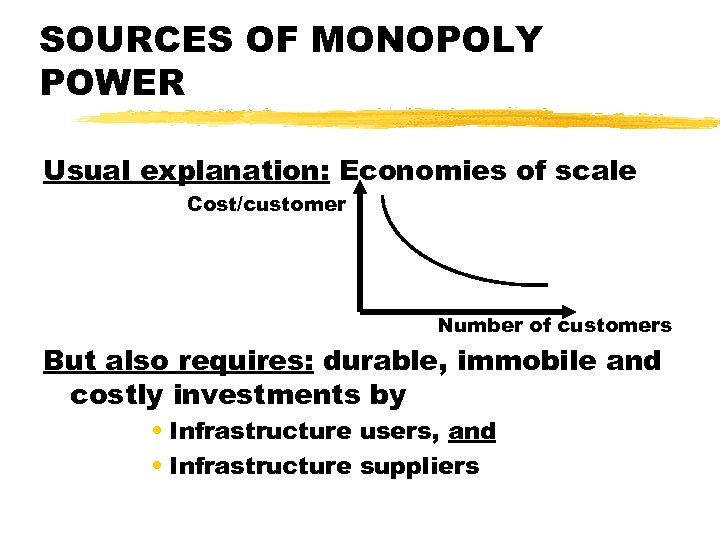 SOURCES OF MONOPOLY POWER Usual explanation: Economies of scale Cost/customer Number of customers But also requires: durable, immobile and costly investments by • Infrastructure users, and • Infrastructure suppliers
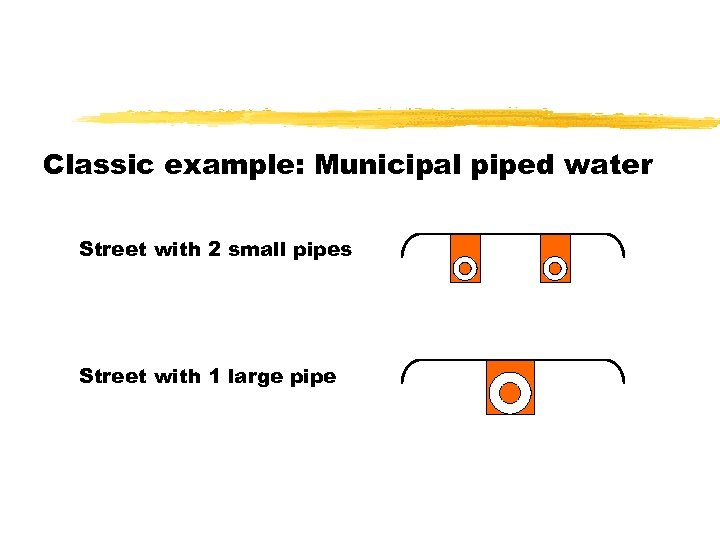 Classic example: Municipal piped water Street with 2 small pipes Street with 1 large pipe
 Durable, immobile, and costly investments: • Make investors vulnerable to opportunistic behavior by others • Are common throughout economy—not just infrastructure • Usually solved by long-term private contracts
 TRANSACTION COSTS (Ronald Coase, Oliver Williamson, Douglas North) TRANSACTION COSTS: • = Costs of negotiating and enforcing agreements • Arise because: 1. Not omniscient: Hard to know every fact, anticipate every development 2. Not saints: Parties will behave opportunistically by withholding information • Influence organization of economic activity
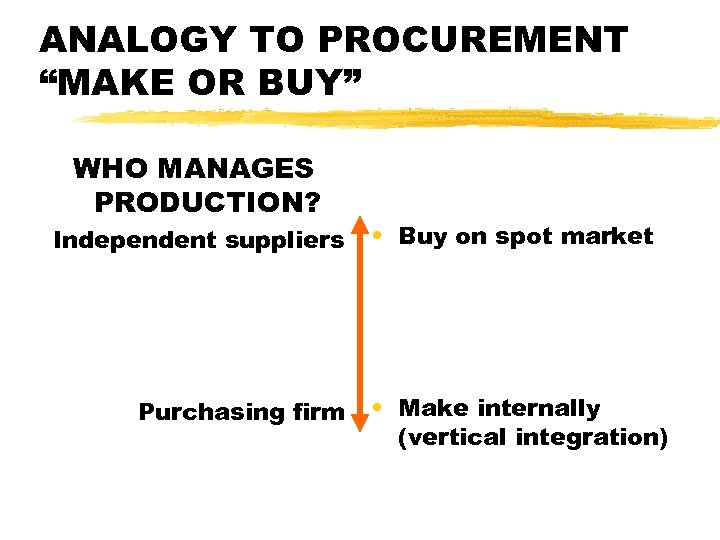 ANALOGY TO PROCUREMENT “MAKE OR BUY” WHO MANAGES PRODUCTION? Independent suppliers Purchasing firm • Buy on spot market • Make internally (vertical integration)
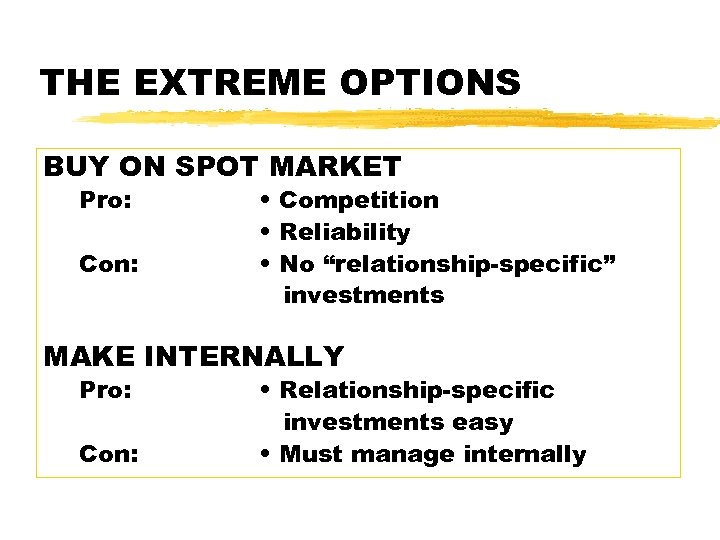 THE EXTREME OPTIONS BUY ON SPOT MARKET Pro: Con: • Competition • Reliability • No “relationship-specific” investments MAKE INTERNALLY Pro: Con: • Relationship-specific investments easy • Must manage internally
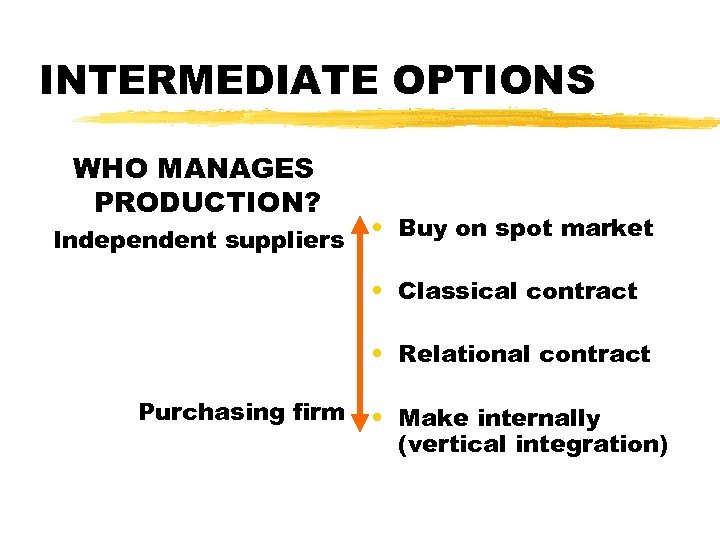 INTERMEDIATE OPTIONS WHO MANAGES PRODUCTION? Independent suppliers • Buy on spot market • Classical contract • Relational contract Purchasing firm • Make internally (vertical integration)
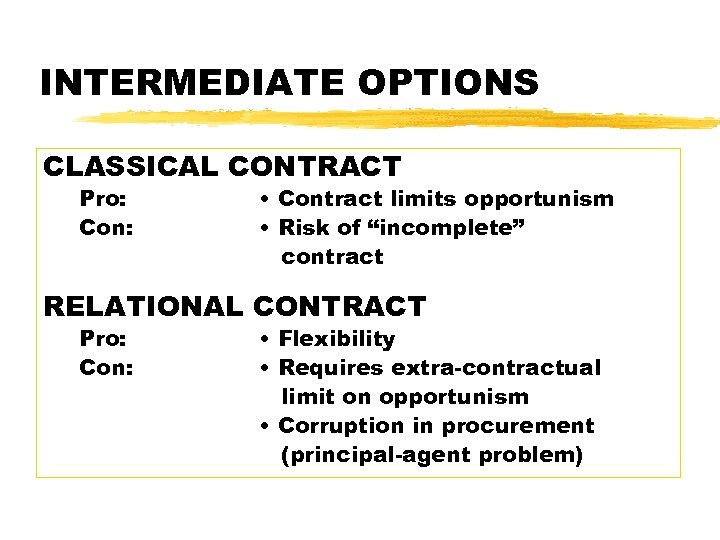 INTERMEDIATE OPTIONS CLASSICAL CONTRACT Pro: Con: • Contract limits opportunism • Risk of “incomplete” contract RELATIONAL CONTRACT Pro: Con: • Flexibility • Requires extra-contractual limit on opportunism • Corruption in procurement (principal-agent problem)
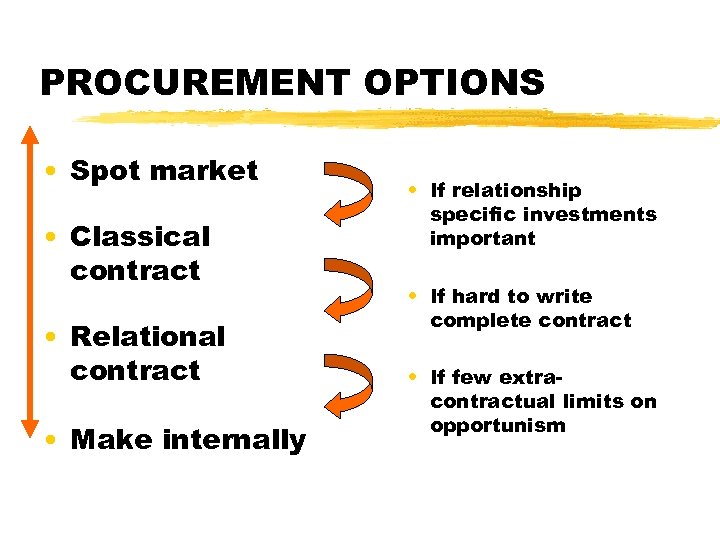 PROCUREMENT OPTIONS • Spot market • Classical contract • Relational contract • Make internally • If relationship specific investments important • If hard to write complete contract • If few extracontractual limits on opportunism
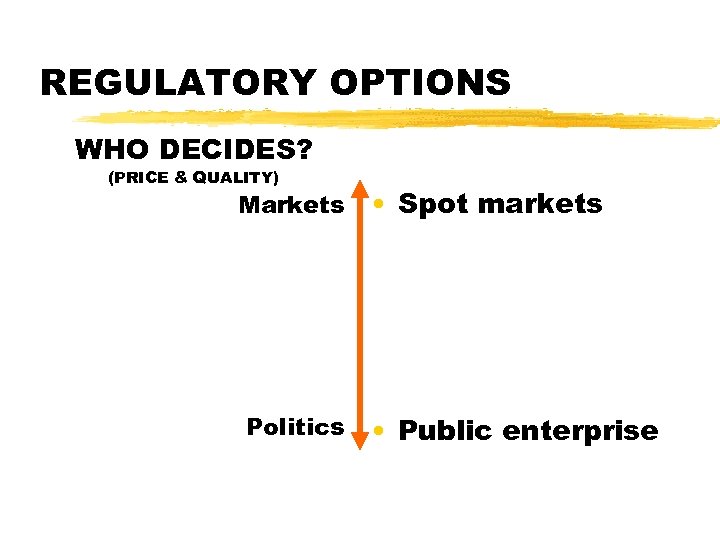 REGULATORY OPTIONS WHO DECIDES? (PRICE & QUALITY) Markets Politics • Spot markets • Public enterprise
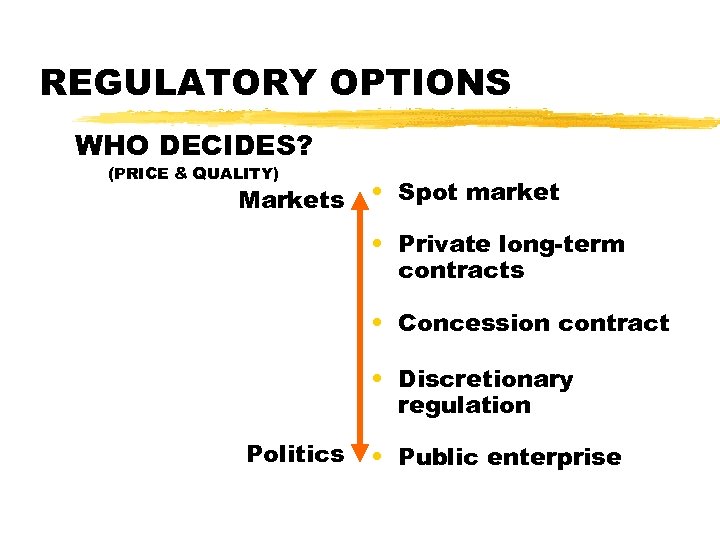 REGULATORY OPTIONS WHO DECIDES? (PRICE & QUALITY) Markets • Spot market • Private long-term contracts • Concession contract • Discretionary regulation Politics • Public enterprise
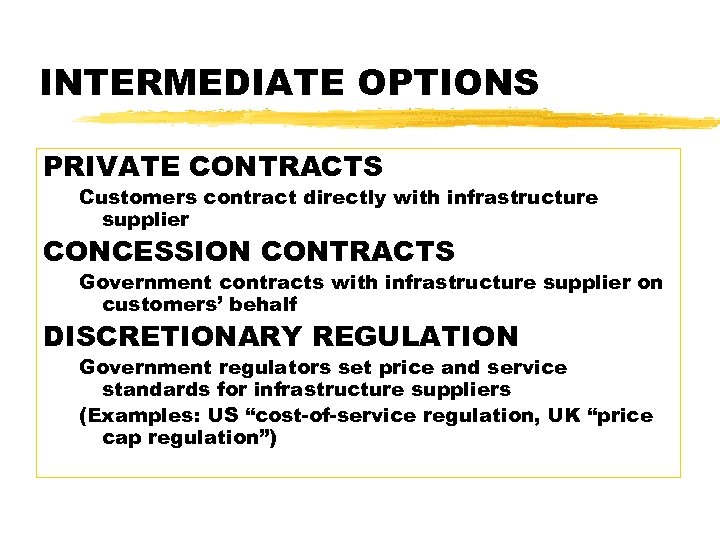 INTERMEDIATE OPTIONS PRIVATE CONTRACTS Customers contract directly with infrastructure supplier CONCESSION CONTRACTS Government contracts with infrastructure supplier on customers’ behalf DISCRETIONARY REGULATION Government regulators set price and service standards for infrastructure suppliers (Examples: US “cost-of-service regulation, UK “price cap regulation”)
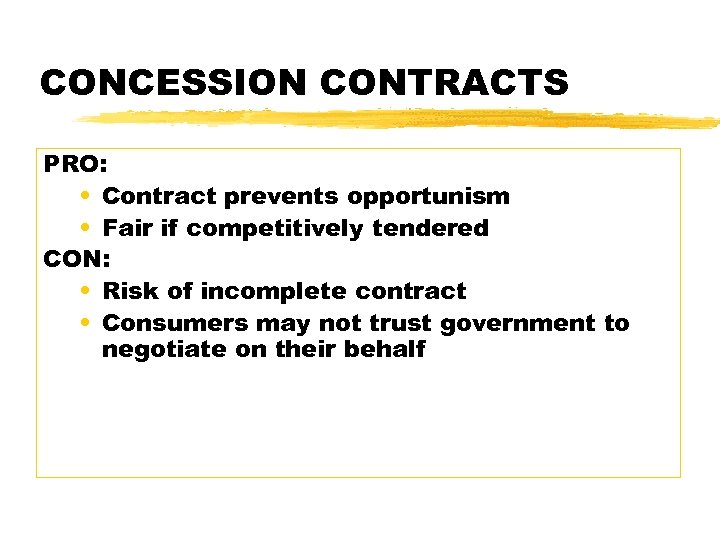 CONCESSION CONTRACTS PRO: • Contract prevents opportunism • Fair if competitively tendered CON: • Risk of incomplete contract • Consumers may not trust government to negotiate on their behalf
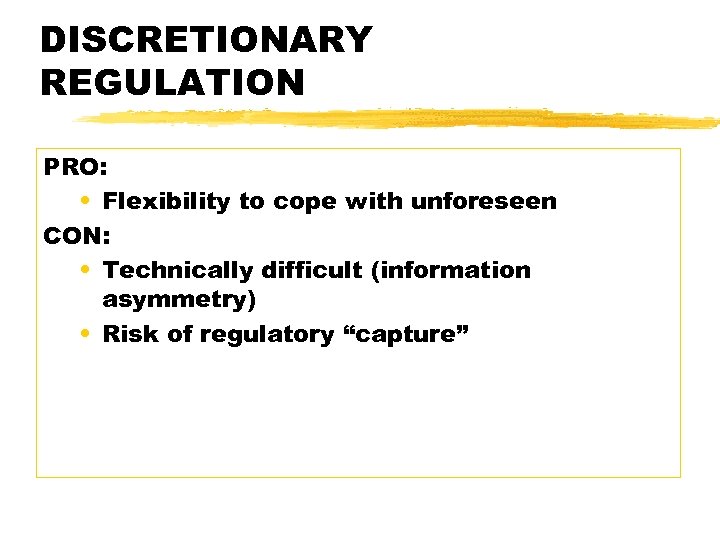 DISCRETIONARY REGULATION PRO: • Flexibility to cope with unforeseen CON: • Technically difficult (information asymmetry) • Risk of regulatory “capture”
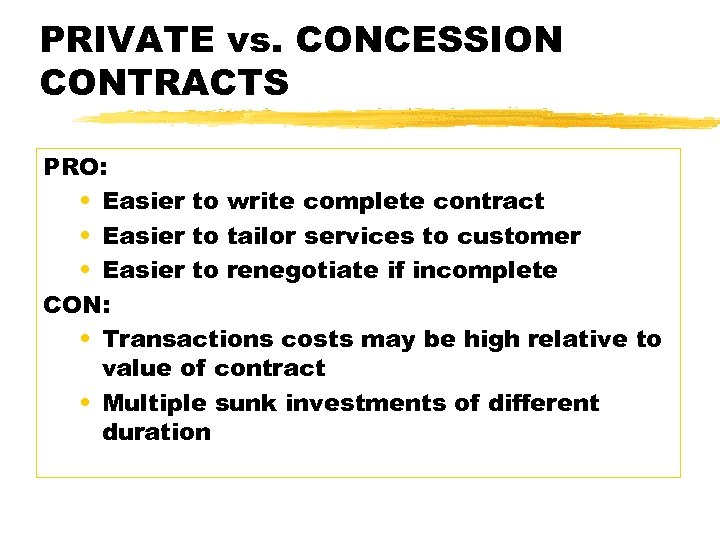 PRIVATE vs. CONCESSION CONTRACTS PRO: • Easier to write complete contract • Easier to tailor services to customer • Easier to renegotiate if incomplete CON: • Transactions costs may be high relative to value of contract • Multiple sunk investments of different duration
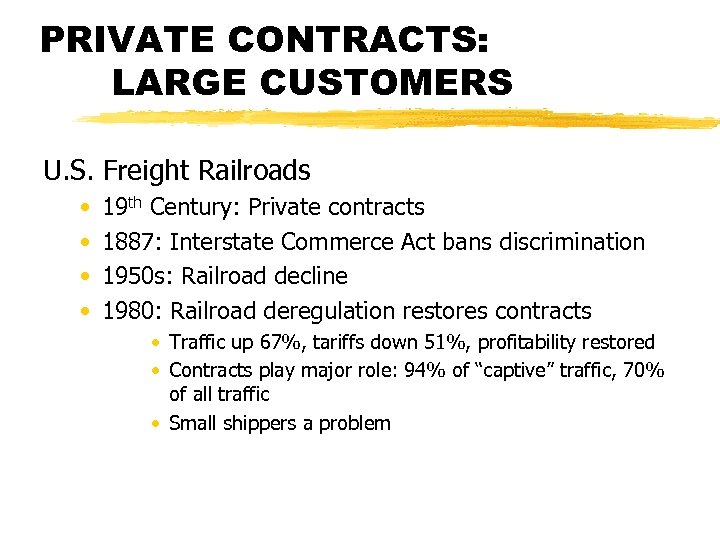 PRIVATE CONTRACTS: LARGE CUSTOMERS U. S. Freight Railroads • • 19 th Century: Private contracts 1887: Interstate Commerce Act bans discrimination 1950 s: Railroad decline 1980: Railroad deregulation restores contracts • Traffic up 67%, tariffs down 51%, profitability restored • Contracts play major role: 94% of “captive” traffic, 70% of all traffic • Small shippers a problem
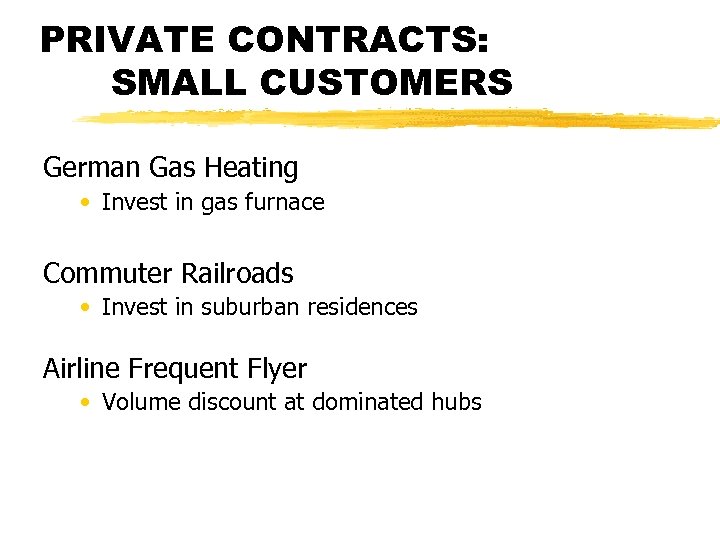 PRIVATE CONTRACTS: SMALL CUSTOMERS German Gas Heating • Invest in gas furnace Commuter Railroads • Invest in suburban residences Airline Frequent Flyer • Volume discount at dominated hubs
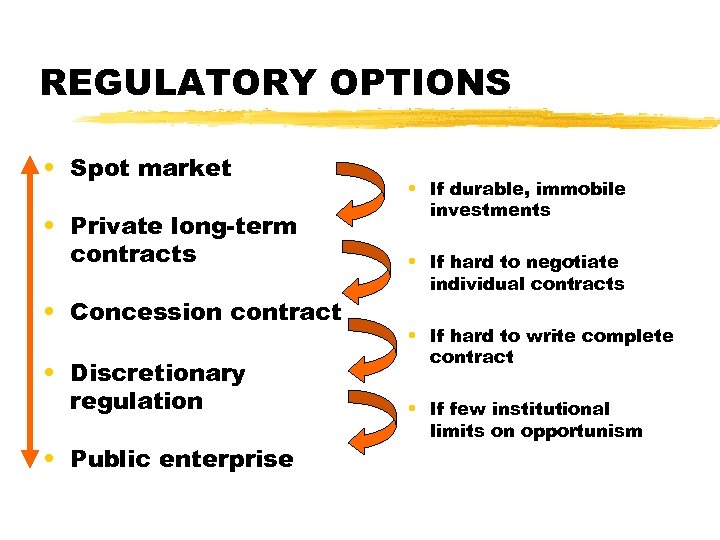 REGULATORY OPTIONS • Spot market • Private long-term contracts • Concession contract • Discretionary regulation • Public enterprise • If durable, immobile investments • If hard to negotiate individual contracts • If hard to write complete contract • If few institutional limits on opportunism