 Скачать презентацию Alternative Governance Models for PKI GGF 8 BOF
ba1af5c26662e50ee22ee6441a6690f6.ppt
- Количество слайдов: 22



Alternative Governance Models for PKI GGF 8 BOF June 26/03
Agenda • • Overview and proposed scope (5 min) Governance Models (25 min) QIK as a possible mechanism (15 min) Discussion of proposed charter and milestones. (30 min)
BOF Goals • Agree on RG Charter • Identify parties interested in working within a RG • Identity overlap/interest with other groups • Identity preliminary work items – Rough out schedule
Overview • X. 509 does not dictate a particular governance model • The conventional governance model of CP/CPS is best suited to the TTP business model • There is room for a variety of governance models to address different business models • The requirements of the GRID community may best be served by a different governance model
Definitions • PKI governance model – Identifies the types of participants in a PKI and the relationships between them • PKI governance instruments – Contractual and supporting documents that define the warranties offered by, and the obligations imposed on, the participants in the PKI – Mechanisms for maintaining the trustworthiness of statements made by authorities – Gentlemen’s agreements
Objectives of Governance models • To achieve a proper understanding and equitable allocation of risk among the actors • Make the risks commensurate with the benefits for all participants – Expose risk – Apportion liability – Identify obligations
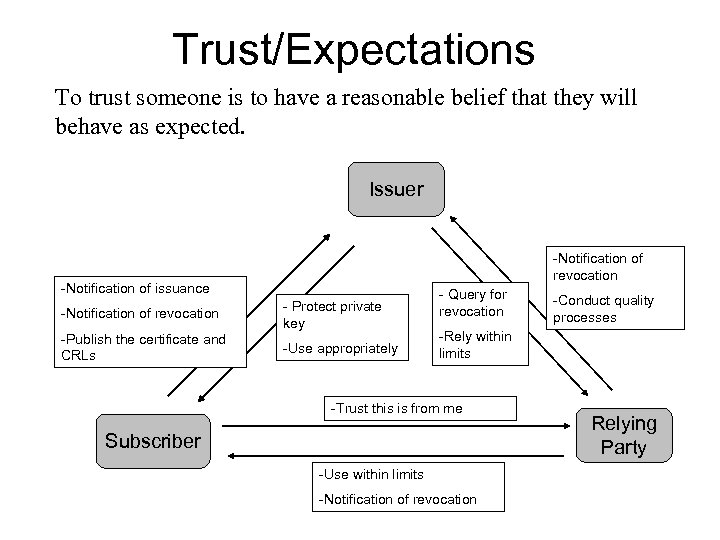
Trust/Expectations To trust someone is to have a reasonable belief that they will behave as expected. Issuer -Notification of revocation -Notification of issuance -Notification of revocation -Publish the certificate and CRLs - Protect private key -Use appropriately - Query for revocation -Conduct quality processes -Rely within limits -Trust this is from me Subscriber -Use within limits -Notification of revocation Relying Party
Governance Models Taxonomy Governance models can be characterized by • The nature of the information shared • On which party the risk assessment burden falls 1. Trusted Third Party 2. ‘Equivalent Safeguards’ 3. ‘Equivalent Conditions’
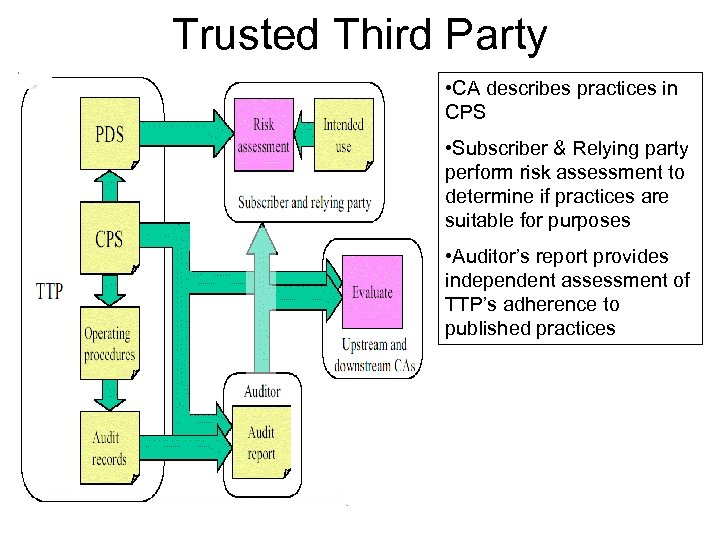
Trusted Third Party • CA describes practices in CPS • Subscriber & Relying party perform risk assessment to determine if practices are suitable for purposes • Auditor’s report provides independent assessment of TTP’s adherence to published practices
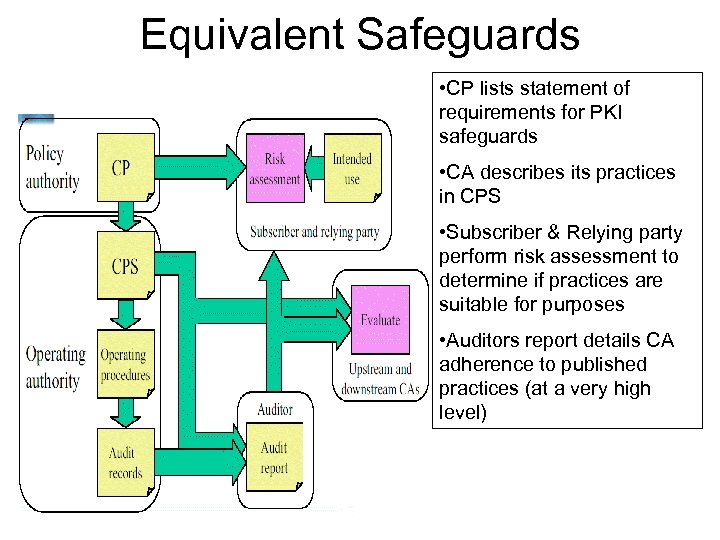
Equivalent Safeguards • CP lists statement of requirements for PKI safeguards • CA describes its practices in CPS • Subscriber & Relying party perform risk assessment to determine if practices are suitable for purposes • Auditors report details CA adherence to published practices (at a very high level)
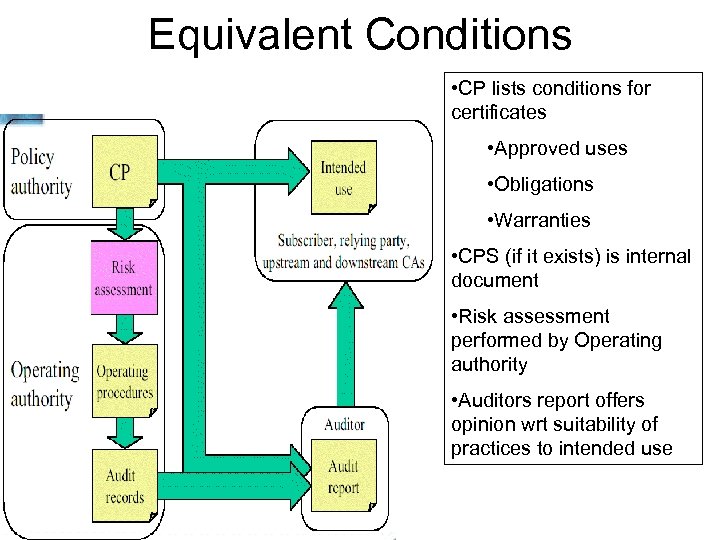
Equivalent Conditions • CP lists conditions for certificates • Approved uses • Obligations • Warranties • CPS (if it exists) is internal document • Risk assessment performed by Operating authority • Auditors report offers opinion wrt suitability of practices to intended use
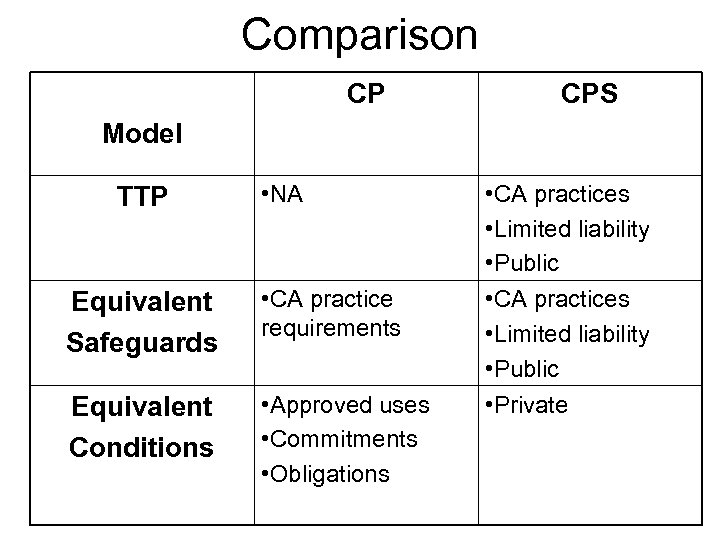
Comparison CP CPS Model TTP • NA Equivalent Safeguards • CA practice requirements Equivalent Conditions • Approved uses • Commitments • Obligations • CA practices • Limited liability • Public • Private
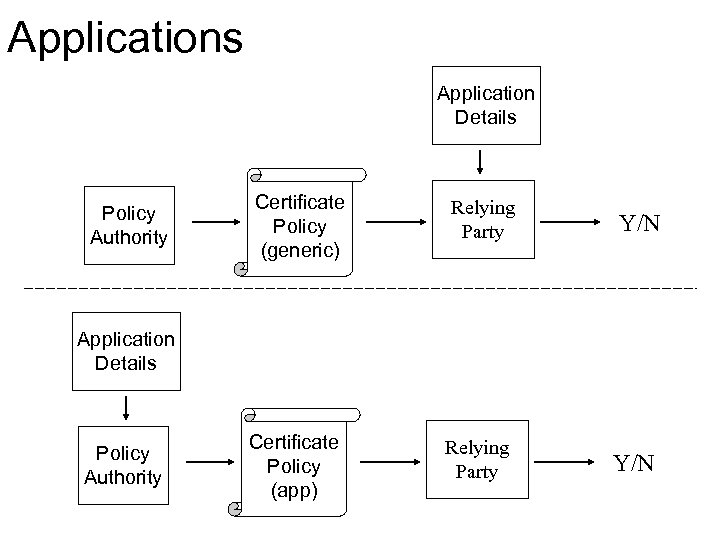
Applications Application Details Policy Authority Certificate Policy (generic) Relying Party Y/N Certificate Policy (app) Relying Party Y/N Application Details Policy Authority
Possible mechanism - QIK • Qualified Installation of Keys • Key-owners publish their public verification key – appended with appropriate uses & associated commitments and obligations in a QIK statement • Relying parties parse QIK statement to determine if contained public key should be ‘trusted’ • If ‘yes’, key is ‘installed’, ‘qualified’ by appropriate conditions (e. g. uses and restrictions)
QIK statement • A binding between a public key and the terms and conditions of its use, as specified by the key owner or issuer. • Keys can be discovered based on these terms & conditions • Keys characterized by – The Commitments the key-owner/issuer makes with respect to their use – The Obligations attendant on those entities that use the key
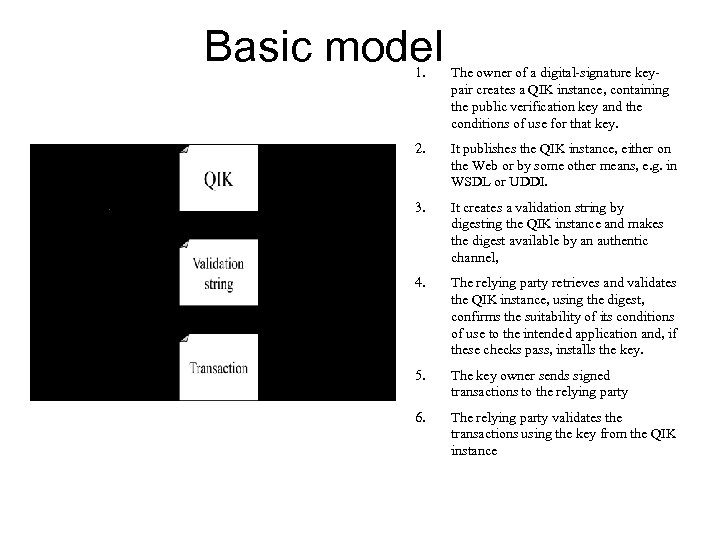
Basic model 1. The owner of a digital-signature keypair creates a QIK instance, containing the public verification key and the conditions of use for that key. 2. It publishes the QIK instance, either on the Web or by some other means, e. g. in WSDL or UDDI. 3. It creates a validation string by digesting the QIK instance and makes the digest available by an authentic channel, 4. The relying party retrieves and validates the QIK instance, using the digest, confirms the suitability of its conditions of use to the intended application and, if these checks pass, installs the key. 5. The key owner sends signed transactions to the relying party 6. The relying party validates the transactions using the key from the QIK instance
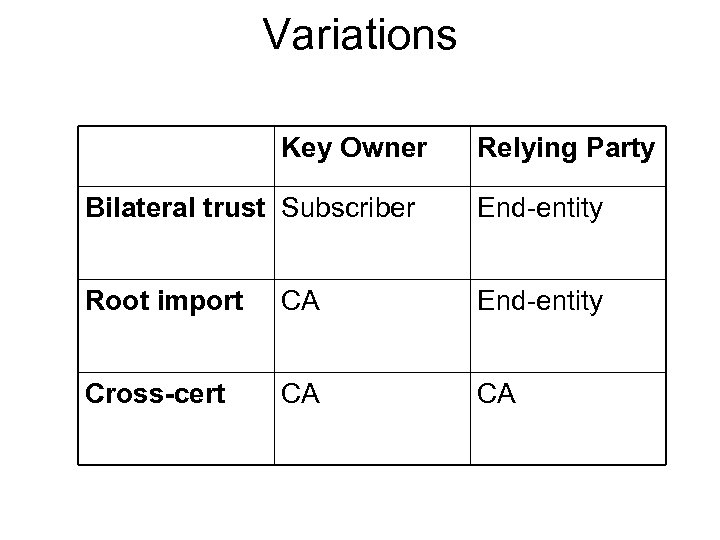
Variations Key Owner Relying Party Bilateral trust Subscriber End-entity Root import CA End-entity Cross-cert CA CA
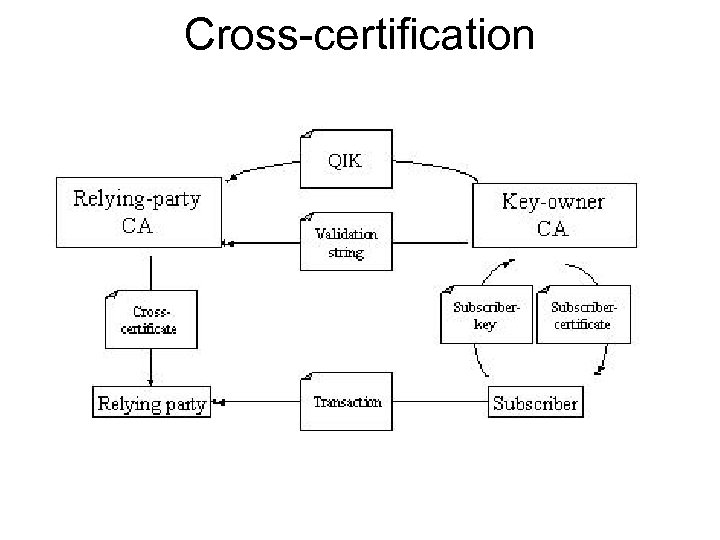
Cross-certification
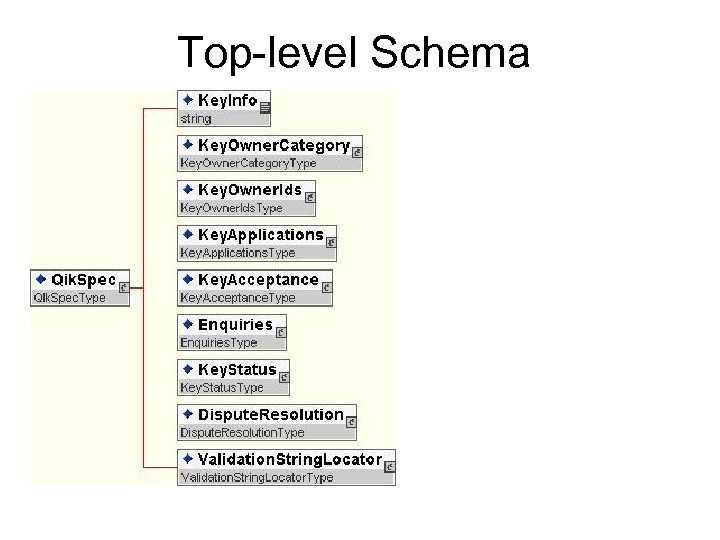
Top-level Schema
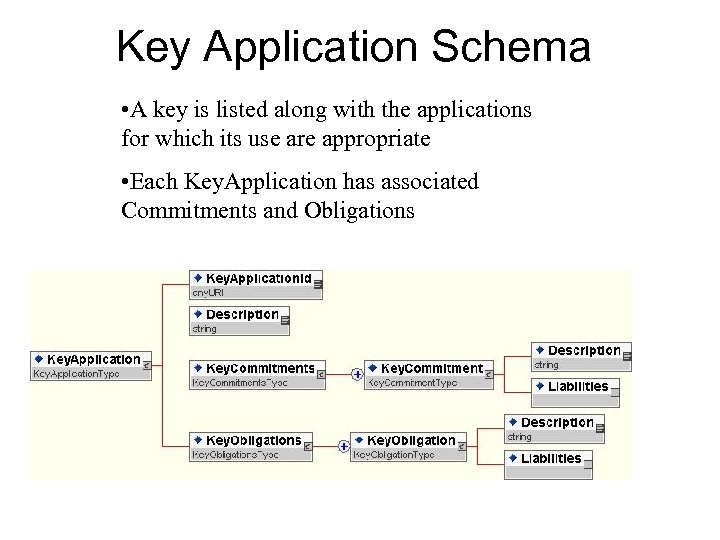
Key Application Schema • A key is listed along with the applications for which its use are appropriate • Each Key. Application has associated Commitments and Obligations
Charter Purpose The Alternative Governance Model Research Group will explore the potential for a simpler, less-expensive, semi-automated alternative to the CP/CPS model for PKI policy governance. It is hoped that such an alternative will simplify and enable the establishment of trust between Grid participants, both end-entities and Certificate Authorities. Output The output of this research group will be an informational or community practices GGF document and suggestions for future development work in GGF working groups.
Summary • The requirements of the GRID community may best be served by a PKI governance model different than the conventional • Work warrants the creation of a Research (Working? ) Group to explore the pros/cons of different models and relevance to Grid scenarios
Скачать презентацию Alternative Governance Models for PKI GGF 8 BOF
ba1af5c26662e50ee22ee6441a6690f6.ppt