 Скачать презентацию Aligning IT with Business Business Transformation Productivity Governance Innovation
bbba40fe178ae149e6b694cdd9b4e84e.ppt
- Количество слайдов: 37



Aligning IT with Business/Business Transformation Productivity, Governance, Innovation Dr Tariq Aslam
Agenda Critical Business Challenges Aligning IT with Business IBM Solution Success Stories Q&A Next Steps
Agenda Critical Business Challenges Aligning IT with Business IBM Solution Success Stories Q&A Next Steps
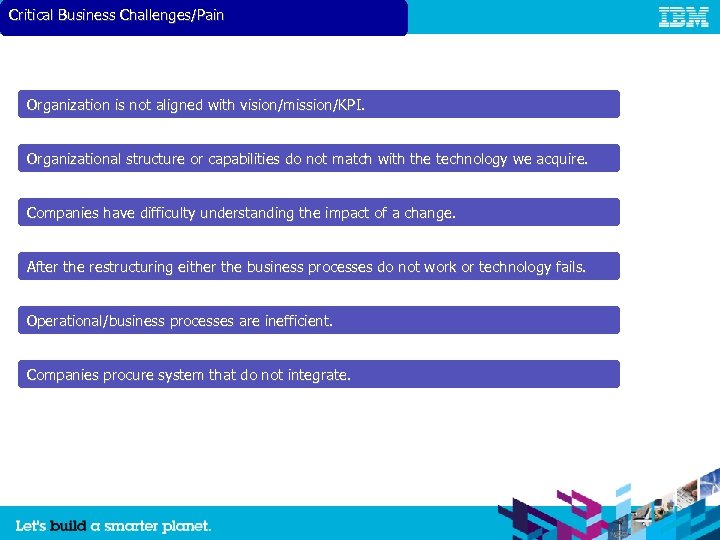
Critical Business Challenges/Pain Organization is not aligned with vision/mission/KPI. Organizational structure or capabilities do not match with the technology we acquire. Companies have difficulty understanding the impact of a change. After the restructuring either the business processes do not work or technology fails. Operational/business processes are inefficient. Companies procure system that do not integrate.
Agenda Critical Business Challenges Aligning IT with Business IBM Solution Success Stories Q&A Next Steps
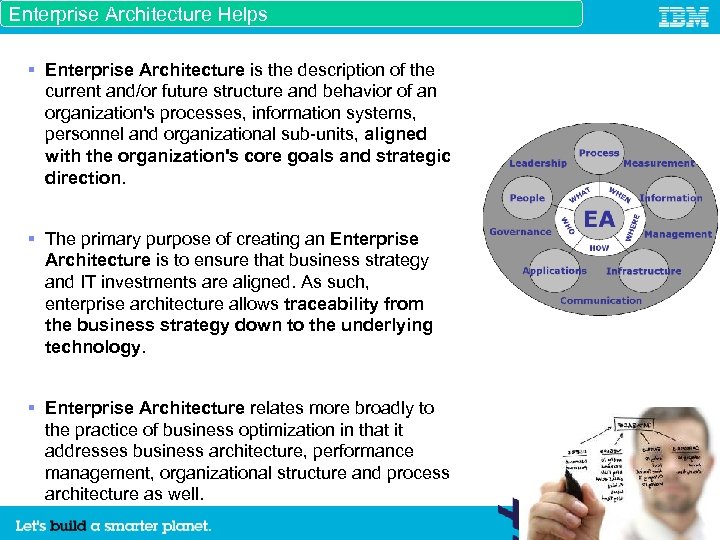
Enterprise Architecture Helps Enterprise Architecture is the description of the current and/or future structure and behavior of an organization's processes, information systems, personnel and organizational sub-units, aligned with the organization's core goals and strategic direction. The primary purpose of creating an Enterprise Architecture is to ensure that business strategy and IT investments are aligned. As such, enterprise architecture allows traceability from the business strategy down to the underlying technology. Enterprise Architecture relates more broadly to the practice of business optimization in that it addresses business architecture, performance management, organizational structure and process architecture as well.
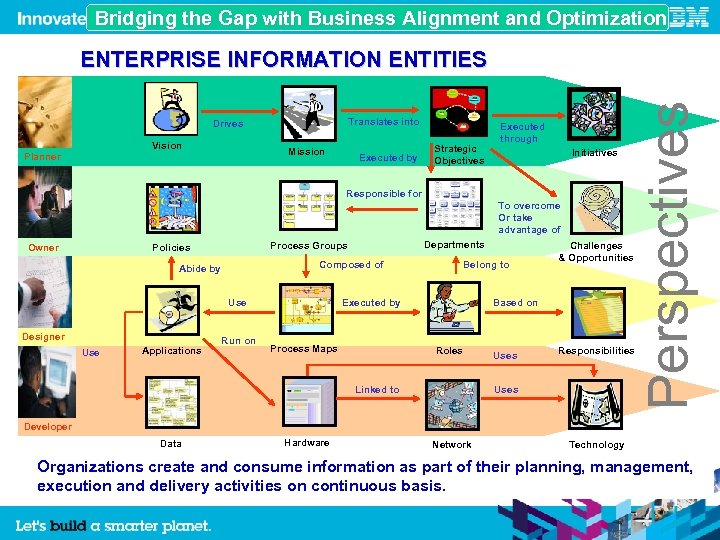
Bridging the Gap with Business Alignment and Optimization Translates into Drives Vision Planner Mission Executed by Strategic Objectives Executed through Initiatives Responsible for To overcome Or take advantage of Composed of Abide by Use Applications Run on Belong to Executed by Use Designer Departments Process Groups Policies Owner Process Maps Challenges & Opportunities Based on Roles Linked to Uses Responsibilities Uses Perspectives ENTERPRISE INFORMATION ENTITIES Developer Data Hardware Network Technology Organizations create and consume information as part of their planning, management, execution and delivery activities on continuous basis.
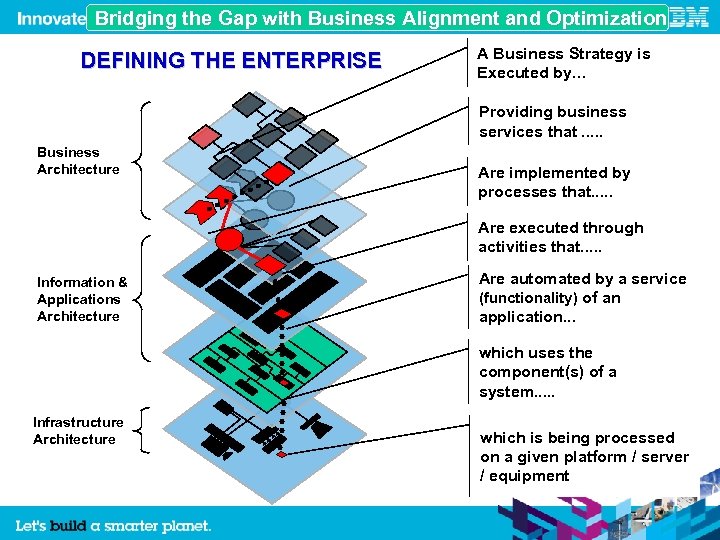
Bridging the Gap with Business Alignment and Optimization DEFINING THE ENTERPRISE A Business Strategy is Executed by… Providing business services that. . . Business Architecture Are implemented by processes that. . . Are executed through activities that. . . Information & Applications Architecture Are automated by a service (functionality) of an application. . . which uses the component(s) of a system. . . Infrastructure Architecture which is being processed on a given platform / server / equipment
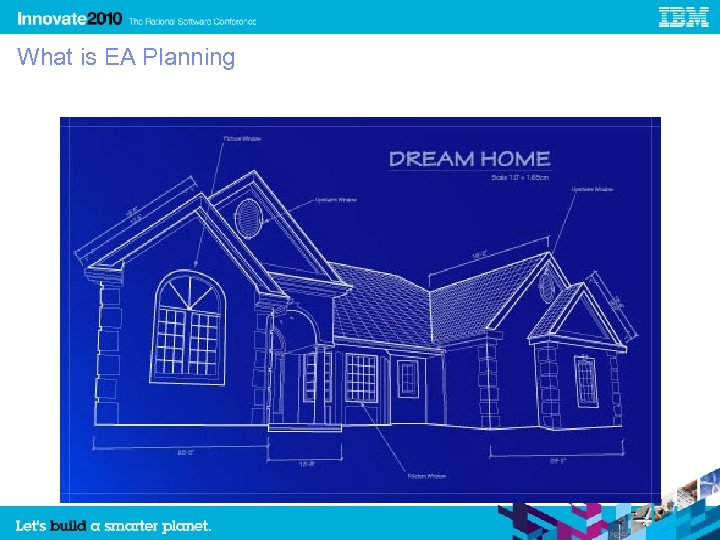
What is EA Planning
. “If you don't know where you are going, any road will take you there” Lewis Carroll
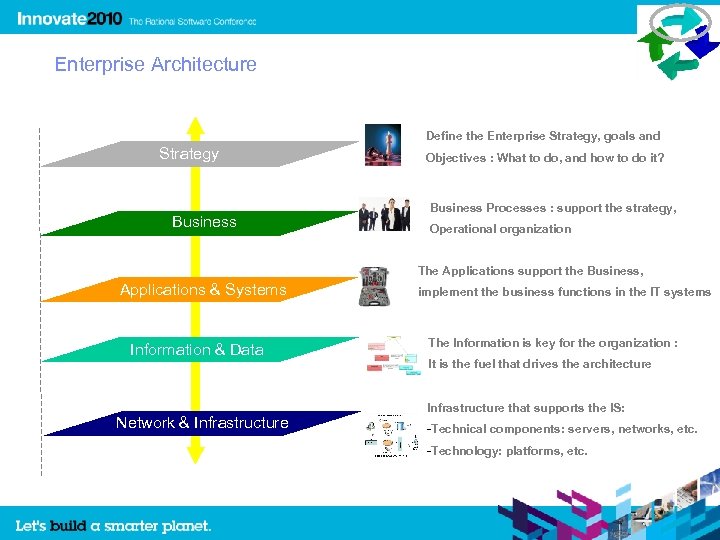
Enterprise Architecture Define the Enterprise Strategy, goals and Strategy Business Métier Applications & Systems Information & Data Network & Infrastructure Objectives : What to do, and how to do it? Business Processes : support the strategy, Operational organization The Applications support the Business, implement the business functions in the IT systems The Information is key for the organization : It is the fuel that drives the architecture Infrastructure that supports the IS: -Technical components: servers, networks, etc. -Technology: platforms, etc.
Agenda Critical Business Challenges Aligning IT with Business IBM Solution Success Stories Q&A Next Steps
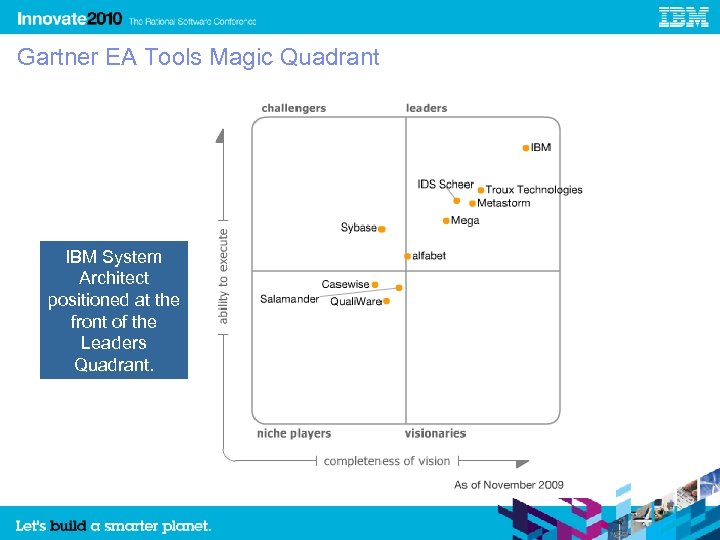
Gartner EA Tools Magic Quadrant IBM System Architect positioned at the front of the Leaders Quadrant.
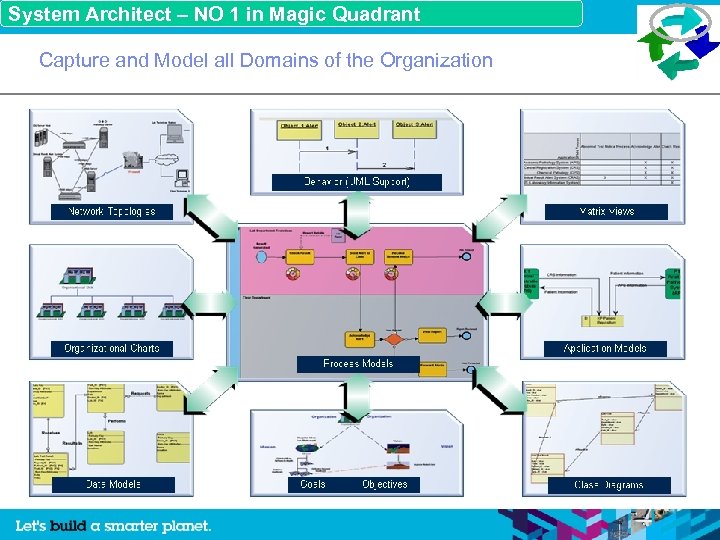
System Architect – NO 1 in Magic Quadrant Capture and Model all Domains of the Organization Application and Network Infrastructure Service Models Behavior (UML Support) Network Topologies Matrix Views Organizational Charts Relational Data Modeling Application Models Process Models Business Process Modeling and Analysis Data Models Goals Objectives Class Diagrams
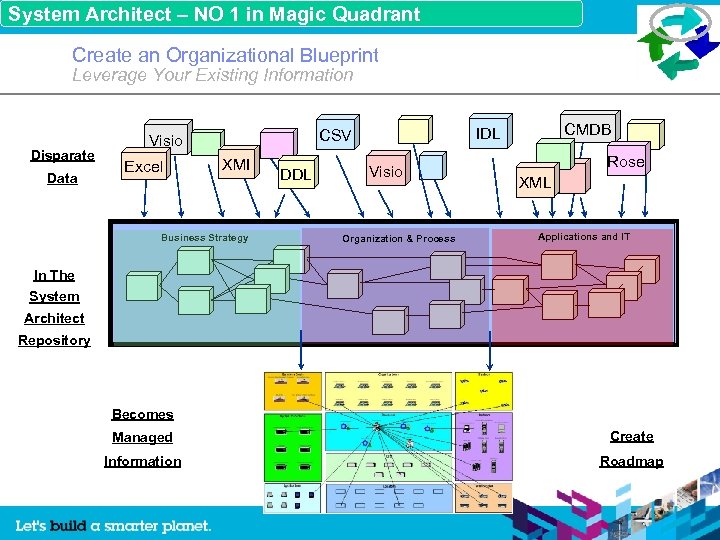
System Architect – NO 1 in Magic Quadrant Create an Organizational Blueprint Leverage Your Existing Information Disparate Data Excel XMI Business Strategy DDL CMDB IDL CSV Visio Organization & Process Rose XML Applications and IT In The System Architect Repository Becomes Managed Create Information Roadmap
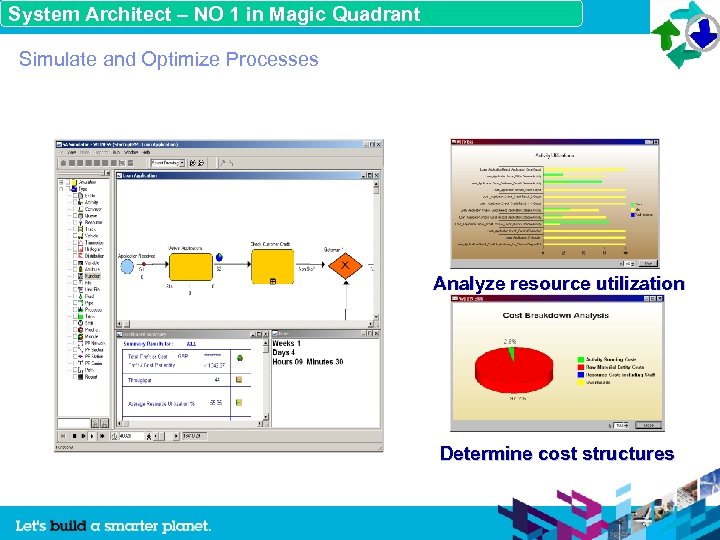
System Architect – NO 1 in Magic Quadrant Simulate and Optimize Processes Analyze resource utilization Determine cost structures
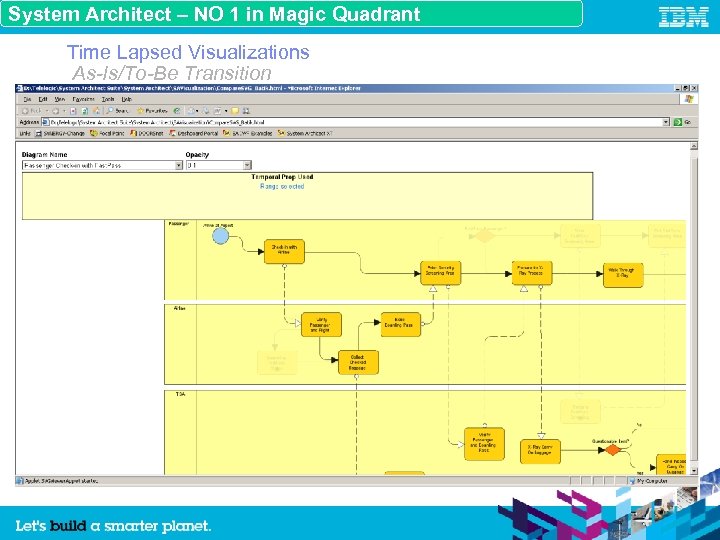
System Architect – NO 1 in Magic Quadrant Time Lapsed Visualizations As-Is/To-Be Transition
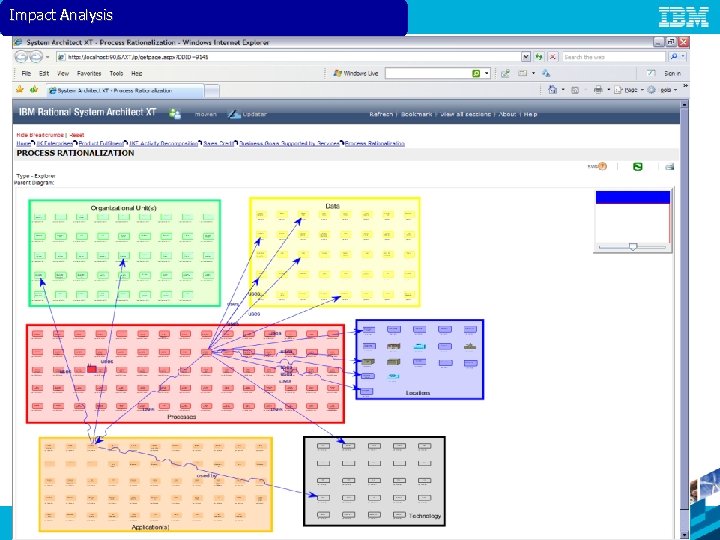
Impact Analysis
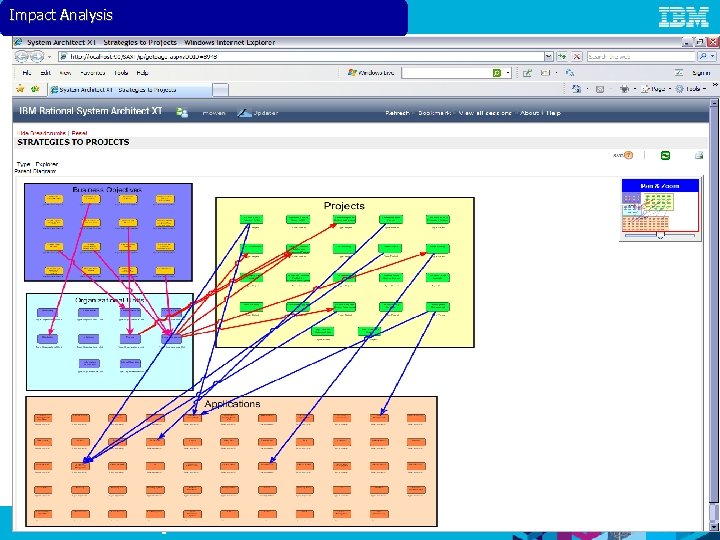
Impact Analysis
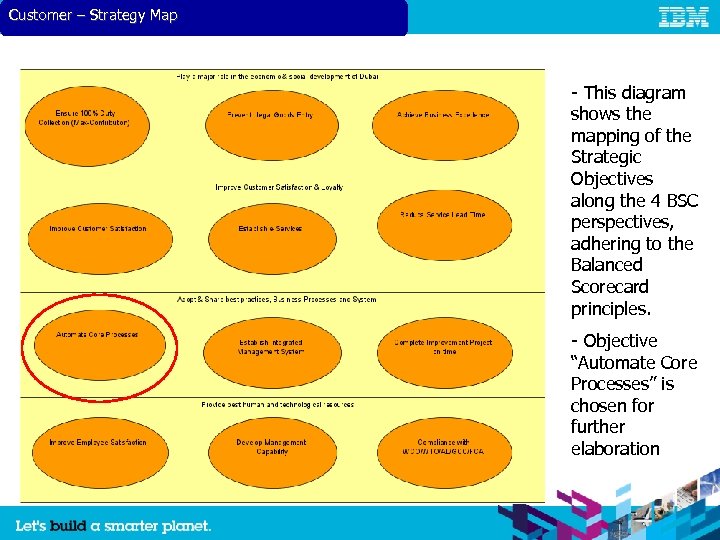
Customer – Strategy Map - This diagram shows the mapping of the Strategic Objectives along the 4 BSC perspectives, adhering to the Balanced Scorecard principles. - Objective “Automate Core Processes” is chosen for further elaboration
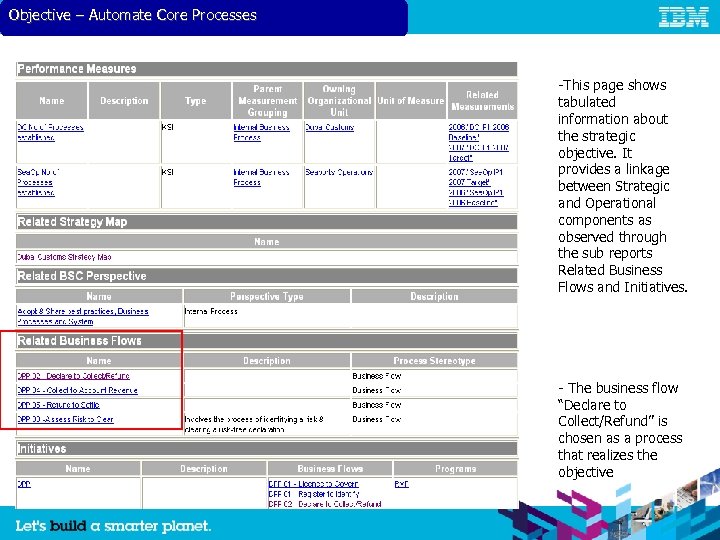
Objective – Automate Core Processes -This page shows tabulated information about the strategic objective. It provides a linkage between Strategic and Operational components as observed through the sub reports Related Business Flows and Initiatives. - The business flow “Declare to Collect/Refund” is chosen as a process that realizes the objective
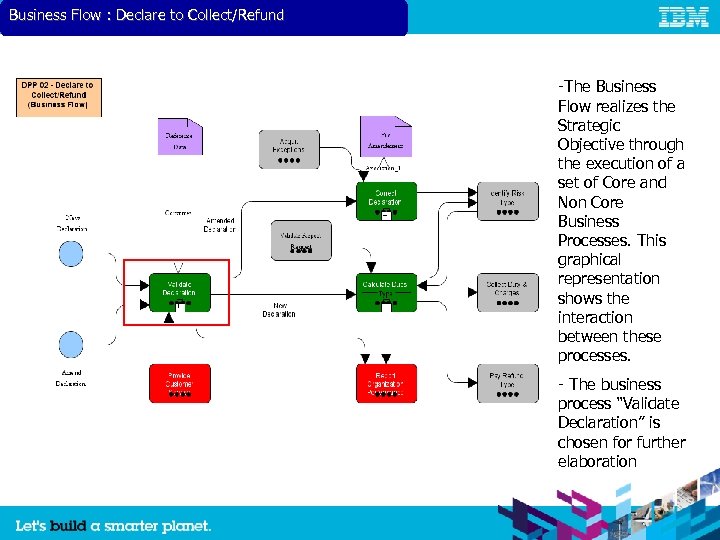
Business Flow : Declare to Collect/Refund -The Business Flow realizes the Strategic Objective through the execution of a set of Core and Non Core Business Processes. This graphical representation shows the interaction between these processes. - The business process “Validate Declaration” is chosen for further elaboration
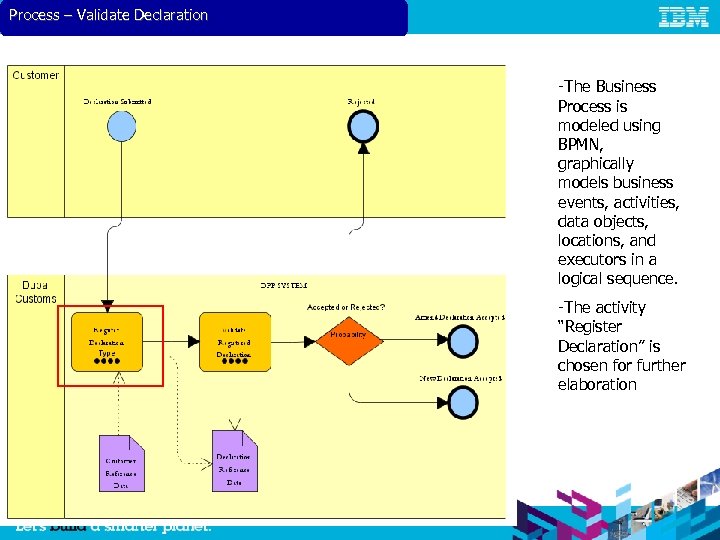
Process – Validate Declaration -The Business Process is modeled using BPMN, graphically models business events, activities, data objects, locations, and executors in a logical sequence. -The activity “Register Declaration” is chosen for further elaboration
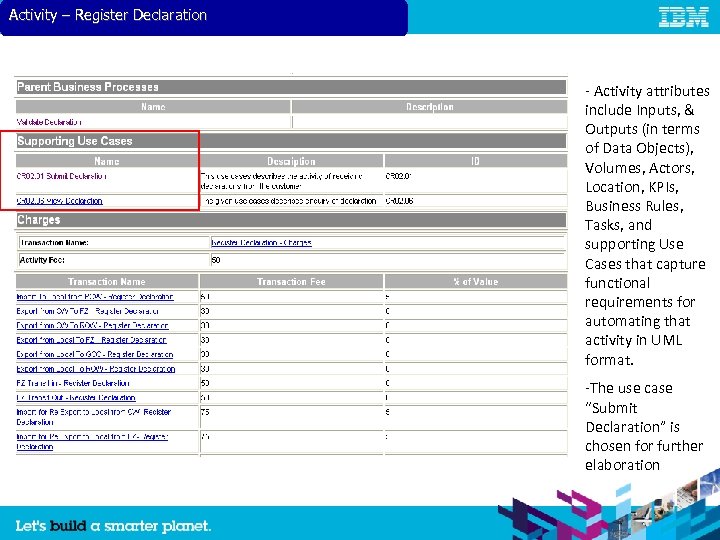
Activity – Register Declaration - Activity attributes include Inputs, & Outputs (in terms of Data Objects), Volumes, Actors, Location, KPIs, Business Rules, Tasks, and supporting Use Cases that capture functional requirements for automating that activity in UML format. -The use case “Submit Declaration” is chosen for further elaboration
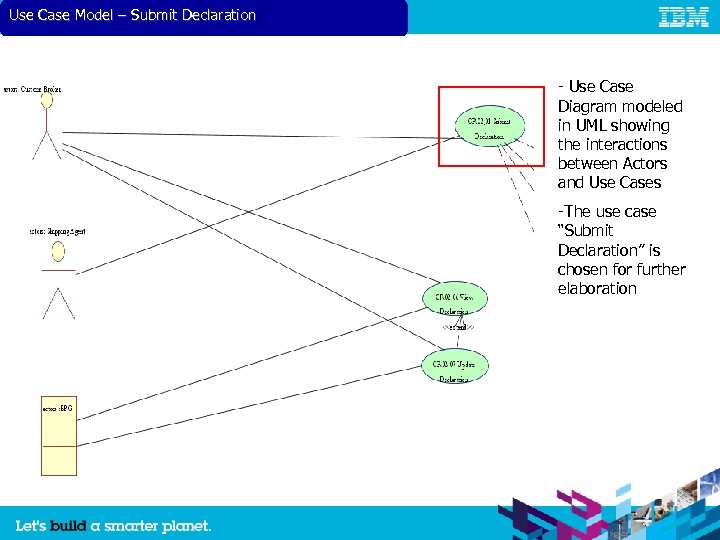
Use Case Model – Submit Declaration - Use Case Diagram modeled in UML showing the interactions between Actors and Use Cases -The use case “Submit Declaration” is chosen for further elaboration
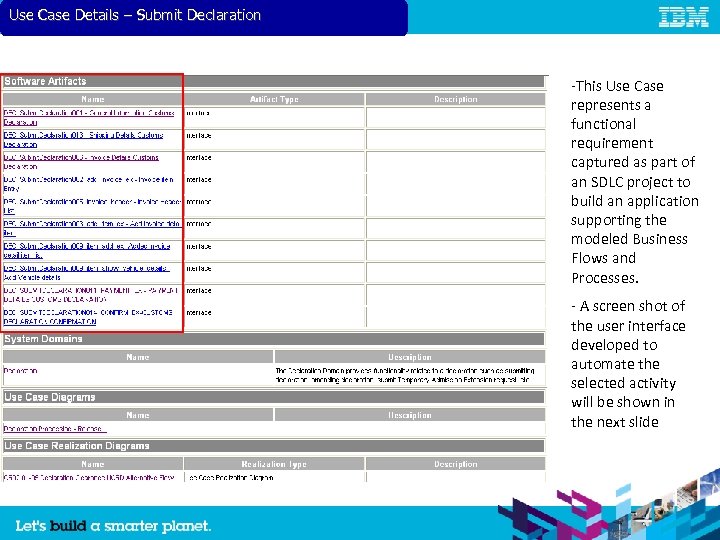
Use Case Details – Submit Declaration -This Use Case represents a functional requirement captured as part of an SDLC project to build an application supporting the modeled Business Flows and Processes. - A screen shot of the user interface developed to automate the selected activity will be shown in the next slide
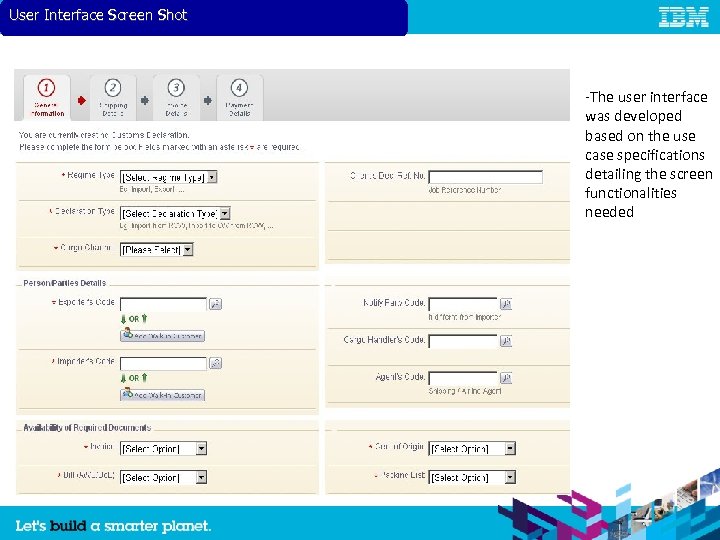
User Interface Screen Shot -The user interface was developed based on the use case specifications detailing the screen functionalities needed
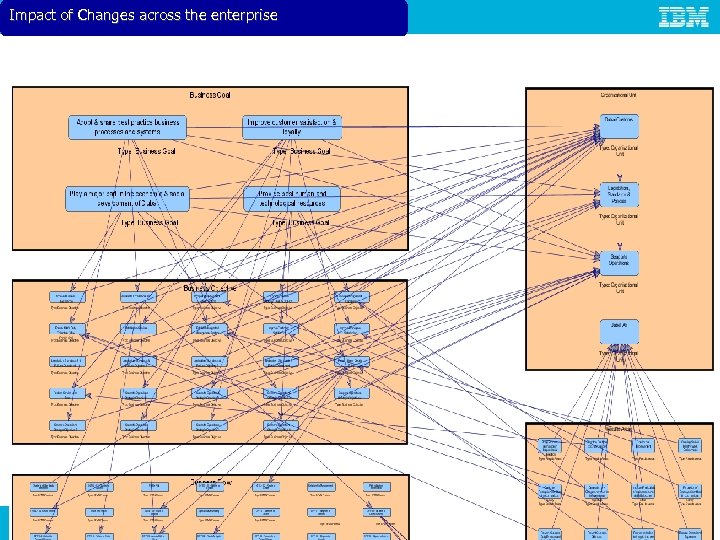
Impact of Changes across the enterprise
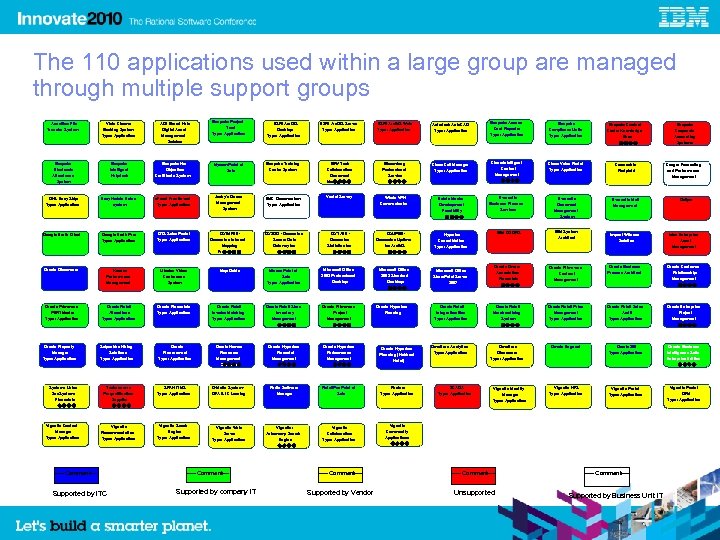
The 110 applications used within a large group are managed through multiple support groups Accellion File Transfer System Vista Cinema Booking System Type: Application ADT Brand Hub Digital Asset Management Soluion Bespoke Project Tool Type: Application ESRI Arc. GIS Desktop Type: Application ESRI Arc. GIS Server Type: Application ESRI Arc. IMS Web Type: Application Autodesk Auto. CAD Type: Application Bespoke Access Card Reporter Type: Application Bespoke Compliance Units Type: Application Bespoke Electronic Bespoke Intelligent Bespoke No Objection Bespoke Training Centre System BIW Tech Collaboration Bloomberg Professional Cisco Call Manager Type: Application Connectria Redplaid Helpdesk Certificate System Document Management Service Cisco Intelligent Contact Management Cisco Voice Portal Type: Application Attendance System Mycom Point of Sale DHL Easy Ship Type: Application Easy Hotels Entee system e. Front. Invest Type: Application Jacky's Queue Management EMC Documentum Type: Application Estate Master Development Feasibility Eversuite Business Process Services Eversuite Document Management Eversuite Mail Management System Vovici Survey Whale VPN Communicator Bespoke Contact Center Knowledge Base Bespoke Corporate Accounting Systems Cougar Forcasting and Performance Management Golips System Google Earth Client Oracle Discoverer Oracle Primavera PERTMaster Type: Application Oracle Property Manager Type: Application Google Earth Pro Type: Application GTS Sales Portal Type: Application GXIMFEE Geocortex Internet Mapping Framework GXSDG - Geocortex GXTAEE - GXUPBE - Secure Data Gateway for Arc. IMS Geocortex Statistics for Arc. IMS Geocortex Uptime for Arc. IMS Micros Point of Sale Type: Application Microsoft Office 2003 Professional Desktop 2003 Standard Desktop Kenexa Performance Management Lifesize Video Conference System Map Guide Oracle Retail Allocations Type: Application Oracle Financials Type: Application Oracle Retail Invoice Matching Type: Application Oracle Retail Store Inventory Management Oracle Primavera Project Management Oracle Human Resource Management Systems Oracle Hyperion Financial Management Oracle Hyperion Performance Management Oracle Hyperion Planning (Nakheel Hotel) Reuters Type: Application Sniperhire Hiring Solutions Type: Application Oracle Procurement Type: Application Systems Union Sun. Systems Financials Technoserve Prequalification Supplier SPAN ITMS Type: Application Q-Matic System GFA & IC Leasing Radia Software Manager Retail. Pro Point of Sale Vignette Content Manager Type: Application Vignette Recommendation Type: Application Vignette Seach Engine Type: Application Vignette Web Server Type: Application Vignetter Automomy Search Engine Vignette Collaboration Comment Supported by ITC Comment Supported by company IT Type: Application Oracle Hyperion Planning IBM DOORS Hyperion Consolidation Type: Application Microsoft Office Share. Point Server Architect Omniture Analytics Type: Application SCADA Type: Application Impact Witness Solution Infor Enterprise Asset Management Oracle Owner Oracle Primavera Contract Management Oracle Business Oracle Customer Association Financials Process Architect Relationship Management Oracle Retail Merchandising System Oracle Retail Price Management Type: Application Oracle Retail Sales Audit Type: Application Oracle Enterprise Project Management System Omniture Discoverer Type: Application Omnix Enguard Oracle 360 Type: Application Oracle Business Intelligence Suite Enterprise Edition Plus Vignette NFS Type: Application Vignette Portal DPM Type: Application 2007 Oracle Retail Integration Bus Type: Application IBM System Vignette Identity Manager Type: Application Vignette Community Applications Comment Supported by Vendor Unsupported Comment Supported by Business Unit IT
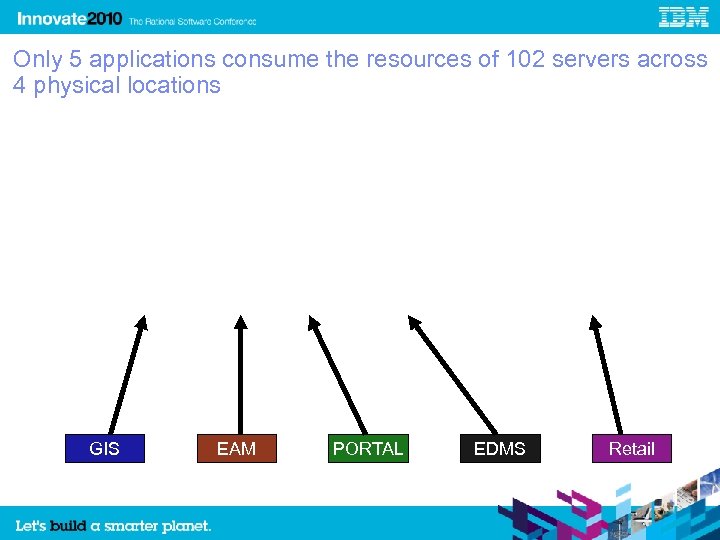
Only 5 applications consume the resources of 102 servers across 4 physical locations GIS EAM PORTAL EDMS Retail
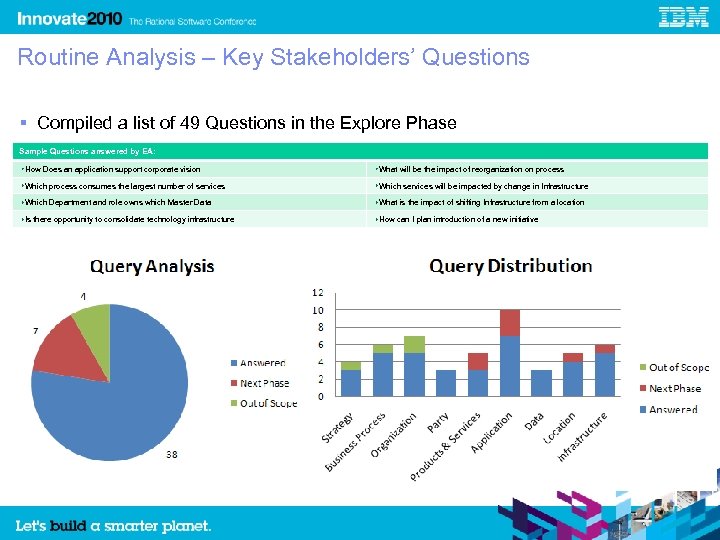
Routine Analysis – Key Stakeholders’ Questions Compiled a list of 49 Questions in the Explore Phase List of answered questions Sample Questions answered by EA: How Does an application support corporate vision What will be the impact of reorganization on process Which process consumes the largest number of services Which services will be impacted by change in Infrastructure Which Department and role owns which Master Data What is the impact of shifting Infrastructure from a location Is there opportunity to consolidate technology infrastructure How can I plan introduction of a new initiative
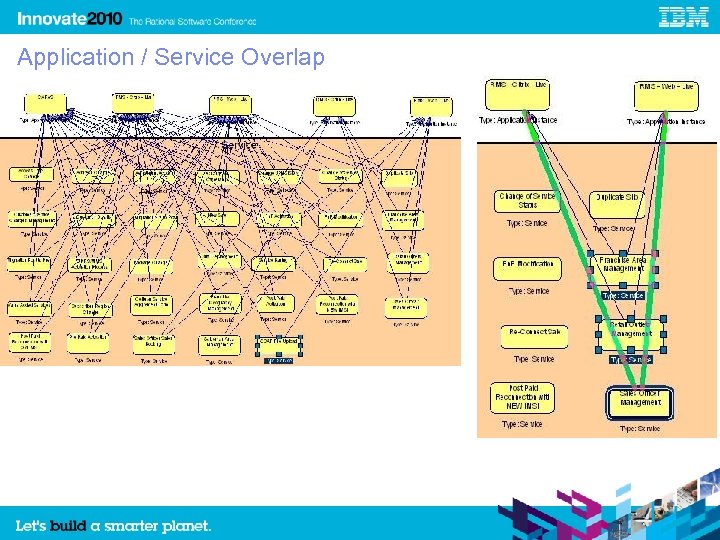
Application / Service Overlap
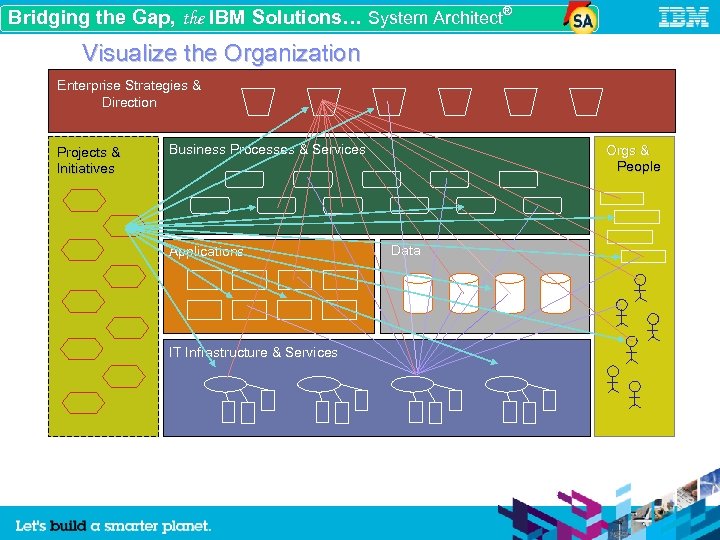
Bridging the Gap, the IBM Solutions… System Architect® Visualize the Organization Enterprise Strategies & Direction Projects & Initiatives Business Processes & Services Applications Orgs & People Data IT Infrastructure & Services With SA you can see key EA components supporting Enterprise strategies & goals! With SA you can see key EA components dependent upon specific technologies! With SA you can manage key EA components as projects and initiatives!
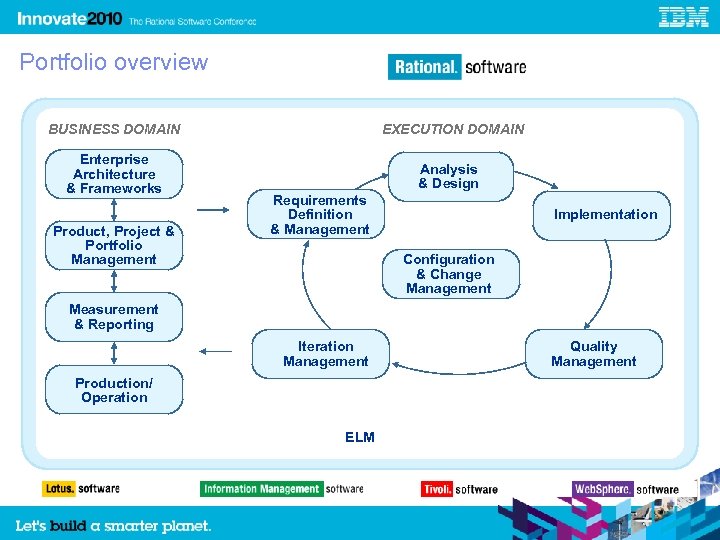
Portfolio overview BUSINESS DOMAIN EXECUTION DOMAIN Enterprise Architecture & Frameworks Analysis & Design Product, Project & Portfolio Management Requirements Definition & Management Implementation Configuration & Change Management Measurement & Reporting Iteration Management Production/ Operation ELM Quality Management
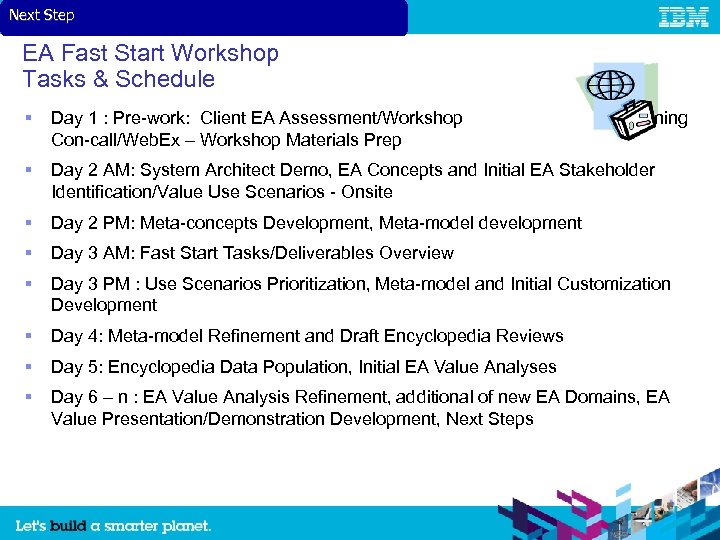
Next Step EA Fast Start Workshop Tasks & Schedule Day 1 : Pre-work: Client EA Assessment/Workshop Con-call/Web. Ex – Workshop Materials Prep Day 2 AM: System Architect Demo, EA Concepts and Initial EA Stakeholder Identification/Value Use Scenarios - Onsite Day 2 PM: Meta-concepts Development, Meta-model development Day 3 AM: Fast Start Tasks/Deliverables Overview Day 3 PM : Use Scenarios Prioritization, Meta-model and Initial Customization Development Day 4: Meta-model Refinement and Draft Encyclopedia Reviews Day 5: Encyclopedia Data Population, Initial EA Value Analyses Day 6 – n : EA Value Analysis Refinement, additional of new EA Domains, EA Value Presentation/Demonstration Development, Next Steps Planning
 Скачать презентацию Aligning IT with Business Business Transformation Productivity Governance Innovation
bbba40fe178ae149e6b694cdd9b4e84e.ppt