 Скачать презентацию Аlcohol harm Batyrbayeva Saniya ЮП-103 Alcoholism is
алкоголь.pptx
- Количество слайдов: 18



Аlcohol harm Batyrbayeva Saniya ЮП-103
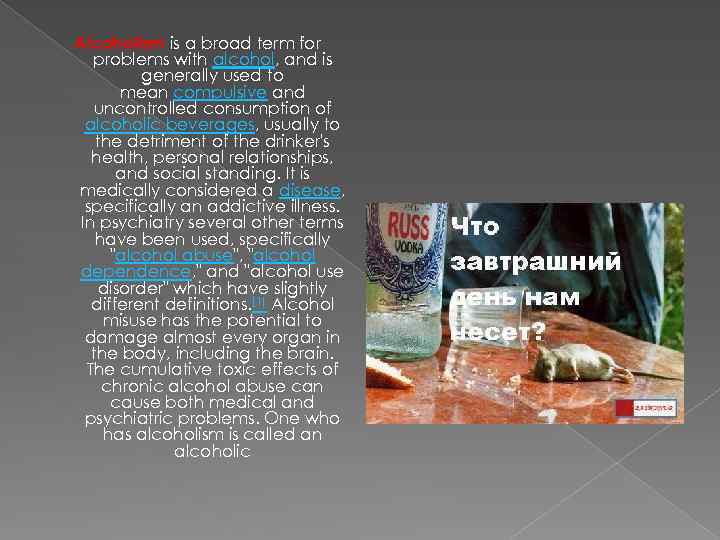
Alcoholism is a broad term for problems with alcohol, and is generally used to mean compulsive and uncontrolled consumption of alcoholic beverages, usually to the detriment of the drinker's health, personal relationships, and social standing. It is medically considered a disease, specifically an addictive illness. In psychiatry several other terms have been used, specifically "alcohol abuse", "alcohol dependence, " and "alcohol use disorder" which have slightly different definitions. [1] Alcohol misuse has the potential to damage almost every organ in the body, including the brain. The cumulative toxic effects of chronic alcohol abuse can cause both medical and psychiatric problems. One who has alcoholism is called an alcoholic
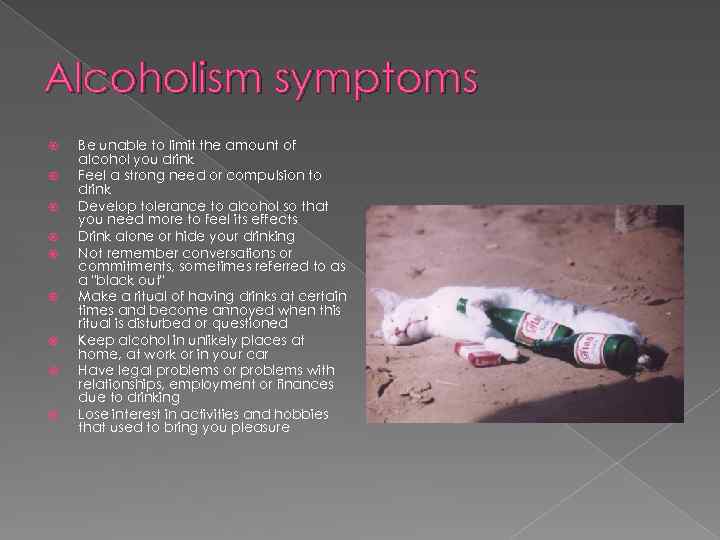
Аlcoholism symptoms Be unable to limit the amount of alcohol you drink Feel a strong need or compulsion to drink Develop tolerance to alcohol so that you need more to feel its effects Drink alone or hide your drinking Not remember conversations or commitments, sometimes referred to as a "black out" Make a ritual of having drinks at certain times and become annoyed when this ritual is disturbed or questioned Keep alcohol in unlikely places at home, at work or in your car Have legal problems or problems with relationships, employment or finances due to drinking Lose interest in activities and hobbies that used to bring you pleasure
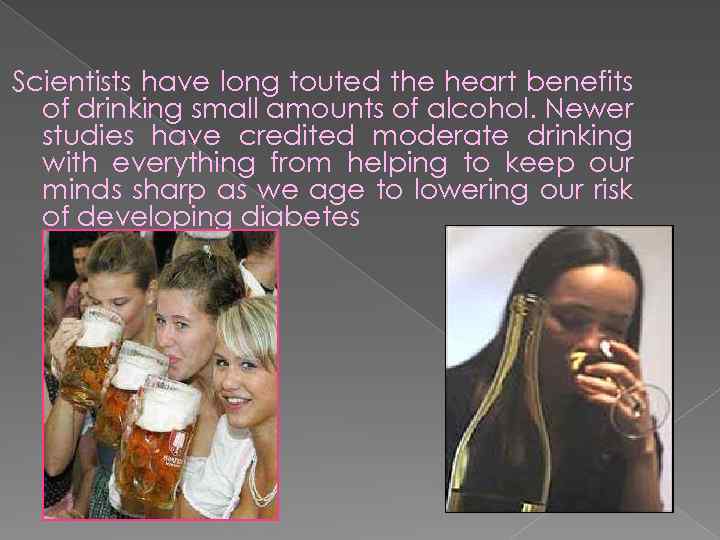
Scientists have long touted the heart benefits of drinking small amounts of alcohol. Newer studies have credited moderate drinking with everything from helping to keep our minds sharp as we age to lowering our risk of developing diabetes
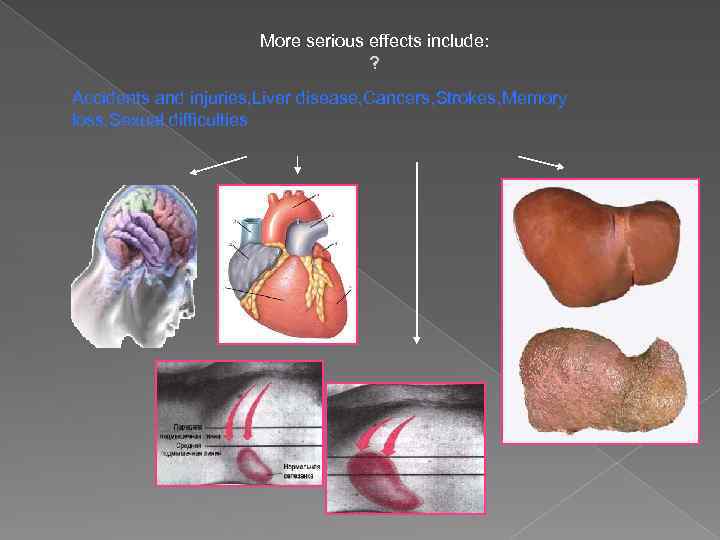
More serious effects include: ? Accidents and injuries, Liver disease, Cancers, Strokes, Memory loss, Sexual difficulties
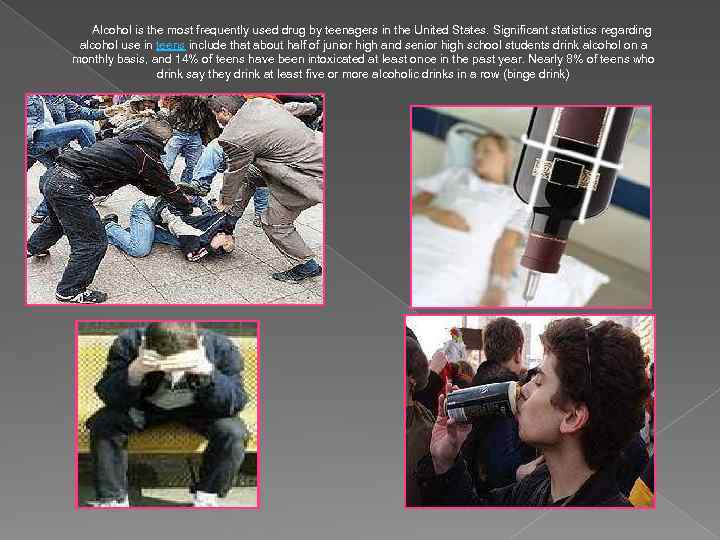
Alcohol is the most frequently used drug by teenagers in the United States. Significant statistics regarding alcohol use in teens include that about half of junior high and senior high school students drink alcohol on a monthly basis, and 14% of teens have been intoxicated at least once in the past year. Nearly 8% of teens who drink say they drink at least five or more alcoholic drinks in a row (binge drink)
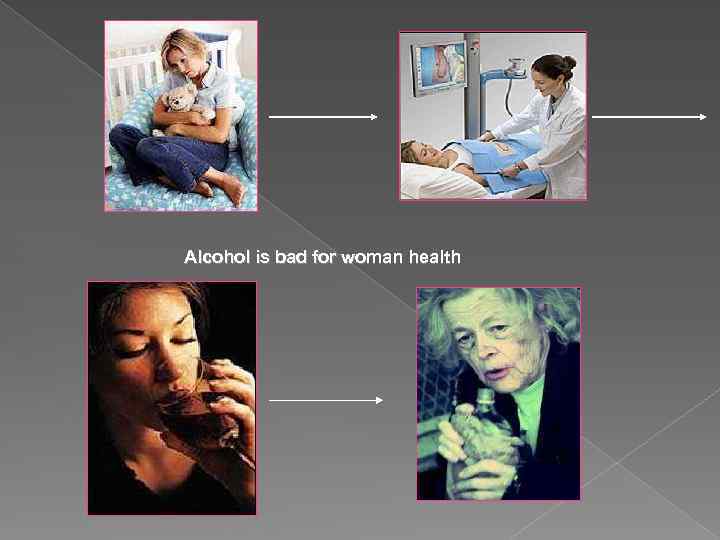
Alcohol is bad for woman health
Cancer - alcohol is one of the most well-established causes of cancer. particularly breast and colon cancer and cancers of the mouth and throat. A recent Europe-wide study of over 350, 000 people found that one in 10 of all cancers in men and one in 33 in women were caused by past or current alcohol intake. Further information about alcohol and cancer can be found on the Cancer Research UK website. Liver cirrhosis - the final stage of alcoholic liver disease. Find out more from the British Liver Trust. High blood pressure and increased risk of stroke and heart disease - see the Blood Pressure Association for further details. Mental health issues - there is a link between drinking too much alcohol and a number of mental health problems. Persistent heavy drinking can also be associated with memory loss difficulties. See the Mental Health Foundation's booklet on alcohol and mental health for further information. Pancreatitis and stomach problems Drinking too much, too often, can also lead to social and relationship problems.
Risk factors for alcoholism include: Steady drinking over time. Drinking too much on a regular basis for an extended period or binge drinking on a regular basis can produce a physical dependence on alcohol. Age. People who begin drinking at an early age are at a higher risk of problem drinking or physical dependence on alcohol. Family history. The risk of alcoholism is higher for people who have a parent or other close relatives who have problems with alcohol. Depression and other mental health problems. It's common for people with a mental health disorder such as anxiety, depression or bipolar disorder to have problems with alcohol or other substances. Social and cultural factors. Having friends or a close partner who drinks regularly could increase your risk of alcoholism. The glamorous way that drinking is sometimes portrayed in the media also may send the message that it's OK to drink too much.
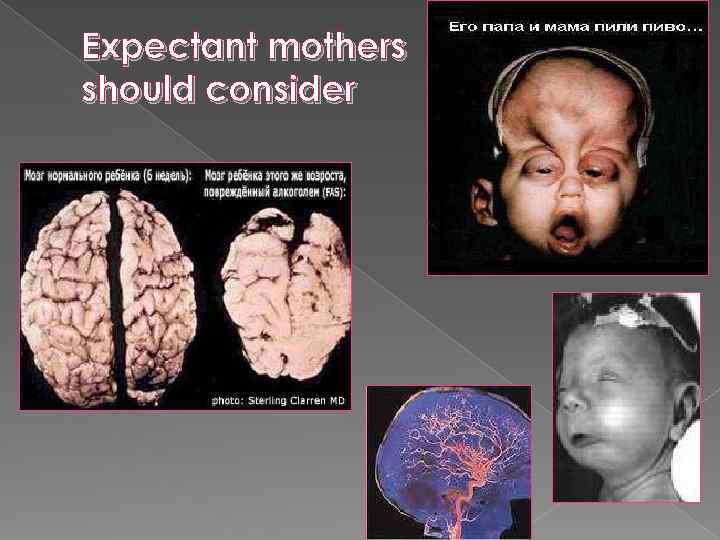
Expectant mothers should consider
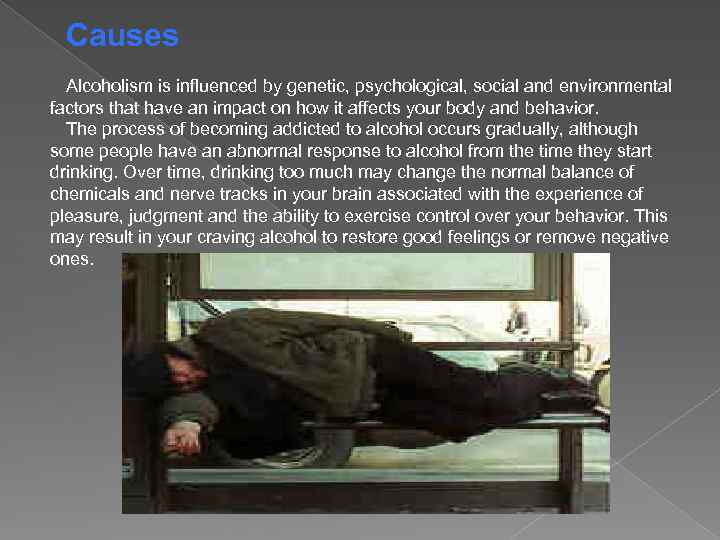
Causes Alcoholism is influenced by genetic, psychological, social and environmental factors that have an impact on how it affects your body and behavior. The process of becoming addicted to alcohol occurs gradually, although some people have an abnormal response to alcohol from the time they start drinking. Over time, drinking too much may change the normal balance of chemicals and nerve tracks in your brain associated with the experience of pleasure, judgment and the ability to exercise control over your behavior. This may result in your craving alcohol to restore good feelings or remove negative ones.

Alternative medicine Several alternative medicine techniques may be helpful in addition to your treatment plan when recovering from alcoholism. Examples include: Yoga's series of postures and controlled breathing exercises may help you relax and manage stress. Meditation. During meditation, you focus your attention and eliminate the stream of jumbled thoughts that may be crowding your mind and causing stress. Acupuncture. With acupuncture, hair-thin needles are inserted under the skin. Acupuncture may help reduce anxiety and depression.

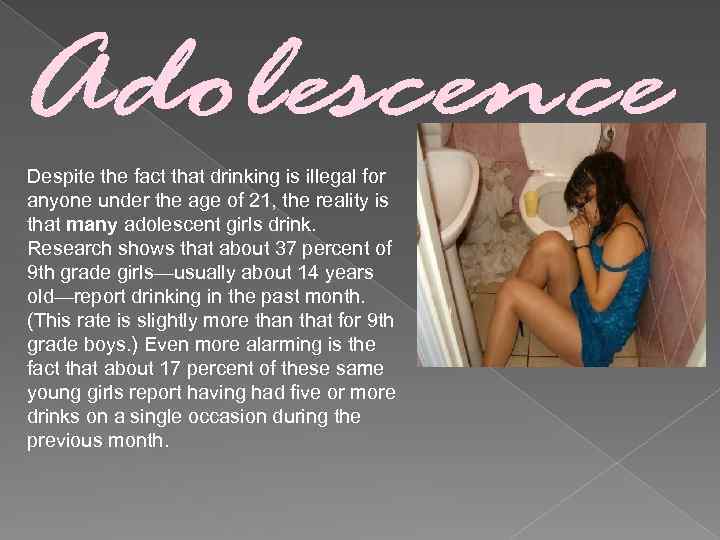
Despite the fact that drinking is illegal for anyone under the age of 21, the reality is that many adolescent girls drink. Research shows that about 37 percent of 9 th grade girls—usually about 14 years old—report drinking in the past month. (This rate is slightly more than that for 9 th grade boys. ) Even more alarming is the fact that about 17 percent of these same young girls report having had five or more drinks on a single occasion during the previous month.
Lifestyle and home remedies Coping with problem drinking or alcoholism requires that you change your habits and make different lifestyle choices. Consider your social situation. Make it clear to your friends and family that you are not drinking. You may need to distance yourself from friends and social situations that impair your recovery. Develop healthy habits. For example, good sleep, regular physical activity and eating well all can make it easier for you to recover from alcoholism. Do things that don't involve alcohol. You may find that many of your activities involve drinking. Replace them with hobbies or pastimes that are not centered around alcohol.
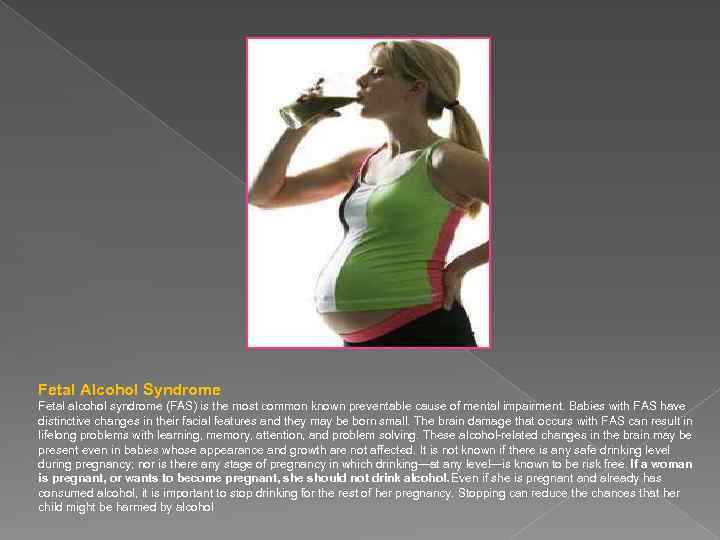
Fetal Alcohol Syndrome Fetal alcohol syndrome (FAS) is the most common known preventable cause of mental impairment. Babies with FAS have distinctive changes in their facial features and they may be born small. The brain damage that occurs with FAS can result in lifelong problems with learning, memory, attention, and problem solving. These alcohol-related changes in the brain may be present even in babies whose appearance and growth are not affected. It is not known if there is any safe drinking level during pregnancy; nor is there any stage of pregnancy in which drinking—at any level—is known to be risk free. If a woman is pregnant, or wants to become pregnant, she should not drink alcohol. Even if she is pregnant and already has consumed alcohol, it is important to stop drinking for the rest of her pregnancy. Stopping can reduce the chances that her child might be harmed by alcohol
 Скачать презентацию Аlcohol harm Batyrbayeva Saniya ЮП-103 Alcoholism is
алкоголь.pptx