 Скачать презентацию Alcohol and Its Abuse Drugs and Our Society
615f9bc17300c65f3bad2233a6e1183c.ppt
- Количество слайдов: 54



Alcohol and Its Abuse Drugs and Our Society Part 13
Effects of Alcohol 1. Impact on the United States - and the world a. Alcohol effects everyone - by own use - someone else’s use b. Attitudes: run the gamut - from reverence - to dismay
Effects, cont. 2. Oldest known drug - primitive societies: ritually / socially - anxiety / unstable environment a. Not always acknowledged as a drug - it is legal - harmful / government would control - commercials: beautiful people drinking b. Parents / role models consume
Effects, cont 3. People drink for many reasons - relax - reduce inhibitions - pleasure - to forget - intoxication a. Part of social fabric / American life - family dinners / festive occasions / super bowl / weddings / celebrate holidays
Effects, cont. b. Difficult to think of drug: - served many cultural purposes - cause so much havoc 4. History of alcohol use in US - beginning of colonial times - temperance movement / Prohibition / contemporary use a. Colonial times
History of Alcohol - 1620: Plymouth Rock - positive attitude towards alcohol - drinking in moderation: acceptable - drunkenness was punished b. Importance of alcohol - sanitation / nutrients (1) Sanitary practices lacking - wells contaminated
History, cont. - was a preservative (2) Important nutrients - vitamins / minerals / yeast - made from grains / vegetables (3) 1640: first distillery (Staten Island) - Dutch rum trade - New England’s largest business - most profitable
History, cont. c. Consumption peaked: 1801 – 1809 - Jefferson’s presidency - farmer’s took alcohol into fields - employers gave to employees on job - politicians gave to voters at polls d. Continental Army - troops received daily rations - either rum or whiskey
History, cont. e. 1850: first national census - aged 15 or older - over 6 gallons person - twice the levels of today 5. Temperance movement (early 1800 s) - stop escalating use / abuse - few made connection between alcohol / social problems
History, cont. a. Did realize problem of uncontrolled use - began in 1826 - declined during Civil War (1861 – 1865) - reasserted late 1860 s b. Before Civil War: 6 gallons per adult - before Prohibition: 2 gallons c. Three most influential in alcohol reform - Women’s Christian Temperance Union
History, cont. - Anti-Saloon League - National Prohibition Party d. Grew into powerful political force - 1880 to 1889: 7 states prohibition law - 1907/1919: 34 states passed - 2 states repealed laws banning alcohol 6. Prohibition - movement gathered strength in early 1900 s
History, cont. - movement to ban gathered strength a. Amendment to ban - ‘Volstead Act’ (Andrew Volstead) - adopted by US Senate (1917) - House (1918) - 35 states must ratify - all but 2 (Rhode Isl / Connecticut) - 18 th Amendment (January 16, 1920)
History, cont. b. Negative effects - illegal trade in alcohol - using adulterants - lack of enforcing the law - home brewing (not illegal) c. Law repealed (1933): 21 st Amendment - disregard for law - loss of jobs - loss of revenue
Current Alcohol Use 1. Most people = social drinkers - drinking patterns: no health/social problems - experience immediate risks (accidents) - able to abstain at will a. Cannot abstain (medical/social difficulties) - problem drinkers / alcoholics b. Label: depends on criteria used - can abuse / not be alcoholic
Current Use, cont. - problem drinkers: not drink daily b. Not easily categorized - do they: drink alone or with friends - do they: drink and drive / or take taxi c. One factor observed: - costs rise / consumption drops - among social drinkers - not heavy drinkers
Current Use, cont. d. State cracking down (alcohol level) - DUI: . 08% - 26 states: drive-thru alcohol sales - Washington state: Sunday sales 2. Drinking patterns - vary among different groups a. College students - fraternity/sorority: higher consumption than students not affiliated
Current Use, cont. b. Gay / lesbian / bisexual college students - more than heterosexual c. Heavy drinking - highly correlated with bar patronage - singles / males d. Alcohol-related problems - greater: more access to places to drink or buy
Current Use, cont. e. Per capita consumption - higher in New England states - lowest in Mid-Atlantic states f. Men vs. Women - men more likely to drink - consumption levels: greater - heavy drinking by younger women increasing - single older women
Current Use, cont. 3. Drinking patterns of women - more seeking treatment a. Demographic subgroups - unemployed - looking for work - employed part-time b. Patterns more prevalent among: - divorced / separated - unmarried / living with a partner
Current Use, cont. c. Age 20 to early 30 s - husband / partner drinks heavily - greater risk for problem drinker d. 21 – 34 with children - less likely to report drinking problems 4. College campus arrests (alcohol / drugs) - increased dramatically - may reflect stricter enforcement
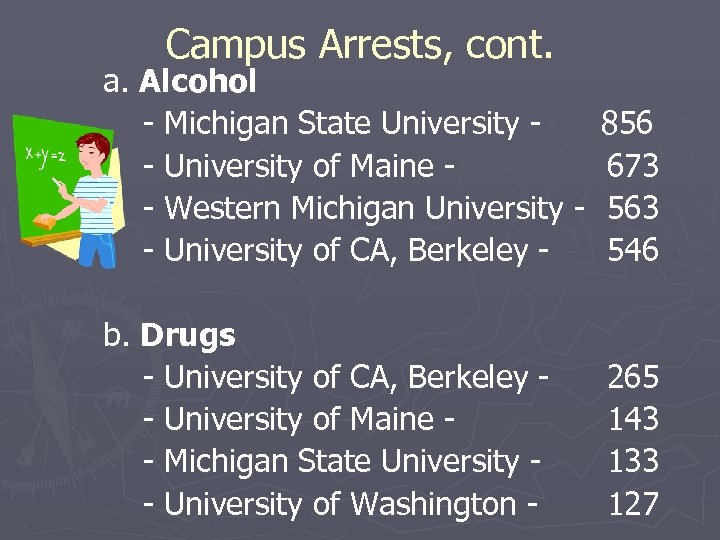
Campus Arrests, cont. a. Alcohol - Michigan State University - University of Maine - Western Michigan University - University of CA, Berkeley - 856 673 563 546 b. Drugs - University of CA, Berkeley - University of Maine - Michigan State University - University of Washington - 265 143 133 127
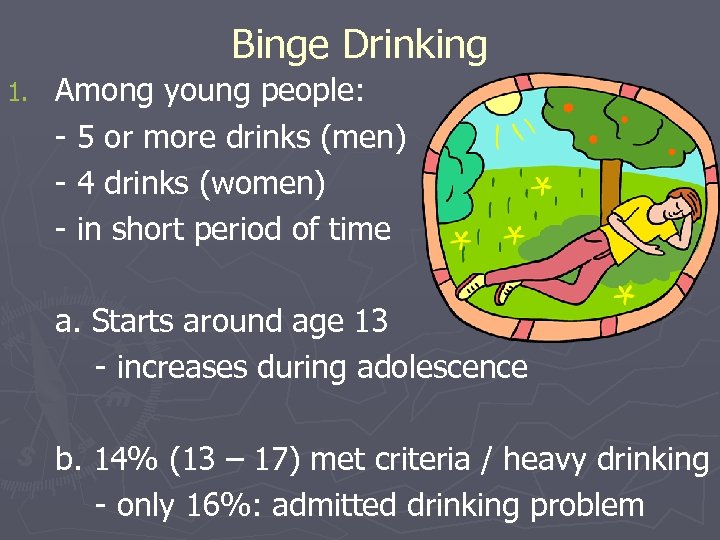
Binge Drinking 1. Among young people: - 5 or more drinks (men) - 4 drinks (women) - in short period of time a. Starts around age 13 - increases during adolescence b. 14% (13 – 17) met criteria / heavy drinking - only 16%: admitted drinking problem
Binge Drinking, cont. 2. Parties very / somewhat important - more likely to binge a. High school athletes - more likely than non-athletes b. More than 2/3 s high school students - obtain alcohol from 21 or older c. 14%: 18 to 20 years – commercial outlet
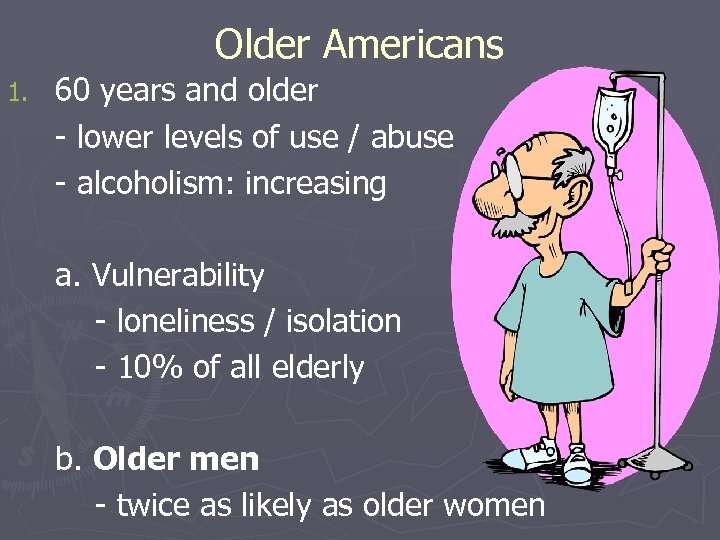
Older Americans 1. 60 years and older - lower levels of use / abuse - alcoholism: increasing a. Vulnerability - loneliness / isolation - 10% of all elderly b. Older men - twice as likely as older women
Older Americans, cont. - alcohol related problems - late-life onset of alcoholism c. Primary reason problem drinking so low - heavy drinkers dying 2. Race and alcohol use - 29% African-American men: abstain - 23% Caucasian men: abstain - 46%: black women / 34%: white women
Race, cont. a. Heavy drinking - more prevalent in 18 – 29 age group - both white men and women b. This age group for black men/women - more likely to abstain 1. Alcoholic beverages - central nervous system depressant - “ethyl alcohol” / not “methyl alcohol”
Beverages, cont. a. Fermentation - certain yeasts with carbon / hydrogen / oxygen of sugar and water - transform: ethyl alcohol/carbon dioxide - yields beverage 14% alcohol b. Distillation: percentage increased - lower boiling point than other liquids - steam rises / cooled / back to liquid - distilled liquid: higher alcohol content
Process, cont. 2. Beer - sprouted barley added to cereal grains - changes carbohydrates to sugar - yeast: changes sugar into 5% alcohol Pharmacology of Alcohol 1. Transformed in the liver: acetaldehyde - then into: acetate / water / carbon dioxide (acetate acid = vinegar)
Process, cont. a. Most toxic poison created - alcohol metabolism b. Found in: cigarette smoke / car exhaust / embalming fluid (“getting bombed”) c. Causes: hangovers / liver disease / cancer / alcoholism - interferes with neurotransmitter activity - you drink = you ingest poison
Pharmacology, cont. 2. Rate of elimination - excreted in urine / breath / sweat a. Leaves body: 3/4 th ounce per hour - shot spirits / bottle beer / glass wine - about the same amount of alcohol - produce same intoxicating effect b. Primary site of absorption - small intestine
Pharmacology, cont. 2. Factors effecting absorption rate a. Food in stomach - absorbed more slowly - wine/beer less quickly = distilled spirits - champagne: exception (carbon dioxide) - liquor + carbonated beverage (quickly) b. Males / females: absorb at different rates - male: larger / more water - less likely to feel effects same amount
Pharmacology, cont. c. Premenstrual phase - absorb more quickly - birth control pills: more quickly 3. Concentration in blood - blood alcohol concentration (BAC) - blood alcohol level (BAL) a. Effect of alcohol on individual - correlates to % of alcohol in bloodstream
Pharmacology, cont. b. Consumed at rate exceeding metabolism - leaving the body - BAC rises c. As BAC rises - behavioral / subjective efforts - become more pronounced - speech / movement / thinking / vision d. Drinking too much / short time / fatal
Health Effects 1. Accounts for 10% of all deaths in US - alcoholic life expectancy: reduced 15 years a. Effects every bodily organ - depend on frequency / quantity - type of alcohol does not matter b. Study of adolescents - beer / wine / distilled spirits - equally damaging physical impairment
Effects on Brain 2. Alcohol and the brain - highly sensitive a. 5 to 6 drinks daily - adversely affect: cognitive functioning - increase impairment: higher consumption - 15 to 30% nursing home patients b. Acts on cerebrum - affects judgment / reasoning / inhibitions
Effects on Brain, cont. - stimulates release of serotonin - accounts for disinhibiting effects c. Acts on cerebral cortex - effects motor activity - moods change quickly - stimulates release of dopamine - feelings of pleasure / euphoria d. Acts on cerebellum
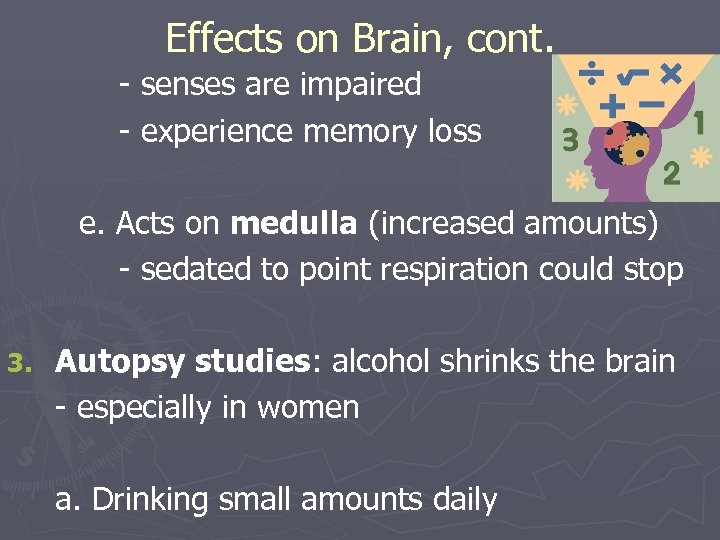
Effects on Brain, cont. - senses are impaired - experience memory loss e. Acts on medulla (increased amounts) - sedated to point respiration could stop 3. Autopsy studies: alcohol shrinks the brain - especially in women a. Drinking small amounts daily
Effects on Brain, cont. - does not affect memory adversely - large amounts: harm the memory - alcohol-induced amnesia last short time b. Conditioned alcoholic - appear conscious - even function when drinking - have no memory of what transpired - condition referred to as: alcohol-induced blackout
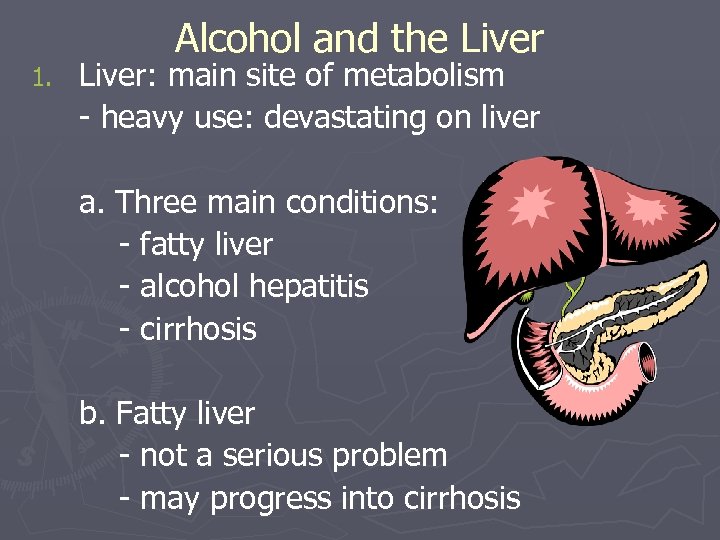
1. Alcohol and the Liver: main site of metabolism - heavy use: devastating on liver a. Three main conditions: - fatty liver - alcohol hepatitis - cirrhosis b. Fatty liver - not a serious problem - may progress into cirrhosis
Liver, cont. c. Alcohol hepatitis - inflammation of liver d. Cirrhosis - injury and scarring - destruction of normal liver tissue - results: 25, 000 deaths annually 2. Alcohol liver disease - more common in women
Liver, cont. a. Women - drink over a period of years - 6 oz. wine / 13 oz. beer / 2 oz. whiskey b. Men - drink over a period of years - 20 oz. wine / 40 oz. beer / 6 oz. whiskey 3. Alcohol / Intestinal Tract
Intestinal Tract - small amounts help digestion - can irritate stomach - large amounts can cause bleeding 4. Alcohol / cardiovascular system - small amount: help reduce coronary disease - reduce risk by 40% - but only in older adults - for wine / not hard liquor
Cardiovascular, cont. a. Heavy use: - degeneration of heart muscle - Alcoholic Heart Muscle Disease (AHMD) - cardiomyopathy: becomes inflamed b. High blood pressure - deficient circulation of blood - abnormal cardiac rhythm 5. Other problems:
Other Problems, cont. - impacts immune system / white blood cells a. Research: links alcohol use and cancer - esophageal cancer - 10 times greater: consume 21 drinks or more per week b. Fetal Alcohol Syndrome - 3 rd most common cause of birth defects
Problems, cont. 6. Underage drinking - 10% of all alcohol consumed - 1/3 rd consume at least once per month - underage males: more than adult males - underage females: slightly less a. Problems generated: - automobile accidents: death / injuries - alcohol induced violence - unplanned / unprotected sex
Problems, cont. - poor academic performance - school dropout rate - delinquent (illegal) behavior b. Early 1970 s: states lowered drinking age - if you can go to war / you can drink - accidents / injuries / deaths increased - 1984: feds set drinking age at 21 - highway funds to control states
Alcoholism 1. Alcoholism has many definitions - none universally accepted a. Many consider it a disease - identified as having a personal defect - used term alcoholic for decades b. Today: alcohol abuse / dependence used - US Dept. Health and Human Services definition:
Alcoholism, cont. “A disease that is characterized by abnormal alcohol-seeking behavior that leads to impaired control over drinking. ” b. Withdrawal - alcohol can create dependency - drinking stops: withdrawal symptoms c. First 5 days: most severe - symptoms can last for weeks
Alcoholism, cont. - craving for alcohol obvious symptom 2. Physical symptoms: - headaches / sweating / nausea / insomnia - loss of appetite / paleness / rapid heart rate - clammy skin / abnormal movements - hand tremors / stomach cramps a. Severe symptoms: - confusion/hallucination (delirium tremor)
Alcoholism, cont. 3. Causes for: - 1800 s: common view = personal choice - heredity / socio-cultural / biochemistry / personality / interpersonal factors a. Genetics - research on twins - 31% for identical / 24% fraternal b. Psychosocial factors
Alcoholism, cont. - look at why we start drinking - why we continue - factors that influence c. Culture - attitude of culture / subculture / group - used in religion / families / neighbors - less likely abused 4. Alcohol and society
Alcohol and Society - can devastate friends / family / others a. Statistics - 6 to 11% of elderly admitted to hospitals - 20% in psychiatric wards - 14% in emergency rooms (alcoholism) - 25% all emergency room admissions b. Automobile accidents - leading cause of death (5 to 34 years old) - 2/3 s involve alcohol
Alcohol and Society, cont. c. How alcohol affects the driver - process information more slowly - look at center of visual field / do not use peripheral vision - unable to deal with multiple sources of information - even moderate drinkers (. 05 BAC) underestimate hazards when driving d. Accidents
Alcohol and Society, cont. - more likely injury accidents / fatal falls -. 10 BAC = 10% more likely to fall e. Suicide - 20 to 36% after consuming alcohol - related primarily to distilled spirits f. Family violence - 57% men under influence - 27% women - alcohol use escalates / so does violence
Скачать презентацию Alcohol and Its Abuse Drugs and Our Society
615f9bc17300c65f3bad2233a6e1183c.ppt