 Скачать презентацию Aksay kazakh turkish high school for boys
2 lesson - Ecology - Abiotic and biotic factors.pptx
- Количество слайдов: 18



Aksay kazakh – turkish high school for boys Introduction to Ecology. Ecological factors
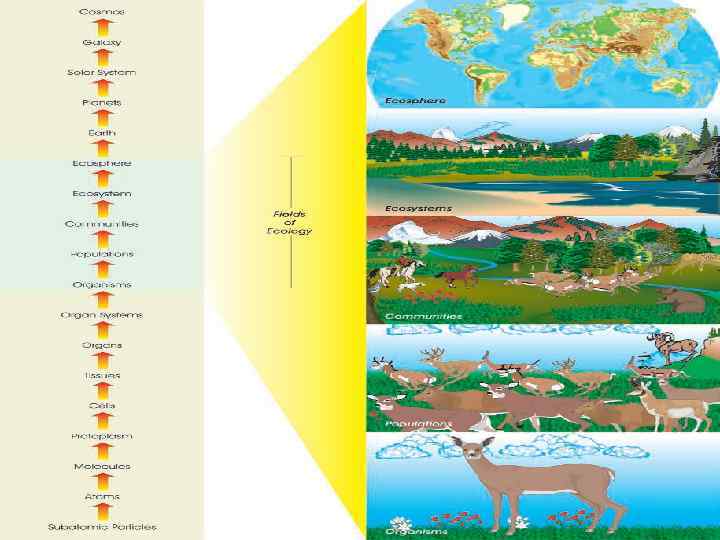
Ecology • Ecology is a branch of biology that studies the interactions of living things with each other and with the environment • Ecology from the Greek oikos, "home, " and logos, "to study"
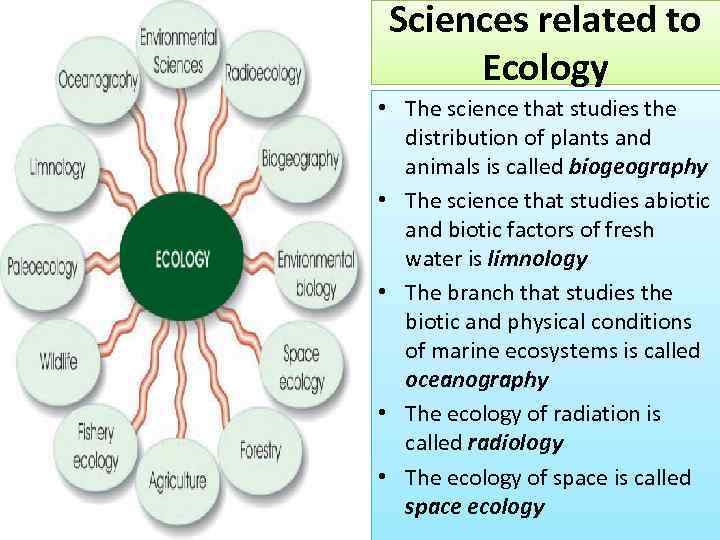
Sciences related to Ecology • The science that studies the distribution of plants and animals is called biogeography • The science that studies abiotic and biotic factors of fresh water is limnology • The branch that studies the biotic and physical conditions of marine ecosystems is called oceanography • The ecology of radiation is called radiology • The ecology of space is called space ecology
Ecological factors • Ecological factor is any factor that influences living organisms, they are divided into 3 groups: Abiotic • The effect of nonliving chemical and physical factors Biotic • The effect of living things to each other Anthropogenic • The effect of humans to environment
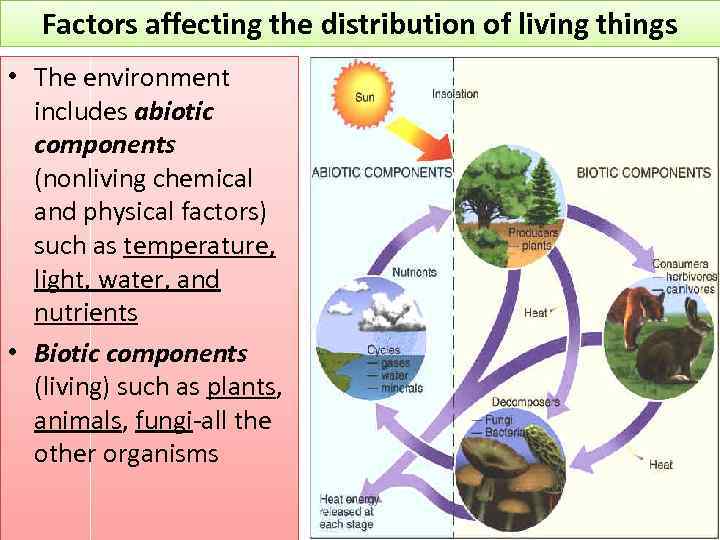
Factors affecting the distribution of living things • The environment includes abiotic components (nonliving chemical and physical factors) such as temperature, light, water, and nutrients • Biotic components (living) such as plants, animals, fungi-all the other organisms
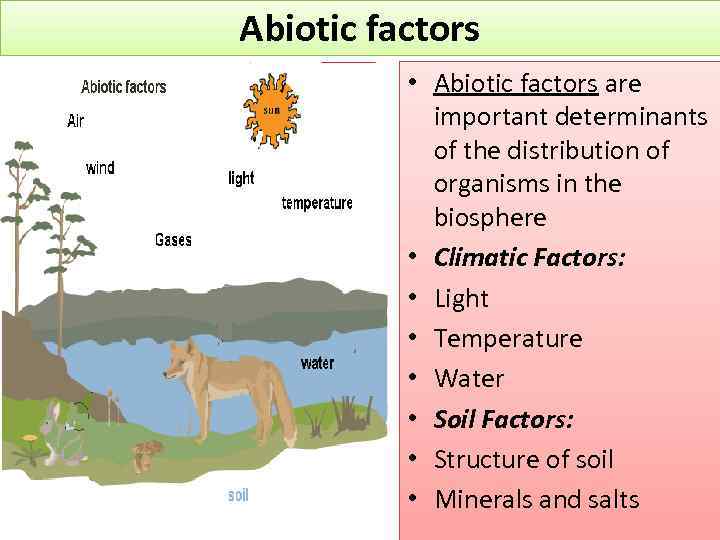
Abiotic factors • Abiotic factors are important determinants of the distribution of organisms in the biosphere • Climatic Factors: • Light • Temperature • Water • Soil Factors: • Structure of soil • Minerals and salts
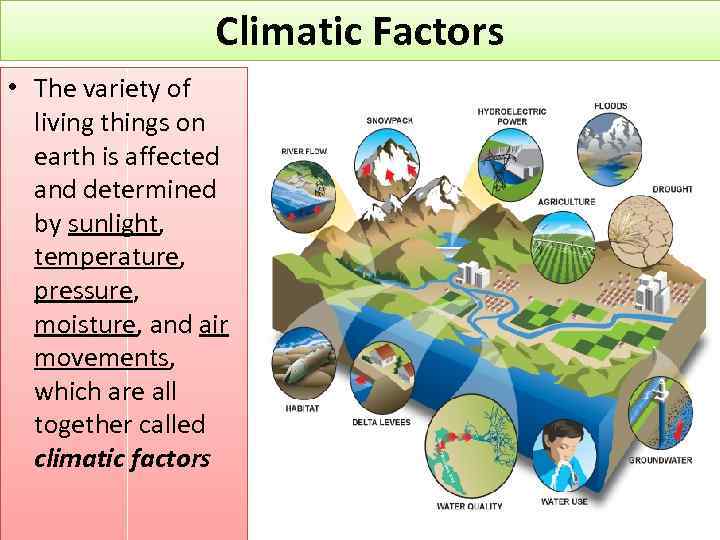
Climatic Factors • The variety of living things on earth is affected and determined by sunlight, temperature, pressure, moisture, and air movements, which are all together called climatic factors
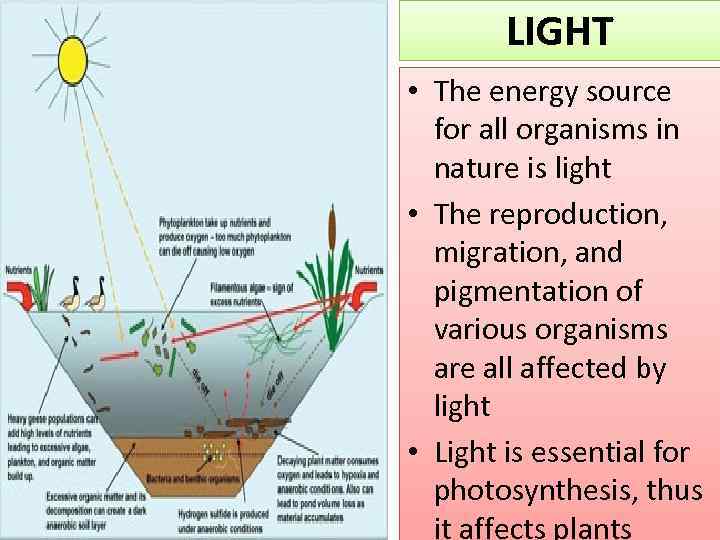
LIGHT • The energy source for all organisms in nature is light • The reproduction, migration, and pigmentation of various organisms are all affected by light • Light is essential for photosynthesis, thus it affects plants
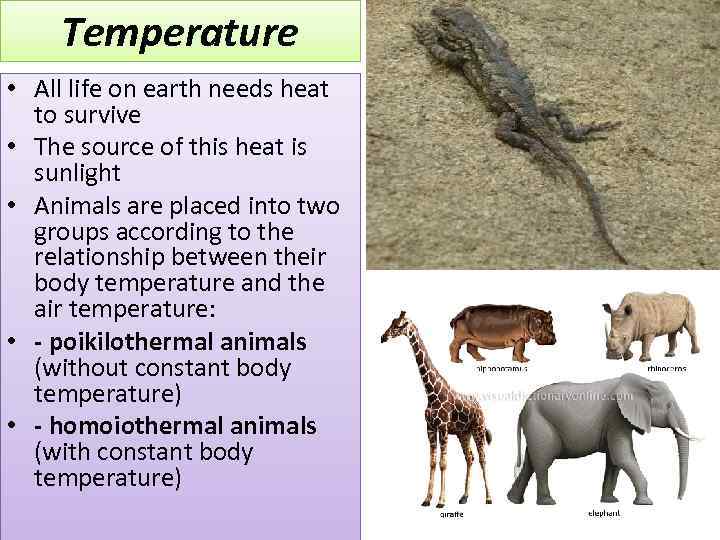
Temperature • All life on earth needs heat to survive • The source of this heat is sunlight • Animals are placed into two groups according to the relationship between their body temperature and the air temperature: • - poikilothermal animals (without constant body temperature) • - homoiothermal animals (with constant body temperature)
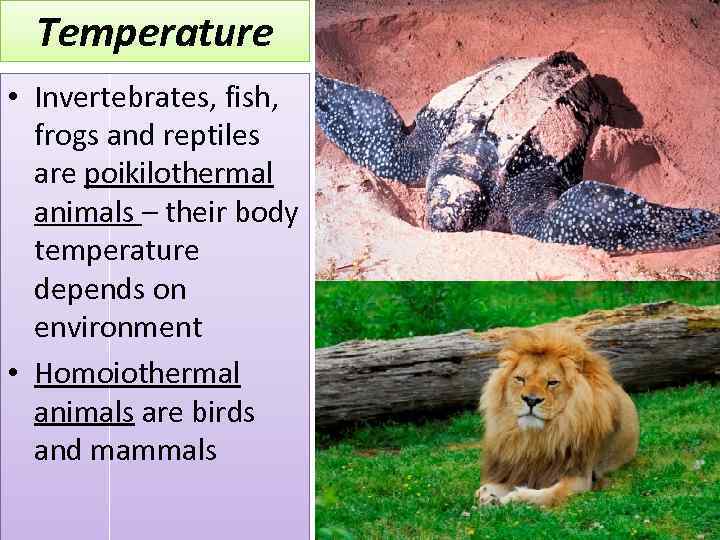
Temperature • Invertebrates, fish, frogs and reptiles are poikilothermal animals – their body temperature depends on environment • Homoiothermal animals are birds and mammals
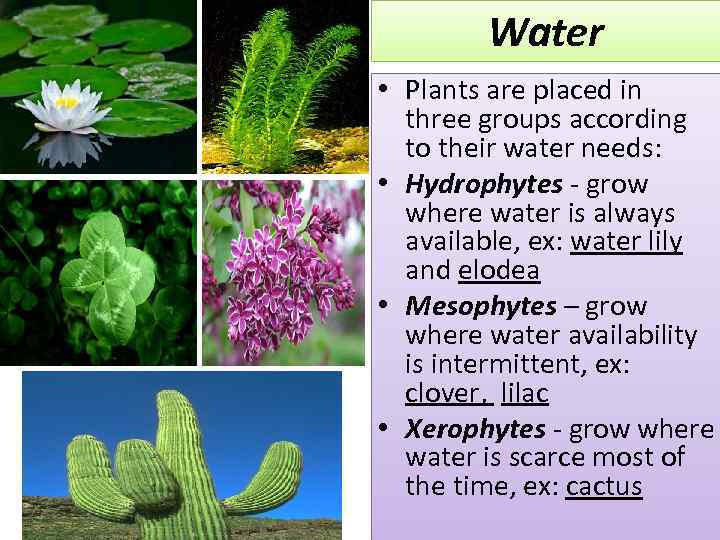
Water • Plants are placed in three groups according to their water needs: • Hydrophytes - grow where water is always available, ex: water lily and elodea • Mesophytes – grow where water availability is intermittent, ex: clover, lilac • Xerophytes - grow where water is scarce most of the time, ex: cactus
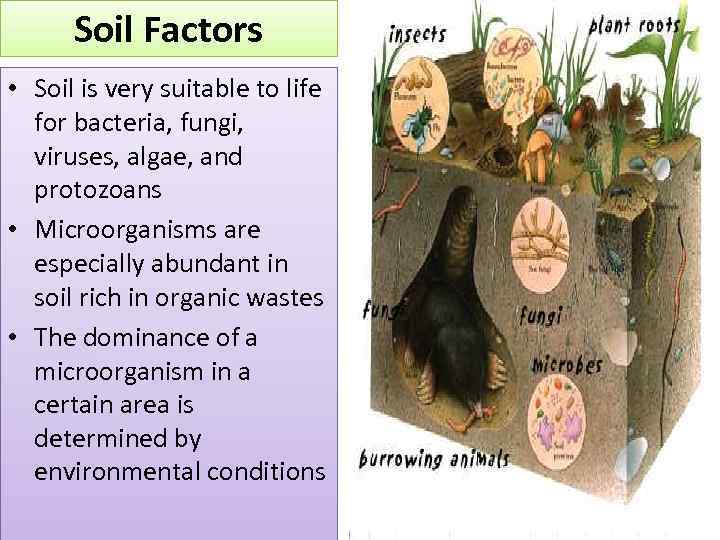
Soil Factors • Soil is very suitable to life for bacteria, fungi, viruses, algae, and protozoans • Microorganisms are especially abundant in soil rich in organic wastes • The dominance of a microorganism in a certain area is determined by environmental conditions
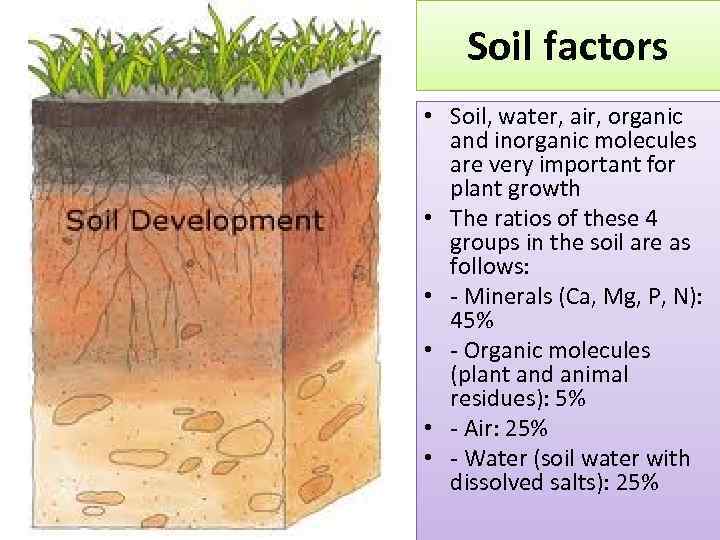
Soil factors • Soil, water, air, organic and inorganic molecules are very important for plant growth • The ratios of these 4 groups in the soil are as follows: • - Minerals (Ca, Mg, P, N): 45% • - Organic molecules (plant and animal residues): 5% • - Air: 25% • - Water (soil water with dissolved salts): 25%
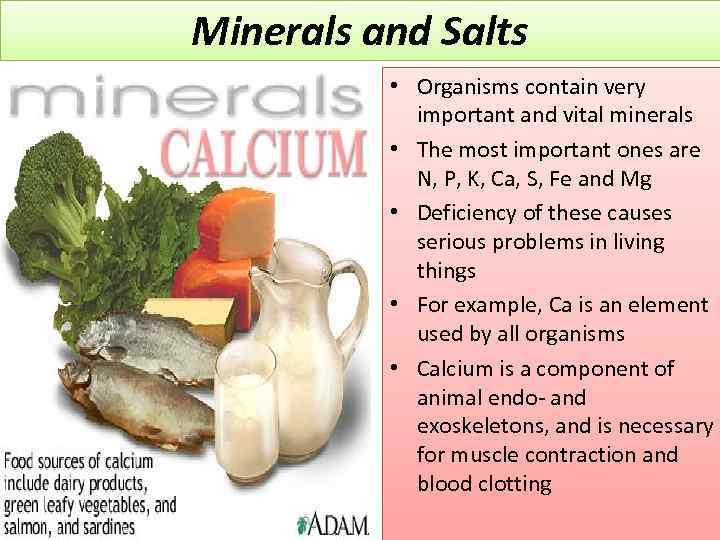
Minerals and Salts • Organisms contain very important and vital minerals • The most important ones are N, P, K, Ca, S, Fe and Mg • Deficiency of these causes serious problems in living things • For example, Ca is an element used by all organisms • Calcium is a component of animal endo- and exoskeletons, and is necessary for muscle contraction and blood clotting
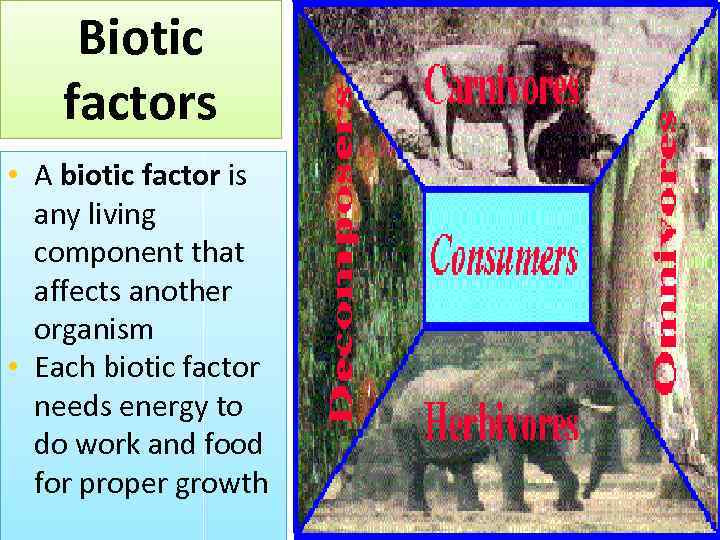
Biotic factors • A biotic factor is any living component that affects another organism • Each biotic factor needs energy to do work and food for proper growth
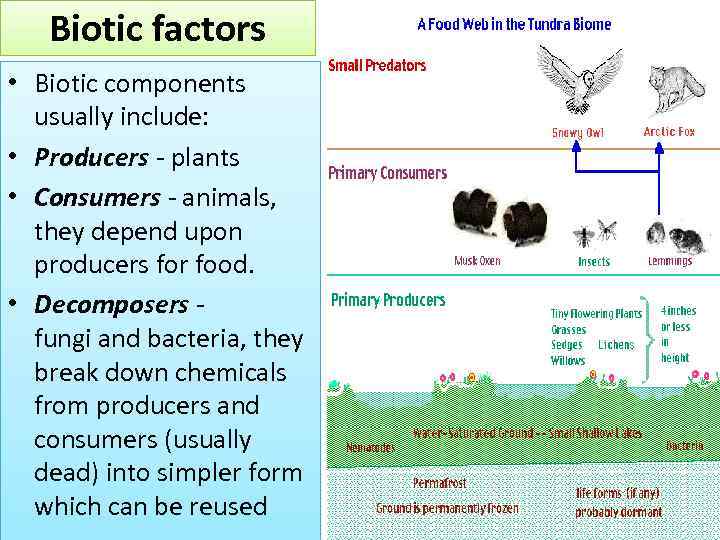
Biotic factors • Biotic components usually include: • Producers - plants • Consumers - animals, they depend upon producers for food. • Decomposers - fungi and bacteria, they break down chemicals from producers and consumers (usually dead) into simpler form which can be reused
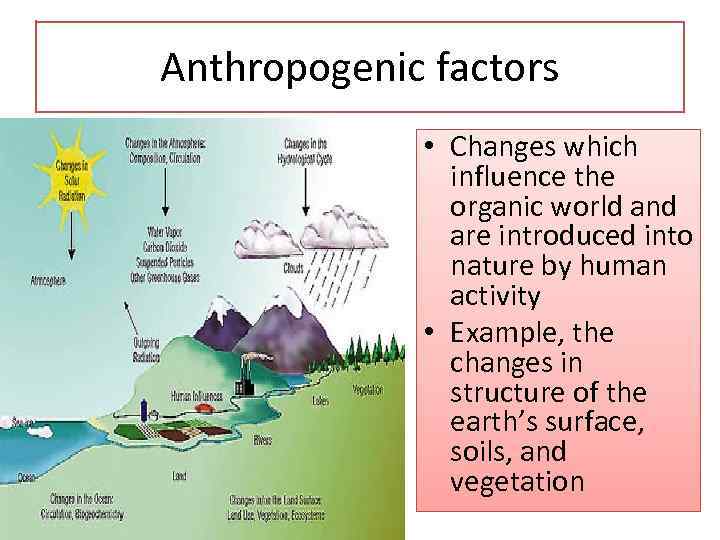
Anthropogenic factors • Changes which influence the organic world and are introduced into nature by human activity • Example, the changes in structure of the earth’s surface, soils, and vegetation
Скачать презентацию Aksay kazakh turkish high school for boys
2 lesson - Ecology - Abiotic and biotic factors.pptx