 Скачать презентацию AIR TRANSPORT ESSENTIALS IN NIGERIA BY D A
c4b28f4530eea0ad806012cc9bcb6427.ppt
- Количество слайдов: 25



AIR TRANSPORT ESSENTIALS IN NIGERIA BY D. A. ISMAILA Nigerian Institute of Transport Technology (NITT) Zaria 30 th July, 2008.
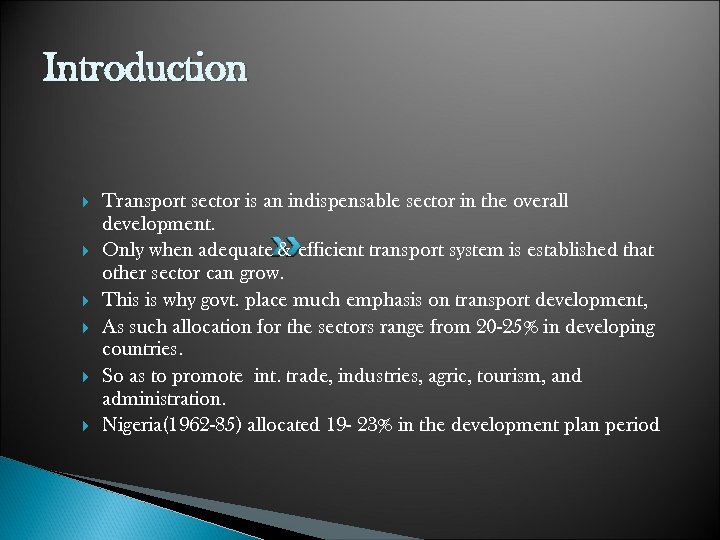
Introduction Transport sector is an indispensable sector in the overall development. Only when adequate & efficient transport system is established that other sector can grow. This is why govt. place much emphasis on transport development, As such allocation for the sectors range from 20 -25% in developing countries. So as to promote int. trade, industries, agric, tourism, and administration. Nigeria(1962 -85) allocated 19 - 23% in the development plan period
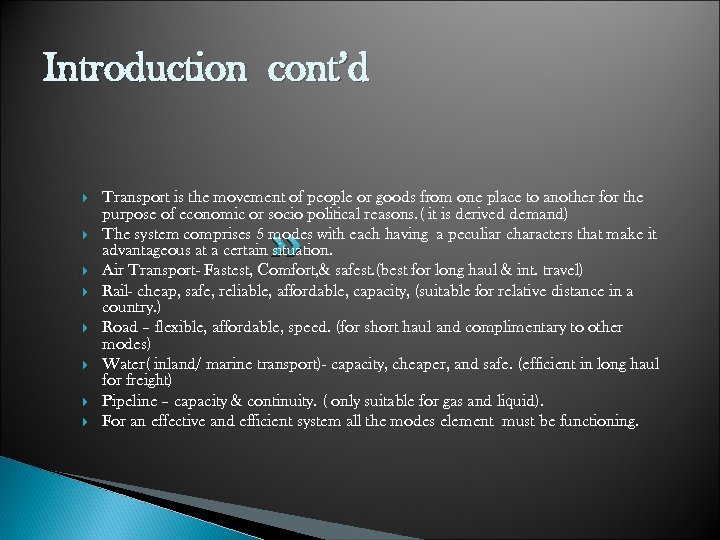
Introduction cont’d Transport is the movement of people or goods from one place to another for the purpose of economic or socio political reasons. ( it is derived demand) The system comprises 5 modes with each having a peculiar characters that make it advantageous at a certain situation. Air Transport- Fastest, Comfort, & safest. (best for long haul & int. travel) Rail- cheap, safe, reliable, affordable, capacity, (suitable for relative distance in a country. ) Road – flexible, affordable, speed. (for short haul and complimentary to other modes) Water( inland/ marine transport)- capacity, cheaper, and safe. (efficient in long haul for freight) Pipeline – capacity & continuity. ( only suitable for gas and liquid). For an effective and efficient system all the modes element must be functioning.
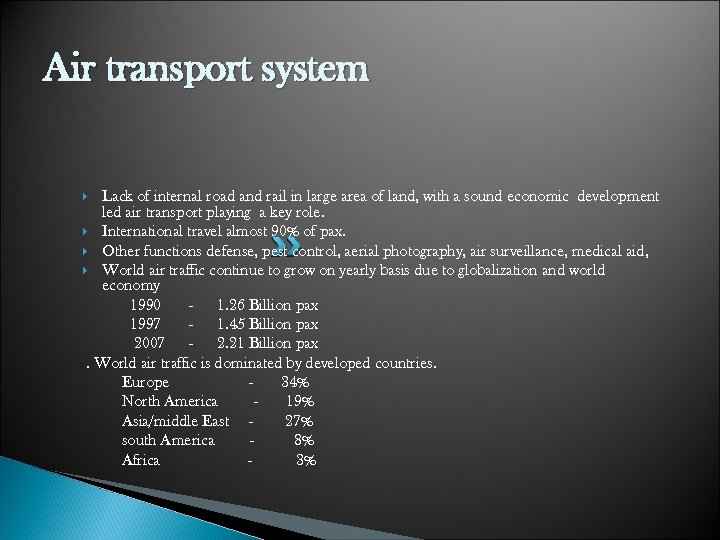
Air transport system Lack of internal road and rail in large area of land, with a sound economic development led air transport playing a key role. International travel almost 90% of pax. Other functions defense, pest control, aerial photography, air surveillance, medical aid, World air traffic continue to grow on yearly basis due to globalization and world economy 1990 1. 26 Billion pax 1997 1. 45 Billion pax 2007 2. 21 Billion pax. World air traffic is dominated by developed countries. Europe 34% North America 19% Asia/middle East 27% south America 8% Africa 3%
Air transport in Nigeria Nigeria has 21 airports and regulated air strips 42 active registered airlines – engaged in int. , domestic, chartered, & special ops. Over 150 serviceable aircrafts. Traffic destination for over 25 foreign carriers. Bilateral air agreement with over 70 countries. Direct flight to some important airports in the world. With an average pax. /annum of 7 -9 Million from 2000 – 2007. While the cargo was about 65. 2 million Kg/annum.
Air transport Components The major components in the civil aviation are AIRPORTS, eg. FAAN AIRLINES, eg Arik, Chanchangi, BA, KLM AIR NAVIGATIONAL SERVICE (ANS), eg NAMA CIVIL AVIATION AUTHORITY eg NCAA Other players in the industry include -aircraft manufacturers - aircraft maintenance - leasing /financing company - handling company - Travels agents - Hotels/ tours/resort centers - suppliers and catering services - training institutes
Economics of air transport Air transport industry is characterized by; Highly perishable product and sensitive demand (highly elastic) High capital and labor intensive Competitive in price and services sensitive to economics fluctuations subject to rapid technological changes Subject to government regulation Depends on other modes The market takes any form of structure; pure competition, monopolistic, oligopoly, and monopoly. Competitive factors in air include; fares/rates, a/c type, service frequency, ground services, in flight service, airport differentiation, commercial agreement (code sharing/alliances), yield mgnt, and promotion.
Demand/ supply of air transport The major determinant of air transport demand are; - No. of potential customers; popn, income - Relative price structure of alternative modes - Flexibility of alternative mode - Customers preference - Time available and flight schedules - General economic condition of the environment Supply of air transport is characterized by; - capital and labor intensive - Non storable product - Long planning investment - High level of fixed cost - Continuity, Regularity and reliability - control Factors affecting costing in airline - Fleet composition/ utilization, Route structure, seasonal demand, economic environment
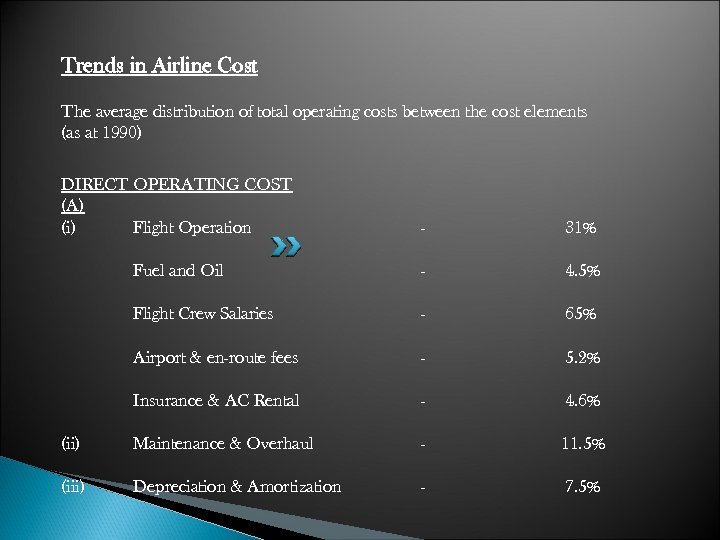
Trends in Airline Cost The average distribution of total operating costs between the cost elements (as at 1990) DIRECT OPERATING COST (A) (i) Flight Operation - 31% Fuel and Oil - 4. 5% Flight Crew Salaries - 65% Airport & en-route fees - 5. 2% Insurance & AC Rental - 4. 6% (ii) Maintenance & Overhaul - 11. 5% (iii) Depreciation & Amortization - 7. 5%
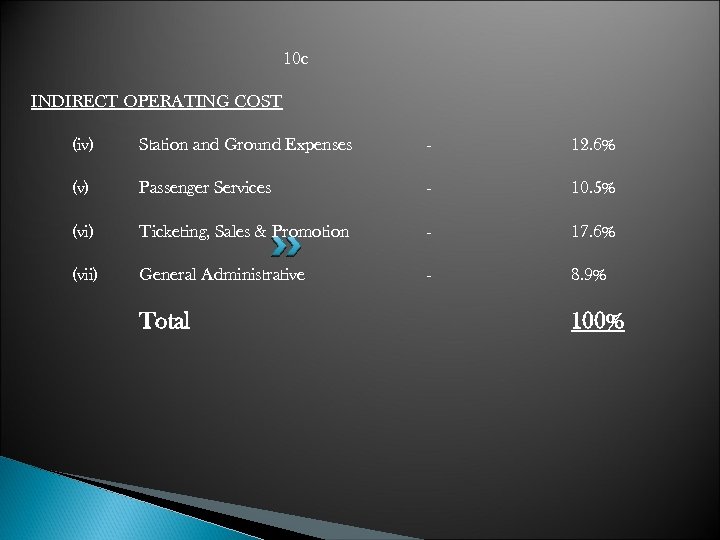
10 c INDIRECT OPERATING COST (iv) Station and Ground Expenses - 12. 6% (v) Passenger Services - 10. 5% (vi) Ticketing, Sales & Promotion - 17. 6% (vii) General Administrative - 8. 9% Total 100%
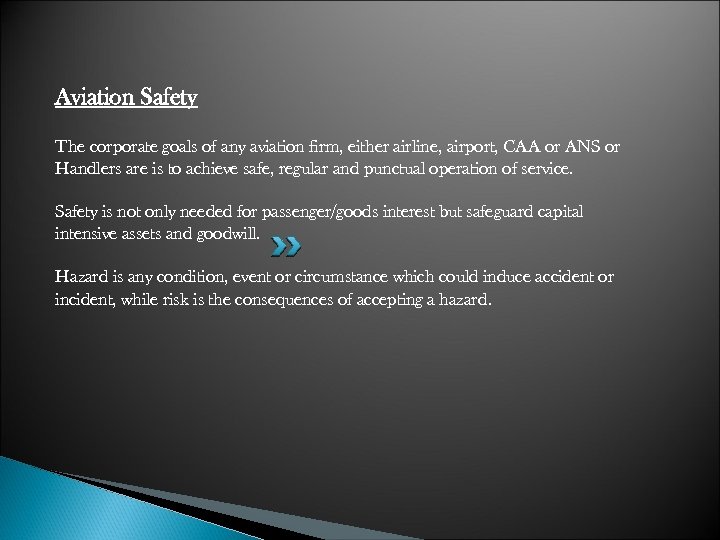
Aviation Safety The corporate goals of any aviation firm, either airline, airport, CAA or ANS or Handlers are is to achieve safe, regular and punctual operation of service. Safety is not only needed for passenger/goods interest but safeguard capital intensive assets and goodwill. Hazard is any condition, event or circumstance which could induce accident or incident, while risk is the consequences of accepting a hazard.
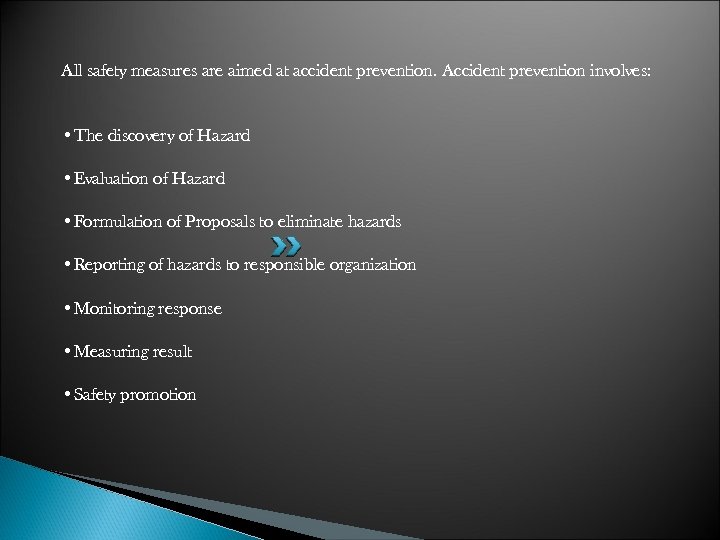
All safety measures are aimed at accident prevention. Accident prevention involves: • The discovery of Hazard • Evaluation of Hazard • Formulation of Proposals to eliminate hazards • Reporting of hazards to responsible organization • Monitoring response • Measuring result • Safety promotion
Aviation industry must plan to maintain an acceptable margin of safety. Margin of safety is provided by; • Redundancy of system • Redundancy of personnel • Standard operating procedures • Training • Experience
Recent developments in Aviation safety is safety management systems of ICAO and ISO 9001 which are aimed at identifying and avoiding hazards. Civil Aviation Authority: CAA of any country is responsible for safety oversight function in any country. It is saddled with the responsibility of ensuring safety standard and compliance. In specific: • Organization safety and economic regulation • Legislation • Setting standards as recommended by ICAO SARPS • Airworthiness of Aircrafts • Licensing of the personnel, airline, and maintenance organization • International and Bilateral agreement. • Licensing of service providers, airport, ANS
. It has the power to carry out inspection on airline operation and maintenance activities to ensure compliance with standard. • To ground any airline for non-compliance. • To close down any airport or ANS for non conformity with standard.
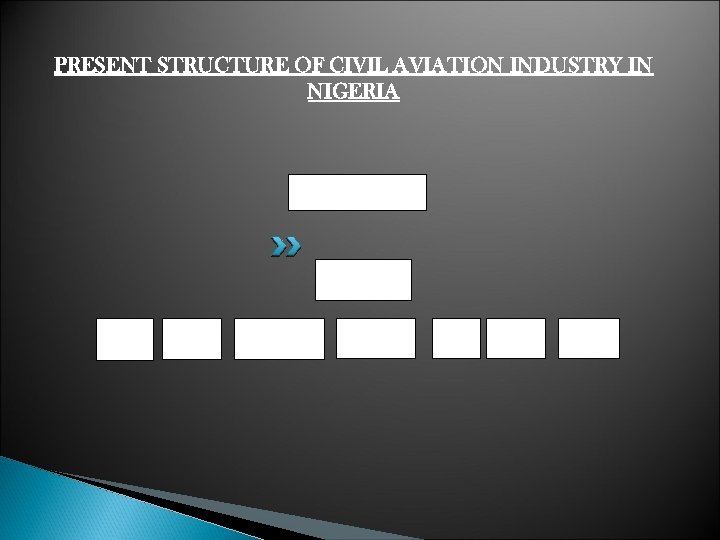
PRESENT STRUCTURE OF CIVIL AVIATION INDUSTRY IN NIGERIA FEDERAL MININISTRY OF TRANSPORTATION NCAA FAAN NAMA AIRLINES NIMET AIB NCAT SAHCOL
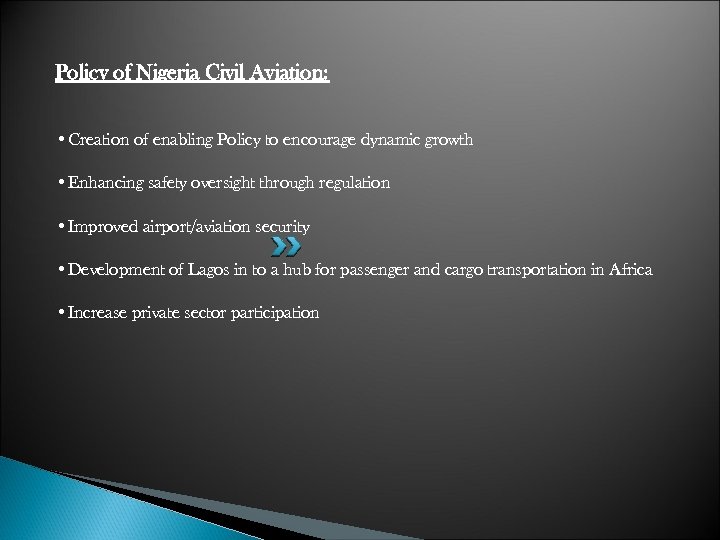
Policy of Nigeria Civil Aviation: • Creation of enabling Policy to encourage dynamic growth • Enhancing safety oversight through regulation • Improved airport/aviation security • Development of Lagos in to a hub for passenger and cargo transportation in Africa • Increase private sector participation
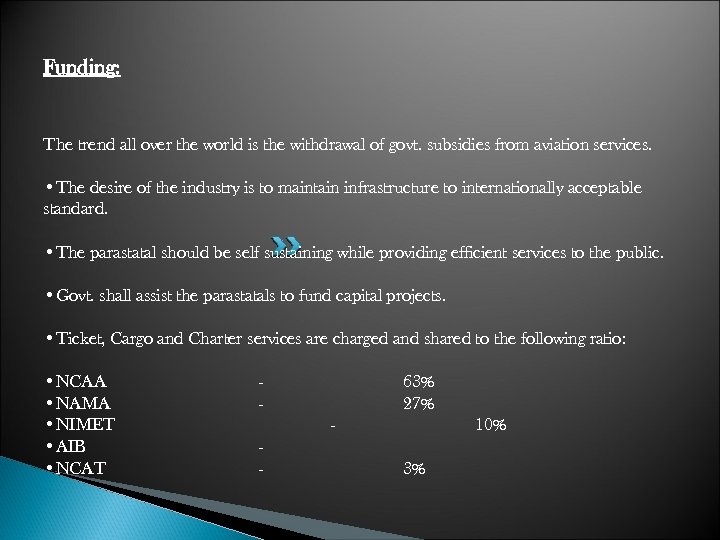
Funding: The trend all over the world is the withdrawal of govt. subsidies from aviation services. • The desire of the industry is to maintain infrastructure to internationally acceptable standard. • The parastatal should be self sustaining while providing efficient services to the public. • Govt. shall assist the parastatals to fund capital projects. • Ticket, Cargo and Charter services are charged and shared to the following ratio: • NCAA • NAMA • NIMET • AIB • NCAT - 63% 27% - - 10% 3%
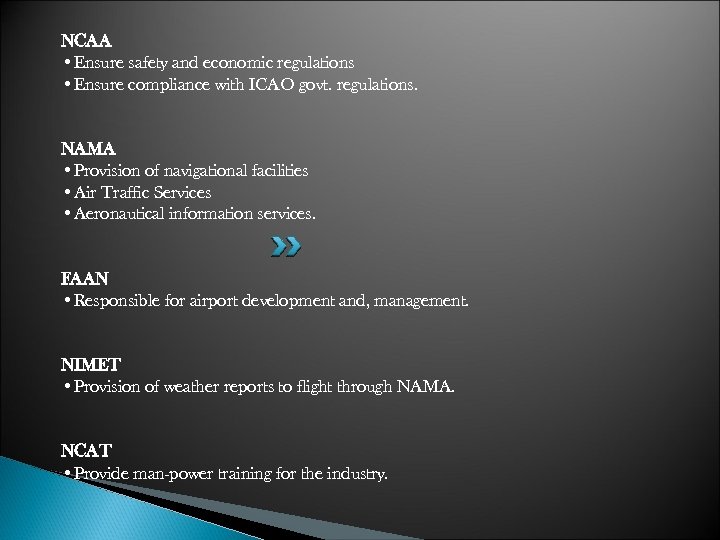
NCAA • Ensure safety and economic regulations • Ensure compliance with ICAO govt. regulations. NAMA • Provision of navigational facilities • Air Traffic Services • Aeronautical information services. FAAN • Responsible for airport development and, management. NIMET • Provision of weather reports to flight through NAMA. NCAT • Provide man-power training for the industry.
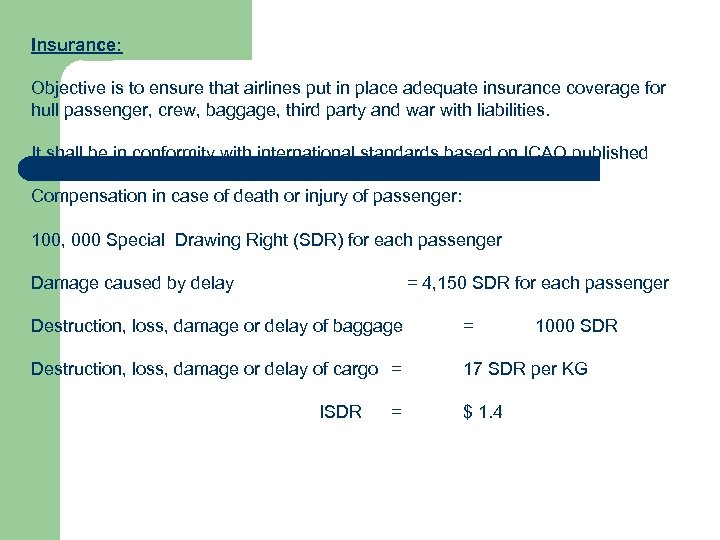
Insurance: Objective is to ensure that airlines put in place adequate insurance coverage for hull passenger, crew, baggage, third party and war with liabilities. It shall be in conformity with international standards based on ICAO published limit. Compensation in case of death or injury of passenger: 100, 000 Special Drawing Right (SDR) for each passenger Damage caused by delay = 4, 150 SDR for each passenger Destruction, loss, damage or delay of baggage = Destruction, loss, damage or delay of cargo = 17 SDR per KG ISDR = $ 1. 4 1000 SDR
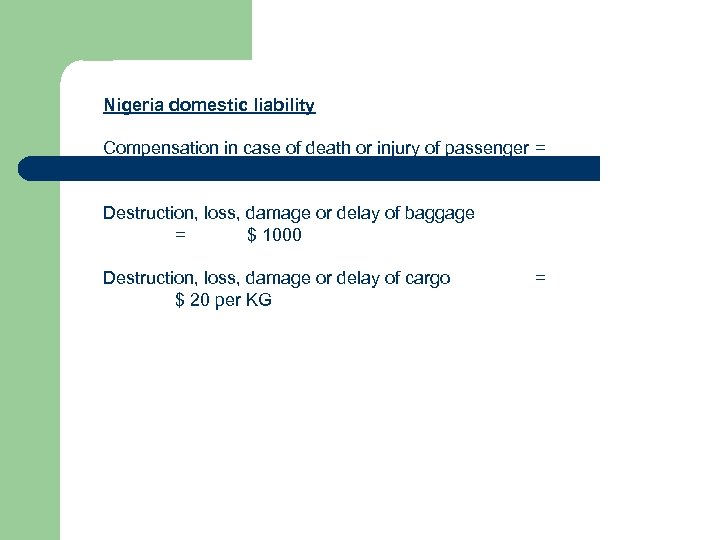
Nigeria domestic liability Compensation in case of death or injury of passenger = $ 100, 000 Destruction, loss, damage or delay of baggage = $ 1000 Destruction, loss, damage or delay of cargo $ 20 per KG =
Problems of the aviation sector in Nigeria: • Decaying and obsolesce of infrastructure • Excessive interference for political reason • Under utilization of the sector. • Inadequate funding of the sector by govt. • Lack of continuity and stability in the sector • Poor implementation of the policy • General economic condition of the country • Weak compliance to SARP • Operational problems make sector not reliable as practice elsewhere.
Prospects: • Large teeming population with large proportion of working class. • Huge capital inflow to the economy • Booming of other industries, commerce, trade, agric, tourism • Strategic location in West Africa without potential competitor that can serve as a hub
RECENT GLOBAL ISSUES & CHALLENGES Business model; Low cost carriers vs competitive, Consolidation in Airlines Alliances- star alliance, one world , sky team Aircraft technology – fuel efficiency, capacity, flexibility Security – 9/11, lags Soaring aviation fuel
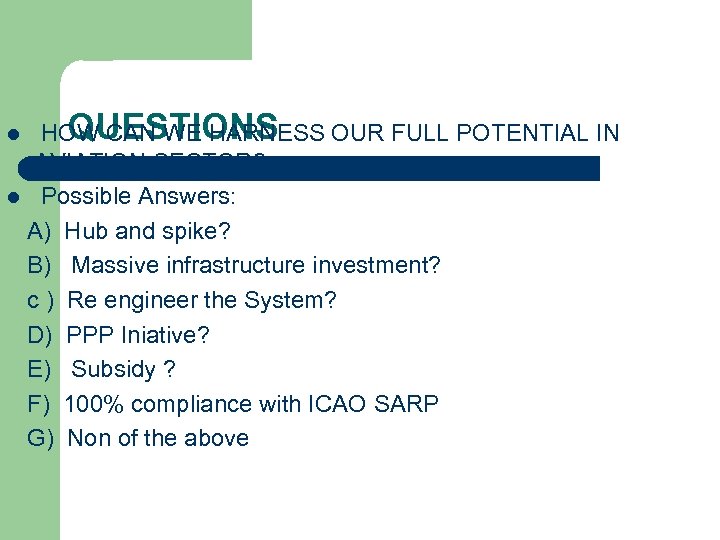
QUESTIONS HOW CAN WE HARNESS OUR FULL POTENTIAL IN AVIATION SECTOR? l Possible Answers: A) Hub and spike? B) Massive infrastructure investment? c ) Re engineer the System? D) PPP Iniative? E) Subsidy ? F) 100% compliance with ICAO SARP G) Non of the above l
Скачать презентацию AIR TRANSPORT ESSENTIALS IN NIGERIA BY D A
c4b28f4530eea0ad806012cc9bcb6427.ppt