Скачать презентацию Air traffic environment The air transport industry has
e50b5802ace44f3d8685c643dd620ecb.ppt
- Количество слайдов: 33

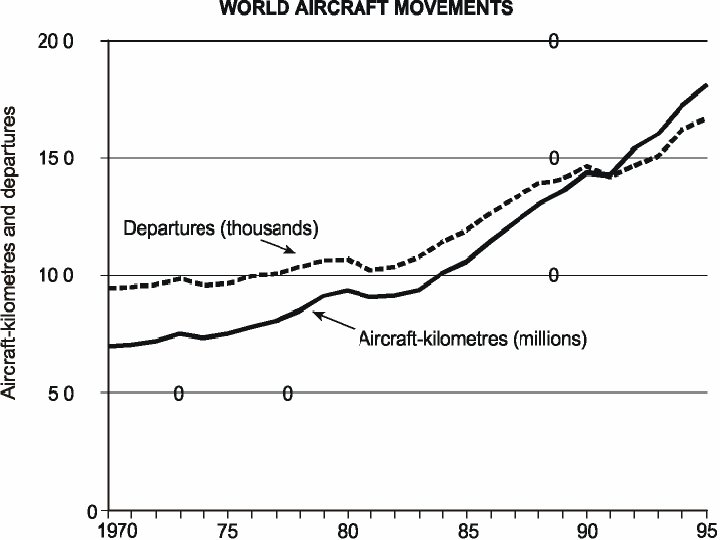
 Air traffic environment The air transport industry has grown more rapidly than most other industries through the 1980 s and 1990 s. Between 1985 and 1995, air passenger travel and air freight on scheduled services grew at average annual rates of 5. 0 and 7. 6 per cent, respectively. Over this same period, aircraft departures and aircraft-kilometres grew at average rates of 3. 7 per cent and 5. 8 per cent, respectively.
 • The air transport industry plays a major role in world economic activity and remains one of the fastest growing sectors of the world economy. • In every region of the world, States depend on the aviation industry to maintain or stimulate economic growth and to assist in the provision of essential services to local communities. • In this light, civil aviation can be seen as a significant contributor to the overall well -being and economic vitality of individual nations as well as the world in general. • Because of the continued growth in civil aviation, in many places, demand often exceeds the available capacity of the air navigation system to accommodate air traffic, resulting in significant negative consequences not only to the aviation industry, but also to general economic health. • One of the keys to maintaining the vitality of civil aviation is to ensure that a • safe, secure, efficient and environmentally sustainable air navigation system is available at the global, regional and national levels. This requires the implementation of an air traffic management system that • allows maximum use to be made of enhanced capabilities provided by technical advances
 • In the 1980 s, the ICAO Council considered the steady growth of international civil aviation, taking into account emerging technologies, and determined that a thorough assessment and analysis of procedures and technologies serving civil aviation was in order. • It was generally recognized at the time that the existing approach to the provision of air traffic services (ATS) and the air navigation system was limiting continued aviation growth and constraining improvements in safety, efficiency and regularity. • In 1983, the ICAO Council established the Special Committee on Future Air Navigation Systems (FANS) to develop recommendations for the future development of air navigation for civil aviation over a period of the order of twenty-five years. • In 1991, a second FANS Committee was established to monitor and coordinate transition planning for the future air navigation system. • In September 1991, the Tenth Air Navigation Conference • endorsed the FANS concept. After acceptance by the ICAO Council, it came to be known as “communications, navigation and surveillance/air traffic management (CNS/ATM) systems”.
 • The Special Committee on Future Air Navigation Systems (FANS) described ATM as consisting of a ground part and an air part, both of which are needed to ensure the safe and efficient movement of aircraft during all phases of operation. The execution of ATM calls for a close integration of the ground part and the air part through well-defined procedures. The genera 1 objective of ATM, as described by • FANS, is to enable aircraft operators to meet their planned • times of departure and arrival and adhere to their preferred • flight profiles with minimum constraints and it with out compromising agreed levels of safety. The airborne part of ATM, according to FANS, consists of the functional capability which interacts with the ground part to attain the general objectives of ATM. • The ground part of ATM comprises the functions of air • traffic services (ATS), airspace management (ASM) and air • traffic flow management (ATFM). The air traffic services • are the primary components of ATM.
 • Factors Affecting Planning • In general, planning is understood as a dynamic process which involves seeking out facts, questioning established or newly proposed methods and searching for • information. it is also a continuing process which, in the interpretation of available data and in the formulation of concepts, requires vision, imagination and the courage to support and justify one’s convictions. Since ATS planning is an activity which cannot be disassociated from the overall • development of civil aviation, it must therefore be assumed that there is already a civil aviation infrastructure established and that the commencement or continuation of ATS planning by an administration is complementary to, and forms a part of, a national civil aviation plan. Also, ATS planning cannot be done in isolation with regard to other aspects of aviation but must take into account information • concerning established commercial air route networks • and existing or forecast traffic flows, the navigation • aids programme, the airports development programme, the • operators fleet composition and their future procurement • programme and the over-al. I priorities of the many and • varied civil aviation flying activities.
 • A plan does not become a reality overnight; therefore, early in the process of planning, consideration must be given to the various stages of implementation. • The plan can then be converted to a progress chart on which every factor affecting the desired end result can be taken into account and entered in its proper order of progression. • Planning involves many disciplines, for example, once the need has been justified, planning for a new control tower involves associated disciplines involving civil engineering, architectural design, electrical, mechanical and telecommunications • engineering, post and telegraph systems, to mention only a few of the more important ones. To function effectively, planners must have timely advice and access to accurate and significant information, e. g. the • evaluation of advanced technology may be beyond the resources of the planners and in this case they must seek the advice of specialists or consultants. • Economic studies are an essential element of planning. From this source costs and benefits can be analysed and equated in monetary terms and planning budgets prepared. The ATS priorities within the total civil aviation development programme can then be established
 • While dealing with air navigation matters, the following terms are frequently used and, for the purpose of this manual, they should be understood to have the following meaning: • • a) Assumed operating parameter. The performance of an aircraft, which, by common agreement, can be assumed by the ground services in providing assistance to aircraft regarding their flights. Note. - This performance relates to such factors as the broad operating characteristics of the aircraft, to their navigation or communication capability, etc. , as it governs the behaviour and/or response of the aircraft to particular situations. Unless specifically stated otherwise by a pilot, it is understood that the applicable operating parameters apply to all flights • • • b) Basic operational requirement. A need upon which agreement has been reached. between the users of a given service and/or facility and its provider that it constitutesa requirement which has to be met in order for the system to perform in a satisfactory manner • • (c)Planning criteria. The sum of principles which need to be taken into account in the planning and implementation of the air navigation system, or of its parts in order to facilitate its uniform operation in the most efficient, economic and practical manner • • (d) Method of application. A method of operation of specific parts of the air navigation system which, by practical application has proved to be an efficient and • • . .
 • The art of planning is to forecast future requirements as accurately as possible, to develop alternative ways of meeting these requirements and to devise the ways and means of implementing the agreed plan to meet the objectives. To do this it is necessary to clearly define the objectives. In ATS planning, objectives will include: • a) planning the organization and management of the airspace with all the ramifications and complexities which arise from the conflicting demands of the users; • b) investigating and recommending the best methods and technical equipment to operate the system; • c) planning for personnel and their appropriate qualifications; • d) functional planning and layout of the controllers’ working environment and changes or additions to operational and technical buildings. answers to the following questions are required:
 • In order to know how to arrive at the objectives, answers to the following questions are required: • a) What are the most reliable data sources? • b) What are the objectives of the users, the military, the commercial sector, the private sector, the specialized operators such as gliding clubs, helicopter associations, etc. ? • c) Have the needs of all users of the airspace been fully considered? • d) Are the objectives common to or in line with those of neighbouring States; will the respective systems be compatible so as to ensure the facilitation of international air traffic? • e)What are the alternatives available, particularly where such alternatives could benefit resource conservation, • i. e. saving money, saving manpower, saving materials? • (f) Does the plan allow for some flexibility in the application or allocation of resources? • (g) What are the consequences of delay in implementation of planning objectives?
 GENERAL CONSIDERATIONS • Apart from specific project planning, ATS planning can form the basis for establishing many of the day to-day requirements of the service. These include such important issues as: • a) determining the type of airspace required for the most effective system; • b) developing standardized working methods; • c) identifying existing shortcomings or potential problems; • d) developing new and improved facilities to best satisfy • the ATS task; • e) determining future personnel requirements; • f) investigating and developing improved training techniques. • Sound Planning Will Also Provide Policy Guidance • on many issues significant to the efficiency of the ATS system. Such matters include: • a) forecasts of long-term budgets; • b) early warning of the need for negotiation and consultation between neighbouring States’ airport authorities or other intrest.
 c) the determination in advance of likely environmental problems and methods of resolution • d) providing expert advice to associated aviation disciplines such as airport engineering services; identifying the cost/benefit advantages of providing navigation aids specifically to facilitate traffic flows; • (e) the need for improvements in taxiways, holding areas, • security parking and other problems confronting controllers in the movement of aircraft on the ground. • • All of these matters are pertinent to the work of planners and their role in establishing and maintaining an efficient ATS system. Finally, planners must arrange for a regular feedback on operating problems which are being encountered by ATS units so that these can be taken into account in their efforts to develop the plan along the most efficient channels
 • TYPES OF ACTIVITY INVOLVED • • Co-ordinated policy. This element covers the need for planning administrations to arrange for the establishment of data collection and evaluation methods, preparation of work programmes, including schedules and target dates, the establishment of co-ordination procedures with associated disciplines, arrangements for staffing programmes and the establishment of an efficient monitoring • system. • Physical planning. This element includes the study • of such matters as personnel environment, accommodation and technical furnishings, facility location and essential
 • Economic planning. • This element involves the preparation of analyses of applicable ATS data concerning aerodrome, approach and en-route traffic, both actual and forecast. From these analyses planners can determine the limitations affecting the orderly flow of traffic, study alternative methods of resolving problems encountered including detailed costeffectiveness calculations for each proposal, and prepare economic studies for use not only in determining preferred methods but also for the benefit of associated planners. • Financial planning. • This element involves the preparation of estimates and proposals for budgeting after final agreement is reached on a planning proposal.
 • OPERATIONAL FACTORS • A safe and adequate ATS system should result from sound planning techniques. All relevant operational factors must be taken into account and close meaningful co-ordination between planners and users is essential. To ensure that an ATS system functions properly itmust cover the following main factors: a) a navigation aid system which provides for both air navigation and ATS requirements; b) communications both point-to-point and air-ground; c) specialist equipment for use by ATS personnel; ’ d) adequately trained and qualified controllers; e) provision of flight data permitting controllers to constitute a picture of the existing and expected traffic situation; f) provision of information on the status of air navigation facilities and services, both air and ground derived, including meteorological information. • • • • The system must have sufficient capability and flexibility to accommodate traffic peaks and reasonable expansion possibilities to cover forecast traffic increases during a period at least equal to the lifetime of the facility. Facilities must be available for controller training and there must be a unit management structure which ensures adequate constant supervision and standardization of operating methods. In ensuring that all operational factors are taken into account at the planning stage, planners will be faced with many conflicting considerations and it is in this area particularly that the judgement and experience of interested aviation activity groups can contribute to a balanced and logical proposal.
 • Poorly evaluated planning may not only affect or restrict the use of airspace but may also unduly restrict flying operations should the limitations of equipment preclude compliance with a proposed procedure. • Circumstances affecting the assumed operational considerations can change drastically with little or no forewarning to the planners and it is in this area that • provision must be made for constant monitoring of planning forecasts vis-&is actual trends so that timely corrective action is taken to amend the plan accordingly.
 • • DATA COLLECTION AND USE General The collection of meaningful and relevant statistical data is basic to sound ATS planning. Such data can be used to determine short- or long-term policy. They should include the volume and composition of traffic, split into arriving, departing and overflights, direction of flight, the levels used and types of aircraft. From the statistics thus produced, forecasts can be prepared concerning systems planning and planning of services facilities and equipment’
 • • • Sources of data The sources of data include: a) air traffic services (ATC) records from flight plans and flight progress strips, or computer print-outs where automation has been introduced into an ATS system; b) records of flights monitored by radar; c) the records of offices responsible for the collection of en-route charges; d) the result of studies carried out to determine methods and workload factors at ATS units; e) those statistical returns which are rendered to governments by airports and airlines (these would indicate airport movements of all categories of traffic and the number of hours flown by the airlines; f) the responses to appropriate questionnaires circulated to users. • Care should be exercised in data collection that the workload resulting from the use of complex and time-consuming methods is not beyond the realistic capacity of those expected to perform the task. • Simpler methods, requiring less work may produce equally useful information and better co-operation from personnel involved.
 • Statistics can be a useful source in respect of the following: • (a) guidance to determine short- and long-term needs of the ATS system by: 1 documenting existing conditions; 2 identifying potential problem areas; 3. indicating facility requirements 4. indicating personnel needs; 5. providing a data base for the determination of future demands; 6. providing information indicating an appropriate alternative to a plan; • (b) providing guidelines for new system design and procurement; • (c) establishing criteria for the navigation aids required to facilitate air traffic flows; • (d) providing a basis for taking remedial actions in the event that navigational guidance is inadequate for ATS purposes; • (e) as a prerequisite to studies into the reduction of separation standards and the preparation of collision risk formulas; • (f) assessment of the relationship between air traffic incidents and the volume of traffic; • (g) the provision of data to programme simulators used in ATS training.
 • For specified portions of an air route network which has to accommodate particularly heavy or otherwise critical traffic demands, planners should arrange, as a matter of routine, the regular collection and exchange of data and the, publication of consequent analyses. These data should include information on: • a) commercial air transport operations; • b) military operations; • c) other matters such as: 1) the number of landing, departing and over flying flights affecting an airport, a route segment or an airspace sector; 2) the vertical distribution of the traffic including an indication of the amount of traffic climbing or descending; 3) the types of aircraft involved (turbo-jet, turboprop, piston). • Collection of the above data should be made during a predetermined representative time span (seven days) in the high and low density travel seasons. Once the task has been undertaken it must be repeated regularly in order to assess the growth or decline in activity.
 • • • Forecasting methods The method of forecasting will depend on the data available. Where an ATS system has been in operation for several years, historical data may be available which will indicate trends and growth areas and should supplement current data. Forecasts should be expressed in terms commonly used by those concerned with the planning of air navigation systems and should indicate likely seasonal, weekly or daily changes in the future traffic demand. Factors affecting the accuracy of forecasting include: a) the availability of an adequate data base; b) the use of proven forecasting methods, e. g. extrapolation or trend analysis; c) introduction of factors not previously considered such as changes in airspace requirements or alterations to routes; d) the influence of factors which are difficult to quantify - changes in government policy regarding civiaviation, re-orientation of traffic flows due to changing customer habits especially in respect of holiday areas, airline operation costs, fuel economies or the introduction of new aircraft types. Particularly in the case of c) and e) above, the preparation of differing sets of assumptions will assist planners in building up alternative pictures of the economic, social, technological and commercial considerations and assist inidentifying and quantifying future traffic probabilities. Poor interpretation of data can distort the accuracy of forecasts which in turn may lead to inadequate provision for the future.
 • Analysis and evaluation • It is necessary to identify the information required under specific headings, and in peak values by the analysis of instantaneous traffic, movements per clock hour and movements per day as follows: • a) total traffic movements, including: 1) outbound flights; 2) inbound flights; 3) overflights; 4) crossing flights; 5) direction of flights; • b) flight level distribution according to performance category (turbo-jet, turboprop, piston); • c) category of flight: 1) commercial; 3) other. 2) military;
 • ENVIRONMENTAL FACTORS • Environmental considerations require special study at an early stage in ATS procedural planning, particularly in respect of the effect of aircraft noise and possible atmospheric pollution onto the area exposed to these phenomena. • Environmental control is an essential element of aerodrome planning and the ATS planning policies should be co-ordinated within the overall aerodrome planning framework. The most significant problems arise in the arrival and departure/climb-out areas and, to the extent that a choice is available, decisions regarding the alignment of runways can be of great significance to future traffic management. Departure clearances calling for evasive flight manoeuvres in the interests of noise abatement can present many problems for the pilot and the controller.
 • Studies on the noise impact generated beneath an • aerodrome circuit can necessitate non-standard patterns and acrobatic, low-flying and training areas require particular study. Where possible, procedures should be designed to avoid flying closer than 600 m (2 000 ft) • vertically over hospitals, educational institutions and • similar noise-sensitive activities, e. g. zoological gardens. Pollution from jet flow can cause discomfort to homeowners and could damage valuable crops. Consideration need also be given to fuel dumping areas in case aircraft are required to return to their departure point shortly after takeoff.
 ASSIGNMENT • what could be the separation minima if all aircrafts in an air space are equipped with Automatic Dependent Surveillance Broadcast. -ADB
 • a) strategic conflict management will reduce the need for separation provision to a designated • level; • b) the ATM system will minimize restrictions on user operations; therefore, the predetermined • separator will be the airspace user, unless safety or ATM system design requires a separation provision service; • c) the role of separator may be delegated, but such delegations will be temporary; • d) in the development of separation modes, separation provision intervention capability must be considered; • e) the conflict horizon will be extended as far as procedures and information will permit; and • f) collision avoidance systems will be part of ATM safety management but will not be included in determining the calculated level of safety required for separation provision.
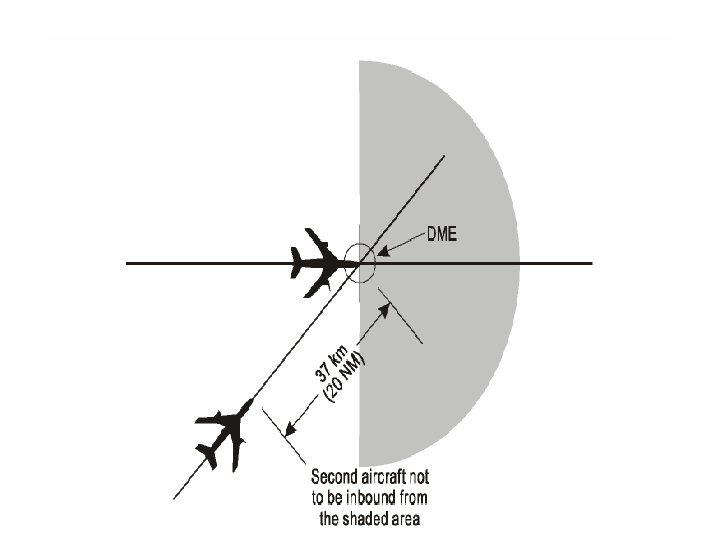
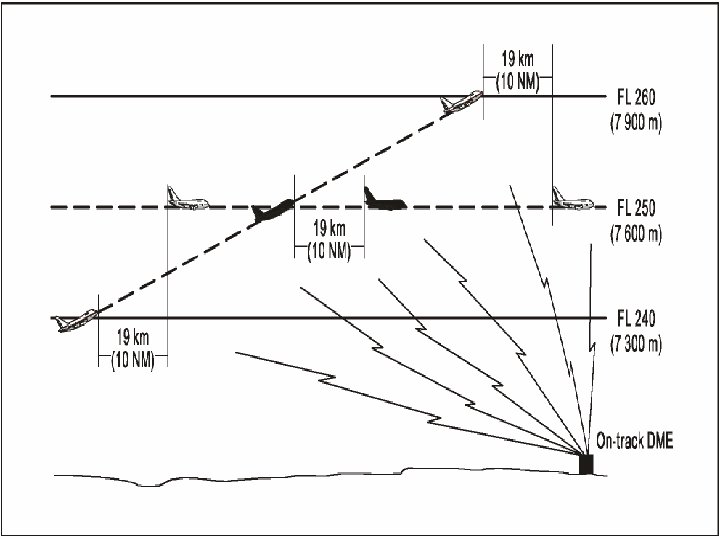
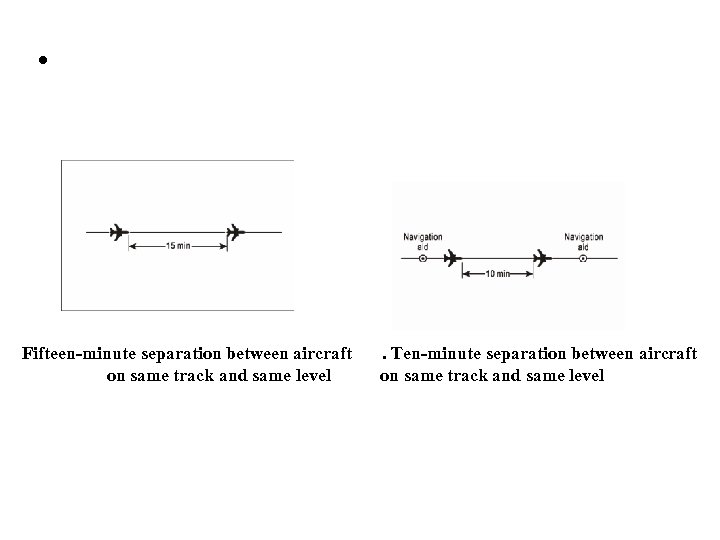 • Fifteen-minute separation between aircraft on same track and same level . Ten-minute separation between aircraft on same track and same level
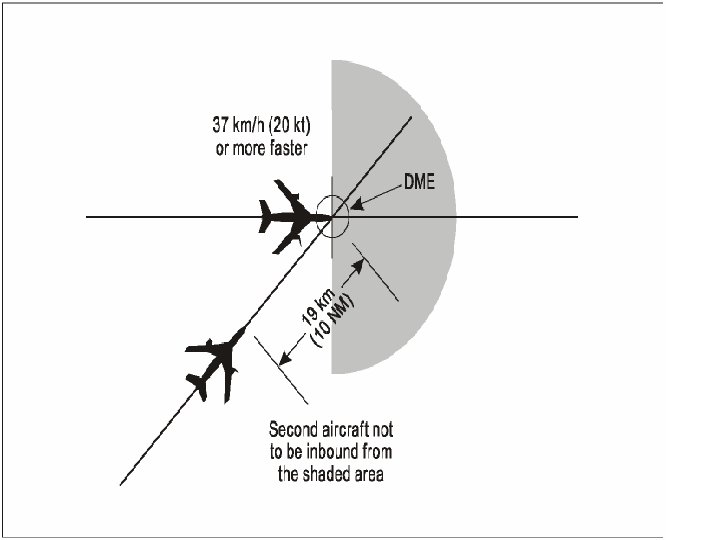
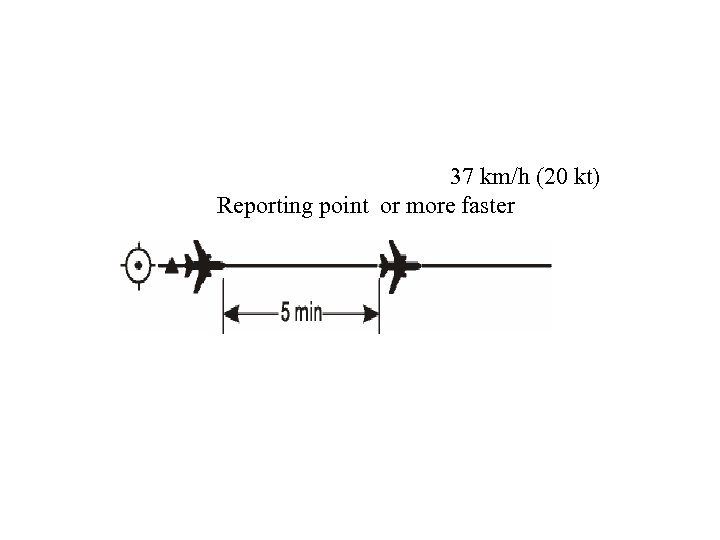 37 km/h (20 kt) Reporting point or more faster
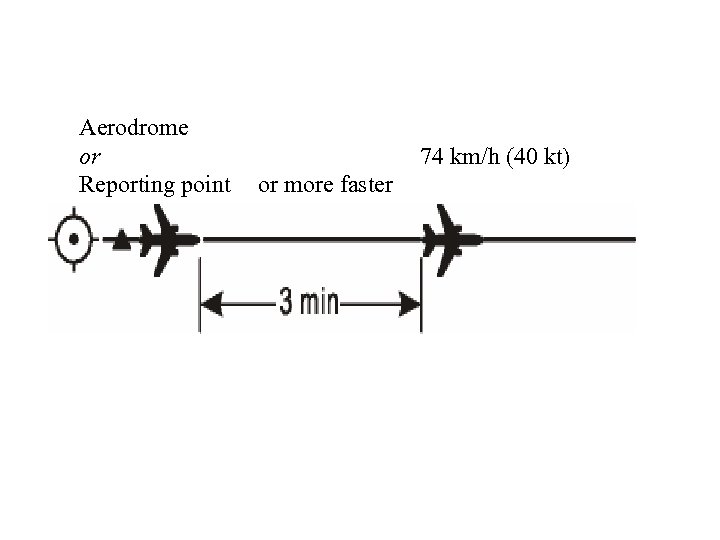 Aerodrome or Reporting point 74 km/h (40 kt) or more faster