

Air pollution 20 000 deaths per year in

 Скачать презентацию Air pollution 20 000 deaths per year in
35764-air_polluttion3.ppt
- Количество слайдов: 13
Air pollution
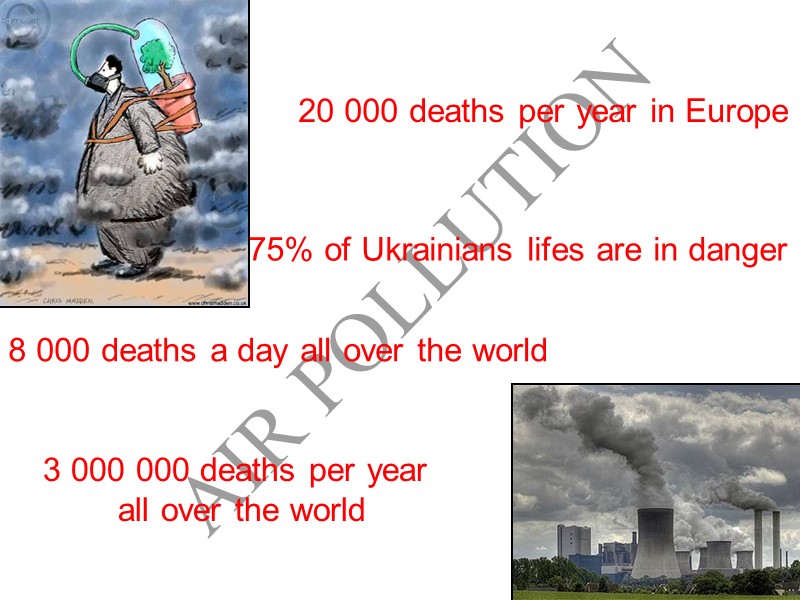
20 000 deaths per year in Europe 8 000 deaths a day all over the world 3 000 000 deaths per year all over the world 75% of Ukrainians lifes are in danger
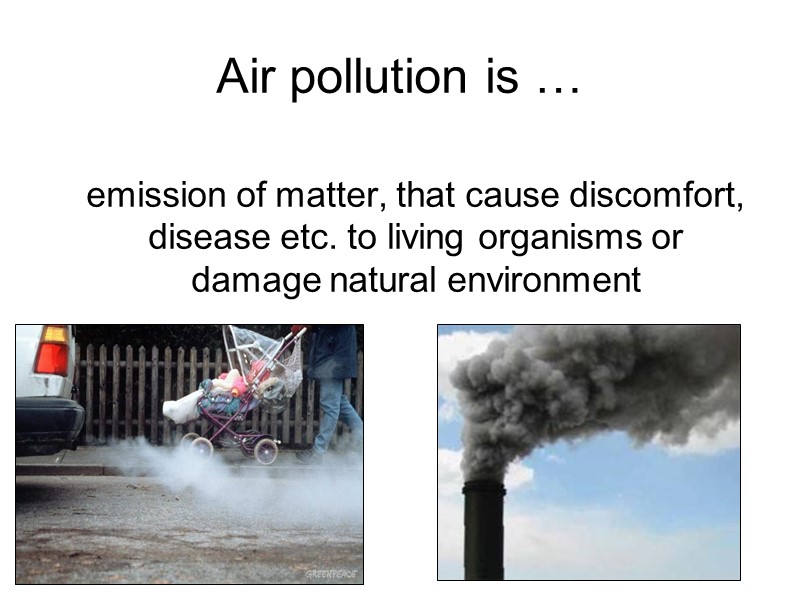
Air pollution is … emission of matter, that cause discomfort, disease etc. to living organisms or damage natural environment
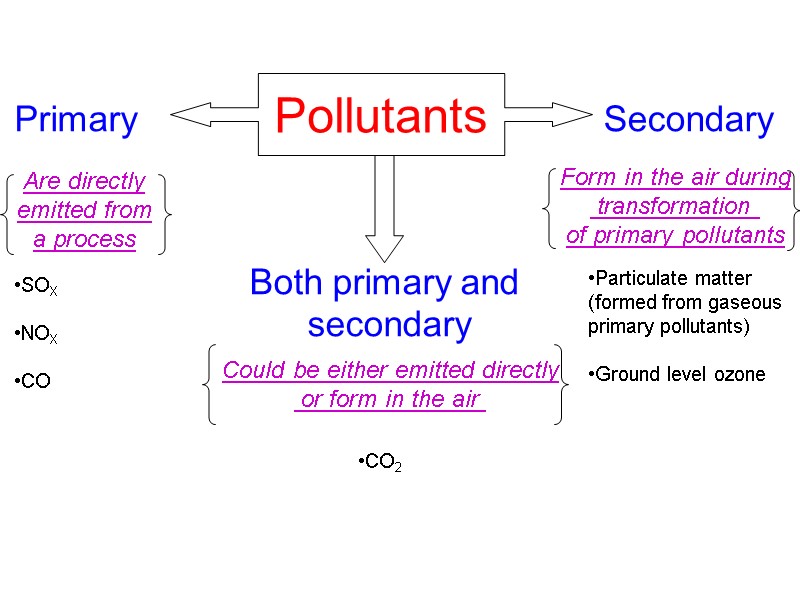
Pollutants Primary Secondary Are directly emitted from a process Form in the air during transformation of primary pollutants Both primary and secondary Could be either emitted directly or form in the air SOX NOX CO Particulate matter (formed from gaseous primary pollutants) Ground level ozone CO2
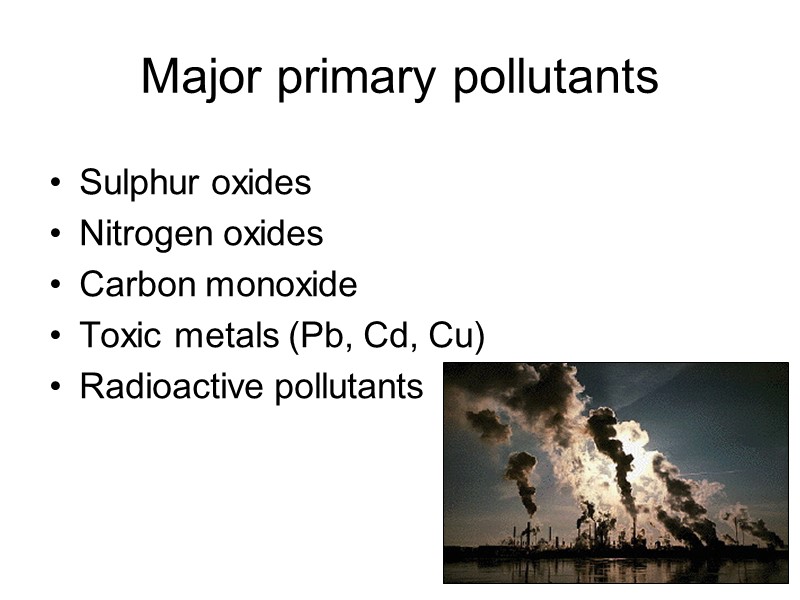
Major primary pollutants Sulphur oxides Nitrogen oxides Carbon monoxide Toxic metals (Pb, Cd, Cu) Radioactive pollutants
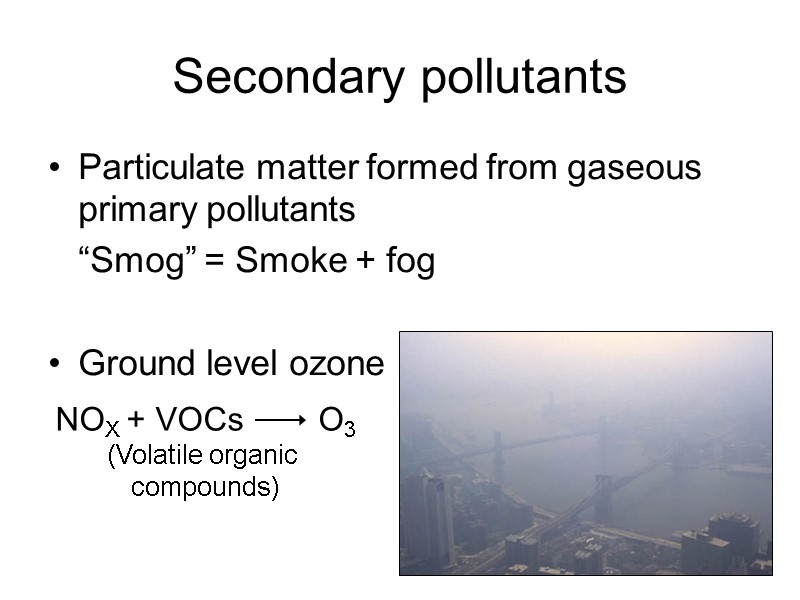
Secondary pollutants Particulate matter formed from gaseous primary pollutants “Smog” = Smoke + fog Ground level ozone NOX + VOCs O3 (Volatile organic compounds)
Effects on health Cardiovascular health Cystic fibrosis Pulmonary disease and asthma Cancer
The risk of developing asthma increases due to increasing of traffic-related air pollution. The main high-risk group is truck drivers. Pulmonary disease and asthma
Particulate matter increases the risk of pulmonary exacerbations and decreases the lung function. Moreover everyday smoke, tobacco, auto emissions further compromise it. Cystic fibrosis
Emission of PM2.5 (particular matter with particles smaller than 2.5 micrometers) is a risk factor for cancer. High concentration of nitrogen oxides increases the incidence of cancer to several times. The influence is higher for non-smokers. Cancer
Air pollution is a risk factor for stroke, especially for people in developing countries. Increases the sickness rate of ischemic desease. Cardiovascular health
A bit more of numbers 1% reduction of ambient PM2.5 and ozone concentrations would produce a $29 000 000 in annual savings only in a small Vancouver region (that is the valuation of lethal and illness effects)