


 Скачать презентацию Air pollution 1 Air pollution is the
pollution Бурдуков-Яковлева.ppt
- Количество слайдов: 9
 Air pollution 1
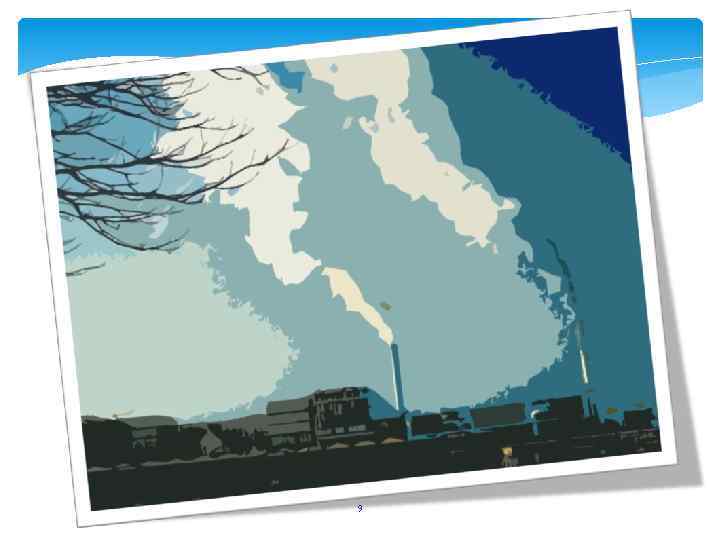
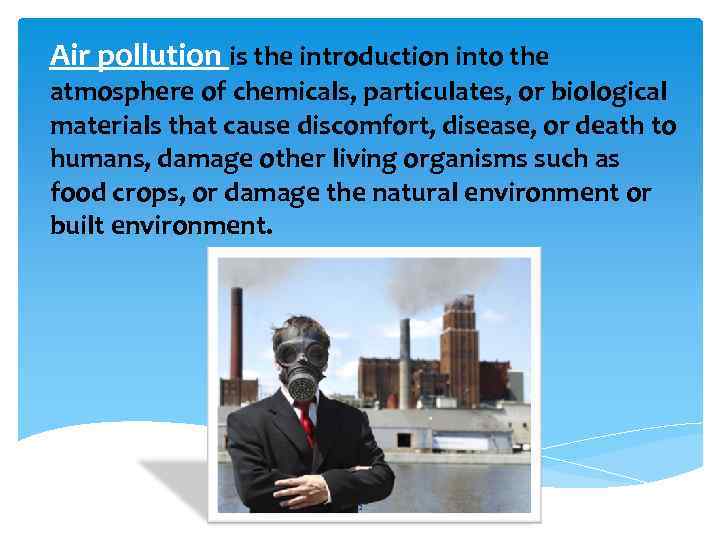 Air pollution is the introduction into the atmosphere of chemicals, particulates, or biological materials that cause discomfort, disease, or death to humans, damage other living organisms such as food crops, or damage the natural environment or built environment. 2
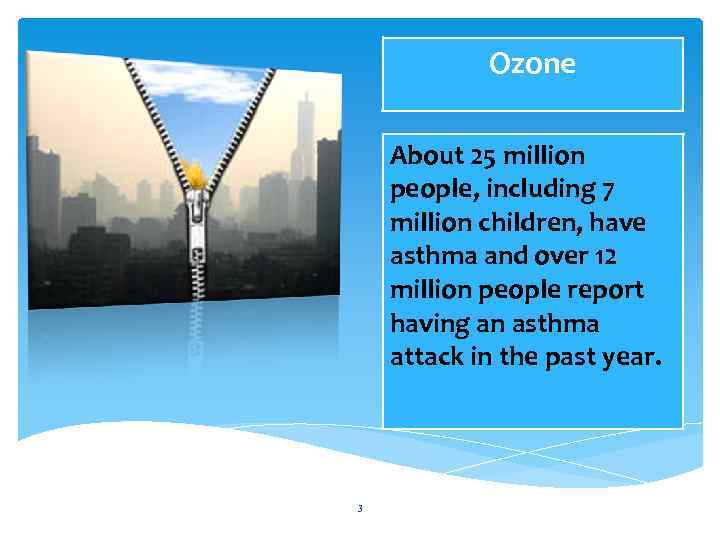 Ozone About 25 million people, including 7 million children, have asthma and over 12 million people report having an asthma attack in the past year. 3
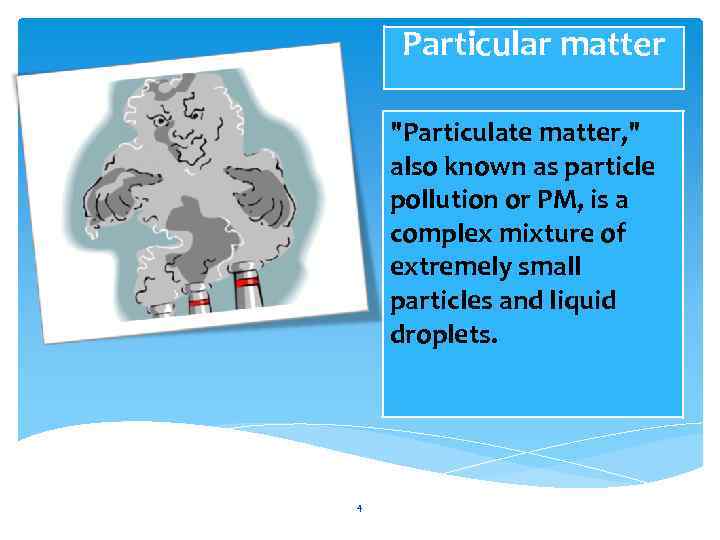 Particular matter "Particulate matter, " also known as particle pollution or PM, is a complex mixture of extremely small particles and liquid droplets. 4
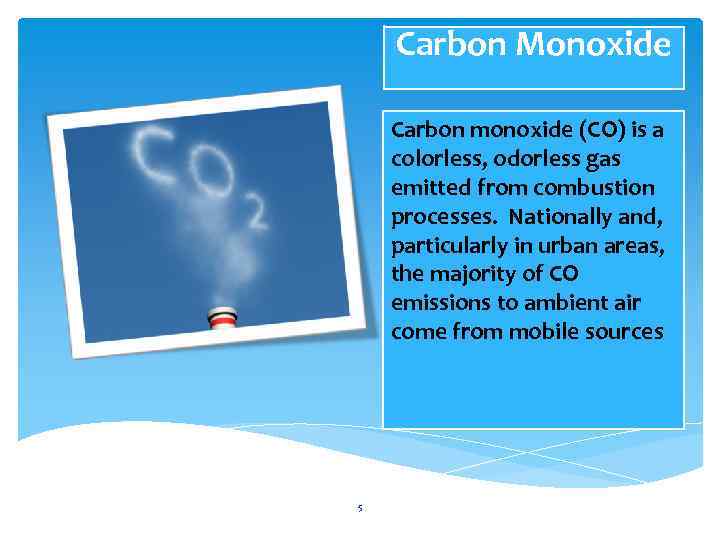 Carbon Monoxide Carbon monoxide (CO) is a colorless, odorless gas emitted from combustion processes. Nationally and, particularly in urban areas, the majority of CO emissions to ambient air come from mobile sources 5
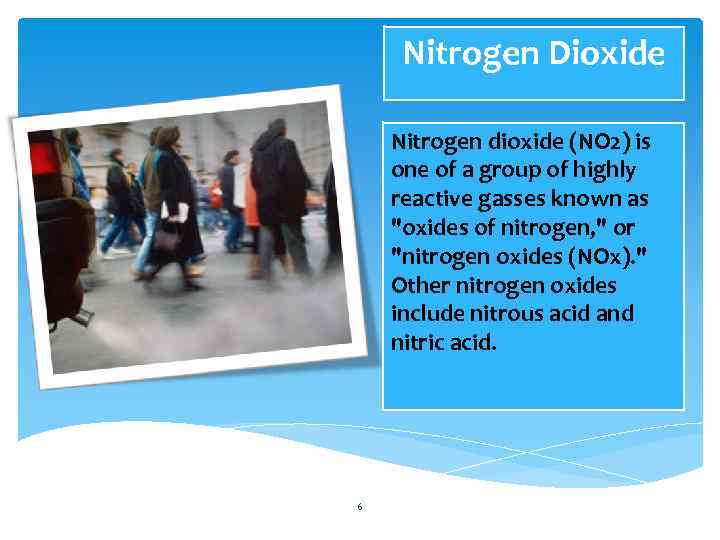 Nitrogen Dioxide Nitrogen dioxide (NO 2) is one of a group of highly reactive gasses known as "oxides of nitrogen, " or "nitrogen oxides (NOx). " Other nitrogen oxides include nitrous acid and nitric acid. 6
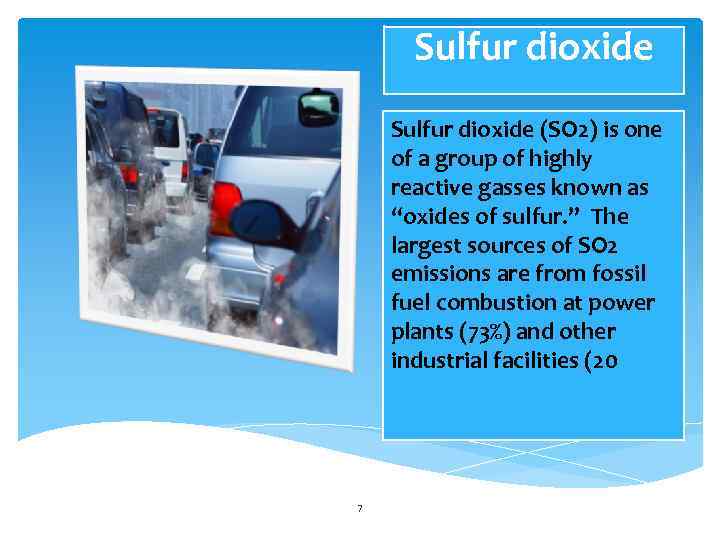 Sulfur dioxide (SO 2) is one of a group of highly reactive gasses known as “oxides of sulfur. ” The largest sources of SO 2 emissions are from fossil fuel combustion at power plants (73%) and other industrial facilities (20 7
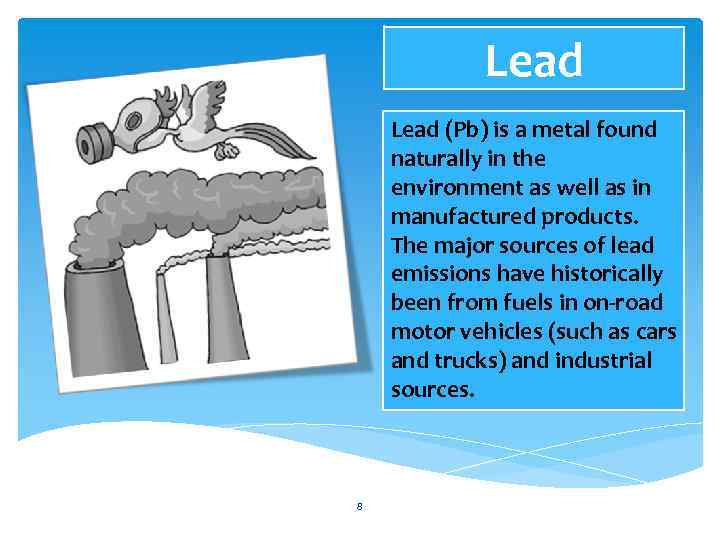 Lead (Pb) is a metal found naturally in the environment as well as in manufactured products. The major sources of lead emissions have historically been from fuels in on-road motor vehicles (such as cars and trucks) and industrial sources. 8
 9
9