


 Скачать презентацию AIM What does the study of Human Geography
f6111c733dc10599d85d769c2602ce03.ppt
- Количество слайдов: 45
 AIM: What does the study of Human Geography involve? Do Now: Take a minute to write down all of the food and drink you ate before coming to class today.
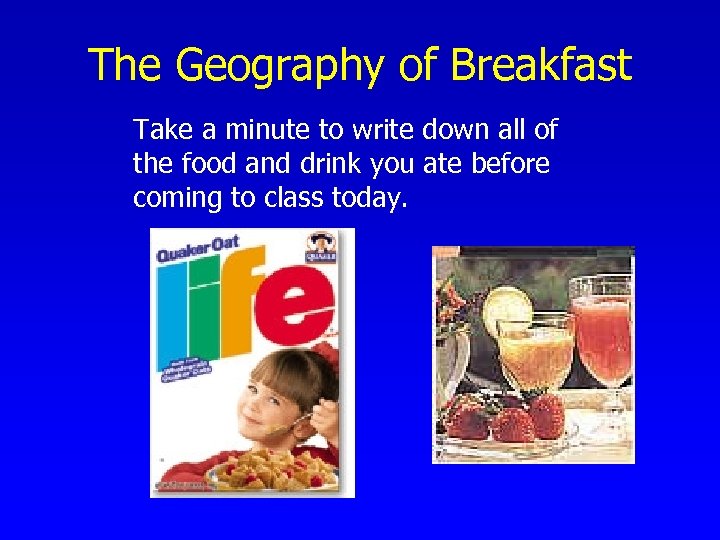 The Geography of Breakfast Take a minute to write down all of the food and drink you ate before coming to class today.
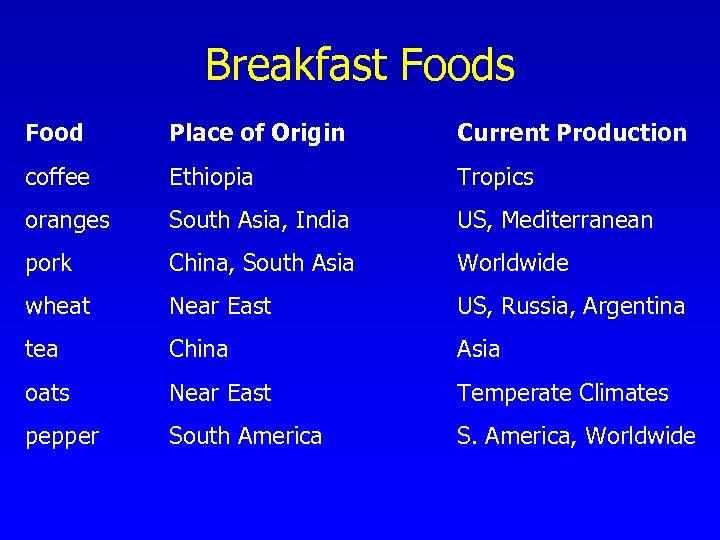 Breakfast Foods Food Place of Origin Current Production coffee Ethiopia Tropics oranges South Asia, India US, Mediterranean pork China, South Asia Worldwide wheat Near East US, Russia, Argentina tea China Asia oats Near East Temperate Climates pepper South America S. America, Worldwide
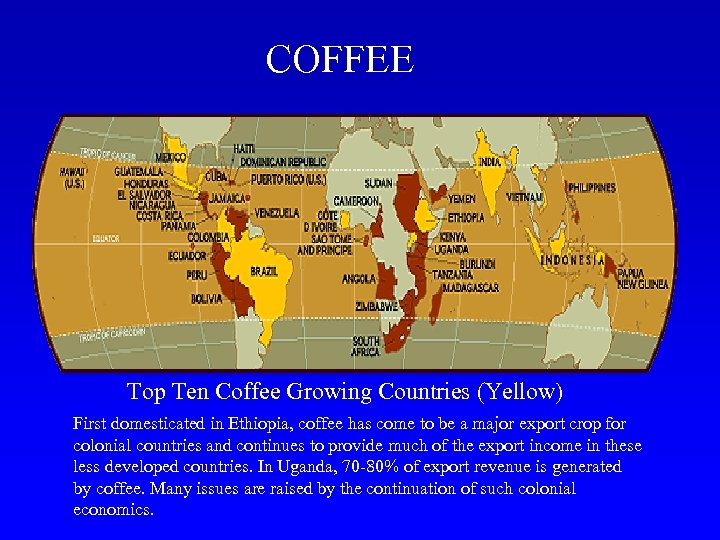 COFFEE Top Ten Coffee Growing Countries (Yellow) First domesticated in Ethiopia, coffee has come to be a major export crop for colonial countries and continues to provide much of the export income in these less developed countries. In Uganda, 70 -80% of export revenue is generated by coffee. Many issues are raised by the continuation of such colonial economics.
 www. coursesmart. com • • Author: James M. Rubenstein Book Title: Human Geography: The Cultural Landscape Read the introduction to chapter one, as well as “Key Issue 1: How do Geographers Address Where Things Are”. Complete the outline for homework over the weekend. Be prepared to discuss the information in class on Monday.
 Divisions of Geography Physical Geography Rocks and Minerals Landforms Soils Animals Plants Water Atmosphere Rivers and Other Water Bodies Environment Climate and Weather Human Geography Population Settlements Economic Activities Transportation Recreational Activities Religion Political Systems Social Traditions Human Migration Agricultural Systems Geography is a bridge between the natural and social sciences. Geography is a holistic or synthesizing science.
 Fieldwork: Geographers as Modern Explorers and Observers
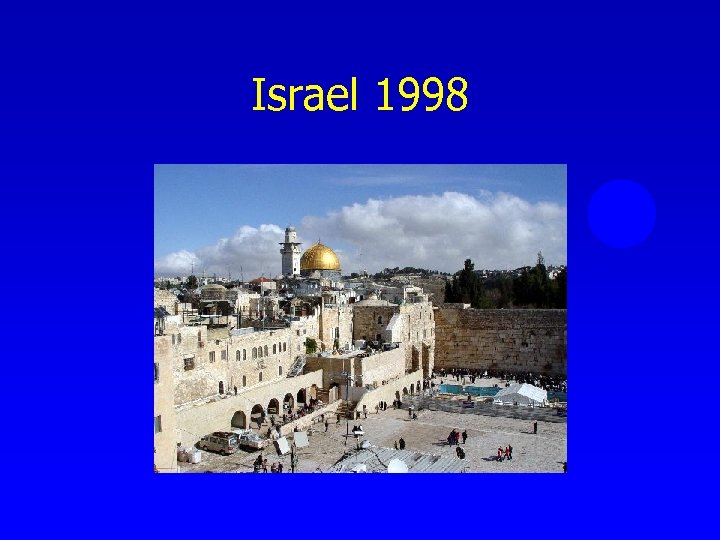 Israel 1998
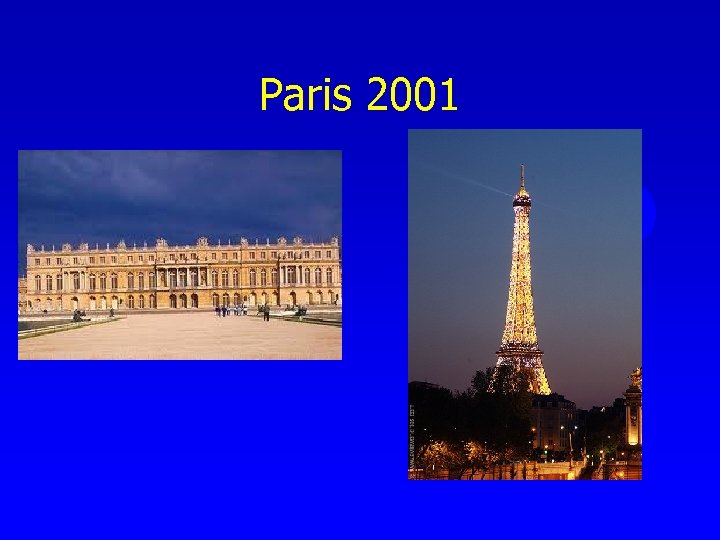 Paris 2001
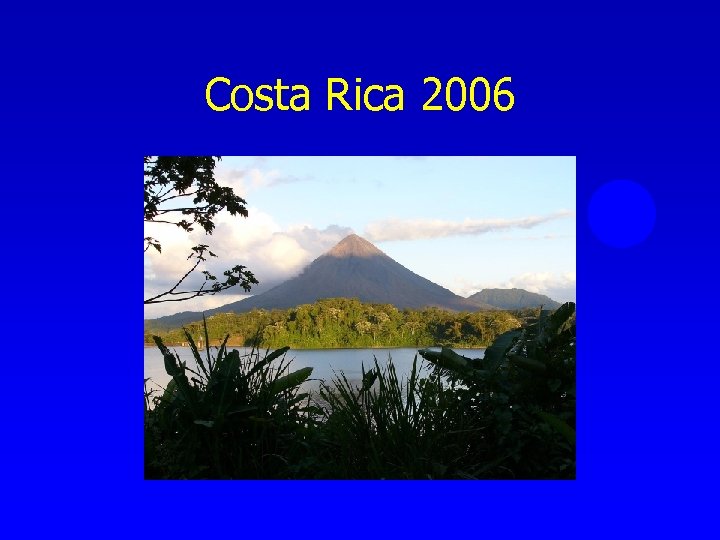 Costa Rica 2006
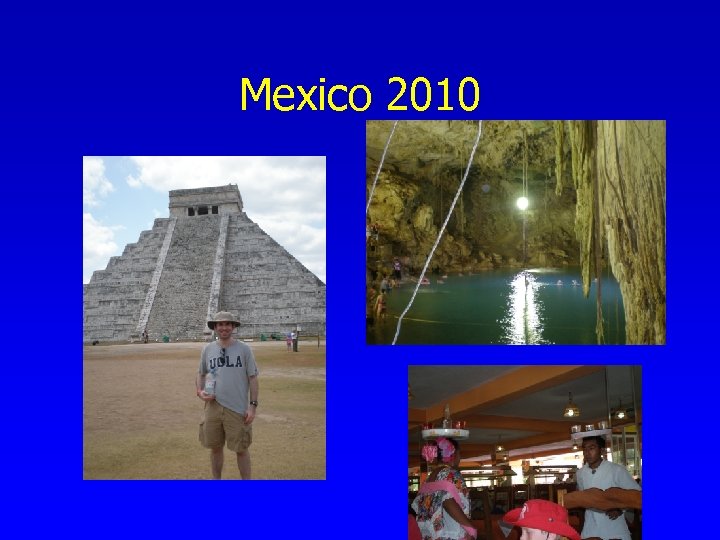 Mexico 2010
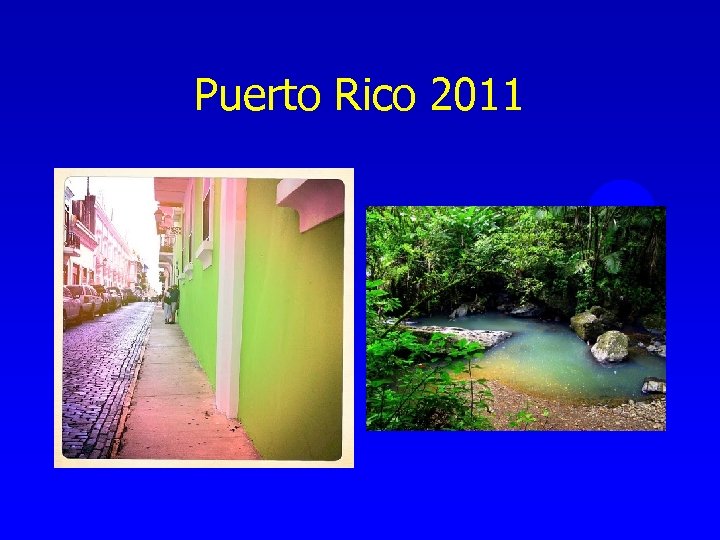 Puerto Rico 2011
 California 2011
 Introduction to Cultural Geography Definition of Cultural Geography l History of the Discipline l Fundamental Concepts l
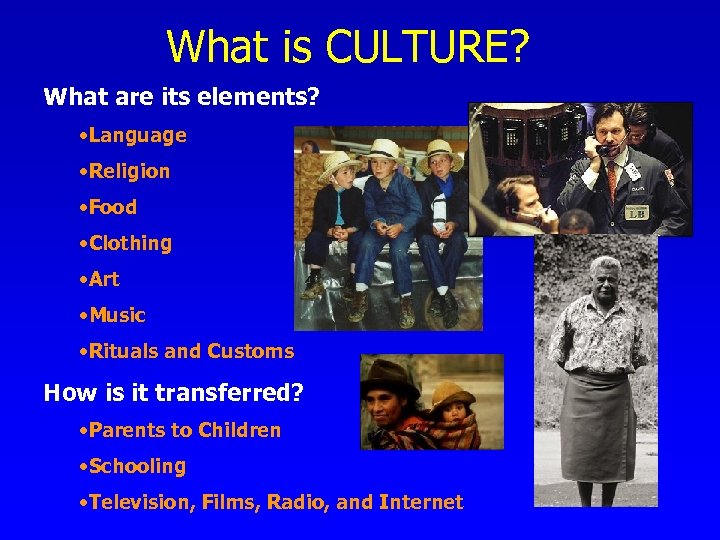 What is CULTURE? What are its elements? • Language • Religion • Food • Clothing • Art • Music • Rituals and Customs How is it transferred? • Parents to Children • Schooling • Television, Films, Radio, and Internet
 What is CULTURE? Culture is learned behavior that is passed on by imitation, instruction, and example. l l Culture is almost entirely relative. Proper behavior shifts from culture to culture. U. S. current problems: 1) little shared culture; 2) no one is teaching culture. l For example: sex education - Home? School? Note: experiencing another culture is useful for gaining perspective on your own. Harshest punishment in history? : banishment in “primitive” cultures.
 Geographic Importance of Culture Geographers study culture because it leaves dramatic imprints on the earth, both physical and cultural. l l l Language: a crystal ball into culture. Religion: strongest determinant of ethics. Nationalism and Borders Material Culture: tools, clothes, toys, etc. Architecture: Suburban garages vs. earlier porches Religion: affects societal choices; creates sacred space
 The Cultural Landscape The result of the natural environment and all of the changes to it as a result of a particular culture. In other words, it is cultures imprint on the land. (Carl Sauer) l l Environmental Determinism: environment is primary determinant of culture. Possibilism: humans are primary determinant of culture, within limits set by the environment.
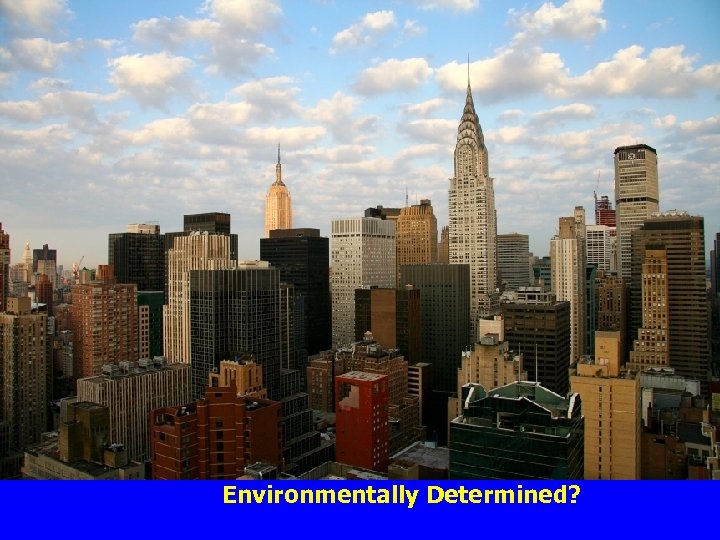 N. Y. C. Environmentally Determined?
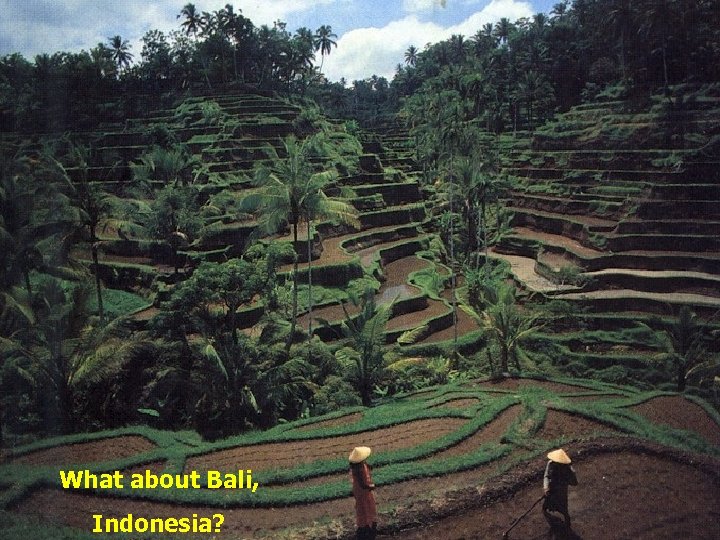 What about Bali, Indonesia?
 Key Concepts: Space Latitude and Longitude - a reference system designed to provide “absolute” location (as opposed to relative locations). A system used to designate space. l l Parallels of Latitude Meridians of Longitude
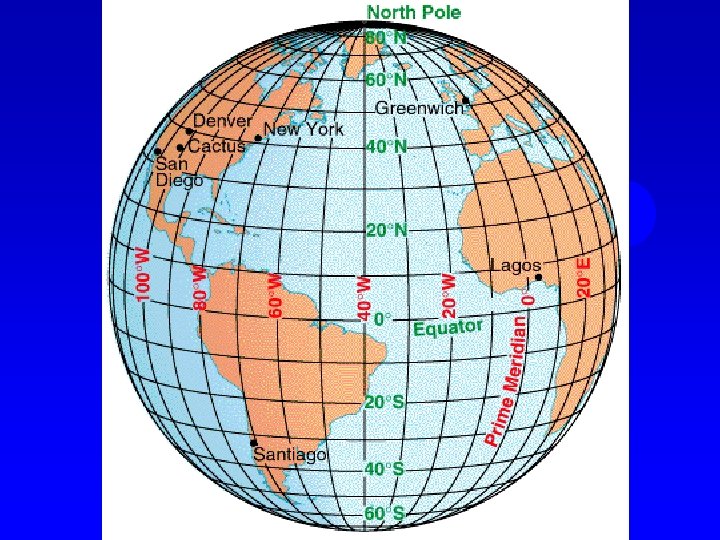
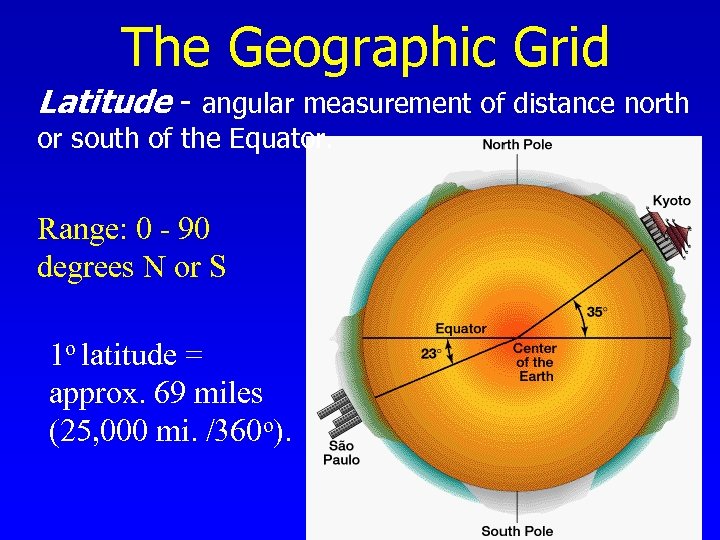 The Geographic Grid Latitude - angular measurement of distance north or south of the Equator. Range: 0 - 90 degrees N or S 1 o latitude = approx. 69 miles (25, 000 mi. /360 o).
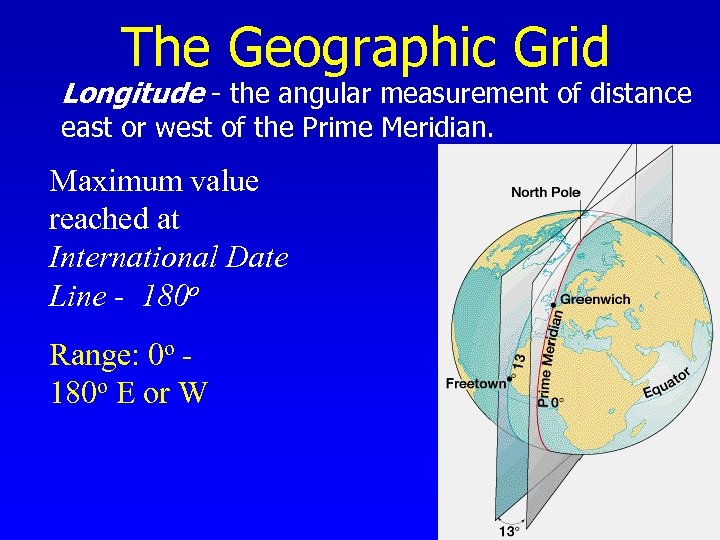 The Geographic Grid Longitude - the angular measurement of distance east or west of the Prime Meridian. Maximum value reached at International Date Line - 180 o Range: 0 o 180 o E or W
 Key Concepts: Tobler’s 1 st Law of Geography All things are related. However, all other things being equal, those things that are closest together are more related. Related Concepts: l l l Distance Decay / Friction of Distance Spatial Interaction Movement
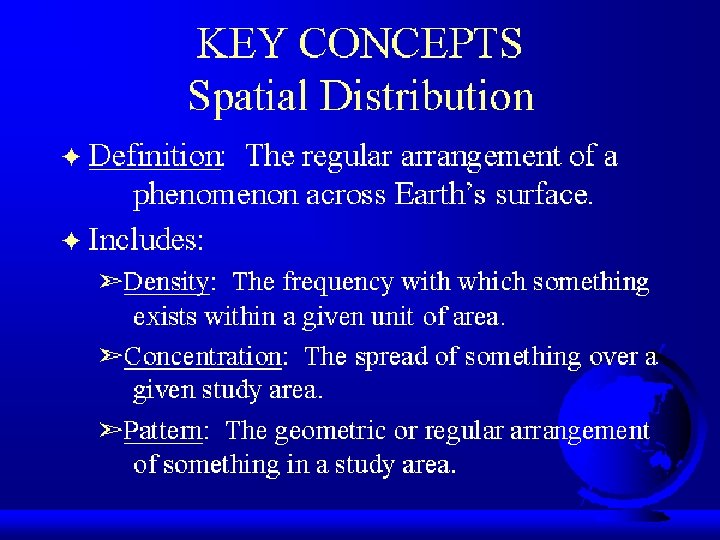
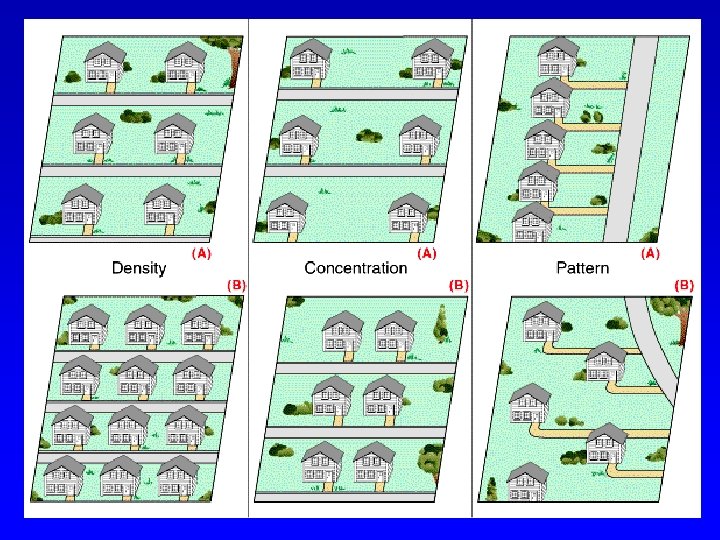
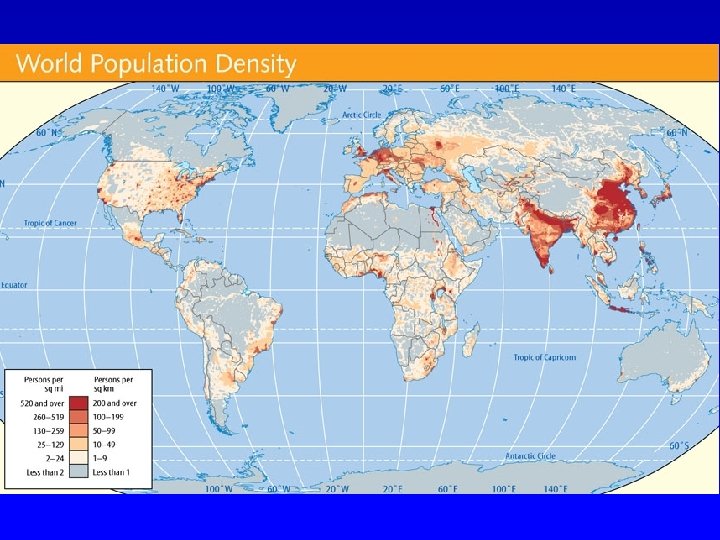
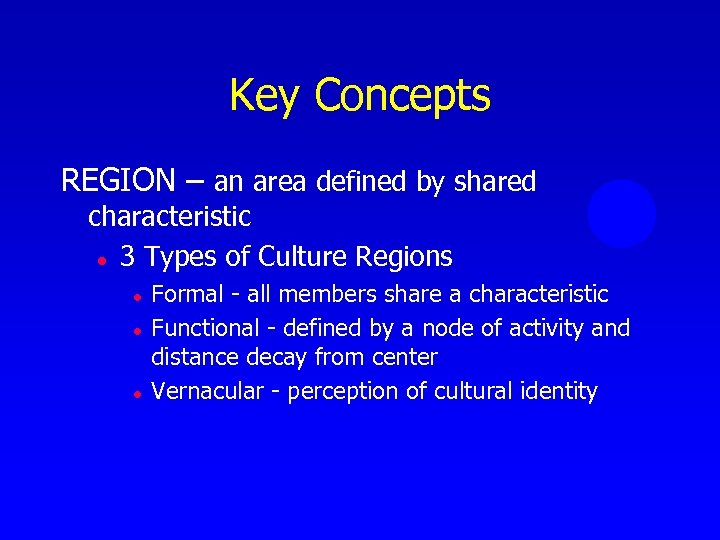 Key Concepts REGION – an area defined by shared characteristic l 3 Types of Culture Regions l l l Formal - all members share a characteristic Functional - defined by a node of activity and distance decay from center Vernacular - perception of cultural identity
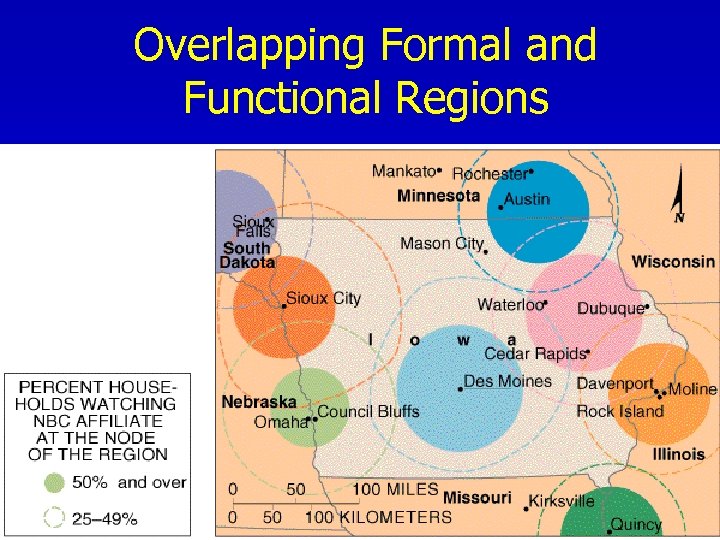 Overlapping Formal and Functional Regions
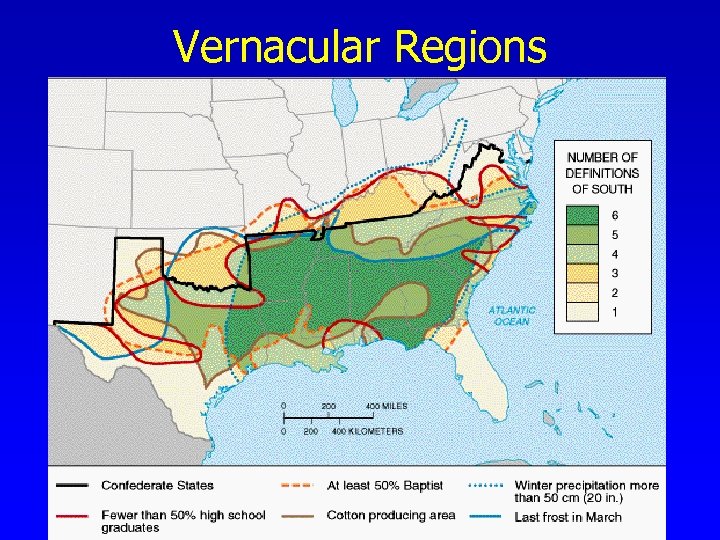 Vernacular Regions
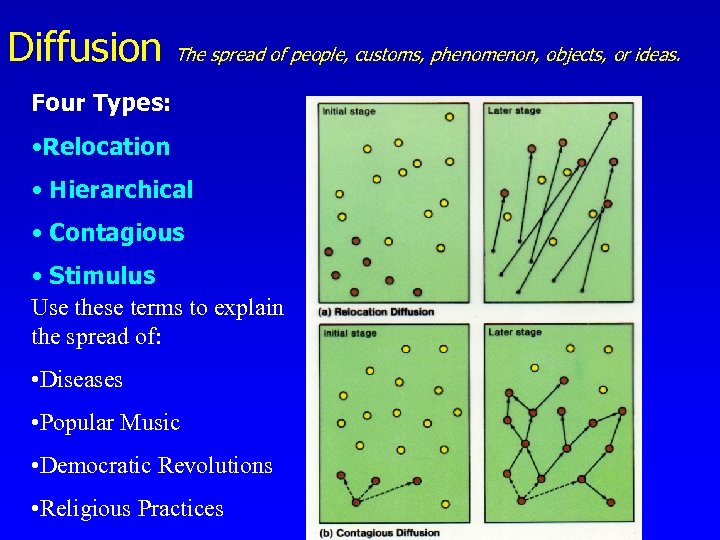 Diffusion The spread of people, customs, phenomenon, objects, or ideas. Four Types: • Relocation • Hierarchical • Contagious • Stimulus Use these terms to explain the spread of: • Diseases • Popular Music • Democratic Revolutions • Religious Practices
 Sense of Place Every place is unique. Imagine where you lived as a child. Where is home? Why and how do places take on meaning for human individuals? l l l Sensory Architecture Symbolic Why is each place unique? Key works: Place and Placelessness Relph, 1978 Topophilia - Tuan, Yi-Fu
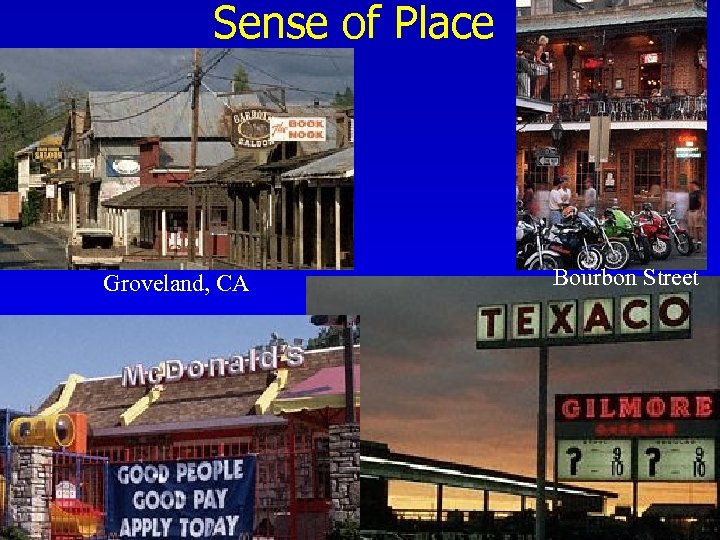 Sense of Place Groveland, CA Bourbon Street
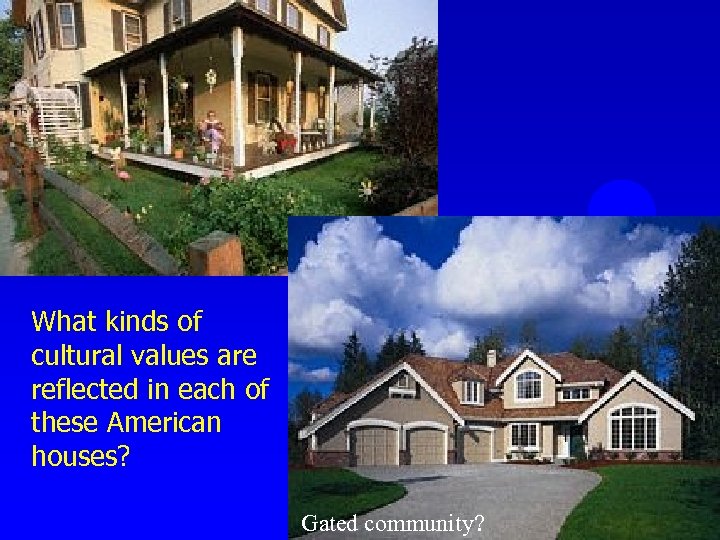 What kinds of cultural values are reflected in each of these American houses? Gated community?
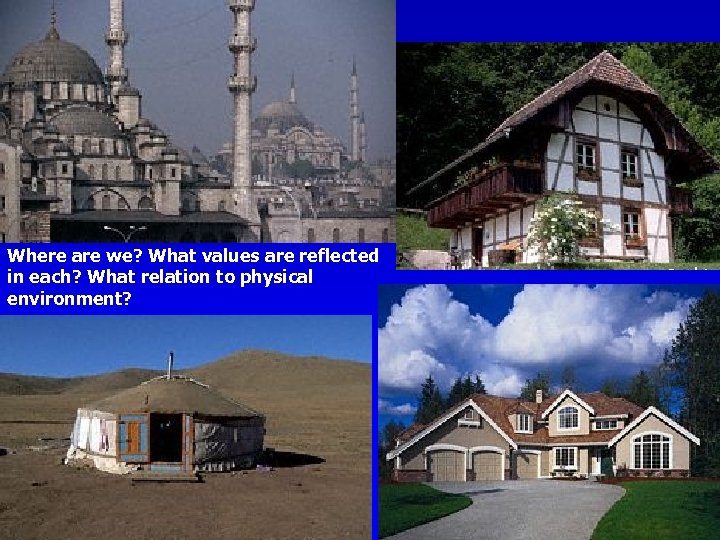 Where are we? What values are reflected in each? What relation to physical environment?
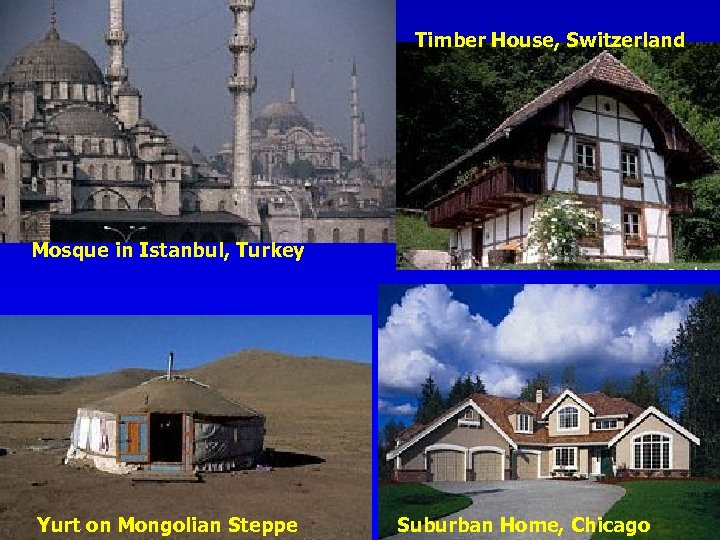 Timber House, Switzerland Mosque in Istanbul, Turkey Yurt on Mongolian Steppe Suburban Home, Chicago
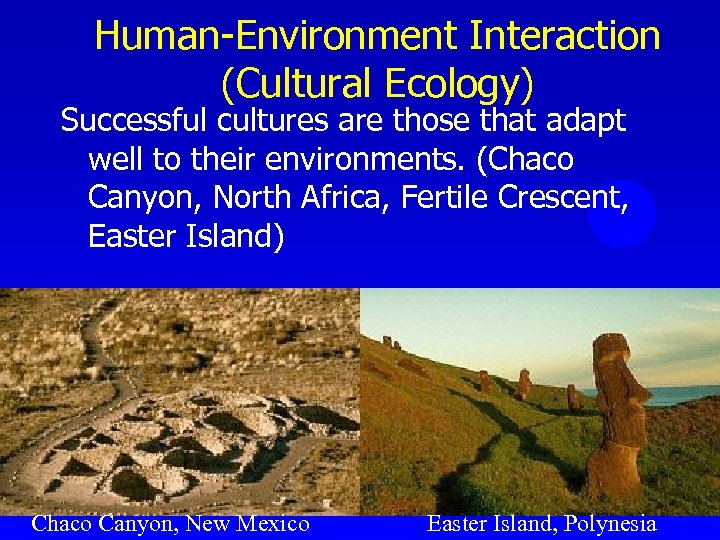 Human-Environment Interaction (Cultural Ecology) Successful cultures are those that adapt well to their environments. (Chaco Canyon, North Africa, Fertile Crescent, Easter Island) Chaco Canyon, New Mexico Easter Island, Polynesia
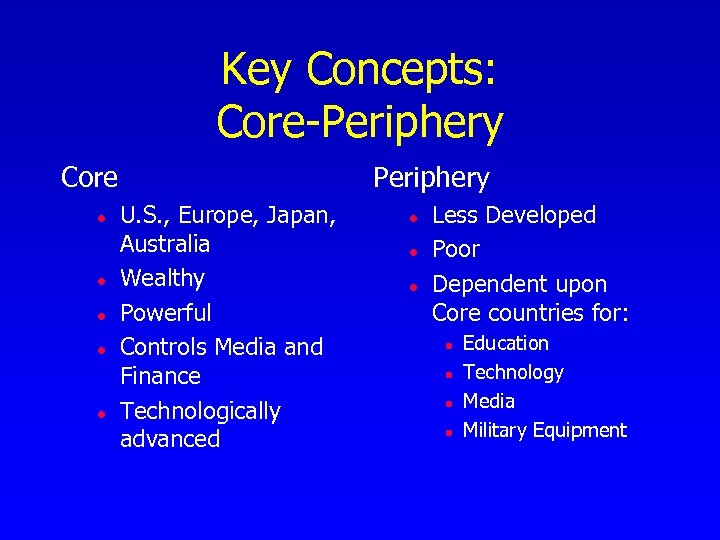 Key Concepts: Core-Periphery Core l l l Periphery U. S. , Europe, Japan, Australia Wealthy Powerful Controls Media and Finance Technologically advanced l l l Less Developed Poor Dependent upon Core countries for: l l Education Technology Media Military Equipment
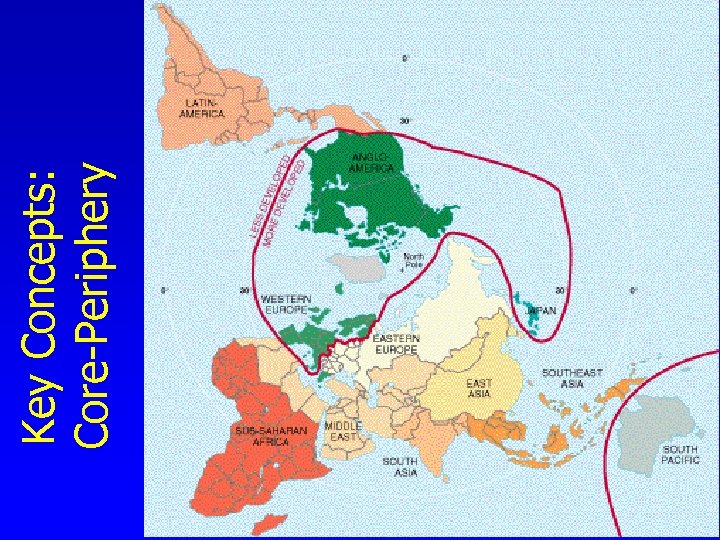 Key Concepts: Core-Periphery
 Geography and Politics Ties to Military l. Role in Colonization l. Role in Imperialism l. Role in Cold War l Ethnocentrism l. Masculinism l Foreign - 4) Situated in an abnormal or improper place. 5) Not natural: alien. The American Heritage Dictionary
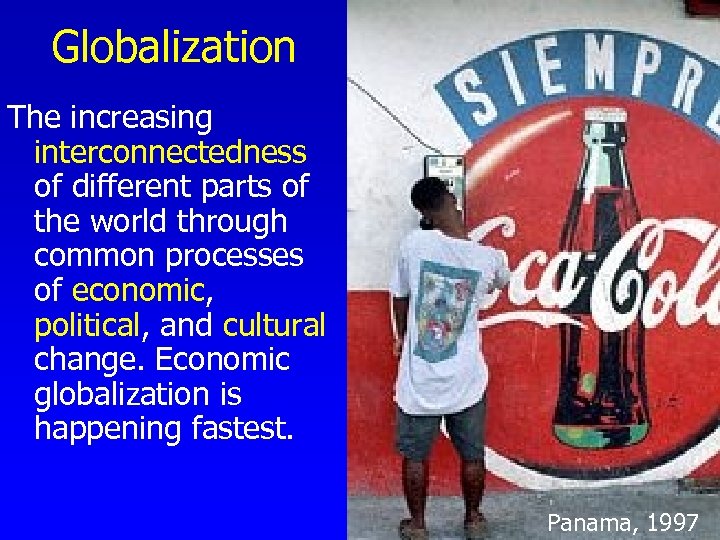 Globalization The increasing interconnectedness of different parts of the world through common processes of economic, political, and cultural change. Economic globalization is happening fastest. Panama, 1997