 Скачать презентацию AGROBIOINSTITUTE KOSTINBROD BULGARIAN CENTRE OF EXCELLENCE IN
f4dcc8d9fb79a546981f18b3d21cdd39.ppt
- Количество слайдов: 73



AGROBIOINSTITUTE – KOSTINBROD, BULGARIAN CENTRE OF EXCELLENCE IN PLANT BIOTECHNOLOGY (EXELLENT PLANT BIOTECH) DIRECTOR: Prof. ATANAS IVANOV ATANASSOV, Corresponding Member of BAS, Acad. of Agricultural Academy - Ukraine, Dr. Honoris Causa of Agricultural University and Veterinary Medicine, Kluj-Napoca, Roumania Contacts: Tel. : +359 (0) 721 2552 Fax: +359 (0) 721 4985 E-mail: atanas_atanassov@agrobioinstitut. org SCIENTIFIC SECRETARY: Dr. ELENA ILIEVA MARINOVA Contacts: Tel. : +359 (0) 721 2645 Fax: +359 (0) 721 4985 Email: elena_marinova@agrobioinstitut. org
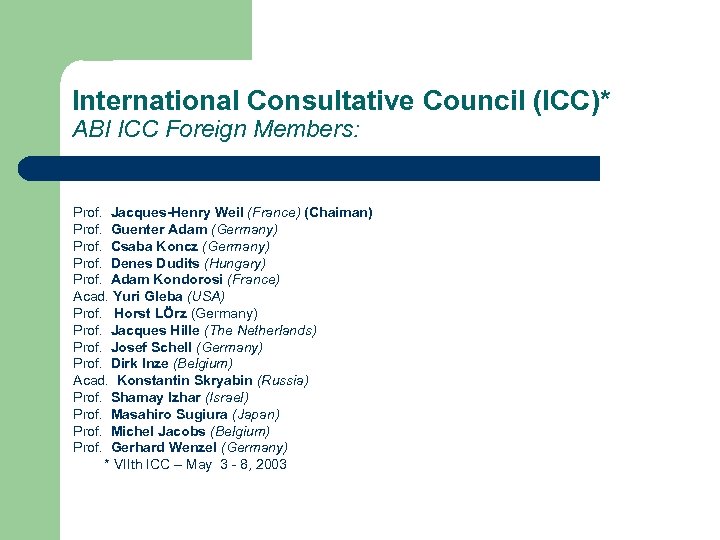
International Consultative Council (ICC)* ABI ICC Foreign Members: Prof. Jacques-Henry Weil (France) (Chaiman) Prof. Guenter Adam (Germany) Prof. Csaba Koncz (Germany) Prof. Denes Dudits (Hungary) Prof. Adam Kondorosi (France) Acad. Yuri Gleba (USA) Prof. Horst LÖrz (Germany) Prof. Jacques Hille (The Netherlands) Prof. Josef Schell (Germany) Prof. Dirk Inze (Belgium) Acad. Konstantin Skryabin (Russia) Prof. Shamay Izhar (Israel) Prof. Masahiro Sugiura (Japan) Prof. Michel Jacobs (Belgium) Prof. Gerhard Wenzel (Germany) * VIIth ICC – May 3 - 8, 2003
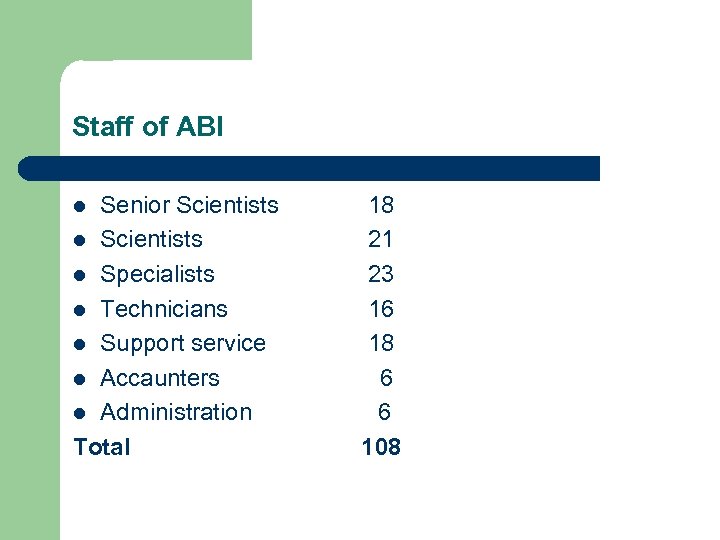
Staff of ABI Senior Scientists 18 l Scientists 21 l Specialists 23 l Technicians 16 l Support service 18 l Accaunters 6 l Administration 6 Total 108 l
Management Activities of ABI l l l ABI is the only research institute in Eastern Europe, the work of which is guided by an International Consultative Council (ICC). Starting from 1985 sixth meetings of ICC took place in ABI. From 1995 ABI represents Bulgaria in the International Centre of Genetic Engineering and Biotechnology (I. C. G. E. B. ), Trieste, Italy. Starting from 1994 IGE (ABI) is a member of Norman Borlaug Institute for Plant Research at the De Montfort University (DMU), Leicester, UK, together with UK, Czech Republic and China. In 1999 the Institute has been selected as a Centre of Excellence in the frame of INCO 2 EC Program, responsible for the co-ordination of scientific investigation and training in the field of plant biotechnology on the national and regional level. In 2002 ABI has been nominated as one of the focal points in SEE Plant Biology and Plant Biotechnology Network supported by UNESCO. Seven Balkan Countries (Albania, Bosnja & Herzegovina, Bulgaria, Greece, Macedonia, Romania and Yugoslavia) were included. The global goals of formation of the Network are: (i) upgrading and strengthening research infrastructures; (ii) launching collaborative projects in some strategic fields; (iii) establishing appropriate training fellowships and exchange grants of scientists and professors; (iiii) reducing the ‘brain drain’ by a general consolidation of national science and technology systems.
Management Activities of ABI l l Several years ago the Institute initiated the development of the National safety regulations for the utilization of genetically modified plants (GMP). The draft of the Living Modified Organisms Act has been prepared with the active participation of ABI. For its activities and initiatives in the area of bio safety and biodiversity in 2002 ABI has been selected as subregional centre for Eastern Europe in the field of regulations and a control of GMO. ABI competence and experience in the field of plant sciences in general has provided the grounds to select the institute to organize a new accredited laboratory. The laboratory is established in 2002 to assess and propagate certified phytosanitary pure and genetically authentic plant material of economically important plant species (grape, potato, strawberry, raspberry, rose etc. ), to trace genetically modified product by DNA analysis and to assess forage quality by NIRS analysis.
Management Activities of ABI l Recently, a modern research Sofia Agro. Bio. Tech Park aiming to focus on Plant Biotechnology, Biosafety and Genomics has been established between Agro. Bio. Institute – Kostinbrod and Biological Faculty, “Kl. Ohridski” Sofia University. The Sofia Agro. Bio. Tech Park will be a pilot between Agro. Bio. Institute – Kostinbrod and Biological Faculty, “Kl. Ohridski” Sofia University. The Sofia Agro. Bio. Tech Park will be a pilot project for Bulgaria and the South-Eastern European Region. The major goals will be to: (i) utilize the Plant Biotechnology expertise and know-how currently available and to foster further development in this area of science; (ii) support the transfer of technology for the improvement of agriculture and the solution of local and regional agricultural and ecological problems; (iii) provide an incubator for the establishment of new plant biotechnology and genomics based companies; (iiii) provide an environment that will attract research investments by national, regional and multinational Plant Biotechnology companies with a focus on Bulgarian and South-Eastern European agricultural needs. l ABI accomplish management activities, related to its scientific activities, by contracts with state organizations, private companies and single persons for the best use of the laboratory, greenhouse and field production facilities of the institute.
INCO 2 EC Project “ Bulgarian Centre of Excellence in Plant Biotechnology” (Excellent Plant Biotech) ACTIVITIES WP. 1. Research Capacity Building Twining of research activity of Agro. Bio. Institute (ABI), Kostinbrod, Bulgaria with: l l Plant Research International /PRI/, Wageningen, The Netherlands Agricultural Research Institute /ARI/, Nicosia, Cyprus Institute of Biochemistry and Biophysics, Warsaw, Poland Biological Research Center of the Hungarian Academy o Sciences, Szeged, Hungary Proposal: GREEN TECHNOLOGY IN PLANT PRODUCTION (GREEN TECH) Proposal No: QLAM-2001 -00314. Accompanying Measures, Area: A 2 - INCO-Centers of Excellence Partners: CENTERS OF EXCELLENCE IN BULGARIA, CYPRUS, POLAND HUNGARY
INCO 2 EC Project “ Bulgarian Centre of Excellence in Plant Biotechnology” (Excellent Plant Biotech) ACTIVITIES WP. 2. Education and Training l International Workshop “Gene transfer in plants - cellular and molecular aspects", 07 -19 May 2001, Kostinbrod, Bulgaria l 5 researchers from ARI, Nicosia, Cyprus; 1 – from, IG, Bucurest, Rumania and 1 – from IBB, Warsaw, Poland worked in the Molecular Genetics and Plant Genetic Resources Groups of ABI , 2002
INCO 2 EC Project “ Bulgarian Centre of Excellence in Plant Biotechnology” (Excellent Plant Biotech) ACTIVITIES WP. 3. Research Management. l l l l l International Conference “Plant biotechnology facing the new millennium”, 16 - 18 October, 2000, Kostinbrod, Bulgaria VI International Consultative Council (ICC) of Institute of Genetic Engineering (IGE), 19 - 21 October 2000, Sofia, Bulgaria BI ANNUAL REPORT October 1997/ June 1999 Turkish – Bulgarian meeting, 17 - 21 May 2001, Gebge, Turkey I Bulgarian - Ukrainian meeting, 24 - 28 September 2001, Lessidren, Bulgaria Seminar ABI, Kostinbrod – Biological Faculty, “Kl. Ohridski” Sofia University , 31 January 2002, Sofia, Bulgara II Ukrainian – Bulgarian Workshop on Plant Biotechnology, 29 May -1 June 2002, Yalta, Crimea, Ukraine Bulgarian – Hungarian Bilateral Seminar, 23 – 24 September 2002, Szeged, Hungary II Bulgarian – Dutch Seminar in the field of Plant Science, 16 – 20 November 2002, Lessidren, Bulgaria
INCO 2 EC Project “ Bulgarian Centre of Excellence in Plant Biotechnology” (Excellent Plant Biotech) ACTIVITIES WP. 4. Modern gene banks of small fruits, grape and rose. l Molecular characterization of rose, grape and small fruits germ plasm collections of ABI (Abell Nasali - University Lyon , France) and Dr. Francois Lefort (CL, Geneva, Switzerland)
INCO 2 EC Project “ Bulgarian Centre of Excellence in Plant Biotechnology” (Excellent Plant Biotech) ACTIVITIES WP. 5. Biosafety legislation in the area of plant biotechnology. l Training Course "Handing Requests for Releasing of GMO into the Environment“, 28 June - 1 July 2001, Lessidren, Bulgaria l Workshop “Transboundary movement of LMO and the Cartagena Protocol on Biosafety”, 19 - 20 November 2002, Sofia, Bulgaria
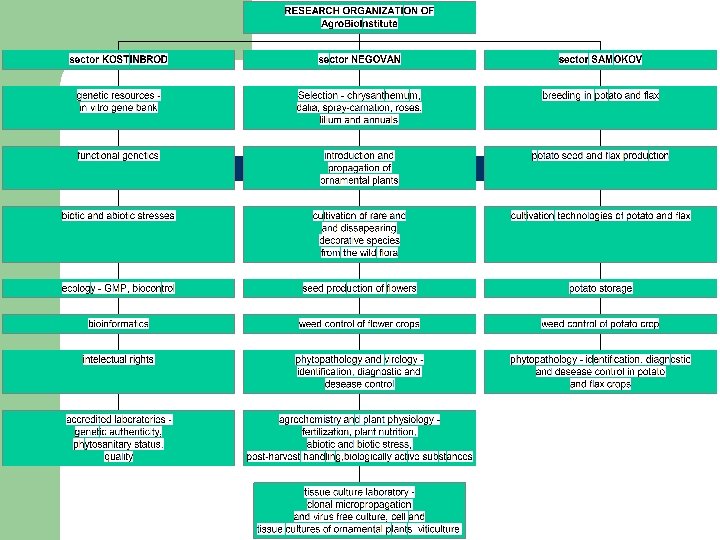
STRUCTURAL UNITS OF AGROBIOINSTITUTE (ABI) – KOSTINBROD, BULGARIA l l Ministry of Agriculture and Forestry National Centre of Agricultural Sciences (NCAS) – Regulations for NCAS, 28. 12. 2000 AGROBIOINSTITUTE: l Institute of Genetic Engineering (IGE) – Kostinbrod l Institute of Floriculture – Negovan l Complex Experimental Station with an Experimental Field – Samokov
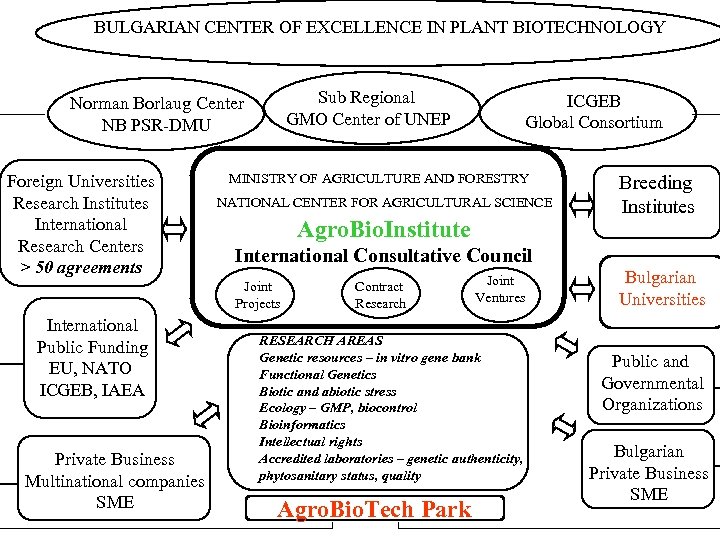
BULGARIAN CENTER OF EXCELLENCE IN PLANT BIOTECHNOLOGY Sub Regional GMO Center of UNEP Norman Borlaug Center NB PSR-DMU Foreign Universities Research Institutes International Research Centers > 50 agreements MINISTRY OF AGRICULTURE AND FORESTRY NATIONAL CENTER FOR AGRICULTURAL SCIENCE Agro. Bio. Institute Private Business Multinational companies SME Breeding Institutes International Consultative Council Joint Projects International Public Funding EU, NATO ICGEB, IAEA ICGEB Global Consortium Contract Research Joint Ventures RESEARCH AREAS Genetic resources – in vitro gene bank Functional Genetics Biotic and abiotic stress Ecology – GMP, biocontrol Bioinformatics Intellectual rights Accredited laboratories – genetic authenticity, phytosanitary status, quality Agro. Bio. Tech Park Bulgarian Universities Public and Governmental Organizations Bulgarian Private Business SME
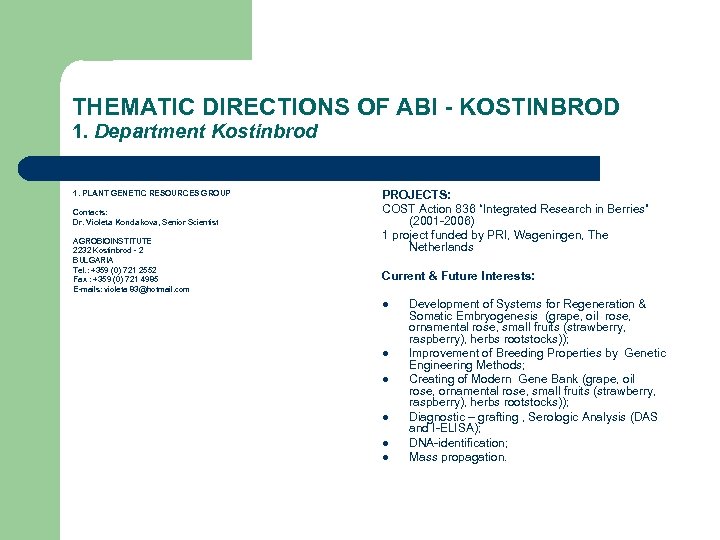
THEMATIC DIRECTIONS OF ABI - KOSTINBROD 1. Department Kostinbrod 1. PLANT GENETIC RESOURCES GROUP Contacts: Dr. Violeta Kondakova, Senior Scientist AGROBIOINSTITUTE 2232 Kostinbrod - 2 BULGARIA Tel. : +359 (0) 721 2552 Fax : +359 (0) 721 4985 E-mails: violeta 83@hotmail. com PROJECTS: COST Action 836 “Integrated Research in Berries” (2001 -2006) 1 project funded by PRI, Wageningen, The Netherlands Current & Future Interests: l l l Development of Systems for Regeneration & Somatic Embryogenesis (grape, oil rose, ornamental rose, small fruits (strawberry, raspberry), herbs rootstocks)); Improvement of Breeding Properties by Genetic Engineering Methods; Creating of Modern Gene Bank (grape, oil rose, ornamental rose, small fruits (strawberry, raspberry), herbs rootstocks)); Diagnostic – grafting , Serologic Analysis (DAS and I-ELISA); DNA-identification; Mass propagation.
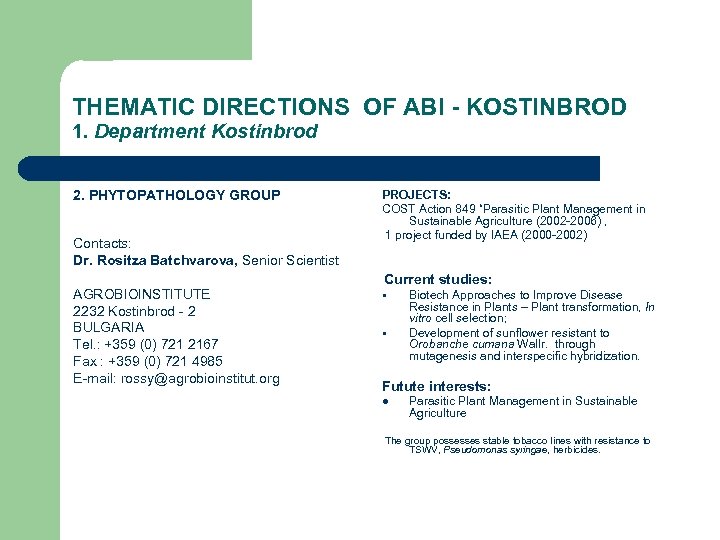
THEMATIC DIRECTIONS OF ABI - KOSTINBROD 1. Department Kostinbrod 2. PHYTOPATHOLOGY GROUP Contacts: Dr. Rositza Batchvarova, Senior Scientist PROJECTS: COST Action 849 “Parasitic Plant Management in Sustainable Agriculture (2002 -2006) , 1 project funded by IAEA (2000 -2002) AGROBIOINSTITUTE 2232 Kostinbrod - 2 BULGARIA Tel. : +359 (0) 721 2167 Fax : +359 (0) 721 4985 E-mail: rossy@agrobioinstitut. org Current studies: § § Biotech Approaches to Improve Disease Resistance in Plants – Plant transformation, In vitro cell selection; Development of sunflower resistant to Orobanche cumana Wallr. through mutagenesis and interspecific hybridization. Futute interests: l Parasitic Plant Management in Sustainable Agriculture The group possesses stable tobacco lines with resistance to TSWV, Pseudomonas syringae, herbicides.
THEMATIC DIRECTIONS OF ABI - KOSTINBROD 1. Department Kostinbrod 3. ECOPHYSIOLOGY AND ABIOTIC STRESS TOLERANCE GROUP Contacts: Dr. Dimitar Djilianov, Senior Scientist AGROBIOINSTITUTE 2232 Kostinbrod - 2 BULGARIA Tel. : +359 (0) 721 2095 Fax : +359 (0) 721 4985 E-mails: d_djilianov@agrobioinstitut. org miteto@bulinfo. net PROJECTS: 1 project funded by FP 5 EC (2001 -2003) (Partners – Project leader from Germany, Bulgaria, Israel, Luxemburg, Italy, France, Portugal, Finland, UK) Current & Future interests: l l l Biotech approaches to improve abiotic stress tolerance in plants – plant transformation, in vitro selection; Genomic studies of model stress tolerant plants; Development of systems for fast screening and evaluation for stress response; Experience in stress physiology, biochemistry and molecular biology; The group possesses stable plant lines with high stress tolerance and collection of endemic plants with unique parameters, related to stress response.
THEMATIC DIRECTIONS OF ABI - KOSTINBROD 1. Department Kostinbrod 4. BIOCHEMISTRY GROUP Contacts: Dr. Nora Gorinova, Senior Scientist AGROBIOINSTITUTE 2232 Kostinbrod - 2 BULGARIA Tel. : +359 (0) 7212645 Fax : +359 (0) 721 4985 E-mail: gorinova_nora@hotmail. com PROJECTS: 1 project funded FP 5 EC (2002 -2005) (Partners – Project leader from Finland, Bulgaria, Germany, Belgium, Switzerland, The Netherlands); 2 project supported by NCAS (Partners for one of them – Institute of Soil Science and Agroecology “Pushkaov”, Sofia, Institute of Vegetables and Canned Foods, Plovdiv) Current studies: l Development of tobacco forms resistant to herbicides by genetic engineering approaches. l Improvement of the plant tolerance and phytoaccumulation of the heavy metals from contaminated soils by genetic transformation. l Physiological and biochemical/molecular characteristics of herbicide resistant and heavy metal tolerant plants. Future interests: l Improvement of the tolerance to organic pollutans by plant genetic transformation.
THEMATIC DIRECTIONS OF ABI - KOSTINBROD 1. Department Kostinbrod 5. CYTOGENETICS GROUP Contacts: Prof. Kostadin Gecheff, Senior Scientist AGROBIOINSTITUTE 2232 Kostinbrod - 2 BULGARIA Tel. : +359 (0) 721 2095 Fax : +359 (0) 721 4985 E-mail: gecheff@agrobioinstitut. org 1 Project supervised by NCAS 1 Project supervised by Ministry of Education Current studies: l l Studies on the mechanisms of induction and repair of structural mutations in plants; Chromosome position effects in induction of structural mutations and expression (silencing) of genes in reconstructed barley karyotypes. Future interests: l l Development and application of different techniques for transfer of genetic material in barley; Physical mapping of transgenes and investigation of their position-dependent expression using barley karyotypes with suitable chromosomal reconstructions.
THEMATIC DIRECTIONS OF ABI - KOSTINBROD 1. Department Kostinbrod 6. MOLECULAR GENETICS GROUP Contacts: Dr. Ivan Atanassov, Researcher AGROBIOINSTITUTE 2232 Kostinbrod - 2 BULGARIA Tel. : +359 (0) 721 2167 Fax : +359 (0) 721 4985 E-mail: ivanatanassov@hotmail. com PROJECTS: l CENTRE OF EXCELLENCE INCO 2 EC l COST Action 853 “ Agricultural Bio Markers for Array Technology” (20022006) A/ Molecular Markers l / RFLP, RAPD, SSR, CAP, SNP detection through mismatch cleavage/; l Evaluation of Plant Genetic Resources l Gene mapping. B/ Gene Cloning and Expression l Cloning and characterization of tissue specific and inducible promoter regions; l ds. RNA mediated gene silencing. l Cloning of anther specific genes.
THEMATIC DIRECTIONS OF ABI - KOSTINBROD 1. Department Kostinbrod 7 a. FUNCTIONAL GENETICS GROUP I Current research: Contacts: Dr. Mariana Vlahova, Senior Scientist l l AGROBIOINSTITUTE 2232 Kostinbrod - 2 BULGARIA Tel. : +359 (0) 721 2167 Fax : +359 (0) 721 4985 E-mail: vlahova@agrobioinstitut. org l Direct and indirect somatic embryogeneisis of flax, diploid and tetraploid Medicago sp. – molecular and cellular aspects. Genetic modification (direct and indirect gene transfer in explant, tissue, seedlings) of tetraploid alfalfa for herbicide resistance and quality improvement. Near Infrared Spectroscopic evaluation of quality of agricultural products. Contents of protein, fat, fibers, ash and moisture are determined on a routine basis. Specific calibration models for NIRS determination are developed and possibility for NIRS detection of genetic modified plant material are examined. Future interests: l Single embryogenic cell suspension culture for understanding processes of plant development.
THEMATIC DIRECTIONS OF ABI - KOSTINBROD 1. Department Kostinbrod 7 b. FUNCTIONAL GENETICS GROUP II Contacts: Dr. Pravda Stoeva-Popova, Senior Scientist AGROBIOINSTITUTE 2232 Kostinbrod - 2 BULGARIA Tel. : +359 (0) 721 2552 Fax : +359 (0) 721 4985 E-mail: pravdastoeva@agrobioinstitut. org stoevap. @exchange. winthrop. edu PROJECTS: 1 project supervised by NCAS (2002 – 2006) l l l Development of dihaploids in tomato by hybridization with autotetraploid wild species and in vitro techniques; CMS in Lycopersicon sp. ; Breeding for a complex resistance to some viral, fungi and bacterial diseases.
THEMATIC DIRECTIONS OF ABI - KOSTINBROD 1. Department Kostinbrod 7 c. FUNCTIONAL GENETICS GROUP III Contacts: Dr. Nikolai Christov, Researcher AGROBIOINSTITUTE 2232 Kostinbrod - 2, Bulgaria Tel. : +359 721 2163 Fax: +359 721 4985 E-mail: nikolai_christov@agrobioinstitute. org Research interests: l SSR and STS markers in barley, wheat and maize for variety identification and MAS for food and feed quality improvement l Elucidation of gene functions in barley and maize by genetic transformation l Ecogenetic aspects of the expression of quantitative traits and heterosis in maize l Biotechnological approaches to enhancement of food and feed quality of wheat, barley and maize. l Engineering of abiotic and biotic stress resistance in wheat, barley and maize; l The plant factory: Production of bioactive proteins and vaccines in barley and maize
THEMATIC DIRECTIONS OF ABI – KOSTINBROD 1. Department Kostinbrod 8. FLAX RESEARCH GROUP Contacts: Dr. Alexandra Balabanova, Researcher AGROBIOINSTITUTE 2232 Kostinbrod - 2 BULGARIA tel. : +359 721 2552 fax : +359 721 4985 E-mail: a_balabanova@agrobioinstitut. org ablbanova@hotmail. com PROJECTS: COST Action 847 “Textile quality and Biotechnology”, 2 supported projects Current studies: l Flax breeding and Seed Production. Varieties suitable for Southern Conditions; l New Effective Methods for Improvement of Flax Retting Technology. Future Interests: l Enzymatic Treatment for Extraction and Improvement of Flax Fiber Quality; l Flax Seed as Health Food and Animal Fodder; l Utilization of Bast Plants and their by- Products as Alternatives for Sustainable Environmental friendly Agriculture.
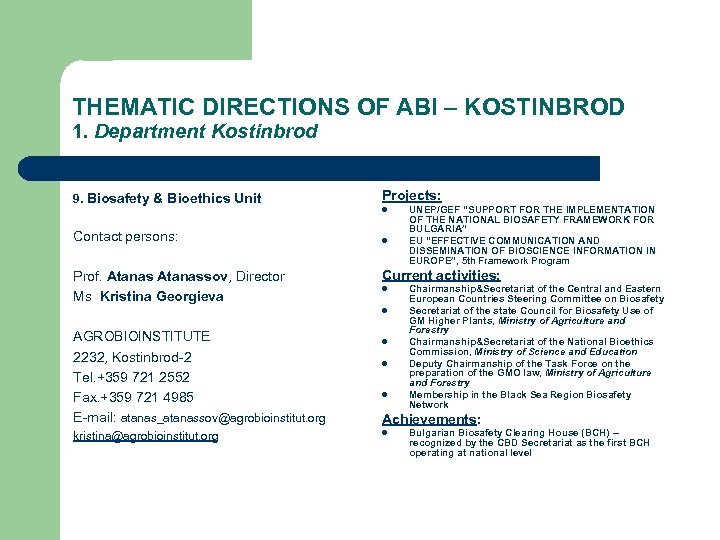
THEMATIC DIRECTIONS OF ABI – KOSTINBROD 1. Department Kostinbrod 9. Biosafety & Bioethics Unit Projects: Contact persons: l Prof. Atanassov, Director Ms Kristina Georgieva l Current activities: l l AGROBIOINSTITUTE 2232, Kostinbrod-2 Tel. +359 721 2552 Fax. +359 721 4985 E-mail: atanas_atanassov@agrobioinstitut. org kristina@agrobioinstitut. org UNEP/GEF “SUPPORT FOR THE IMPLEMENTATION OF THE NATIONAL BIOSAFETY FRAMEWORK FOR BULGARIA” EU “EFFECTIVE COMMUNICATION AND DISSEMINATION OF BIOSCIENCE INFORMATION IN EUROPE”, 5 th Framework Program l l l Chairmanship&Secretariat of the Central and Eastern European Countries Steering Committee on Biosafety Secretariat of the state Council for Biosafety Use of GM Higher Plants, Ministry of Agriculture and Forestry Chairmanship&Secretariat of the National Bioethics Commission, Ministry of Science and Education Deputy Chairmanship of the Task Force on the preparation of the GMO law, Ministry of Agriculture and Forestry Membership in the Black Sea Region Biosafety Network Achievements: l Bulgarian Biosafety Clearing House (BCH) – recognized by the CBD Secretariat as the first BCH operating at national level
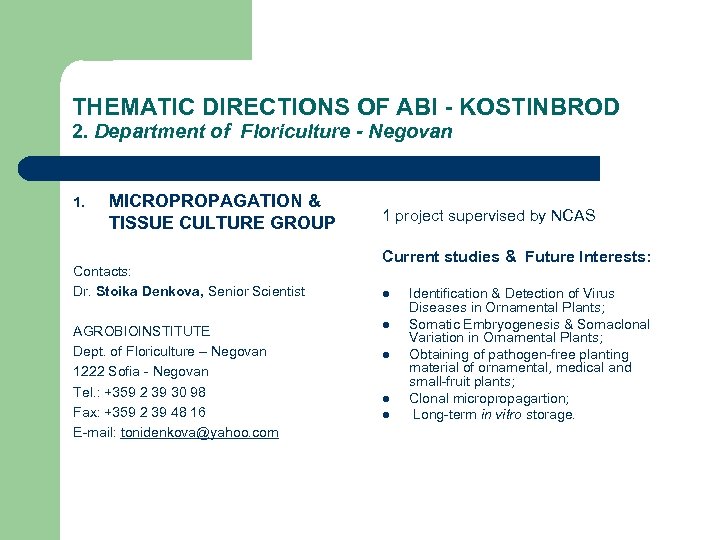
THEMATIC DIRECTIONS OF ABI - KOSTINBROD 2. Department of Floriculture - Negovan 1. MICROPROPAGATION & TISSUE CULTURE GROUP Contacts: Dr. Stoika Denkova, Senior Scientist AGROBIOINSTITUTE Dept. of Floriculture – Negovan 1222 Sofia - Negovan Tel. : +359 2 39 30 98 Fax: +359 2 39 48 16 E-mail: tonidenkova@yahoo. com 1 project supervised by NCAS Current studies & Future Interests: l l l Identification & Detection of Virus Diseases in Ornamental Plants; Somatic Embryogenesis & Somaclonal Variation in Ornamental Plants; Obtaining of pathogen-free planting material of ornamental, medical and small-fruit plants; Clonal micropropagartion; Long-term in vitro storage.
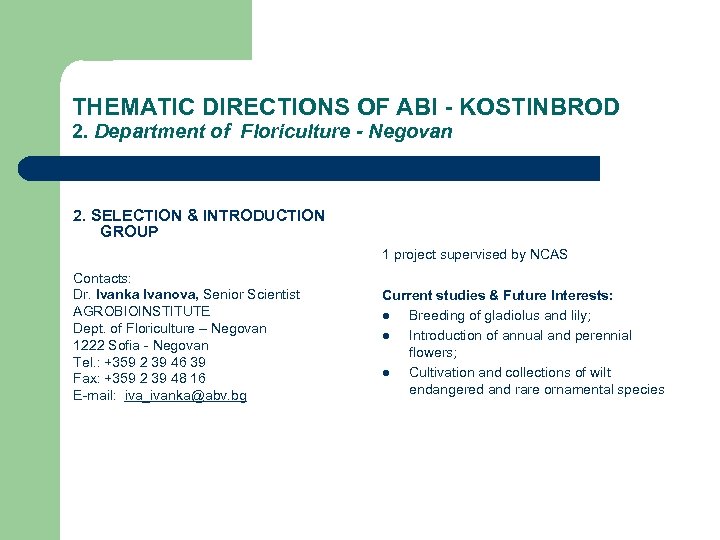
THEMATIC DIRECTIONS OF ABI - KOSTINBROD 2. Department of Floriculture - Negovan 2. SELECTION & INTRODUCTION GROUP 1 project supervised by NCAS Contacts: Dr. Ivanka Ivanova, Senior Scientist AGROBIOINSTITUTE Dept. of Floriculture – Negovan 1222 Sofia - Negovan Tel. : +359 2 39 46 39 Fax: +359 2 39 48 16 E-mail: iva_ivanka@abv. bg Current studies & Future Interests: l Breeding of gladiolus and lily; l Introduction of annual and perennial flowers; l Cultivation and collections of wilt endangered and rare ornamental species
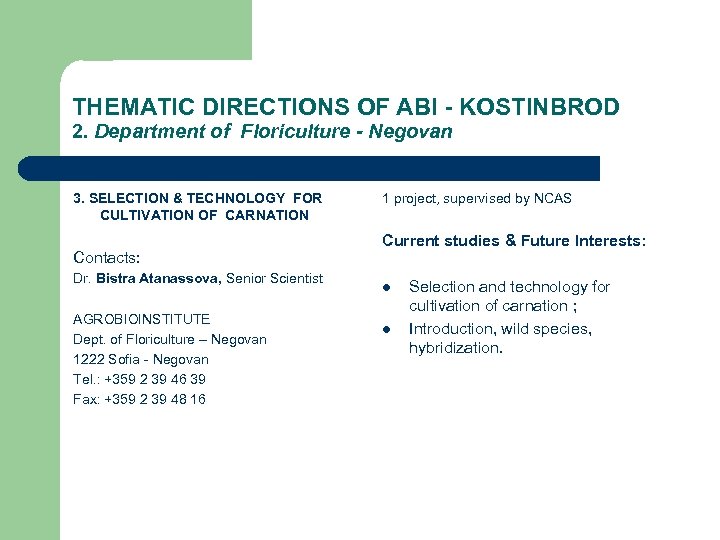
THEMATIC DIRECTIONS OF ABI - KOSTINBROD 2. Department of Floriculture - Negovan 3. SELECTION & TECHNOLOGY FOR CULTIVATION OF CARNATION Contacts: Dr. Bistra Atanassova, Senior Scientist AGROBIOINSTITUTE Dept. of Floriculture – Negovan 1222 Sofia - Negovan Tel. : +359 2 39 46 39 Fax: +359 2 39 48 16 1 project, supervised by NCAS Current studies & Future Interests: l l Selection and technology for cultivation of carnation ; Introduction, wild species, hybridization.
THEMATIC DIRECTIONS OF ABI - KOSTINBROD 2. Department of Floriculture - Negovan 4. AGROCHEMISTRY & PHYSIOLOGY GROUP Contacts: Dr. Elena Iakimova, Senior Scientist PROJECTS: COST Action 844 “Apoptosis and programmed cell death: Molecular mechanisms and applications in Biotechnology and Agriculture” 1 project, supervised by NCAS Current studies & Future Interests: l AGROBIOINSTITUTE Dept. of Floriculture – Negovan 1222 Sofia - Negovan Tel. : +359 2 39 46 39 Fax: +359 2 39 48 16 E-mail: elena_iakimova@hotmail. com l l l Application of biologically active substances for controlling the height, time of flowering, rooting, germination and senescence of ornamentals - pot plants, shrubs, cut flowers; Fertilization, substrates and nutrition; Programmed cell death - signal transduction - apoptosis elicitation and inhibition, hypersensitive response, role of heavy metals; Biochemical and physiological response to stress.
THEMATIC DIRECTIONS OF ABI – KOSTINBROD 2. Department of Floriculture - Negovan 5. PRODUCTION UNIT Contacts: Dr. Dimitar Slavov, Senior Scientist AGROBIOINSTITUTE Dept. of Floriculture – Negovan 1222 Sofia - Negovan Tel. : +359 2 39 46 39 Fax: +359 2 39 48 16 l l Crop production of wheat, barley, carrots, cabbage, leafy vegetables, flowers (gladiolus, lily, chrysanthemum, statice, gypsophilla, callistephus chinensis, transients, calendula, helichrysum, zinnia) Extension service
THEMATIC DIRECTIONS OF ABI - KOSTINBROD 3. Department Samokov 1. POTATO BREEDING & PRODUCTION GROUP Current: 2 projects supervised by NCAS Breeding of potato varieties resistant to Phytophtora infestans Mont. (D’Barry) and viral diseases; l Quality Improvement (taste; dry matter content, chemical composition); l Abiotic stress resistance (drought and heat tolerance); l Control of fungal diseases; l Seed production; l Potato storage Interests: l Relationship between racial density and host resistance in regard to reducing l Contacts: Violeta Blagoeva, Researcher 152 Boriss III str. , Samokov Tel. +359 722 2 20 25 New Bulgarian potato varieties: Bor (late, resistant to Ph. Infestans); Kalina (late, universal use); Koral (middle late, red skin) (in State testing)
PROJECTS OF ABI Projects funded by International Organizations 1. BULGARIAN CENTRE OF EXELENCE IN PLANT BIOTECHNOLOGY (EXELLENT PLANT BIOTECH) Contract № ICA 1 -1999 -70003 2000 – 2003 Accompanying Measures, Area: A 2 -INCO-Centers of Excellence Proposal: GREEN TECHNOLOGY IN PLANT PRODUCTION (GREEN TECH) Proposal No: QLAM-2001 -00314. Accompanying Measures, Area: A 2 -INCO-Centers of Excellence Partners: BULGARIA, CYPRUS, POLAND, HUNGARY
PROJECTS OF ABI Projects funded by International Organizations 2. MOLECULAR ECOPHYSIOLOGY AS TOOL FOR THE SELECTION OF HIGHLY STRESS RESISTANT POPLAR SPECIES FOR MULTIPURPOSE FORESTS (ESTABLISH) Contract No. : QLK 5 -CT-2000 -01377 RTD, FP 5, Quality of Life and Management of Living Resources Project leader: Prof. A. Polle (Germany) ABI Project coordinator: Dr. D. Djilianov Partners : Bulgaria, Finland, France, Germany, Israel, Italy, Luxemburg, Portugal, UK 2001 - 2004 3. DEVELOPMENT OF SYSTEMS TO IMPROVE PHYTOREMEDIATION OF METAL CONTAMINATED SOILS THROUGH IMPROVED PHYTOACCUMULATION (PHYTAC) Contract No. QLK 5 -CT-2001 -00429 RTD, FP 5, Quality of Life and Management of Living Resources Project Leader – Prof. Sipra Karennlampi (Finland) ABI Project coordinator: Dr. N. Gornova Partners: Belgium, Bulgaria, Finland, Germany, The Netherlands, Switzerland 2002 - 2005
PROJECTS OF ABI Projects funded by International Organizations 4. CONSERVATION AND RESTORATION OF EUROPEAN OAK WOODLANDS: A UNIQUE ECOSYSTEM IN BALANCE (CREOAK) Proposal No: QLRT – 2001 – 01594 (accepted) RTD, FP 5, Quality of Life and Management of Living Resources 5. EFFECTIVE COMMUNICATIONS AND DISSEMINATION OF BIOSCIENCE INFORMATION IN EUROPE (ECOD-BIO) Proposal No: Qо. LAM-2001 -00314 (accepted) Accompanying measures 6. IMPROVED FIBRE QUALITY BY DECORTICATION AND REFINING (FLAXZYM) Proposal No: Qо. L-2001 -3 (accepted) RTD, FP 5, Quality of Life and Management of Living Resources
PROJECTS OF ABI Projects funded by International Organizations 7. SUPPORT TO THE IMPLEMENTATION OF THE NATIONAL BIOSAFETY FRAMEWORK FOR BULGARIA Funding organization: GEF/UNEP Project leader: Prof. A. Atanassov 2002 – 2004 8. DEVELOPMENT OF SUNFLOWER RESISTANT TO Orobanche cumana Wallr. THROUGH MUTAGENESIS AND INTERSPECIFIC HYBRIDIZATION Funding organization: IAEA Project leader: Dr. R. Batcvarova 2000 – 2002 9. FIELD TRIALS OF GENETICALLY MANIPULATED ALFALFA Funding organization: The Samuel Noble Foundation Project leader: Prof. A. Atanassov 2000 – 2002
PROJECTS OF ABI Projects funded by International Organizations 10. DIFFERENTIAL GENE EXPRESSION IN CMS AND FERTILITY RESTORED Lycopersicon HYBRIDS ( # 2001 -01500, програма “Plant Genetic Mechanisms” USDA – grant, USA, Winthrop University, Department of Biology, Rock Hill, SC 29732, USA Project leader: Dr. P. Stoeva - Popova 2002 - 2004
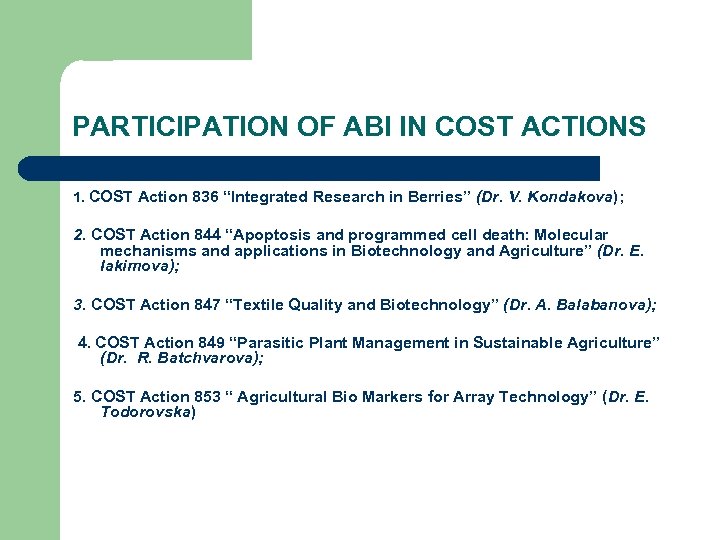
PARTICIPATION OF ABI IN COST ACTIONS 1. COST Action 836 “Integrated Research in Berries” (Dr. V. Kondakova); 2. COST Action 844 “Apoptosis and programmed cell death: Molecular mechanisms and applications in Biotechnology and Agriculture” (Dr. E. Iakimova); 3. COST Action 847 “Textile Quality and Biotechnology” (Dr. A. Balabanova); 4. COST Action 849 “Parasitic Plant Management in Sustainable Agriculture” (Dr. R. Batchvarova); 5. COST Action 853 “ Agricultural Bio Markers for Array Technology” (Dr. E. Todorovska)
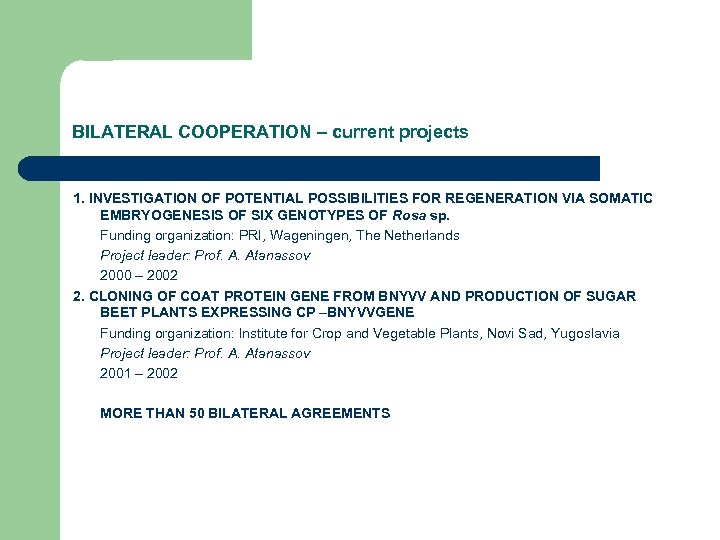
BILATERAL COOPERATION – current projects 1. INVESTIGATION OF POTENTIAL POSSIBILITIES FOR REGENERATION VIA SOMATIC EMBRYOGENESIS OF SIX GENOTYPES OF Rosa sp. Funding organization: PRI, Wageningen, The Netherlands Project leader: Prof. A. Atanassov 2000 – 2002 2. CLONING OF COAT PROTEIN GENE FROM BNYVV AND PRODUCTION OF SUGAR BEET PLANTS EXPRESSING CP –BNYVVGENE Funding organization: Institute for Crop and Vegetable Plants, Novi Sad, Yugoslavia Project leader: Prof. A. Atanassov 2001 – 2002 MORE THAN 50 BILATERAL AGREEMENTS
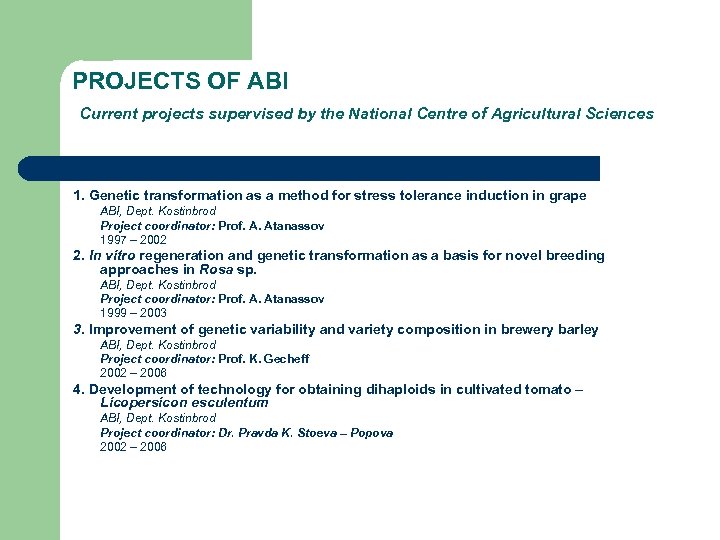
PROJECTS OF ABI Current projects supervised by the National Centre of Agricultural Sciences 1. Genetic transformation as a method for stress tolerance induction in grape ABI, Dept. Kostinbrod Project coordinator: Prof. A. Atanassov 1997 – 2002 2. In vitro regeneration and genetic transformation as a basis for novel breeding approaches in Rosa sp. ABI, Dept. Kostinbrod Project coordinator: Prof. A. Atanassov 1999 – 2003 3. Improvement of genetic variability and variety composition in brewery barley ABI, Dept. Kostinbrod Project coordinator: Prof. K. Gecheff 2002 – 2006 4. Development of technology for obtaining dihaploids in cultivated tomato – Licopersicon esculentum ABI, Dept. Kostinbrod Project coordinator: Dr. Pravda K. Stoeva – Popova 2002 – 2006
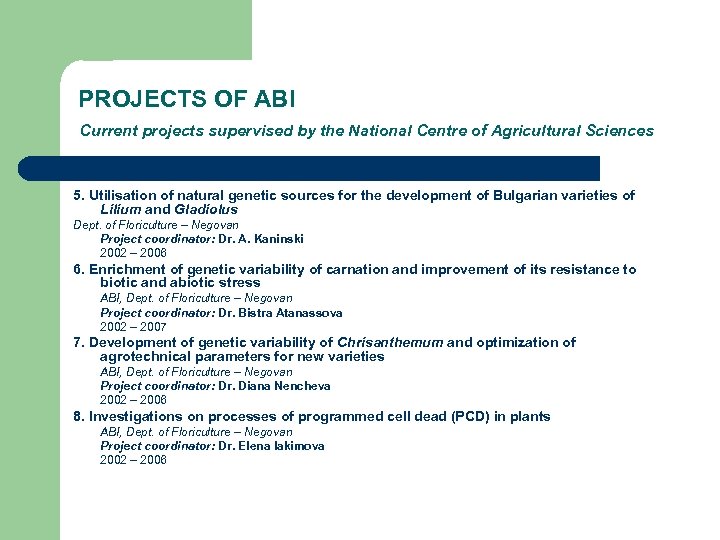
PROJECTS OF ABI Current projects supervised by the National Centre of Agricultural Sciences 5. Utilisation of natural genetic sources for the development of Bulgarian varieties of Lilium and Gladiolus Dept. of Floriculture – Negovan Project coordinator: Dr. A. Kaninski 2002 – 2006 6. Enrichment of genetic variability of carnation and improvement of its resistance to biotic and abiotic stress ABI, Dept. of Floriculture – Negovan Project coordinator: Dr. Bistra Atanassova 2002 – 2007 7. Development of genetic variability of Chrisanthemum and optimization of agrotechnical parameters for new varieties ABI, Dept. of Floriculture – Negovan Project coordinator: Dr. Diana Nencheva 2002 – 2006 8. Investigations on processes of programmed cell dead (PCD) in plants ABI, Dept. of Floriculture – Negovan Project coordinator: Dr. Elena Iakimova 2002 – 2006
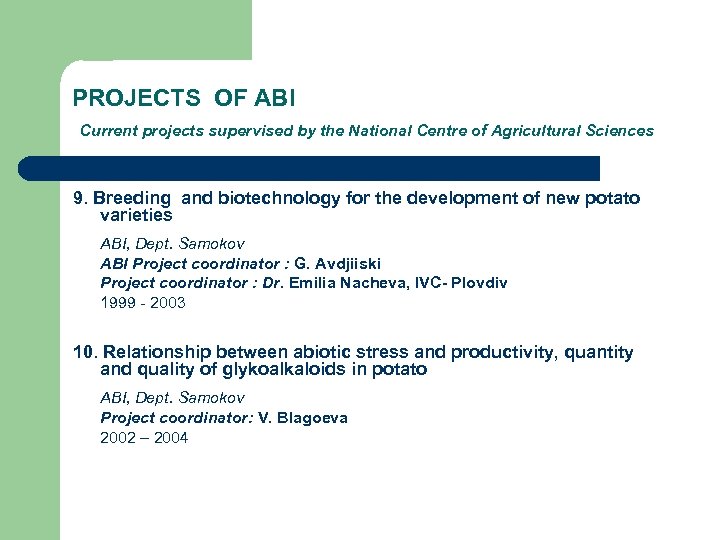
PROJECTS OF ABI Current projects supervised by the National Centre of Agricultural Sciences 9. Breeding and biotechnology for the development of new potato varieties ABI, Dept. Samokov ABI Project coordinator : G. Avdjiiski Project coordinator : Dr. Emilia Nacheva, IVC- Plovdiv 1999 - 2003 10. Relationship between abiotic stress and productivity, quantity and quality of glykoalkaloids in potato ABI, Dept. Samokov Project coordinator: V. Blagoeva 2002 – 2004
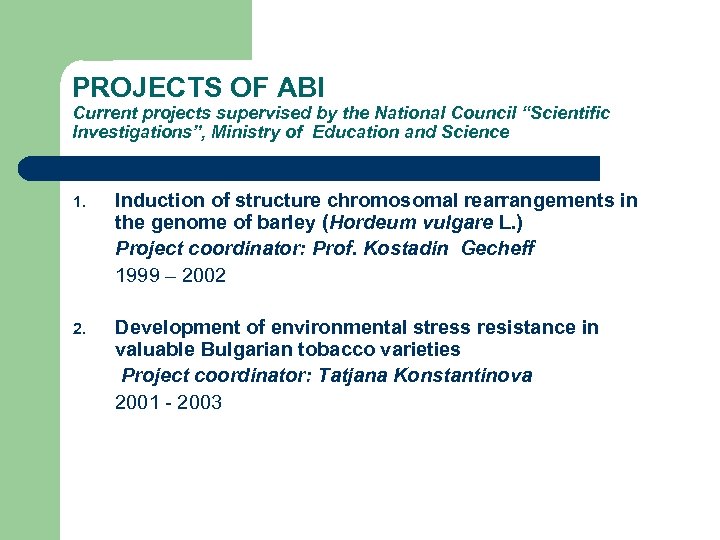
PROJECTS OF ABI Current projects supervised by the National Council “Scientific Investigations”, Ministry of Education and Science 1. Induction of structure chromosomal rearrangements in the genome of barley (Hordeum vulgare L. ) Project coordinator: Prof. Kostadin Gecheff 1999 – 2002 2. Development of environmental stress resistance in valuable Bulgarian tobacco varieties Project coordinator: Tatjana Konstantinova 2001 - 2003
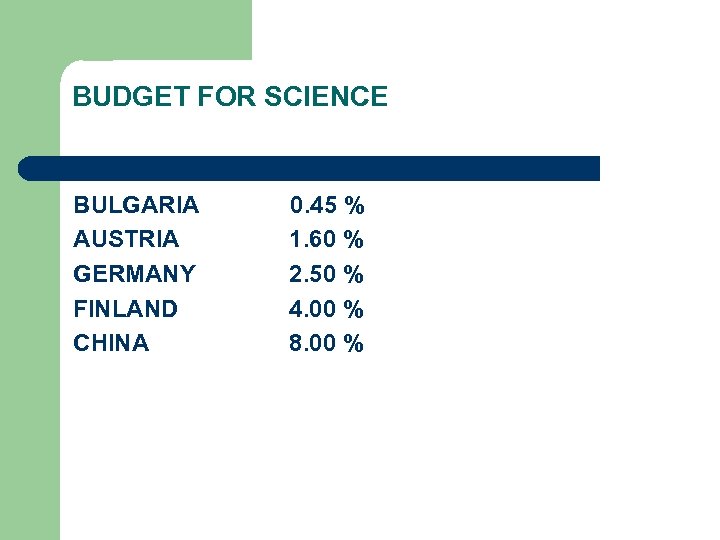
BUDGET FOR SCIENCE BULGARIA 0. 45 % AUSTRIA 1. 60 % GERMANY 2. 50 % FINLAND 4. 00 % CHINA 8. 00 %
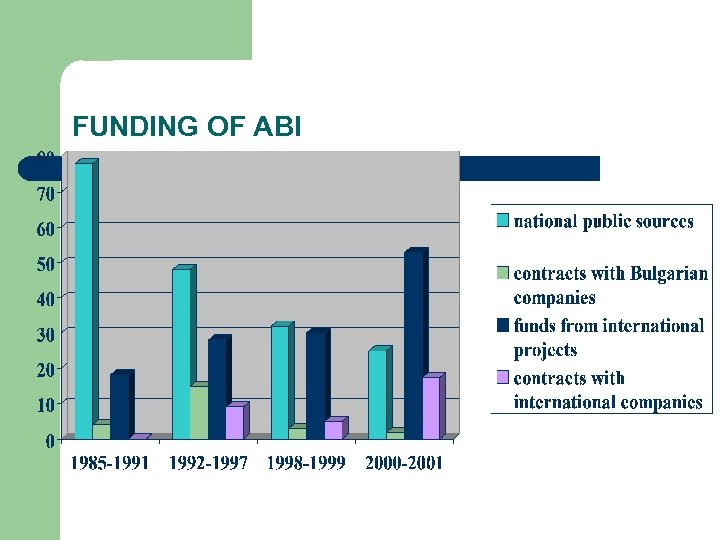
FUNDING OF ABI
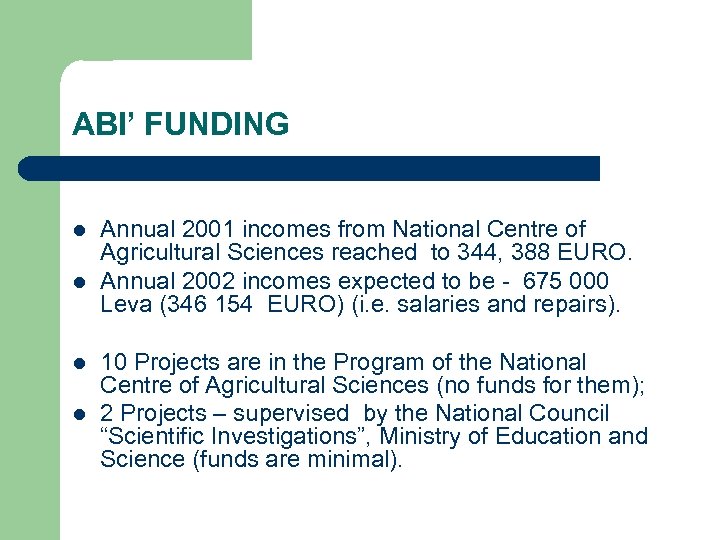
ABI’ FUNDING l l Annual 2001 incomes from National Centre of Agricultural Sciences reached to 344, 388 EURO. Annual 2002 incomes expected to be - 675 000 Leva (346 154 EURO) (i. e. salaries and repairs). 10 Projects are in the Program of the National Centre of Agricultural Sciences (no funds for them); 2 Projects – supervised by the National Council “Scientific Investigations”, Ministry of Education and Science (funds are minimal).
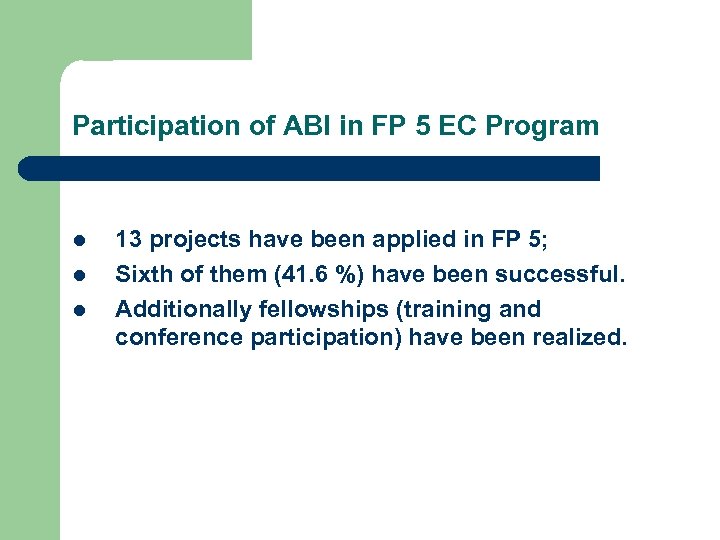
Participation of ABI in FP 5 EC Program l l l 13 projects have been applied in FP 5; Sixth of them (41. 6 %) have been successful. Additionally fellowships (training and conference participation) have been realized.
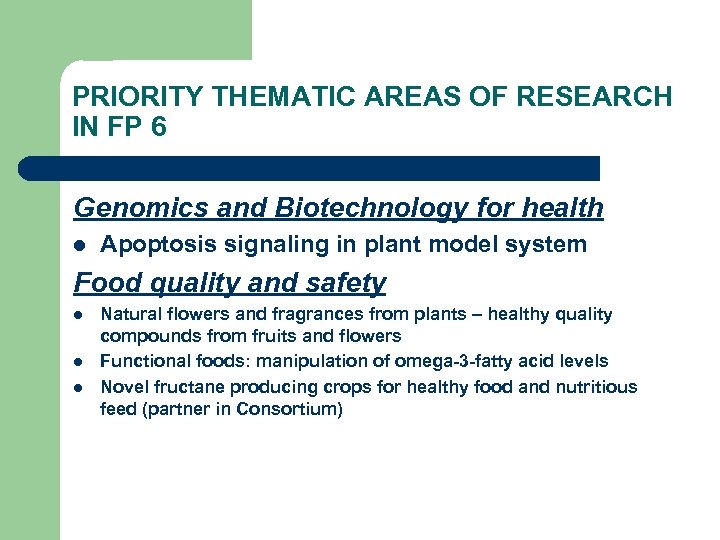
PRIORITY THEMATIC AREAS OF RESEARCH IN FP 6 Genomics and Biotechnology for health l Apoptosis signaling in plant model system Food quality and safety l l l Natural flowers and fragrances from plants – healthy quality compounds from fruits and flowers Functional foods: manipulation of omega-3 -fatty acid levels Novel fructane producing crops for healthy food and nutritious feed (partner in Consortium)
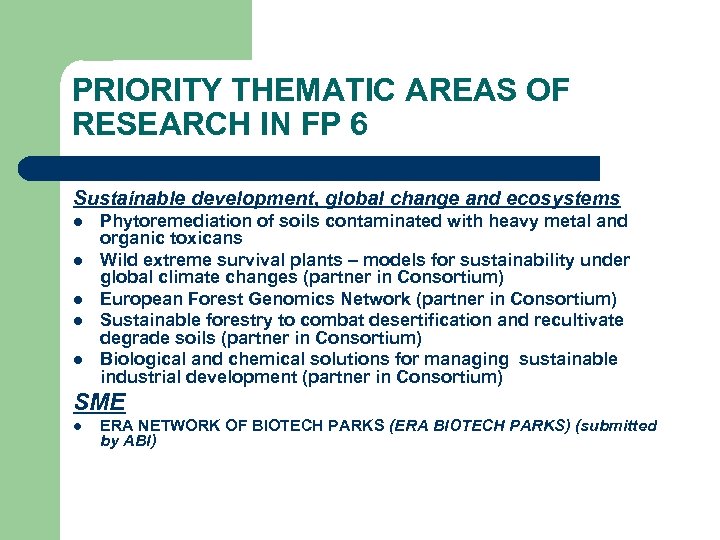
PRIORITY THEMATIC AREAS OF RESEARCH IN FP 6 Sustainable development, global change and ecosystems l l l Phytoremediation of soils contaminated with heavy metal and organic toxicans Wild extreme survival plants – models for sustainability under global climate changes (partner in Consortium) European Forest Genomics Network (partner in Consortium) Sustainable forestry to combat desertification and recultivate degrade soils (partner in Consortium) Biological and chemical solutions for managing sustainable industrial development (partner in Consortium) SME l ERA NETWORK OF BIOTECH PARKS (ERA BIOTECH PARKS) (submitted by ABI)
SCIENTIFIC ACHIEVEMENTS OF ABI IN VITRO SELECTION l l l l Based on developed efficient regeneration system, a number of alfalfa lines with valuable traits were selected: - 74 RS L-et. - is a mutant resistant to amino acid analog L-ethionine , a methionine overproducer possessing multifoliate leaves. - ET-14 – a clone with low saponine content. Important as a compound in a breeding process aiming improvement of forage quality. - Several alfalfa lines with increased drought tolerance were obtained after PEG-selection. - ET-19 (cv. Rangelander) – a clone regenerated from hairy roots, displays high vegetative productivity and very well developed root system. - SG 4 (cv. Burgaltay) – possessing the ability to form spontaneously occurring root pseudonodules. The nodule like structure formation pattern of this clone could provides an additional experimental system for studying the interaction between leguminous plants and Rhizobium. The original selection scheme for resistance to black shank disease was established. After cell selection, using culture filtrates of Phytophthora parasitica var. nicotianae as selective agent, resistant to black shank tobacco lines were obtained.
SCIENTIFIC ACHIEVEMENTS OF ABI Gene transfer technologies Transgenic plants carrying valuable traits Development of gene transfer technologies l The efficient transformation procedures were established for a number of model and economically important species including: tobacco and other Nicotiana sp. , tomato, alfalfa, grape, barley, maize, sugar beet, apple, plum, carnation, petunia, wild Helianthus sp, Rosa hybrida cultivars etc. Using these procedures a number of transgenic lines possessing valuable traits were developed. Plants with improved qualities l Several transgenic alfalfa lines with reduced lignin content and improved digestibility, obtained after antisense suppression of lignification genes CCo. AOMT and CCR.
SCIENTIFIC ACHIEVEMENTS OF ABI Abiotic stress resistance l l l A large number of tobacco lines resistant to the herbicides Basta (Hoehst) and Glean (Du Pont) were produced after transfer of bar gene; Brassica napus ahas 3 R gene for resistance to chlorsolfuron (Glean) and ahas gene for resistance to imidazolinones. The possibility to use obtained transgenic plants for control of broomrape (Orbanche sp. ) was proved T 0 transgenic plants of maize mutant line with stable integration of bar gene and resistant to the Bialaphos herbicide were produced. Transgenic seedless grape lines carrying an anti-freezing type I gene, conferring frost resistance, were developed. Transgenic plants from 3 tobacco varieties expressing transgenes respectively coding for proline overproduction (from Arabidopsis and Vigna acontifolia), fructin (from Bacillus subtilis) and glycine–betaine (from Arthrobacter globiformis) were produced. The lines demonstrate low temperature tolerance during germination and seedling stage and enhanced plant high temperature tolerance and drought resistance. The abiotic stress resistance was confirmed by biochemical, physiological and molecular analysis. T 1, T 2 and T 3 transgenic plants from 5 tobacco varieties expressing a mouse metalothionine (m. MTF 1) transgene coding for heavy metal tolerance were produced. The tested plants demonstrate tolerance in vitro to 200 M Cd. Cl 2. 5 H 2 O and cross-tolerance to 150 M Cu. SO 4.
SCIENTIFIC ACHIEVEMENTS OF ABI Biotic Stress resistance Development of viral resistance l Tobacco and tomato lines resistant to Tomato Spotted Wilt Virus were obtained after transformation with TSWV- nucleoprotein gene. Successful field tests of tobacco plants derived from 9 -11 successive seed generation of the transgenic lines were performed during 1998 -1999. l Transgenic tobacco lines from economically important cultivars resistant to PVY (Potato Virus Y) and CMV (Cucumber Mosaic Virus) were developed. l Transgenic lines from seedless grape hybrids and grape rootstocks carrying gene coding for the capsid protein of GFLV were developed and tested for resistance to the virus. l Transgenic tobacco plants from 4 Bulgarian varieties were developed carrying the PVY capsid protein gene. T 0 plants resistant to PVY infection were selected through mechanical inoculation and the inheritance of PVY resistance was studied in tested T 1 progenies. l Four transgenic lines carrying the CMV replicase gene were characterized by PCR for the presence of the transegene and by Western blotting for the presence of the replicase protein. These lines been tested to a broad spectrum of isolates and to purified viral preparations. High Resistance was demonstrated to serogroup I isolates and moderate one - to mixed (serogroup I +II) infections. Development of resistance and tolerance to bacterial pathogens l Transgenic tobacco cultivars, resistant to Pseudomonas syringae pv. Tabaci were developed after transfer of ttr (tabtoxin resistant) gene. l Transgenic grape rootstock lines were developed carrying antibacterial peptide of sarcotoxin conferring resistance to bacterial cancer
SCIENTIFIC ACHIEVEMENTS OF ABI Somatic hybridization l l l The effective use of UV irradiation in asymmetric somatic hybridization was proved. Several stable, highly asymmetric, partially fertile somatic hybrids between Nicotiana plumbaginifolia and Lycopersicon esculentum were obtained. A new CMS sources in Nicotiana developed via somatic cybridization between N. tabacum and N. alata (Theor. Appl. Genet. 1998, 97, 982 -985) and N. tabacum and Petunia hybrida. Tobacco lines resistant to Tomato Spotted Wilt Virus were obtained after asymmetric somatic hybridization between N. tabacum and N. sanderae.
SCIENTIFIC ACHIEVEMENTS OF ABI Experimental mutagenesis and remote hybridization l l l A great number of lines containing different structural rearrangements of the karyotype are produced in two-rowed spring barley using gamma-irradiation. The structural mutations produced so far can be classified into 3 main groups: reciprocal translocations, pericentric inversions and duplications. Based upon these structural mutations a series of multi-reconstructed karyotypes were synthesized by intercross of preliminary selected lines. All these materials are precisely characterized with regard to the chromosomal localization of the structural rearrangements using classical and molecular techniques of the cytogenetics and provide an essential advantage in their use in genetic studies and breeding programs. By the application of the automated computer system for chromosome image analysis (CHIAS) the physical map of the PK-88 barley reconstructed karyotype were constructed. Detailed mapping of the heterochromatin and highest gene density regions (highest recombination frequency) were completed. By CHIAS it was established that strict correlation exists between the degree of chromatin compactness and the genetic activity of chromosome regions. New celery cultivars with improved agricultural performance was obtained from interspecies sexual crosses Apium graviolens X Petroselium hortense Original CMS forms for introduction of CMS in cultivated tomatoes were selected after complex interspecies hybridizations between L. peruvianum; L. pennellii and L. esculentum. New tomato variety with high content of beta-carotin (80 g/g) tomatoes were developed after complex interspecies hybridization in genus Lycopersicon.
SCIENTIFIC ACHIEVEMENTS OF ABI Molecular markers. Gene expression. l l A number of barley lines containing different structural rearrangements of the karyotype were studied. The intrachromosomal distribution of structural mutations induced by various mutagenic agents was analyzed. Evidences for(1) agent-specific and (2) position-specific action of the mutagenic factors were found. Position-dependent r. RNA gene activity was demonstrated. RFLP and RAPDs molecular markers were developed for evaluation of the natural genetic diversity among Bulgarian barley varieties (H. vulgare L. ) and assessment of the genetic variability among somaclones obtained from in vitro culture. Inheritable polymorphisms were found for several somaclones performing valuable agronomic traits. Selected markers could be used as genetic markers for cultivars identification, as well. Protein, isozyme and molecular markers were developed made for identifying the introgression in winter bread wheat of alien (Ae. variabilis and Ae. kotschyi) germplasme carried the gene(s) of resistance to powdery mildew. One chromosome pair, identified as 1 U was shown to be present in all resistant lines from both crosses. One HMW-glutenin marker, 3 RFLP and 5 microsatellite markers were selected for application in the respective breeding programs for intensification the process of transfer of the resistance. Characterization of new CMS sources in sunflower and development of respective molecular markers were accomplished. The selected are provide for further use in breeding programs.
SCIENTIFIC ACHIEVEMENTS OF ABI Molecular markers. Gene expression. l l l The studies on the expression of ribosomal genes in reconstructed caryotypes has revealed that methylation of cytosine residues which is a key mechanism in interspecific nucleolar dominance, has insignificant role in position dependent activity of ribosomal genes. A hypothesis is formulated that interspecific nucleolar dominance depends on the interaction of genetic factors lying outside of the ribosomal clusters of satellite chromosomes 6 (6 H) and 7 (5 H). Molecular markers distinguishing 19 Lactobacillus bulgaricus strains. The marker were sequenced and specific primers were developed allowing the differentiation of each of the 19 strain in one-step PCR reaction using either the sour-milk product or bacterial culture. The studies of the molecular and cellular basis of direct somatic embryogenesis in Medicago species by using transgenic plants with GUS gene driven by different cell cycle gene promoters has revealed that low temperature treatment (for 45 days) stops the cell cycle in G 1 phase.
SCIENTIFIC ACHIEVEMENTS OF ABI Molecular markers. Gene expression. l l l On the basis of the developed and characterized unique line with cytoplasmic male sterility CMS-pennellii and its hybrids with cultivated tomato it was established that due to the interaction between the nuclear genome of L. pennellii and L. peruvianum cytoplasm an inhibition of the expression of two mitochondrial genes takes place atp A and nad 3. In the sterile line CMS-pennellii, the interaction between the nuclear genome of L. pennellii and the mt genome of L. peruvianum inhibits the accumulation of the nad 3 transcript in a tissue specific manner mainly in the anthers. The pattern of nad 3 trascriptiption in CMS-pennellii (inhibited expression) and in the fertile hybrids (enhanced transcription) points at the fact that the expression of nad 3 plays a role in the development of the CMS phenotype in the studied CMS-pennellii line. Mitochondrial nad 3 and cob genes differentiate the cytoplasms of the species from genus Lycoperscon: L. peruvianum, L. esculentum and L. pennellii. The study of the mitochondrial intergenic regons of the developed unique CMS line and its complex hybrids with L. esculentum by PCR with atp 9 and rsp 12 coding sequence specific primers allowed the development of molecular marker for early identification and selection of hybrid plants with CMS or restored fertility phenotypes.
SCIENTIFIC ACHIEVEMENTS OF ABI Gene isolation and characterization l l l The genes encoding nucleoprotein of TSWV (Tomato Spotted Wilt Virus) and the nucleocapsid protein of PPV (Plum Pox Virus) were cloned and sequenced. The obtained results were further used for development of chimeric genes and constructs for engineering of transgenic virus resistant plants. Two anther specific genes, from Nicotiana sylvestris, encoding (CHSlk)chalcon synthase- and coumarate Co. A ligase- like proteins were isolated and characterized. Fusion of the promoter region of CHSlk gene with GUS marker gene demonstrated that it is specifically expressed in tapetal cells and microspores. Thus this promoter can be used for engineering of transgenic male sterility. RAN (ras- related nuclear protein gene) was isolated from N. sylvestris and further characterized. Fusion of RAN- promoter region with GUS marker gene shows that promoter is expressed predominantly in meristem tissue. Thus the cloned promoter region could be used when higher transgene expression in young tissue is necessary. The coat-protein gene of beat necrotic yellow wein virus (BNYWV) was isolated and plant transformation vectors with chimaeric genes with the sense (two constructs) or the anti-sense sequence (one construct) of the coat protein gene were developed. The development of engineered virus resistant transgenic tobacco and sugar beet plants is in progress. Thionine gene expressed in flowers of Nicotiana sylvestris with unknown functions was isolated, sequenced and is under further characterization. A protease inhibitor gene expressed in flowers was isolated from N. sylvestris. The gene was sequenced and is under study.
SCIENTIFIC ACHIEVEMENTS OF ABI Immunodiagnostics l l l Polyclonal antibodies against the following economically important viruses were raised: arabis mosaic, artichoke Italian latent, bean yellow mosaic, feet necrotic yellow vein, carnation mottle, carnation-ringspot, grapevine Bulgarian latent, grapevine fanleaf, henbane mosaic, potato viruses M, Y, X, S, tobacco mosaic, tobacco necrosis, tobacco ringspot, tomato aspermyl, tomato bushy stunt, tomato spotted wilt virus. The nucleoprotein gene of TSWV was expressed in E. coli. A polyclonal antibody was raised against the purified protein. The obtained antibody could be used for diagnostics of different strains of TSVW. Polyclonal antibodies against zeatin, zeatin-riboside, iso-penthenyl-adenine, isopenthenil-adenosine and indole-a-acetic acid (IAA) were raised They -were LC-MS validated to be highly sensitive. Obtained antibodies were further used for study of the levels of the phytohormones during different stages of somatic embryogenesis in alfalfa. Using monoclonal antibodies a study of PPV strain differentiation of Bulgarian fruit producing regions was carried out for plum, apricot, peach and cherry. A new TSWV strain were isolated and its presence were identified for the first time in 23 ornamental species cultivated in Bulgaria.
SCIENTIFIC ACHIEVEMENTS OF ABI Micropropagation l A technology for accelerated in vitro propagation of carnation (newly developed forms), pharmaceutical plants (peppermint, lavender, summer snowflake) and thirteen more species etc. was successfully developed. l Successful system for in vitro culture, micropropagation and greenhouse adaptation of several poplar species were developed Populus tremula, P. alba, P. euphratica. l An efficient system for in vitro micropropagation of azalea.
SCIENTIFIC ACHIEVEMENTS OF ABI Biopreservation and introduction of new varieties and species l For the biopreservation of wild species a technology for in vitro and in vivo propagation of 4 Limonium species, 3 Goniolimon species, 2 Ciclamen species, 4 Caryophylus species, and 3 Lilium species were developed. l The adaptation to local climatic condition of 72 varieties of summer-flowering ornamental annuals, 33 varieties of dahlias and 123 biannual and perennial ornamental species were studied and forms with good adaptation ability for cut flowers and laying out of gardens were selected.
SCIENTIFIC ACHIEVEMENTS OF ABI Technologies developed l A greenhouse vessel in vivo technology was developed to test GFLV resistance in grape plantlets. l A system for in vivo testing of low-temperature stress resistance in tobacco plants was developed. l Technologies for industrial production of 7 ornamental species through clonal micropropagation were developed. l A new technology for the development of unique chrysanthemum varieties was established combining irradiation, direct adventure morphogenesis in vitro and clonal selection in vivo. l Agro-systems for weed suppression were developed specifically for the cultivation of lilium, freesia and mini-carnation. l Based on the acid decomposition of magnesite a new nitrogenpotassium-magnesium fertilizer for pot growing spatiphylum plants were developed and introduced.
SCIENTIFIC ACHIEVEMENTS OF ABI Breeding of new varieties l Through conventional hybridization tomato hybrids with high betacarotene content and resistance to TMV were developed. l Transgenic candidate variety R 480 carrying resistance to TSWV was used to create hybrid indeterminate variety with complex resistance to TSWV and TMV. l Through hybridization 3 new varieties of mini carnation were developed exceeding the controls by yield, qualities and tolerance to Fusarium wilting. l Four candidate varieties of dahlias and two hybrid rose varieties were developed. l Two new greenhouse late flowering, low temperature tolerant (+2 C) chrysanthemum varieties for cut flowers were developed. l A large-scale breeding program of potato varieties with improved qualities and pathogen resistance is in progress.
STRATEGY OF ABI l l l 1. Problems with the existing transformation systems developed by ABI Problem: current transformation methods are species and variety – dependent. Currently the commercial applications require the combination of transformed and traditional lines in order to transfer the transgene from a primary transformant into select varieties. ABI’s solution: the transformation systems will be based on effective direct and indirect somatic embryogenic technologies developed in a number of dicotyledonous and monocotyledonous species, including bulbous, fruit and forest species. Additional techniques include DNA cloning, gene construct preparation to obtain rapidly and efficiently genotypes based on independent gene transfer by Agrobacterium and particle gun approaches. Currently under development are pollen and tube transformation, chloroplast transformation, antibiotic marker’s elimination, CMS development etc.
STRATEGY OF ABI l l l 2. Problems with functional genomics Problem: Various genes have been isolated and the number continue to be increased by EST’s and bioinformatics application. The gene tagging approach offers additional opportunities. The full study of the novel genes in the field and in the lab require labour intensive approaches and experienced people to understand their function with regard to the agronomic, biochemical and physiological character. Solution: ABI can offer team(s) consisting of 4 -6 scientists and technicians which can provide full range of services from gene transfer to their full molecular, biochemical, cytological, phytopatological and breeding analyses for one gene or a set of genes. Extensive screening will allow to identify the plants that show stable, heritable and accurate transgene expression for single and multiple traits. Such studies are organized in a separate unit(s) named “Functional genetics”. In this regard reverse genomic studies are planed to be included adequately.
STRATEGY OF ABI l 3. Genetic resources problems l Problem: Genetic resources issues are quite controversial all over the world. At present Bulgaria has no law to protect indigenous knowledge and products, particularly from herbal and medicinal plants. Additional knowledge for genetic identification is lacking in such unique but economically valuable species as grape, rose, tobacco etc. However procedures for identification using DNA technology have not been developed so far. The exchange of valuable germplasm between countries is more restrictive now than before.
STRATEGY OF ABI l l 3. Genetic resources problems Solution: IGE can offer two approaches for the proper utilization of valuable local germplasm: – – l to characterize and to protect them by various DNA-based marker systems. to produce basic certified material with appropriate phytosanitary certificate (upon control for the absence of viral, bacterial, fungal diseases) for a number of economically important vegetatively propagated crops. The controls will include classical diagnostic methods and also nucleic acid probes by using various PCR techniques. In order to accomplish this task in vitro gene banks are nearly to be established for grape, rose, strawberry and herbal plants which are characterized by their unique market qualities.
STRATEGY OF ABI l l l l 4. Ecoproblems a. Biological control is a very intensive area of development at present. Solution: Together with PPI Kostinbrod, ABI is planning to utilize the accumulated knowledge of parasitism and predation of insects. Thresholds that take into account the number of beneficial organisms present in the environment will be developed. b. Bioremediation Problems – Soil and water contaminated with heavy metals, wastes etc. is a widespread phenomenon. Solution – ABI together with other institutions in the country could search for natural plant species capable of growing on contaminated soil and water and extract pollutants or to engineer transgenic plants by metalothioneine gene (s).
STRATEGY OF ABI l l 4. Ecoproblems a. Biosafety regulation in transgenic plants Problem – The incroduction and use of transgenic plants is one of the most controversial issues in Europe at present, so that it is difficult to establish acceptable rules and regulation. Solution – The biosafety issue has received a great deal of attention at ABI through 1) participation in the development of specific Guidelines for biosafety of genetically modified higher plants in 1996, 2) participation in the development of National Programme for Biosafety in the framework of the UNEP project (1998 -1999) and Support for the implementation of National Biosagety Framework in Bulgaria (2002– 2005), 3) participation in the preparation of the final draft of the law regarding GMOs. Public perception and capacity building, risk assessment and risk management projects need to be pursued in this regard.
STRATEGY OF ABI l l l l 4. Ecoproblems d. Field trials Problems – Not every company, research unit or university in the world has the necessary specialization, space and facilities to perform small field trials for risk assessment studies. Solution – Such studies can be easily performed in the framework of the proposed “Functional genetics” units. e. Detection of GMO products (GMPs) Problem – Labeling of genetically modified food is going to be included in the new law regarding GMOs. Solution –A highly specialized lab has been established which will have to be able to detect GMPs products with high sensitivity using the most up to date DNA and immunoassay techniques.
STRATEGY OF ABI In summary ABI’s technologies will enable: To perform variety independent gene transfer with any crop; – – Efficient management and analysis of large numbers of transgenic plants by integration of molecular, physiological, biochemical, immunochemical, phytopathological and breeding techniques; To collect, preserve in vitro, analyze and use effectively the unique genetic biodiversity useful for agriculture and industry by determining their phytosanitary status and genetic identification purity; Gradual implementation of biocontrol and bioremediation procedures to provide solutions based on living genetic biodiversity; Greatly increase the safety of GMPs based on risk assessment analyses and precise determination of GMPs in all products on the market.
ECONOMIC/FINANCIAL JUSTIFICATION l l Investments made in plant genomics will result in the discovery of many new genes. Transgene management – the controlled and effective transformation, insertion and expression of genes in plants - will be essential to provide the expected substantial return. The present and future development of products based on new genes creates an attractive business opportunity with the potential for a substantial return on investment. The real breakthrough would be the development of a set of enabling technologies to accomplish the difficult and lengthy tasks required for gene product commercialization. The ABI is going to be the nucleus of an Agro. Bio. Tech Park such as the Plant Biotechnology Park in Saskatoon, Canada, which has attracted many science groups.
ECONOMIC/FINANCIAL JUSTIFICATION l l The current situation in plant biotechnology is very similar to that in the computer industry a few decades ago when there were few essential software packages and when user-friendly operating systems did not exist. The present financial position of ABI can be strengthened if the new Agro. Bio. Institute (ABI) can generate revenues not only from government programs, grants from joint projects with international organizations, contract research with start-up companies, and also from large Life Science corporations, where and when it will be possible to enter profitable joint ventures. This will enable the ABI to develop some of its own IPR.
Скачать презентацию AGROBIOINSTITUTE KOSTINBROD BULGARIAN CENTRE OF EXCELLENCE IN
f4dcc8d9fb79a546981f18b3d21cdd39.ppt