


 Скачать презентацию AGRICULTURAL PRODUCT INSPECTION SERVICES Ms Salamina Maelane Directorate
81e4744e46b376dc67847d40c8e86bb2.ppt
- Количество слайдов: 28
 AGRICULTURAL PRODUCT INSPECTION SERVICES Ms Salamina Maelane Directorate : Agricultural Product Inspection Services Agribusiness Export Awareness Workshop CEDARA COLLEGE – KWAZULU NATAL 18 NOVEMBER 2010 1
 Overview of the presentation 2 1) WTO Intro 2) Structure 3) Core Functions 4) Legislative mandate 5) Key deliverables 6) Footprint 7) Trade requirements 8) Inspection requirements 9) Inspection processes 10)Specific Requirements for inspections 11)Current Export markets 12)Phytosanitary Risk management 13)Challenges 14)Contact details
 INTERNATIONAL SPS OBLIGATIONS AND RESPONSIBILITIES WTO intro 3
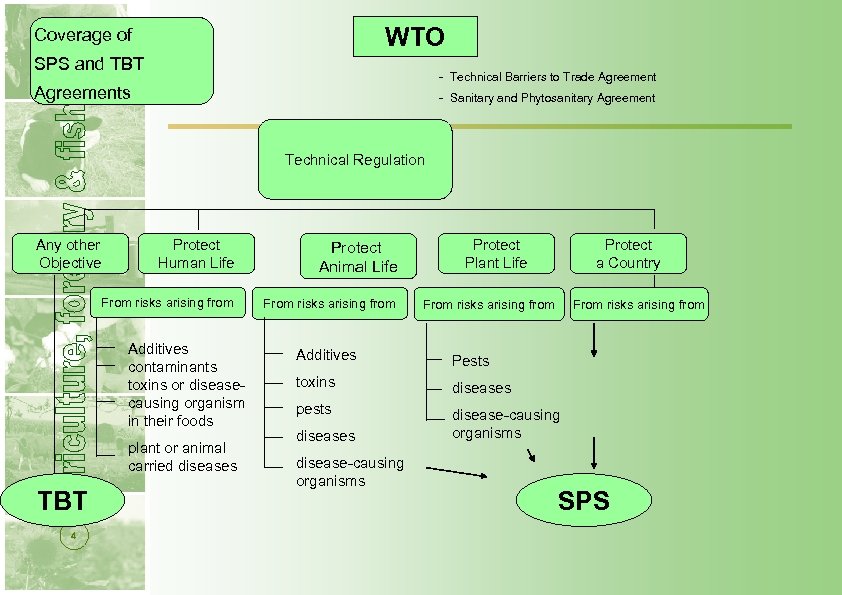 WTO Coverage of SPS and TBT - Technical Barriers to Trade Agreements - Sanitary and Phytosanitary Agreement Technical Regulation Any other Objective Protect Human Life Protect Animal Life From risks arising from Additives contaminants toxins or diseasecausing organism in their foods plant or animal carried diseases TBT 4 Protect Plant Life Protect a Country From risks arising from Additives Pests toxins diseases pests disease-causing organisms SPS
 Provides for Protection of Animal, Human & Plant Health and Life Recognises the OIE, Codex & IPPC as the respective international standard setting bodies RSA is a member country of the WTO, OIE, Codex and IPPC which implies obligations and responsibilities such as To make provision a national plant protection organization 5
 INTERNATIONAL SPS OBLIGATIONS AND RESPONSIBILITIES OF THE OFFICIAL NPPO Issuance of certificates Surveillance of growing plants, stored and transported articles Inspection of consignments regulated articles Disinfection or disinfection of consignments Protection of endangered areas Conduct PRA Ensure phytosanitary security Training and development of staff 6
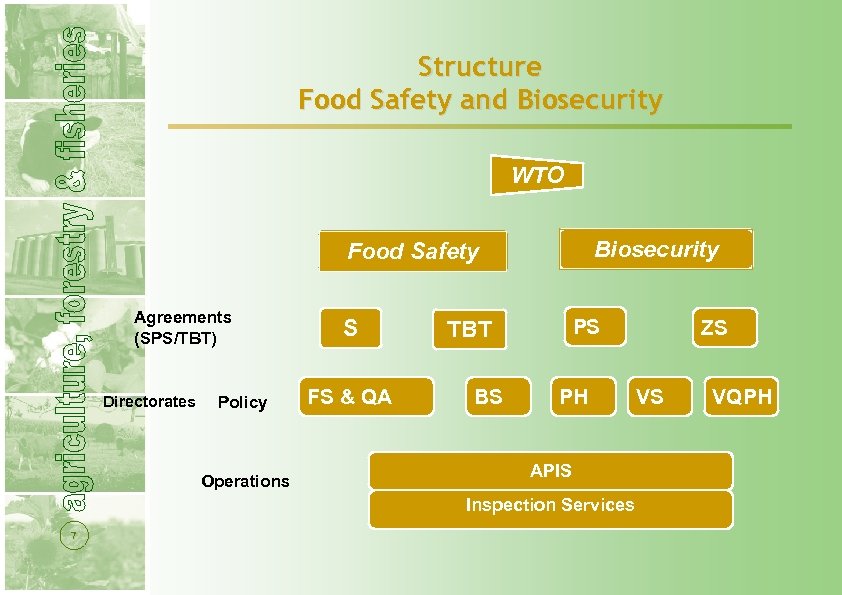 Structure Food Safety and Biosecurity WTO Biosecurity Food Safety Agreements (SPS/TBT) Directorates Policy Operations S FS & QA PS TBT BS PH APIS Inspection Services 7 ZS VS VQPH
 INTERNATIONAL OBLIGATIONS D: APIS is guided by the following in terms of international agreements, guidelines and standards IPPC - to protect plant resources from harmful pests (phytosanitary measures) which may be introduced through international trade. Codex Alimentarius – protecting the health of consumers and ensuring fair practices in the food trade. Deals with food safety, MRL and toxins 8
 AGRICULTURAL PRODUCTS INSPECTION SERVICES v. CORE BUSINESS Manage the levels of risks associated with food safety and quality, diseases, pests and support fair trade. §Protocols and work programs §Inspections §Audits §Permits §Surveys 9
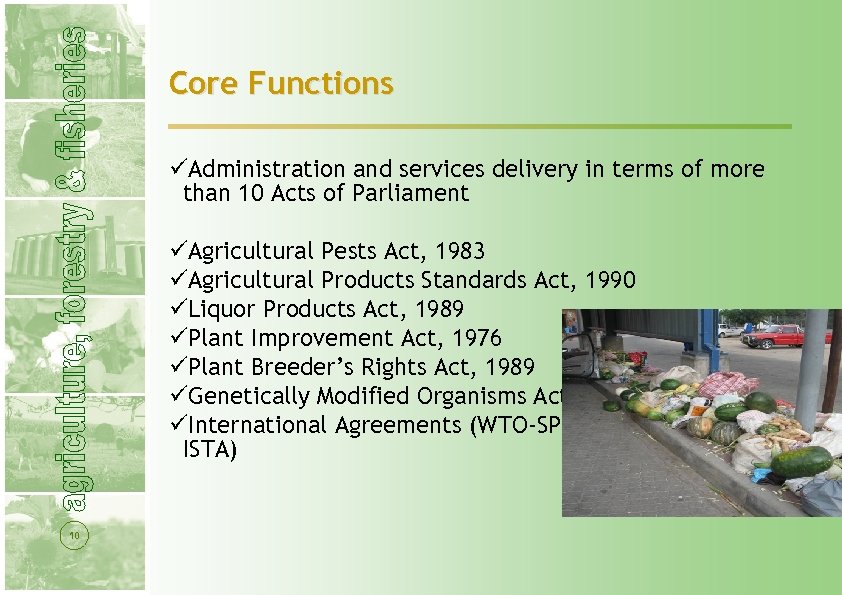 Core Functions üAdministration and services delivery in terms of more than 10 Acts of Parliament üAgricultural Pests Act, 1983 üAgricultural Products Standards Act, 1990 üLiquor Products Act, 1989 üPlant Improvement Act, 1976 üPlant Breeder’s Rights Act, 1989 üGenetically Modified Organisms Act, 1997 üInternational Agreements (WTO-SPS, WTO-TBT, CBD, ISTA) 10
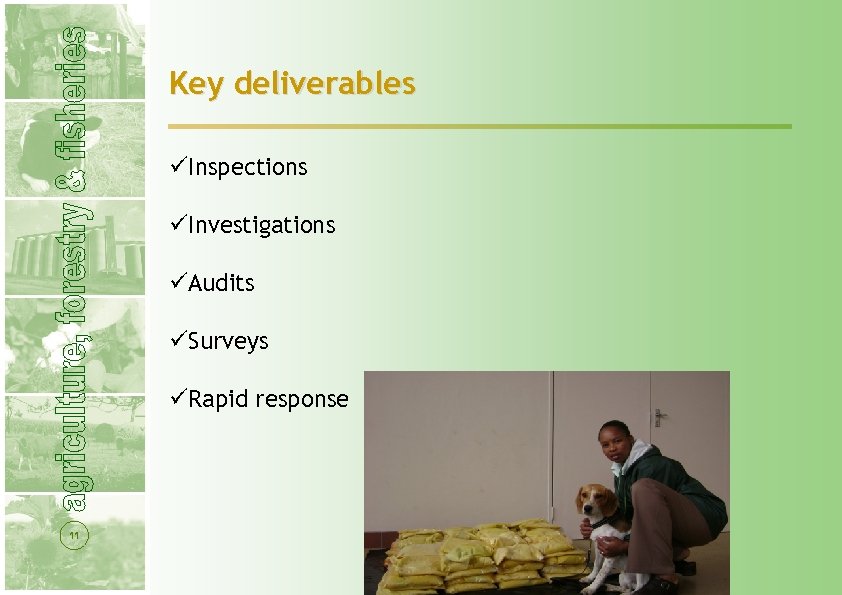 Key deliverables üInspections üInvestigations üAudits üSurveys üRapid response 11
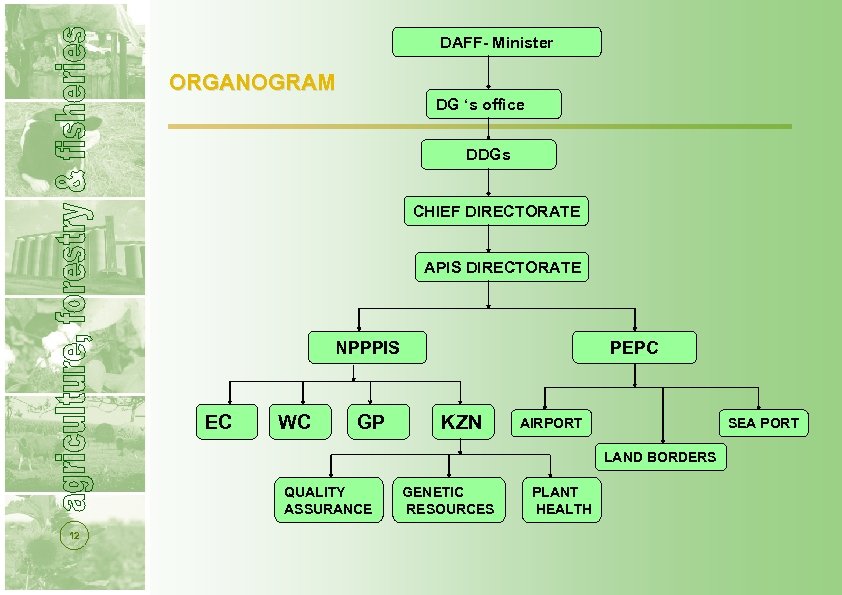 DAFF- Minister ORGANOGRAM DG ‘s office DDGs CHIEF DIRECTORATE APIS DIRECTORATE NPPPIS EC WC GP PEPC KZN AIRPORT SEA PORT LAND BORDERS QUALITY ASSURANCE 12 GENETIC RESOURCES PLANT HEALTH
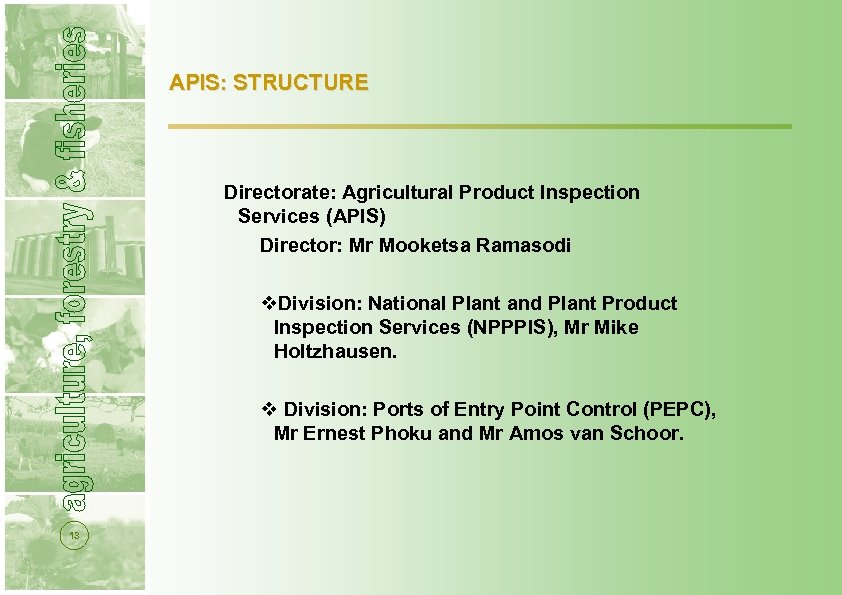 APIS: STRUCTURE Directorate: Agricultural Product Inspection Services (APIS) Director: Mr Mooketsa Ramasodi v. Division: National Plant and Plant Product Inspection Services (NPPPIS), Mr Mike Holtzhausen. v Division: Ports of Entry Point Control (PEPC), Mr Ernest Phoku and Mr Amos van Schoor. 13
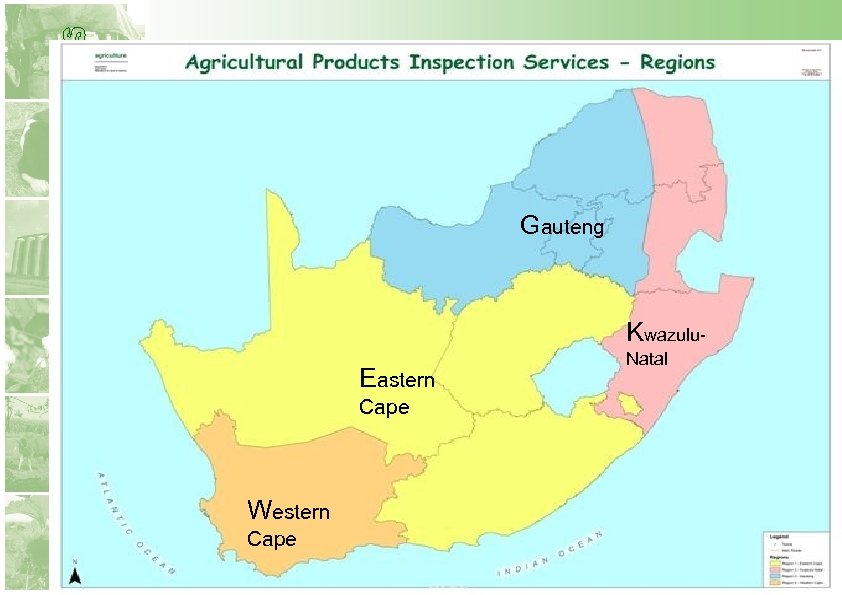 • map Gauteng Kwazulu. Eastern Cape Western 14 Cape Natal
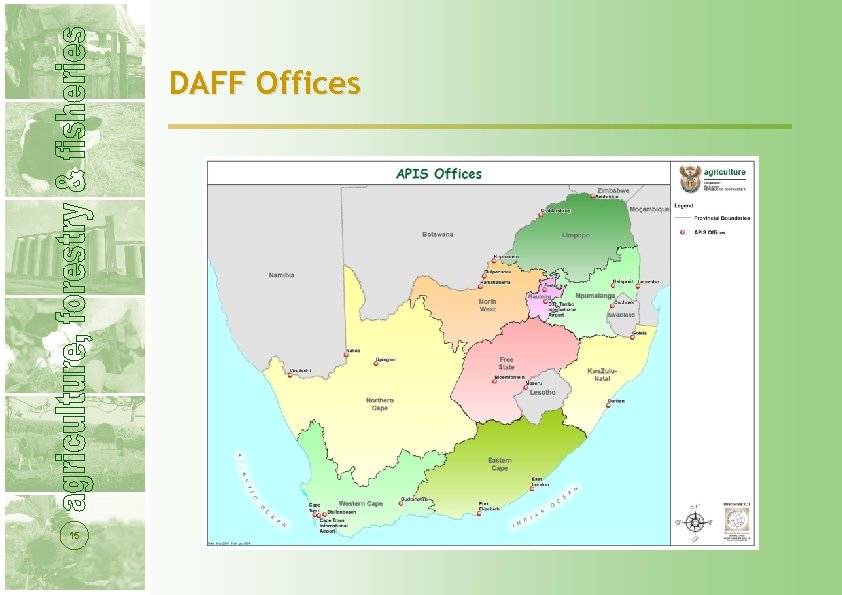 DAFF Offices 15
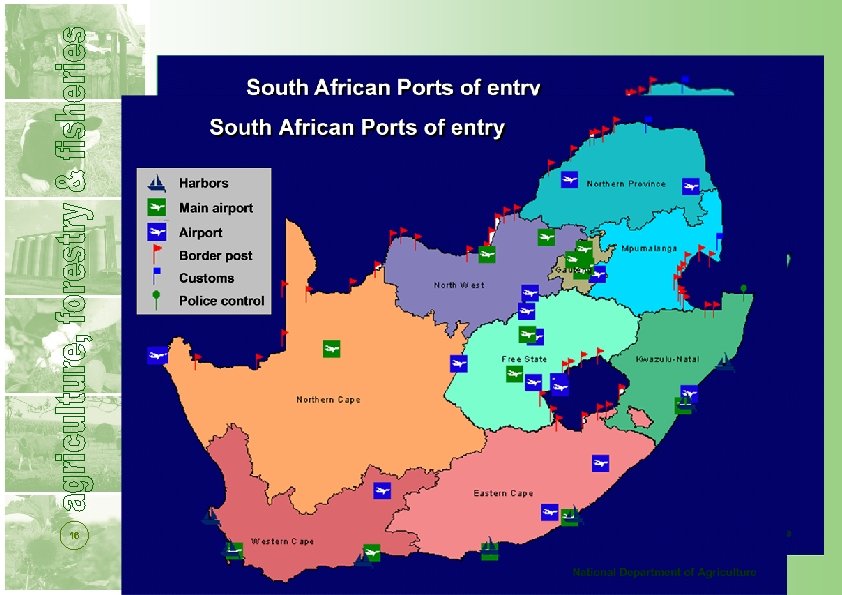 SOUTH AFRICAN BORDERS 16
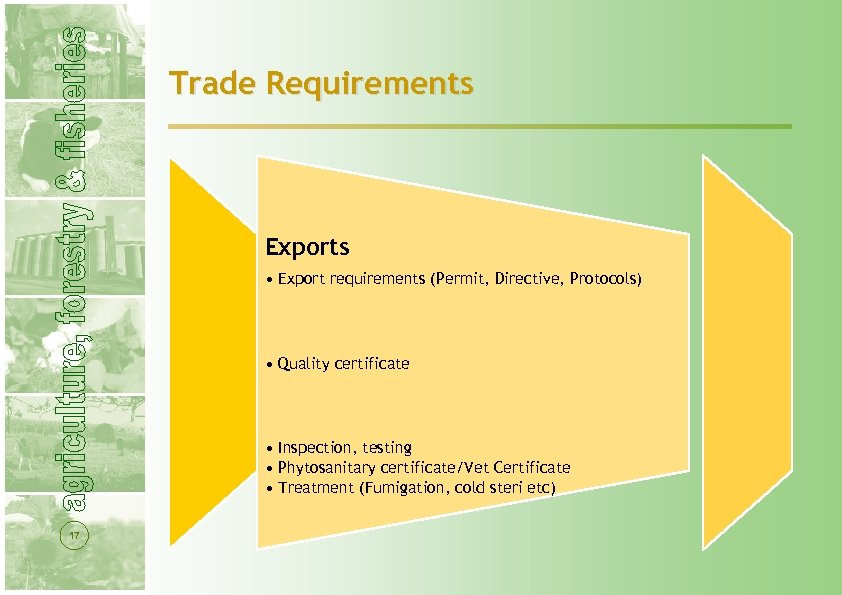 Trade Requirements Exports • Export requirements (Permit, Directive, Protocols) • Quality certificate • Inspection, testing • Phytosanitary certificate/Vet Certificate • Treatment (Fumigation, cold steri etc) 17
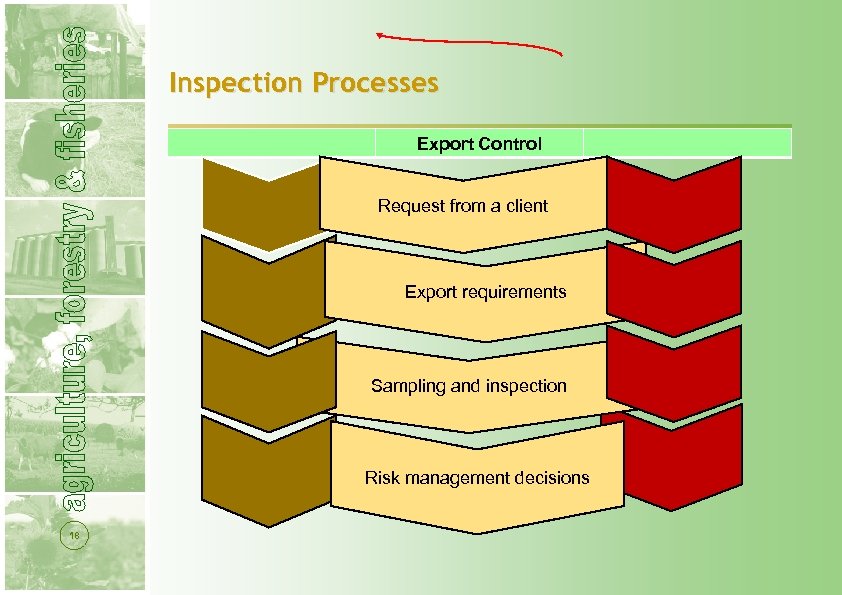 Inspection Processes Export Control Request from a client Export requirements Sampling and inspection Risk management decisions 18
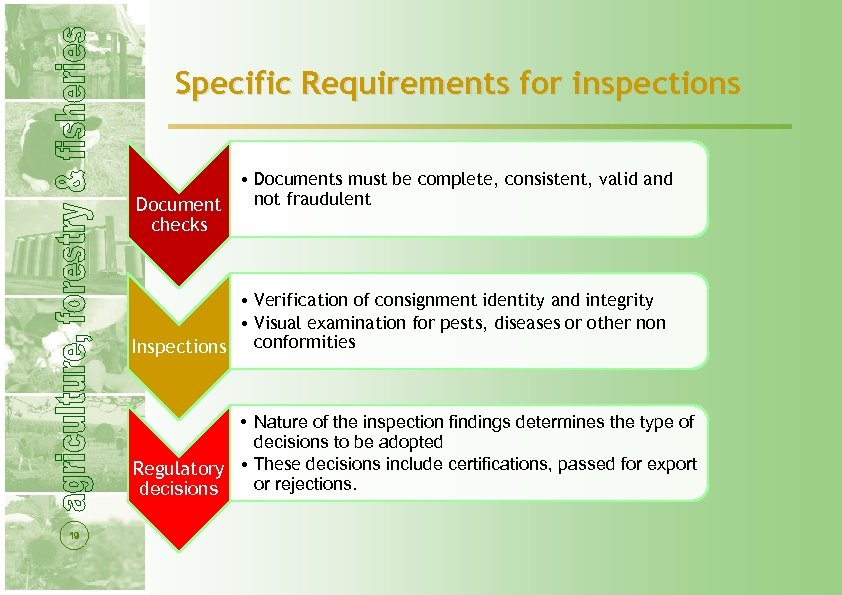 Specific Requirements for inspections Document checks • Documents must be complete, consistent, valid and not fraudulent • Verification of consignment identity and integrity • Visual examination for pests, diseases or other non Inspections conformities • Nature of the inspection findings determines the type of decisions to be adopted Regulatory • These decisions include certifications, passed for export or rejections. decisions 19
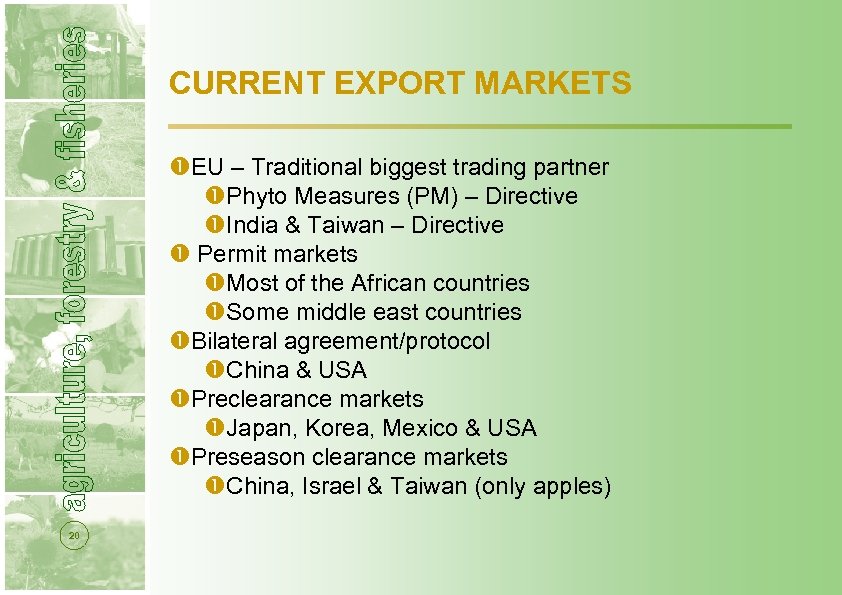 CURRENT EXPORT MARKETS EU – Traditional biggest trading partner Phyto Measures (PM) – Directive India & Taiwan – Directive Permit markets Most of the African countries Some middle east countries Bilateral agreement/protocol China & USA Preclearance markets Japan, Korea, Mexico & USA Preseason clearance markets China, Israel & Taiwan (only apples) 20
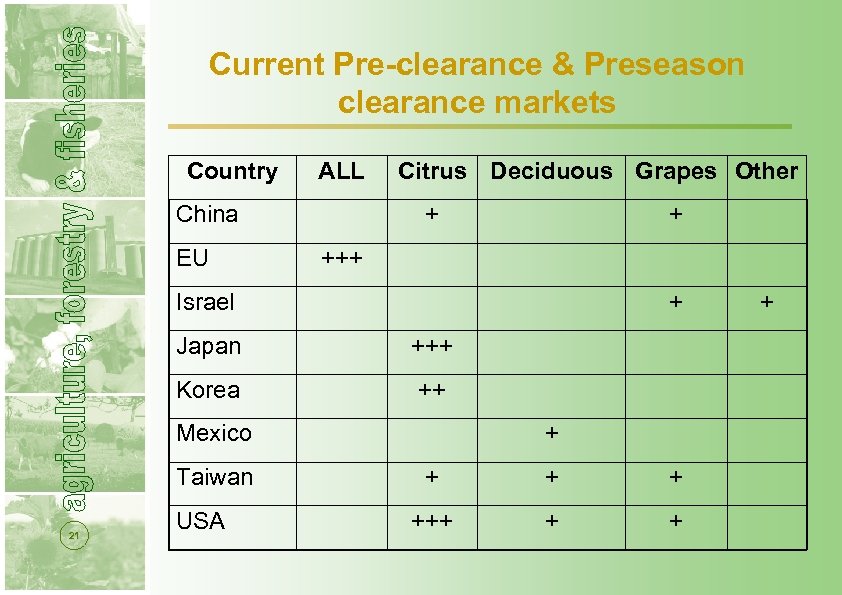 Current Pre-clearance & Preseason clearance markets Country ALL China EU Citrus Deciduous Grapes Other + + +++ Israel + Japan +++ Korea ++ Mexico Taiwan 21 USA + + +++ +
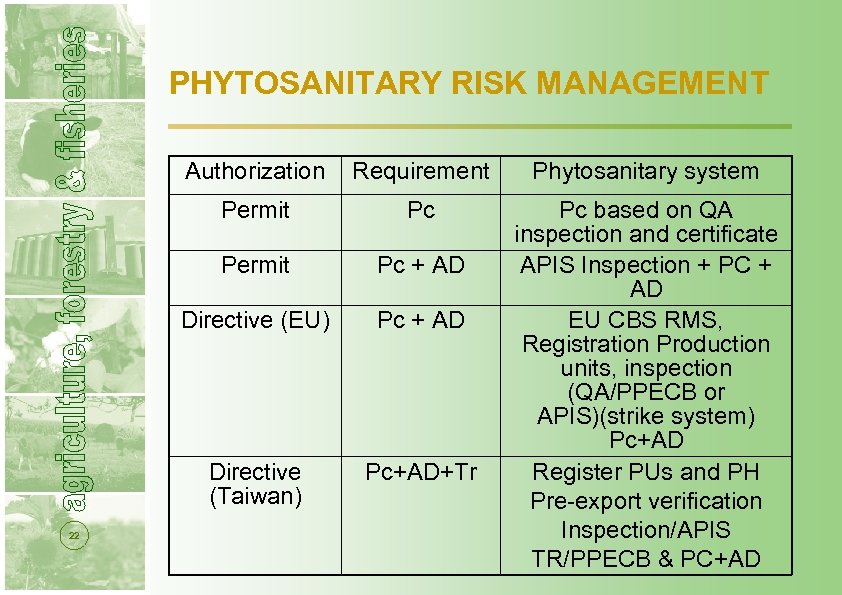 PHYTOSANITARY RISK MANAGEMENT Authorization Phytosanitary system Permit Pc + AD Directive (EU) Pc + AD Directive (Taiwan) 22 Requirement Pc+AD+Tr Pc based on QA inspection and certificate APIS Inspection + PC + AD EU CBS RMS, Registration Production units, inspection (QA/PPECB or APIS)(strike system) Pc+AD Register PUs and PH Pre-export verification Inspection/APIS TR/PPECB & PC+AD
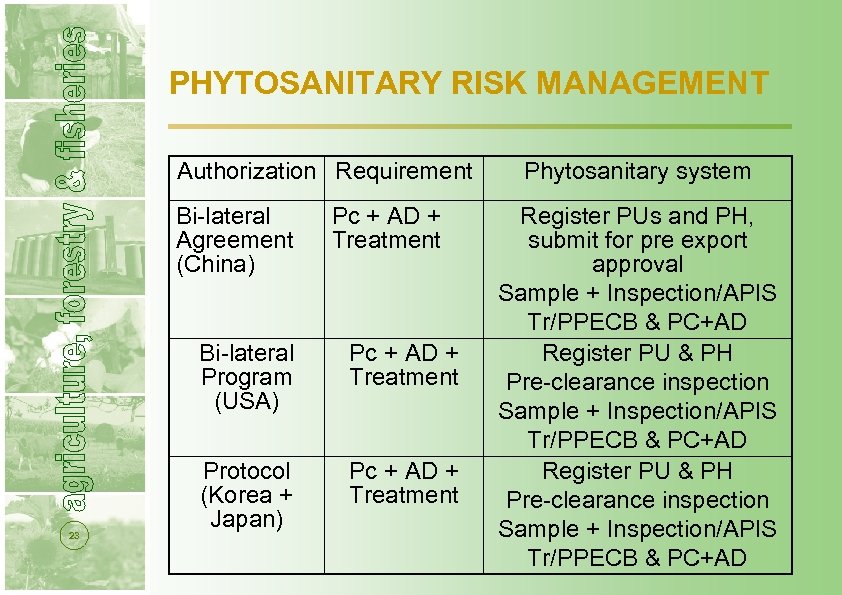 PHYTOSANITARY RISK MANAGEMENT Authorization Requirement Bi-lateral Agreement (China) Pc + AD + Treatment Bi-lateral Program (USA) 23 Pc + AD + Treatment Protocol (Korea + Japan) Pc + AD + Treatment Phytosanitary system Register PUs and PH, submit for pre export approval Sample + Inspection/APIS Tr/PPECB & PC+AD Register PU & PH Pre-clearance inspection Sample + Inspection/APIS Tr/PPECB & PC+AD
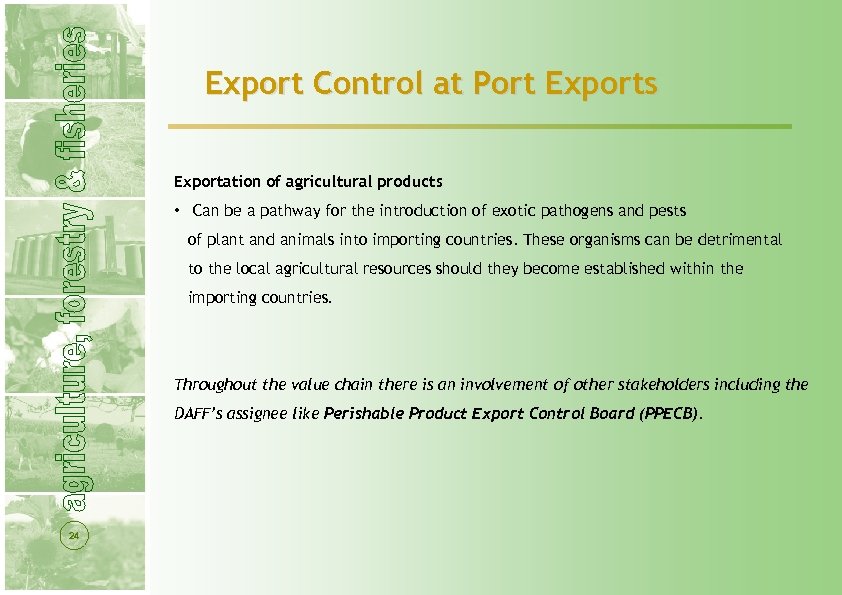 Export Control at Port Exports Exportation of agricultural products • Can be a pathway for the introduction of exotic pathogens and pests of plant and animals into importing countries. These organisms can be detrimental to the local agricultural resources should they become established within the importing countries. Throughout the value chain there is an involvement of other stakeholders including the DAFF’s assignee like Perishable Product Export Control Board (PPECB). 24
 Competiveness through Food Safety and Biosecurity GAIN: Opening of new markets RETAIN: Ongoing inputs to keep existing markets open OPTIMISE: Ongoing inputs to improve terms and scope of access to existing markets 25 ALL OF THE ABOVE ARE IMPOSSIBLE IF: South Africa does not protect its biosecurity by preventing entry of pests, diseases and other regulated articles posing a threat to food safety and biosecurity
 OFFICE DETAILS Where to find us: 190 Mahatma Gandhi/ Point road Point Durban REGIONAL MANAGER: SALAMINA MAELANE TEL: 031 -337 2755/ 6 Email: Salamina. Meh@nda. agric. za 26
 ANY QUESTIONS? 27
 28
28