


 Скачать презентацию AGRIC TECHNOLOGY PROPOSAL PREPARED FOR RCCG AGENDA
cbd0112447f902a2b7dee20c46575b0b.ppt
- Количество слайдов: 23
 AGRIC TECHNOLOGY PROPOSAL PREPARED FOR RCCG
 AGENDA 1) Introduction 2) Benefits 3) Increased Efficiency and Yield 4) List of Crop 5) Proposal 6) Next Steps
 INTRODUCTION The current global economy is beset by several challenges. Key among them is the slow down of the commodities sector. For a country like Nigeria and sub-saharan Africa at large, which are heavily dependant on resource extraction and export to fuel growth, this portends immediate danger for their respective economies. Diversification is the key to ameliorating the current economic situation we find ourselves in. Agriculture can be a key driver of economic growth going forward. Merging agriculture with technology is the key to increased efficiency in the sector. Increased efficiency will lead to food self-sufficiency and in turn will create excess which can be exported, generate foreign exchange, and bolster our economy. Aeroponics, is one of the most recent agricultural technologies. Plants can be planted in the air without soil and applying minimal water usage. We have managed to refine this technology and have successfully tested it on over 200 different plants/crops.
 INTRODUCTION Scenario 1: Growing in the soil which has been the conventional method There are frequent situations whereby the soil might be infected with pathogens or lack the essential nutrients due to over-use Plants compete with fellow plants for limited nutrients and oxygen to the detriment of the plants. Even when nutrients are applied in the form of fertilizer, it often doesn’t have maximum impact as it tends to wash away with the onset of the rains. Plants also tend to get injured during the weeding process, as they compete with weeds for space, oxygen and nutrients, Pests are also a significant issue as plants are often plagued by insects and pests infestations. Scenario 2: Growing in the air without soil An adequate amount of nutrients and essential oxygen are received. No pathogens The technology is not constrained by weather or seasons and planting and harvesting can be carried out year round. There is no need to apply pesticides as the technology is deployed in a covered space. The strenuous and delicate process of weeding isn’t applicable with this technology as plants are grown in the air
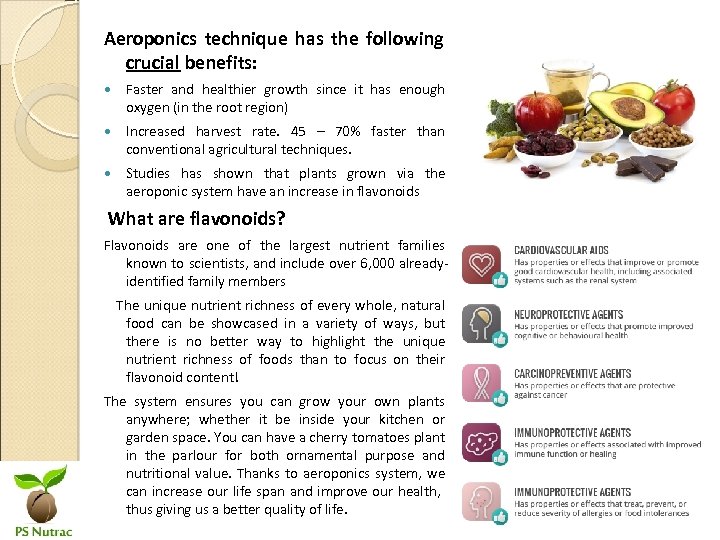 Aeroponics technique has the following crucial benefits: Faster and healthier growth since it has enough oxygen (in the root region) Increased harvest rate. 45 – 70% faster than conventional agricultural techniques. Studies has shown that plants grown via the aeroponic system have an increase in flavonoids What are flavonoids? Flavonoids are one of the largest nutrient families known to scientists, and include over 6, 000 alreadyidentified family members The unique nutrient richness of every whole, natural food can be showcased in a variety of ways, but there is no better way to highlight the unique nutrient richness of foods than to focus on their flavonoid content! The system ensures you can grow your own plants anywhere; whether it be inside your kitchen or garden space. You can have a cherry tomatoes plant in the parlour for both ornamental purpose and nutritional value. Thanks to aeroponics system, we can increase our life span and improve our health, thus giving us a better quality of life.
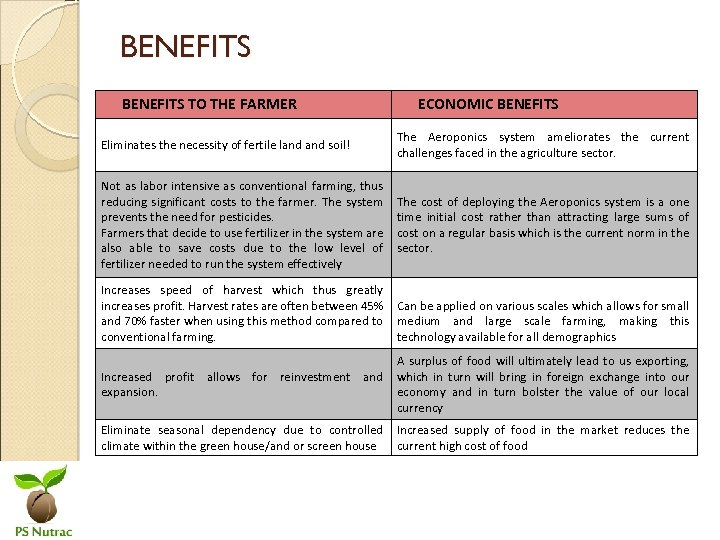 BENEFITS TO THE FARMER ECONOMIC BENEFITS Eliminates the necessity of fertile land soil! The Aeroponics system ameliorates the current challenges faced in the agriculture sector. Not as labor intensive as conventional farming, thus reducing significant costs to the farmer. The system prevents the need for pesticides. Farmers that decide to use fertilizer in the system are also able to save costs due to the low level of fertilizer needed to run the system effectively The cost of deploying the Aeroponics system is a one time initial cost rather than attracting large sums of cost on a regular basis which is the current norm in the sector. Increases speed of harvest which thus greatly increases profit. Harvest rates are often between 45% Can be applied on various scales which allows for small and 70% faster when using this method compared to medium and large scale farming, making this conventional farming. technology available for all demographics A surplus of food will ultimately lead to us exporting, Increased profit allows for reinvestment and which in turn will bring in foreign exchange into our expansion. economy and in turn bolster the value of our local currency Eliminate seasonal dependency due to controlled Increased supply of food in the market reduces the climate within the green house/and or screen house current high cost of food
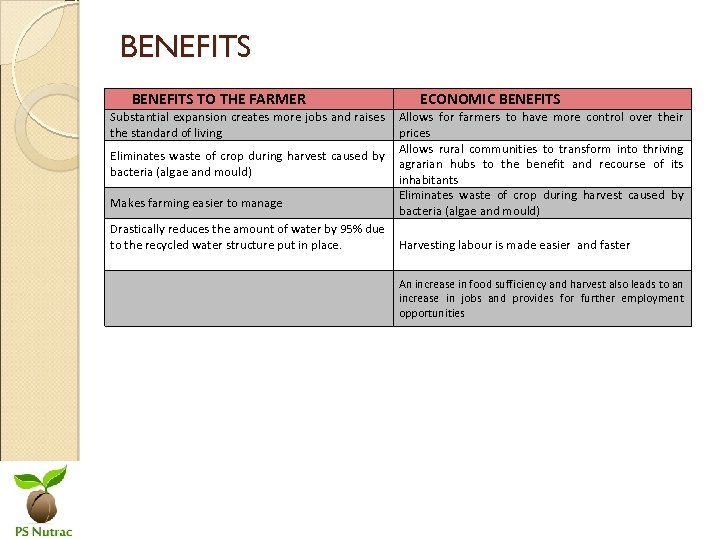 BENEFITS TO THE FARMER ECONOMIC BENEFITS Substantial expansion creates more jobs and raises Allows for farmers to have more control over their the standard of living prices Allows rural communities to transform into thriving Eliminates waste of crop during harvest caused by agrarian hubs to the benefit and recourse of its bacteria (algae and mould) inhabitants Eliminates waste of crop during harvest caused by Makes farming easier to manage bacteria (algae and mould) Drastically reduces the amount of water by 95% due Harvesting labour is made easier and faster to the recycled water structure put in place. An increase in food sufficiency and harvest also leads to an increase in jobs and provides for further employment opportunities
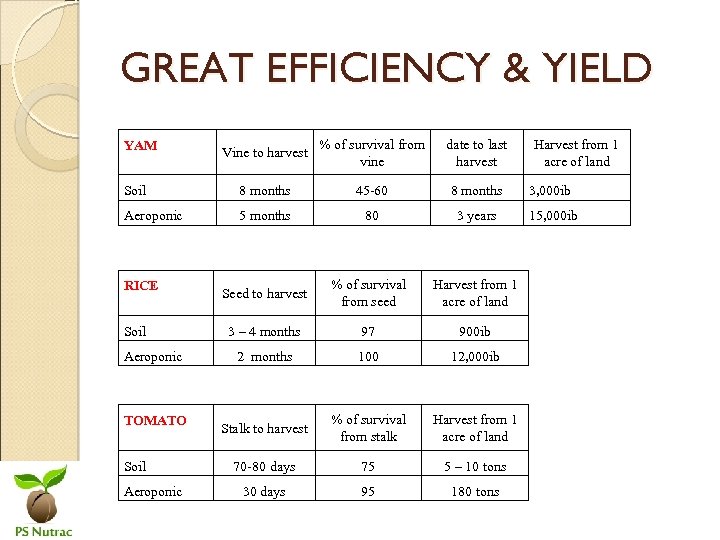 GREAT EFFICIENCY & YIELD Vine to harvest % of survival from vine date to last harvest Soil 8 months 45 -60 8 months 3, 000 ib Aeroponic 5 months 80 3 years 15, 000 ib Seed to harvest % of survival from seed Harvest from 1 acre of land 3 – 4 months 97 900 ib 2 months 100 12, 000 ib Stalk to harvest % of survival from stalk Harvest from 1 acre of land 70 -80 days 75 5 – 10 tons 30 days 95 180 tons YAM RICE Soil Aeroponic TOMATO Soil Aeroponic Harvest from 1 acre of land
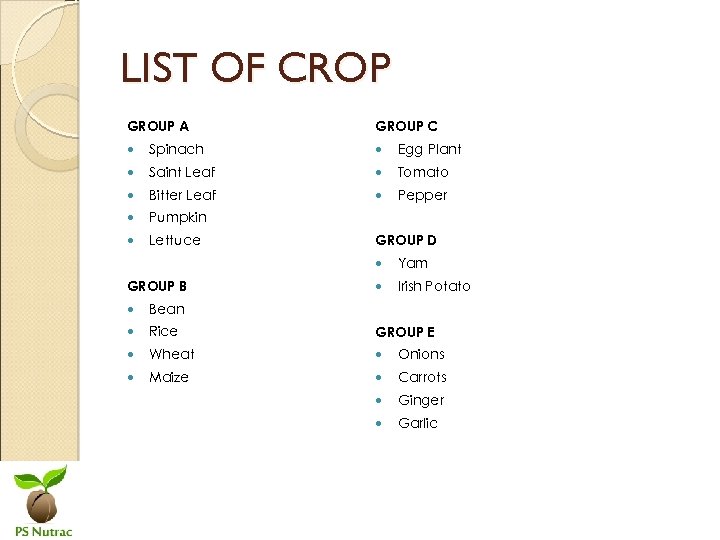 LIST OF CROP GROUP A GROUP C Spinach Egg Plant Saint Leaf Tomato Bitter Leaf Pepper Pumpkin Lettuce GROUP D GROUP B Yam Irish Potato Bean Rice GROUP E Wheat Onions Maize Carrots Ginger Garlic
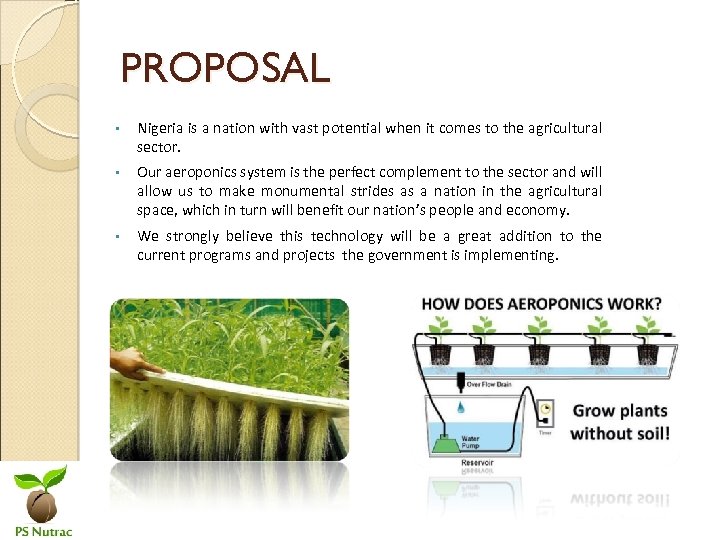 PROPOSAL • Nigeria is a nation with vast potential when it comes to the agricultural sector. • Our aeroponics system is the perfect complement to the sector and will allow us to make monumental strides as a nation in the agricultural space, which in turn will benefit our nation’s people and economy. • We strongly believe this technology will be a great addition to the current programs and projects the government is implementing.
 PROPOSAL proposition 1. Due to the lack of funds local farmers have, the RCCG can support them by taking on the setup cost of the technology and subsequently allow farmers to maintain and expand this with their own generated profit. proposition 2. RCCG can support the food sector by utilising unused land for the Aeroponics system to be setup and grow a variety of crops. PS Nutrac Ltd. Services: Assessment of all designated land Develop proposal based on assessment Construction and assembly of green or screen houses Setting up of Aeroponics system Quarterly Maintenance Quarterly data analysis services. We will capture and analyse data/records of each farm quarterly to enable us make recommendations for growth and expansion of the business.
 COST CONSIDERATION Cost can be determined once quantity and dimensions of land have been assigned. Cost include: Green house construction Screen house construction Aeroponic system construction Water supply Electricity (Inverters/solar panels, generator) Labour Accommodation for farmer(s) Details of these will be determined upon assessment of land.
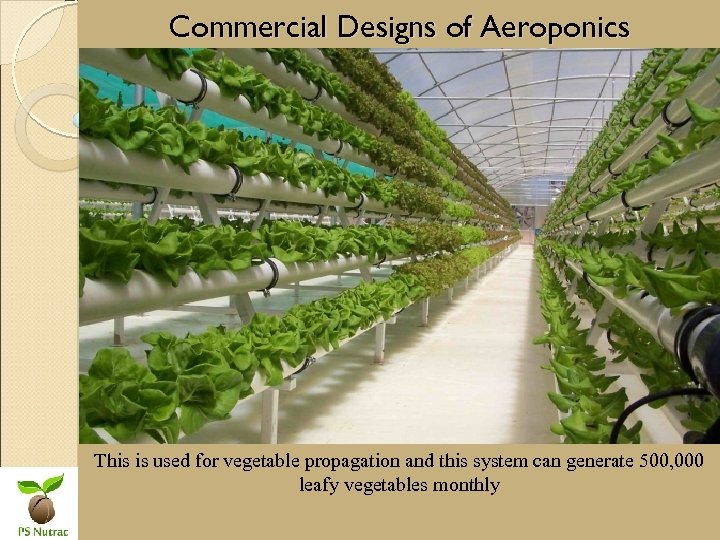 Commercial Designs of Aeroponics This is used for vegetable propagation and this system can generate 500, 000 leafy vegetables monthly
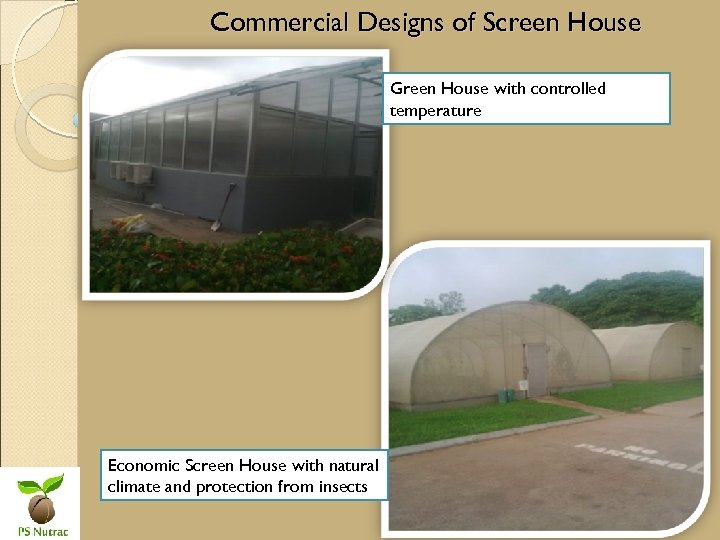 Commercial Designs of Screen House Green House with controlled temperature Economic Screen House with natural climate and protection from insects
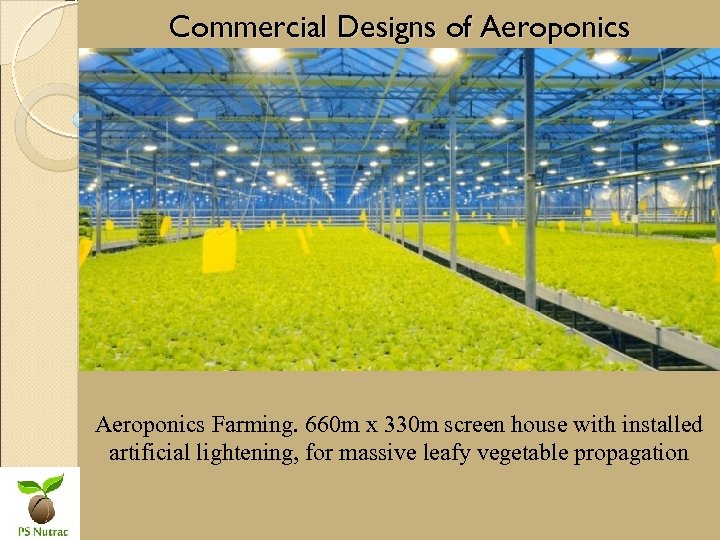 Commercial Designs of Aeroponics Farming. 660 m x 330 m screen house with installed artificial lightening, for massive leafy vegetable propagation
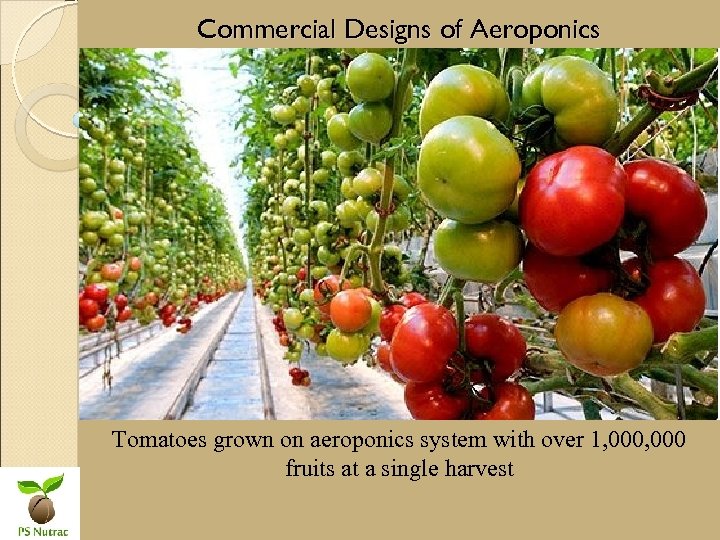 Commercial Designs of Aeroponics Tomatoes grown on aeroponics system with over 1, 000 fruits at a single harvest
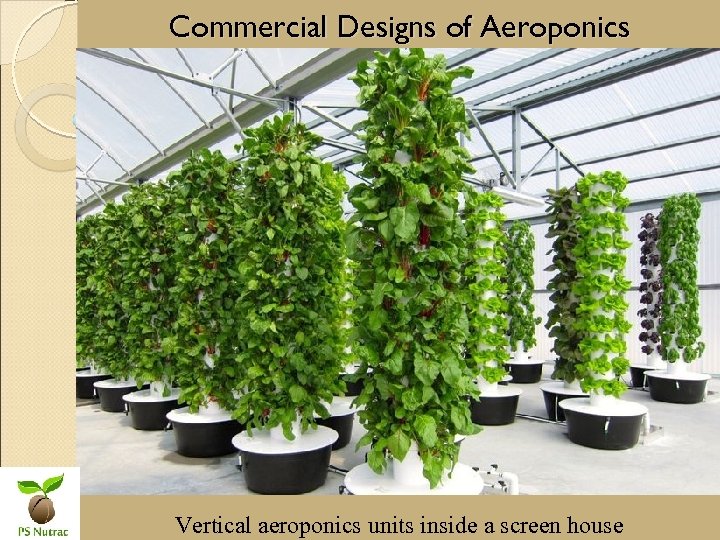 Commercial Designs of Aeroponics Vertical aeroponics units inside a screen house
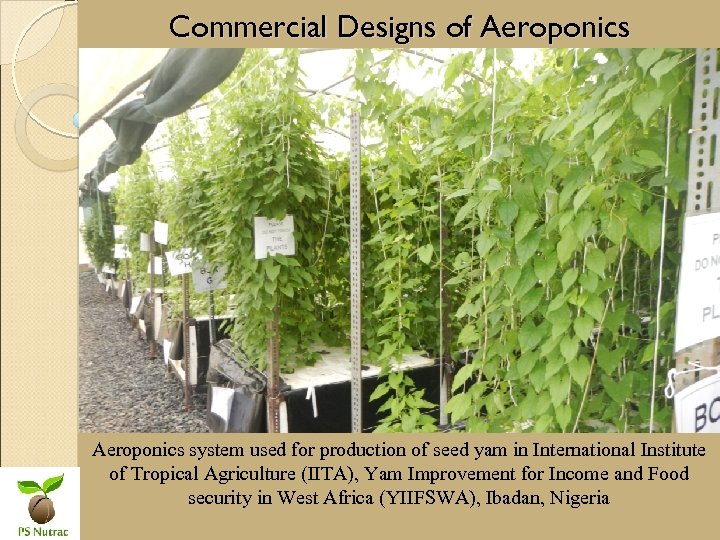 Commercial Designs of Aeroponics system used for production of seed yam in International Institute of Tropical Agriculture (IITA), Yam Improvement for Income and Food security in West Africa (YIIFSWA), Ibadan, Nigeria
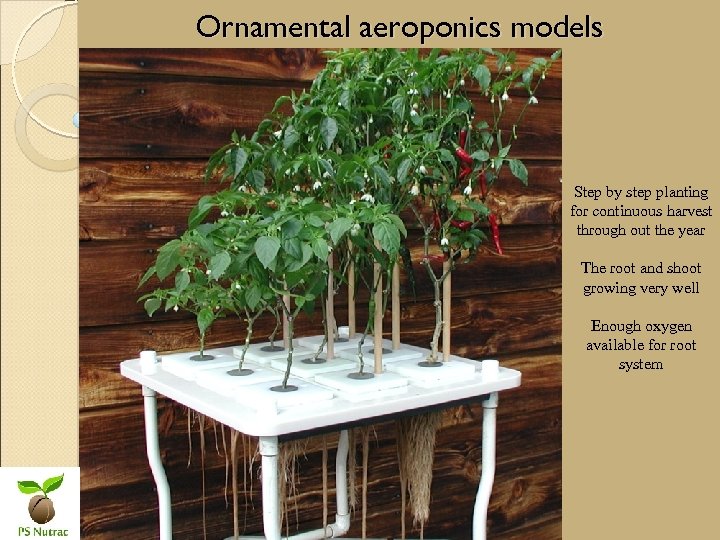 Ornamental aeroponics models Step by step planting for continuous harvest through out the year The root and shoot growing very well Enough oxygen available for root system
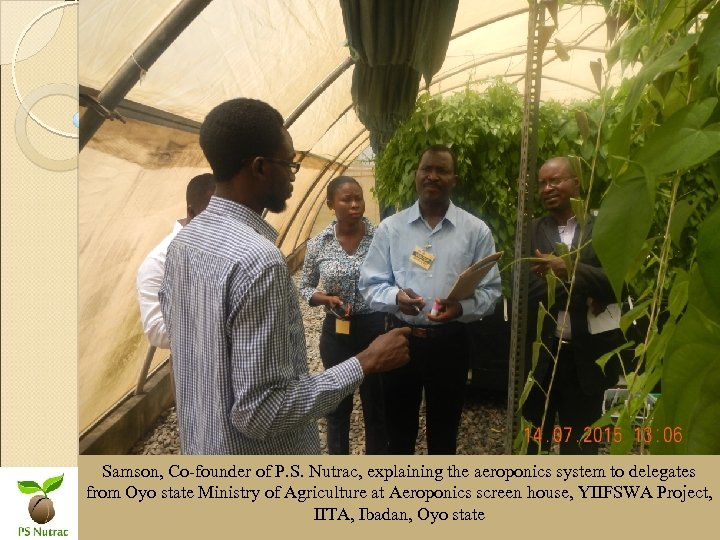 Samson, Co-founder of P. S. Nutrac, explaining the aeroponics system to delegates from Oyo state Ministry of Agriculture at Aeroponics screen house, YIIFSWA Project, IITA, Ibadan, Oyo state
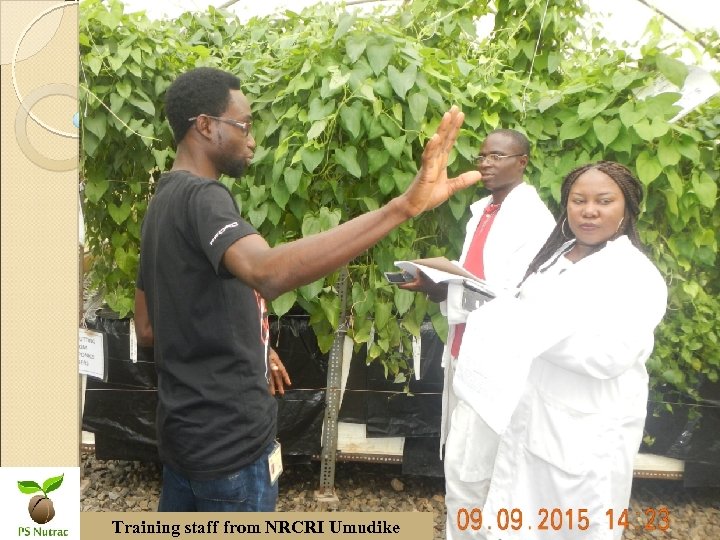 Training staff from NRCRI Umudike
 NEXT STEPS Assessment of designated land Agree on crop Proposal based on RCCG objective Develop budget based on requirements Finalize agreement Execution Quarterly reports and reviews Quarterly maintenance Quarterly business assessment for expansion
 THANK YOU CONTACT Mevis Aiyeju Director Business Development +234 703 243 8730